Nightmare of the Alps: Shadows of Drachenschlucht
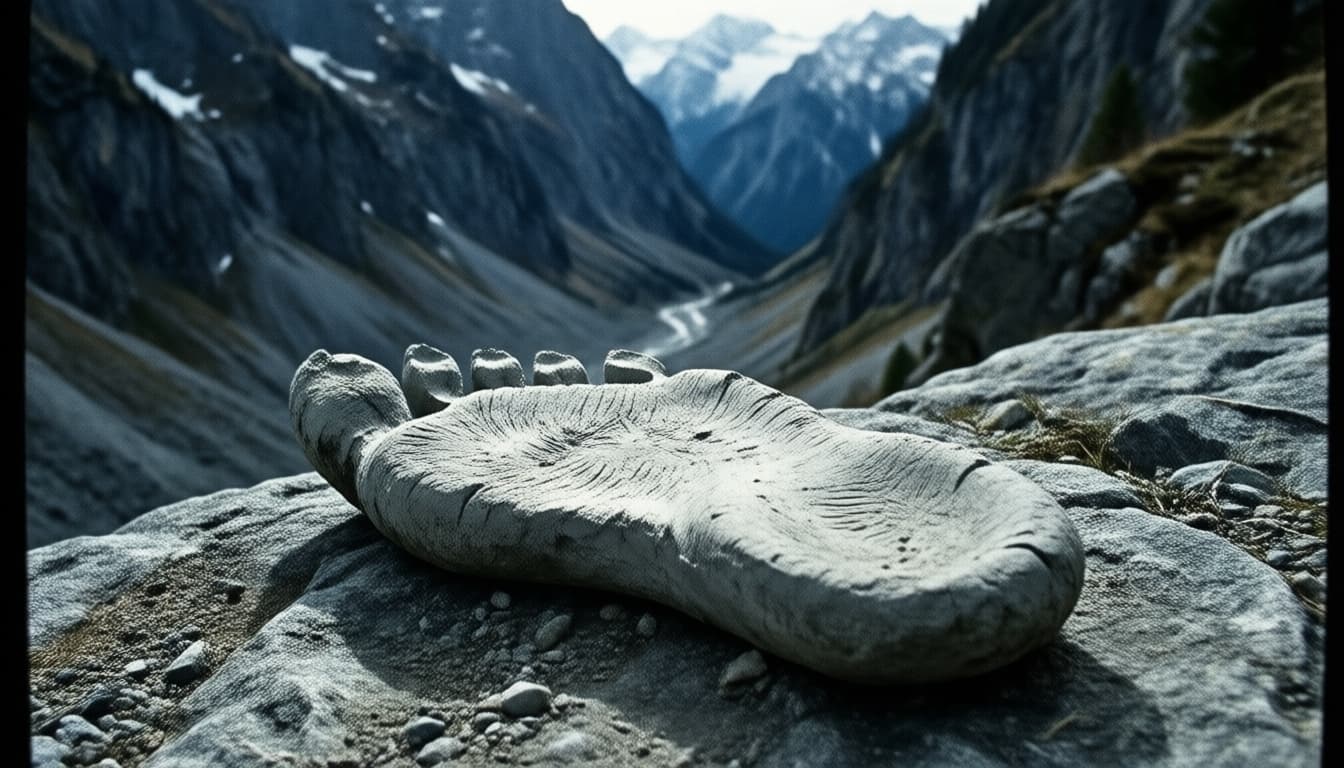
Deep within the Ötztal Alps of Southern Austria, in a remote alpine gorge known as Drachenschlucht (Dragon's Gorge), a digital whisper began to spread from late autumn onwards. Initially dismissed as mere unfortunate climbing accidents, three experienced mountaineers vanished without a trace from the same isolated gorge over two months. Authorities attributed it to hypothermia or falls, citing the treacherous terrain. However, a few photographs posted by Mr. Franz Moser, a local mountain guide renowned for his meticulousness and composure, on a private Alpine rescue forum changed everything. Plaster casts Moser took near the third disappearance site revealed an undeniably 'anomalous' footprint. Large, approximately 25cm long, blunt, powerful, and two-toed, it matched no known European animal—not a bear, wolf, lynx, nor even a modified deer track. Moser's post also noted an 'absolute silence' just before the discovery, as if the mountain itself held its breath, accompanied by an unknown musky scent. This evidence, combined with blurry thermal camera images from a separate incident (a local farmer reporting livestock brutally killed in an unidentifiable predatory manner during night raids), was enough to capture the attention of those who monitor the fringes of our perceived reality. The correlation with historical accounts of the 'Tatzelwurm'—a powerful lizard-cat form with short limbs—was chillingly clear.
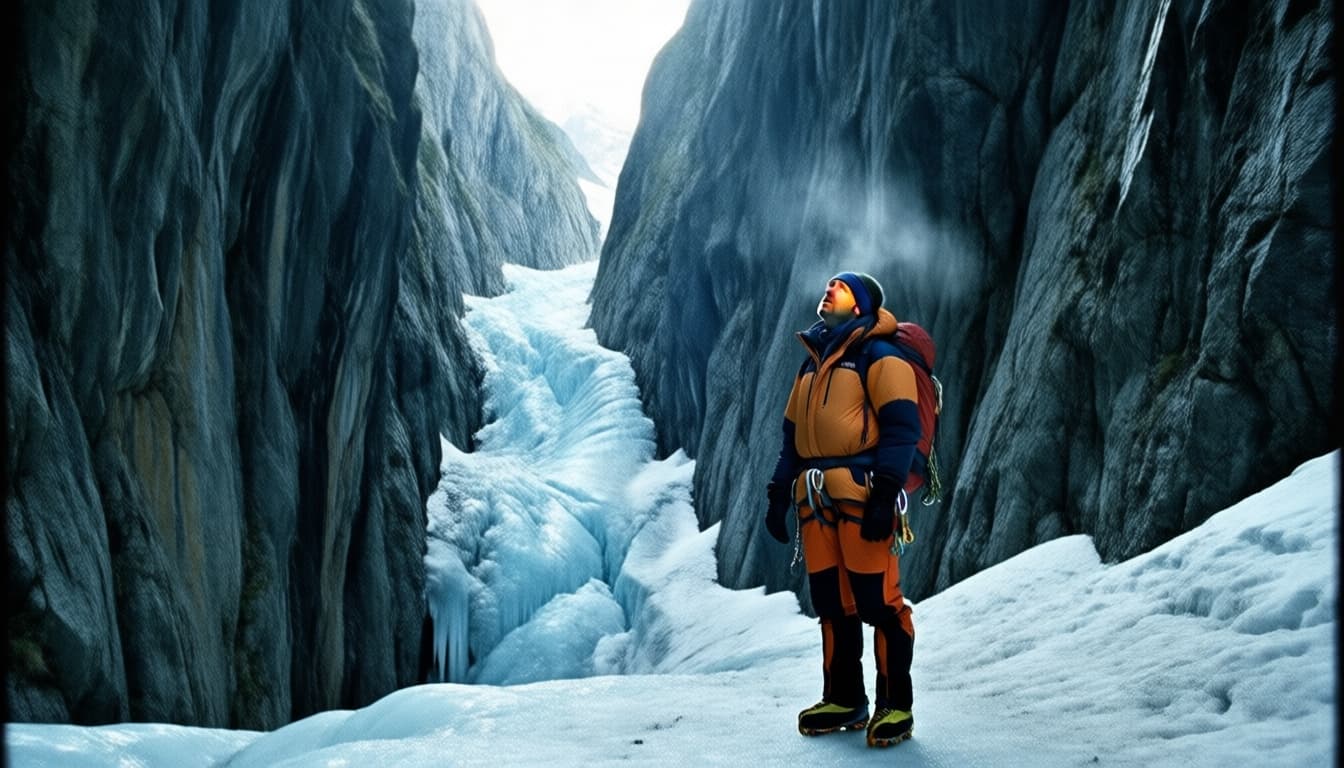
Accessing Drachenschlucht was arduous, its isolated location creating an intentional difficulty. The gorge itself was like a deep, narrow wound carved by ancient glaciers, its walls sheer and covered in glacial ice even on temperate days. The air was thin and frigid, constantly accompanied by the distant roar of unseen waterfalls. My initial objective was to re-examine Moser's discovery site and then extensively search the surrounding area for further tracks or signs of a lair. The route involved scrambling over unstable scree slopes and traversing sections where a single misstep would mean a fatal plummet into the churning glacial waters below.
The environment immediately overwhelmed me. The steep rock faces amplified and distorted every sound – the creak of my boots, the rustle of my pack. Yet, there was also an unsettling 'absence of sound.' No birdsong, common even at this altitude. The wind, which should have whistled through the narrow passages, was strangely still in sections, creating an almost vacuum-like atmosphere. The ground, primarily rock and sparse moss, made tracking difficult, but I carried a high-resolution camera to capture any anomalies. There was a faint earthy smell in the air, but occasionally, particularly near shaded crevices, a sharp, metallic scent, mixed with ozone and something wild and savage, stung my nostrils.
As I ventured deeper into a side gorge, branching off the main canyon, a particularly steep ascent vaguely referenced in Moser's report, the environmental peculiarities intensified. The distant roar of glacial rivers faded, replaced by a localized silence so potent it felt unnatural. My own breathing sounded eerily loud. Despite a brief appearance of sunlight between the high peaks, an intense, localized cold began to manifest, dropping the ambient temperature by several degrees within meters.
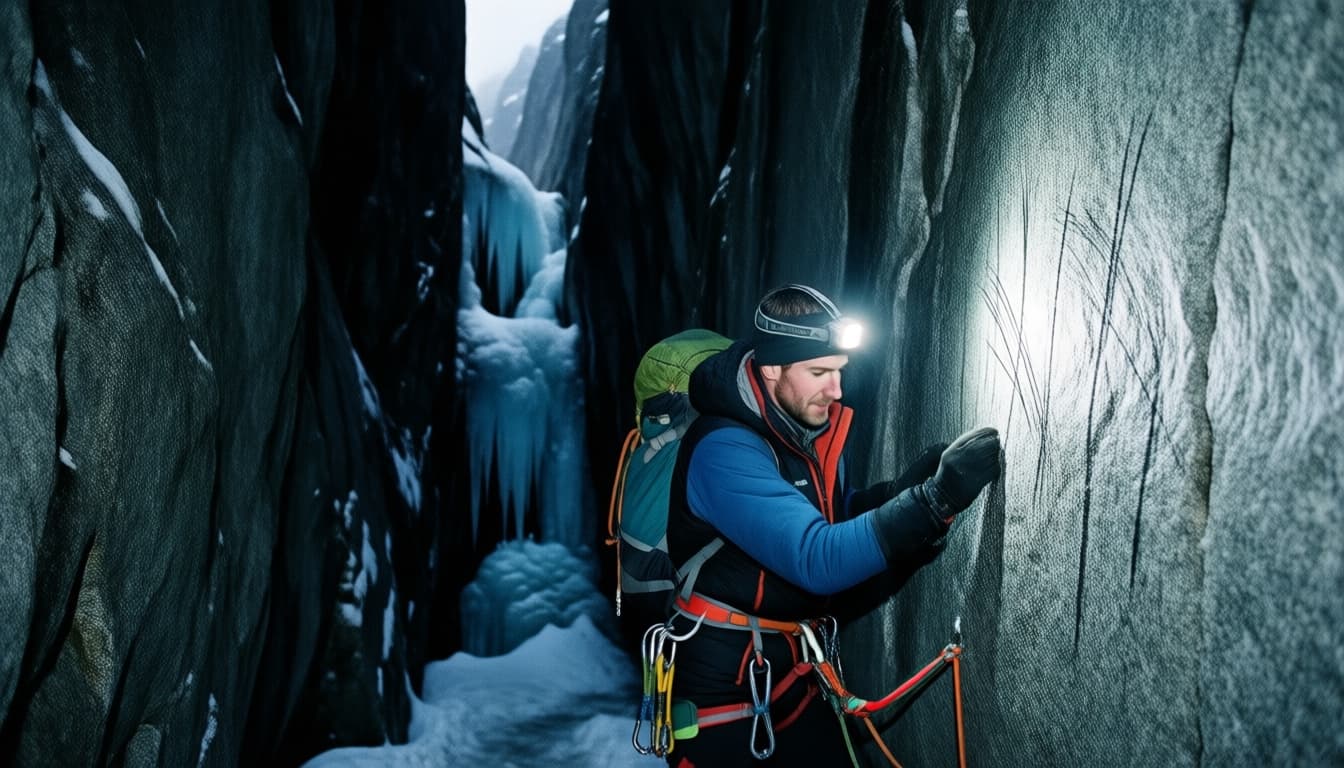
My altimeter showed a steady ascent, but it felt like little progress for the effort, as if an unseen pressure was building. I discovered faint, linear scratch marks on an exposed granite wall, several meters above any plausible human climbing route, too regular for rockfall, too deep for general erosion, and leading upwards over an overhang, disappearing. Then came an even more unsettling observation: in a section where a small, usually fast-flowing stream snaked over smooth rock, the water unnaturally pooled for a moment, as if its flow was 'interrupted,' before rapidly becoming a torrent again after a few seconds. My thermometer registered a drastic localized temperature drop at that pooled point. The feeling of being watched, of an animal intensity, was no longer vague apprehension but a tangible, cold certainty pressing down from the shadowed peaks above. When I pressed my ear to the rock, it felt as though very low-frequency vibrations were resonating through the rock face – not a roar, but a slow, heavy pulse.
The narrow side gorge led to a constricting glacial crevice, its entrance partially obscured by a recent rockfall. Beyond it, a small cave system opened, exhaling an even more potent metallic scent. I advanced cautiously, my headlamp cutting through the absolute darkness. Then, the silence shattered. A sudden, intense cold enveloped me, so sharp it felt like my lungs were burning. From the deepest part of the cave, a low, guttural growl vibrated through the rock itself – an impossible auditory phenomenon, seeming to come from all directions, disorienting my senses.
Before I could react, an impossibly swift, dark form erupted from the shadows. It moved with an eerie, fluid agility across the slick, vertical walls of the glacial ice-covered crevice, defying gravity and friction. It was far larger than I had anticipated. A powerful, serpentine body with short, thick limbs ending in blunt, two-toed claws, and a broad, almost feline head, embedded with eyes that gleamed with ancient, predatory intelligence.
It was only then I realized: this was the Tatzelwurm. A creature of nightmare made brutal reality.
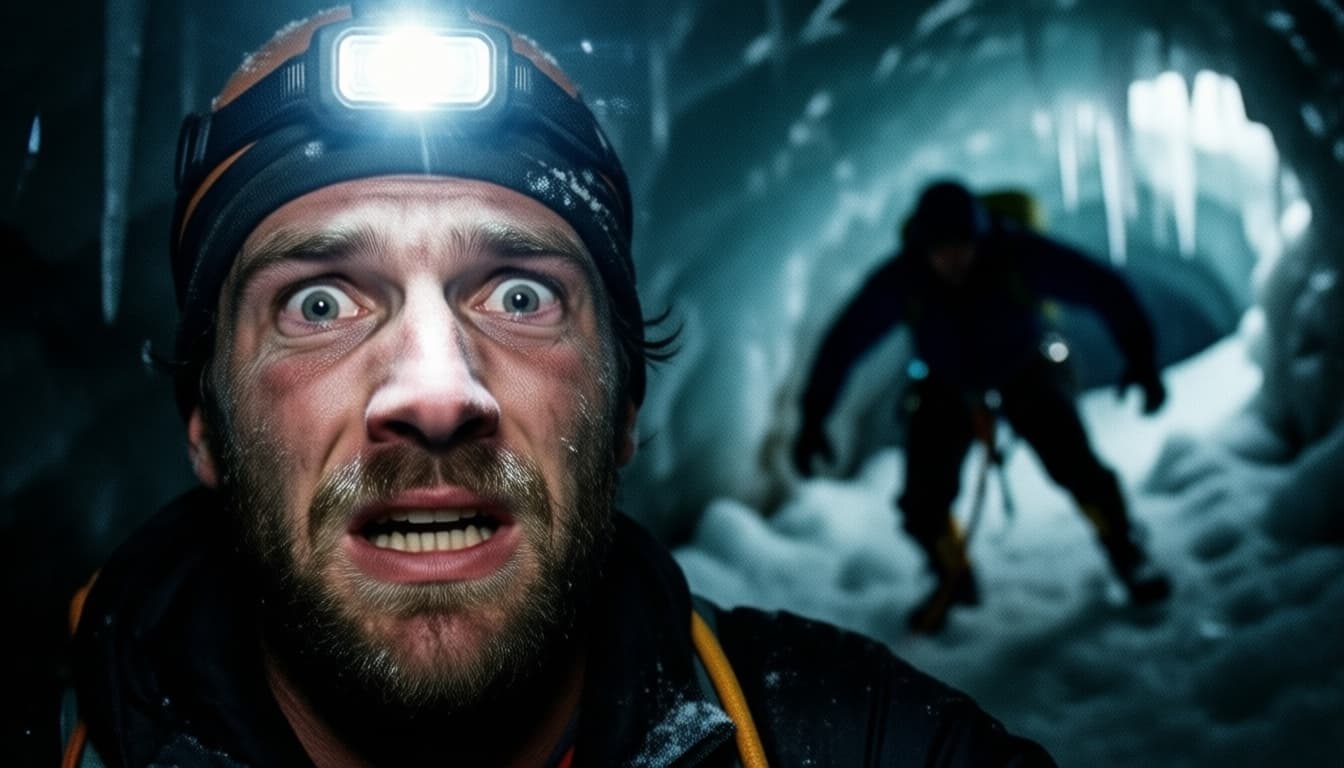
The creature launched itself. I had no time to raise my ice axe. Its speed was impossible, a blurred streak defying the natural physics of inertia. The impact was immense. A powerful tail slammed into my ribs with a sickening crack, sending me sprawling against the cave wall. A searing pain blossomed in my side, and my breath was abruptly knocked out. Before I could recover, it lunged again, its powerful claws raking my shoulder as I desperately scrambled backward. My headlamp beam danced wildly over its scaled hide. Its breath was cold and acrid, smelling of something deep and ancient. The force of its attack wasn't merely animal; it felt as though the mountain itself was striking me down. In a terrifying moment, I caught a glimpse of its eyes: cold, unblinking, utterly devoid of mercy. In a desperate surge of adrenaline, I kicked at a loose section of the ceiling, triggering a small collapse that momentarily obscured its path. The last thing I saw before blindly scrambling back out into the crevice was its massive head turning, mouth agape in a silent, predatory snarl as falling debris showered between us. Driven by a primal fear that transcended the intense pain, I crawled out, severely injured, leaving my pack and precious equipment behind.
I barely made it back to civilization. The official diagnosis was 'severe trauma consistent with a fall and hypothermia,' a narrative carefully crafted by local authorities keen to avoid awkward or difficult questions. My broken ribs, deep shoulder laceration, and severe bruising were all accounted for. My explanation of the creature was dismissed with concerned nods and suggestions of post-traumatic stress disorder.
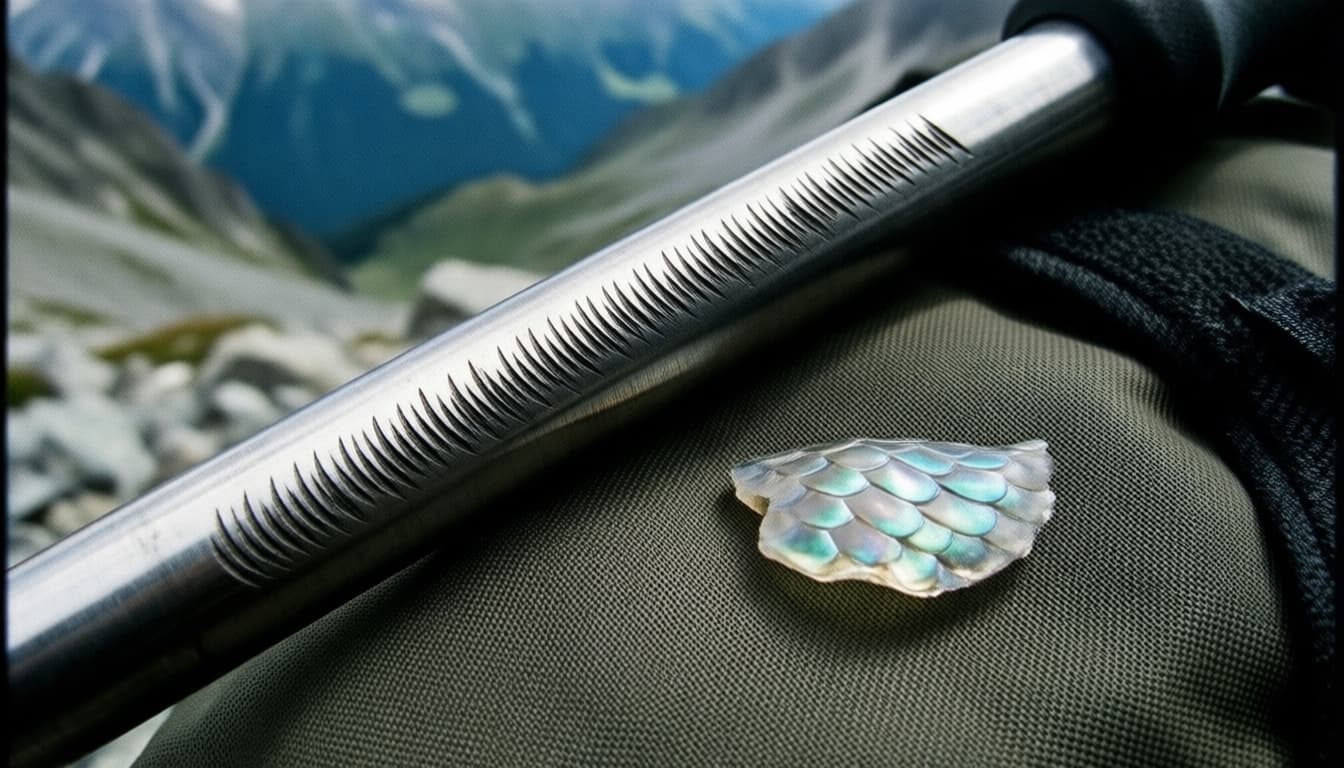
Yet, the truth isn't only etched in my memory. A small, iridescent fragment was later recovered by the search team, deeply embedded within the synthetic fabric of my abandoned outer shell. It was a translucent, scale-like organic material, about 1cm in diameter. Later examined by an independent biologist, its cellular structure matched no known reptile, amphibian, or fish. Its composition was entirely anomalous. Furthermore, the perfectly spaced parallel claw marks sharply etched into my titanium-reinforced climbing pole, which was almost bent double in the furious struggle, are proof of impossible strength. No bear, no wolf, could have inflicted such damage.
But the most chilling evidence resides within. My hearing, particularly in the lower frequencies, has subtly changed. I still perceive that deep, overwhelming silence when alone, and occasionally, that low, guttural vibration resonates through the floor of my apartment—an echo of the creature's impossible growl. And in the cold mountain air, even on subsequent, safer expeditions, I still sometimes catch that faint metallic, ozone-like scent. A bitter reminder of what truly lurks within Drachenschlucht, watching and waiting. This knowledge is a quiet burden, a chilling understanding that some urban legends are not mere tales, but warnings of a darker, enduring truth. And it is still there.
[ CLASSIFIED VERDICT ]
[ACCESS LOG - SOURCE FILE]
This story is based on the 'Tatzelwurm,' a legendary creature from the folklore of the Austrian and Swiss Alps. It is described as a lizard-cat-like creature with short limbs and a serpentine body, said to inhabit deep mountain caves or crevices, attacking climbers or livestock. Sightings and tales of unknown footprints have been passed down for centuries.