The Tangible Light
The Paulding Light of Michigan's Upper Peninsula isn't just a legendary mystery; it's a documented one. For over half a century, a ghostly light has appeared with eerie regularity in a forgotten stretch of Robbins Pond Road. It has been undeniably witnessed, recorded, and is a local phenomenon that draws hundreds of curious onlookers annually. In 2010, Michigan Tech students published a comprehensive study, concluding that a significant portion of the sightings were attributable to vehicle headlights and taillights on US-45, miles away. For many, this offered a mundane, yet conclusive, explanation.
However, local historians and lifelong residents continued to recount stories that predated the widespread adoption of automobiles. They spoke of a light that drifted, pulsed, and moved in ways no car could. Whispers circulated of a lost lantern belonging to a brakeman tragically killed on the 19th-century railroad tracks, still searching for something. More recently, anecdotal reports — dismissed as insignificant by casual observers — surfaced among dedicated witnesses. These reports described 'interactions' beyond mere observation: responding to shouts, mirroring movements, and, in one particularly ominous account from a retired forest ranger, intensifying briefly into an unbearable localized light before purposefully receding as if in retreat. This dissonance between established scientific explanations and persistent, unverified reports of something 'more' was precisely why further investigation was warranted.
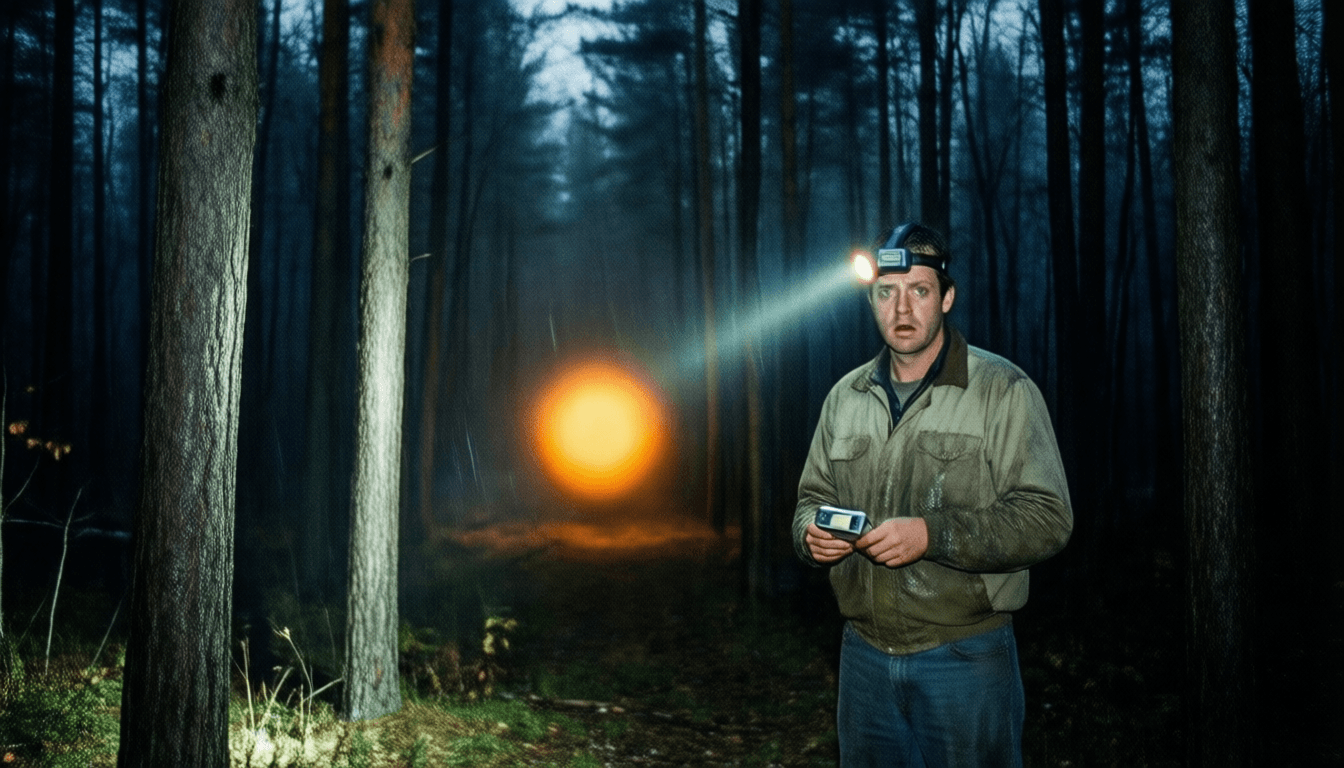
My arrival at Robbins Pond Road was deliberate, timed for the deepest hours of darkness after the last tourists had departed. The air was bitterly cold, mingled with the scent of pine and damp earth. My unassuming utility van was strategically parked, engine off, allowing the vast silence of the Ottawa National Forest to envelop me. My equipment was meticulously set up: high-resolution thermal and IR cameras, a directional microphone, an EMF detector, a LiDAR unit for precise terrain mapping, and a calibrated photometer.
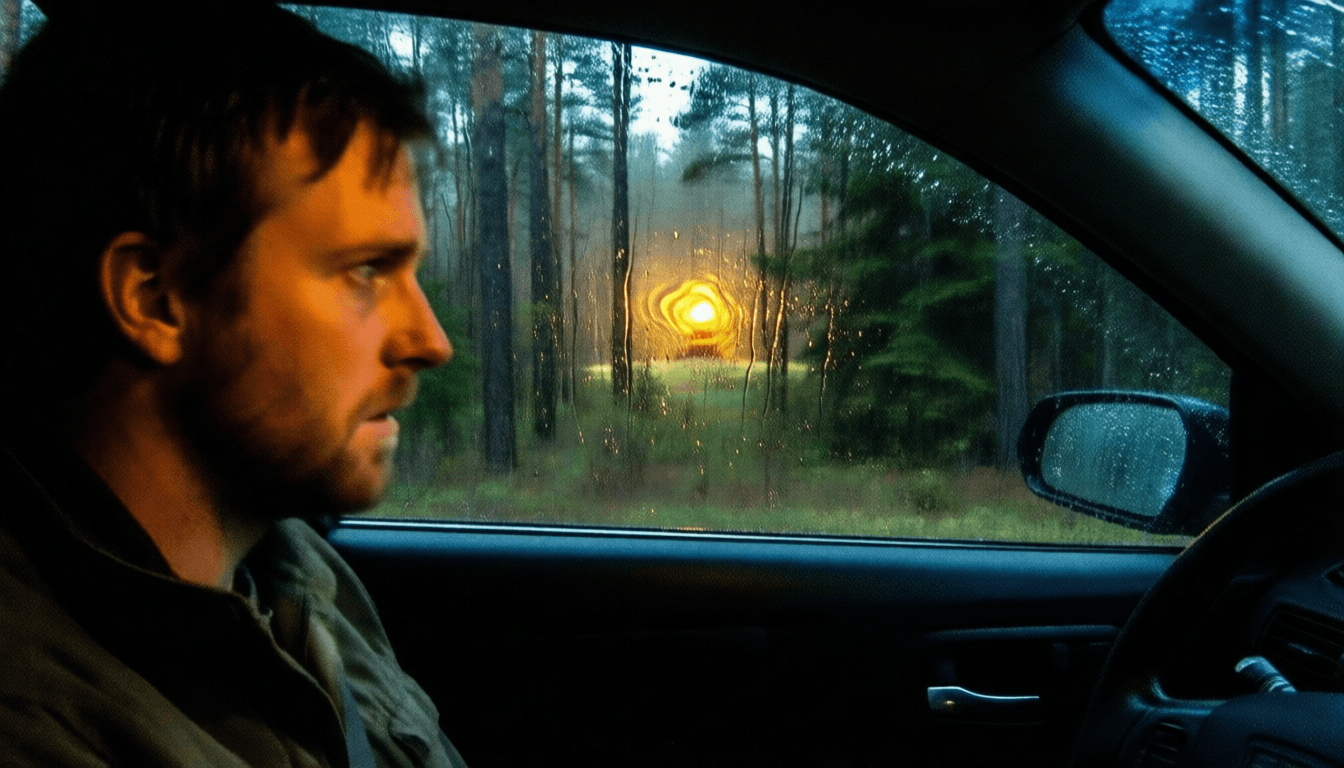
The first few hours were spent observing the typical phenomenon from the designated viewing spot. The distant, wavering light appeared exactly as it had in countless videos – a familiar, almost mundane sight. But my objective wasn't merely observation; it was to contextualize beyond the tourist experience. Consulting historical maps, I pinpointed the precise trajectory of the old copper mine railroad line. A faint, overgrown trace through the dense woods, it extended perpendicularly from the viewing point. This was the path of the legendary brakeman. Stepping off the well-worn gravel, this was where the true investigation would begin. Relying on night vision, I moved slowly, the crunch of fallen leaves underfoot, following the faintly raised old railbed deeper into the oppressive, moonless gloom.
As I ventured deeper along the old line, the forest felt as though it pressed in on me. The familiar distant light was now obscured by trees, but a subtle, deepening unease began to permeate. Within the already cold air were unnatural pockets of chill, detected by my thermal camera as localized spots several degrees lower. The faint ambient sounds of the night—unseen animals rustling, a distant owl—gradually faded, replaced by a profound, overwhelming silence.
Then, it appeared. Not the flickering light from afar. Deep within the woods to my left, about two hundred yards away, a distinct luminescence was visible. It wasn't floating at a typical height; it was low, almost at eye level with the ground, glimpsed through gaps in the trees. This light was different. Less hazy, more focused, a single amber orb. It didn't flicker erratically like a headlight. It pulsed with a slow, deliberate beat, mirroring the sudden irregularity of my own heartbeat. While my audio recorder captured only dead silence, the EMF detector registered subtle, fluctuating anomalies inconsistent with any known natural phenomena. As I moved slowly, cautiously, taking another step into the undergrowth, the light moved too. It mirrored my movement, keeping parallel with impossible fluidity. It didn't retreat, nor did it approach; it was simply observing. This was no headlight. This was something else. The silence deepened, pressing against my ears, and the air grew heavy and suffocating with an unseen presence.
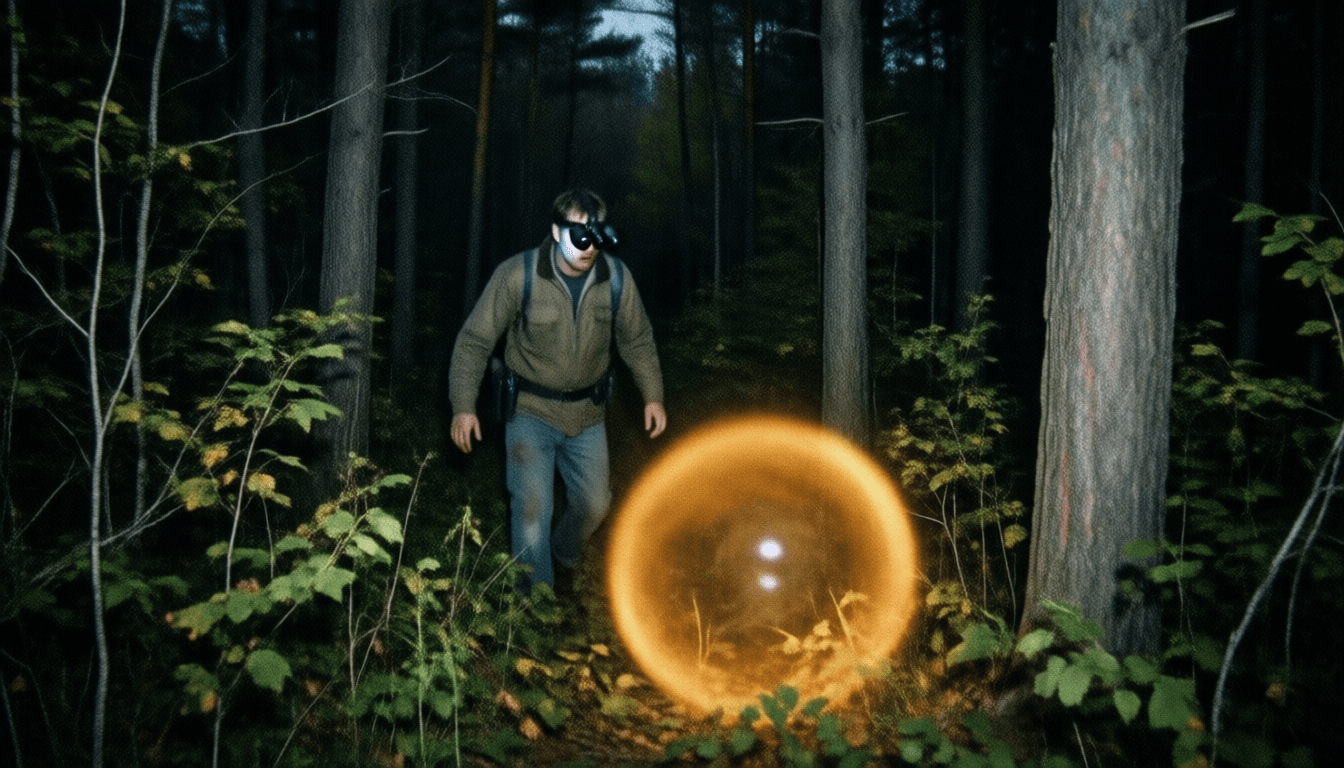
The silent pursuit continued for what felt like an eternity. With every subtle shift in my position, the amber light responded with perfectly synchronized movement. A sickening wave of dread washed over me as I realized: I wasn't observing. I was being herded. The light began to approach, a chilling glide, slow at first, then accelerating. There were no footsteps, no rustle of disturbed undergrowth. It wasn't moving through the dense forest; it was moving through it. As it drew nearer, the amber intensified, becoming agonizingly piercing to the eyes, yet casting no shadow. My LiDAR unit registered a void where the light should have been, followed by anomalous, distorted reflections as if the surrounding space itself was warping.
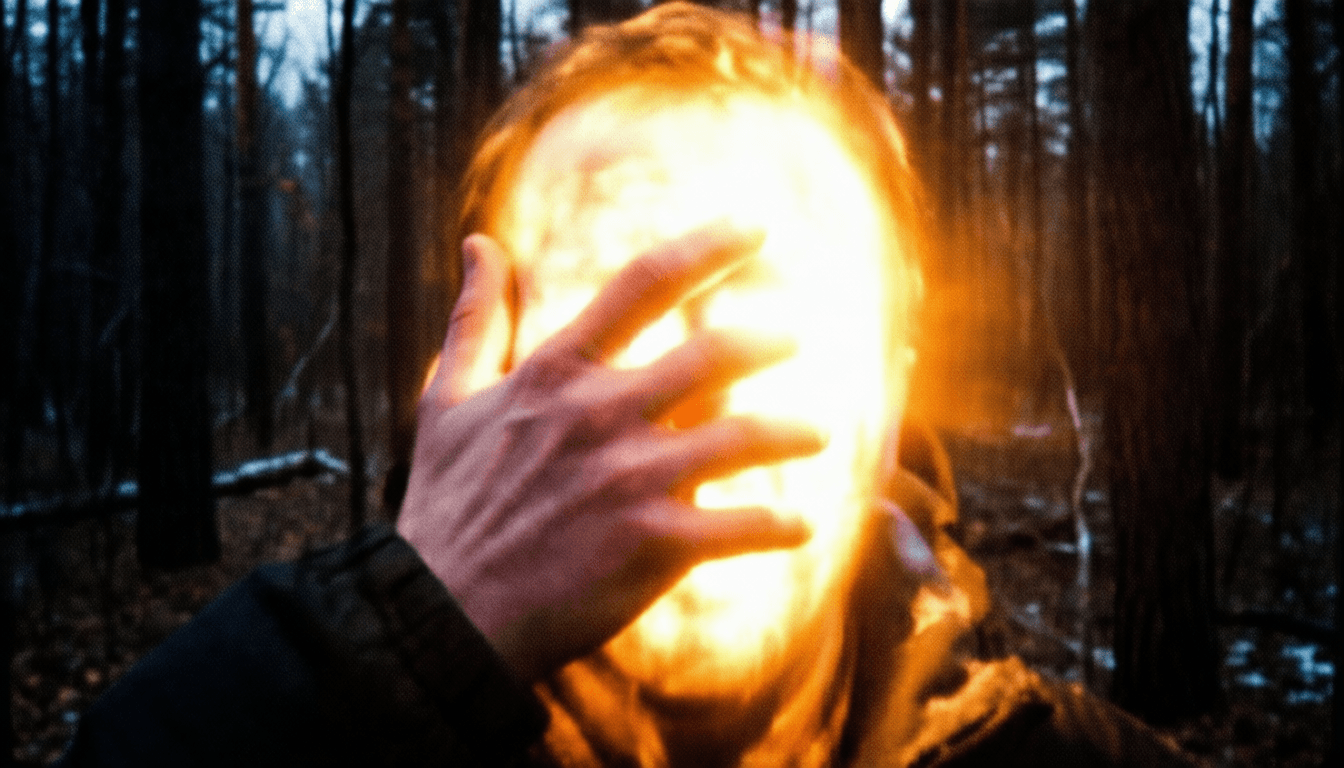
Then, the world twisted. The profound silence shattered, replaced by an internal, bone-jarring, ear-splitting scream. It was no physical sound. The now blindingly close light was no longer a point but an unbearable, brilliant haze filling my entire field of vision. A colossal pressure registered, as if the air itself was being sucked away, accompanied by a sensation of ice-cold dread piercing through my body. There was no form. No identifiable entity. Only light, unbearable cold, and the internal scream. My hands, raised instinctively to shield my eyes, met nothing but burning, icy brilliance. I stumbled backward, tripping on the uneven forest floor. As I fell, a chilling phantom limb sensation gripped my arm, as if something intangible was attempting to pull me into its luminous intensity. I clawed backward, struggling against an unseen grip. My mind shrieked for escape. The light seemed to recoil with a final, searing wave of cold energy on my skin. The internal scream subsided, replaced by a ringing silence in my ears. The amber light impossibly diminished, receding into the impenetrable depths of the forest, leaving me gasping, trembling, utterly alone in the sudden, mundane darkness.
Driven by a primal terror unlike anything I had ever known, I scrambled back to my van. The drive out of the forest was a blur. The cool night air rushing through the open window did little to dispel the bone-deep chill that lingered. Much later, in the quiet, sterile environment of my lab, the analysis of the collected data began.
Thermal readings from the old rail line confirmed localized cold spots, yet my cameras yielded frustratingly ambiguous results. The IR footage from the climactic moment was overexposed, showing only an amorphous blur of light, the source indistinguishable. LiDAR data was corrupted, revealing inexplicable distortions and spatial displacements at the point where the light was most intense. The most unsettling discovery came from the audio recordings. Throughout my time deep in the woods, the main track captured only the natural sounds of the forest, the ensuing profound silence, and my own ragged breathing. However, a separate, amplified, high-sensitivity ultrasonic track revealed a series of rapid, high-frequency pulses precisely coinciding with the light's closest approach. These pulses were beyond human hearing, but when slowed and filtered, they coalesced into a rhythmic, almost mechanical hum. And interspersed within it, faintly, almost subliminally, was a distorted, ghostly wail.
I drafted my report with painstaking objectivity. I detailed the anomalies—the temperature shifts, the inexplicable silence, the unusual ultrasonic signatures—presenting them as an intriguing but unresolved phenomenon. The subjective terror, the sensation of being pulled, the internal scream: these were meticulously omitted. They would only compromise the data's credibility. I published my precise, controlled findings, adding another contribution to the archives of mystery.
Yet, sometimes, in the dead of night, the memory of that blinding amber light resurfaces. I've grown to avoid certain shades of yellow, and the profound silence of truly isolated places now carries an eerie, suffocating weight. My skin occasionally prickles with an inexplicable chill—a memory of unseen force. I now understand that the Paulding Light isn't just an optical illusion or a distant vehicle. It is a presence anchored to that forgotten land, possessing capabilities far beyond mere observation. It can touch you, and once touched, its darkness never entirely leaves.

[ CLASSIFIED VERDICT ]
[ACCESS LOG - SOURCE FILE]
The Paulding Light of Michigan's Upper Peninsula is a ghostly light phenomenon that has drawn numerous witnesses for decades. While Michigan Tech researchers offered an explanation involving distant highway vehicle lights, local legends whisper of it being the lost lantern of a brakeman killed in a 19th-century railroad accident. This story explores the discrepancy between scientific explanations and local accounts of supernatural interaction.