Sounds Defying Time: The Glitch of Stanley Hotel
The rumors of the Stanley Hotel began not in its grand ballrooms or infamous guest rooms, but in the old staff tunnels hidden beneath the East Wing and certain unrenovated rooms on the 4th floor, specifically the service corridor leading to the old laundry chute. For years, intermittent reports of peculiar acoustic phenomena were often dismissed as pipe noises, wind, or overactive imaginations. But these weren't the typical ghostly music or disembodied voices that accompany the hotel’s reputation. Rather, specific testimonies cross-referenced on internet forums like the Colorado History Group and local paranormal subreddits detailed ‘reversed acoustic’ phenomena. Guests and former staff reported echoes heard ‘before’ the original sound, or most commonly, a faint, metallic music box melody that, instead of fading, ‘gradually grew louder’ before abruptly cutting off. In 2018, a viral audio clip uploaded by a former night watchman captured what distinctly sounded like a human sigh played in reverse, followed by a subtly delayed creaking sound. The content itself was unsettling, but the fact that it defied fundamental acoustic laws was truly chilling. This phenomenon became known among local paranormal enthusiasts as ‘McGregor’s Glitch,’ named after a former hotel manager rumored to have an obsession with recording and preserving all sounds within the hotel in the early 20th century. This wasn't just a ghost story; it was a persistent, localized fracture in physical law.
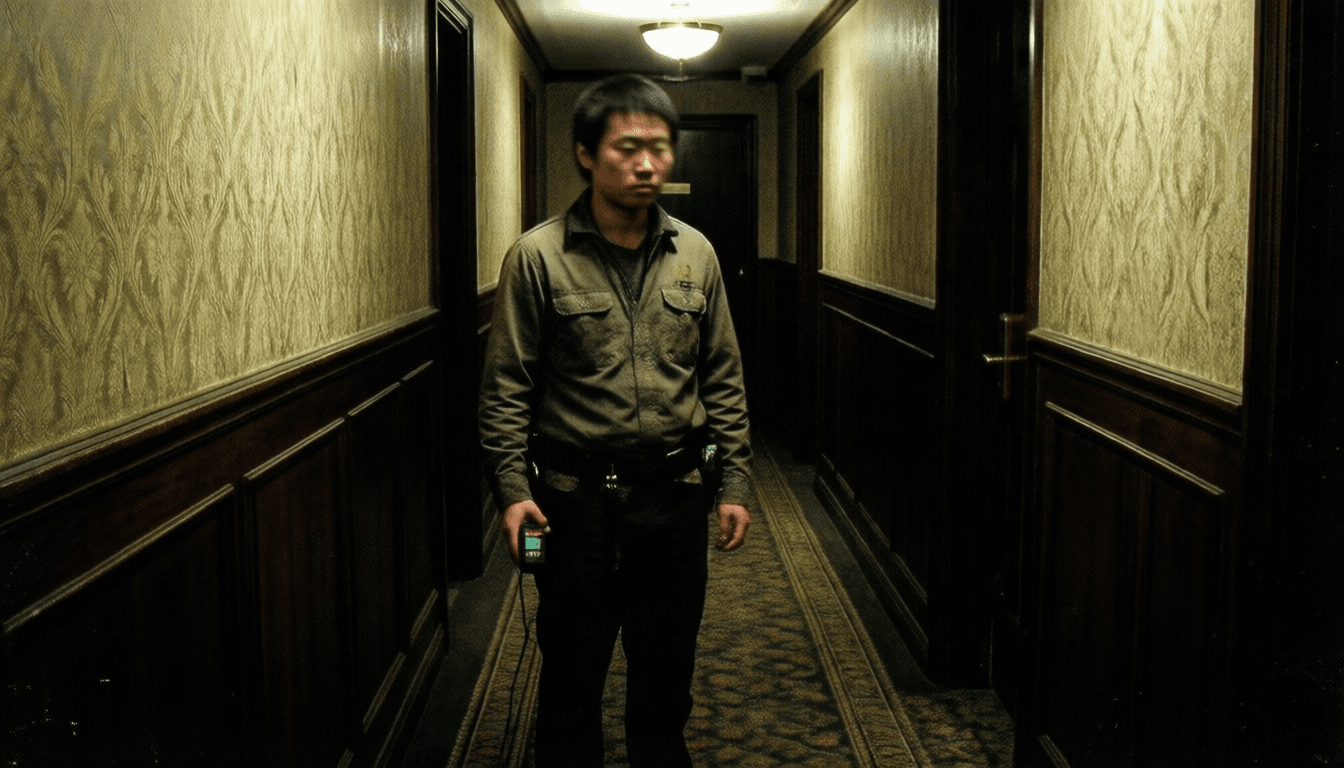
Armed with sensitive directional microphones, multi-spectrum audio recorders, EMF detectors, and thermal imaging equipment, I entered the Stanley Hotel under the guise of an architectural acoustics survey. Initial investigations focused on the well-known ‘hotspots’: the lower staff tunnels in the East Wing, parts of the sealed laundry chute, and the less frequented areas of the 4th-floor corridor. The air in these sections was heavy and still, imbued with a perpetual chill that defied the hotel's heating system. Dust motes danced in the faint, artificial light, illuminating antique wallpaper and dark, heavy wooden decor. Floorboards creaked under sturdy shoes, but the sound was strangely muted, absorbed into the silence. A faint, almost imperceptible low hum resonated throughout the old building's skeleton, not a frequency registered as a specific sound, but enough to create a subtle pressure in the ears. Initial scans detected no unusual activity beyond the expected ambient noise of an old hotel.
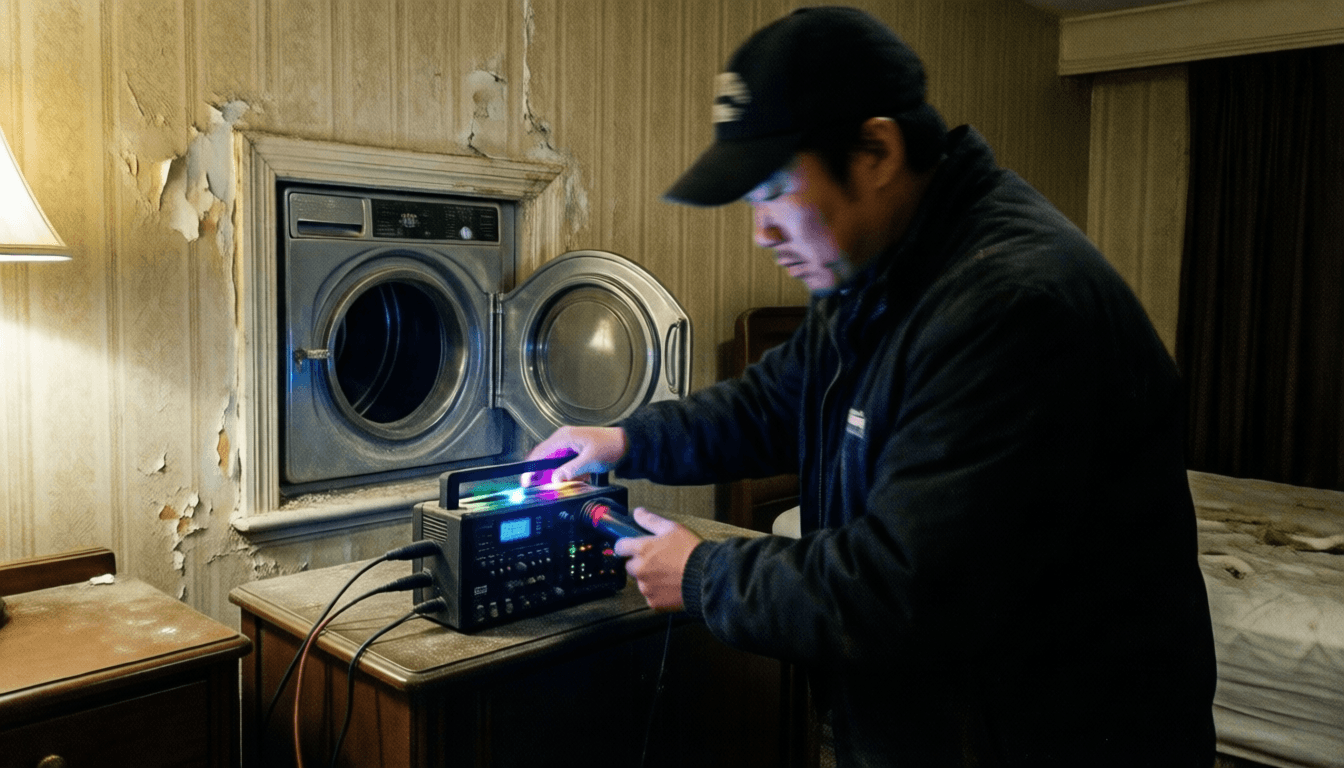
I meticulously measured each area, documenting minute physical details: the exact location of drafts, the reverberation time of each section, and even the structural integrity of the sealed laundry chute, which remained a dark, vertical void within the wall. Everything was precisely recorded.
And then the subtle anomalies began. During a long, solitary recording session in the 4th-floor service corridor, I heard a faint, distant music box melody. It was high-pitched and delicate. I recorded it. Moments later, a distinct, slightly louder ‘echo’ of the same melody seemed to emanate from the corridor ‘ahead’ of where the original sound began. The recorded waveform showed this ‘echo’ increasing in amplitude, peaking, and then vanishing instantly. Later, while testing acoustics near the sealed laundry chute, a deliberate tap on a metallic pipe produced a normal echo, but the subsequent tap from the same point clearly exhibited ‘reversed decay’ – the sound growing louder after the impact, creating a disorienting sense of auditory premonition. Walking through the longest, unlit staff tunnel, I seemed to hear a faint ‘pre-echo’ of my footsteps, mere milliseconds before my feet actually touched the ground. Thermal scans revealed small, localized cold spots drifting and merging against natural air currents. The air sometimes felt charged with static electricity, causing the hairs on my arms to stand on end. The accumulation of these phenomena amplified a profound psychological disorientation. My very presence seemed to subtly disrupt causality as I struggled to reconcile what I was hearing and feeling with what I knew to be physically impossible.
Drawn by the increasingly intense and pervasive ‘reversed echoes’ of the music box melody, I headed towards a dead-end alley beside the entrance to the old laundry chute. The melody was clear now, yet its source remained elusive, seemingly emanating from everywhere and nowhere at once. Suddenly, the heavy fire door leading into the alley slammed shut. The impact sound reverberated ‘before’ the physical ‘clang.’ The iron bolt locking with a ‘thud’ was distinctly heard ‘after’ the door had already closed. I was trapped.
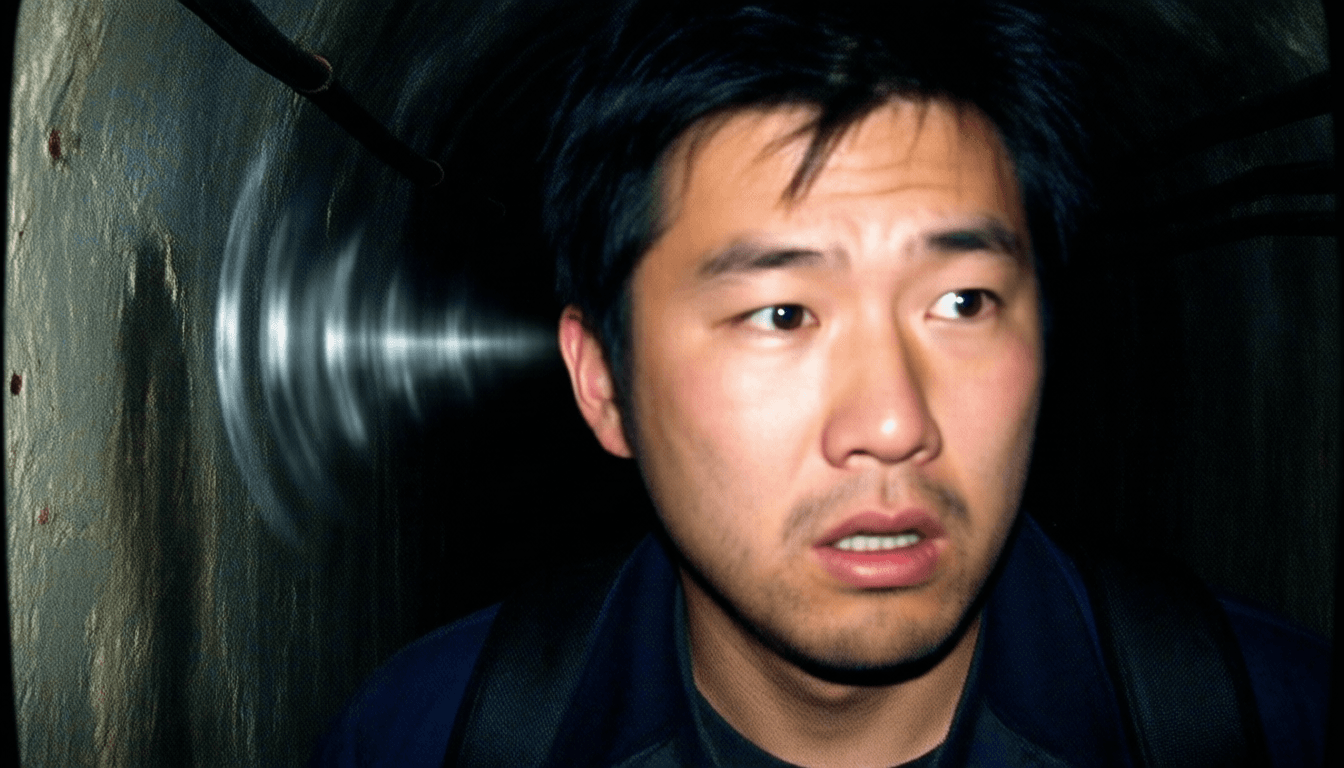
The music box melody surged. It rang out loudly, playing perfectly in reverse, culminating in a crescendo before abruptly stopping. Then came a low, guttural sigh. It wasn't merely reversed; it seemed to ‘suck’ sound from the very air, a vacuum pressing on my eardrums, causing intense pain and dizziness. As I fumbled for the emergency release, the surrounding air dropped to an impossibly cold temperature. The heavy, old brass latch of the laundry chute, previously rusted and immobile, began to vibrate violently, the metal creaking and groaning under immense, invisible pressure. The stressing sound of metal from ‘inside’ the chute boomed, but the vibrations only began after the sound was heard.
Suddenly, a cold, non-physical pressure pushed hard against my back. It wasn't just a chill; it was a direct, physical shove, yet the impact felt ‘delayed,’ like a subtle ‘aftershock’ of a force that had already occurred. Simultaneously, the old wood in the alley wall behind the laundry chute began to split and crack. A loud ‘crack’ was heard ‘before’ the visible fissures appeared. The music box melody reached its peak, playing both forwards and backward simultaneously, tearing apart my perception of temporal causality. The pushing force grew stronger, propelling me towards the unstable, weakened entrance of the laundry chute. It was actively being driven not by spectral forms, but by localized, physical manipulative forces defying the normal flow of cause and effect. The danger was now beyond mere psychological distress; I was at risk of being forcibly pushed into a deep, dark vertical shaft by an entity manipulating reality itself. I braced myself against the invisible force, my own breath echoing ‘seconds before’ I actually inhaled.
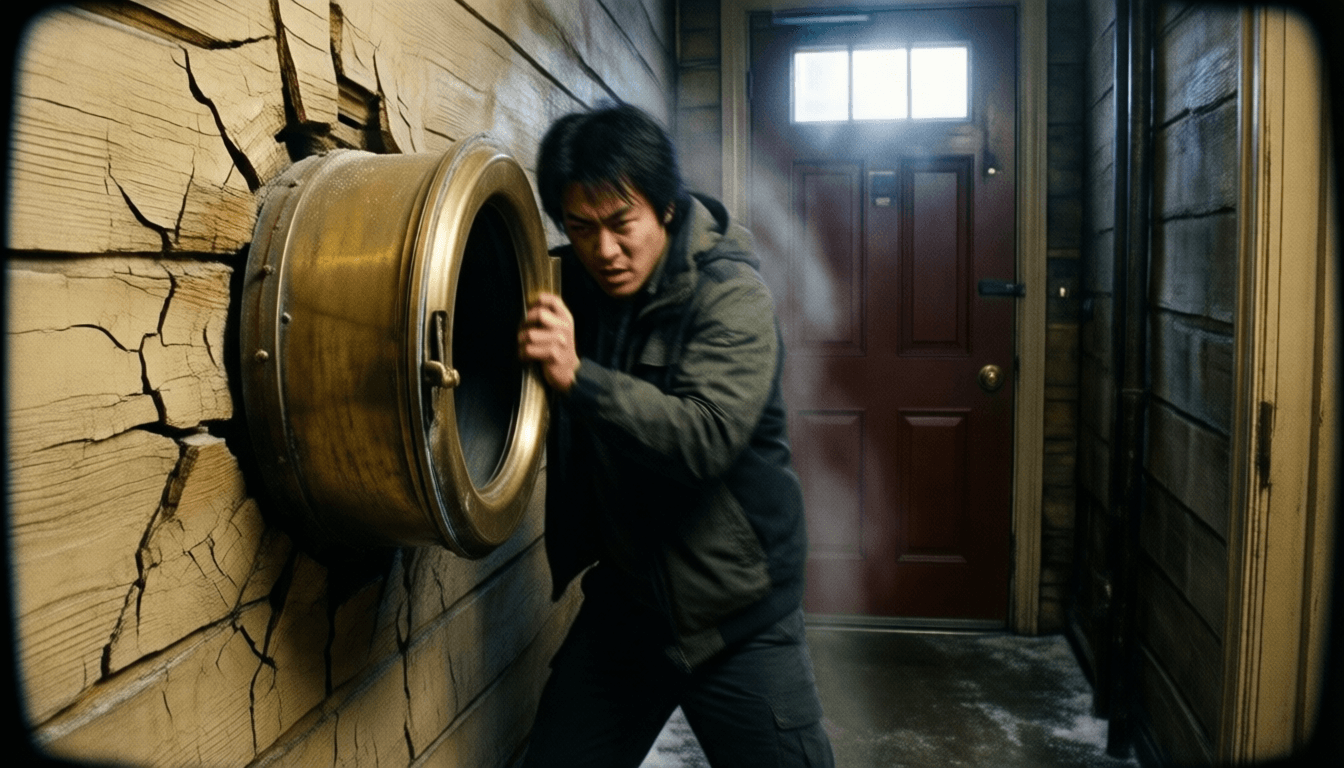
With desperate adrenaline and the fortunate snagging of a recording device in the latch, I managed to force open the heavy door, stumbling out of the alley, bruised and disoriented but alive. The incident was not reported to the hotel; there would have been no way to explain it. Back at the research facility, the recorded data was meticulously reviewed. The audio files were undeniable: sounds amplifying instead of decaying, echoes preceding original sounds, and corresponding noises heard distinctly ‘after’ physical impacts occurred. Thermal imaging captured impossible temperature drops and rapid, directional movement of cold masses defying natural convection.
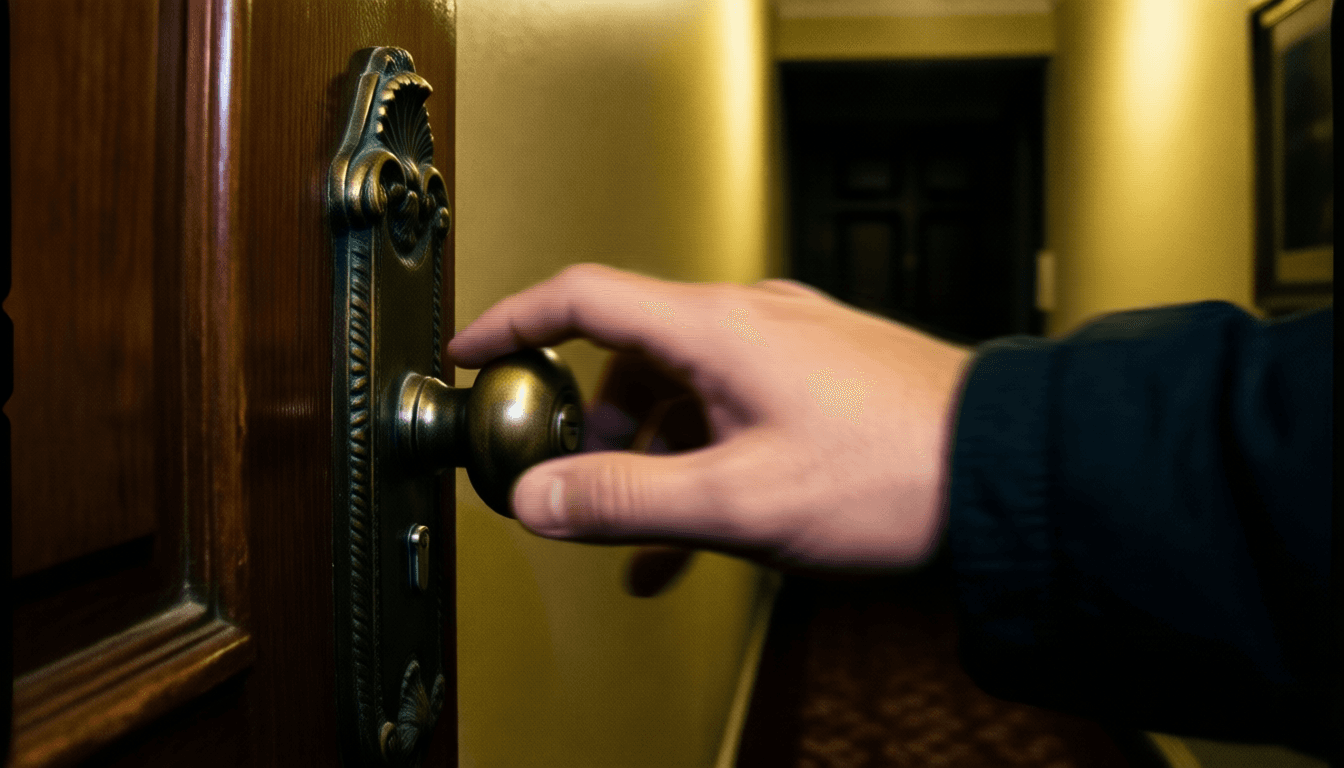
However, the most shocking evidence was a short video clip recorded on my bodycam just before my escape. In the clip, the faint shadow of my hand was seen reaching for the door handle, but the shadow appeared just a fraction of a second ‘before’ the movement of my hand. It was a momentary, almost imperceptible distortion of light and time. This experience left me with a deep, chilling terror not of ghosts, but of a fundamental vulnerability within the very fabric of reality. Weeks later, I began to experience subtle ‘pre-echoes’ in my daily life: a faint premonition of a car horn before it actually sounded, or the sensation of a word being spoken briefly before it left my mouth. The precise mechanism of McGregor's Glitch remains unexplained, but the undeniable evidence from the Stanley Hotel suggests that in certain places, the universe sometimes remembers events not as they happened, but as they ‘will’ happen, or perhaps as they ‘never should have happened.’ I now understand that some truths are beyond unpleasant; they are hostile to the very concept of existence.
[ CLASSIFIED VERDICT ]
[ACCESS LOG - SOURCE FILE]
The Stanley Hotel, famously known as the inspiration for Stephen King's 'The Shining,' is home to a peculiar paranormal phenomenon known as 'McGregor's Glitch.' This isn't just a typical ghost story; it involves 'reversed acoustics' where sounds defy the laws of time, playing backward or growing louder before disappearing, representing a persistent localized fracture in the very fabric of causality.