The Song of the Weeping Riverbank
In 2012, the first alarm sounded. Jan Kowalski, an experienced kayaker, vanished without a trace while exploring a particularly remote stretch of the Narew River upstream near Szumowo. No overturned kayak, no distress signal. He simply evaporated. Two years later, Monika Szczygieł, a young ornithologist researching migratory bird routes in the same area, disappeared from her campsite. Her field notes were neatly organized, her tent undisturbed. However, a small puddle of unusually clear water, unfitting for the dry weather, had collected on her sleeping bag. Local authorities attributed both incidents to tragic accidents, unpredictable currents, or wild animals, but no evidence was ever found.
Beyond official reports, a pattern emerged. Over several years, a local online bulletin board preserved sporadic posts about "strange singing" heard from the Szumowo bend. This was especially true during the spring thaw and late autumn's foggy days. Descriptions ranged from "like a woman's humming" to "a strange, sorrowful melody that takes your breath away." One post in particular, made in 2015 by an anonymous user named 'StaryRybak' (Old Fisherman), now reads as an eerie warning. He wrote succinctly: "Do not listen to the river's song from the weeping riverbank. She takes what she fancies. The water is not always what it seems." The correlation between the disappearances and these periodically reported enigmatic auditory phenomena was too precise to dismiss as mere local superstition, eventually drawing my attention.
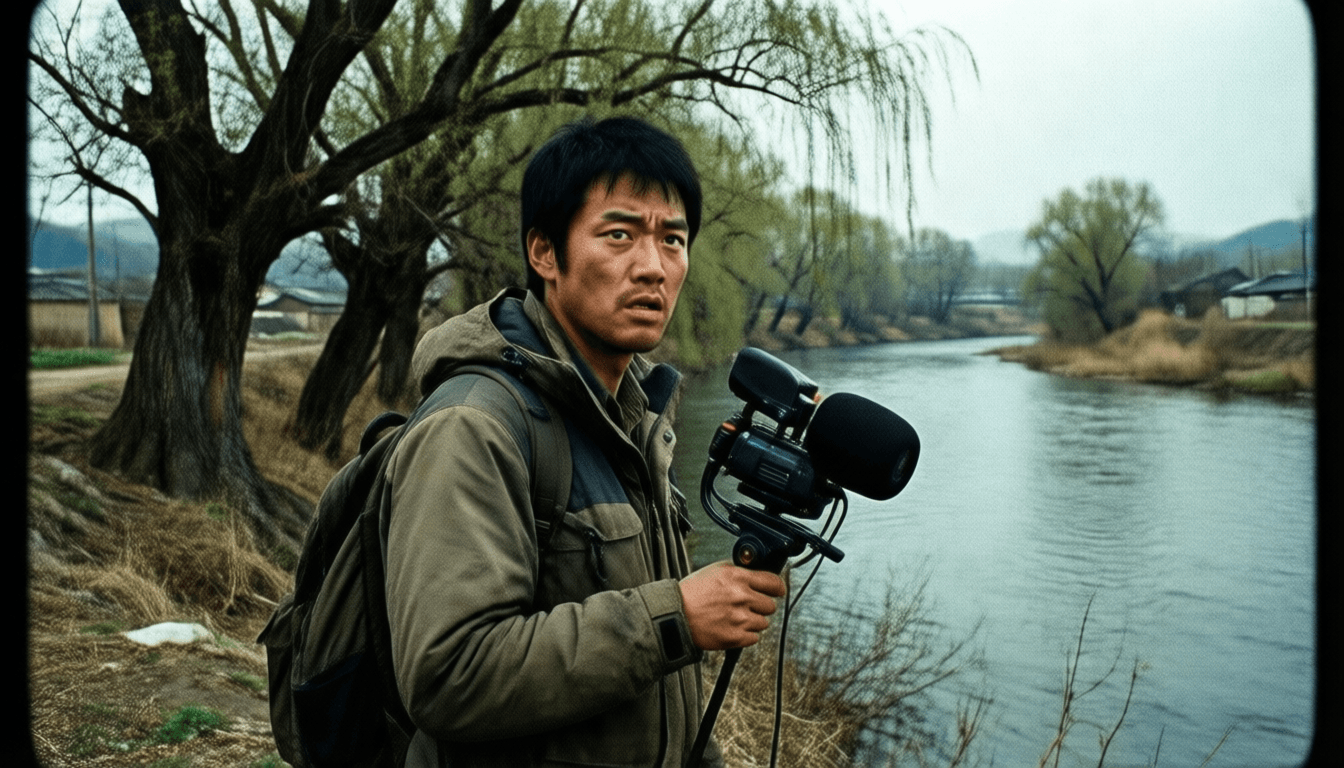
The Szumowo bend, locally known as 'the Weeping Riverbank' for reasons no one could accurately recall, appeared outwardly serene and peaceful. My arrival was deliberate. Late autumn, approaching dusk, carefully chosen to coincide with StaryRybak's warning and the reported period of activity. I packed essential survival gear, including a high-performance directional microphone, thermal camera, portable sonar, and waterproof camera.
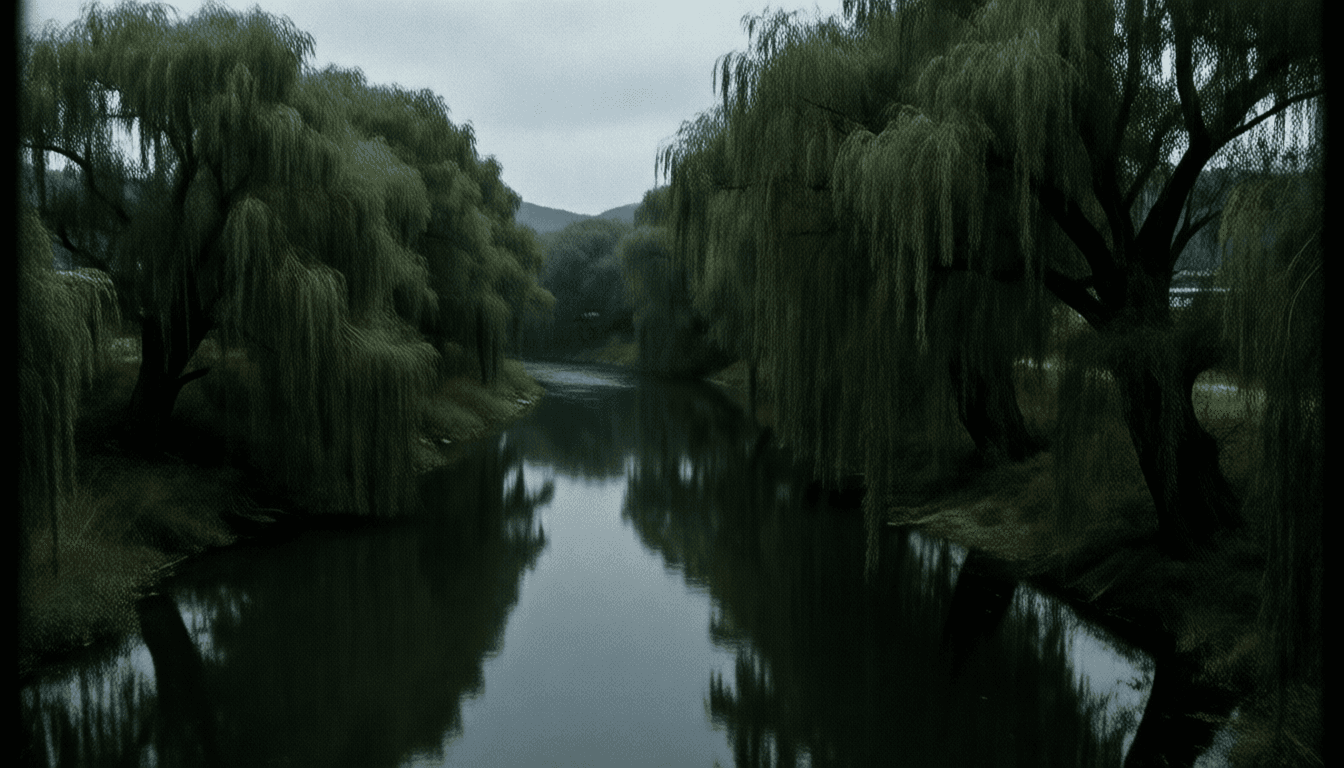
The first physical characteristic that struck me was the silence. Not nature's quiet. Despite the surrounding wetlands and forest, the air felt heavy, as if sound-absorbing material had been applied, swallowing all noise. Birdsong sounded muffled, and even the rustling of leaves was strangely subdued. The current in the river bend flowed unusually slowly, and the drooping branches of ancient willows, like skeletal fingers, submerged into the water, creating deep, dark pools. The surface of the water was disturbingly calm, perfectly reflecting the dying light of the sky like a mirror, its planar perfection eerily unnatural. My sonar indicated a depth far greater than the typical riverbed in this area, as if plunging straight into an unfathomable abyss. Intermittent cold drafts momentarily froze the surrounding air before dissipating.
As I began setting up my recording equipment by the water's edge, a subtle, almost imperceptible hum began. It was a low, resonant sound. Like the vibration of a tuning fork underwater, felt more in the body than heard with the ears. Convinced of equipment malfunction, I checked the microphone levels, but the readings were stable.
The hum intensified, subtly shifting in pitch. It wasn't continuous; it pulsed as if breathing. I described the phenomenon into my own recorder, but the echo of my voice seemed to return seconds later, or distorted, as if passing through an abnormally dense medium. Soon, distinct fragments of a melody emerged from the hum. A series of drawn-out, sorrowful, yet undeniably beautiful notes. It wasn't the wind, nor was it the sound of wildlife. It was a song.
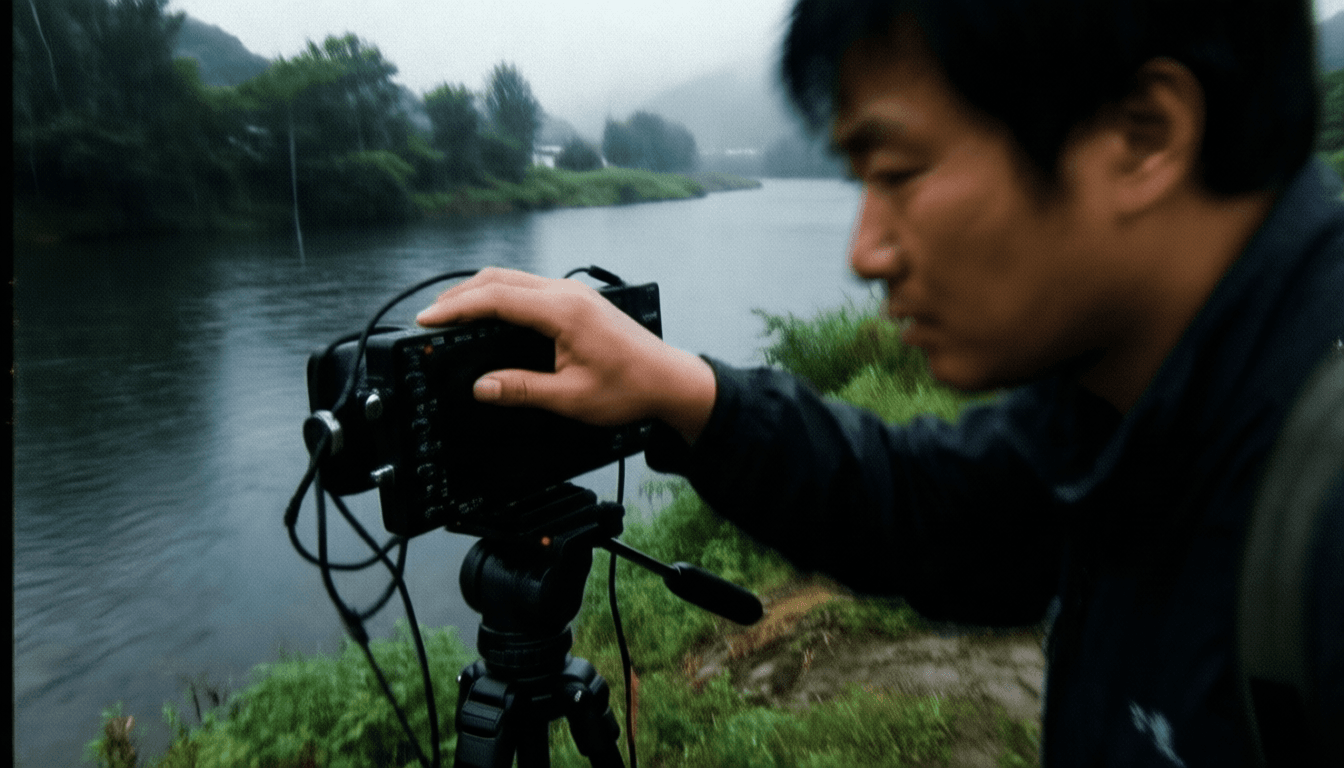
The most unsettling aspect was its origin. The sound didn't seem to emanate from a specific point but rather from all surfaces of the water around the river bend simultaneously. As I moved, the melody maintained a consistent, enveloping quality, as if following me. I dropped a small stone into the water. The ripples spread normally, but in the center of the largest pool, a subtle, almost imperceptible current began to swirl against the river's flow. A fallen leaf was drawn into this vortex. The song seemed to grow louder. My thermal camera showed no anomalous heat signatures, but the water itself registered incredibly cold temperatures in specific localized areas, far lower than the surrounding river. I tried to rationalize it: peculiar acoustics of the terrain, unique currents, an auditory illusion born of suggestion. But its consistency and the palpable intentionality of the sound defied all explanation. It drew me in. An inexplicable urge to understand the source of its melancholic beauty pressed strongly upon me. The air grew colder, a dampness permeating to the bone, less like fog and more like a deep, ancient chill. Birdsong had ceased entirely, and the forest around the bend fell silent, leaving only the water's melody.
I was irresistibly drawn to the edge of the largest, most still pool, where the maximum depth had been recorded. The song was now overwhelming. Like the allure of a siren, it echoed directly in my mind, bypassing my ears and stripping away all caution. It was both lament and promise, an irresistible invitation. My hands trembled, not from fear, but from an intense, almost spiritual longing to join the source of this sound. My rational mind screamed, but the mesmerizing melody was stronger. I knelt at the edge, my fingers almost touching the impossibly dark water's surface. The song reached its climax. An ecstatic, agonizing crescendo.
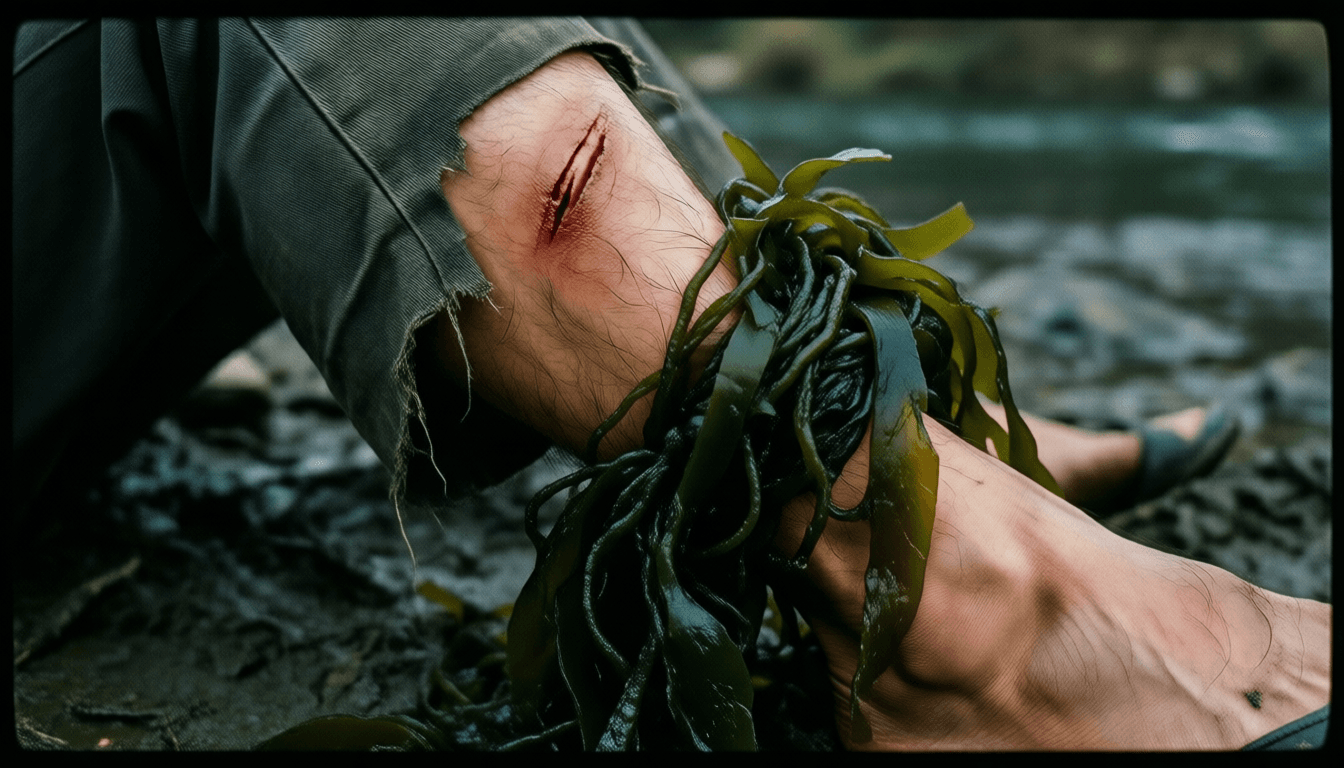
And then, without warning, the water moved. It wasn't a ripple, nor a current. A localized stream of water suddenly surged from the previously still surface. A column of water, as thick as an forearm and incredibly strong, almost viscous, shot up before my eyes, then rapidly lashed forward. It wasn't a wave. It was an independent, almost deliberate force, moving with an impossible intensity that defied all logic, faster than any current. It struck my outstretched arm like a solid impact, the cold, slimy blow knocking the breath out of me. I stumbled, losing my footing on the wet riverbank. The moment I fell, my other hand instinctively shot out, and for a terrifying split second, I felt something grab my ankle from beneath the water. It was a cold, slimy, immensely powerful grip, pulling with incredible force. It wasn't a root, nor a fish. It was… organic yet fluid. I let out a raw, terrified scream, struggling violently, and with the horrific sound of tearing fabric from my pants, I yanked my leg free from the unseen grasp. I scrambled backward away from the water, scraping my hands and knees on the rough earth. I gasped for air. The song, which had been so beautiful, transformed into a low, intense shriek, seemingly echoing from the depths of the pool, then abruptly cut off. The water's surface immediately returned to its unnatural stillness, reflecting the encroaching darkness of the night like polished obsidian.
I was adrenaline-fueled, I fled. I didn't look back until I was completely clear of the bend. My leg throbbed, and shallow cuts bled from where the unseen grip had torn my skin. Fortunately, most of my recording equipment was intact, though covered in mud. Back at my makeshift base, I reviewed the audio files.

Between my ragged breaths and the sounds of my desperate escape, the recording captured the eerie crescendo of the song, the wet 'thwack' of the water column hitting my arm, my scream, and the subsequent violent, chilling shriek. But beneath all that chaotic noise, almost imperceptibly faint, there was something else. Subtle, rhythmic clicking and gurgling sounds, distinctly different from natural water movement. They seemed to form a pattern just before the attack, as if from the depths, like a distorted language or perhaps a predatory, mocking laugh.
Later, examining my torn pants, I found it. A single strand of long, dark emerald-green seaweed entangled in the frayed fabric near my ankle wound. It wasn't soft and slimy like common river algae; it was incredibly tough and fibrous. And strangely, when I gripped it, a faint, cold, mineral-like, almost metallic smell, not the scent of decay, clung to my fingers. I couldn't identify the species. It was unlike any recorded in the Narew River basin.
I categorized my report as 'Unexplained underwater acoustic phenomena accompanied by aggressive physical manifestation.' The conclusion remained inconclusive due to the lack of concrete scientific evidence of the entity. I did not include the word 'Rusalka.' Yet, the chilling horror lingered. The 'Weeping Riverbank' was not merely a place of peculiar acoustics or dangerous currents. Its waters were alive, possessing an ancient, predatory intelligence capable of weaving a hypnotically beautiful song to strip away will, and then reaching out with impossible physical force to snatch its victims. StaryRybak's warning was no folk tale. It was an accurate observation of a deadly, inexplicable truth. The Weeping Riverbank sings, and sometimes, it touches you. And once it touches you, a part of you will forever be tied to its cold, dark abyss.
[ CLASSIFIED VERDICT ]
[ACCESS LOG - SOURCE FILE]
This story is based on the legend of the 'Rusalka,' a water nymph or spirit appearing in Eastern European folklore. Rusalkas are known to lure people near rivers with their beautiful songs and drag them into the water, with a common belief that the spirits of drowned women transform into Rusalkas. They primarily inhabit rivers and lakes, appearing on spring and summer nights to enchant people.