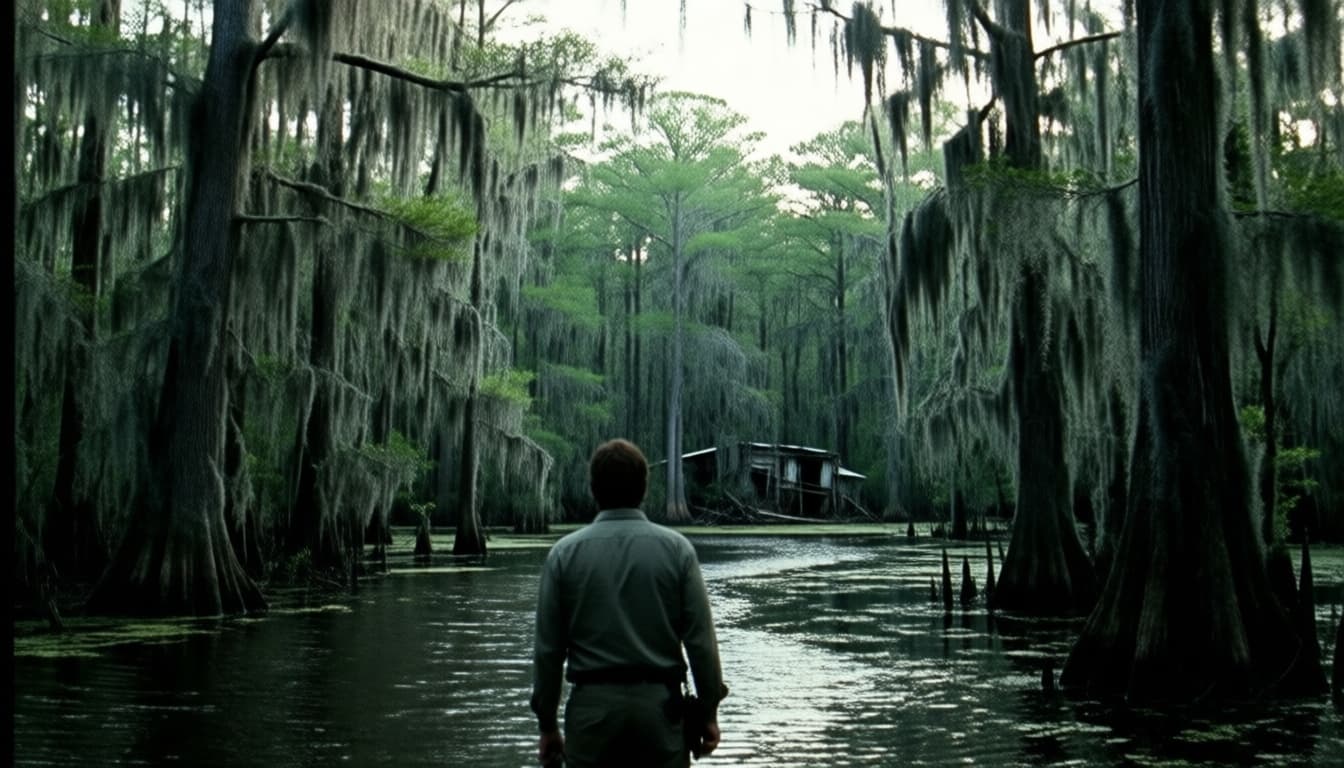
The Silent Void of Cotton Valley Swamp
For decades, the whispers had persisted, not just local hearsay. In the police archives of rural Alabama counties—Clark, Washington, Monroe—unexplained livestock deaths and disappearances were logged as "missing, presumed deceased," yet unofficial margins hinted at something unknowable. By the early 2000s, internet forums and cryptid sighting websites began to feature chillingly consistent accounts: isolated farmhouses near dense woodland abandoned due to "something white and moving silently." This entity left behind perfectly exsanguinated animal carcasses, not a drop of blood, not a discernible wound. A series of disappearances in the mid-90s, particularly after summer storms around the infamous "Cotton Valley Swamp," solidified the legend. What linked all these incidents was the absolute impossibility of description. Phrases like "too fast to properly see," "it was like a hole torn in the air," "a solid absence." This was no mere animal. It was a presence, and the physical traces of its unreal existence were undeniable.
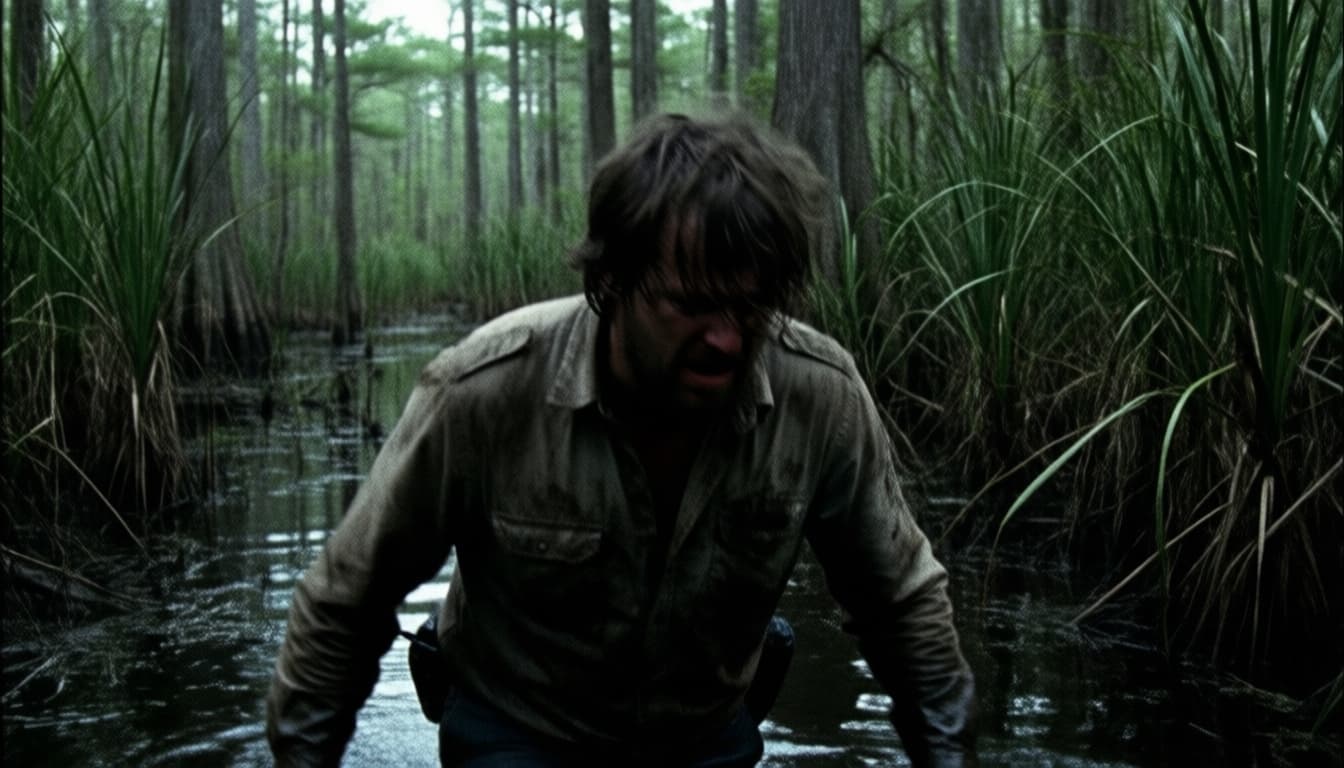
My investigation led me to the edge of the Mobile-Tensaw Delta, a forgotten stretch still referred to by locals as "Cotton Valley Road." Asphalt crumbled to dirt, then vanished into thick undergrowth—a perfectly forgotten entry point into the rumored epicenter. The air hung heavy with the damp scent of decaying leaves and stagnant water. Pine needles underfoot formed a deep, quiet carpet, muffling my steps. In the suffocating heat, the unnerving lack of sound was immediately apparent. No cicadas, no birdsong, just the lazy drone of distant mosquitoes. My equipment was minimal: a directional microphone, thermal camera, GPS, and a high-lumen tactical flashlight. The goal was to establish a base camp near a ruined logging cabin, an isolated foray deep enough into the rumored domain to be undisturbed. I navigated precisely through kudzu vines and swamp cypress, each careful step sinking into the squelching mud. The deeper I went, the more profound the silence became, feeling like a physical presence pressing in from all sides.
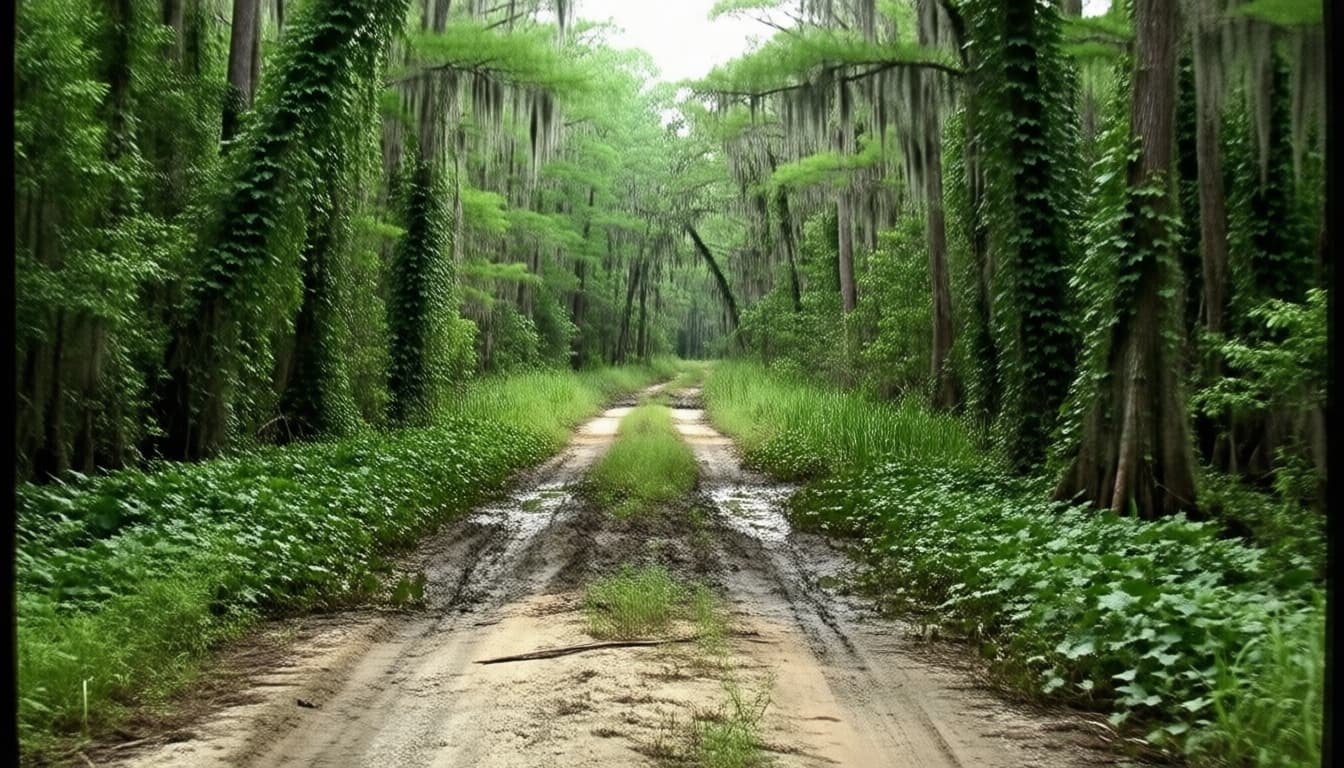
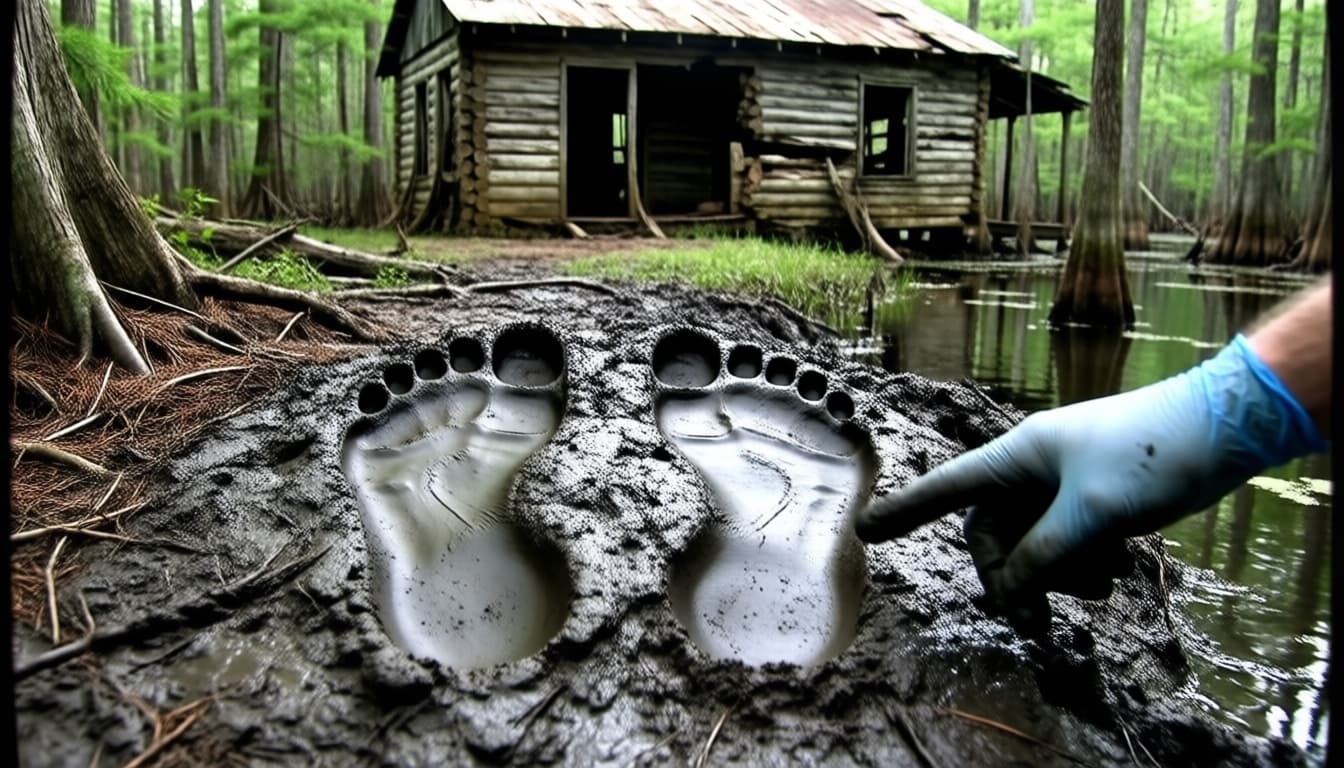
Deep within the forgotten woodlands, the anomalies began subtly. The already heavy air grew denser, each breath a conscious effort. My directional microphone, calibrated to catch the faintest rustle of wildlife, initially recorded only static, then conveyed long stretches of perfect nothingness—an auditory void more unnatural than any noise. I found a small, winding creek; parts of its surface shimmered, eerily distorting the faint light filtering through the overhead canopy. For a moment, I was certain I saw the water flowing upstream, only for it to return to normal the instant I focused. Deeper still, near the dilapidated cabin, I found footprints in the wet earth. They were unsettlingly large, spaced as if bipedal, yet massive, smooth indentations with no discernible toes or heels. The tracks simply stopped mid-stride, as if the entity had vanished from that spot. Moments later, a faint, metallic odor, like ozone mixed with faintly decaying organic matter, wafted intermittently, disappearing as quickly as it appeared. The thermal camera, usually a reliable tool, began displaying erratic, ghostly heat signatures—intense cold pockets or impossibly hot spikes that appeared and vanished before I could reorient. The psychological weight of being alone in an environment where even basic physical laws seemed to waver grew steadily. The forest was actively listening, and I was its sole sound.
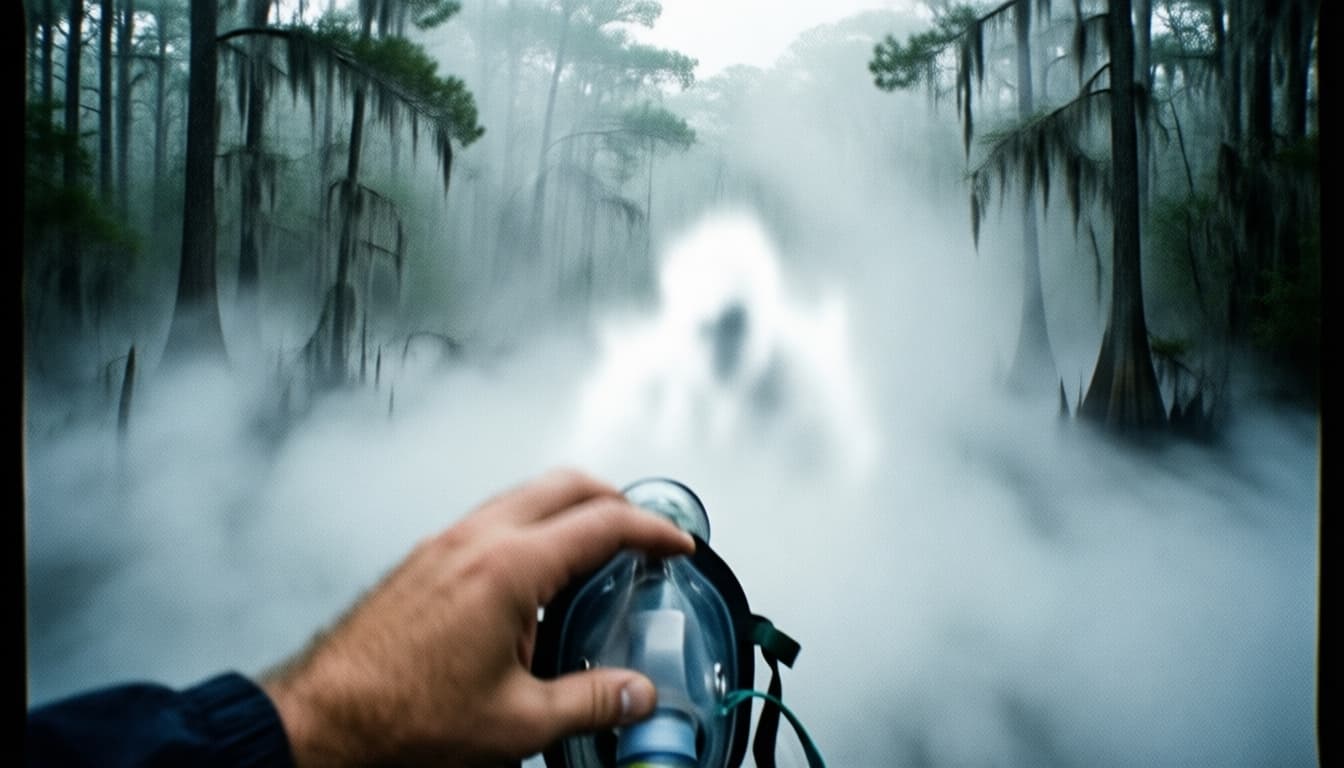
It was in the deepest part of Cotton Valley, near a small, strangely clear circular pond ringed by ancient cypress trees, that I found it. A large bone fragment, half-buried in the mud—impossibly smooth, dense beyond any animal bone native to the region. As I crouched to examine it, the ambient temperature plummeted, and a localized, impossibly thick fog rolled in from between the trees, swallowing what little light there was. My flashlight beam became a useless, blunt shard. The air grew impossibly thin, making breathing a struggle. As I fumbled for my emergency oxygen, a sudden, violent crack echoed through the mist—not thunder, but the sound of something breaking the laws of physics.
Then I saw it. A movement within the swirling white mist. Not a creature, but a fissure appearing in my vision. Large, fluid, impossibly fast, and utterly silent. It was white, but not the white of fur or bone; a perfect, unsettling absence of color, a void sliding through space, defying inertia. My rational mind screamed hallucination, yet the cold, sharp impact that slammed into my side was terrifyingly real. I was thrown against a moss-covered cypress, all air knocked from my lungs. Before I could regain my bearings, "it" was on me, or rather, around me. Not claws or teeth; it was a crushing pressure, as if by an invisible, impossibly strong hand. I felt its "surface"—cold, smooth, utterly alien—pressing against my face. The tactical flashlight I held flickered wildly, its beam bending and twisting around the impossible white, showing not its form, but the distortion of reality around it. It moved through me, leaving behind a searing phantom cold and profound disorientation. I thrashed desperately, feeling my ribs scream under the unseen weight. The ozone smell was overwhelming, almost nauseating. I closed my eyes. Just when I was certain this was the end, the pressure vanished as abruptly as it began. But the fog remained, thick and disorienting. Blinded and terrified, I fled, hearing only my ragged breathing and a faint, high-pitched shriek that seemed to resonate from the air itself.
Hours later, disoriented and bruised, a deep, persistent ache in my ribs, I stumbled out of the woodlands. My equipment was gone, save for the camera, which recorded only static, unintelligible whispers, and that impossible shriek. The memory of that contact, that pressure, imprinted an indelible mark not just on my body, but on my mind. My investigation journal, once filled with precise observations, now contained only fragmented notes, repeatedly underlined: "Not an animal. Not a ghost. An anomaly." I sleep poorly now. The quiet of my apartment, once comforting, now feels like a prelude. I find myself watching shadows in darkened windows, certain for a moment that I glimpse something white and indistinct flash at the edge of my vision. The metallic ozone smell returns faintly but surely when the house is quietest. Sometimes, I find myself listening not for sounds, but for the absence of sound—a localized, unnatural silence, a subtle drop in barometric pressure before a room becomes too still. The White Thing was not a mere cryptid of the Alabama swamps. It was proof that there are seams in the very fabric of reality, and something can tear through them. And now, I know where one of those seams is, and I have felt its cold breath. The fear isn't of what will happen next, but the quiet, chilling certainty that it knows I saw it. And that its manipulation of physics might not be confined to a forgotten swamp.
[ CLASSIFIED VERDICT ]
[ACCESS LOG - SOURCE FILE]
For decades, rumors have persisted in rural Alabama counties, especially around the Cotton Valley Swamp, concerning sightings of an unidentified entity and unexplained livestock disappearances and deaths. Stories describe "something white and moving silently" leaving perfectly bloodless carcasses or vanishing with strange footprints, intermittently documented in local police records and online forums. This entity is often described not as a mere animal, but as an 'anomaly' that defies the physical laws of reality.