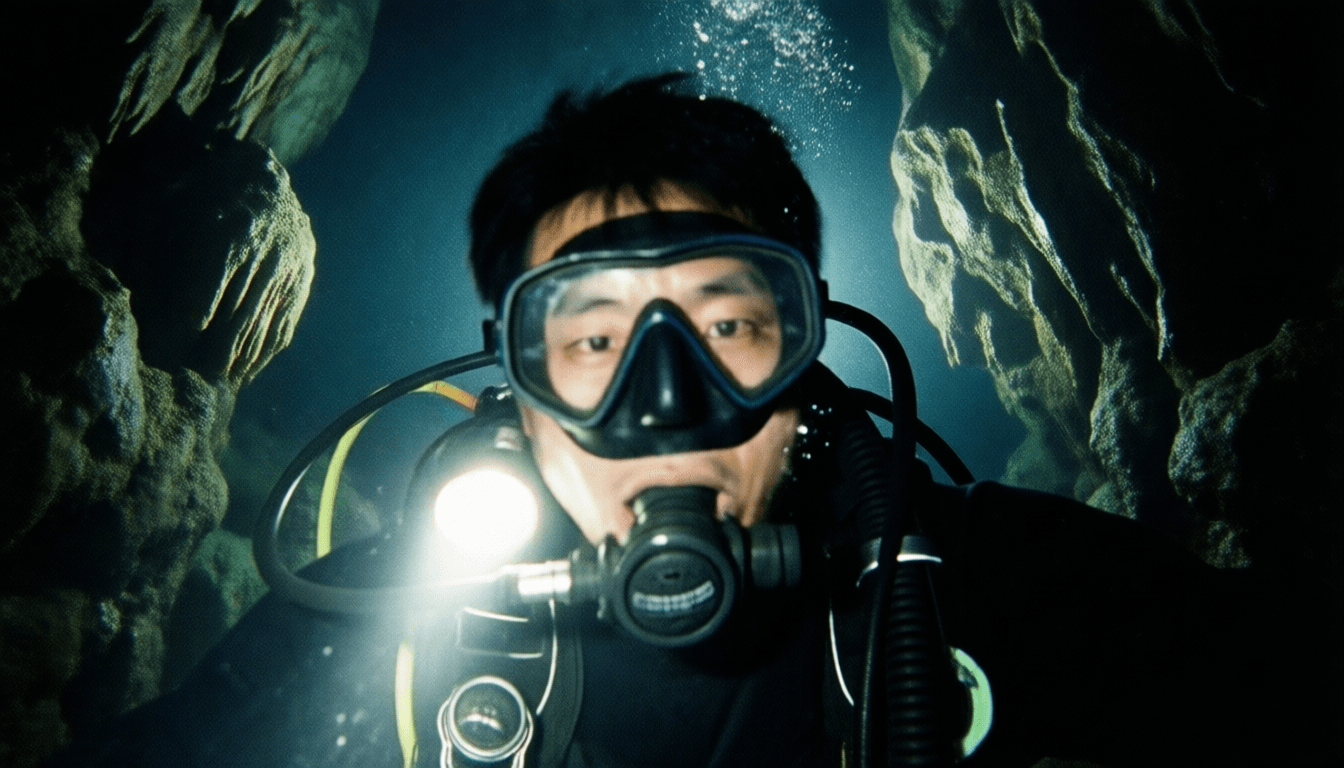
The Silence of Yongagul Cave
The official report from the Gyeonggi Provincial Police Agency regarding the 'Yongagul' cave system was clear: "unstable rock formations," "unpredictable rapid currents," "unexpected atmospheric conditions." Over the past five years, three disappearances occurred in the deep underwater sections of the cave, invariably after heavy rainfall. No bodies or personal belongings were ever found. Local media once sensationalized the incidents but eventually classified them as tragic but isolated accidents, and the interest faded.
However, untold records whisper a different story. Astronomical observations from late Joseon dynasty farmers, missionary reports during the Japanese colonial period, even fragments of oral traditions collected by rural folklorists in the 1970s. All these sources spoke of "hungry water currents" or "shadows that drink rivers" awakening from the hills whenever a long drought was broken by sudden downpours. Tales of offerings made to specific bodies of water and "serpents waiting for the sky to fall" also persisted. As these disparate records overlapped with modern disappearances, they led to the suspicion that this was not merely an accident but a pattern repeated across generations.
My approach was unemotional and cold-blooded. Equipped with professional diving gear, high-intensity underwater lights, and specialized sonar, I entered Yongagul Cave. The entrance, a jagged granite crevice, soon led to a vast, echoing space. The air was cold and humid, carrying the scent of old stone mixed with a faint, metallic smell, though my gas sensor detected nothing. My objective was to map the underwater passages and identify any structural anomalies or current patterns that official search teams might have overlooked.
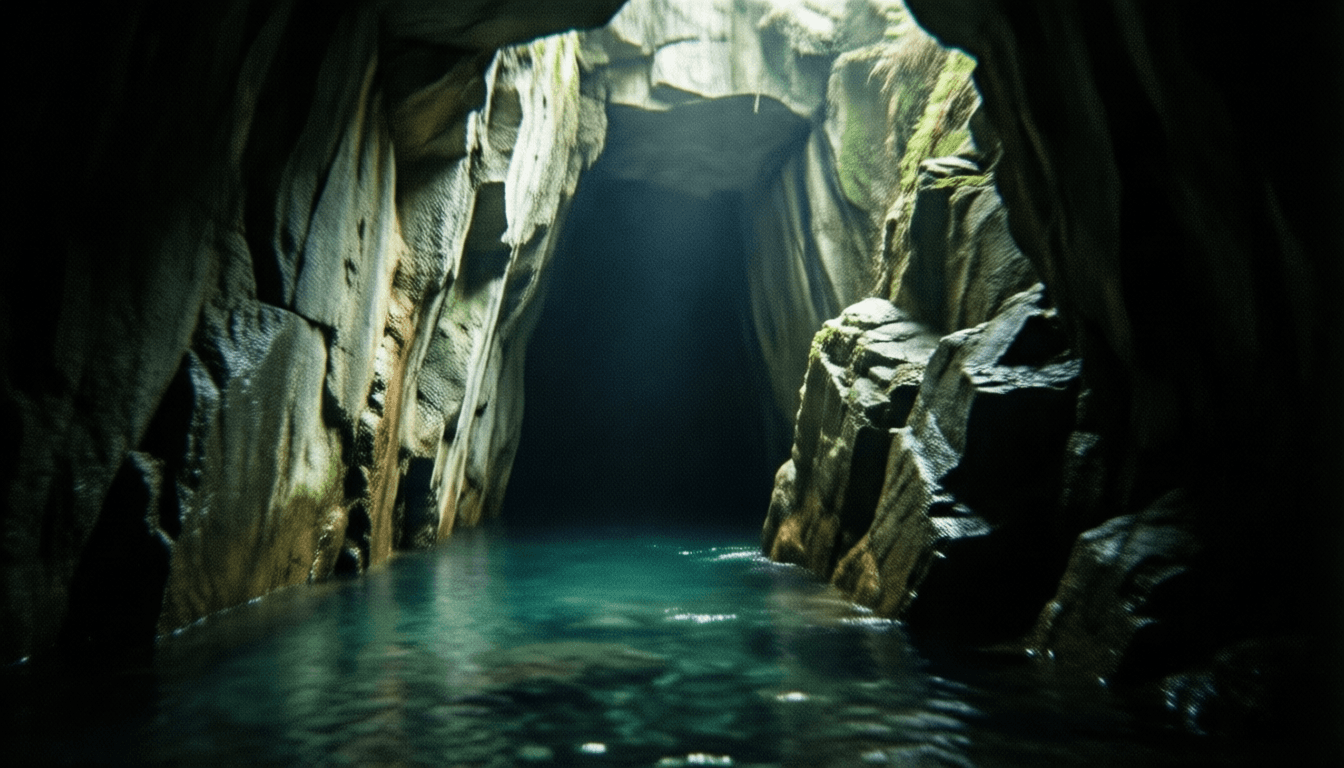
The initial sections were as expected: strong currents, complex rock formations, and pockets of trapped compressed air. But the deeper I went, beyond the traces of previous search teams, the environment subtly began to change. The currents, which should have been consistently strong due to recent rain, became erratic. In long, narrow passages, the current would suddenly abate to an eerie stillness, only to rage again mere meters ahead. My sonar constantly sent back anomalous signals of large, indistinct forms disappearing before they could be triangulated. It was too vast, too dark to ascertain anything definite beyond my immediate range of illumination.
The most unsettling anomaly was the silence. In an underwater cave system, there should always be the continuous flow of water, the subtle friction sounds of geological shifts, even the amplification of one's breathing. Yet here, there were moments of perfect, profound silence. It was as if even the air bubbles from my diving gear were swallowed whole. It wasn't merely quiet. It was the absence of sound, like a vacuum.
In one larger chamber, I witnessed a bizarre phenomenon. Ripples formed on the perfectly still surface of a lateral pool. But they didn't spread outwards from a droplet; instead, the ripples moved across the surface as if an invisible hand was trailing fingers. Then, the water in a small, deep crevice momentarily receded, revealing slick, dark rock walls for a fleeting instant, only to surge back with unexpected force. In that brief retreat, my diving light caught something in the murky water: a massive, dark shape, impossibly flexible, a flash of it disappearing into a deep, vertical shaft. It was far larger than any known cave-dwelling fish. My heart rate monitor spiked. I rationalized it as light refraction, an optical illusion caused by the blurry water, but the chilling silence that followed felt like a prelude to disaster.
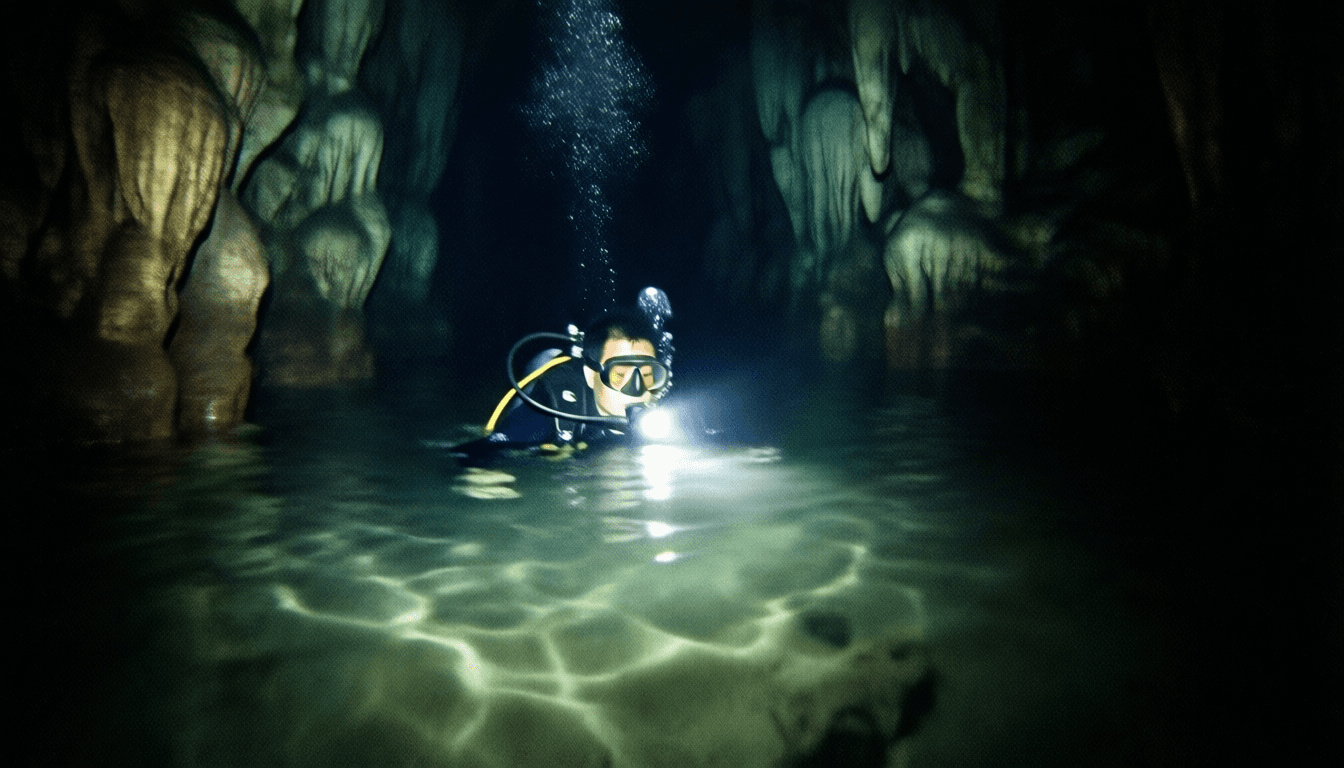
I was navigating a passage barely wide enough for my shoulders. At that moment, the true nature of the current revealed itself. Instead of flowing uniformly in one direction, it pulled at me erratically and violently, as if multiple opposing forces were at play. My sonar went wild, indicating an impossibly elongated object moving towards me at an incredible speed.
And then the water around me split.
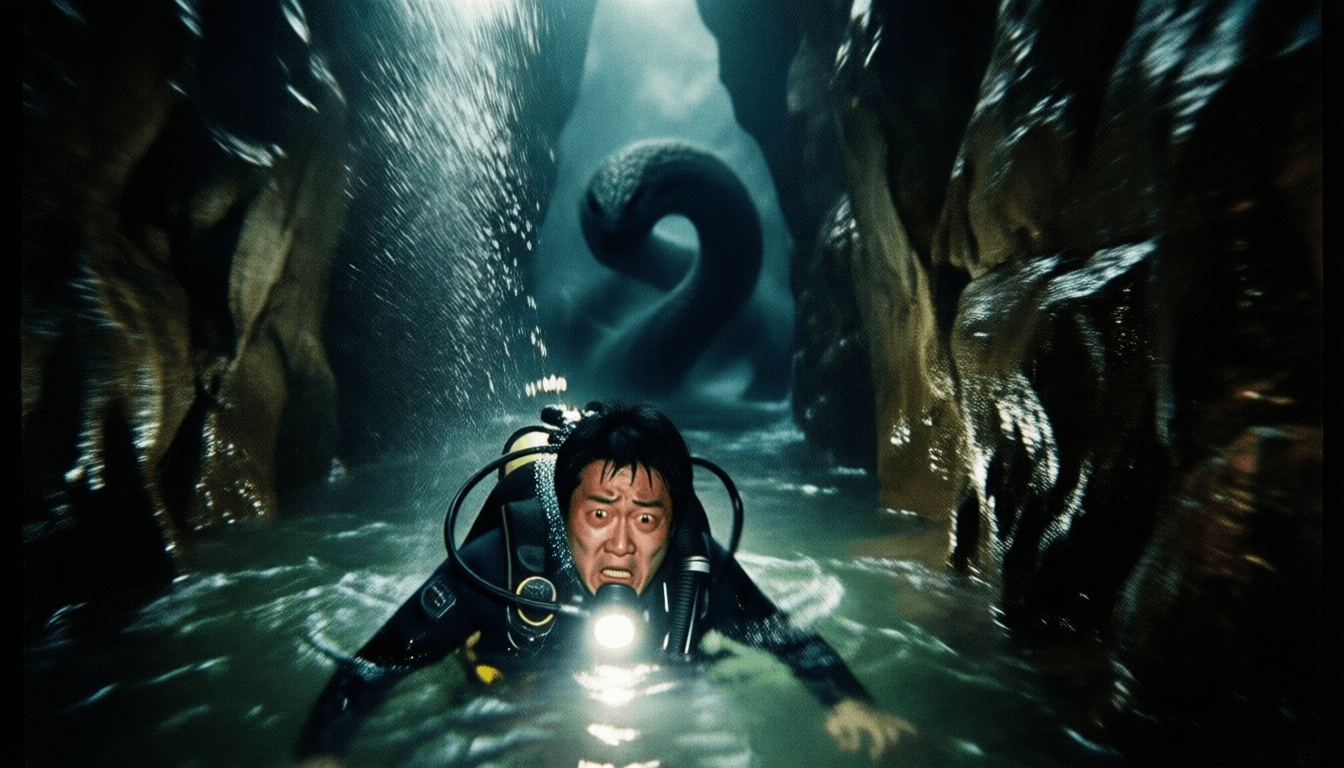
It wasn't gradual, or due to a sudden shift in flow. It was as if an invisible wedge had been driven through it; the water around me instantly parted to either side. For a terrifying, fleeting moment, a void of water formed, revealing slick, dark rock walls. In that impossible vacuum, I finally perceived its presence. A colossal, serpent-like form, far thicker than a human torso. It had scales that seemed to absorb rather than reflect light, and an disproportionately large head embedded with eyes that glowed with ancient, predatory intelligence.
It moved with a speed that defied the laws of water physics. There was no surge of water around it as it passed, only the terrifying thumping of my own heart threatening to burst. Before I could react, it was upon me. A sudden, immense force coiled around my legs, violently pulling me backward into the dark shaft. The pressure was unimaginable, its grip unrelenting. My diving mask was torn askew. Instinctively, I clawed at its scales. The rough, dry texture under my gloved hands. Then, I thrashed wildly with my remaining leg. The creature's grip momentarily loosened, and I seized the chance, desperately pulling free, leaving parts of my wetsuit, and perhaps more, behind. Disoriented, my light flickering, I scrambled upwards, searching for the upward current. The unseen predator pursued me like a relentless, silent shadow. I felt its body brush past me again. The sheer force of its movement created a localized micro-tsunami in the narrow tunnel. It wasn't merely trying to hold me. It was trying to crush me, to swallow me whole. My escape was not strategic; it was the blind, desperate flight of an animal.
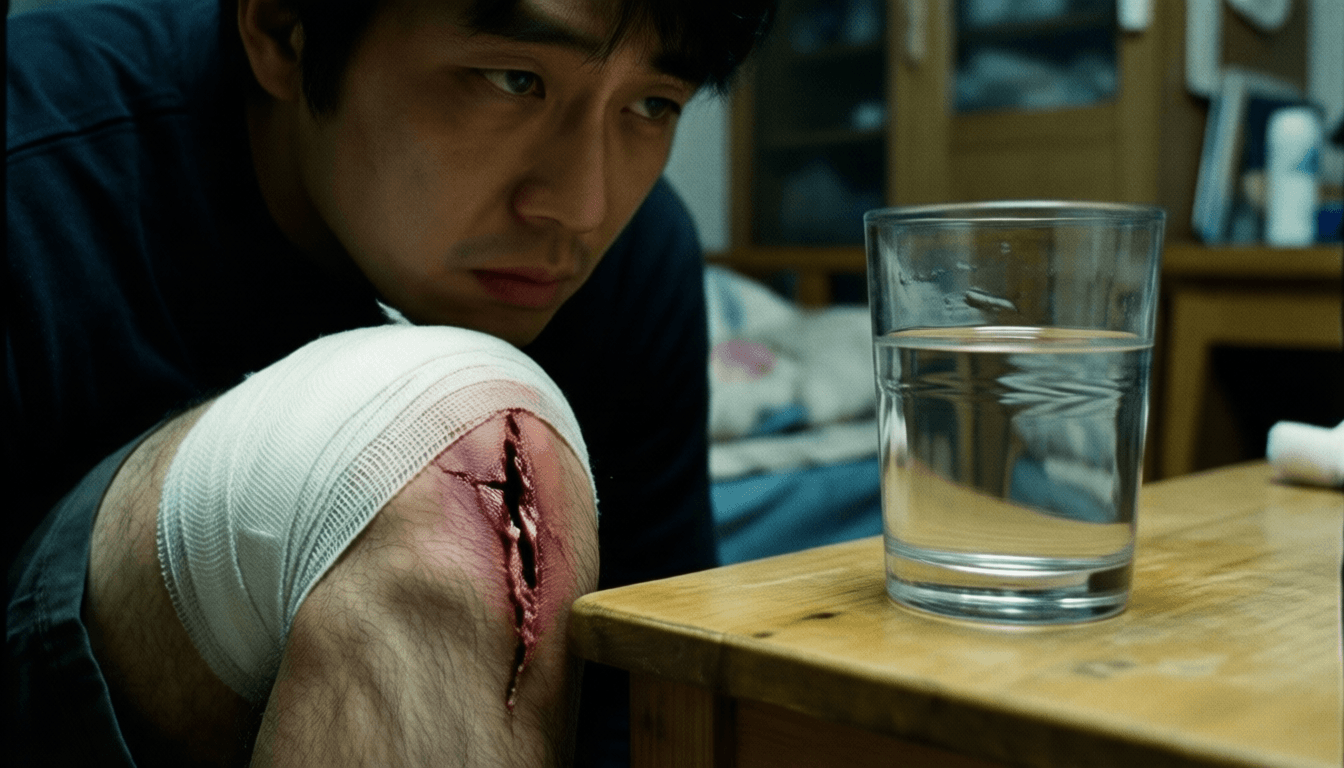
Hours later, I emerged battered and bruised. My body was covered in contusions, and my thigh bore a deep, gruesome laceration that no known marine life could inflict. My equipment was severely damaged, but the most unsettling find was a small, opaque, calcified fragment embedded in the outer shell of my diving gear. It was unlike any rock or bone fragment I had ever encountered. The forensic team dismissed it as an unknown mineral. My story of 'splitting water' and an 'impossible creature' was, predictably, attributed to hypothermia and trauma-induced hallucinations.
The Yongagul cave system was subsequently officially sealed by the local government due to "extreme geological instability." But the whispers among local residents grew more fervent. I now pore over ancient documents and fragmented legends of the Imoogi: a primeval dragon, trapped in a liminal state, forever yearning to be a dragon, forever hungry. I now understand the meaning of "hungry water currents" and "shadows that drink rivers." It was not merely a force of nature. It was a being.
Some nights, I stare blankly at a glass of water on my desk. If I watch the surface closely, for a fleeting moment, I detect an almost imperceptible tremor, a ripple that seems to move against the natural flow, as if something invisible has just passed through it. And though healed, the wound on my thigh sometimes throbs with a cold, deep ache, an illusory pressure like an unrelenting grip. I survived Yongagul, but I gained the chilling certainty that I did not merely encounter an unknown animal. I met an ancient entity, something beyond our understanding of natural laws, and it still waits in the darkness, its subtle influence extending far beyond the sealed entrance to its lair. The silence, I now realize, was not an absence. It was a coming sound.
[ CLASSIFIED VERDICT ]
[ACCESS LOG - SOURCE FILE]
This story is based on the Korean folklore surrounding the Imoogi. The Imoogi is a giant serpent or a proto-dragon that has not yet ascended to full dragon status, often living in water and enduring long periods and trials to become a true dragon. It is sometimes said to appear during heavy rains or in specific geographical features, either harming or helping humans.