The Shifting Petroglyphs of Bangudae
The first rumor about the Bangudae Petroglyphs in Ulsan was found on a Korean urban exploration forum. It was a short, almost ignored post titled 'Bangudae - Changing Shadows.' Written by a local fisherman, it claimed that when the waters of the Sayeon Dam reservoir receded after being submerged for a long time, the petroglyphs *changed*. Not eroded, but literally *altered*, he insisted. The angle of the hunter's arm would subtly shift, and the whale's eye seemed to gaze in a different direction. He posted a blurry photo of a whale petroglyph taken years ago, alongside another taken last month when the water level was exceptionally low. The details were subtly, impossibly, different. Other users dismissed it as pareidolia, water erosion, or tricks of light. However, the fisherman strongly asserted one detail: a small, previously nonexistent line on the flank of the largest whale petroglyph, like a fresh wound. This mark was absent from all official photos and archaeological sketches. It wasn't erosion; it was an *addition*. The thread was soon buried under more sensational topics, but the idea of ancient, static rock *changing* wouldn't leave my mind.
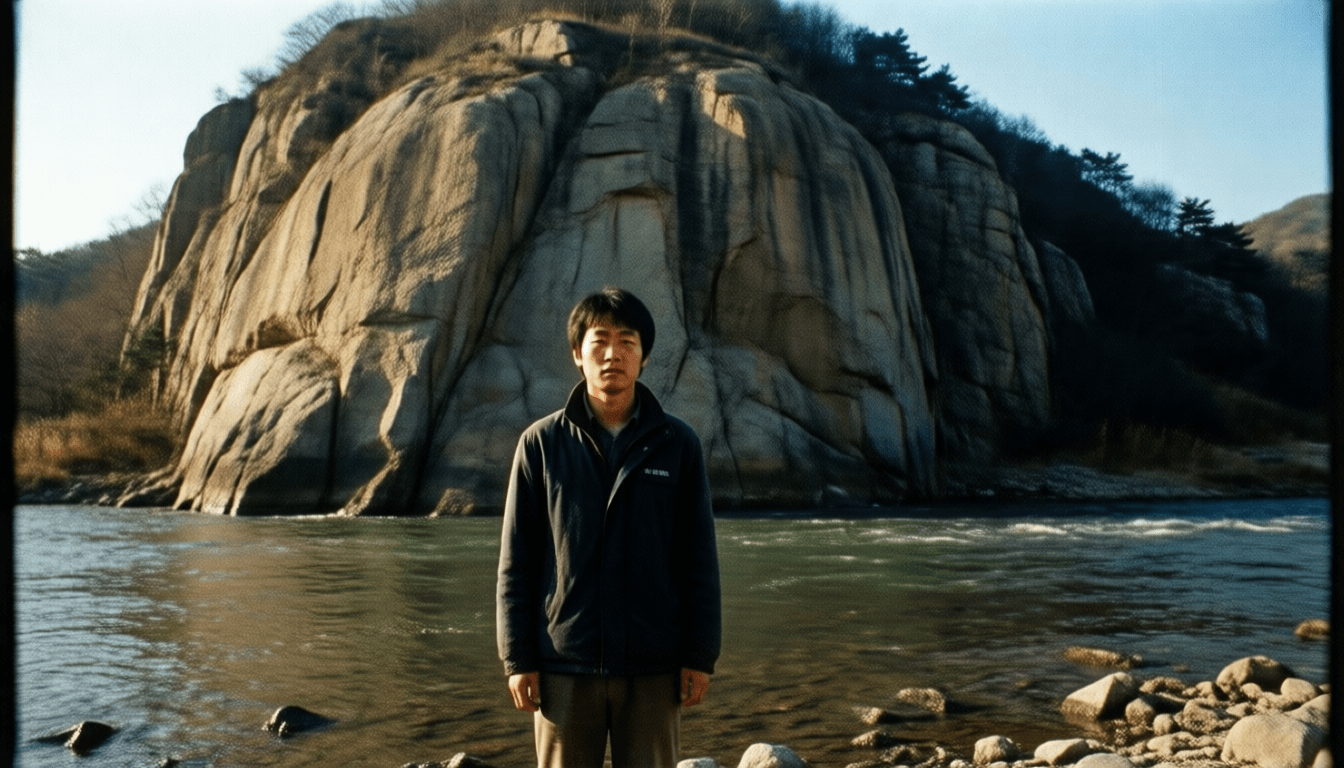
Access to the Bangudae Petroglyphs was granted during a period when the water level was unusually low due to dam repairs. The journey was a quiet descent into a forgotten pocket of history. The winding road along the Taehwa River was heavy with the damp scent of earth and the distant, majestic roar of the dam's water. Finally, arriving at the petroglyph observatory, the rock face I encountered was desolate yet imposing. A massive, anciently stained rock wall sloped towards the exposed riverbed. The famous petroglyphs—whales, hunters, turtles, deer—were carved into the dark grey stone with astonishing precision, their scale and craftsmanship inspiring awe. For the first few hours, I meticulously compared high-resolution photos with historical records, focusing on the giant whale the fisherman had mentioned. His described faint 'scar' caught my eye. It was an almost invisible hairline crack, entirely unlike any known erosion pattern. The surrounding air was eerily still, and the usual sound of the river was muffled. It was as if the very atmosphere of the river valley absorbed all ambient noise.
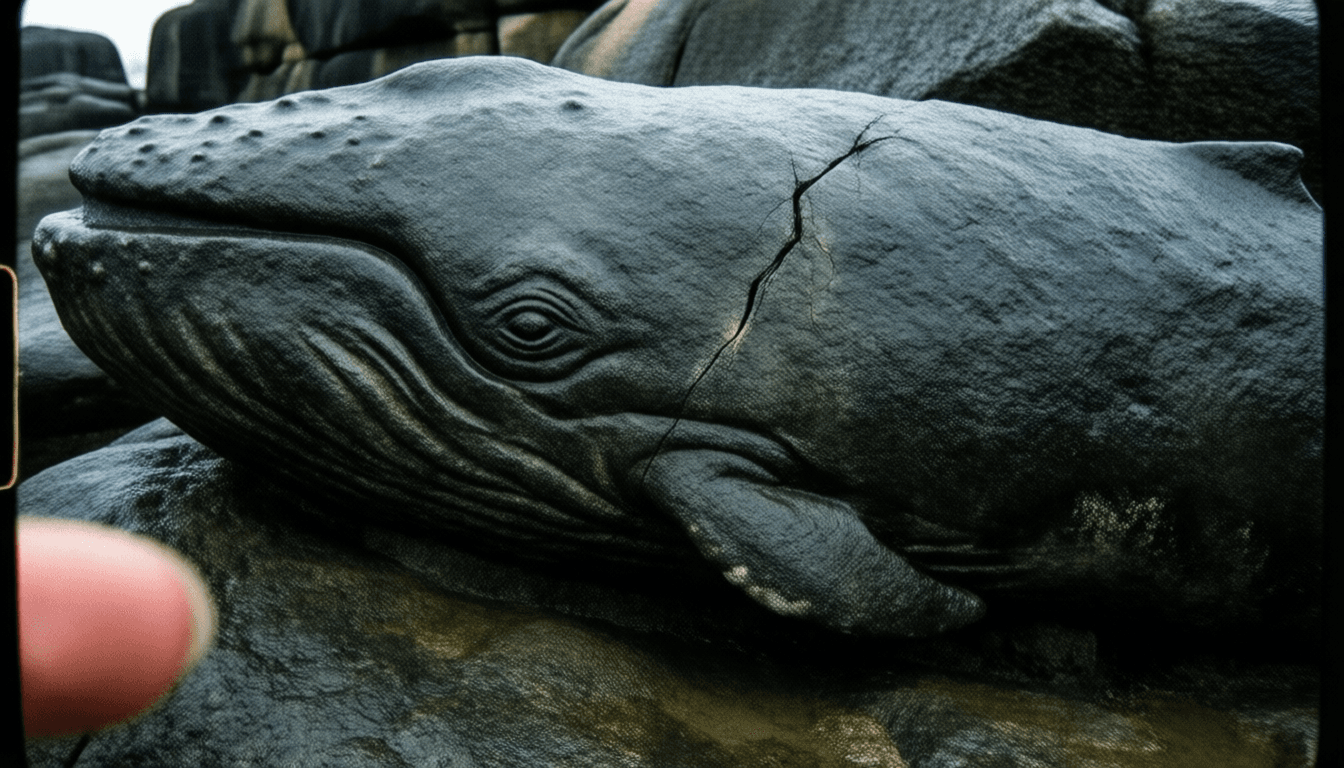
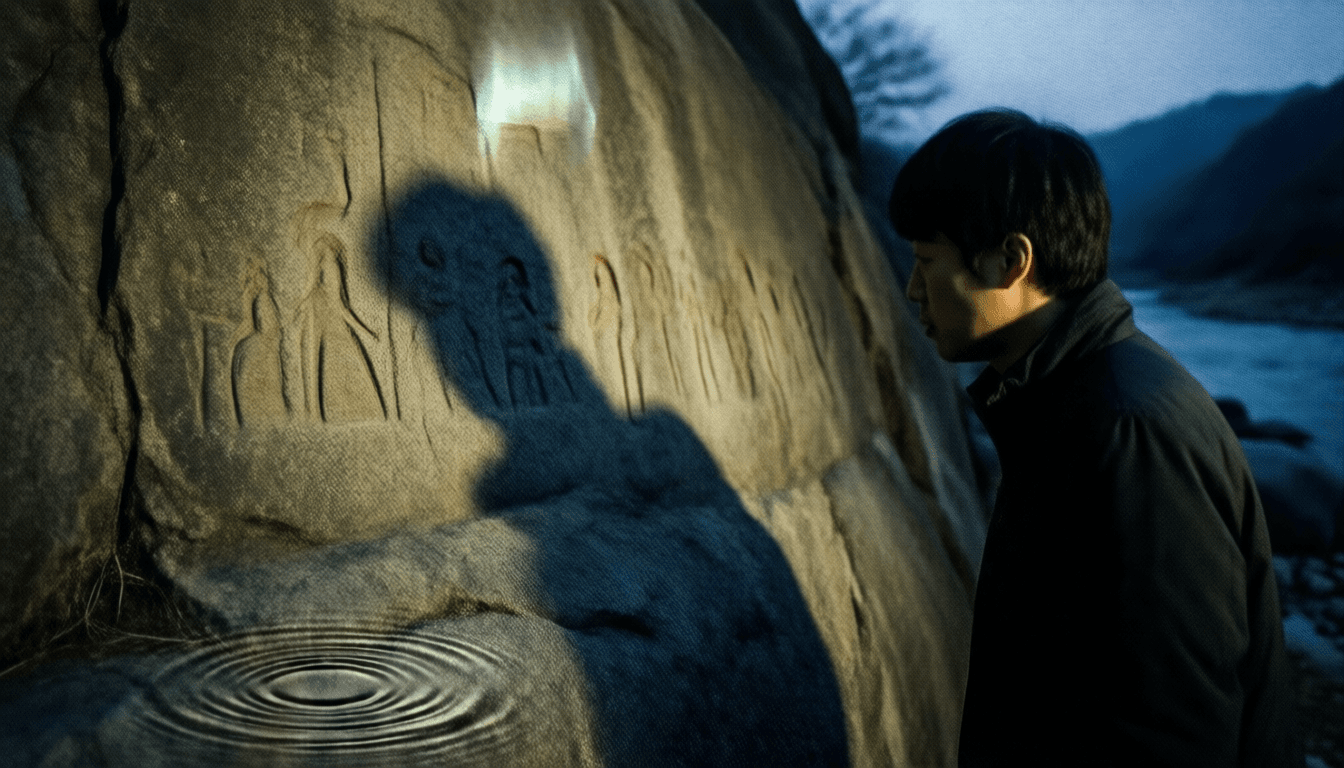
As the afternoon sun began to set, casting long, wavering shadows across the rock face, subtle anomalies emerged. The river, which usually flowed serenely beside the petroglyphs, started to create unsettling micro-ripples at their base. Small eddies formed and vanished, as if *testing* the rock, their movement subtly distinct from the main river current. I moved closer to the massive whale petroglyph, tracing the faint scar with my finger. The rock felt unusually cold and damp, despite having been exposed to air for hours. I dictated my observations into my recorder. My voice sounded flat and lifeless, without echo, even in the open space of the valley. Then, a strange sensation overwhelmed me: a faint, salty scent, not of a freshwater river, but something from the deep, ancient ocean. As I focused on the intricate details of the whale hunting scene, the figures of the carved hunters seemed to shift in the deepening shadows, an illusion. Their spears appeared to advance by millimeters. I dismissed it as an optical trick, but the feeling intensified that the silent, carved figures were *watching* me. And above the rock surface, a subtle shimmering, like heat haze, appeared, though the air was cool.
I raised my camera to capture the subtle shimmer. The moment I focused, the ground beneath my feet felt strangely soft. Not muddy, but firm yet subtly yielding, like damp sand. The shimmering intensified, coalescing into a humid mist directly above the petroglyphs. The small eddies at the rock's base suddenly grew, swirling furiously, pulling debris with impossible force, even as the main river remained calm. A low, guttural hum began to emanate from the rock itself, vibrating through the ground into my bones. I stared at the giant whale petroglyph. The faint scar on its flank deepened and darkened, seemingly *pulsating*. The solid contours of the surrounding rock began to blur, and the carved lines subtly bled, as if the surface was *flexing*.
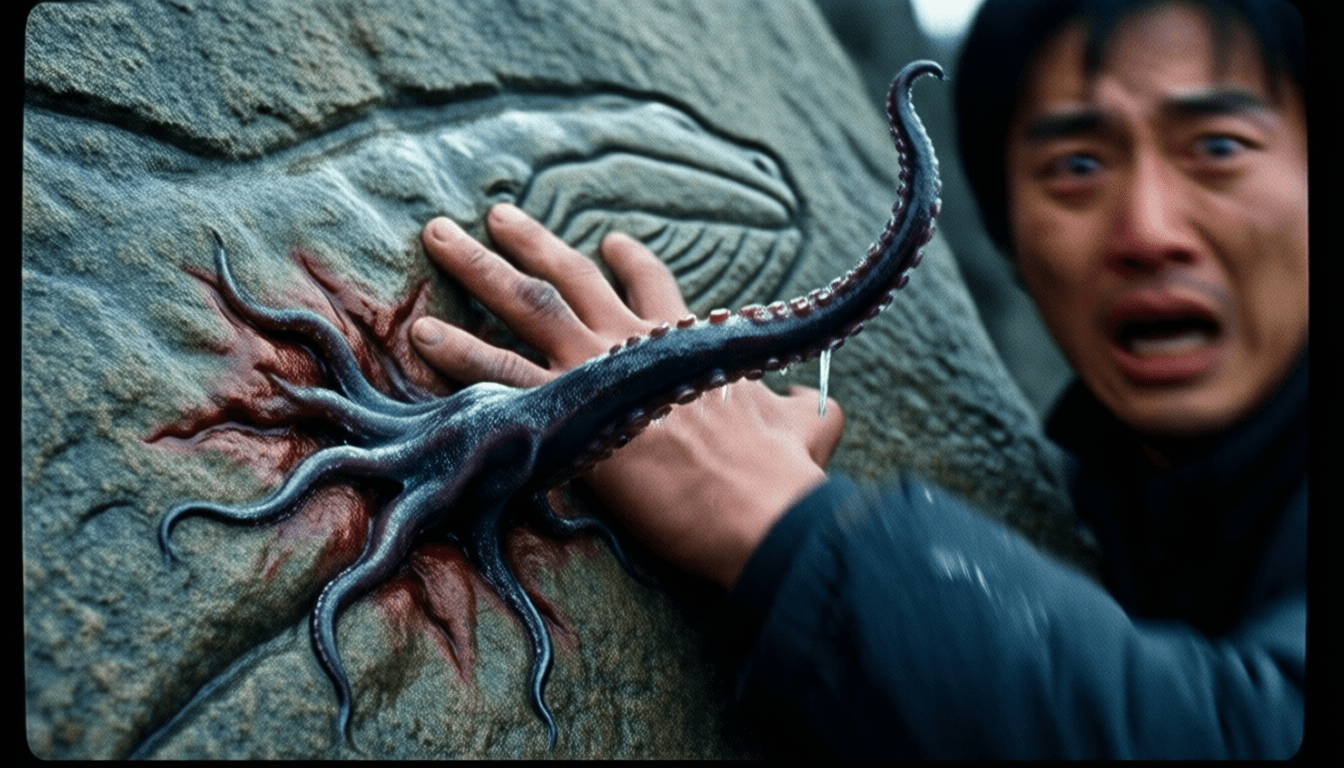
Driven by an instinct beyond caution, I reached out. My fingers hovered inches from the whale's flank, from the shifting scar. I wanted to confirm the impossible texture of the rock. The moment my fingertips made contact, the surface was not cold stone. Beneath a thin film, it was something yielding and damp, an ancient, leathery texture. A sickening suction pulled at my fingers. Panic surged. I tried to pull my hand back, but it was held fast. The lines carved into the whale's body seemed to ripple, and from the rock face itself, from the very 'scar' I had observed, something sharp and cold, like a tentacle, not stone nor water, extended. It coiled around my wrist, violently dragging me towards the petroglyphs. The hum intensified, a deep resonance vibrating through my very marrow. The surface of the rock, where my hand was trapped, became impossibly pliable. My fingers were drawn into it, the substance cold, sticky, trying to merge with my flesh. I felt an immense pressure, as if the entire weight of ancient rock and the dark waters it had known for millennia were pulling me in.
I screamed and struggled. My free hand flailed for purchase on the slippery riverbed, my boots digging into the ground. The tentacle pulled harder, and an icy, sharp chill spread from my wrist up my arm. It wasn't a tearing pain, but a sensation like molecular rearrangement. A desperate surge of adrenaline helped me yank my hand free. There was a sound like something *stickier* tearing, not fabric or flesh. Stumbling backward away from the pulsating rock, I fell into the shallow, turbulent riverbed water. The salty scent now overwhelmed everything.
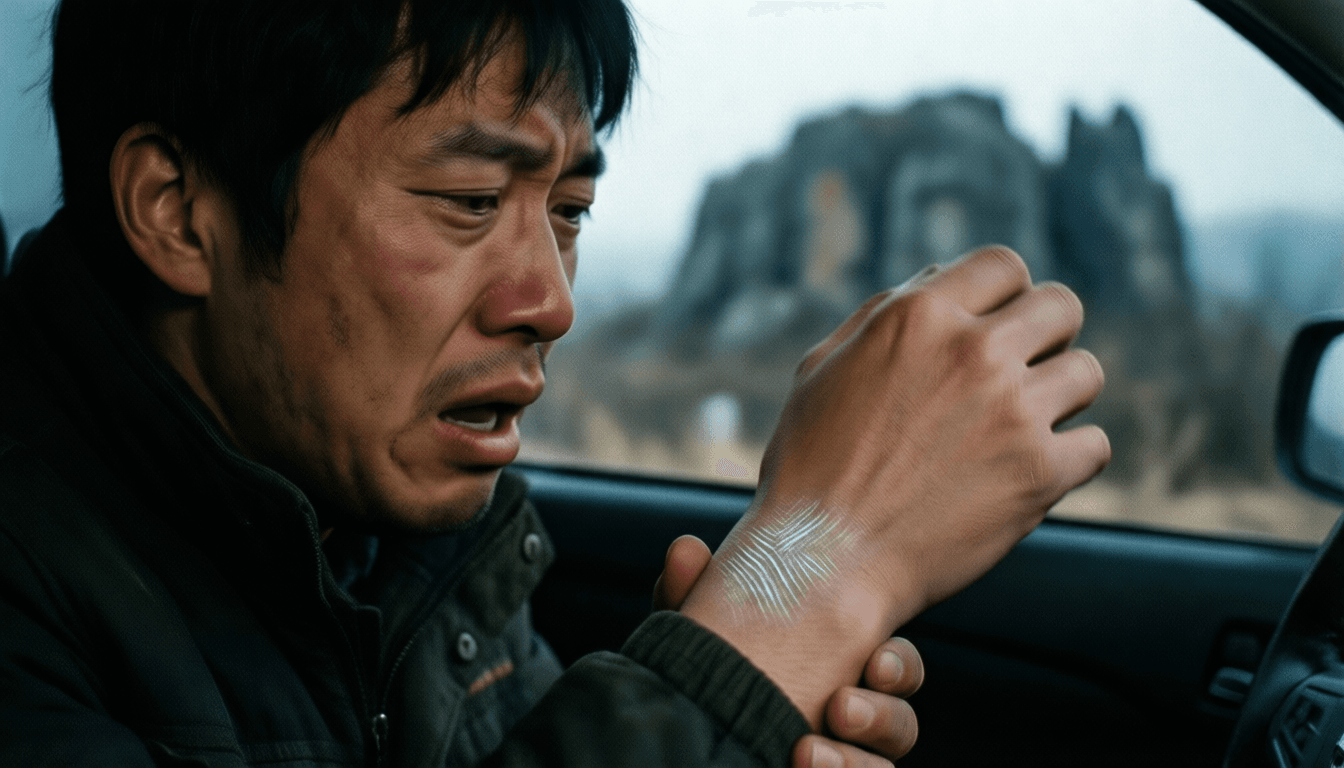
I half-crawled, half-stumbled away from the riverbed, fleeing. The primal roar of the dam, compared to the silent hum of the rock, now sounded welcoming. My left hand throbbed. I finally reached the relative safety of my vehicle, panting, and examined my wrist. There was no blood, no open wound. Instead, a strange mark stood out on my skin. A faint, almost invisible pattern of parallel lines. It was as if a small, intricate carving had been pressed onto my flesh. It bore a faint resemblance to the 'scar' on the whale petroglyph. To the touch, it was cold, and no matter how much I rubbed it, or how much time passed, it never fully disappeared.
Days later, as the initial shock subsided, I revisited my photos and official records. I found the fisherman's forum post again. He was right about the scar. But looking at high-resolution photos of the whale petroglyph taken just before the incident, the 'scar' I had observed was subtly different. It seemed *fainter*, less distinct. As if a part of its essence had been transferred, or *taken*. And there was another, almost imperceptible detail. A specific hand within the intricate lines of one of the whale hunters now looked subtly *less complete*. A finger was minutely eroded, as if a piece had broken off, or its substance had been *borrowed*. I now live with not only the subtle, cold mark on my wrist but also the chilling conviction that the ancient art of the Bangudae Petroglyphs is not merely a record of the past, but something else entirely. It exists in a mutable, dark state of vitality, constantly carving its own new truth, one slow, terrifying detail at a time, each time the waters recede.
[ CLASSIFIED VERDICT ]
[ACCESS LOG - SOURCE FILE]
The Bangudae Petroglyphs in Ulsan are a real-life national treasure depicting prehistoric life. This story is inspired by an urban legend that claims when the water recedes from the petroglyphs, the shadows shift, the carved figures move, and new marks even appear. The rumor that ancient rock transforms like a living organism forms the core of this narrative.