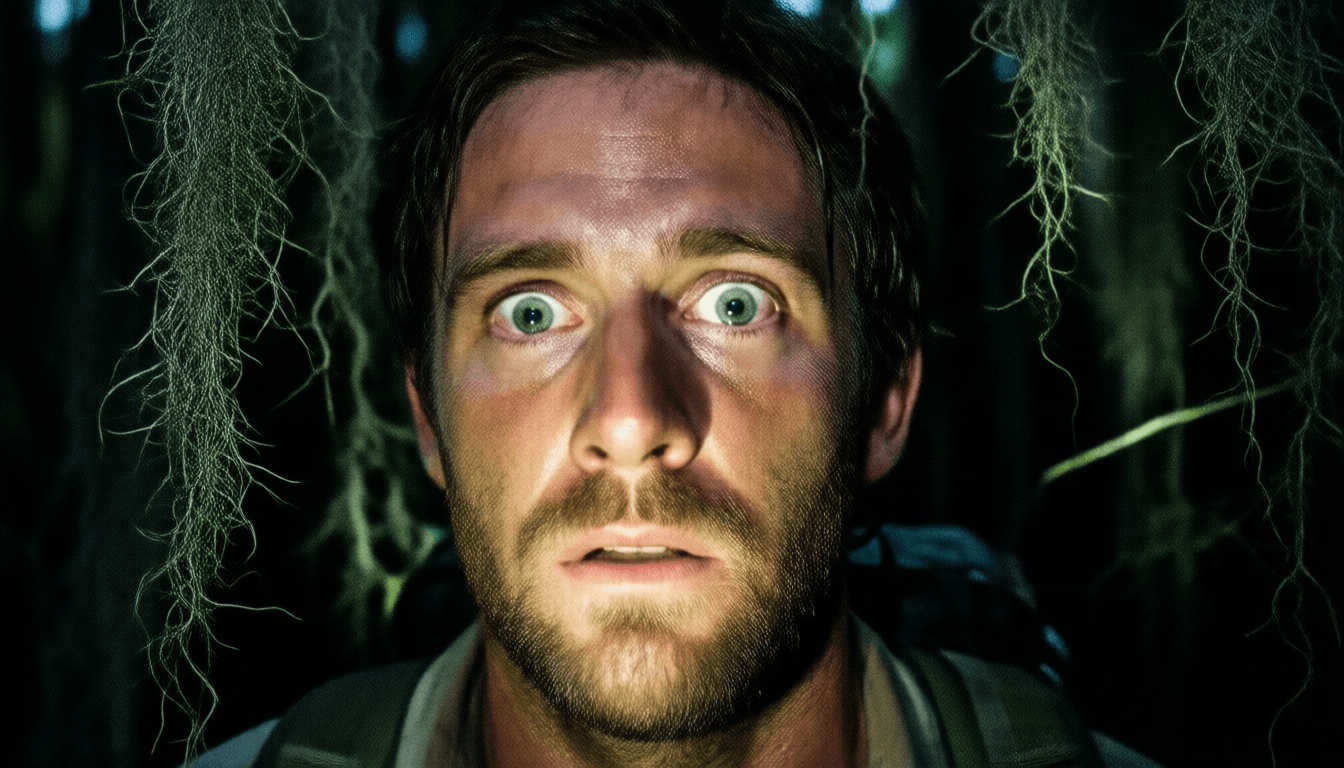
The Shadow of Atchafalaya Swamp
Digital archives from a Louisiana regional news agency usually overflow with hurricane preparedness alerts and oil industry news. However, for the past eight months, they've shown a subtle yet sinister pattern. Three remote hunter camps and two secluded cabins, deep within the Atchafalaya Basin, just outside Pecan Island, have been found brutally destroyed. Official reports attributed this to 'large predators' or 'vandalism,' dismissing them as the work of alligators or wild boars. But regional online forums—Cajun history groups, local cryptozoology discussion boards, even private fishing communities—told a very different story.
Several independent testimonies spoke of unique and inexplicable details. Not mere scratches, but grooves in aluminum boat hulls too deep and precise for alligator teeth or boar tusks, and damage to solid timber structures hinting at immense, unnatural force. More chillingly, two retired trappers and a shrimp fisherman each testified to hearing "an incredibly deep, close, non-animalistic growl" just before their properties were destroyed. The most compelling, and consistently dismissed, evidence was the bizarre 'handprints' found on damp soil or shattered wood. Too large for human, too distinct in joint articulation for an animal's paw, and suggestive of enormous claws and bipedal locomotion, these marks defied zoological classification. Accumulating evidence, consistently overlooked by official channels, suggested something far more intelligent and terrifying than mere wildlife.
Driven by these intense, fragmented clues, I headed deep into the Atchafalaya Basin. My journey began with Jules, an old Cajun guide whose eyes held the deep weariness of the swamp's secrets. He navigated a shallow boat through increasingly narrow, winding waterways. The humidity clung to the air, and the smell of stagnant water and decaying vegetation was suffocating. Spanish moss hung from ancient cypress branches like tattered shrouds, creating tunnels of eternal twilight.
The sensory input of the environment was overwhelming: the monotonous hum of unseen insects, the distant bellow of alligators, the slap of water against the boat's hull. Jules spoke in a low voice, recounting local legends, pointing to specific waterways, his gaze constantly sweeping the dense trees. Our destination was a remote trapper's cabin, its entire front wall ripped off—officially attributed to a 'flipped airboat' by recent online forums. As we neared, the silence subtly shifted. The continuous symphony of the swamp subtly receded, leaving an unnatural stillness specifically around the cabin.
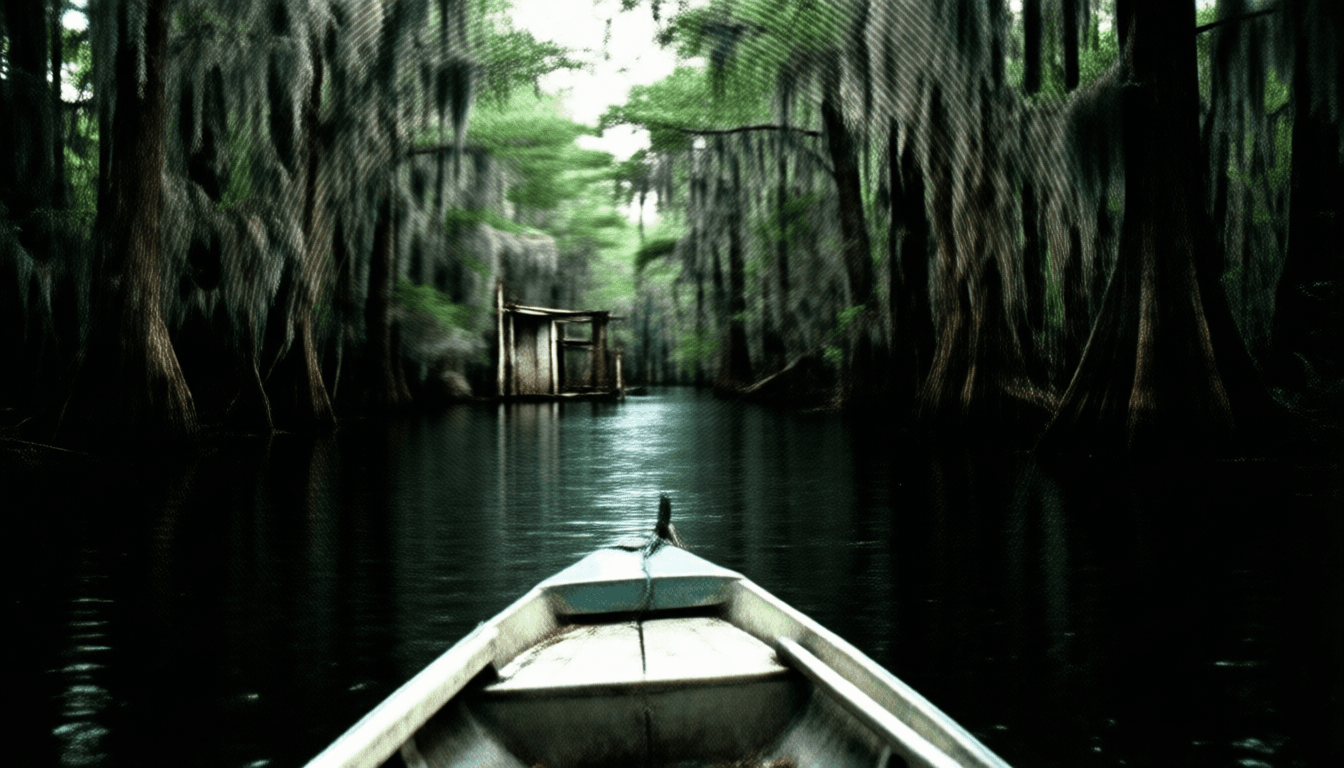
Upon reaching the cabin, the damage was far more severe than described. The entire front wall wasn't simply 'ripped off'; it was peeled away, broken timbers exposed like stripped flesh, skeletal. As I stepped onto the creaking wooden pier, the planks groaned. The air here was noticeably cooler despite the oppressive heat, carrying a faint scent of damp dog and something metallic.
The oppressive silence deepened further. My footsteps—the crunch of leaves, the splash of water—were unnaturally muffled or delayed, as if swallowed. When Jules whispered a warning, his voice echoed strangely, flat and absorbed. Observing the dark, still water below the pier, I noticed a bizarre phenomenon: a pool of water, roughly six meters wide near the bank, subtly swirled in reverse to the slow current around it. There were no ripples, no discernible cause.
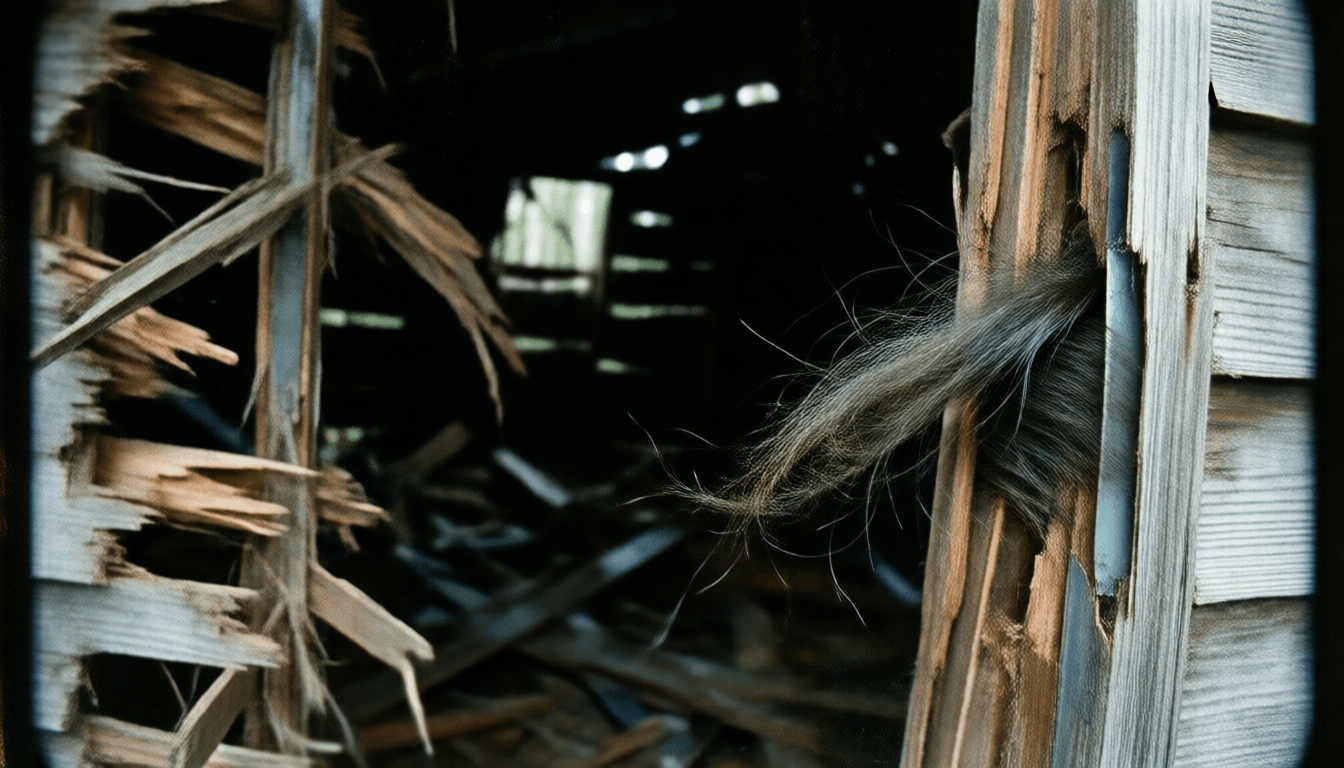
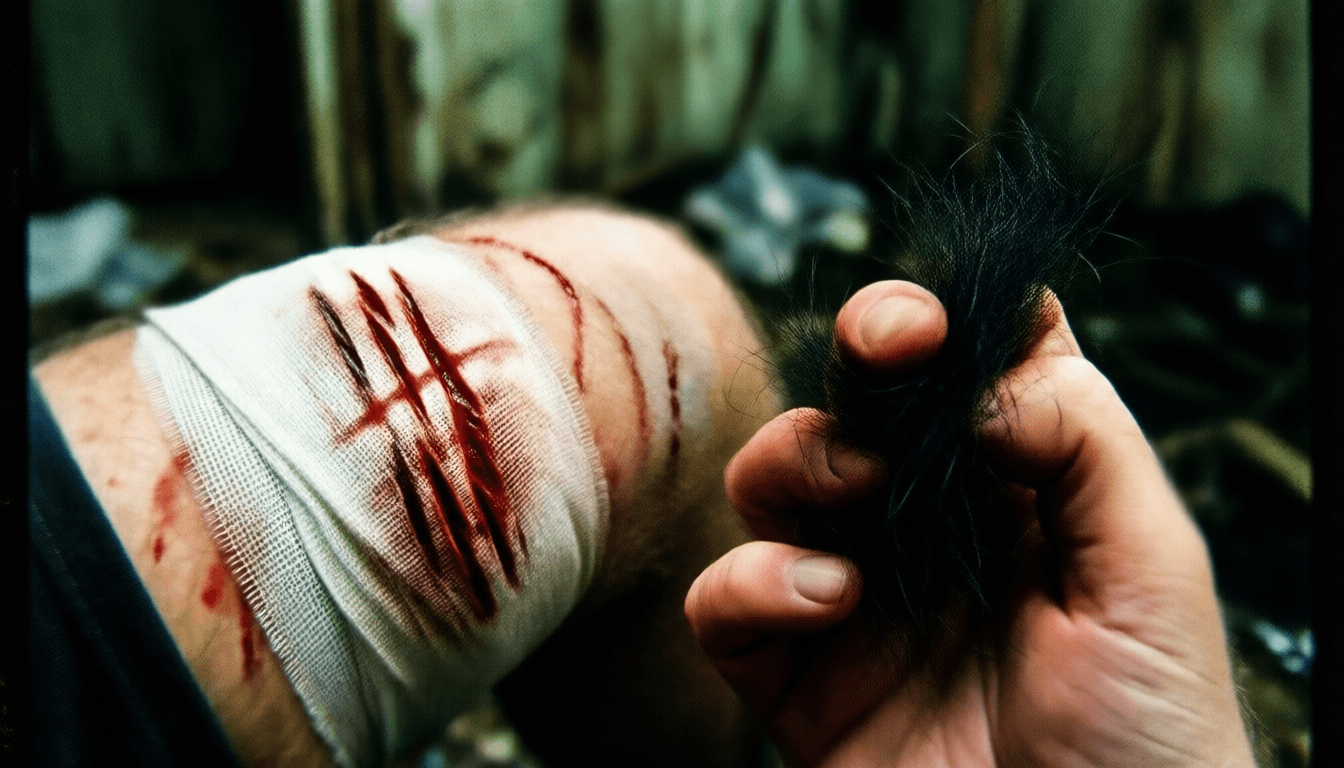
A sudden, localized chill ran down my spine. In my peripheral vision, a movement, too fast and dark to discern a shape, vanished behind a cypress tree. I hadn't realized I was holding my breath. Inside, amidst the chaos, I found what I was looking for: a single, thick, coarse strand of black hair, impossibly long, snagged on a splintered doorframe. It was several times the diameter of human hair, like a thick wire, yet outwardly resembled it.
The moment I examined the hair, the silence outside became absolute. Even Jules, who had remained in the boat, sharply turned his head, his eyes wide with profound fear. The reverse current near the bank subtly intensified, creating a vortex of stillness where water should have flowed. From the dense thicket behind the cabin, there was a deep, resonant 'thump.' It wasn't loud, but powerful, vibrating through the ground. The boat's idling engine suddenly sputtered and died, plunging us into perfect mechanical silence.
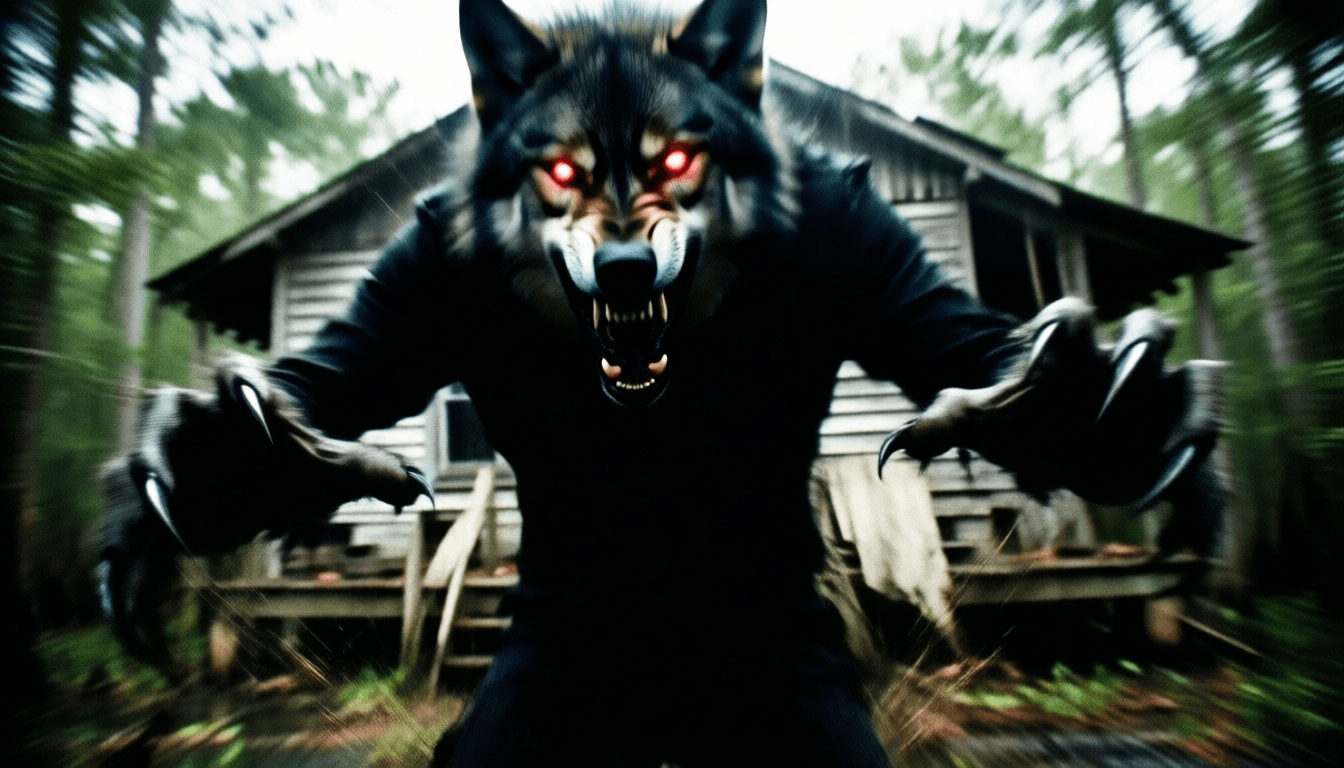
The Loup-Garou emerged from the brush. Not with the snap of branches or the tearing of leaves, but simply appearing as if passing through the dense thicket. For a fleeting moment in the shadows, its form was indistinct, but its massive, bipedal silhouette, wolf-like head, and faintly glowing red eyes were unmistakable. It moved with impossible speed, covering the six-meter distance from the tree line to the cabin in what seemed like a single, blurring movement.
Trapped inside the cabin, I recoiled. Its movements defied physics. Its massive feet landed on the dock, yet made no sound. Instead, only a vibration shook the entire structure. A primal growl erupted from its wolfish muzzle. It wasn't just a sound; it was a physical force that struck my chest, momentarily stealing my breath and sense of balance. I lunged into the water, but instead of splashing, the water parted around its legs as if repelled, then seamlessly rejoined without a ripple. It was a ghost in liquid.
It was upon me. A giant, clawed hand snatched my field camera, crushing it into a sickening shower of plastic and metal shards. I was pinned against the shattered wall, its immense weight pressing down. Its fetid breath, a mix of damp earth and that metallic scent, washed over my face. I felt the rough, wire-like hair of its arm, the sharp, tearing pressure of its claws—not fatal, but searing agony. I thrashed in a primal struggle against impossible force.
In a desperate surge of adrenaline, I flailed and gripped a heavy, broken timber post. I plunged its fractured end into the creature's flank with desperate force. The Loup-Garou recoiled with a low, chilling growl—not of pain, but surprise. A flicker of almost intelligent hesitation flashed in its eyes; that was all. Seizing the opportunity, I scrambled past it, running desperately through the swamp toward Jules's boat. A faint trail of blood marked the dark water. The Loup-Garou watched, then, with a final, deliberate motion, silently melted back into the dense foliage, leaving no trace.
I escaped, limping, soaked, and profoundly traumatized. In my hand, I clutched a single, thick, coarse black strand of hair. Jules, pale and silent, started the boat and took us back to civilization. He never met my gaze once.
Back home, my treated injuries were diagnosed as severe lacerations and contusions from a large animal attack. Yet, the physical evidence told a different story. Beneath the bandage on my thigh were impossibly deep, parallel claw marks, forming a distinct and unmistakable pattern. It was precisely those 'handprints' described in the initial reports—marks etched into my flesh that no known animal could make.
The strand of hair I had analyzed yielded baffling results. It shared genetic markers with both canids and humans, yet its cellular structure and unique protein composition were unclassifiable. A biological impossibility, an anomaly. The encounter left deep, unsettling after-effects. My hearing became unnaturally acute, picking up distant sounds with disturbing clarity, making urban environments overwhelming. Its damp, metallic scent would occasionally surface without cause—a phantom odor. Sleep offered no escape, haunted by recurring nightmares of the swamp's oppressive silence and its physics-defying movements.
Days turned into weeks. I developed an inexplicable aversion to running water; showers were uncomfortable, rivers evoked dread. I obsessively checked my reflection, a subtle, primal fear growing in my gut. Reason struggled to classify the impossible, but the memory of broken physics—of sounds swallowed, of water parting—lodged itself in my thoughts as a persistent, insidious hum. I had survived, but the Atchafalaya had left me with a knowledge too dark, a truth too chilling to deny, and it was now consuming me. Every time I looked at the moon, especially the full moon, a new, unexplainable anxiety gripped me. In a cold, heart-stopping dread, I knew I carried a piece of the swamp's impossible truth, perhaps more than just a mere mark left by its presence.
[ CLASSIFIED VERDICT ]
[ACCESS LOG - SOURCE FILE]
This story is based on the famous 'Loup-Garou' folk legend from Louisiana's Cajun culture. Meaning 'werewolf' in French, the Loup-Garou is said to inhabit the swamps, attacking people and animals. The legend often involves a sinner cursed to transform into a werewolf at night, along with beliefs about identifying or defeating it through specific markings or rituals.