The Night Separator: Shadow of Mapawa
A 1974 Philippine Ministry of Health document, classified as ‘Biohazard-Gamma’, contained peculiar records. Recently rediscovered during digitization, this file detailed cases of stillbirths and unexplained infant deaths in a remote rural village named Sitio Mapawa in Antique Province. Official diagnoses were vague, such as ‘unidentified infectious agent’ or ‘maternal malnutrition’. However, the document included handwritten field reports by local physician Dr. Elena Ramos. Her initial records noted “peculiar lacerations inconsistent with surgery or animal attack” on the deceased infants. Subsequent entries progressively adopted a more anxious tone, mentioning a “strange odor” reported by mothers and, chillingly, “local superstitions about a predator that flies at night.” Her final entry, just before her sudden and unexplained transfer, stated: “The silence here is unnatural. I believe I am being watched.” The file concluded with an inconclusive internal investigation report, effectively burying Dr. Ramos’s concerns. For decades, it remained a forgotten phantom within administrative procedures. Until now.
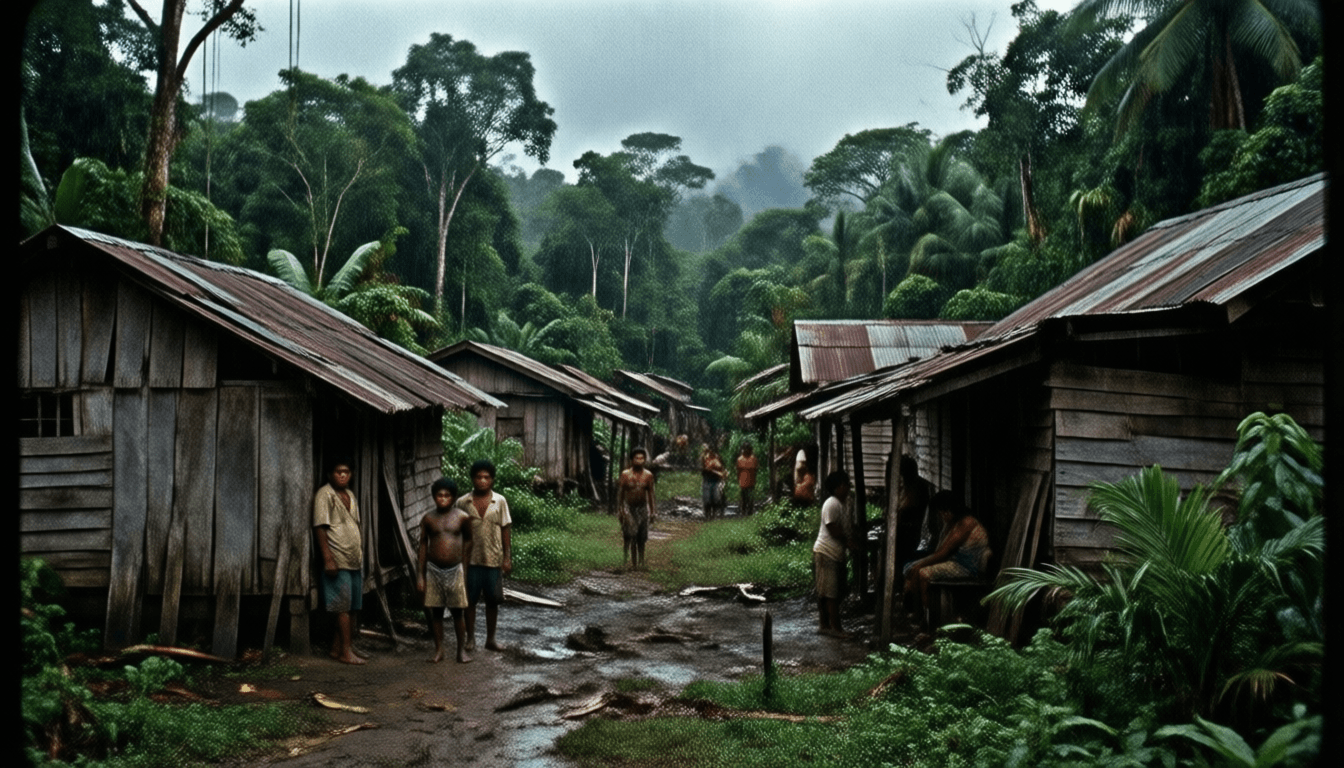
Drawn by the ominous specificity of Dr. Ramos’s observations and the chilling pattern of the victims, I set out for Sitio Mapawa. The journey was isolation itself. A rough provincial road turned into a dirt track, then a winding path through the humid, lush forest, eventually becoming accessible only on foot. The air hung heavy with stifling heat and the scent of damp earth. The village was a sparse collection of skeletal shacks, its population thin. The few remaining residents were gaunt, their eyes holding a palpable fear alongside generational weariness. They whispered of “the old times” and “what still comes when darkness falls,” carefully avoiding naming any specific entity, their gazes constantly drawn to the impenetrable forest edge. Their consistent advice was to avoid the old riverbed after sunset. According to Dr. Ramos’s notes, that was where the “strange odor” was strongest. I established my observatory there.
As the equatorial sun dipped below the jungle canopy, an unnatural silence descended. The usual chorus of insects and nocturnal birds gradually faded, replaced by an unnerving stillness. From high above, an intermittent, rhythmic THUMP… THUMP… THUMP… began. Too heavy for a large bat, too soft for any known bird, its source was untraceable in the rapidly darkening sky. The “strange odor” intensified. A metallic tang, like copper and sulfur, mingled like ozone after lightning, but it was cloying and repulsive.
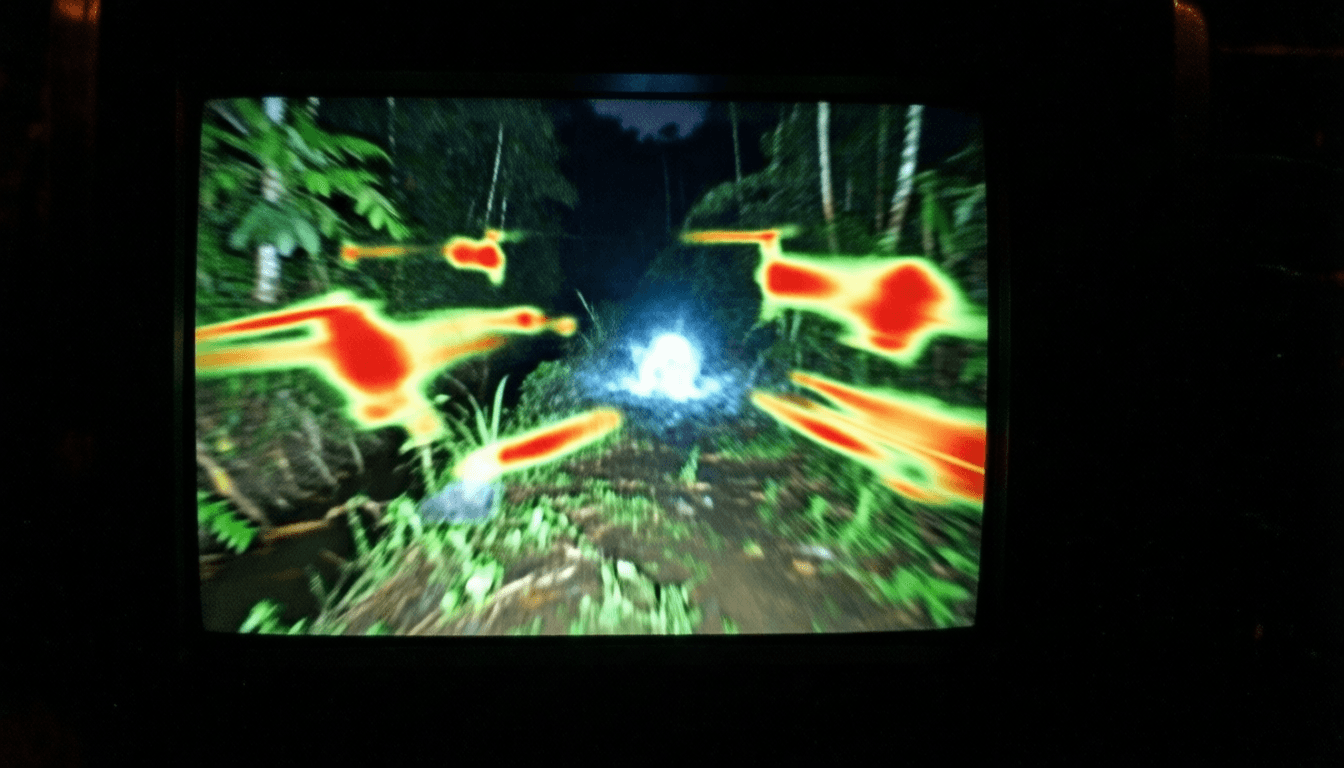
I activated my drone, equipped with thermal and infrared sensors, and sent it skyward. The riverbed below me was still, but in one of the stagnant pools, the surface rippled gently. Not from wind or insects, but perfectly circular concentric waves emanating from an invisible disturbance below. The ripples defied the stillness of the air, seeming to absorb rather than reflect light. Despite the pervasive humidity, localized drops in temperature created distinct cold spots, which my atmospheric sensors picked up, subtly shifting around me. On the drone's screen, shadows, too large and too fast for any known nocturnal animal, flickered across the infrared spectrum, appearing and disappearing with impossible speed and movement. My initial scientific objectivity began to crumble, replaced by a growing internal dread. Dr. Ramos's "superstitions" no longer seemed preposterous.
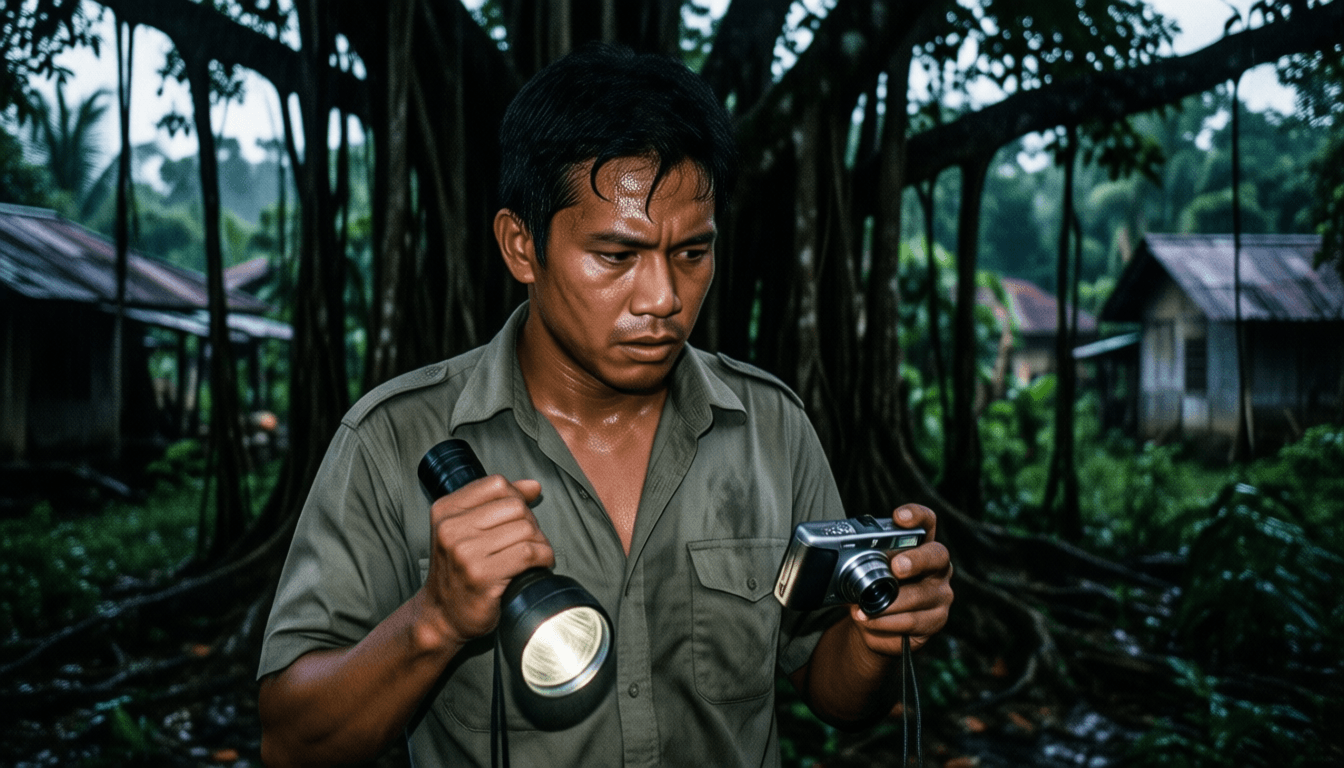
Following the intensifying metallic sulfur odor, I discovered a hidden crevice nestled between the twisted roots of an ancient banyan tree. It led to a small, dark cavity. The smell here was overwhelming, suffocating. As my headlamp pierced the gloom, it briefly revealed a shockingly clean, almost surgical-looking sharp instrument, seemingly made of bone or tough chitin, and beside it, a small, dried pouch, meticulously placed. This was the source. This was the lair.
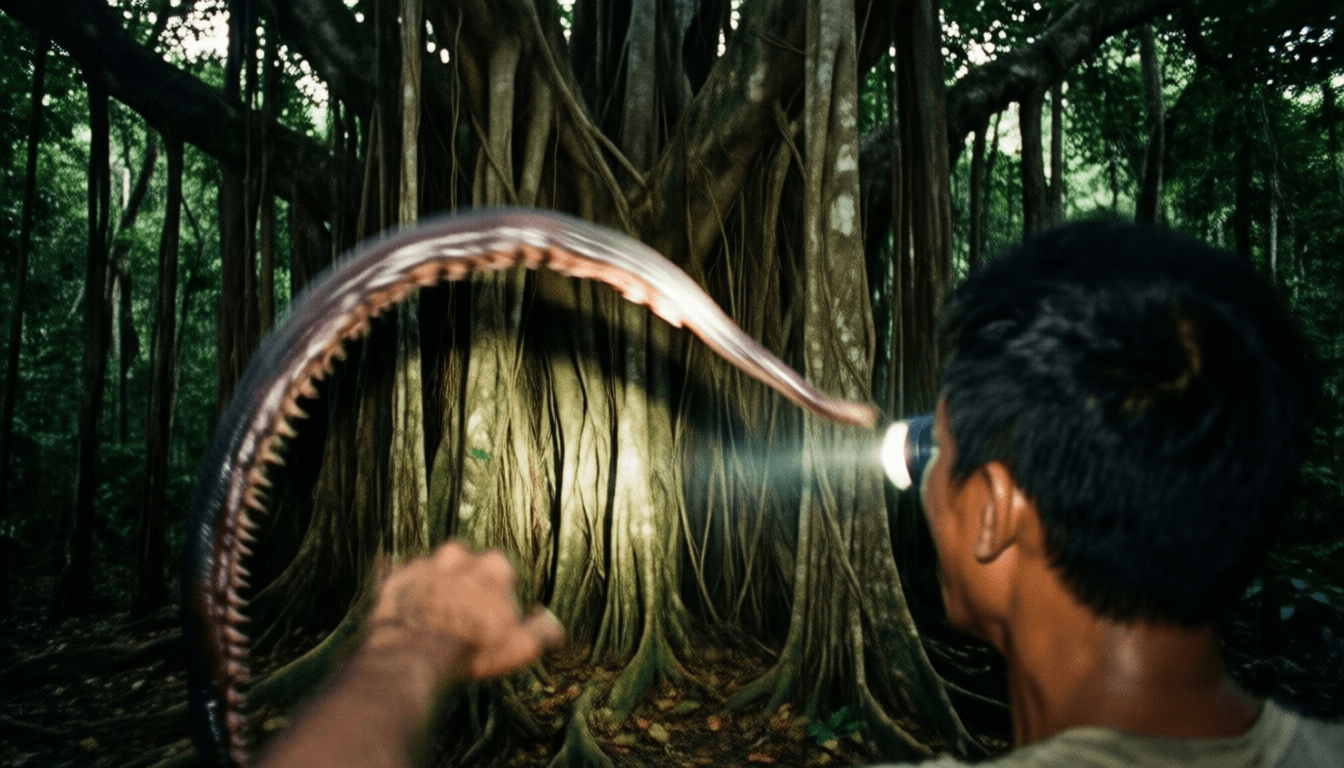
The moment I leaned in further, attempting to position my camera for a shot, the thumping sound from above grew deafening, followed by a rapid, powerful downward rush that seemed to tear the very air. Before I could react, I was slammed violently against the unforgiving bark of the banyan tree. A long, impossibly thin, black, proboscis-like tongue whipped out with immense force. It was not rigid but flexible and incredibly strong. It pierced through my thick field jacket, tearing through layers of fabric and insulation to find my skin. It pinned me to the tree, attempting to draw me closer with a chilling suction.
Above, the creature’s upper torso floated. Leathery wings flapped in a deep, eerie silence, seemingly defying air currents and its own immense weight. Its “eyes” glowed faintly with an internal amber light. But the true horror was below. Partially obscured in the darkness, yet undeniably present, was… a writhing, independently breathing lower half. It remained rooted in the darkness, unmoving, yet mentally connected to the attacking upper torso. The sheer presence of it unleashed waves of extreme fear and disorientation, paralyzing my muscles and making any movement almost impossible.
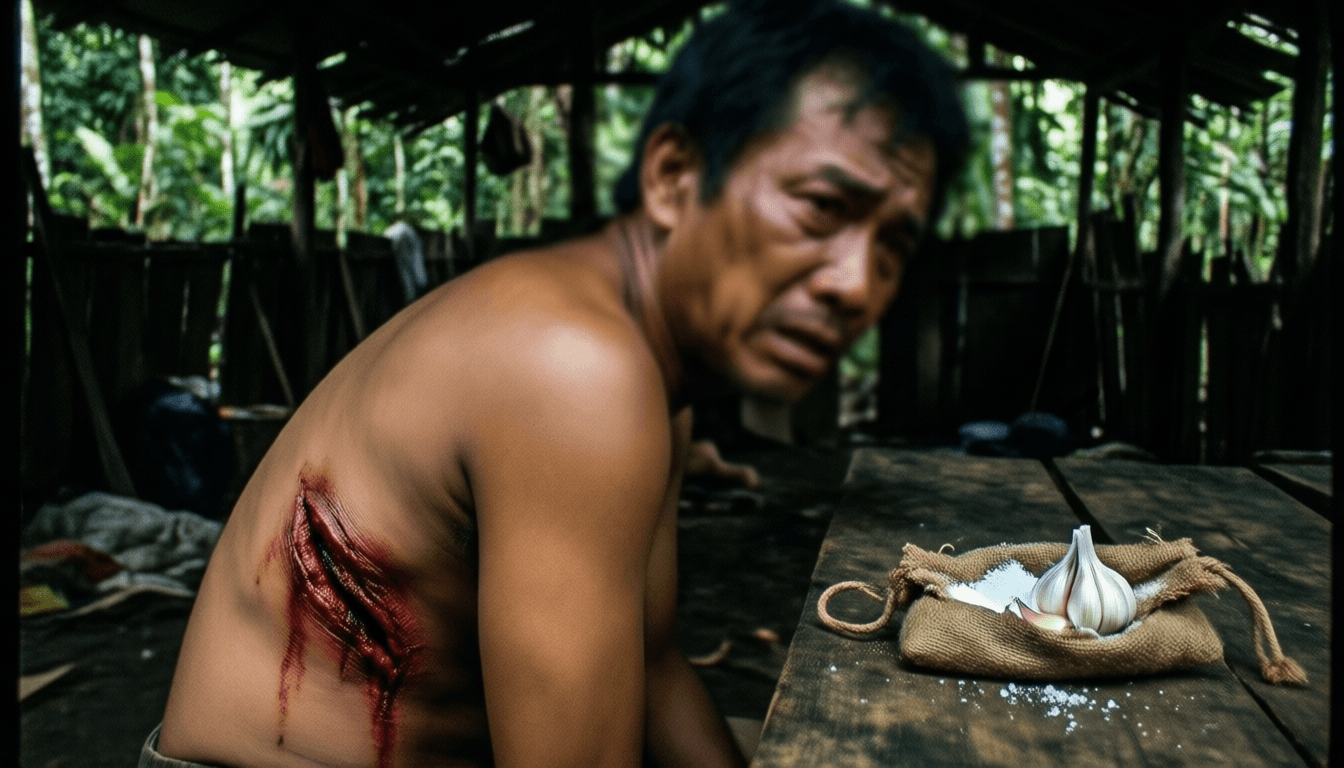
Seized by primal terror and a desperate will to live, I managed to grasp the rusted bolo knife from my bag. With strength born of pure instinct, I furiously swung downwards towards the hidden lower half, not to kill, but to distract it in any way. The bolo knife struck with a sickening ‘thud’ and a wet ‘squelch’. From the flying upper torso, a guttural scream of pure agony and animalistic fury erupted. The proboscis immediately retracted, leaving a deep, burning laceration in my side. The upper torso thrashed violently, tearing through leaves and soaring back above the canopy with impossible speed, leaving only a chilling shriek that seemed to vibrate the very air.
I stumbled back, my body covered in scratches and bruises. The laceration on my side was a deep, burning gash, but it bled little, emitting an eerie coldness. My official report was meticulously medical, devoid of even a shadow of the impossible horror I had faced. "Unidentified avian predator, showing extreme physiological adaptations for nocturnal hunting, likely a newly classified species. Possesses evolved camouflage capabilities and specialized feeding apparatus." I attached the damaged drone footage, showing only fleeting, impossible shadows, samples of metallic sulfur residue, and photographs of the “tool” and “pouch” found in the cavity. All direct descriptions of the separated upper torso or the psychic dread it induced were omitted.
The experience, however, left an indelible mark. The laceration on my side never healed cleanly; it remains an itchy, cold scar. I suffer from insomnia, and in the dead of night, even in the heart of the city, I seem to hear the faint thump-thump of leathery wings. Every shadowed corner, every movement in the periphery of my vision, rekindles a cold dread. I compulsively check my reflection, examining my abdomen, an irrational fear that something within me has subtly changed. Under my bed, out of sight, I keep a small, coarse pouch filled with rock salt and crushed garlic—a secret, desperate ritual born from a truth I dare not voice. The lingering thought is the memory of the lower half, writhing and waiting, and the knowledge that the upper torso will one day return to reclaim it. The horror wasn't just that it existed. It was that it still breathed there, in the darkness. And now, I knew its name. My report concludes with a vague yet chilling addendum: "Further investigation of nocturnal activity in the region is strongly recommended with extreme caution."
[ CLASSIFIED VERDICT ]
[ACCESS LOG - SOURCE FILE]
The Philippine urban legend of the 'Manananggal' describes a vampiric creature that detaches its upper torso to fly at night, preying on pregnant women and infants. This story is based on peculiar infant death records from the 1974 Philippine Ministry of Health, local superstitions about "flying predators at night," and an investigator's terrifying encounter with this legendary entity.