The Sealed Cistern of the Desert: Whispers of the Djinn
A blog post, originally penned in 2018, was recently republished by the Al-Ruwaiss Historical Society’s digital archives. Its title: 'The Sealed Cistern of Al-Baraka: Why a Desert Town's Water Plant Was Abandoned for Decades.' The piece revisited a series of inexplicable events that led to the abrupt closure of the Al-Baraka water treatment plant in the late 1990s. Despite being a state-of-the-art facility built for a rapidly growing desert community, official reports attributed its sudden 1998 closure to 'structural integrity issues' and 'unexpected geological instability.' However, local newspaper clippings from the time hinted at something far more unusual: unexplained equipment malfunctions, rapid corrosion of piping, and several transient maintenance workers vanishing from the plant premises without a trace.
What particularly caught my attention was an anonymous comment on the 2018 blog post, signed by 'The Sage of the Oasis.' It read: "Our grandfathers warned of the cold wells. Places where the earth holds its breath, where unseen presences gather. Their silence is not absence, but presence. The water plant was built upon such a place. Some thirsts cannot be quenched with water. Some silences should never be broken." This chilling anonymous contribution directly referenced the whispered legends of the Djinn—beings of smokeless fire said to inhabit forgotten places in the desert, particularly old wells and ruins. The numerous similar local anecdotes surrounding the Al-Baraka plant’s closure, and the specific mention of 'cold wells' and 'unseen presence,' compelled me to initiate an investigation.
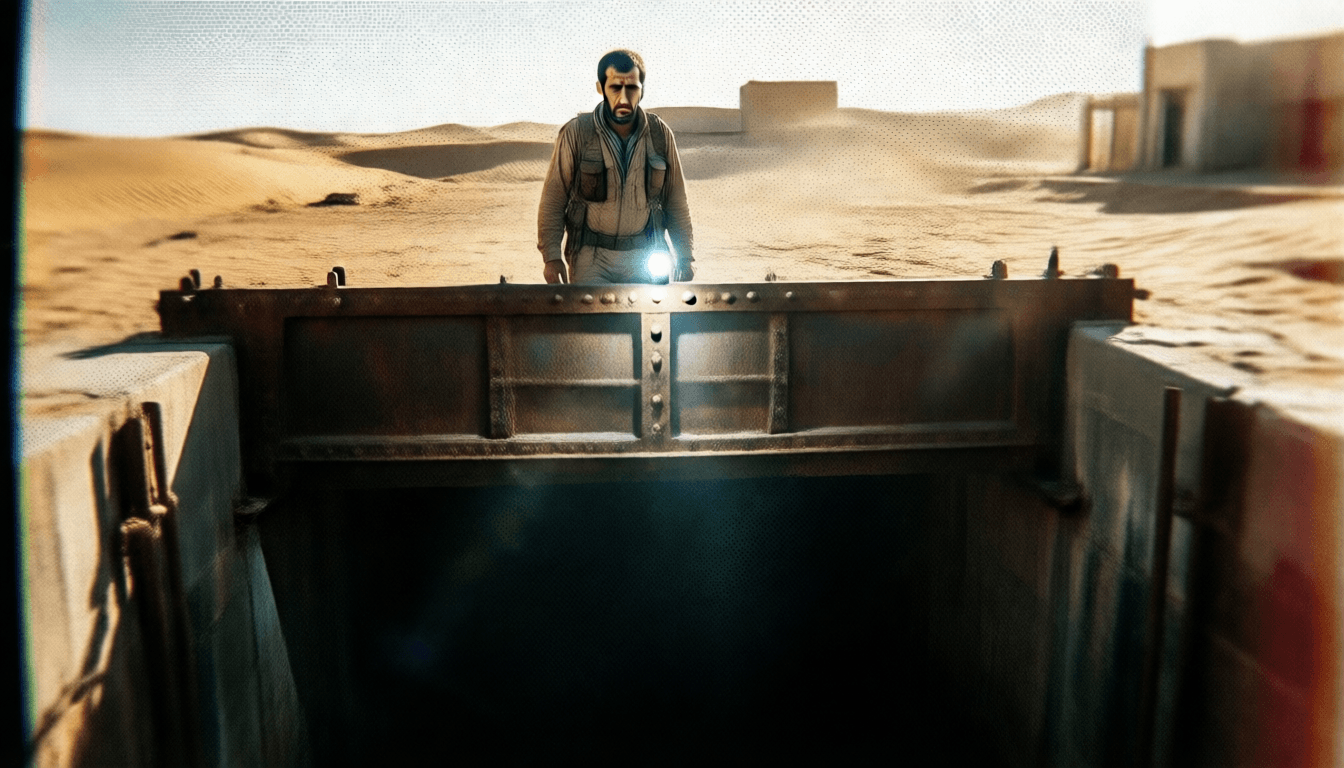
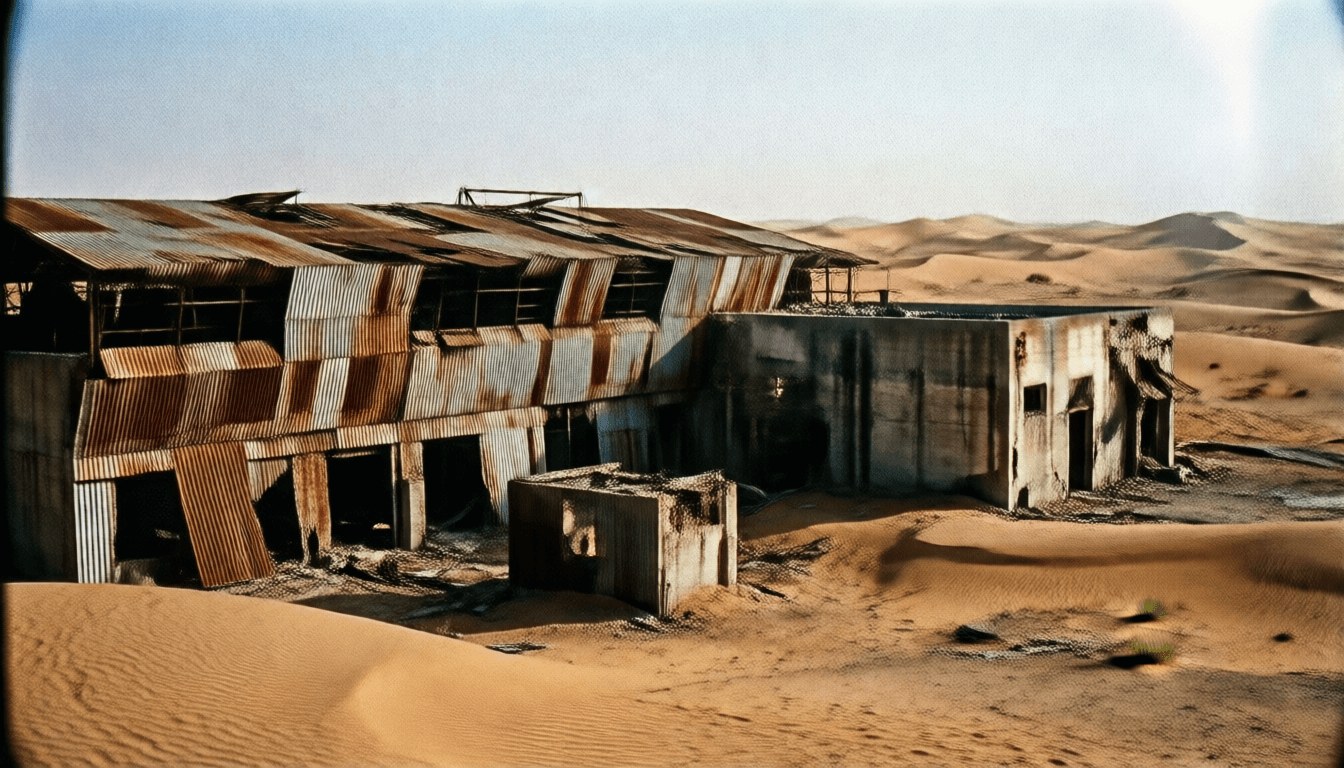
Upon arriving at the Al-Baraka site, I was met by desolation itself. Rusted corrugated iron, sand-blasted concrete, and wind-shredded machinery stood as testaments to time and neglect. The entrance to the subterranean network of cisterns was a heavy, rusted, bolted-down hatch. Equipped with professional audio recorders, a thermal imaging camera, high-intensity headlamps, an air quality monitor, and satellite communication gear, I began my descent.
As the massive hatch groaned open, a surprisingly cool, musty air escaped, smelling faintly of damp concrete, ozone, and old iron. A narrow, steep ladder led into an overwhelming, absolute darkness. Dust motes danced erratically in my headlamp’s beam as I navigated the tight shaft. Below, an immediate and profound silence existed, one that seemed to swallow even the usual creaks and groans of an abandoned structure. My boots met the concrete floor of a vast chamber, but instead of the expected echo, there was a dull thud, as if the sound died an early death. The subterranean network was enormous: a concrete labyrinth of interconnected chambers, designed to process millions of liters of water, now completely empty.
I began a systematic investigation. I clapped my hands sharply for an acoustic test. The resulting echo was not a clean reverberation, but a distorted, fragmented sound, impossibly delayed, as if sound waves were absorbed and then spat out in pieces. When I spoke into my recorder, my voice, despite being close to the microphone, sounded distant and muffled.
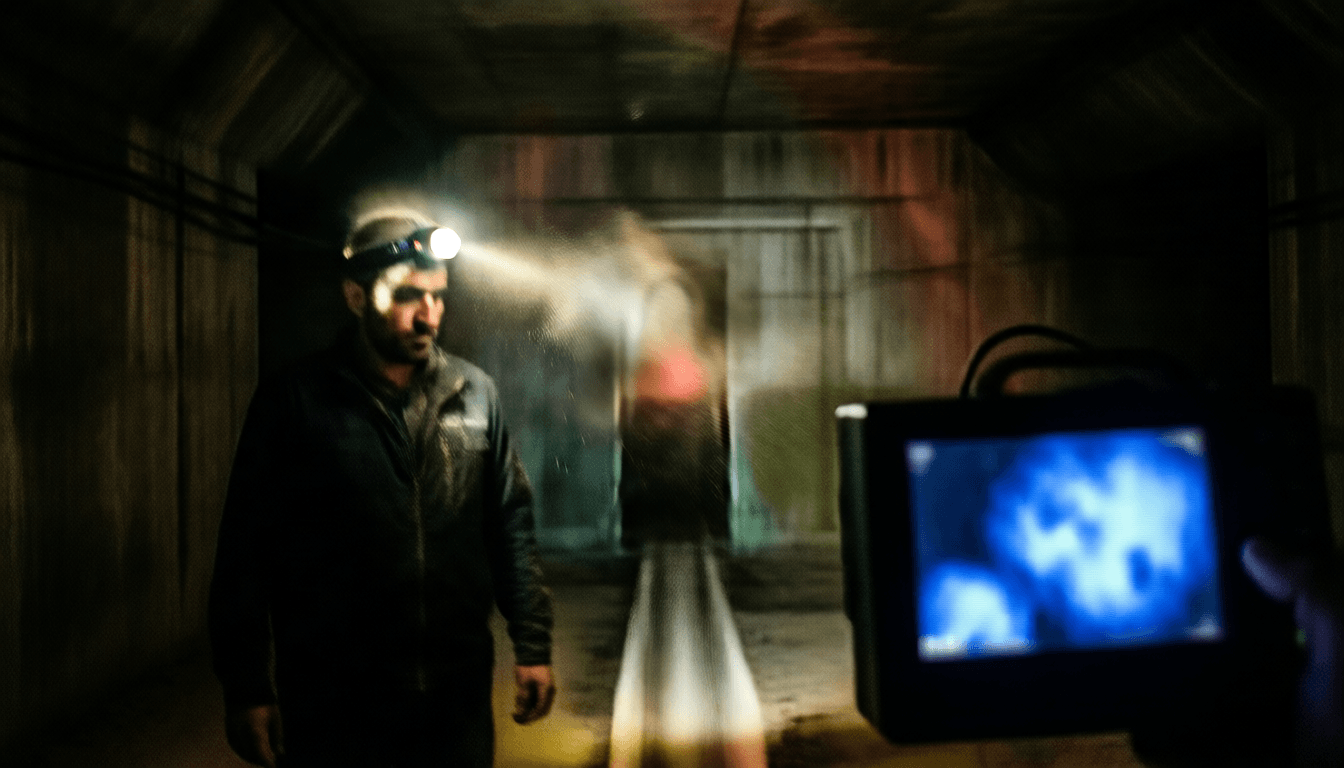
The thermal imaging camera began registering anomalous readings. Beyond the general coolness of the underground environment, distinct, intense pockets of cold moved and fluctuated, showing significant temperature drops of 5°C below ambient on the thermal display, with no air currents or physical explanation. The previously stable air quality monitor began showing intermittent, inexplicable drops in localized atmospheric pressure.
Deeper into the network, particularly in the massive circular cisterns, I observed dust particles suspended in the air swirling in trapped vortices, without any discernible drafts or disturbances. My headlamp’s beam, when shone upon certain sections of the damp concrete walls, appeared subtly warped, creating a peculiar refractive effect on the surface, as if space itself was distorted.
Then, the whispers began. Too low for my recorder to accurately parse into words, yet undeniably present—faint, multi-layered sounds that didn’t emanate from a specific direction, but seemed to arise from the air itself, surrounding me, raising goosebumps on my skin with an instinctual dread. I tried to rationalize them as auditory hallucinations, a product of isolation and strange acoustics, but their persistence gnawed at my resolve. A growing pressure began to build in my chest. Despite the air quality monitor showing healthy oxygen levels, I felt a physical heaviness that hindered my breathing. My attempts to contact my support team failed, as the previously intermittent satellite signal abruptly cut out, leaving me in total isolation.
I reached the deepest point, the largest cistern, a monumental chamber where unseen moisture dripped. The moment I stepped onto the elevated platform in its center, the massive, rusted access hatch, my only exit, slammed shut with a final, deafening metallic clang. The entrance shaft was plunged into instantaneous, absolute darkness, and I was trapped. Immediately, an impossibly cold wind erupted powerfully from the very center of the chamber, pushing me backward with a tangible force.
The air around me grew virulently viscous and thick, like swimming through mud. Breathing, despite the air quality monitor still reporting normal oxygen levels, was no longer an automatic function, but a desperate, conscious effort against an enormous, unseen pressure crushing my lungs. And then, the sound: a sharp, high-frequency *scream* that burst forth not from a specific source, but *everywhere* at once. It vibrated through my skull and bones, causing a searing pain in my ears and blinding disorientation. It was not an acoustic phenomenon; it was an assault on my very senses.
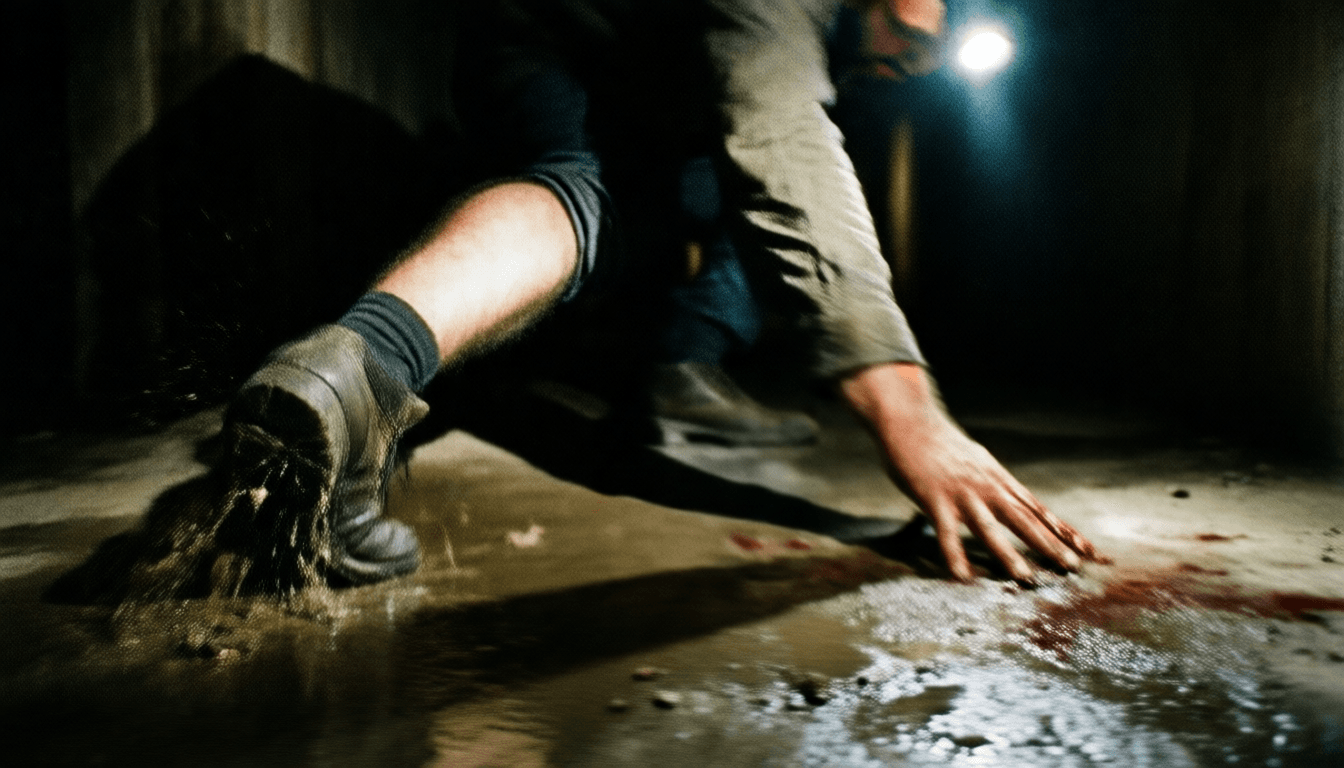
Before I could react, an unseen something struck me from behind, sending me sprawling onto the damp concrete floor. An incredibly cold, powerful *grip* fastened around my ankle, dragging me towards the center of the echoing chamber. My hands scraped raw and bleeding on the rough floor, but I thrashed desperately, kicking against the crushing hold. The invisible force was palpable and undeniable. I felt the immense pressure of an unseen hand, the sheer power of its pull. This was no hallucination; it was a physical, deadly intervention. I screamed, but the sound was swallowed by the crushing air and the tearing shriek. In my flailing, my thermal camera fell and shattered. For a fleeting moment, an impossible ultra-cold spot flashed in the air where I’d felt the impact. It wasn’t trying to scare me; it was trying to *take* me.
In a final, desperate burst of adrenaline, I wrenched my leg free, feeling a sickening *snap* in my ankle. The grip released, but the crushing pressure and tearing sounds *followed* as I limped and crawled towards the entrance shaft. I fought for every painful breath, for every agonizing step. Miraculously, I found the access hatch unlocked, scrambled up the ladder, and tumbled out into the searing desert sun, leaving my recorder behind in my frantic escape. With a final, frantic effort, I slammed the hatch shut, sealing the presence back into the darkness.
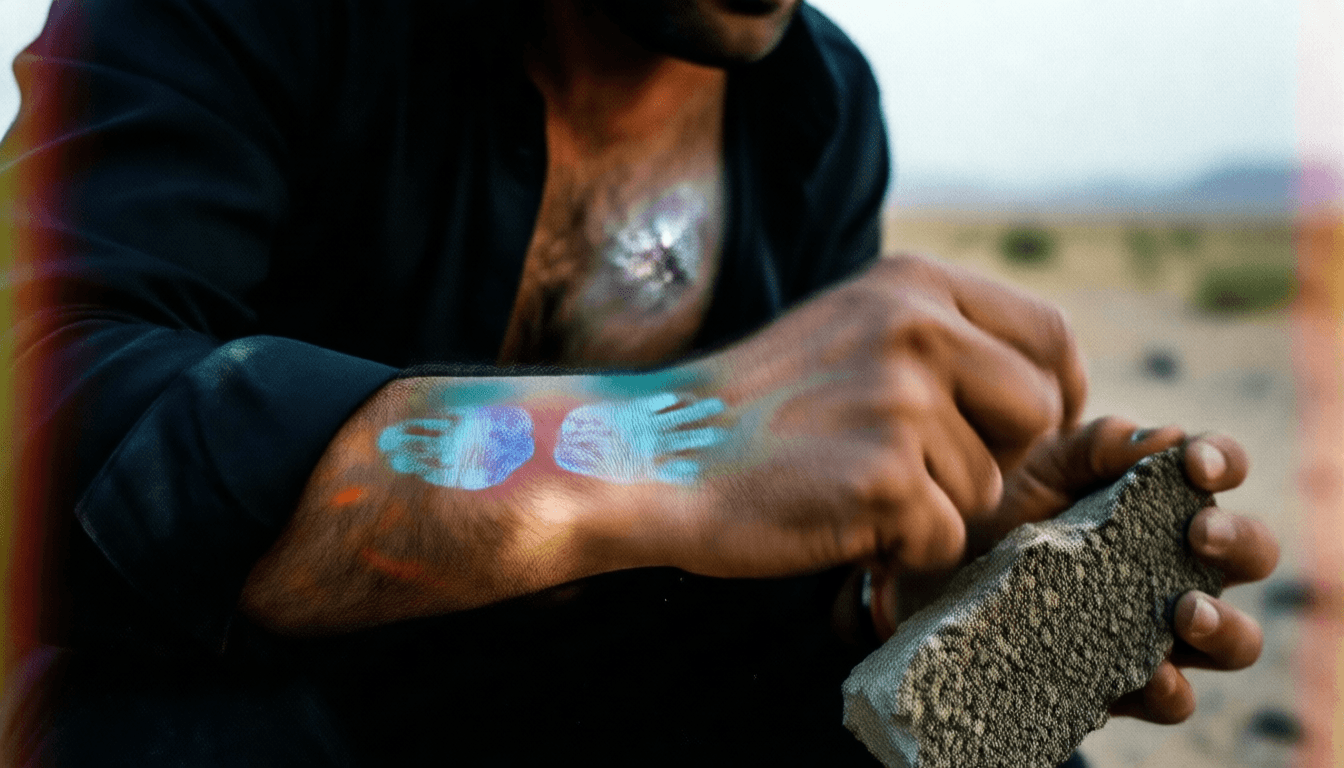
I collapsed outside the hatch, gasping for air. My hands trembled uncontrollably, my heart hammered against my ribs. My ankle throbbed with a persistent, unnatural cold that seemed to bore deep into the bone. On my chest, where the pressure had been strongest, a faint, iridescent bruise, almost crystalline in appearance, lingered and refused to fade.
The true marks, however, were on my wrist. Where I had felt the crushing, cold grip, tiny, perfectly symmetrical icy imprints were faintly etched into my skin. Not wounds or scratches, but a peculiar, almost branded texture, as if held by an impossibly cold and precise touch. These marks neither faded nor hurt; they simply remained, a constant, pervasive reminder.
Later, when I discovered a weak, intermittent signal from my abandoned recorder (which had somehow continued transmitting for a brief period after my escape), the last few seconds of audio were mostly static and my own terrified gasps. But just before the signal completely died, an impossibly clear whisper emanated directly next to the microphone. It was an ancient, hoarse language I could not comprehend, but the tone of possessive malevolence was unmistakable. I could not bring myself to analyze it further; its implication was too profound.
I never published my findings. My career as an urban legend specialist effectively ended that day. Now, I cannot tolerate absolute silence. The absence of sound feels like a suffocating presence, and I constantly check for drafts, cold spots, or the faint, almost imperceptible murmur of ‘presence’ that now clings to the periphery of my perception. I understand, with chilling clarity, why some wells are best left undisturbed, and why some silences are best unbroken. The desert's cold embrace feels different now; no longer just a natural phenomenon, but a reminder of something that exists beyond sight, waiting for another transgression. It wasn’t just *in* the cistern; it *was* the cistern, and perhaps now, a part of me.
[ CLASSIFIED VERDICT ]
[ACCESS LOG - SOURCE FILE]
This story is based on local legends surrounding an abandoned, old water treatment facility in the desert. It specifically centers on the whispered legends of the Djinn, beings of smokeless fire said to inhabit deep places beneath arid lands, especially what were historically known as "cold wells." The mysterious phenomena in the story are interpreted not as structural or geological issues, but as the actions of these ancient entities, contrary to official explanations for the plant's closure.