The River's Intelligence: The Abyss of Cestos River
In early March this year, strange rumors began to circulate in a remote area about 40 kilometers from the Cestos River in Liberia. Local fishermen reported inexplicable stillness of the water, followed by their nets suddenly disappearing or being damaged. They weren't just torn; it was as if they had been precisely cut by a huge blade. Goats and small cattle grazing by the river vanished overnight, leaving behind incredibly deep and heavy tracks on the muddy ground, unlike anything a leopard could make.
However, two recurring features elevated this incident beyond simple wild animal attacks. First, the enormous scale of the tracks, possessing a unique, rhythmic depth unlike any known crocodile print. Second, and more chilling, was a deep hum transmitted through the bottom of wooden canoes before anything was seen. Even village elders, who had long dismissed Gbbali stories as superstition, now made the sign of the cross towards the river, sweeping the riverbanks with unprecedented unease. Local media, after initial sensationalism, downplayed the incidents as increased crocodile activity due to heavy rainfall, but the consistent details of the humming sound and the precision of the damage hinted at a much more complex truth, beyond mere animal instinct. What interested me wasn't the unidentified creature itself, but the point where rational explanation consistently failed to account for specific phenomena.
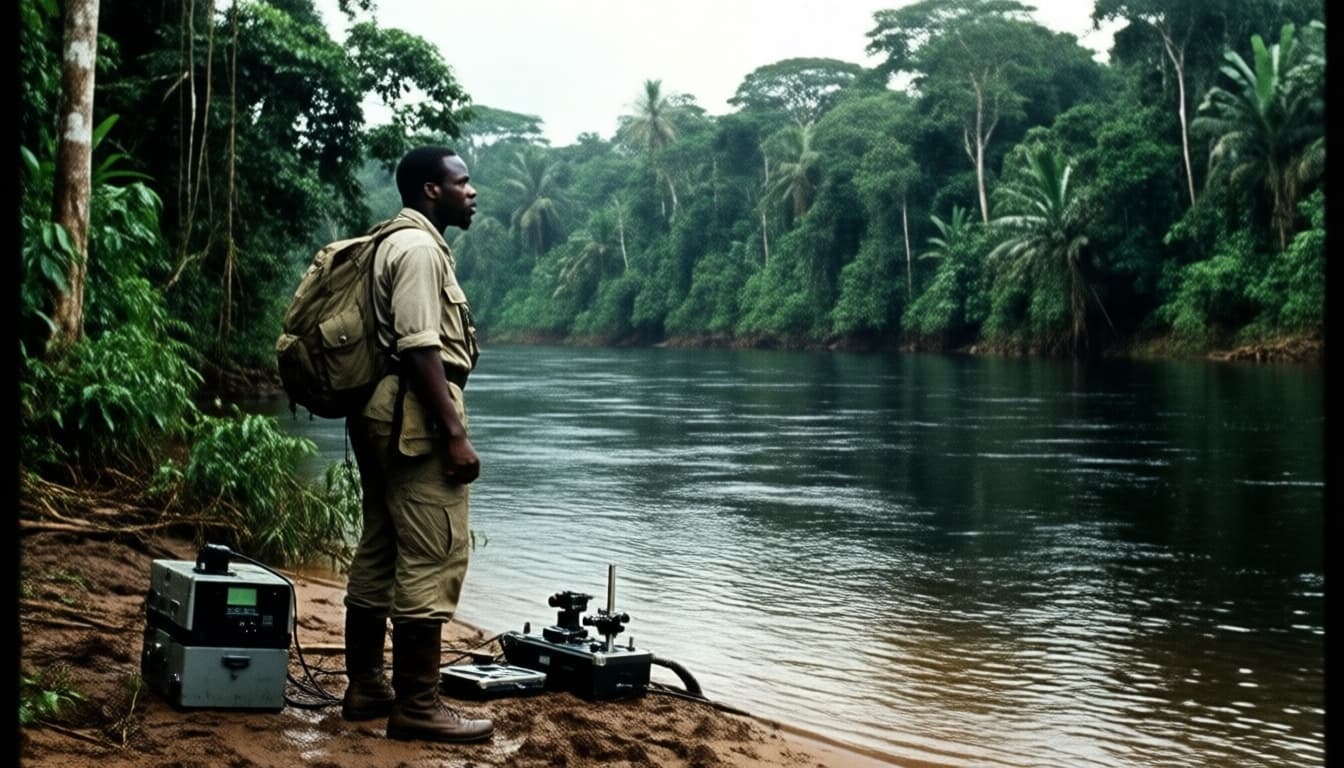
I arrived at a nameless stilt-house village, where the jungle pressed down upon the riverbanks. The air was thick and humid, smelling of rich earth and decaying plants. The Cestos River was like a wide, brownish artery, its surface calm yet deceptively powerful. Initially wary, the residents eventually offered fragmented stories, casting glances at the river each time sunlight glinted on its surface. They called it ‘the river’s breath’ – a sudden, deep exhalation that preceded every disappearance. My initial investigation focused on specific coordinates mentioned in recent reports: a point where a small tributary flowed into the main river, creating complex currents and deep pools. The riverbanks were treacherous, a mix of slippery mud and dense root systems. I deployed sub-aquatic low-frequency detection sensors deep into the water and placed infrared trail cameras along anticipated paths. The purpose was purely observational: to record, measure, and analyze. The jungle throbbed with the hum of insects, their ceaseless high-pitched chorus an almost physical presence. The river itself made a constant rustling sound as it brushed against the banks. Everything flowed in the fiercely ordinary rhythm of the tropics.
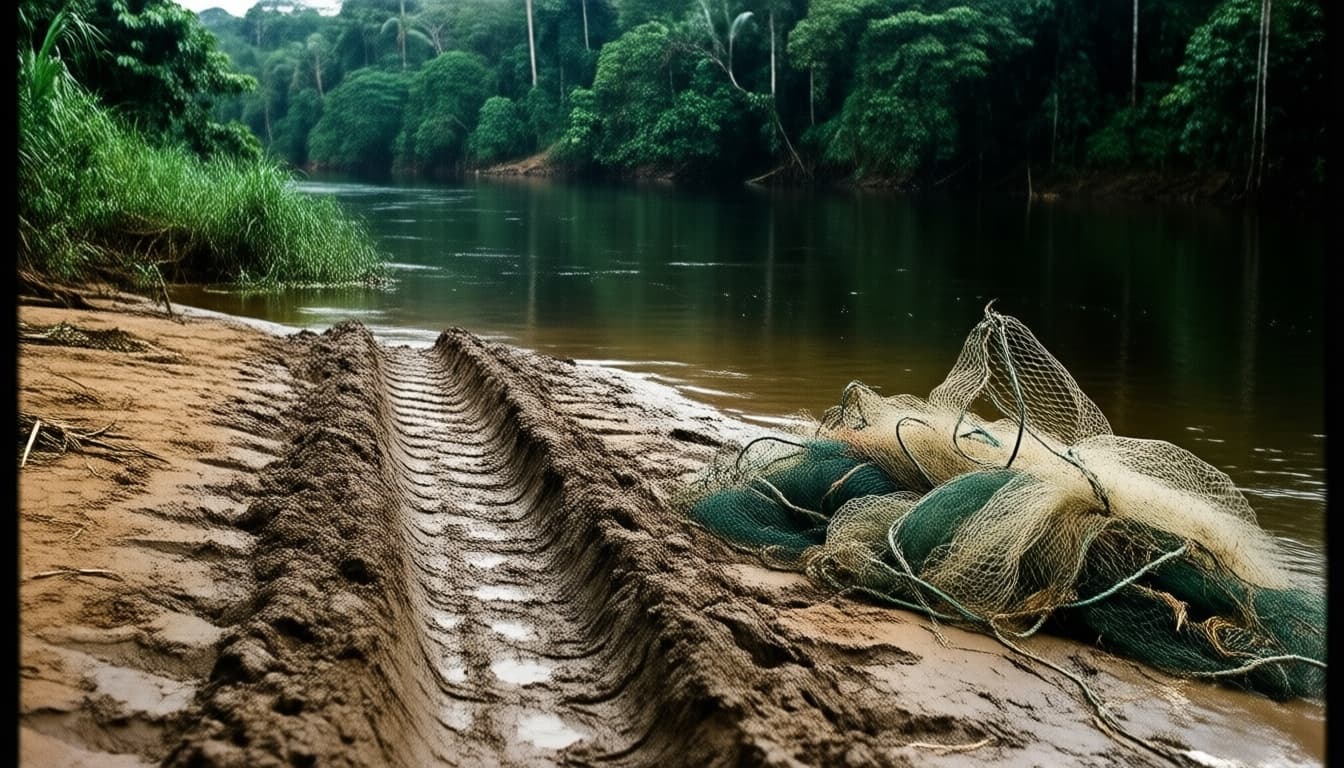
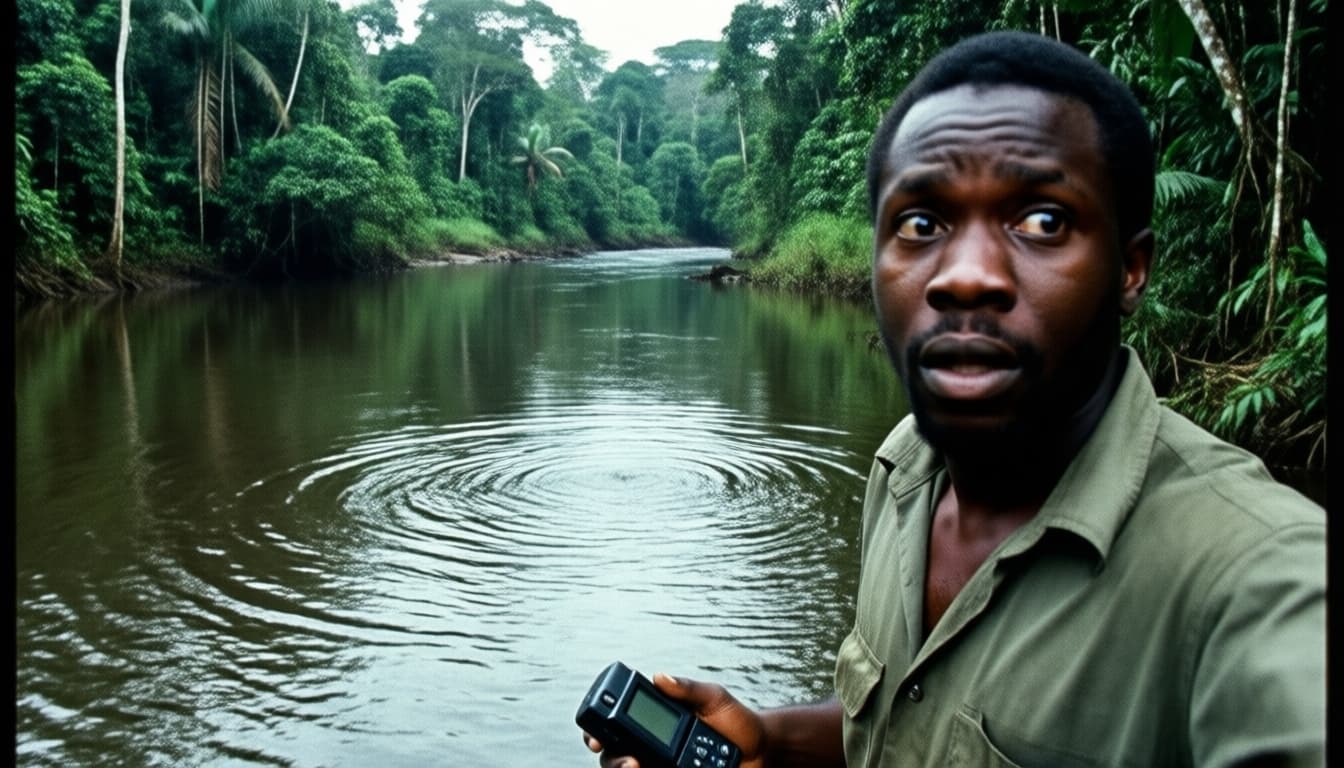
The first anomaly was subtle. My hydrophones began picking up irregular, incredibly low-frequency pulses. Infrasound, below human hearing, yet so intense it seemed to vibrate the water itself. It wasn't seismic activity, nor distant thunder. It was distinctive, rhythmic, and seemed to originate from the deeper parts of the river. Each time these pulses appeared, the fierce jungle chorus – insects, birds, rustling leaves – would vanish into an abrupt, violent silence. A deafening, utterly unnatural vacuum followed. It was in the midst of one such silence that I was examining a particularly deep drag mark on the riverbank – a track only something of immense weight and a curved underside could leave. Then, I witnessed a section of the river moving against the current. Approximately twenty meters of water temporarily rippled upstream before disappearing. There was no wind, no visible obstruction. It was as if the water itself momentarily possessed an independent will. A faint, metallic, and sour smell, like wet stone mixed with decaying fish, briefly filled the air before dissipating. My sturdy and reliable equipment began to malfunction. Camera batteries drained at an impossible rate, and encrypted satellite phones experienced data corruption whenever the infrasound pulses peaked. There was an undeniable sense of primal surveillance, a pressure from unseen depths that made the hairs on my arms stand on end. This was no longer just a matter of recording; it was a matter of palpable physical awareness.
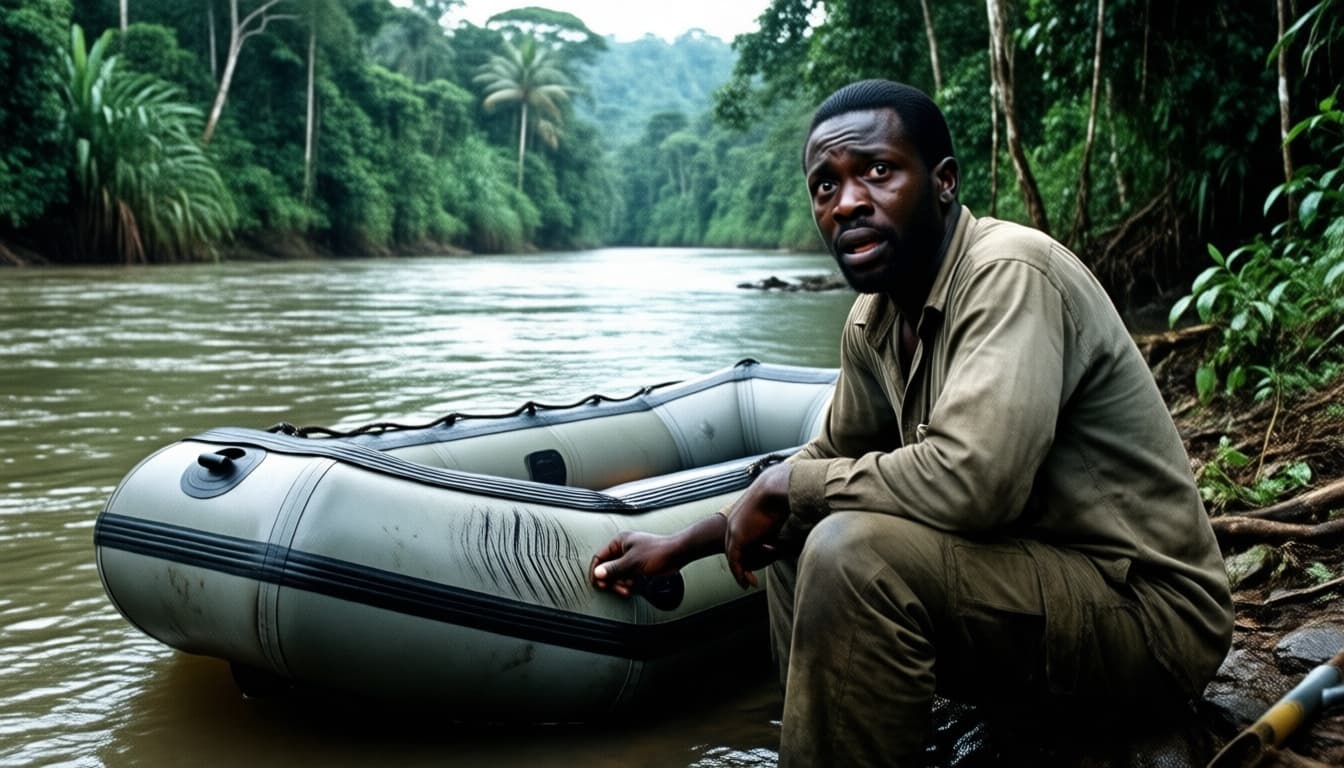
I was in my small rubber boat, attempting to retrieve a malfunctioning hydrophone. The sun was low, casting long, broken shadows across the darkening river. Again, that oppressive silence descended. This time, it was absolute. The infrasound hum was no longer merely felt; it vibrated through the boat's hull, up into my feet and chest. And then, the water surged.
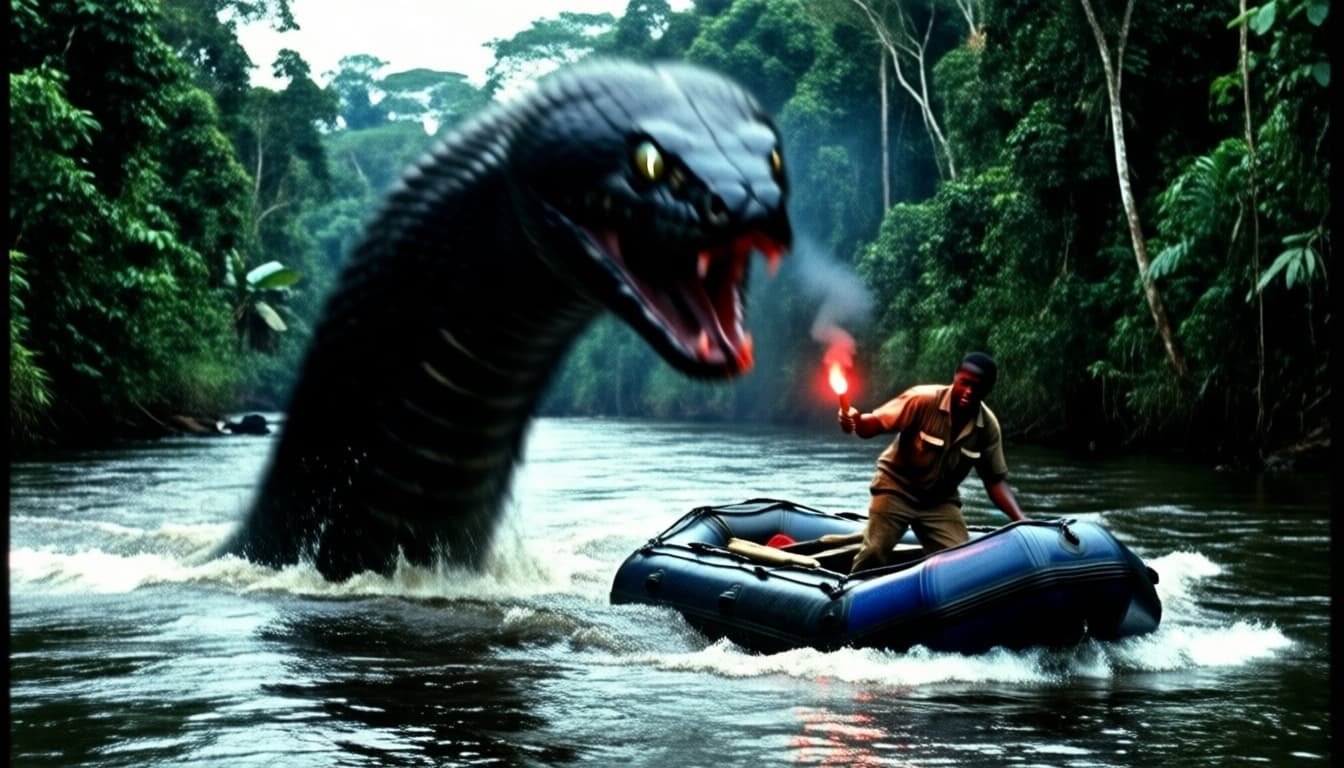
It wasn't just a splash; it was a sudden, violent upheaval. A massive, blurred black shape erupted from the surface with tremendous force, mere meters from my bow, in the deepening gloom. It was enormous, with a sleek, curving back and a powerful, almost serpentine tail. The water surged violently, a sudden, immense wave nearly capsizing my boat. The current, which had been gently pulling my anchor line, suddenly twisted and surged with an impossible, directed force. It was no longer a natural flow; it was a calculated power, pulling my boat not downstream, but directly towards the point where the creature had emerged.
Adrenaline surging, I fumbled for an emergency flare. The water around the boat became a chaotic vortex. A section of tail, as thick as a tree trunk and covered in obsidian-black scales, slammed down inches from my head. It sounded like an underwater depth charge exploding. The sheer impact rattled my teeth. Then, a massive, dark head broke the surface. Flat and triangular, its faintly glowing eyes, filled with primal, predatory intensity, locked onto me. It wasn't just observing; it was actively hunting. It pushed a powerful surge of water directly towards my boat, shoving it sideways. My leg, pressed against the rubber side of the boat, felt the direct, crushing force of the water hitting the hull. I fired the flare. The blinding red flash illuminated the monstrous form for a terrifyingly brief instant, revealing serrated ridges running down its spine and a horrifyingly massive mouth. The light seemed to deter it momentarily, but the water around me still surged, violently pulling me into a dark, swirling vortex. I desperately wrestled with the anchor line, cutting it with my survival knife. It was at that moment that something immense scraped beneath the boat. A rough, chitinous grinding shook the entire vessel. The released current finally freed me, but the presence remained below, a dark, churning entity in the river. My heart pounding, I rowed frantically, scanning the surface for any further sign, certain it would return.
I barely reached the riverbank, half-submerged and gasping for air. A deep, spreading bruise bloomed on my left thigh, as if the river itself had tried to reclaim me. My observation boat bore a long, deep gouge, too precise for an accidental impact. The jungle, which had been silent during the climax, was now once again filled with its cacophony, as if trying to erase the memory of the unnatural quiet.
Back at my makeshift shelter, shivering with a cold dread beyond mere fright, I reviewed the retrieved footage and audio. The trail cameras had inexplicably malfunctioned or captured only still frames at crucial moments. But one hydrophone, the one I had almost failed to retrieve, had survived. The recording contained a clear, deep hum, vibrating with an almost conscious intensity beneath the sounds of the current and my desperate struggles. And then the sound of something vast moving through the water, followed by a low, guttural roar that felt less animalistic and more like grinding stone, reverberating with primal force. Just before the audio cut out due to water damage, a sharp, distinct 'click' was recorded, something I hadn't noticed in the chaos.
Upon closer examination of the boat's gouge, faint iridescent sheen was visible, along with tiny, impossibly hard fragments of an unknown, obsidian-like substance embedded within. The horror wasn't simply from the near-death experience; it stemmed from the realization that what I had faced was not merely an unidentified creature. It was a sentient being, capable of manipulating its environment, bending the very physical laws of the river to its will. The directed currents, the organized silence, and the way it seemed to know I was there – these were not actions of a mere beast. I had the evidence. Within the broken recording devices and the strange fragments, there was undeniable physical proof. But it was too alien, too impossible to submit formally. It would surely be dismissed as trauma-induced hallucination. The Cestos River, once a mere geographical feature, now lives in my memory as a breathing entity. Every ripple I see in water, every low hum of distant machinery, brings back the chill of that unknowable silence, that horrifying intelligence in the depths. I escaped, but the river still holds its secrets, and I, the lone recorder, am now bound to its dark, unspeakable truth.
[ CLASSIFIED VERDICT ]
[ACCESS LOG - SOURCE FILE]
This story is based on the legend of 'Gbbali', an unknown giant aquatic creature said to inhabit the Cestos River in Liberia, West Africa. Gbbali is described not merely as an animal but as a sentient being capable of manipulating its environment, preying on riverside livestock and fishermen, causing mysterious disappearances and strange phenomena.