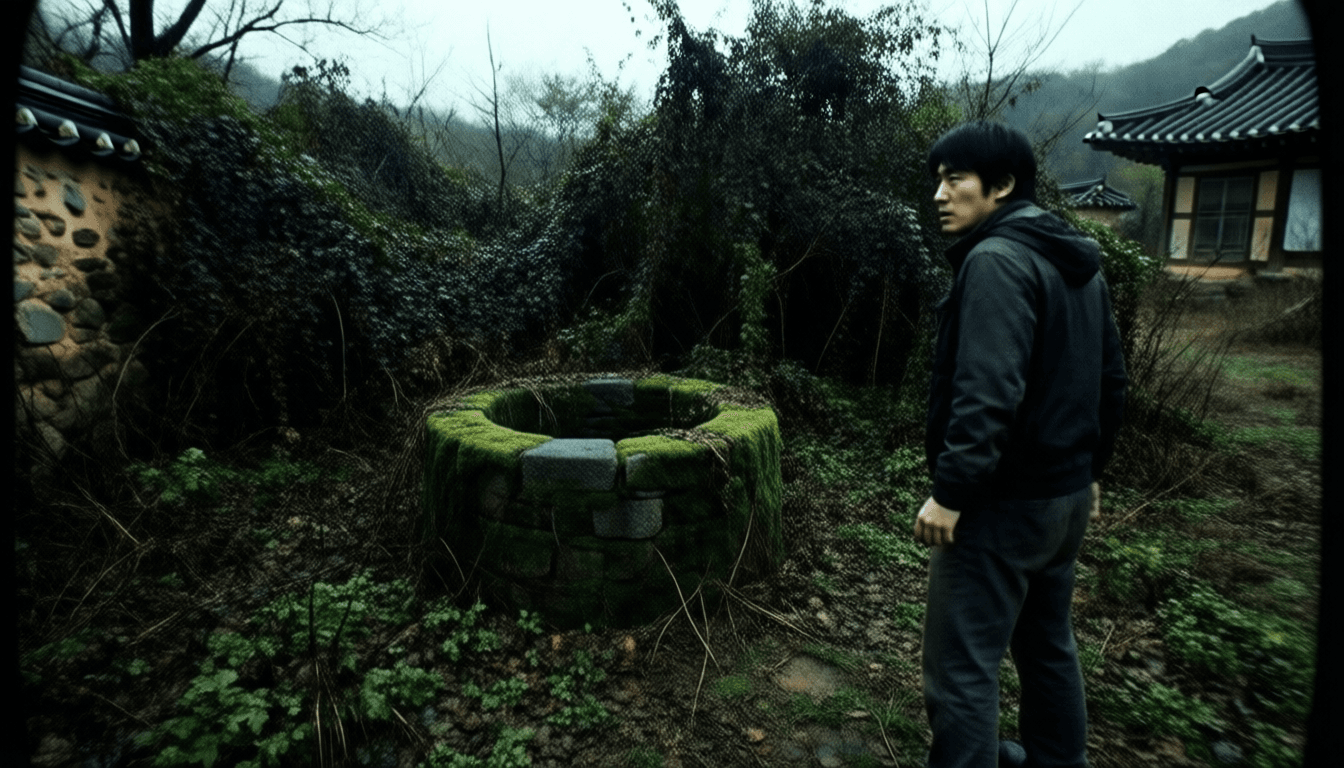
The Resentment of Jiju-ri Well
The ‘Jiju-ri Well Ghost Story’ began circulating a few years ago like fragmented whispers across various Korean online communities, particularly on DC Inside’s mystery board and local information sites. Posts dating back to 2017 consistently described unexplained phenomena surrounding an old, abandoned well in a forgotten rural valley known as Jiju-ri. Keywords such as ‘forgotten well,’ ‘night cries,’ and ‘fall accidents’ appeared with chilling repetition. Eyewitness accounts, often dismissed as superstition, reported localized extreme temperature drops around the well, overwhelming feelings of sorrow, and faint, almost imperceptible mournful sounds emanating from the well itself. One post, in particular, included a blurry cell phone photo of a white silhouette reflected on the murky surface of the well’s water, which was immediately dismissed as lens flare. More chilling was the account of an elderly farmer whose usually vibrant hunting dog, upon nearing the well, refused to approach, instead crying inconsolably and mournfully before vanishing completely the next day. Collective speculation consistently pointed to a ‘처녀귀신’ (cheoryeogwisin) — a virgin ghost trapped by unfulfilled resentment. My preliminary research uncovered a faded land deed from the 1920s, which specified the well was located on land once owned by a family whose youngest daughter had mysteriously drowned there.
Equipped with standard gear — a thermal camera, parabolic microphone, EMF meter, digital recorder, and powerful lighting — I headed for Jiju-ri. The valley itself was breathtaking. The remnants of a village amounted to only a few crumbling Hanok houses, overgrown with brambles and tall grass. The air was unnaturally still, a heavy silence that seemed to absorb every distant sound. My footsteps on the dry leaves and cracked earth echoed eerily loud.
Following a path so old it was almost indiscernible, I eventually located the well. It stood in a small clearing, almost entirely swallowed by dark, tangled vines. The stone rim was smooth, worn by centuries of human touch and wind, parts of it crumbling. The well itself was deep, its dark water barely visible even under the intense midday sun. Unlike the online posts, there were no recent signs of human activity or offerings. Before I even set up my equipment, a faint chill was immediately palpable. Yet, the EMF meter stubbornly remained within normal ranges, initially suggesting no immediate anomalous electromagnetic activity.
Upon deploying the thermal camera, the first clear anomaly emerged. Directly above the well, it captured a distinct localized cold spot, several degrees lower than the surrounding ambient air temperature. It was an inexplicable drop, unlike its surroundings. This chill wasn't just a breeze; it was a static, persistent pocket of cold.
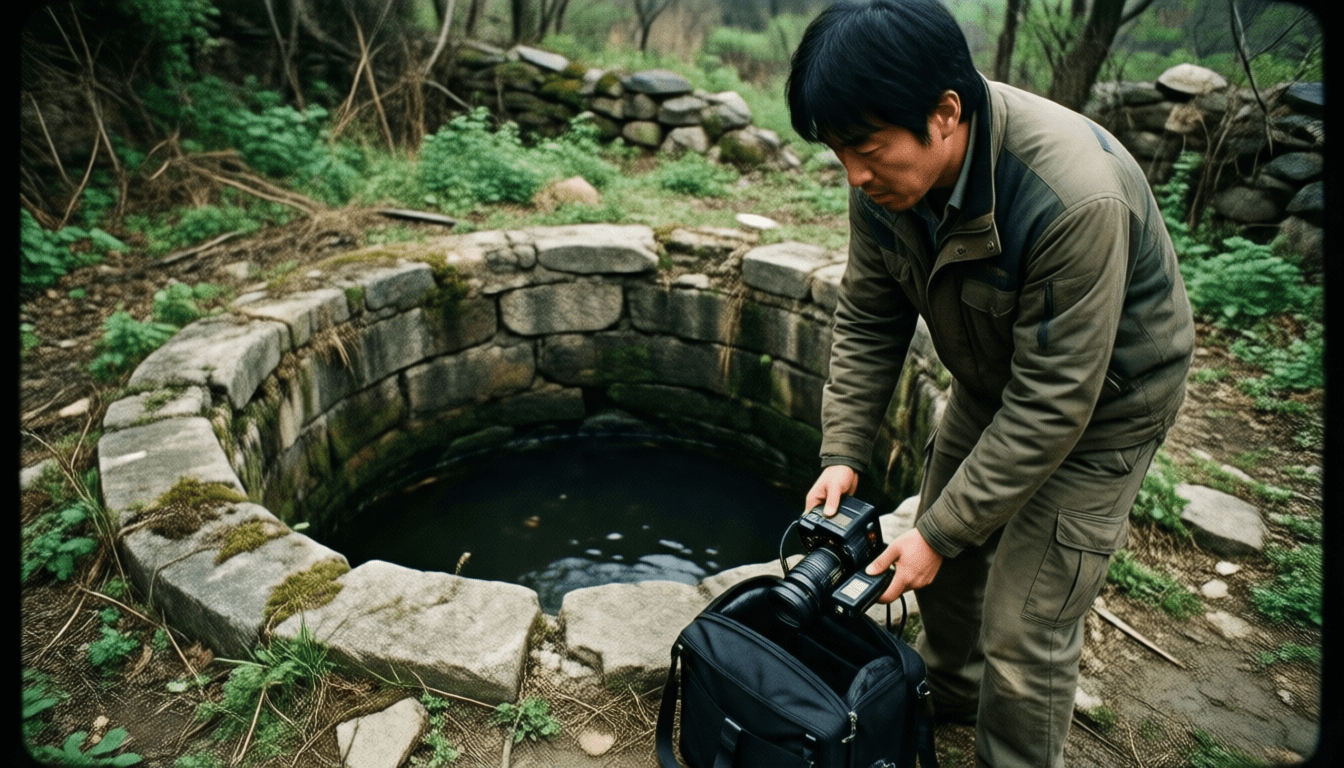
Next came the acoustics. The parabolic microphone, designed to pick up the minutest distant sounds, registered almost no natural ambient noise. No insects, no rustling leaves, not even the chirping of birds common in the deep countryside. Instead, it recorded a pervasive, low-frequency hum that seemed to emanate directly from the well. Analyzing the digital recording revealed something else in the waveform: a faint, almost consciously imperceptible to the ear in the field, but distinctly repetitive sobbing lament upon spectral analysis.
I peered into the well. The water was unnaturally dark, reflecting nothing but the concentrated beam of my tactical flashlight. No ripples, no discernible depth — just an opaque blackness that seemed to swallow the light. I dropped a small pebble, and the splash was oddly dull, with a delayed sense of sound. More disturbingly, no corresponding ripples spread across the surface, as if the liquid absorbed the impact without disturbance. I aimed my camera to capture my reflection. The flash briefly illuminated the darkness, but the resulting image was blurry and distorted, revealing a faint, elongated white shape faintly visible beneath my own dim reflection. It seemed to vanish into the darkness too quickly to be a photographic anomaly.
A sense of profound sorrow and desperate loneliness descended upon me, an uninvited guest. It was an intense emotional wave, physically crushing. My chest ached. It was a feeling entirely disconnected from my own mental state, an intrusive despair so menacing it threatened to unbalance me entirely. But the investigator's compulsion to document overrode the sudden, intense urge to flee.
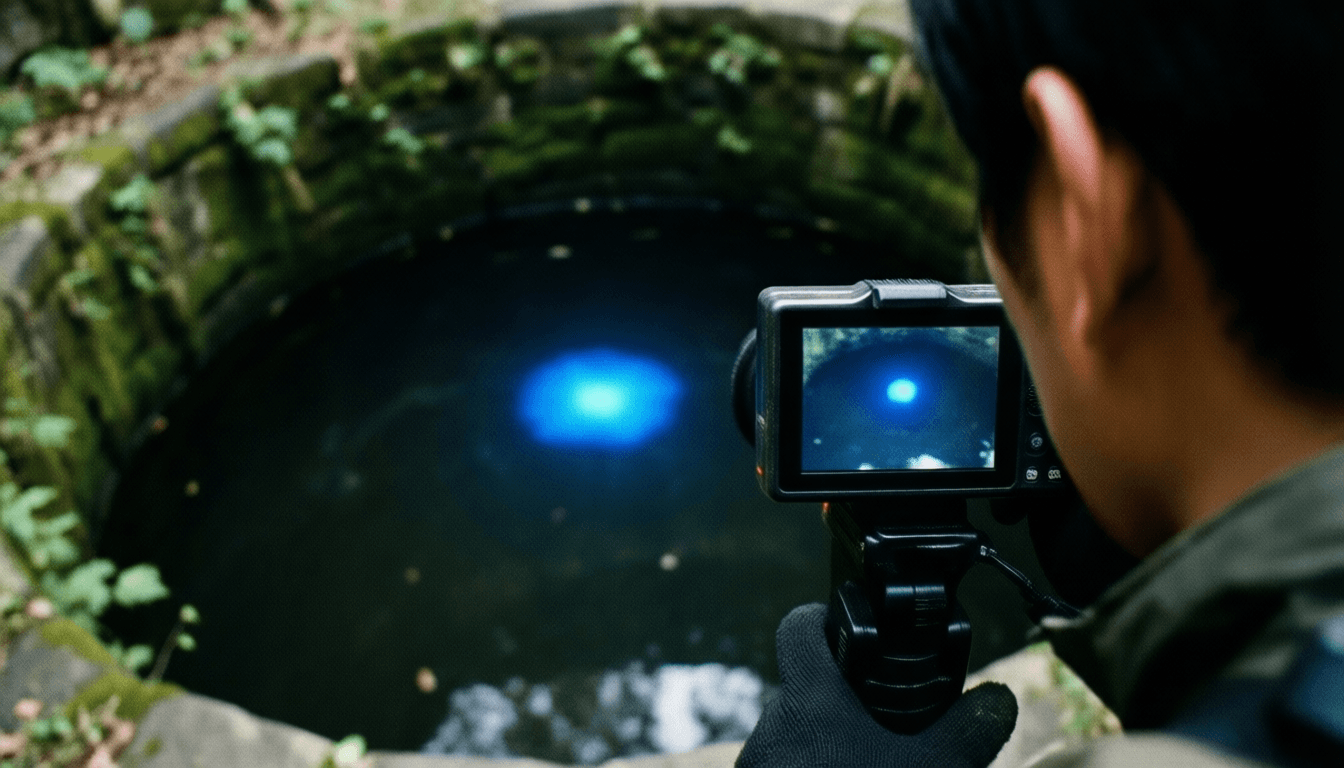
Knowing it was foolish, I lowered a waterproof action camera on a sturdy climbing rope into the well, intending to illuminate its depths. As the camera descended, the low lament, which had been captured on my voice recorder, dramatically amplified, morphing into a piercing wail, growing in volume and clarity. The cold emanating from the well intensified, becoming sharp enough to cause bone-deep aches. My exposed skin felt numb.
Then, the water moved. Not rippling, but swelling. Slowly at first, then rapidly, it rose silently. A column of dark liquid defied gravity, stretching upwards out of the well. Within this rising water, a pale, elongated shape began to coalesce. It was indistinct, like smoke in water, yet it was a white form with long, dark streaks — unmistakably hair.
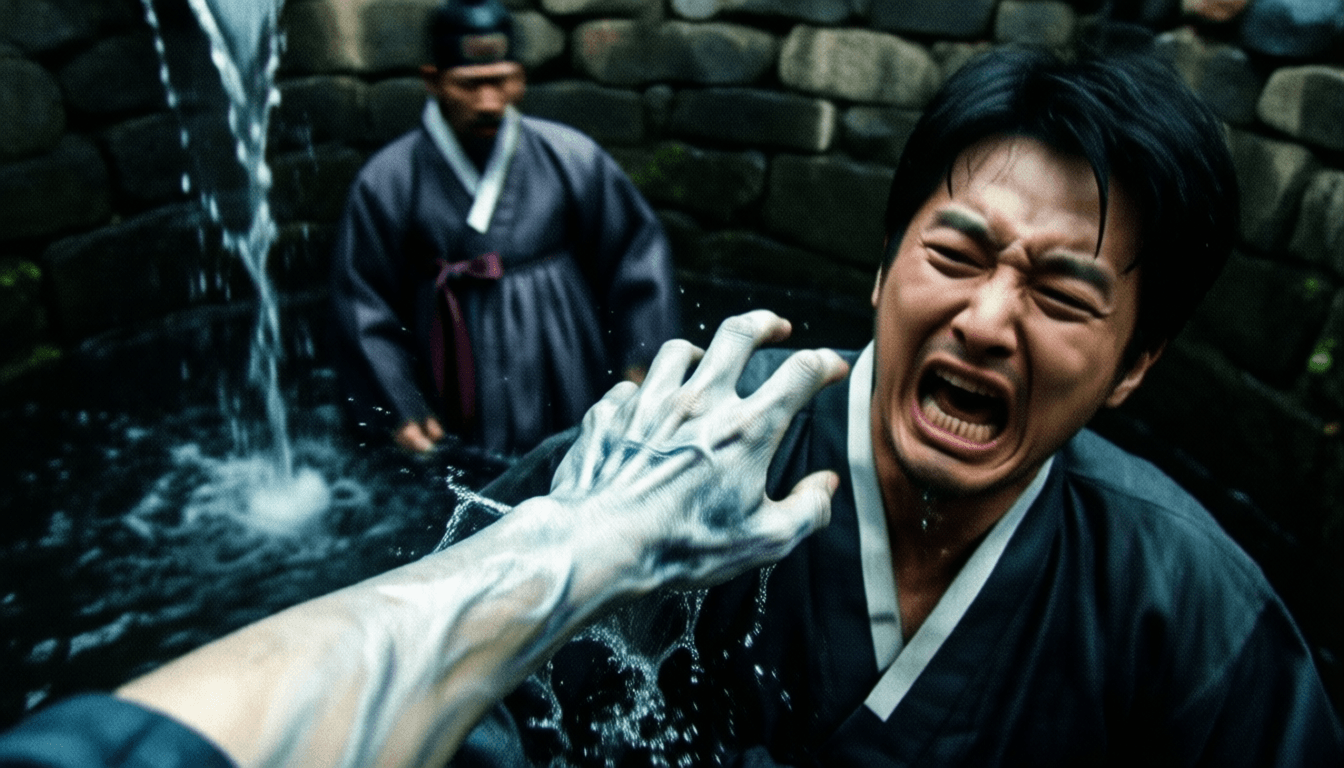
The surging water now formed a rough, reaching ‘arm,’ lunging out of the well. It seized my right wrist with incredible force. The sensation was beyond mere cold; it was like absolute zero. Simultaneously, I felt a burning, freezing pain and the weight of unimaginable sorrow that threatened to crush my very will. The mournful wail was no longer an external sound; it was deafening, an endless lament echoing inside my head. For a terrible moment, I saw a featureless, pale face within the surging water, its eyes like bottomless pits of despair. The ‘hand’ tugged relentlessly, with utterly unnatural strength, attempting to drag me into the black abyss. I struggled violently. My equipment bag caught on thorny roots, providing a desperate, temporary anchor. The fight was primal, instinctual. This was no passive ghost; it was an active attempt, a desperate need to drag another into its eternal despair. With a terrible scream, I managed to wrench my wrist free from the unseen grip. With skin tearing pain, I tumbled onto the cold, hard ground. The column of water instantly contracted, silently sinking back into the well with an unnatural splash. All that remained was my ragged breathing.
I fled the well, driven by instinct, but my investigator's mind was already documenting everything. Days later, back in the sterile environment of my data room, the physical and psychological marks remained.
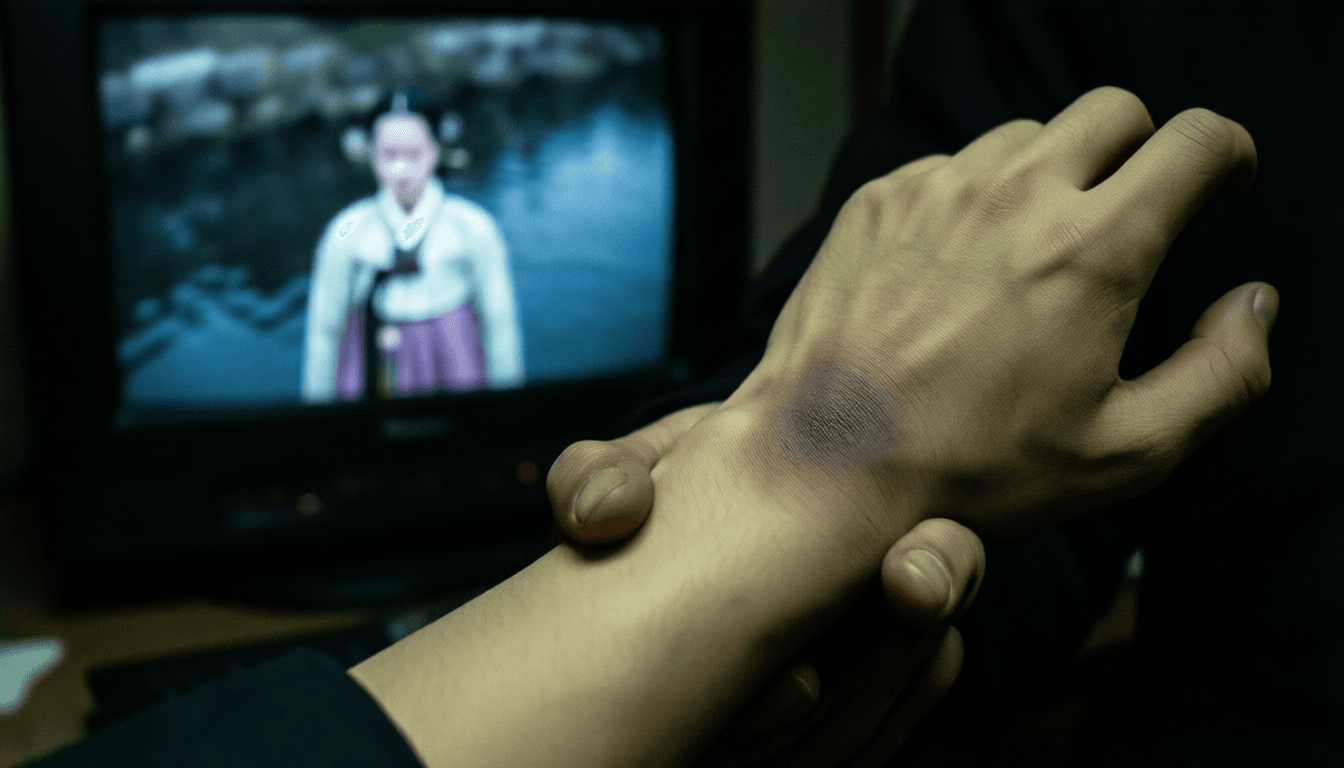
On my right wrist, a faint, mottled bruise lingered where I had been seized. It was a permanent discoloration, unnaturally cold to the touch, often causing an unconscious shiver regardless of ambient temperature. A faint, phantom ache pulsed within it.
Reviewing the audio recorded at the well, the previously subtle lament was now undeniably present throughout the entire recording. Even moments before my physical approach to the well, a constant, low, rhythmic sobbing permeated every layer of sound. It was as if the recording device, or perhaps I, had only become attuned to it after the direct confrontation, as if it had always been there, just waiting to be heard.
Though largely corrupted by the sudden water surge, the dive camera footage contained one blurry but intact frame just before the feed cut out. It showed the murky abyss, but in the background, a faint, pale outline of a young woman in Hanbok, her head bowed in eternal sorrow, was distinctly visible. Her image was not a reflection on the surface; it existed within the water itself, in its deeper, colder currents.
I often find myself staring at the thermal anomaly on my wrist, or listening to the almost imperceptible sorrow embedded in my audio files. I survived, but the encounter changed me irrevocably. The sorrow of Jiju-ri well is no longer a distant rumor or an intriguing case file. It is now a cold whisper in my life, a silent, eternal elegy that I carry. And I understand all too well: some tragedies are too profound, too deeply rooted, to ever truly sleep. They merely wait for new ears to hear their unending wail.
[ CLASSIFIED VERDICT ]
[ACCESS LOG - SOURCE FILE]
This story is based on a Korean urban legend surrounding an old, abandoned well in the forgotten rural village of Jiju-ri. The well sits on land once owned by a family whose young daughter mysteriously drowned there in the 1920s, leading to rumors of a '처녀귀신'—a virgin ghost trapped by unfulfilled sorrow. Unexplained temperature drops, overwhelming feelings of sadness, and mournful wails are often reported around the well.