The Pulsation of Marui Bridge
Initially, digital rumors about the demolition of Marui Bridge were just another local curiosity. But a Shizuoka Shimbun article detailing unexplained issues during the dismantling of this old concrete bridge, built over the Fujikawa River in the early 20th century, especially concerning one of its central piers, piqued my interest. Several demolition workers testified to hearing “muffled wailing” and “groans” while drilling into the concrete core of pier #3, though most dismissed it as auditory illusion or psychological stress. However, the consistency of the testimonies was certainly peculiar.
The story truly gained traction when an anonymous worker posted a photograph on a local history forum. It showed the fresh cross-section of pier #3 after partial blasting. Deep within the concrete, a strange, human-sized cavity was revealed, and even more chillingly, dark, reddish-brown “vein-like” patterns extended from it into the surrounding material, eerily resembling a circulatory system. Engineers attributed it to rebar corrosion and water ingress, but the forum quickly buzzed with theories of Jinshu (人柱) — the ancient Japanese custom of burying living sacrifices in major constructions to ensure stability and appease earth deities.
To a documentarian like myself, specializing in the intersection of folklore and mystery phenomena, this wasn't just another ghost story. It was a tangible physical anomaly, supported by widespread, corroborated testimony, and directly linked to a gruesome historical practice. The ominous organic geometry in that photograph demanded closer investigation.
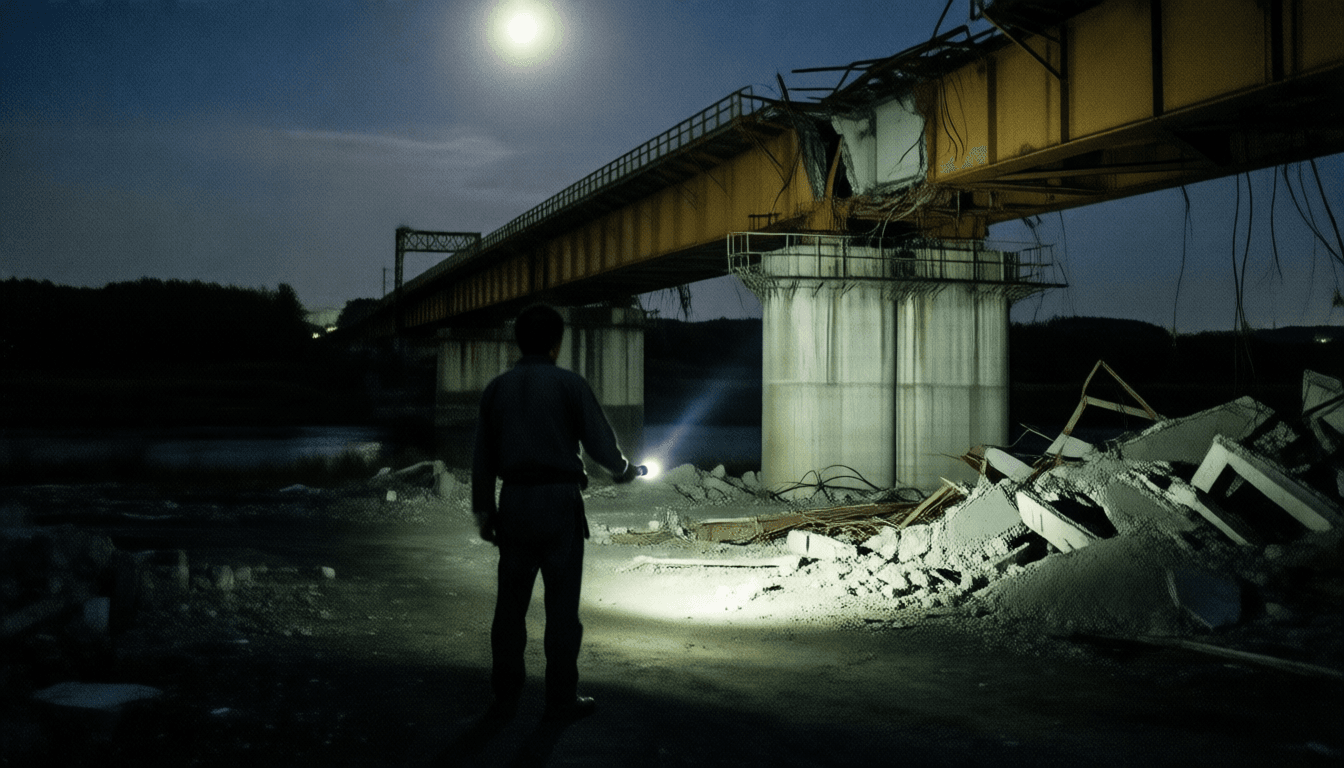
Well past midnight, the demolition site was a vast, desolate expanse. The air was cold, thick with the smell of broken concrete and river mud. Most of Marui Bridge was gone, leaving only a skeletal frame of twisted rebar and shattered debris. My gaze fixed on pier #3, cordoned off, standing like a colossal, partially severed stump under the moonlight. The distant hum of the city felt entirely alien here.
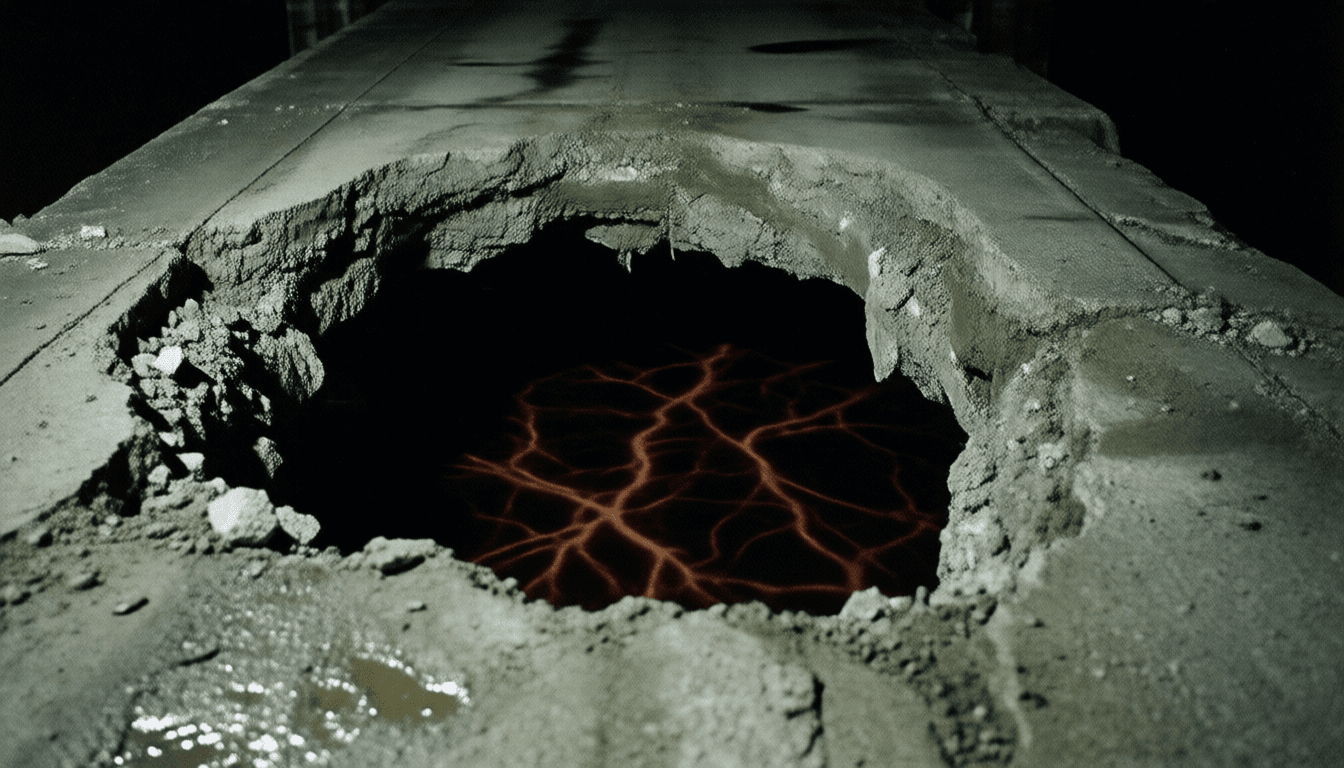
Navigating through the rubble, I reached pier #3. Its scale up close was immense. The exposed concrete face, where the blasting occurred, was rough and jagged. The problematic cavity was immediately visible: a roughly oval-shaped void deep within the pier’s core. Unlike the coarse faces of the blasted fragments, the inner surface of the cavity was strangely smooth and partially polished. The “vein patterns” were far more intricate and unsettling in person — a complex reticulum of iron-rich dark stains that permeated the stone, inexplicable by simple corrosion. A distinct, unnatural cold radiated from the cavity, palpable on my skin even through my thick coat.
I cautiously dropped a small stone I held into the cavity. The impact was not crisp. Instead, there was an unnervingly muffled, dull thud, followed by an abnormally prolonged, breathing echo, as if the stone itself was being absorbed deeper into the sound. My own breathing sounded loud, then was swallowed by the oppressive, unnatural silence that draped around the cavity, even silencing the distant city hum.
A faint, yet definite, pressure change tickled my ears, like rapidly ascending in an elevator, followed by a subtle resistance in the air itself, making each breath feel infinitesimally heavier. There was a puddle of rainwater on a flat, exposed concrete slab near the cavity. I watched, mesmerized, as ripples didn't start at the edges, but emanated from the very center of the puddle, then subtly reversed, pulling the surface tension inwards before vanishing. It defied the normal physics of liquid.
My usually sharp flashlight beam seemed to subtly warp around the cavity’s edges, distorting its form at the periphery of my vision. The vein patterns appeared to subtly shift, seemingly fluid, as if a dormant vascular network was slowly reawakening. The surrounding cold intensified, appearing to emanate not from the ambient air, but from the very substance of the concrete itself. I tried to rationalize every occurrence: air currents, optical illusions, an overactive imagination. But as they accumulated, I felt a knot of dread tighten in my stomach. In the silence that had swallowed even the city's distant noise, a regular 'thump, thump' began. Too rhythmic for settling debris, too deep to be external. It resonated through the soles of my boots, clearly emanating from the deepest core of the pier. My flashlight, despite having fresh batteries, flickered once, briefly. An irresistible pull drew me closer to the cavity. The urge to lean in and listen to the unholy heartbeat within the stone.
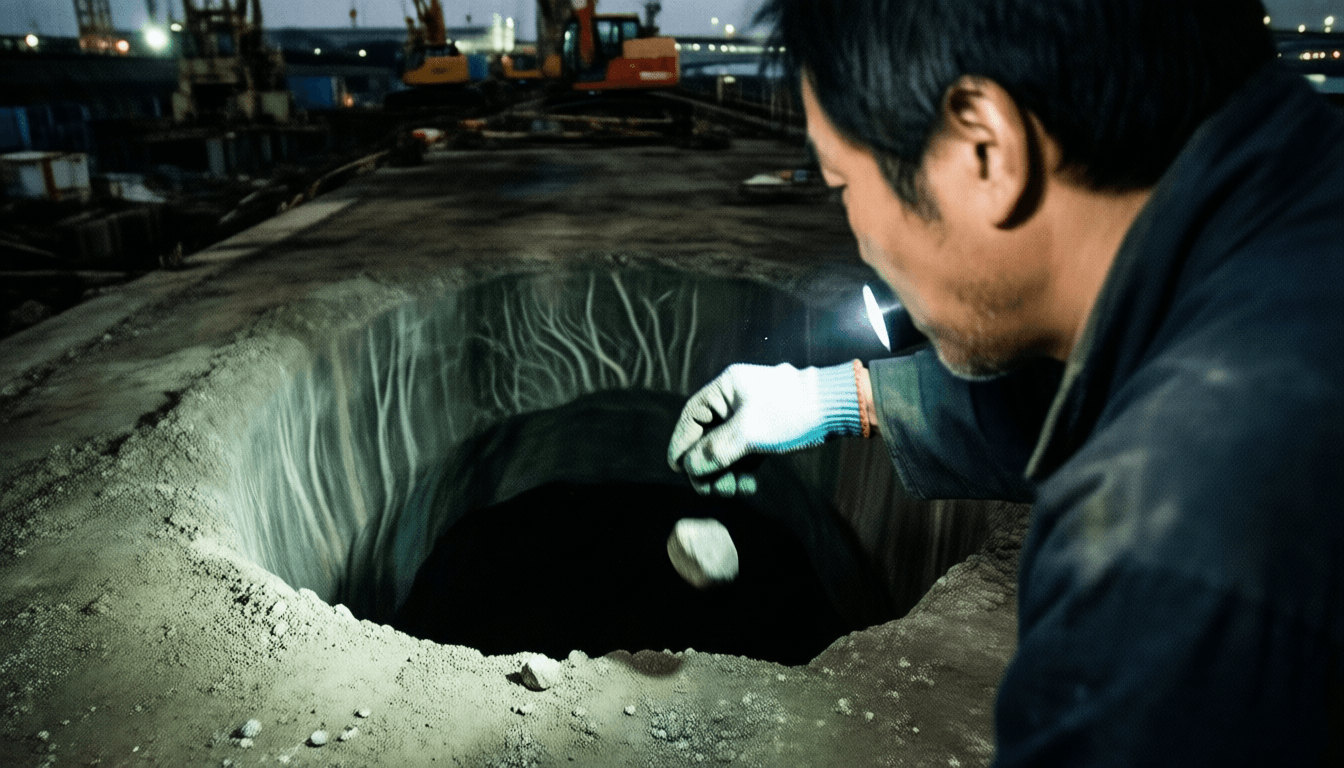
Driven by an unknown fascination, I leaned into the cavity, my flashlight beam piercing its depths. The regular 'thump, thump' was undeniable now, resonating with chilling clarity. The air within the cavity was suddenly thick and heavy, carrying a faint, organic scent — damp earth, old blood, and something else intensely alive and suffering.
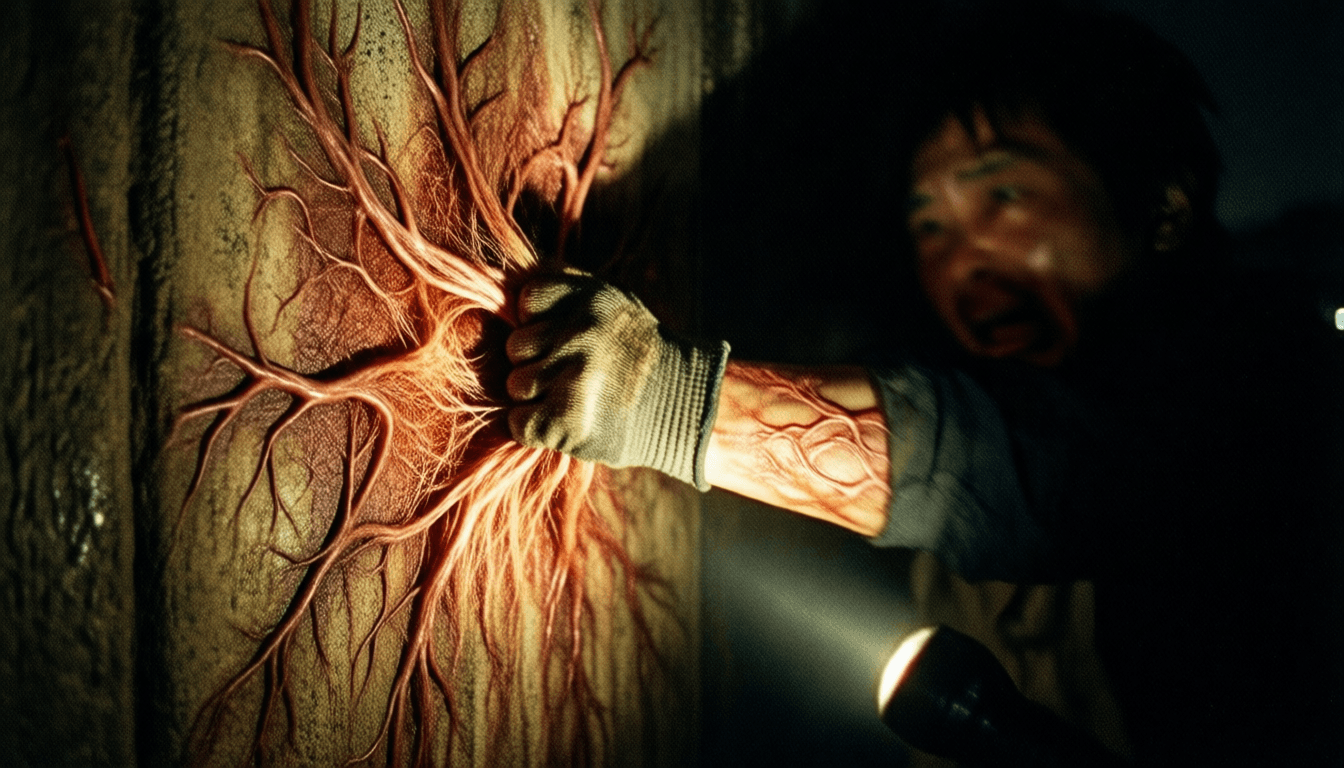
As I extended my arm deeper, the rough concrete surface of the cavity felt strangely warm and pliable against my gloved fingertips. It was no longer inert stone. The reddish-brown “vein patterns” on the surrounding walls pulsed with a sickly light from within, deepening in hue and texture. They were not stains; they were something *in* the material. It was awakening. A deep, guttural groan, a horrific sound mingled with faint, muffled screams, erupted as the cavity 'contracted'. It wasn't a collapse; it was a deliberate, overwhelming grip. My arm was suddenly seized, the material morphing around it, tightening. It was warm, impossibly dense. In the crushing pressure, I felt the distinct texture of something cold and almost fibrously organic, not stone or rebar, piercing deep into my flesh.
The regular 'thump, thump' turned violent, reverberating through my trapped arm, shaking my entire body. Low, hoarse groans emanated directly *from within* the substance gripping me; it was not an echo. My flashlight flickered violently, dimmed to a dying ember, then died completely. I was enveloped in absolute, suffocating darkness within the pier’s grasp.
The pressure on my arm intensified, threatening to shatter bone. The concrete was unequivocally alive, malevolent, persistent. It wasn’t just holding me; it was drawing me in, assimilating me. In the crushing grip, I felt something sharp and cold, like a bone fragment, piercing deeper into my flesh. The organic stench grew more potent, becoming sickeningly sweet and metallic. My scream was choked, swallowed by the living stone. It wanted me. It wanted another sacrifice.
The memory of my escape was a blur of searing pain and primal adrenaline. I recall a sudden, tearing crack – perhaps the concrete briefly loosened, or I ripped myself free with desperate strength – then blindly scrambling and crawling out into the night, leaving my multi-tool forever swallowed by the pier. I lay panting in the cold rubble. My arm throbbed and ached, but miraculously, it was intact. No broken bones, no visible lacerations.
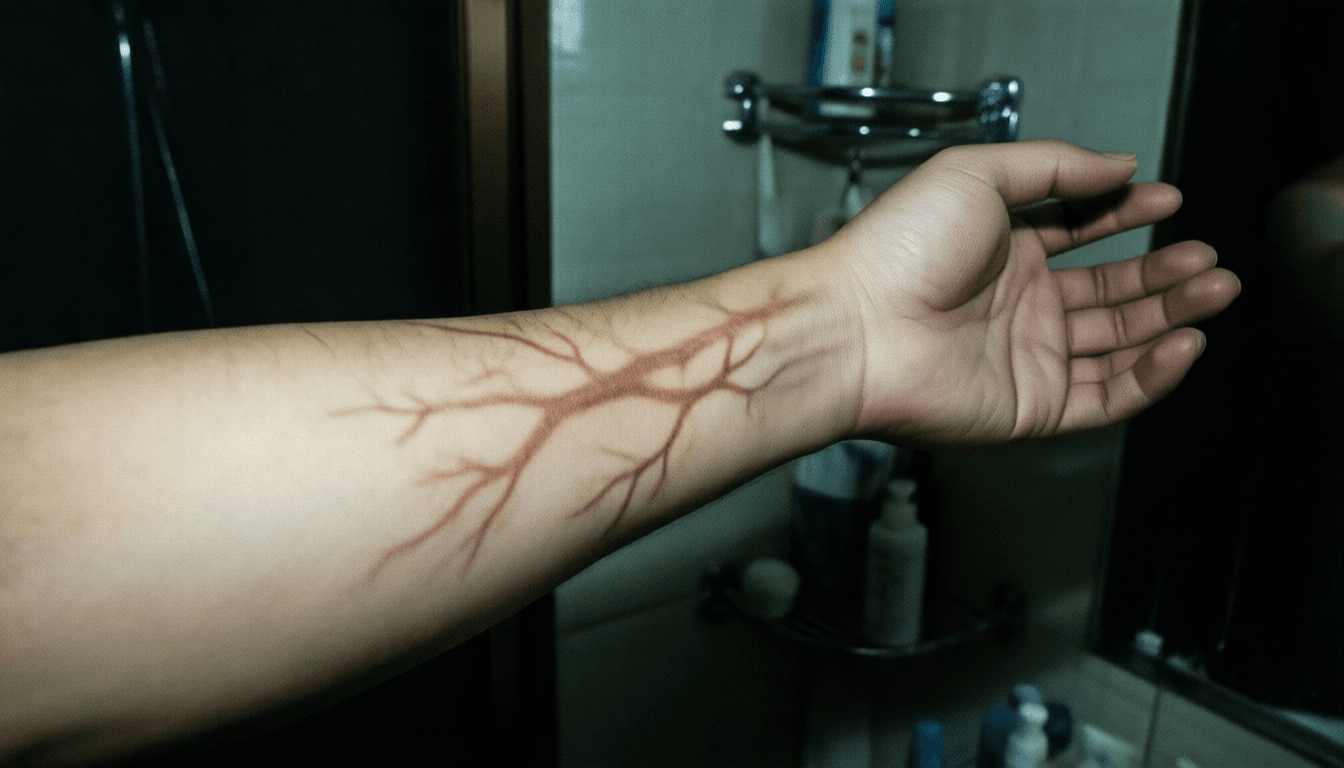
Hours later, safe but profoundly traumatized, I examined my arm under harsh bathroom light. There were no bruises or cuts where the concrete had pressed. Instead, a faint, reddish-brown pattern bloomed on my skin, an exact mirror of the “vein stains” I had seen in the pier’s core. It wasn’t a surface mark. Beneath the skin, there was a faint, hazy network of what seemed like veins, pulsing with a subtle, almost imperceptible rhythm. When I touched it, it was abnormally cold. A deep, bone-chilling cold.
This was not the horror of a spectral presence or a haunting. This was the horror of something far more ancient, more physical, and infinitely more terrifying. The Jinshu were not sacrifices *to* the structure; they *became* the structure. Their living essence, their consciousness and suffering, bound into the concrete and steel, making the Marui Bridge not a mere monument, but a living, perpetual tomb. It had been alive, in eternal agony, for decades. And now, a piece of that agony, a fragment of that terrible, living reality, was imprinted on me. I carried a piece of the living stone.
Once, I tried to explain to a trusted colleague, to show them the cold, pulsating mark on my arm. But the words caught in my throat. How could I explain that a bridge was 'alive'? They would have only seen fatigue, shock, delusion. The mark remains. A constant, chilling reminder. The Marui Bridge is gone, but the knowledge, and a fragment of its horrifying, living reality, has transferred. In the deepest silence of my study, I sometimes feel the faint, regular 'thump, thump' not in my ears, but resonating within the very bones of my left arm. The sacrifice succeeded. The structure was impossibly strong. And it remembers. Now, inescapably, I remember too.
[ CLASSIFIED VERDICT ]
[ACCESS LOG - SOURCE FILE]
This story is based on the ancient Japanese custom of Jinshu (人柱), a gruesome ritual where living individuals were buried alive in the foundations of major structures to ensure their stability and appease local deities. The rumored Marui Bridge, during its demolition, unveils traces of this Jinshu practice, proposing the terrifying concept that the suffering of the sacrificed souls lives on within the structure itself.