Pistaco's Mark: The Hollow Fear of the Andes
In the ancient folklore of the South American Andes, the Pistaco has largely been dismissed as a fictional monster, a metaphor for colonial fears or economic exploitation. However, in November 2009, this ancient legend surged into a terrifying reality, drawing international media attention. Peruvian authorities announced the dismantling of a criminal organization that had been extracting and selling human fat from the bodies of victims after a series of disappearances in the remote Huánuco region. Tabloids dubbed it the "Pistaco Case," sensationally reporting that the extracted fat was sold to European cosmetic companies for $15,000 per kilogram. Yet, this story was soon officially retracted, criticized as sensational exaggeration by authorities and police incompetence, followed by public apologies.
However, in the high-altitude Andes, particularly among isolated Quechua communities, this "official" retraction held no meaning. For generations, adults had warned children with stories of the Pistaco. Described as a pale-faced, bearded foreigner or a local operating in secret, the Pistaco was said to ambush travelers, extract their fat, and leave behind "hollowed-out" corpses. The 2009 incident, whether fact or fabrication, merely reconfirmed a fear that had always existed for them. It revealed, albeit in a distorted form, a glimpse into a deeper, older phenomenon difficult for modern society to comprehend. My investigation began with the question of whether "official fiction" might be concealing a persistent and chilling truth that the modern world is reluctant to acknowledge.
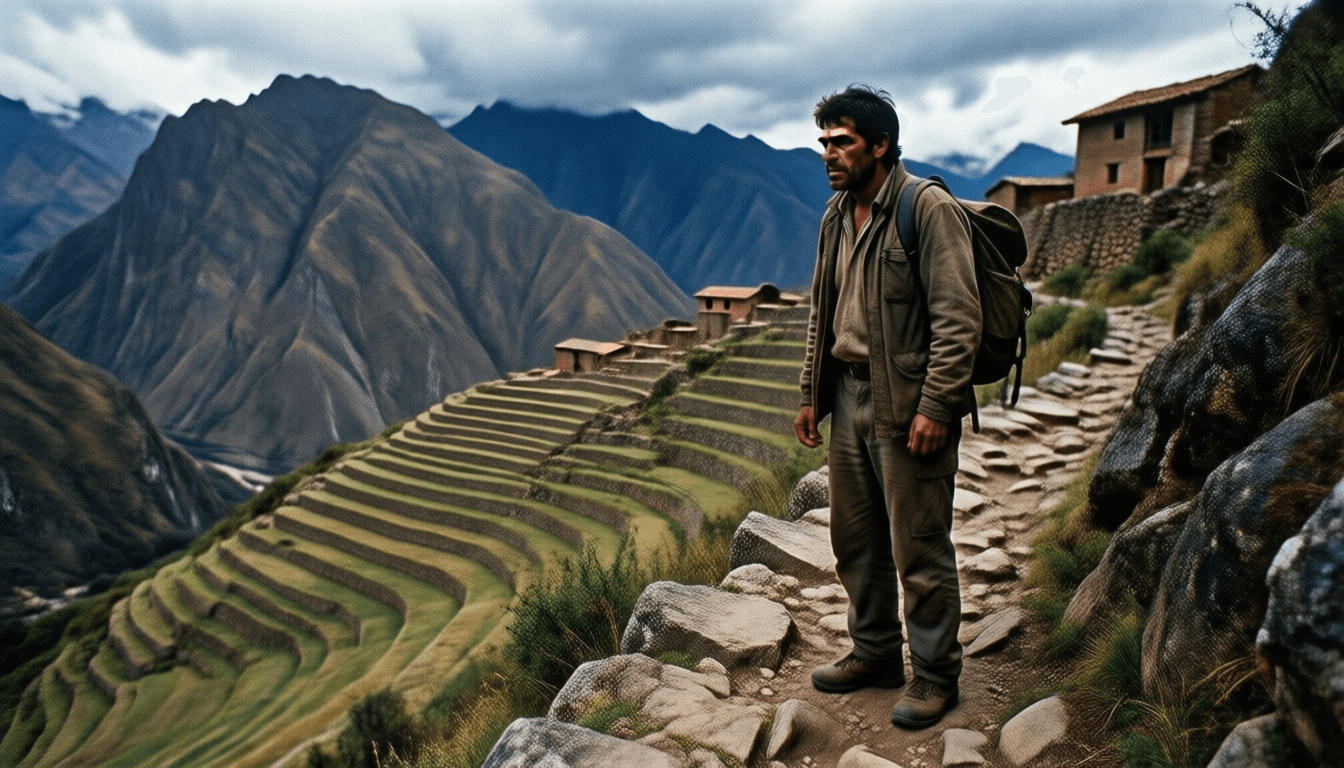
Weeks after a particularly ominous disappearance in a remote part of the Cusco region, I journeyed to a mountainside village, accessible only by treacherous slopes. Though it was early autumn, the air was thin and cold, mingling the sharp scent of puna grass with the faintly sweet aroma of quinoa dishes. Stone houses huddled together beneath the desolate peaks.
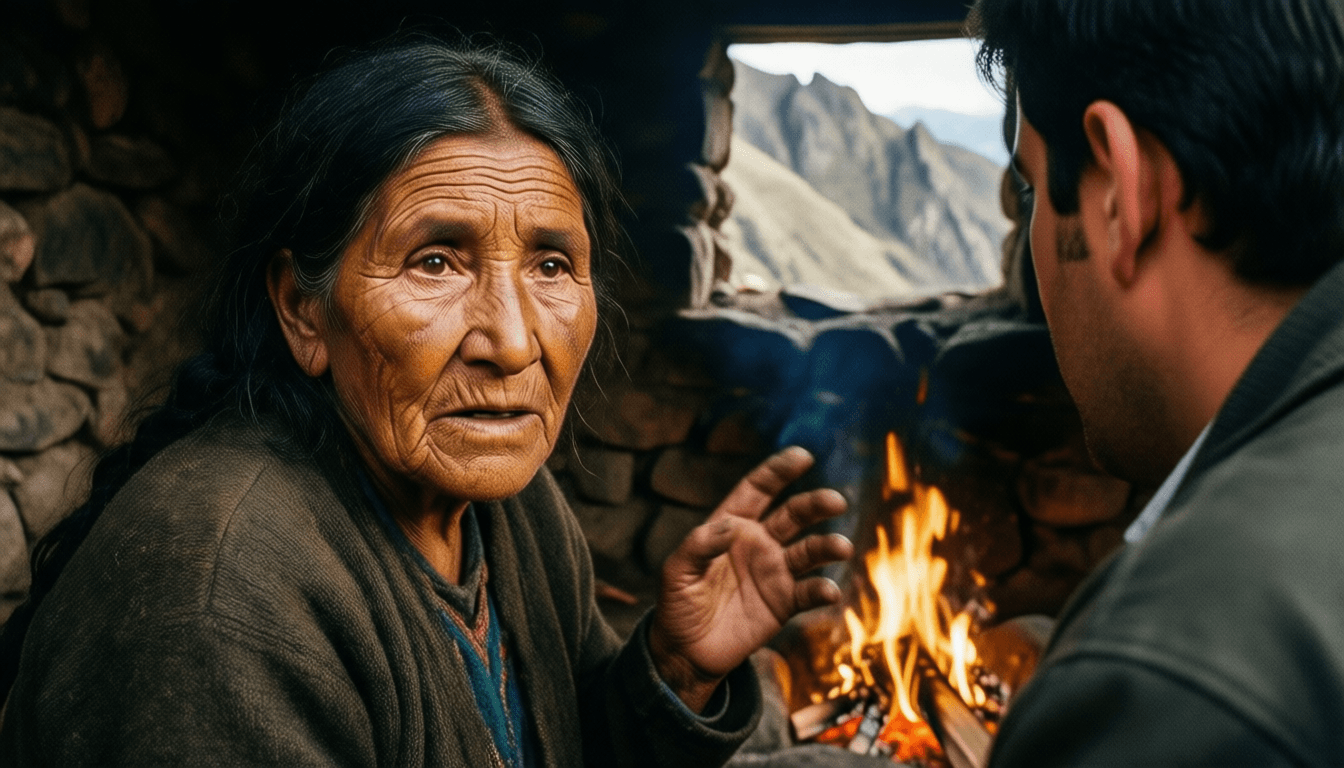
The villagers were wary, their gazes dark and cautious. Coca leaves were offered, but conversation was scarce. My questions about Mateo, a young shepherd who had vanished, were met with polite but firm silence. The word 'Pistaco' remained unspoken, yet its name hung heavy in the air. Only one old woman, her face a map of sun-worn wrinkles, spoke in hushed Quechua by a small fire. She vaguely gestured towards the desolate ridge, whispering that Mateo had been found "dried up." She warned me not to follow his tracks, cautioning about "the stealing shadows."
Ignoring the warnings, I followed Mateo's last known path. The narrow goat trail, winding past ancient agricultural terraces, soon dissolved into a chaotic expanse of rock and barren land. The altitude was stifling, each step a struggle. The wind, initially a low moan, soon became erratic gusts, stirring up fine glacial dust that stung the eyes. The silence between the squalls was absolute, a void that seemed to swallow all sound.
As I ascended, the environment grew increasingly alien. The wind's unpredictable shifts created moments of sudden calm, in which my ragged breathing echoed eerily loud. Then, abrupt, furious gusts would sweep away all ambient noise. The distant sound of shifting pebbles seemed to emanate from impossible directions, an illusion created by the thin air and complex terrain. The typically crisp alpine light became dim and heavy, casting long, distorted shadows that moved with frenzied irregularity.
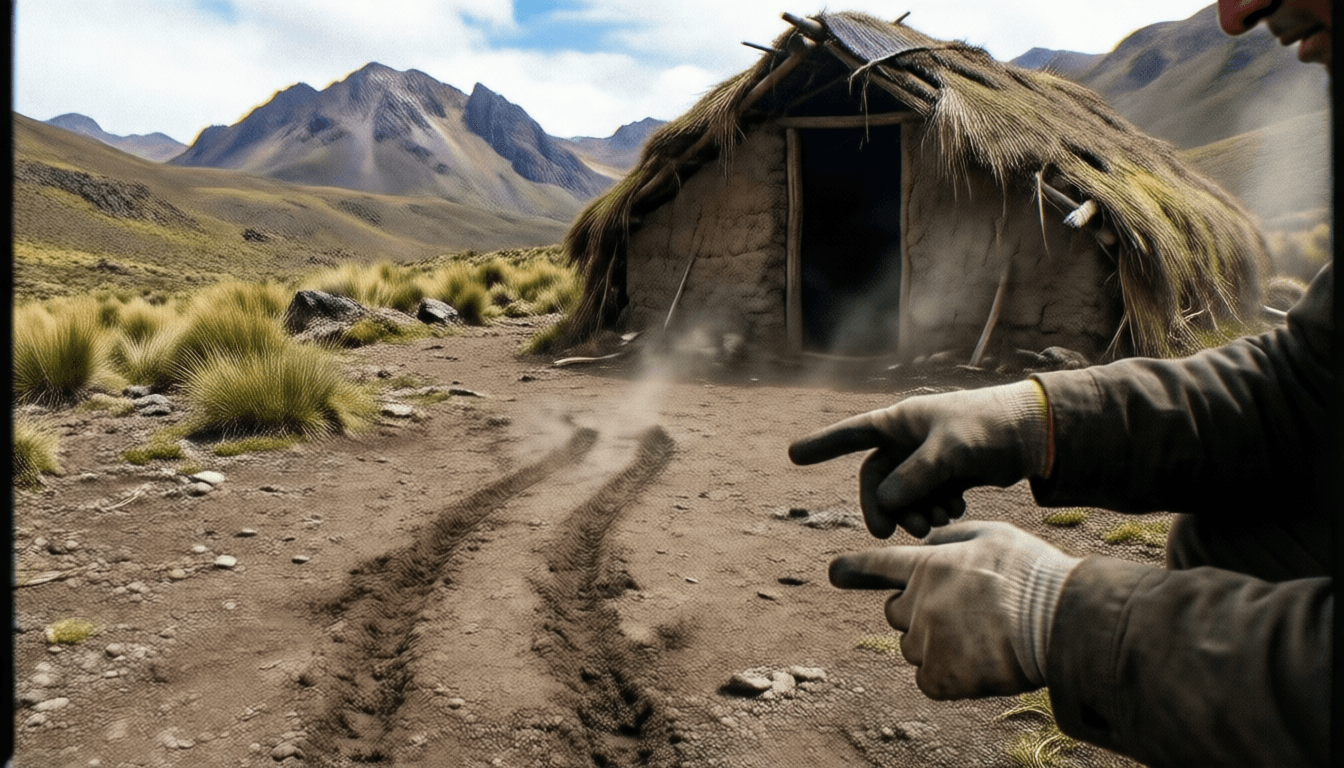
Near a collapsed choza (shepherd's hut), I found it. Faint, unnatural indentations in the hard-packed earth. Too wide and shallow for animal tracks, too regular for falling rocks. They suggested something heavy and irregular had been repeatedly dragged. The air around the hut clung with a sticky, putrid stench—a mix of metallic tang, old blood, and a strangely oily organic matter. It was a phantom smell, appearing and disappearing with the gusts, refusing to be dissipated by the biting mountain wind.
I called out. My voice returned as fragmented, delayed whispers from multiple directions. An eerie, disembodied chorus. The feeling of being watched intensified. The nape of my neck constantly tingled. Each time I turned, only empty rock greeted me. It wasn't the sensation of a hidden predator, but of being systematically observed by something.
Then, at the entrance of a shallow rock overhang—more a significant shelter than a cave—I noticed a small, dark object. It didn't shimmer like a mineral, but rather had a greasy sheen, like congealed fat or perhaps resin. Its shape was irregular, smooth on one side and coarse on the other, emitting the same faint, repugnant metallic tang and oily odor I'd detected around the hut. It felt like a deliberate marker, a twisted offering.
Drawn by the peculiar lump and its scent, I stepped into the shallow overhang. The air inside was subtly warmer than outside, and thick with that sticky, metallic-oily stench. The moment I knelt to search for other traces on the uneven floor, a sudden, ear-splitting crash echoed through the rock face. It wasn't a natural occurrence, but a precisely calculated, dull impact. Heavy boulders, seemingly too perfectly fitted, tumbled down, sealing off the narrow entrance. Dust filled the air, and the alcove plunged into near-total darkness.
I coughed, scrambling, but the rocks were too massive, too perfectly interlocked. The oppressive silence that followed was broken only by my ragged breathing. Then, from deeper within the alcove, a new sound emerged. A soft, regular, scraping sound. It was deliberate, rhythmic, almost surgical in its precision. Despite the warm air, a bone-deep cold filled the small space.
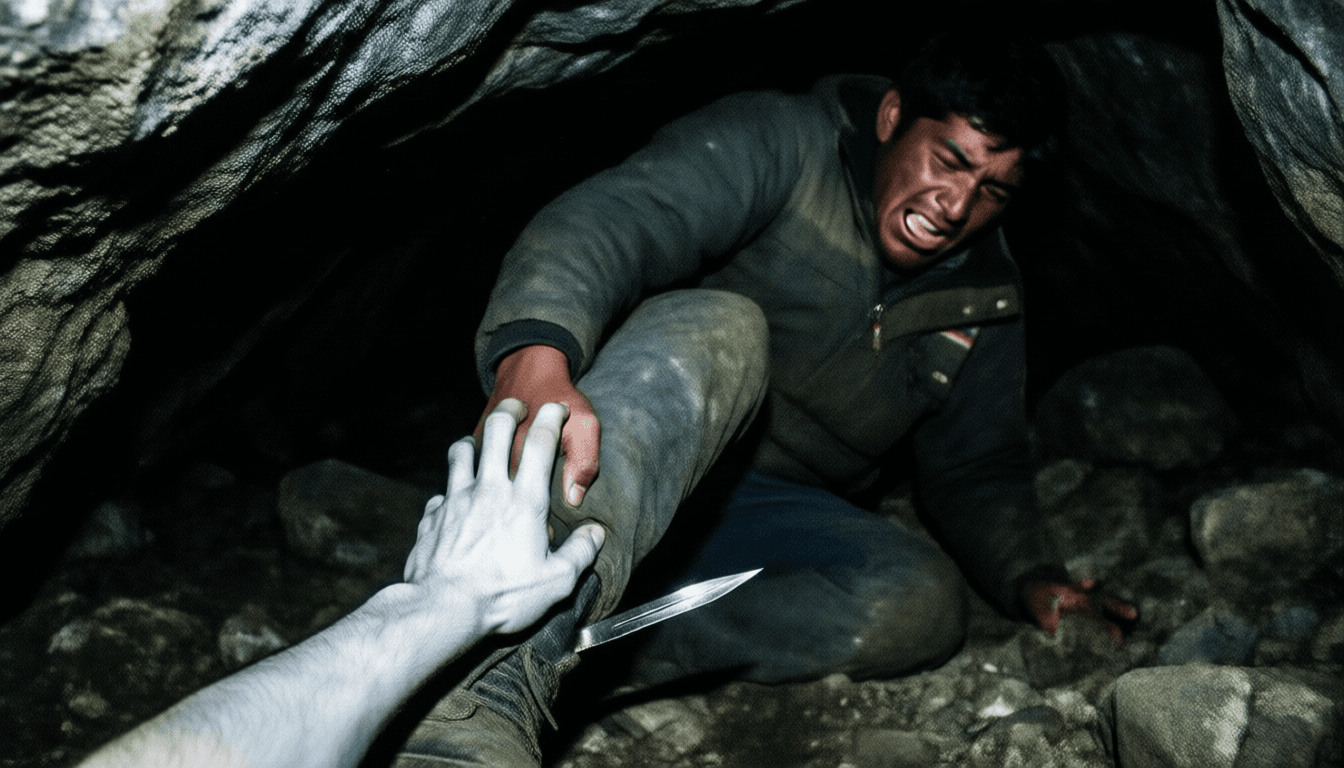
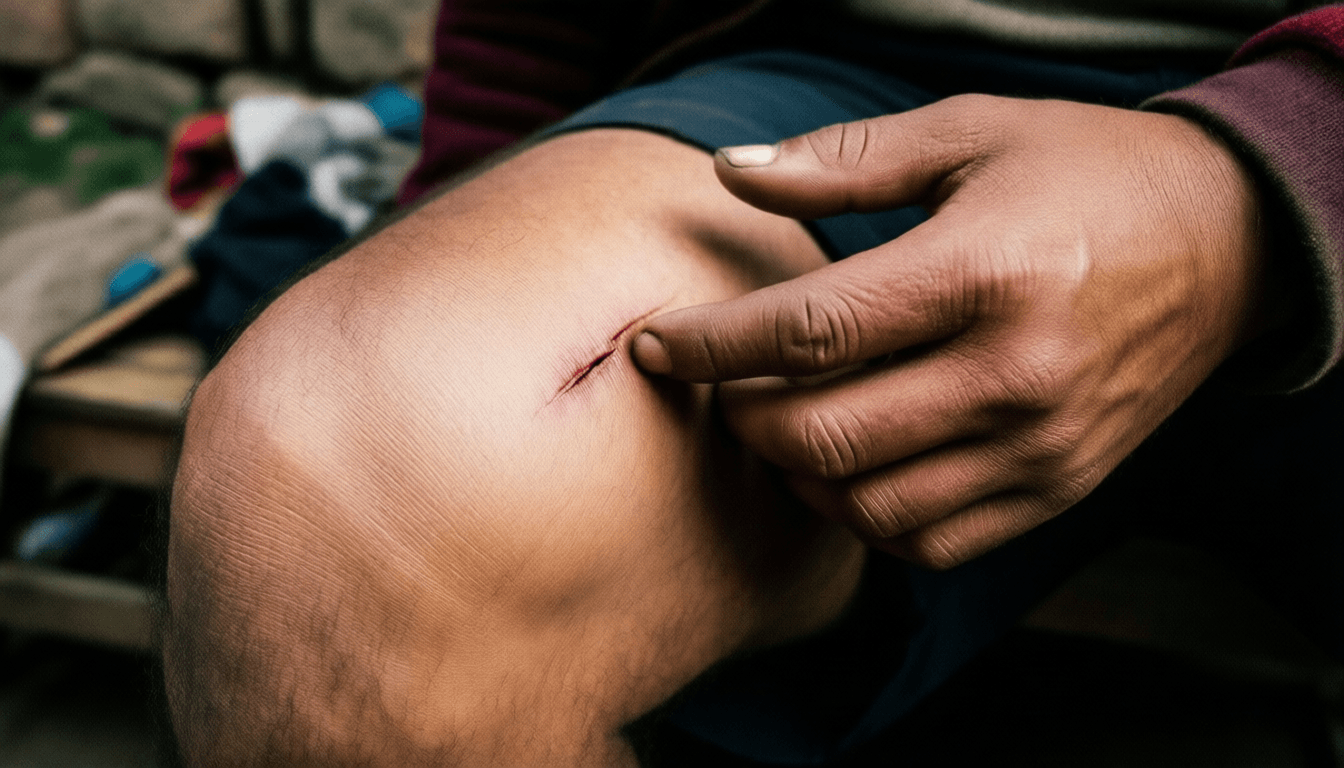
The scraping stopped. A single shadow detached itself from the deeper darkness. It moved with impossible fluidity. Human-sized, yet its form was indistinct in the gloom, and there was no sound of approaching footsteps or rustling cloth. I tried to back away, stumbled over a loose stone. An unnervingly cold, strong hand seized my ankle. The grip was firm, inhuman. Not a desperate grasp, but more like an executioner's. A thin, sharp metal instrument pressed against my left thigh, just above the knee. A cold, razor-sharp sensation, followed by a deep, intense pressure. It wasn't a simple cut, but an intense pressure as if something was being extracted. Instinctive terror choked my throat. My scream, when it finally broke free, was swallowed by the suffocating darkness of the alcove. Consumed by primal fear, I thrashed violently, my foot hitting against something surprisingly firm yet yielding, like muscle beneath thick, soft cloth. The grip loosened, and the shadow receded as silently as it had appeared, vanishing back into the deeper gloom.
Adrenaline surging, I frantically clawed at the fallen rocks. I found a newly formed, impossibly narrow crevice. Scraping my skin, I squeezed through the gap, collapsing outside, gasping for the thin, cold mountain air.
With trembling hands, I examined my leg. There was no gaping wound. Instead, where the metal instrument had pressed, there was a unique, precise incision—only a small, fine line, barely visible on my skin. It was clean, and strangely, not a drop of blood. Yet, beneath the surface, there was an uncanny, deep ache, and a chilling "hollow" sensation within the flesh itself. The area around the incision was cold and subtly concave, as if something beneath the surface had been subtly and surgically replaced or removed.
I eventually returned to civilization, physically bruised and psychologically shattered. The official explanation for the rockfall was "natural erosion," common in the unstable Andes terrain. The village remained silent, and Mateo's disappearance a cold statistic. But the faint, precise line on my thigh never fully healed. It remained perpetually sore, a subtle deformation within the muscle.
The true horror lies not in the Pistaco's impossibility, but in its ominous "plausibility." I now understand that the villagers' ancient fears weren't merely of a mythical beast, but of a systematic, intelligent predator. The Pistaco is not just a monster from old tales. It is a cold, calculating entity with an unnervingly precise understanding of anatomy, environment, and human vulnerability. It exists, adapts, and harvests in the desolate, lawless spaces of the world.
Back in the mundane world, I find myself scrutinizing people on the streets. Who vanishes without a trace? What happens to the countless others? The lingering chill is the realization that the Pistaco represents not just an Andean legend, but a fundamental, terrifying truth about vulnerability. It's the thought that something else might be out there, hidden in plain sight, silently harvesting its tribute with surgical precision, leaving almost no trace, and defying comprehension. The "hollow" sensation in my leg is a persistent, physical testament. The myth is not a story. It's a warning.
[ CLASSIFIED VERDICT ]
[ACCESS LOG - SOURCE FILE]
The Pistaco is a creature from South American Andean folklore, said to ambush travelers, extract their fat, and leave behind "hollowed-out" corpses. In 2009, a "Pistaco Case" was reported in Peru, alleging that a criminal organization was extracting and selling human fat from victims, though this report was later officially retracted as an exaggeration by authorities. Despite the retraction, this fear remains a vivid reality for isolated Quechua communities.