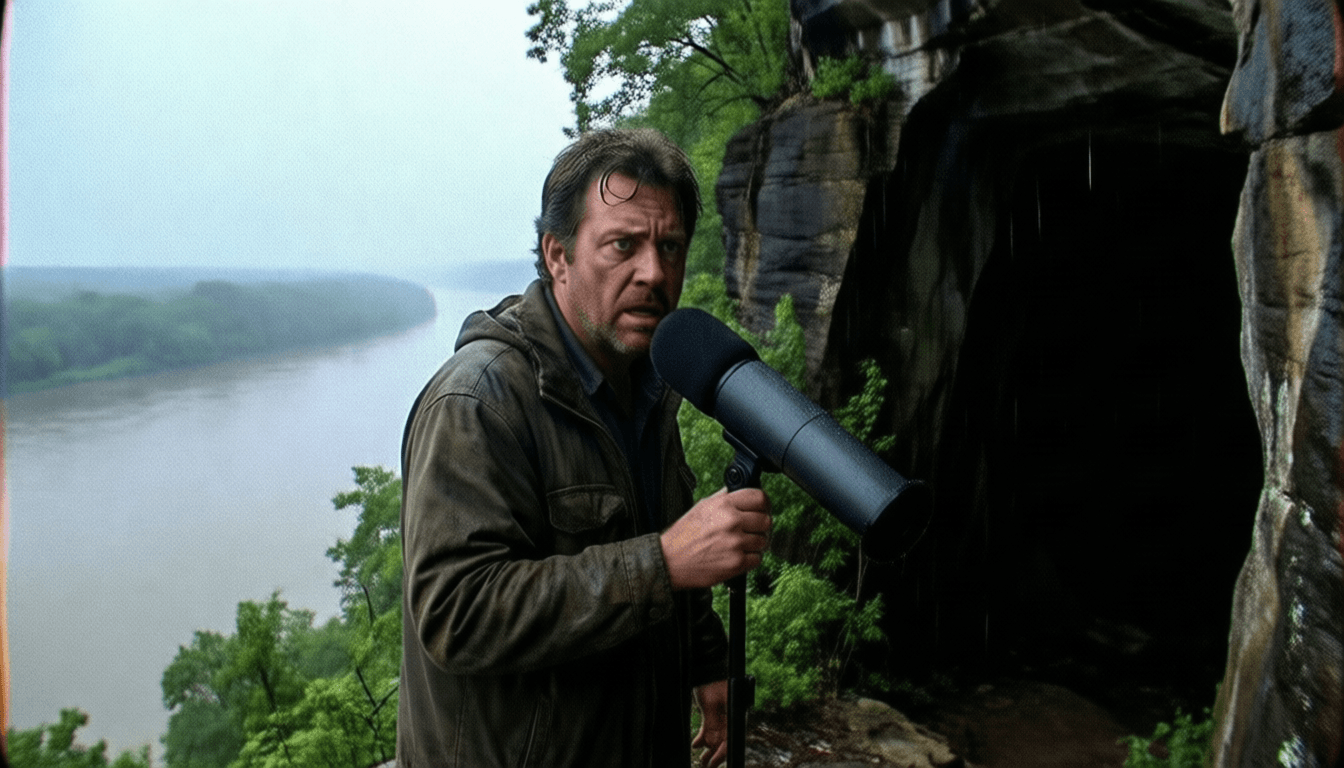
Piasa Cliff: The Silent Predator
When disappearances occurred near Piasa Bluffs, situated by the Mississippi River in Alton, Illinois, local media dismissed them as simple mountain accidents or falls. However, testimonies recorded on the online community 'Mississippi River Anomaly Phenomena' told a different story. Over the past 18 months, three disappearances and one kayaker distress incident were reported, all occurring within a two-mile radius of the cliff's famous Piasa Monster mural. Before vanishing, witnesses commonly mentioned an 'unnatural silence' followed by a 'low-frequency hum,' and on one occasion, a 'sharp scream not of a bird.' Strangely, the kayaker rescued from distress suffered severe hearing loss in one ear and extreme terror, testifying that what capsized his boat felt like a 'pressure wave.' All these records suggested that the ancient mural of the Piasa Bird was not just a painting, but a chilling warning.
Dr. Aris Thorne, a sound geologist and folklorist, packed his equipment and headed to the bluffs. Fully prepared with a high-sensitivity parabolic microphone, seismic sensors, and a high-frequency acoustic recorder, he passed through a narrow gorge near the mural and entered a cave system known even to locals as 'Snake's Coil.' The moment he stepped into the cave entrance, the air settled impossibly heavy. The highway noise and river flow that should have been audible from a distance were eerily hushed. It was as if all sound was absorbed by this massive stone.
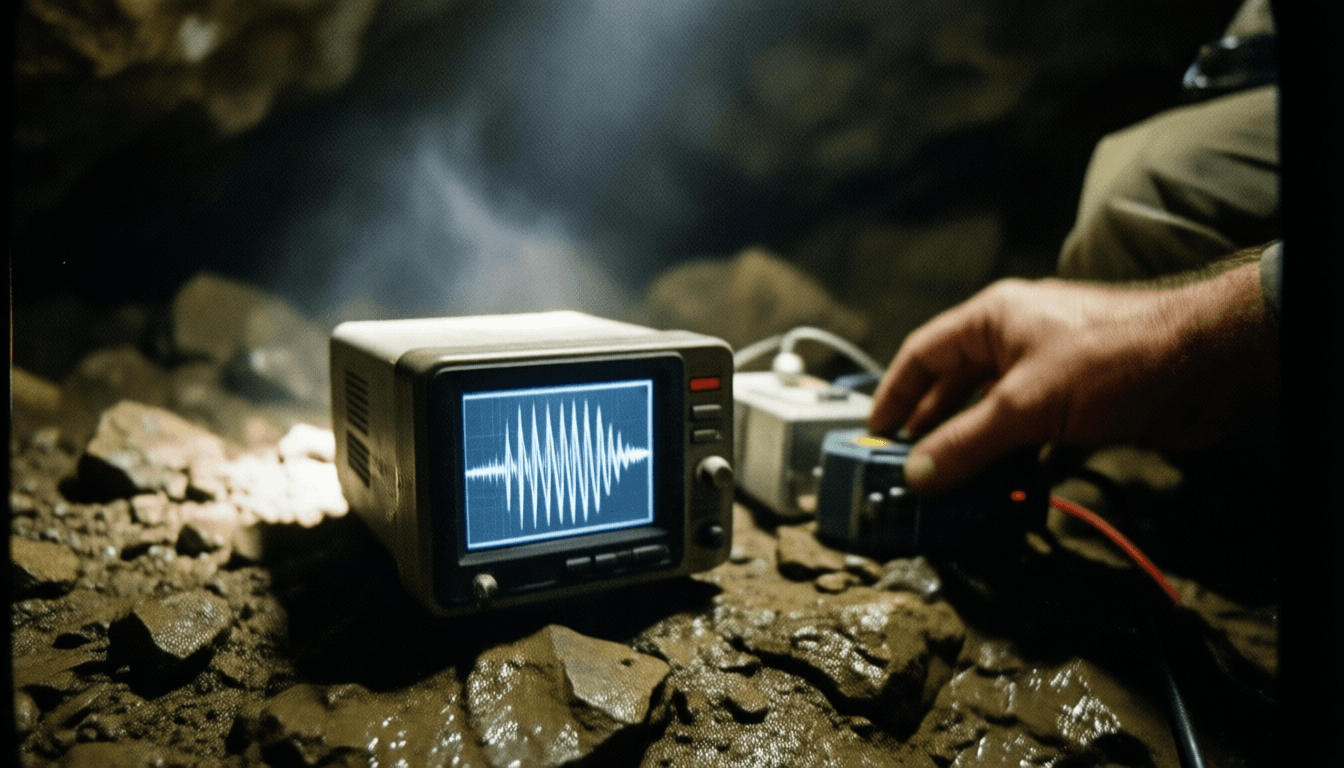
The cave interior was stranger than imagined. Perhaps due to the unique acoustic properties of the limestone cliffs, even the sound of the doctor's footsteps irregularly reflected or sometimes vanished without a trace. At certain points, a sudden chill permeated, and the sound of water droplets running down the walls occasionally seemed to come from mid-air, displaced from their source. At several points, he felt subtle but distinct vibrations underfoot, prompting him to immediately install seismic sensors. Even with no clear air currents, the flame of the small torch he lit experimentally flickered without reason or sometimes leaned towards the wall.
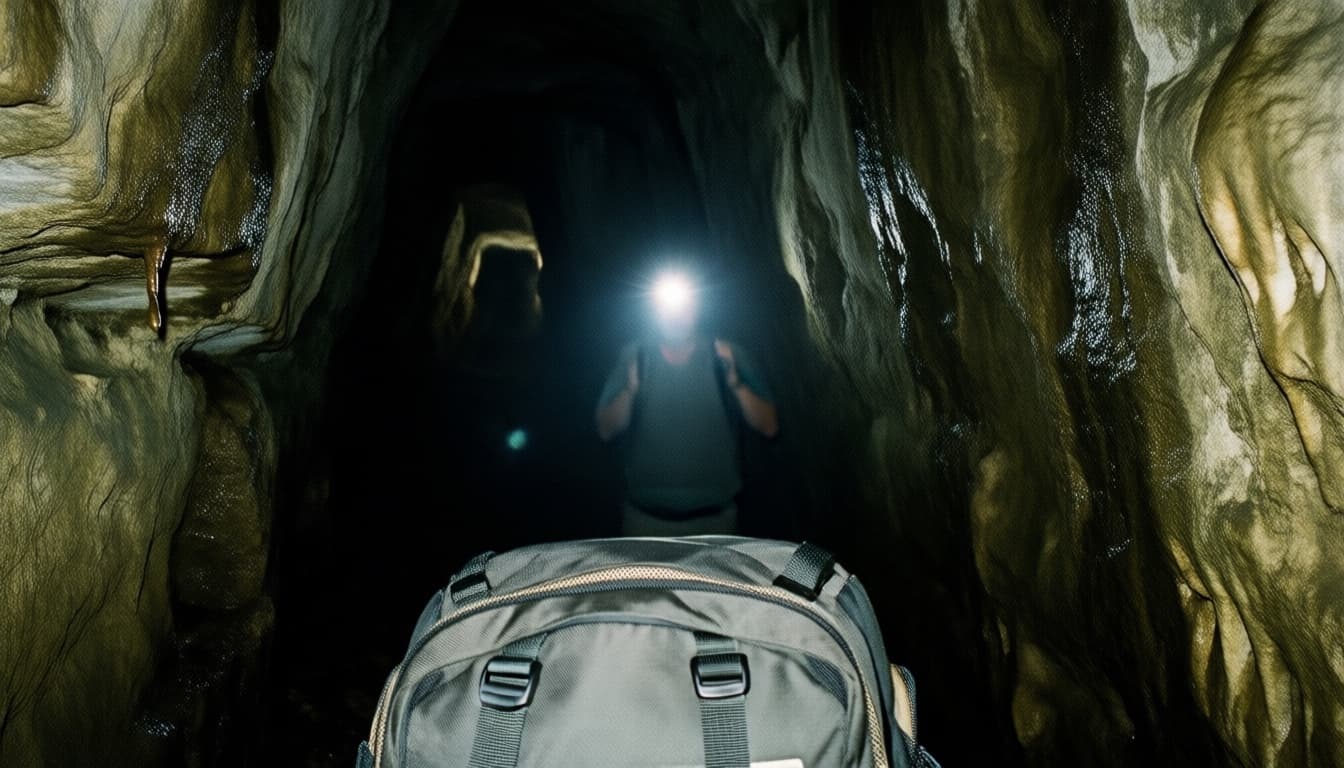
The parabolic microphone captured all surrounding sounds, yet it was the extreme 'absence' that was chilling. There were no sounds of distant small creatures at all, and the silence felt oppressive to the ears. The microphone picked up a constant, low-frequency vibration from deep within the cave. It was too regular and continuous to be a geological shift. His own voice, in some chambers, was absorbed without echo, and he felt a short, faint tinnitus in his ear, just as the distressed kayaker had testified. Occasionally, something dark and formless flickered at the edge of his vision, but turning his head, it was only an ordinary shadow or rock. The damp earthy smell intensified, accompanied by a metallic, ancient, pungent odor, as if left by a prehistoric predator. The seismic sensors continuously recorded periodic, subtle ground vibrations, completely unrelated to nearby fault lines or industrial activity. He was seized by the chilling sensation of being meticulously observed by countless unseen eyes. This oppressive silence amplified that feeling.
Finally, in a vast, cathedral-like cave, the doctor discovered a huge hole near the ceiling. It was an impossibly high, enormous crevice, far too large to be a nest. The moment he aimed his parabolic microphone upwards, it suddenly began to shriek violently. The low-frequency hum was explosively amplified, overlaid with a low, guttural growl like a beast. Simultaneously, the seismic sensors vibrated wildly. Powerful, localized vibrations resonated through the rock.
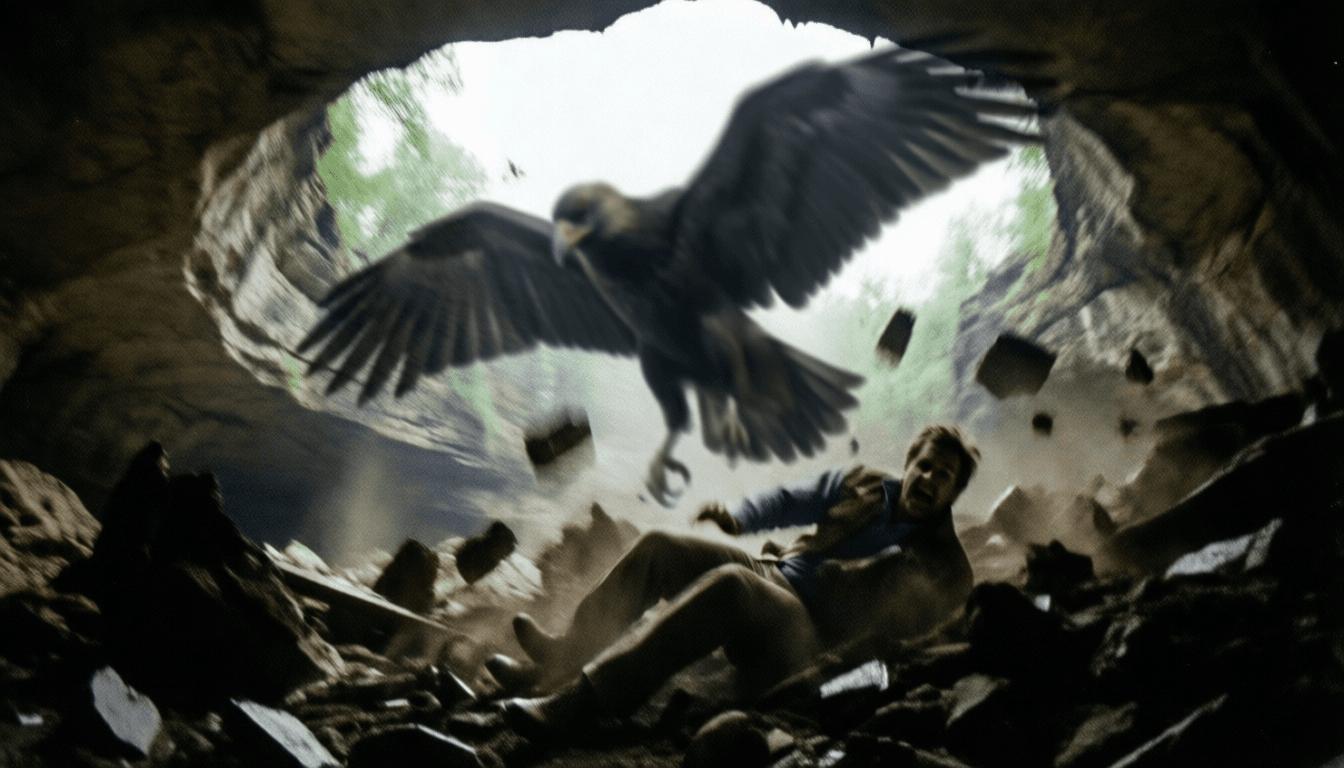
At that instant, a 'sonic implosion' occurred, deafeningly loud. It wasn't an echo. It was as if the surrounding air was fiercely compressed, pushing all sound outwards. This was followed by a pressure wave, accompanied by intense physical pain, that struck the doctor. He collapsed helplessly, his ears ringing agonizingly, his sense of balance completely lost. The surrounding air became incredibly dense, making even breathing painful. And from the hole in the ceiling, a colossal shadow fell. It vaguely resembled a bird, but its size was abnormal, and its wings seemed to absorb the ambient light. It did not move with typical wing beats. It glided in an impossible silence, as if manipulating the surrounding air density or gravity itself. Its movement defied the laws of physics concerning its massive bulk in such a confined space.
The monster descended in an instant. Its movement seemed to generate a localized hurricane. Equipment was ripped from the doctor's backpack, and fragments of rock rained down like hail. As he desperately tried to hide, a colossal, scaled claw struck the rock face right beside him with tremendous speed. The solid limestone shattered. The entire cave shook from the impact. A beast-like shriek erupted, which felt less like a sound and more like a physical tearing sensation within his skull. The moment the monster abruptly changed direction, a terrible sensation, as if its massive body grazed him, briefly touched his back. The surrounding air was filled with unbearable static electricity. The monster did not follow him into the narrow escape passage he barely squeezed into. Instead, it circled the vast cavern, emitting an overwhelming oppressive presence by its very existence. Its movement in silence was a terrifying paradox. He distinctly heard the low hum resonating through the rock itself.
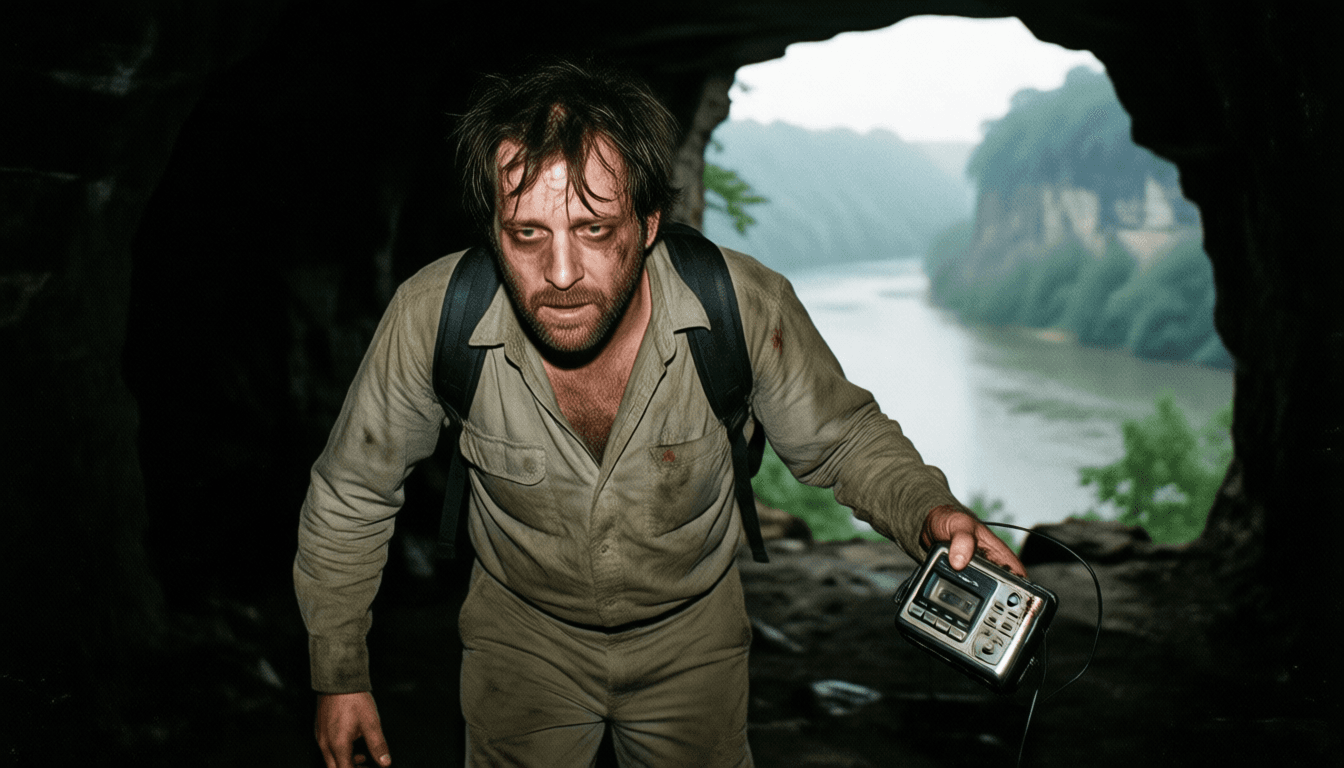
Hours later, Dr. Aris Thorne stumbled out of the cave, battered and bruised. He had deep, unexplainable abrasions on his body, his ears ached incessantly, and a high-frequency tinnitus still rang in one of them. He had lost most of his equipment but clutched his main high-frequency acoustic recorder tightly.
Back in his makeshift lab, he analyzed the recovered audio. The final recording contained the silence that had initially oppressed him, the increasingly amplified low hum, and the physically recorded pressure wave. And, most terrifyingly, when processed, the sharp scream revealed a complex acoustic pattern unlike any known animal. It was not merely a sound vibrating the air; it was a sound that seemed to manipulate the very fabric of the air. Finally, there was a short but chilling fragment: the sound of a large, heavy object moving 'without air displacement.' Acoustically, it was an impossible, simply 'non-existent' sound.
The doctor did not publish his findings. He couldn't. The data was too anomalous, impossible. Official reports would again cite falls or strong winds as the cause. But Dr. Thorne knew. He gazed at the Piasa mural in his reference books. It was no longer an ancient myth. It was a chillingly accurate biological sketch. Irregular missing person reports continued to appear in the local news feeds he monitored from the same area. He sometimes felt faint, deep vibrations under the soles of his feet. Even in his quiet office, the low hum from the bluffs echoed like a phantom. The Piasa Bird was not a legend. It simply existed, still patrolling the bluffs above the Mississippi River, its impossible movements unseen, its terrible silence unheard until it was too late. And he, he heard it.
[ CLASSIFIED VERDICT ]
[ACCESS LOG - SOURCE FILE]
The 'Piasa Bird' depicted in the ancient mural on Piasa Bluffs near Alton, Illinois, is a giant monstrous bird from Native American legends. This legend describes it as a mysterious and threatening entity that devoured those passing by the river. This story is based on the chilling imagination that this legendary monster is the real cause of people disappearing in the modern world.