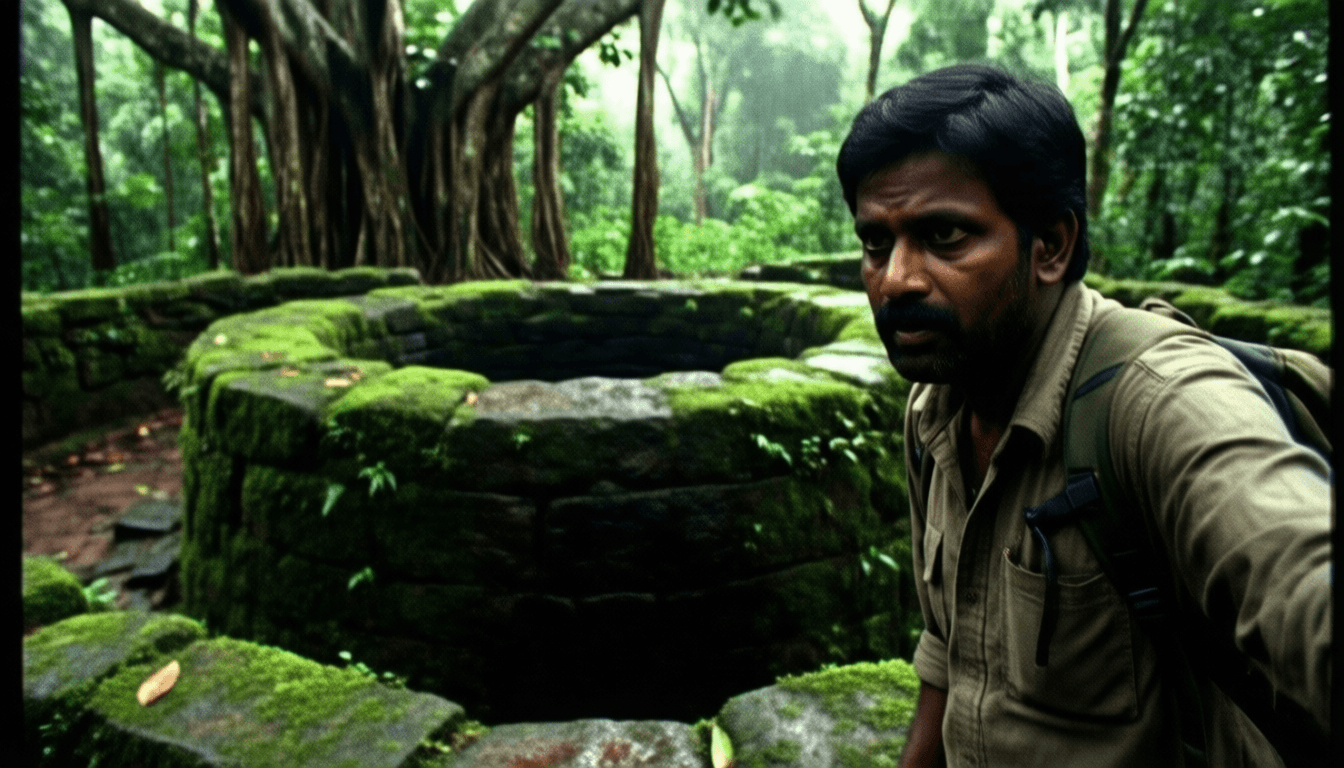
The Perumala Blood Well
Official reports recorded in Kerala, India, were always precise. In July 2001, then 2006, 2012, and several scattered times thereafter, a phenomenon that baffled meteorologists occurred: rain the color of arterial blood. After rigorous analysis, scientists explained this blood-red rainfall as spores of 'Trentepohlia' algae carried by strong winds. This explanation was logical, published, and widely accepted.
However, beyond scientific consensus, a different story persistently circulated in the state's humid, green interior. Whispers from old villages far from the coastal cities linked the rain not to algae, but to specific, forgotten places, moments of deep ecological imbalance, or ancient, restless earth. They spoke of the earth's sorrow, a silent elegy staining the sky. They mentioned Perumala. My investigation began with an untraceable online forum post from a user claiming their family had ties to the region. The post detailed a local legend about a deep, forgotten well in the Perumala Hills, a place where the first, true blood-rain was said to have poured forth not from the sky, but from within the earth, long before the meteorologists arrived.
The journey to the Perumala Hills was like a descent into Kerala's forgotten pockets. The vibrant green of the monsoon-drenched landscape faded into muted, desaturated hues as I approached the coordinates I’d cross-referenced from the forum post and old topographical maps. The air grew heavy, thick with the smell of decaying leaves and a subtle, metallic scent, like old coins. What was once a narrow path vanished into dense undergrowth, forcing a slow, arduous trek. The humidity clung like a second skin.
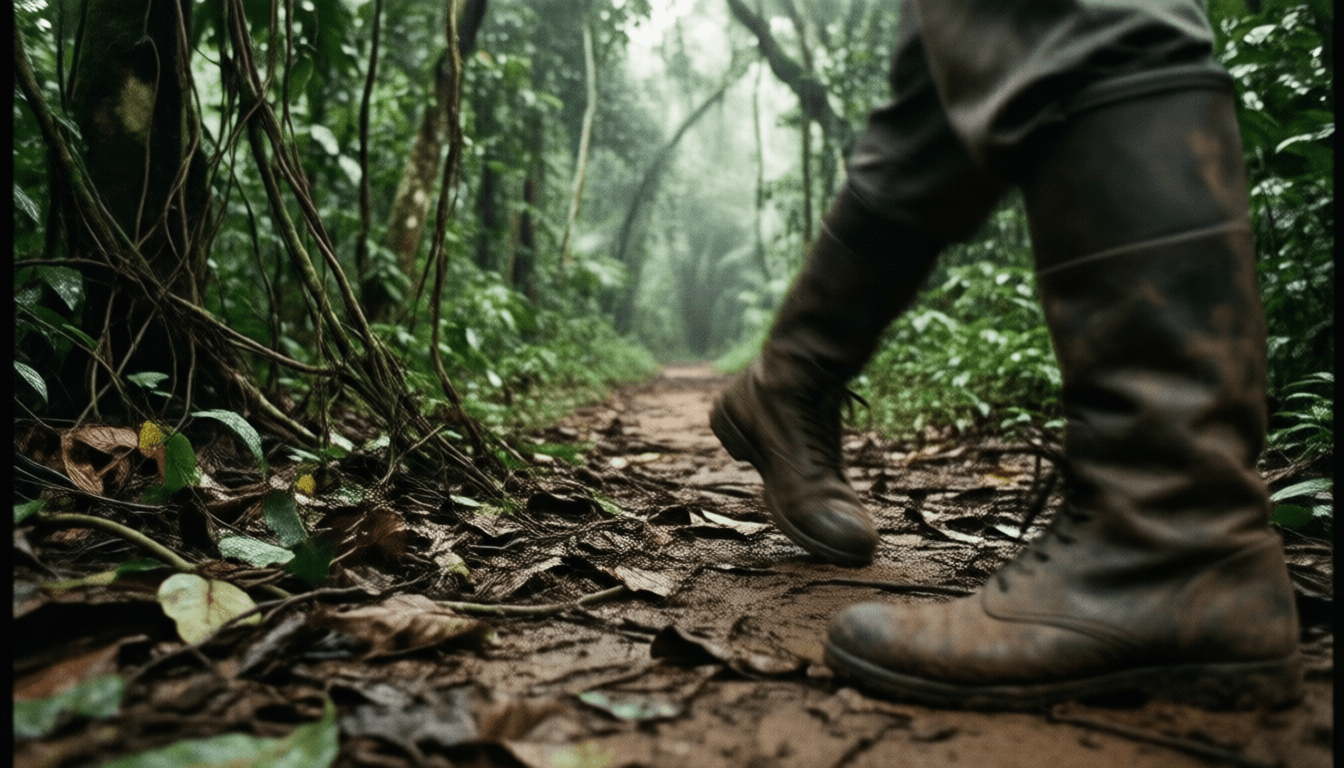
Eventually, I found it amidst tangled vines. A moss-covered, rounded stone structure, barely visible beneath the canopy of ancient banyan trees. It was indeed a well. Its rim was cracked and broken, gaping like a colossal mouth leading into the earth. The air around it was noticeably colder, utterly still, forming an unnatural pocket of silence amidst the buzzing insects of the jungle. No distant vehicles, no birdsong. Only my own heartbeat echoed. The light penetrating the tree cover seemed to dim around the well, casting it into perpetual twilight. My Geiger counter detected no anomalous radiation, nor did my atmospheric sensors pick up any strange chemicals. It was just an old well, an abandoned structure in a quiet part of the jungle, yet an oppressive stillness pressed down on the entire air.
I set up my tripod and lowered a small, waterproof camera with a powerful light into the well. The cable unspooled meter by meter, slowly descending. The well was deeper than I anticipated, its stone walls slick and dark. At about fifteen meters down, the camera's light illuminated something peculiar: faint, reddish-brown streaks, matching the color of the blood rain, clung to the damp stone. They were too localized, too thick in places, to be simple rust or mineral deposits. As the camera descended deeper, the streaks became more common, forming almost abstract, flowing patterns.
Then, the first anomaly. My audio recorder, attached to the camera, began to pick up an extremely faint, almost imperceptible drip-drip-drip sound. Yet the camera showed no droplets falling from above, nor did the well walls appear to be actively weeping water. The sound seemed to echo from within the well. A hollow, resonant rhythm. I checked my external thermometer. It showed a subtle three-degree Celsius drop compared to the surrounding jungle air. Just then, moving along the well's edge, my boot scraped a patch of dirt. A small, shallow puddle of water, perhaps 2.5 cm deep, *moved*. Not rippled, but *shifted*. The surface tension seemed to stretch, and the water moved slowly, viscously, as if trying to re-center itself against an unseen force. It was a minuscule detail, barely noticeable, easily dismissed as an optical illusion or trick of the light, but the memory of the forum post – “not from the sky, but from within the earth” – flashed through my mind. I leaned closer to the well's opening, trying to pinpoint the source of the dripping sound. The faint metallic smell intensified, a sharp, coppery taste scratching at my throat. The dripping now had a rhythm, almost a pulse.
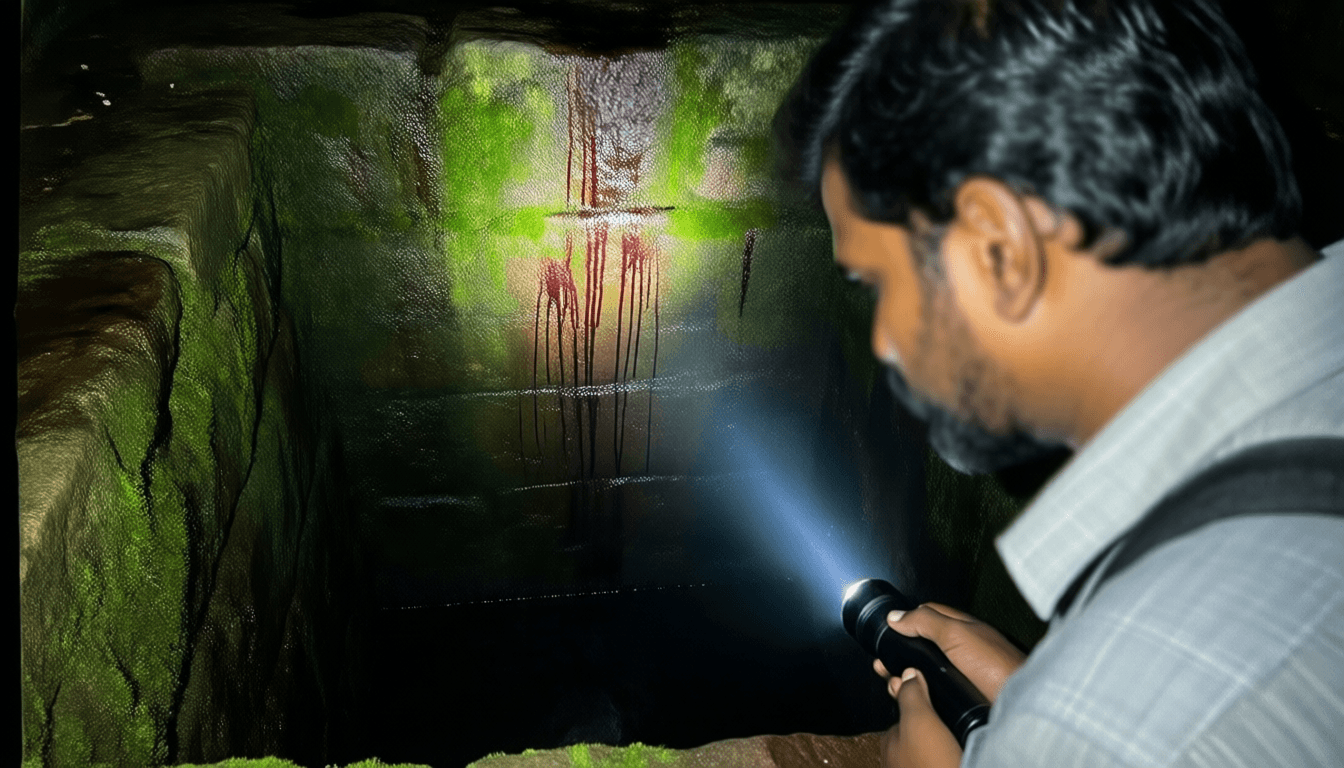
I reached the bottom of the well. The camera's powerful light revealed a small, stagnant pool about sixty centimeters deep. Its surface was a uniformly unsettling reddish-brown, like thick, congealed blood. The dripping was now undeniable, emanating from the surface of this pool. I held my breath, concentrating on the camera feed. As I watched, the red liquid in the well began to stir. Not ripples from falling drops, but a slow seething from within, as if something beneath the surface was awakening.
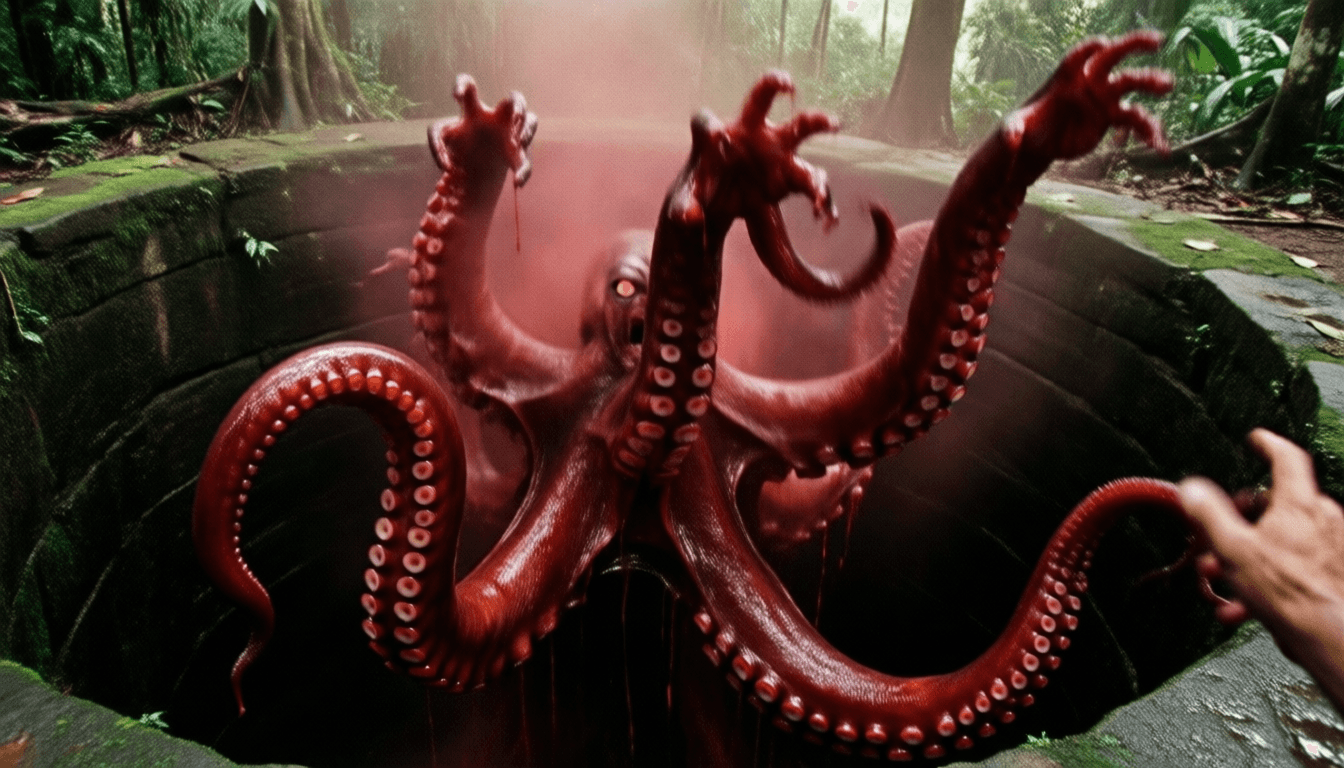
And then the impossible happened. A slender, glistening tentacle rose from the center of the pool. It wasn't water defying gravity. It was the substance itself, contracting and solidifying enough to form a grotesque, writhing column, rising nearly 1.8 meters towards the camera. The metallic smell was overwhelming, suffocating. The air around the well, even above ground, grew heavy and humid, filled with a fine, almost invisible bloody mist that stung my eyes and coated my tongue. I gagged, tasting iron.
The tentacle from the well pool branched, reaching towards the camera with unnatural precision. I fumbled for the winch to pull the camera up, but the surrounding air was thickening too. The bloody mist became visible, congealing into swirling, viscous currents that wrapped around my legs, binding them. It felt like trying to move through liquid concrete. I struggled under an oppressive weight, the sticky, hot embrace of airborne particulates. The well beneath me exploded. Multiple blood-red tentacles erupted not just from the pool, but from the damp stone walls themselves, moving with a terrifying singularity of purpose. They extended actively towards me, not splashing, not flowing, but reaching.
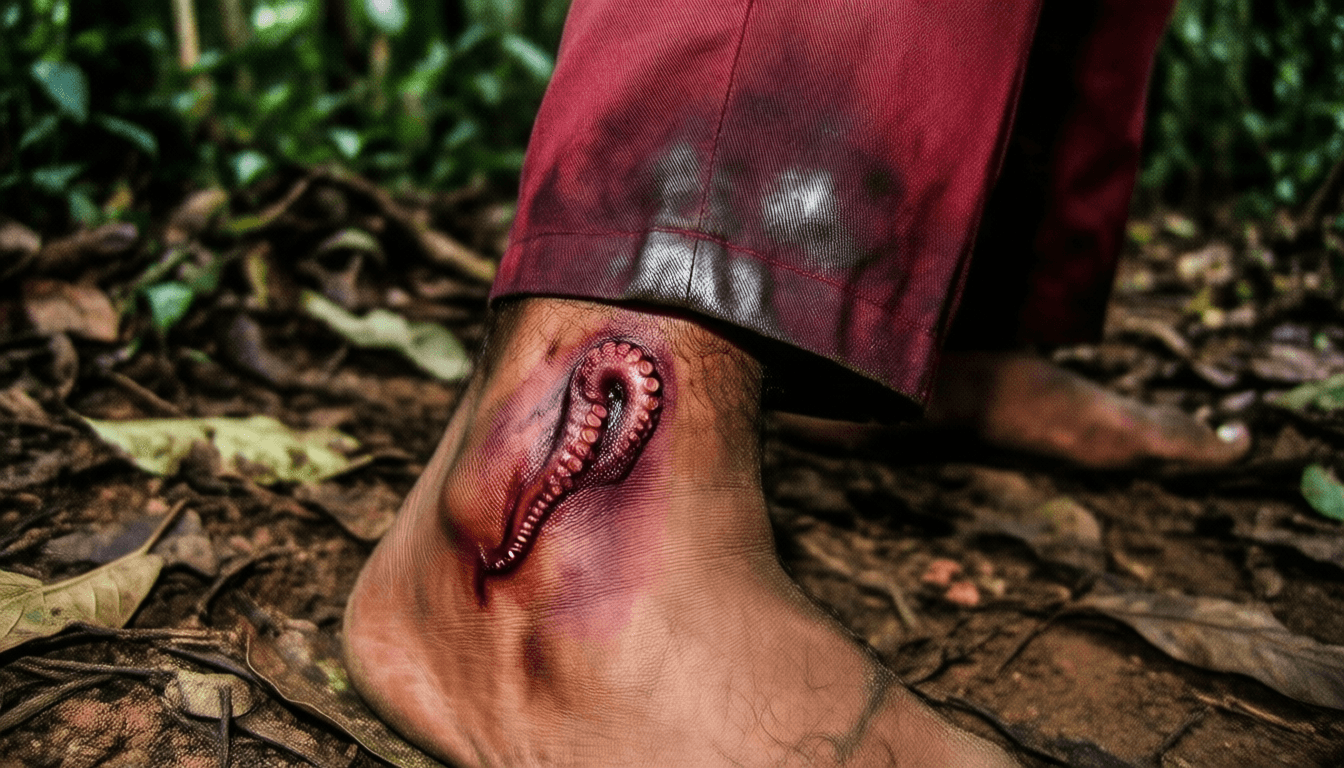
One tentacle, as thick as a human forearm, burst from the well opening, lashing out like a whip. It wrapped around my ankle, burning hot, pulling me towards the dark abyss. The searing pain was excruciating, and the metallic smell was now so intense it felt like breathing rusted iron and dried blood directly. I let out a choked, ragged scream, struggling to grip the slippery stone. The tentacle tightened further, threatening to sever my limb. The surrounding jungle was silent. Only my desperate struggles and the insidious, sticky sound of the blood-like substance trying to drag my foot into the depths could be heard. I tore myself free. The skin on my ankle ripped and bled, and a piece of my trousers was instantly stained a permanent dark crimson. I fled, crawling furiously and blindly through the sticky, burning mist, leaving a trail of my own blood behind me, the metallic smell searing my nostrils.
I barely made it back alive. The deep wound on my ankle eventually healed, but the skin where the tentacle had touched it remained strangely discolored. A permanent, faint reddish-brown scar tissue that seemed to absorb light rather than reflect it. My trousers, abandoned in panic, were found weeks later by a local at the jungle's edge. The blood-like stain on the fabric was indelible, no detergent could remove it. A deeper, stickier hue than any blood or rust. And sometimes, on particularly humid days, it still emits that faint metallic smell.
My camera and recording equipment, lost to the Perumala well, were never recovered. However, my external audio recorder, clipped to my belt, captured something in the last few seconds before its battery died. Amidst my screams and desperate rustling, a low, resonant murmur can faintly be heard. It was a sound that seemed to vibrate at the edge of human perception. Deep and mournful, too subtle for an elegy, too nuanced for a roar, yet undeniably present amidst the chaos. And sometimes, late at night, in the quietest moments, I catch a faint copper taste of old blood in the air of my office. Not strong enough to be objectively identified, it's easily dismissed as imagination. But I know it's there. A remaining whisper, a reminder that some truths are not observed from above, but seep from the earth, carrying a deep sorrow that can stain even the sky.
[ CLASSIFIED VERDICT ]
[ACCESS LOG - SOURCE FILE]
The blood-red rain phenomenon recorded in Kerala, India, was scientifically attributed to Trentepohlia algal spores. However, a local urban legend suggests that due to the earth's sorrow, the true blood-rain originated not from the sky but from a deep well in Perumala Hills, seeping from the ground. This story explores the forgotten elegy of the earth and the well's profound mystery.