The Breathing River of Gambia
Three months ago, deep within the local news section of the online Gambia Standard, the first verifiable incident was reported: "Fishing Boat Capsizes Near Bolong Wetland, Fisherman Missing." Official police reports cited "possible crocodile attack or accidental drowning," but subsequent threads on local Gambian travel forums saw residents whispering about "Ninki Nanka" and "the river's caprice."
Two weeks later, a German amateur wildlife photographer posted a shaky, blurred video on YouTube titled "Unexplained Water Disturbance in Gambian Tributary?" The footage showed his small drone hovering over a particularly mangrove-dense section of an unnamed river. The screen ended abruptly with a violent splash and a muffled, submerged roaring sound. The drone was found days later on a beach, its memory card miraculously intact, but the drone itself was shattered. The corrupted final frame contained a powerful, resonant "hum" unlike any known animal vocalization.
My interest wasn't in sensationalism but in the pattern of anomalies. The Bolong wetland incident was concerning because the tributary where the drone footage was shot was directly upstream. A separate incident months prior, where a tourist boat reported "unexplained currents," also seemed to align with the drone's final recorded location. Local fishermen, when pressed, spoke of river sections that "swallowed boats" and where the water itself felt "heavy as stone." A correlation between unknown sounds, inexplicable hydrological phenomena, and disappearances within an increasingly confined geographical area. This wasn't superstition. This was a pattern demanding investigation.
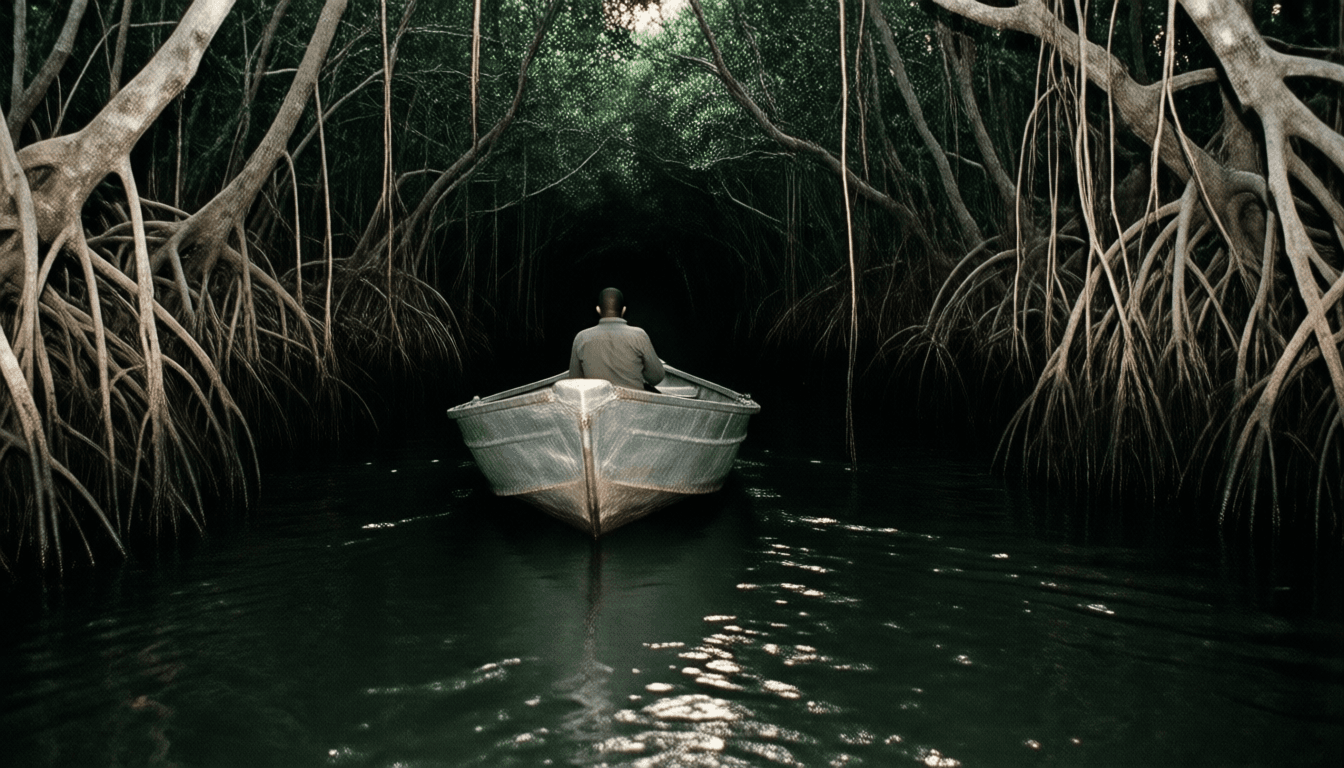
I equipped a quiet, sturdy aluminum boat with a high-resolution thermal camera, a professional hydrophone array, sophisticated sonar, and emergency satellite communication gear, then set off for that specific unnamed tributary where the drone's signal had been lost.
As I navigated away from the main river, humidity clung clammily to the air, and the scent of brackish water and decaying vegetation hung thick. Gnarly, ancient-finger-like mangrove roots began to close in, forming an increasingly narrow channel. The usual cacophony of the Gambian jungle—birdsong, insect hum, distant primate chatter—receded, replaced only by the steady, rhythmic drone of my motor and the soft lap of water against the hull.
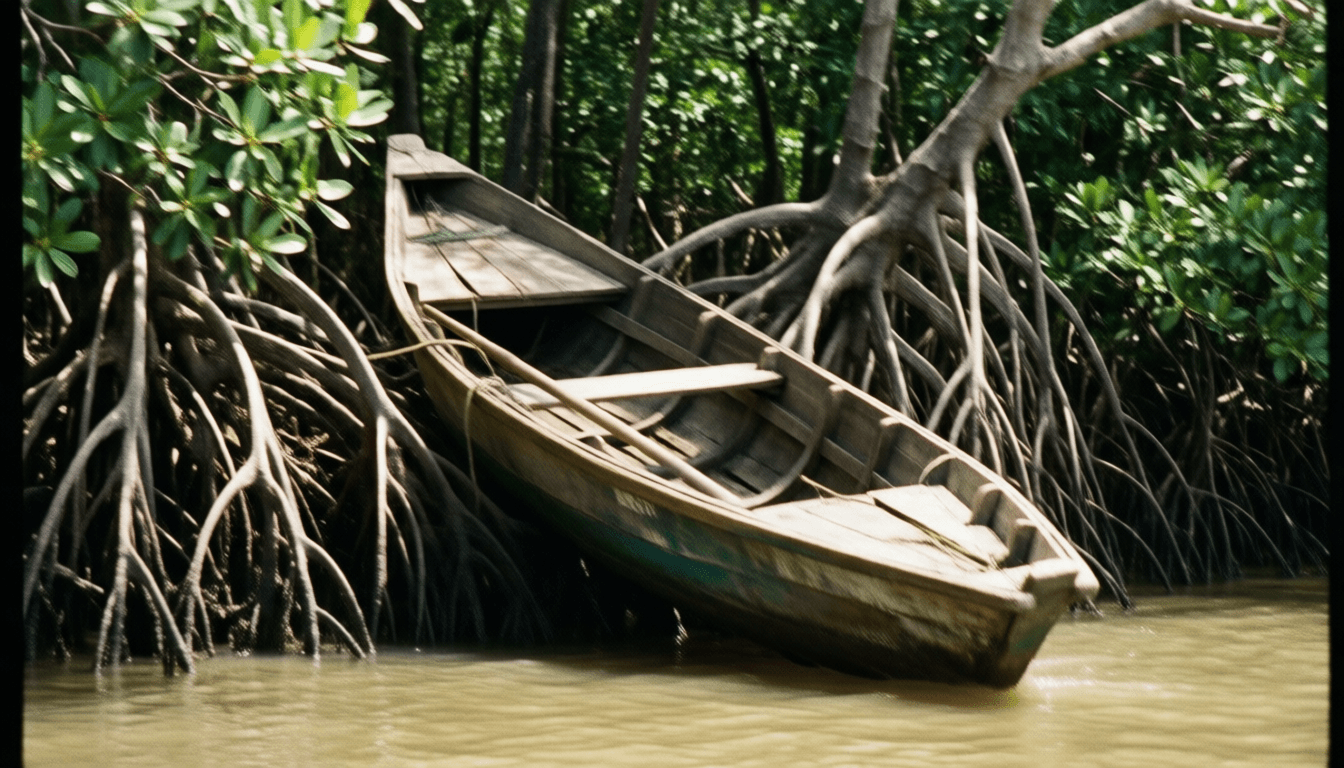
Initial sonar pings detected a disproportionately deep, almost canyon-like trench in the riverbed for such a narrow channel. My hydrophone, sensitive to subtle underwater vibrations, picked up a faint, rhythmic hum from the depths. It was too deep to be boat noise, too regular to be natural current shifts. My camera, set to continuous recording, captured fleeting, hard-to-identify disturbances in the murky water—sudden localized whirlpools, or dark, swiftly vanishing shapes. They were too large and too fluid to be any known fish species.
As I pressed deeper into the labyrinthine channels, the environment itself seemed to transform. The canopy overhead became so dense that sunlight was reduced to fractured slivers, casting an eerie, emerald glow. The air grew heavy and oppressive, as if compressed.
First, the auditory anomalies began. The hum of my outboard motor, once a steady comfort, seemed to fade, then recede, as if the very air absorbed its sound waves. Finally, a perfect, profound, uncanny silence descended. The jungle's natural chorus vanished entirely. I spoke aloud to confirm the silence, my voice flat and dead, strangely close yet utterly isolated, swallowed by the oppressive quiet.
Then the water began to betray its nature. The wake of my boat, which normally left a distinct trail, dissipated abnormally fast, the surface behind me smooth as if I hadn't passed. Small, localized whirlpools would form and vanish, flowing against the gentle upstream current. At one point, the section of river ahead of me became incredibly still and glassy, a mirror-like void reflecting the twisted mangroves with unsettling clarity, distorting the world around it. Air temperature fluctuated wildly at specific points—sudden chills followed by sticky, heavy, oppressive heat.
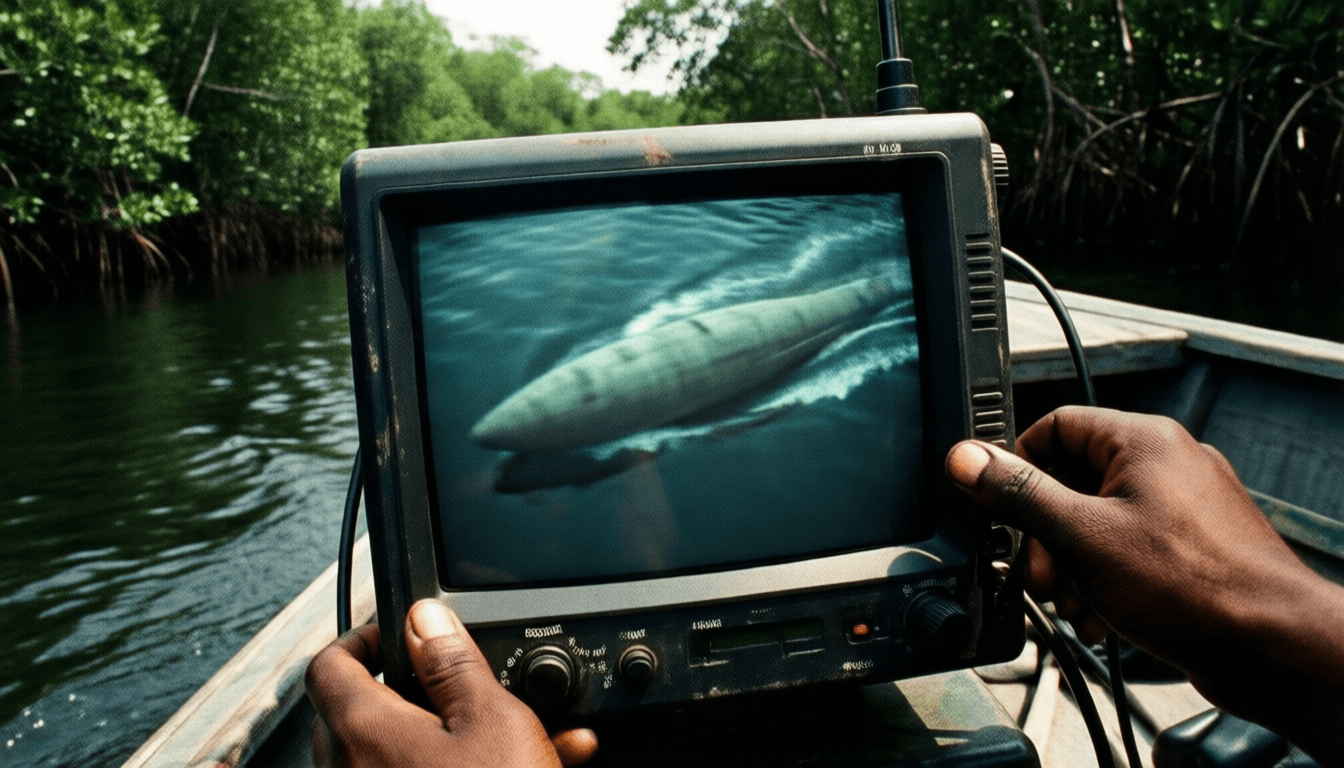
My hydrophone now registered the deep hum with greater intensity. It was less like an animal and more like a colossal, organic engine operating beneath my feet, vibrating through the hull. On the sonar screen, massive, elongated forms flickered. They didn't stay in one place, moving with impossible speed. They were far too large for any known river creature, yet too agile for their immense size. A deep, chilling realization washed over me. I wasn't merely observing. I was being observed. I was being hunted.
The river narrowed further, becoming a lightless tunnel beneath an impenetrable ceiling of roots and branches. It was a natural bottleneck. Without warning, my outboard motor sputtered, then died. It wasn't a mechanical failure; it simply ceased to function, as if the very concept of combustion was nullified in this specific, suffocating space. The silence became absolute and terrifying.
Then the water around the boat began to churn. It wasn't the natural movement of current or wind; it was a powerful, unseen force erupting from beneath the boat. The boat was violently lifted, then slammed against the dense mangrove roots, sending splinters flying. Cold, dark water poured into the boat from an invisible source, not a splash, but a concentrated, deliberate force.
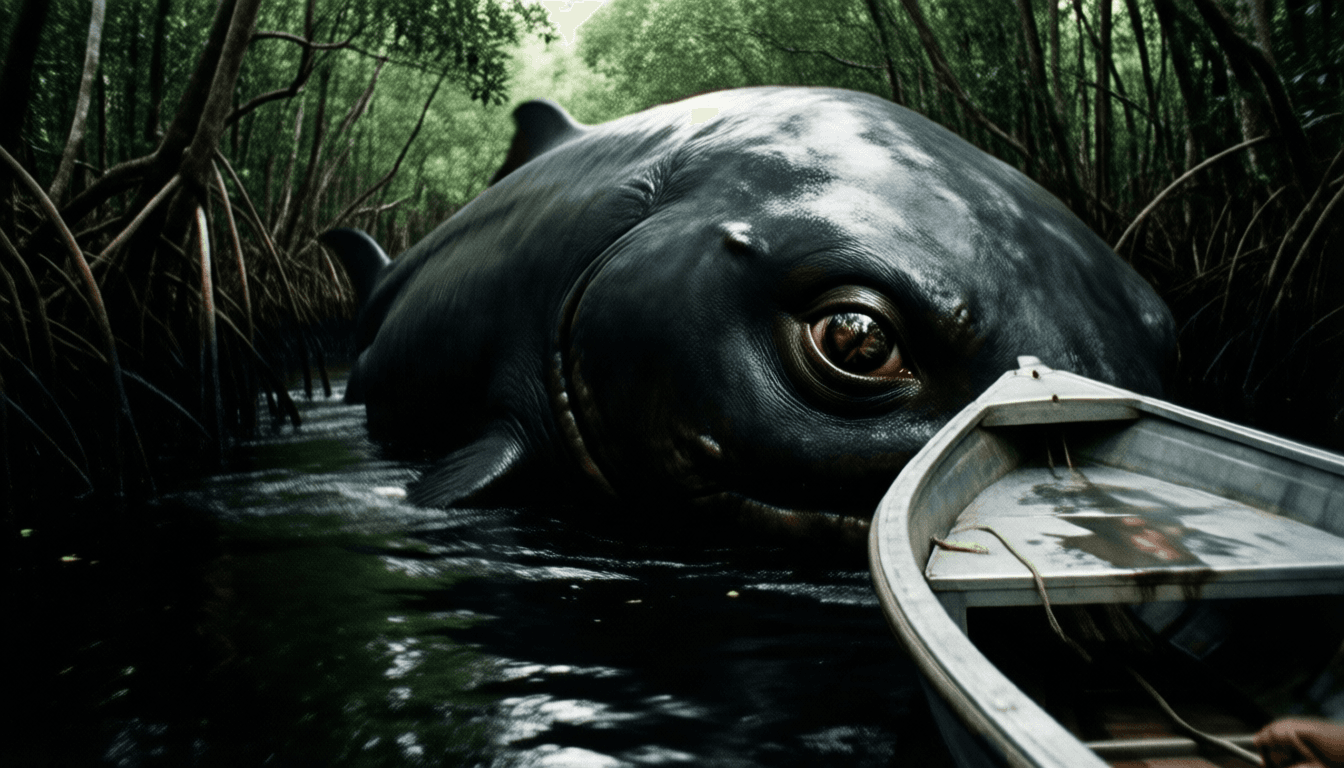
A colossal black form briefly broke the surface right next to the boat. I didn't see its entirety, but its moist, impossibly dark skin, immense girth, and a series of unnatural, segmented ridges or fin-like structures shimmered unsettlingly iridescently in the faint light. It was impossibly huge for the narrow channel. For a fleeting instant, a single, ancient eye, black and glossy like obsidian, rose above the water and stared at me. There was no malice. It was just an old eye.
A low, rumbling sound erupted from beneath the water. It vibrated the very air around me, resonating in my bones. It was not an animal sound; it was too deep, too powerful, a pure resonance pressing on my eardrums. The boat lurched violently again, its hull groaning. A heavy, slick mass—part of an impossibly dense creature—slid over the side of the boat, pinning my legs to the seat. Immense weight pressed down, bone-crushing. Water in the boat rose rapidly, covering my feet, my shins. I thrashed, feeling the cold, alien texture of its skin against my legs, its raw power.
With a desperate surge of adrenaline, I screamed, a sound ripped from my throat, and wrenched my legs free. As the boat tilted precariously, almost capsizing, I scrambled over the side, clawing at mangrove roots, pulling myself onto the slippery muddy bank. I burrowed into the tangle of roots just as, with a chilling gurgle, the boat was dragged down beneath the surface, vanishing without a trace.
Clinging to the mangrove roots, soaking wet and shivering uncontrollably despite the stifling heat, I spent a terrifying night activating my distress beacon, listening to the impossible silence and the deep, resonant vibrations of something massive moving beneath the mud and water. Dawn finally broke, and rescue arrived. I was suffering from hypothermia, exhaustion, and multiple lacerations, and my story of a colossal river serpent was met with sympathetic but dismissive nods. "Malaria-induced delirium," "panic attack," "dehydration hallucinations," they said.
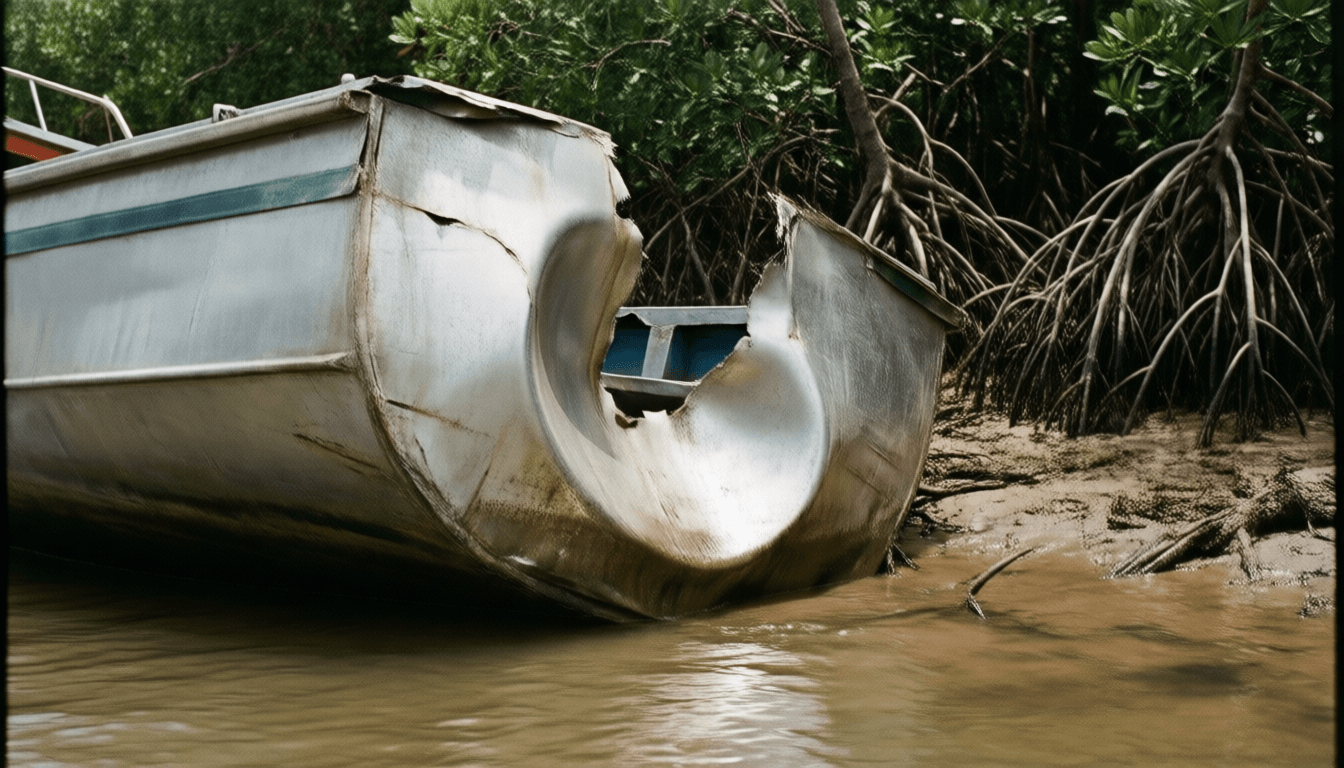
My boat was never found. No wreckage, no oil slick—just a clean, impossible disappearance. Miraculously, my camera, stored in its waterproof case, survived. The last recorded images were chaotic: blurred water, twisted mangrove roots, and then, in one chillingly clear frame just before the camera died, a section of my boat's hull. It bore a massive, crescent-shaped indentation, deep enough to nearly pierce the aluminum, but not torn by teeth or claws—rather, perfectly smoothly pressed in by something impossibly vast and dense.
The hydrophone data was partially corrupted but contained ultralow frequency recordings from the climax of the incident. It wasn't sound in the traditional sense, but powerful, rhythmic infrasonic pulsations. When amplified and played back, it induced severe disorientation and nausea. It sounded less like a creature and more like shifting tectonic plates, or an impossible, living engine.
I published my findings online: a clinical, unemotional account, complete with the drone footage, the distorted hydrophone recordings, and that single, disturbing photo of the boat's impossible damage. The post garnered attention in the darker corners of the internet.
The memory of that ancient, unblinking eye remains indelible. It wasn't predatory; it was just there, observing. The chilling realization I carry isn't that a monster exists, but that there is a fundamental part of the ecosystem operating by rules we don't comprehend, subtly bending the physics we take for granted. The Ninki Nanka isn't hiding. It exists in a way our science cannot readily grasp, asserting its presence with a force that subtly reshapes reality. And somewhere in those remote, dark tributaries, the river flows on, but something else flows with it. Patiently, unseen, until it decides otherwise.
[ CLASSIFIED VERDICT ]
[ACCESS LOG - SOURCE FILE]
This story is based on local rumors and urban legends about 'Ninki Nanka,' a legendary creature said to inhabit the Gambia River basin in West Africa. Local fishermen speak of specific sections of the river that 'swallow' boats and inexplicable water phenomena, attributing these to Ninki Nanka. These mysterious disappearances and events have long been passed down as fear and superstition among the local inhabitants.