The Moving Void of Lake Van
The story of the monster in Lake Van, a vast saline lake in eastern Turkey, a creature locals call ‘Canavar,’ typically begins and ends with a single blurry video shot by Ünal Kozak in 1997. The uncertain shape captured in the water led to the establishment of a local university and government-backed research institutes, yet decades later, no clear scientific evidence, specimens, or compelling proof of this unknown aquatic creature has emerged. The monster remains merely a regional legend and tourist attraction; the story has not progressed further.
However, recently, unidentified data reported from the private deep-sea geological survey vessel Tethys Explorer, operating in the lake's southern basin, suddenly vanished from public records. Equipped with advanced multi-beam sonar and gravity sensors, the ship intermittently detected extremely unusual acoustic signals at depths over 300 meters, far beyond the lake's known biological activity zones. These were not random geological echoes. Analysts described them as "deliberate and repetitive low-frequency pulses." Even more astonishingly, while investigating these anomalies, the Tethys Explorer experienced complete system failures and communication blackouts on two separate occasions. After each power outage, lasting several minutes, minor but inexplicable surface scratches were found on the ship's hull upon its return to port, and several internal diagnostic systems were irreparably damaged without any plausible external cause like collision or extreme pressure. The incident was officially attributed by the operating company to "unexpected electromagnetic interference," but local geophysicists privately considered that conclusion insufficient. It was this hushed-up incident—a modern technological encounter with an unfathomable unknown—that drew this investigation into the silent abyss of Lake Van.
Our deep-sea unmanned submersible, Charon, was a robust and sophisticated piece of equipment designed for extreme environments. It was deployed into the southern basin, precisely following the Tethys Explorer's last recorded trajectory. Lake Van's unique chemical properties—a hypersaline, highly alkaline carbonate lake—create an anomalous environment. It is surprisingly clear down to 100 meters, but below that, light rapidly diminishes due to increasing density and fine suspended particles. The absence of typical oxygen-dependent deep-sea life meant there was no usual biological ‘noise’ that fills ocean depths. This created an environment of deep, almost suffocating silence.
As Charon descended, external temperature sensors recorded a gradual drop as expected, stabilizing around 4°C. The pressure hull creaked softly, the familiar song of the deep. Our multi-frequency sonar array meticulously probed the complex, volcanically formed terrain. Initial scans revealed nothing beyond the expected: stratified sediment layers, hydrothermal vent structures, and ancient fault lines. The only sounds were the faint hum of the ROV's thrusters and the occasional sonar ping echoing back in the vast, dark expanse. The environment was exactly as theoretical models predicted: desolate, cold, and perfectly still.
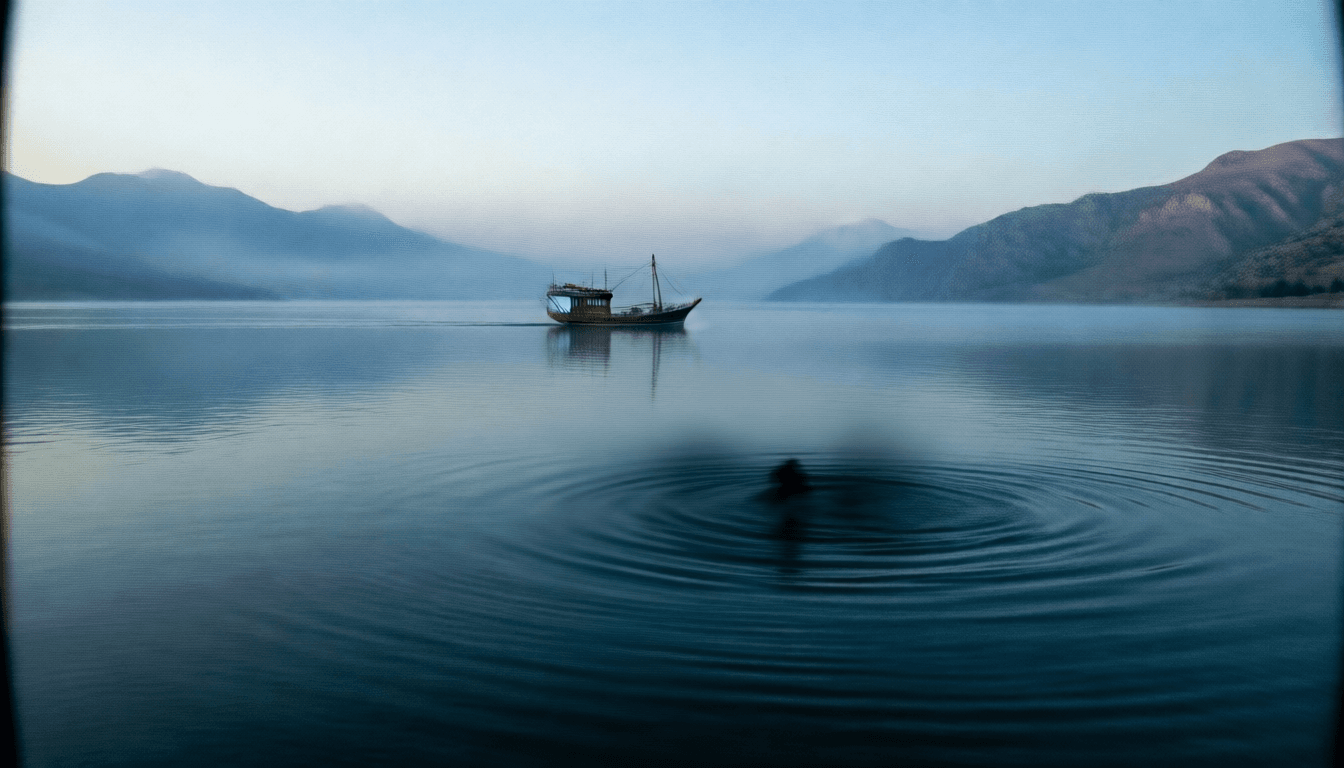
The first anomaly was subtle, almost imperceptible. Around 280 meters, Charon's primary sonar began to register persistent, low-amplitude reflections that were unclassifiable. It wasn't a solid object. The reflections were too diffuse, too irregular to be geological features, yet too patterned to be random noise. It appeared as a 'moving void' – not reflections, but instantaneous absorptions of sonar pings. Adjusting frequency bands, the anomaly persisted, subtly shifting with our movements but never resolving into a clear form.
And then, the silence. Designed to capture even the faintest whispers of the deep, the ROV's hydrophones recorded a diminishing ambient noise level. The normally constant hum of the thrusters seemed to fade, as if moving away. The very feel of the water was different. The subtle currents we had previously detected seemed to vanish, and Charon was encased in an unnaturally still pool. The external cameras, which typically showed fine suspended particles shimmering in the lights, now showed almost nothing. It was as if the water around us had been hyper-purified. This was not a silence of absence; it was an eerie silence of suppression.
At 350 meters, the 'moving void' on the sonar became more distinct, appearing as an elongated form too massive for any known deep-sea species. Simultaneously, Charon's internal pressure gauges began to fluctuate erratically, registering impossible drops and surges as if the water density around the hull was momentarily changing drastically. The main external lights flickered, briefly dimming to an almost imperceptible level, plunging the forward view into near-total darkness, despite no recorded power fluctuations. The absolute silence deepened further, now punctuated only by the strained groans of the ROV's internal servo motors wrestling against an unseen, fluctuating pressure. Something was not just in the water; it was subtly reconfiguring the water's physical properties.
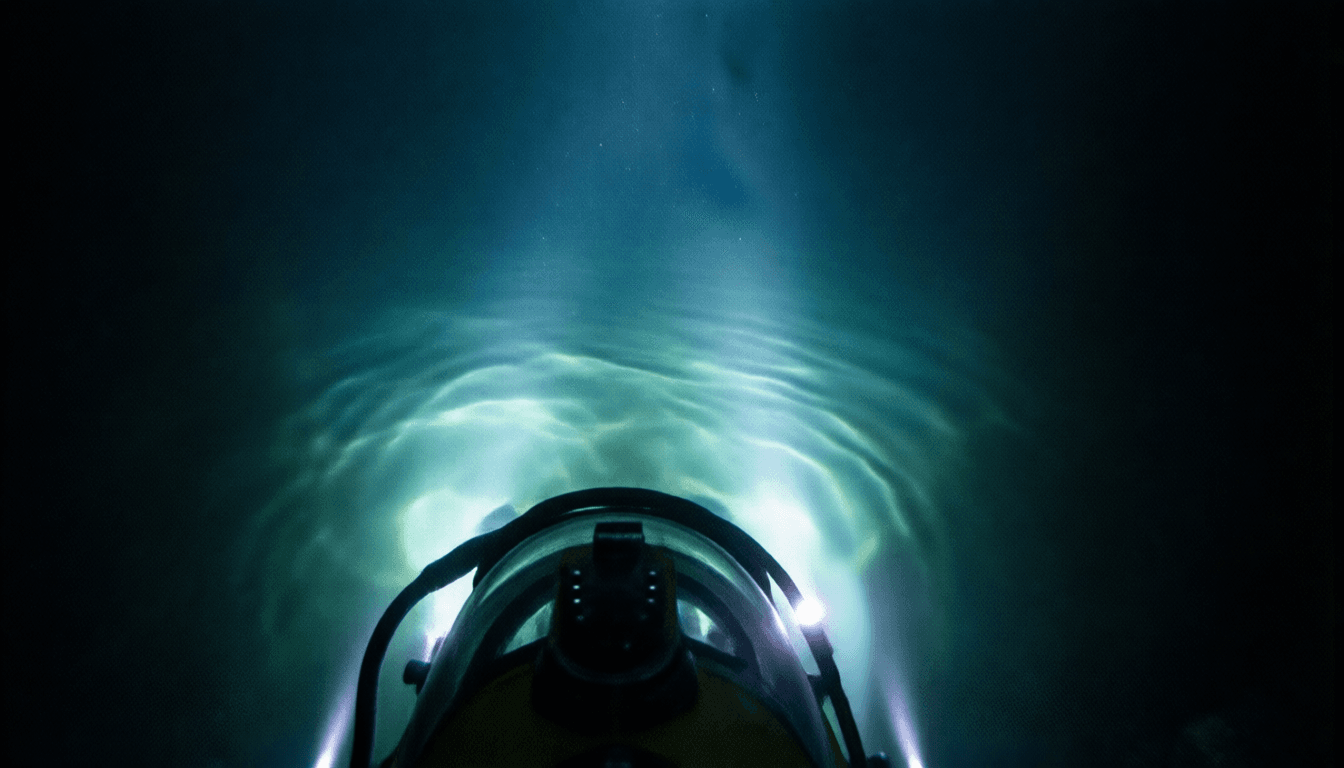
We followed the increasingly distinct acoustic void deeper. At 412 meters, directly above a previously unrecorded deep trench, the anomalies converged into an inescapable presence. The sonar screen was a chaos of impossible readings: multiple overlapping reflections indicating a structure of unimaginable scale simultaneously registering as a complete absence of matter. Our gravity sensors surged then flattened.
Then, the water around Charon vibrated. It wasn't a current, nor an impact. It was a powerful, low-frequency resonance passing directly through the ROV's structure itself. The hull groaned not from external pressure, but from internal stress caused by molecular vibration. Lights shattered inside the cockpit. Alarms blared, not from system failure, but from violently induced resonance. Charon was not being moved by a force; it was being shattered from within by manipulated sound waves.
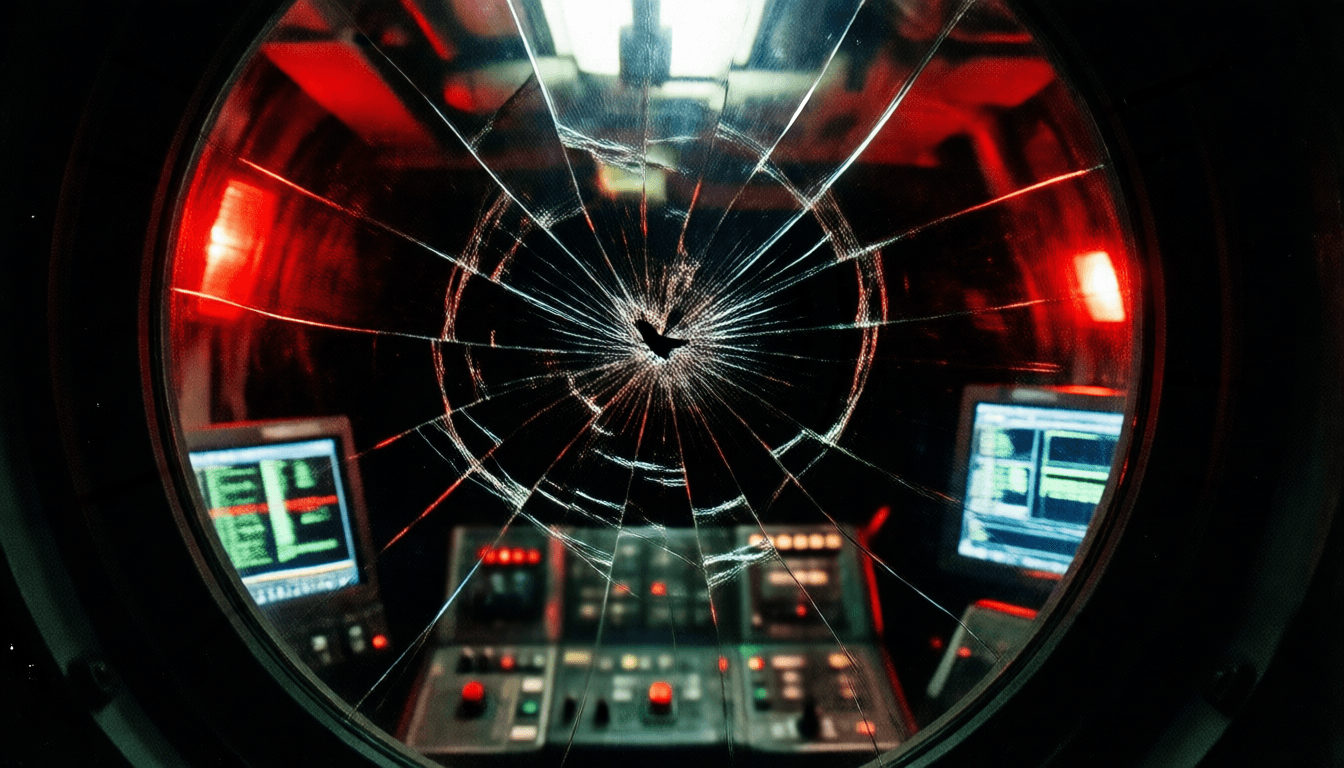
Through the forward observation port, now cracked by internal vibration, a deep, absolute darkness materialized. It wasn't merely the absence of light; it was active absorption. A massive surface, impossibly smooth, blacker than any known material, completely eclipsed the dim external lights. It swallowed the volcanic terrain, filling the view. This entity was not reflecting light; it was consuming it.
And then came the impact. Not a violent collision, but a gradual, inexorable compression. Charon's reinforced manipulator arm, extended for sampling, crumpled instantly like paper. Metal screamed in tearing agony. As the pressure intensified, external cameras winked out one by one. The hull buckled inwards with the horrifying shriek of tortured titanium. This entity was not attacking; it was simply closing in on our immediate environment. The depth gauge spun wildly, indicating impossible increases and drops, as if the water itself around the ROV was being twisted and manipulated by an unseen, overwhelming will. The silence returned, absolute and terrifying, punctuated only by the sounds of rending metal and our desperate attempts to initiate an emergency ascent. We weren't merely being hunted; we were being dissolved into the lake's physical properties.
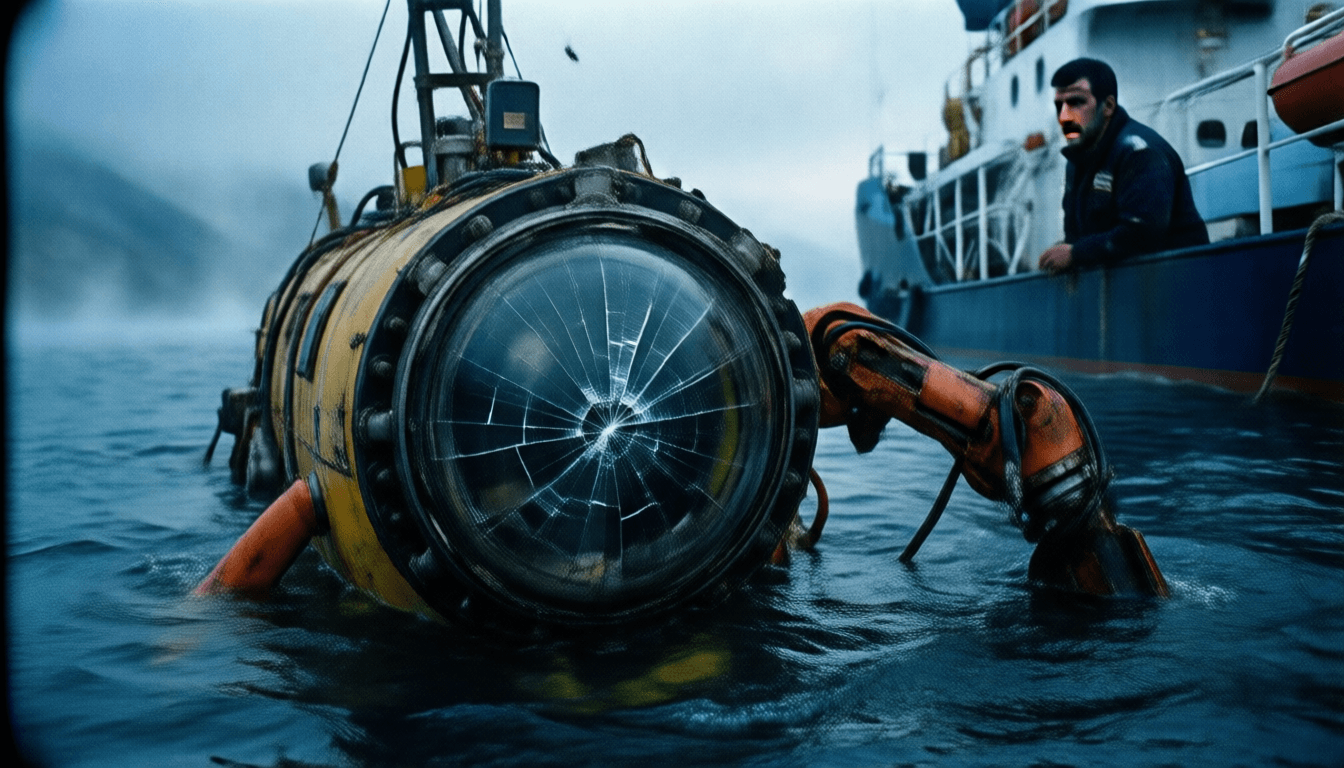
Charon barely surfaced. Its hull was a mangled wreck, ravaged by an unknown force. The forward observation port was radially fractured, the manipulator arm a twisted ruin, and half of the external lighting array was completely crushed, not from impact, but from localized pressure that deformed the metal outwards from its mounting points. Internally, most sensor and communication systems were critically damaged, their circuits shorted by inexplicable localized electromagnetic pulses. There were no teeth marks, no claw damage, no signs of conventional attack. Only impossible, uniform compression and inexplicable internal system destruction.
Our official report noted "catastrophic structural damage due to unexpected hydrothermal pressure fluctuations." While this satisfied the insurance company, it offered no explanation for the nature of the destruction. However, the recovered sonar logs told a different story. In the final few seconds before complete system failure, amidst the chaos of impossible readings, a single, persistent low-frequency acoustic signal was recorded. It was a deep, resonating hum, unlike anything biological or geological on Earth. But more chillingly, interspersed with this hum were distinct inverse energy spikes – moments where the ambient acoustic environment around Charon registered not merely as reduced, but at minus decibel levels, as if sound itself was actively being pulled in.
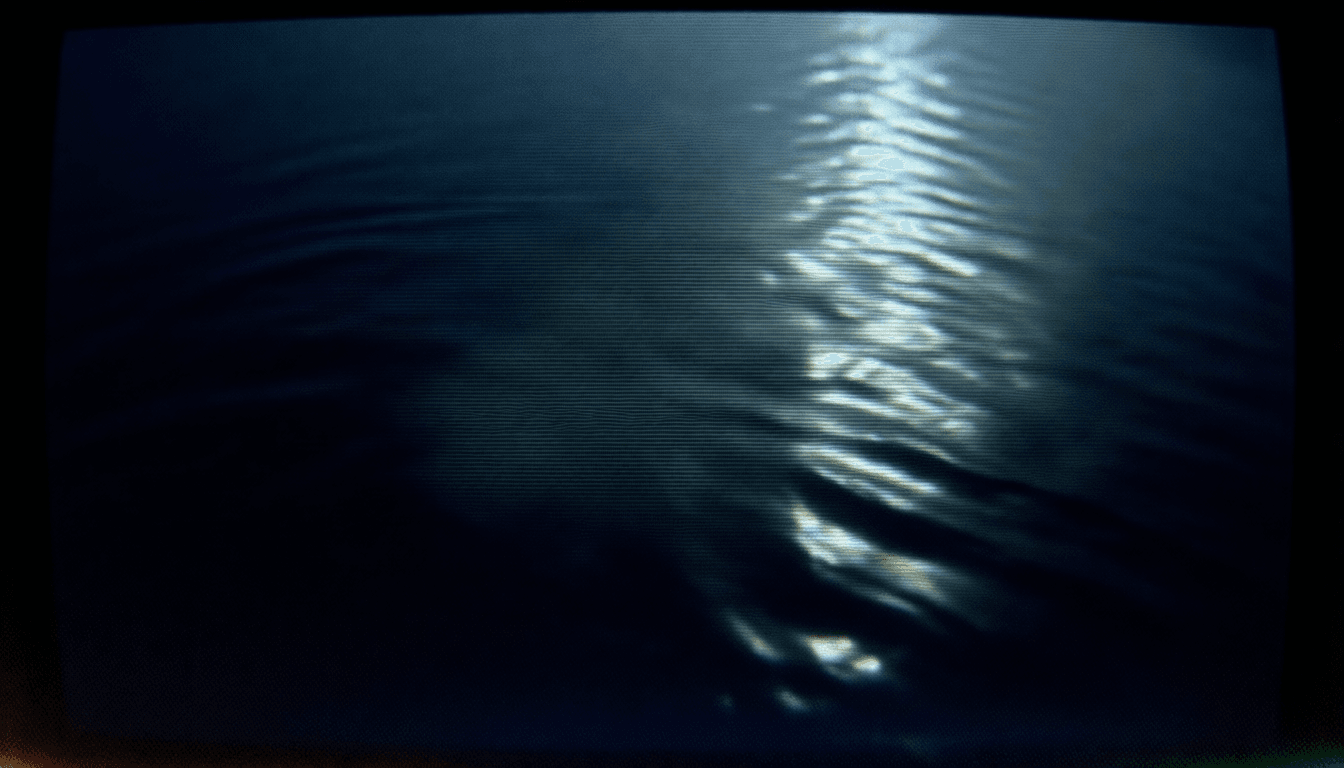
Just before the camera array failed, Charon's last recorded image was a blurry video of unnatural blackness. But forensic analysis of the footage embedded in the final frames revealed a faint, distorted pattern on the surface of the 'void.' It wasn't scales, nor skin. It was what appeared to be faint, shimmering ripples, moving against the current of the water like heat haze in extreme cold, distorting light rather than reflecting it.
The implication is more terrifying than any conventional cryptid. What if the Lake Van monster is not merely a creature in the lake, but an entity fundamentally, actively participating in the physical properties of the lake itself? What if its defensive mechanisms are not teeth or claws, but the manipulation of sound, pressure, density, and even light within its immediate environment? The silence we experienced was not passive; it was an active weapon, an engineered absence. The overwhelming force was not a grasp; it was a localized intensification and transformation of the water's properties themselves. The reason for the lack of evidence is now chillingly clear. The entity doesn't merely hide; it actively 'un-makes' itself from the parameters of conventional observation. It blurs the line between organism and environmental phenomenon. It leaves no trace, because it is the trace. A moving void existing within the fabric of the world, waiting patiently in the impossible depths of Lake Van. And sometimes, in the quietest moments, I can still hear it. That deep, resonating hum, and the profound, absorbing silence that follows.
[ CLASSIFIED VERDICT ]
[ACCESS LOG - SOURCE FILE]
The legend of the Lake Van Monster, 'Canavar,' in Turkey became famous after Ünal Kozak's blurry video in 1997. Although described as a long, snake-like creature, no clear scientific evidence has been found despite decades of investigation. This monster remains an unsolved mystery and a local tourist attraction.