The Metal-Eating Hunger of Busan Shipyard
The series of bizarre incidents plaguing the redevelopment zone of Busan Shipyard were initially dismissed as shoddy construction or industrial espionage. However, the five structural collapses over the past six months were too frequent and specific to ignore. Key metal components in abandoned warehouses and newly erected temporary scaffolding structures consistently failed, with official reports only citing 'unprecedented material fatigue' or 'rapid and localized corrosion'.
But among the local residents, especially the elderly and former shipyard workers, a different whisper circulated. They spoke of the Bulgasari, not as a mythical monster, but as a cunning 'metal plague' that emerged after the great fire that reduced the foundry to ashes in 1987. Their claim was that the area itself was contaminated, like a wound beyond natural decay, with an insatiable hunger that never disappeared. My investigation began with an anonymous tip: a blurry security photo taken at a collapsed scaffolding site. It showed not merely bent rebar, but a jagged, crystalline cross-section, as if something had gnawed at it, unlike any known corrosion or stress fracture.
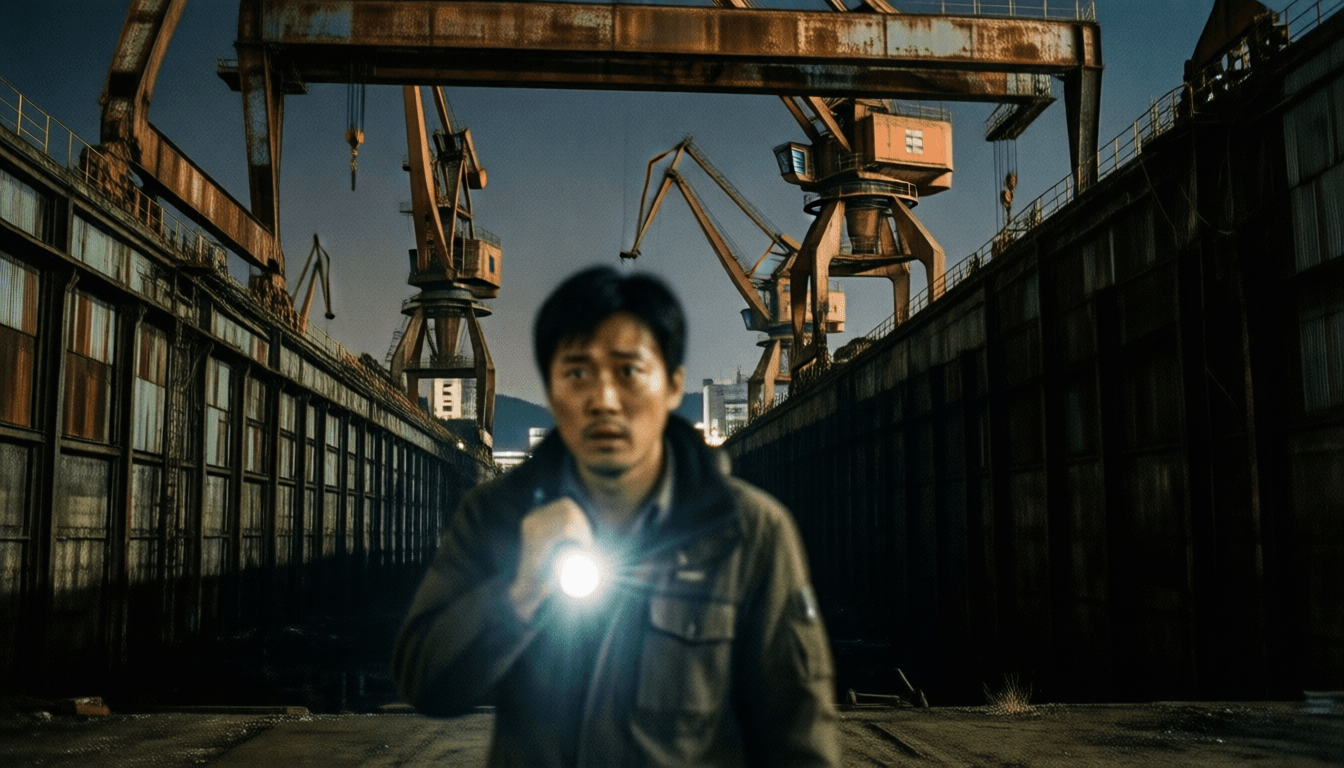
I arrived at Dry Dock No. 7, the abandoned Busan Shipyard, where the latest collapse occurred. The air was thick with the metallic tang of rust and salt, but there was something else – a faint, acrid smell that was hard to place. The sheer scale of the derelict industrial site was overwhelming, with massive cranes frozen mid-air, colossal ships rusting in dry docks, and a labyrinth of corrugated iron structures before me.
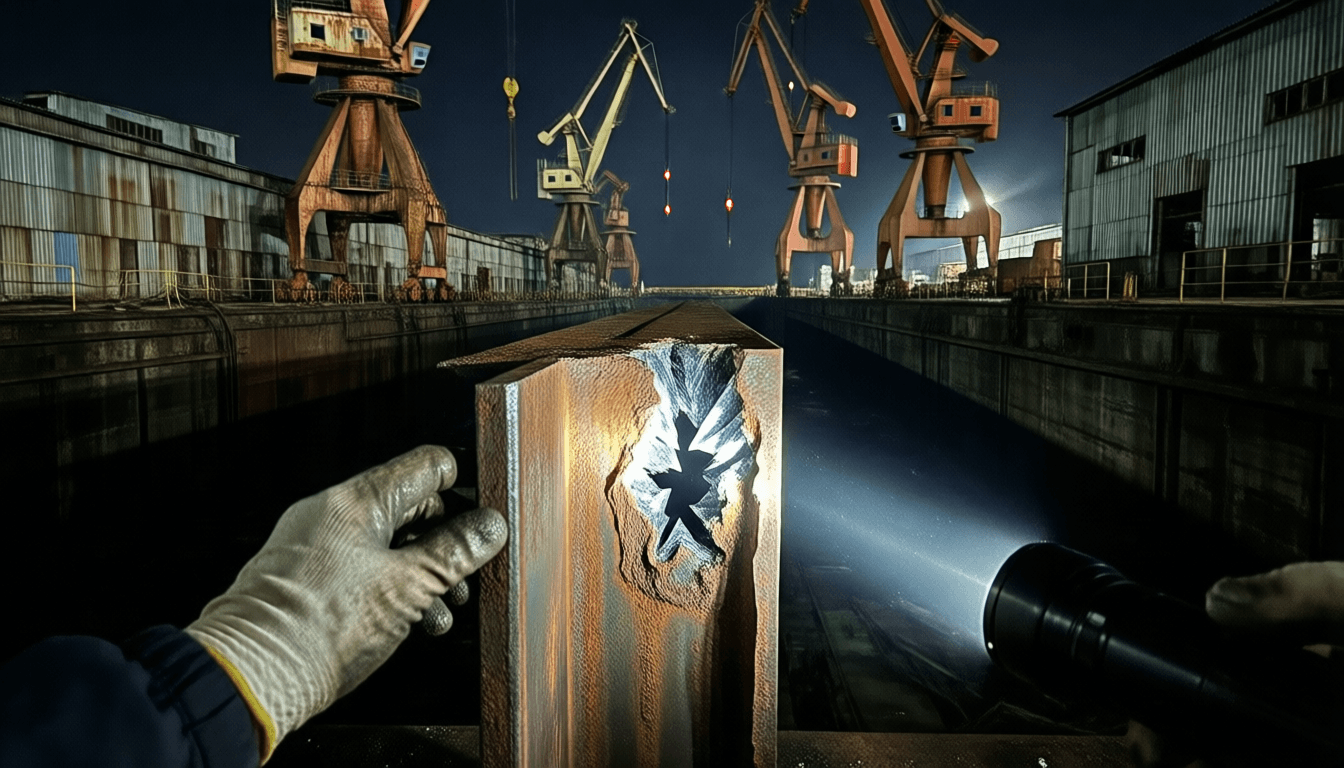
My flashlight cut through the darkness, illuminating vast halls where machines lay entombed in dust and grime. I began documenting the damage. The initial collapsed scaffolding section displayed the same impossibly 'gnawed' metals I'd seen in the photo. Further inside, I found traces of abnormally advanced, highly localized corrosion on massive steel beams that should have lasted decades longer. Some sections, beyond just rust, looked as if they had been scraped and gouged by invisible claws. Some exposed rebar had a strangely unnatural sheen; parts appeared polished, yet were surrounded by deeply flaked rust, a contrast inexplicable by natural weathering. The profound silence was broken only by my movements and the distant clatter of loose metal sheets rattling in the wind.
As I delved deeper into the vast, echoing warehouses, the environment itself began to subtly warp. Metallic sounds—my footsteps, accidental bumps of equipment—were strangely muted, abruptly cut short, or sometimes echoed back with only a fraction of their original intensity. It was as if the metal itself was absorbing the sounds.
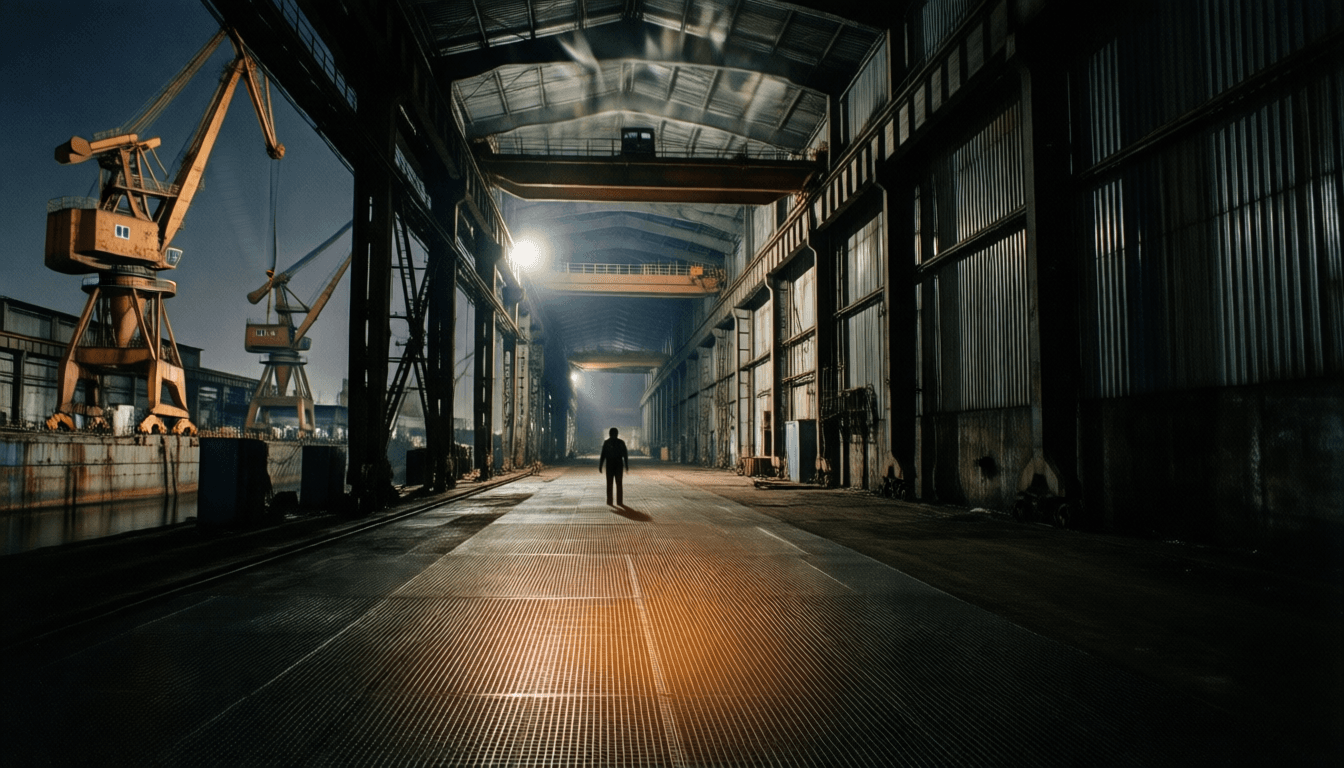
Walking across wide metal grate flooring, I felt certain sections vibrate abnormally beneath my weight – a low, hoarse hum unconnected to machinery or wind. It felt as though the metal beneath my feet was held in tense anticipation. My thermal camera picked up localized cold spots on large metal plates, significantly colder than the ambient temperature, with no clear explanation. These cold spots sometimes appeared to slowly move across the surface. At the edge of my vision, momentary distortions shimmered in the air, especially above damaged metal, like faint heat haze without a heat source. Feeling a colossal H-beam, I encountered abnormally smooth, almost polished sections of metal, contrasting with areas of extreme decay, defying natural weathering. My compass needle began to subtly waver, even without any major electrical interference. The acrid smell intensified, faintly transforming into the scent of sulfur.
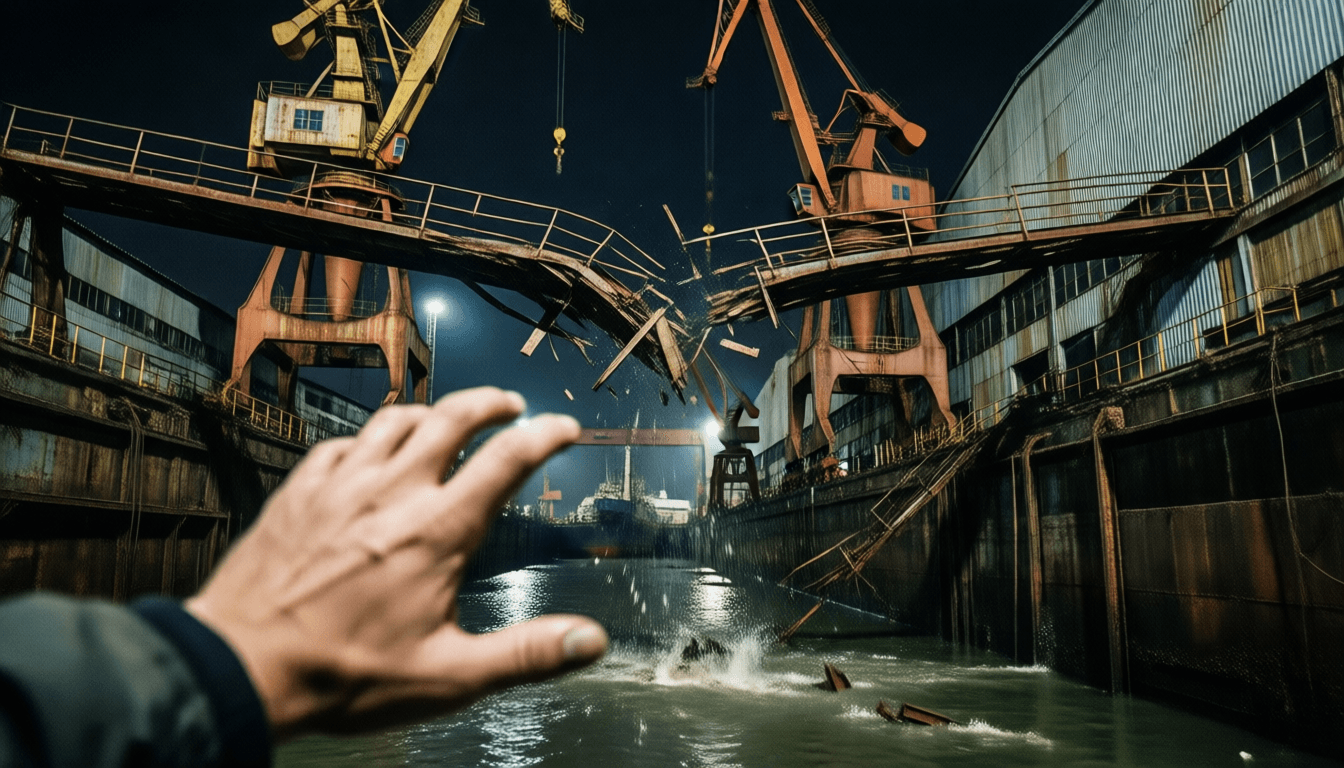
I was crossing a long, creaking catwalk suspended high above a massive, flooded dry dock. The steel beneath my feet groaned ominously. Suddenly, a sharp, raspy tearing sound erupted ahead, reverberating through the entire metal structure. It sounded like stone grinding against stone, but amplified, monstrous. A section of the catwalk about fifteen meters ahead buckled and tore, not from rust, but as if an enormous, unseen force was ripping it apart from within. Metal twisted and shrieked, falling with a horrific clang into the dark waters below.
My body froze. The tearing sound was now stronger beneath my feet. I felt the catwalk vibrate violently. Looking down, small sections of the perforated metal floor beneath my feet began to melt away before my eyes, turning into rusted dust. It was too fast for any natural process. Large rivets securing the structure popped with explosive force, leaving small, rapidly expanding pits in their place. The Bulgasari was not a creature in the traditional sense; it was a greedy void manifesting as localized, accelerated decay. An active hunger melting steel like sugar.
The section of catwalk directly behind me collapsed without warning. I was trapped. The rapid dissolution of metal was spreading outwards from an unseen source, forming concentric rings of destruction around me. The handrail I instinctively grabbed began to peel and disintegrate instantly in my grasp; the metal turned granular. I heard the sharp screaming of rapidly transforming steel getting closer, coming from everywhere on the catwalk. A massive support beam immediately to my right suddenly buckled inwards with a deafening groan, then ruptured, its colossal steel fibers unraveling like threads. I had no choice but to run forward, leaping over sections that vanished milliseconds after my foot lifted, pushing through metallic air thick with acrid dust and the terrible sound of metal being consumed. I felt its hungry vibration transmit through the metal into my bones. My metal-rimmed glasses warmed where they touched my face, subtly warping. I reached what seemed like a stable ladder, but as soon as I gripped the first rung, it immediately warped, weakened, and threatened to give way. The force was a palpable, unseen pressure. A presence of absence devouring all metal around me.
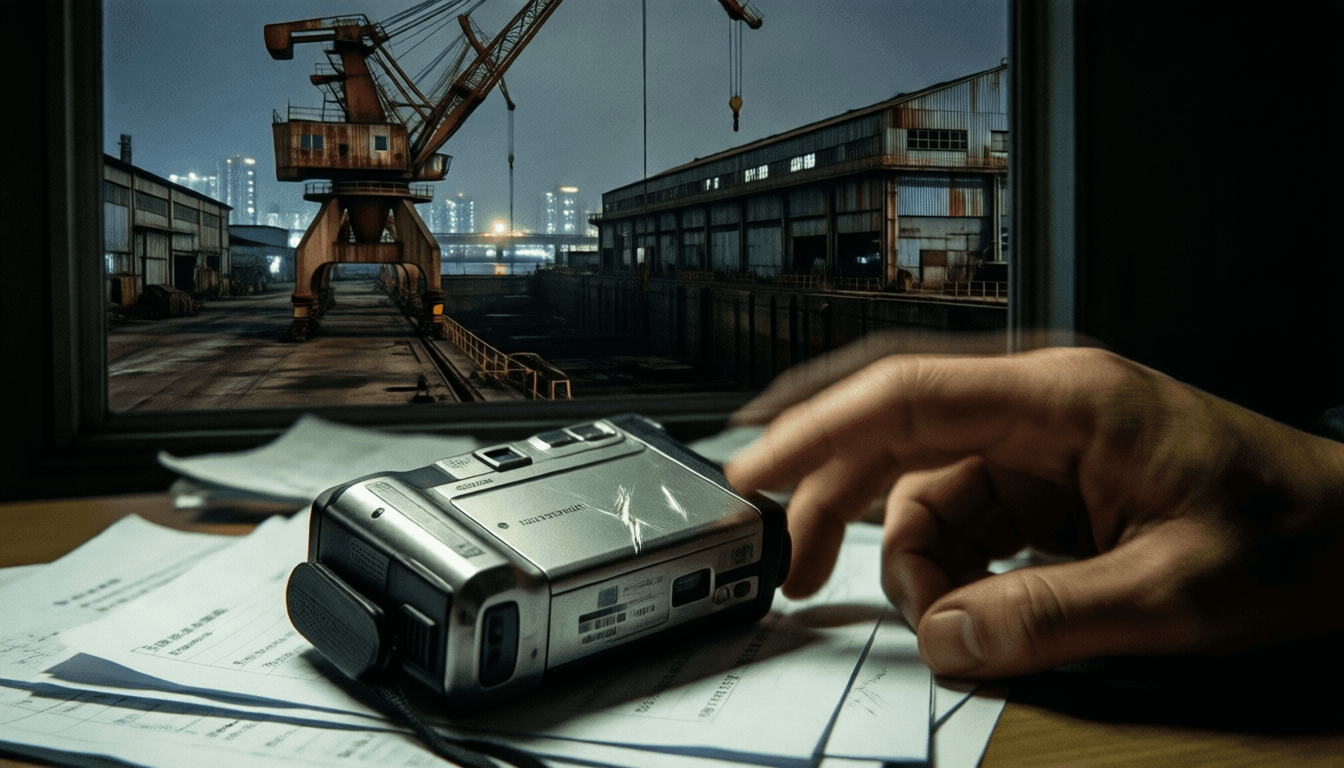
I stumbled out of Dry Dock No. 7 in an adrenaline-fueled terror, clothes torn, lungs burning from the dust. I had captured no clear visuals of a creature, only the horrifying remnants of an inexplicable destruction. The metal casing of my portable camera now bore small, unnatural nicks and crystalline damage, and it held images of the metal's dying screams and thermal readings showing inexplicable, floating cold spots. My compass was forever broken, its needle spinning wildly.
Back in my archives, the taste of rust and blood-like metal lingered on my tongue. I processed the evidence. The 'gnawed' metal samples I barely recovered resisted all conventional analysis; their molecular structure was ruptured in ways defying known metallurgy. Local news in Busan continued to report 'structural integrity issues' and 'unexpected material failures,' and redevelopment was halted indefinitely. I now saw all metal structures differently – bridges, lampposts, even the rebar in the walls of my building. I kept one of the affected samples on my desk, watching it, convinced weeks later that I could still see subtle changes, infinitesimal flakes detaching. The Bulgasari was not a roaring, flesh-hunting monster; it was a quiet, pervasive hunger, a slow plague eating away at the very infrastructure of civilization, and it was still there, silent, persistent, gnawing.
[ CLASSIFIED VERDICT ]
[ACCESS LOG - SOURCE FILE]
The Bulgasari is a mythical creature from Korean folklore, an imaginary monster that eats metal and grows stronger. In this story, it is reinterpreted as a 'metal plague' that appeared after a 1987 fire at a Busan shipyard foundry, actively corroding and destroying metal structures. It delves into the horror of an unseen entity causing strange decay in structures, slowly consuming the city's infrastructure.