The Living Eagle's Nest: Heart of Patomskiy
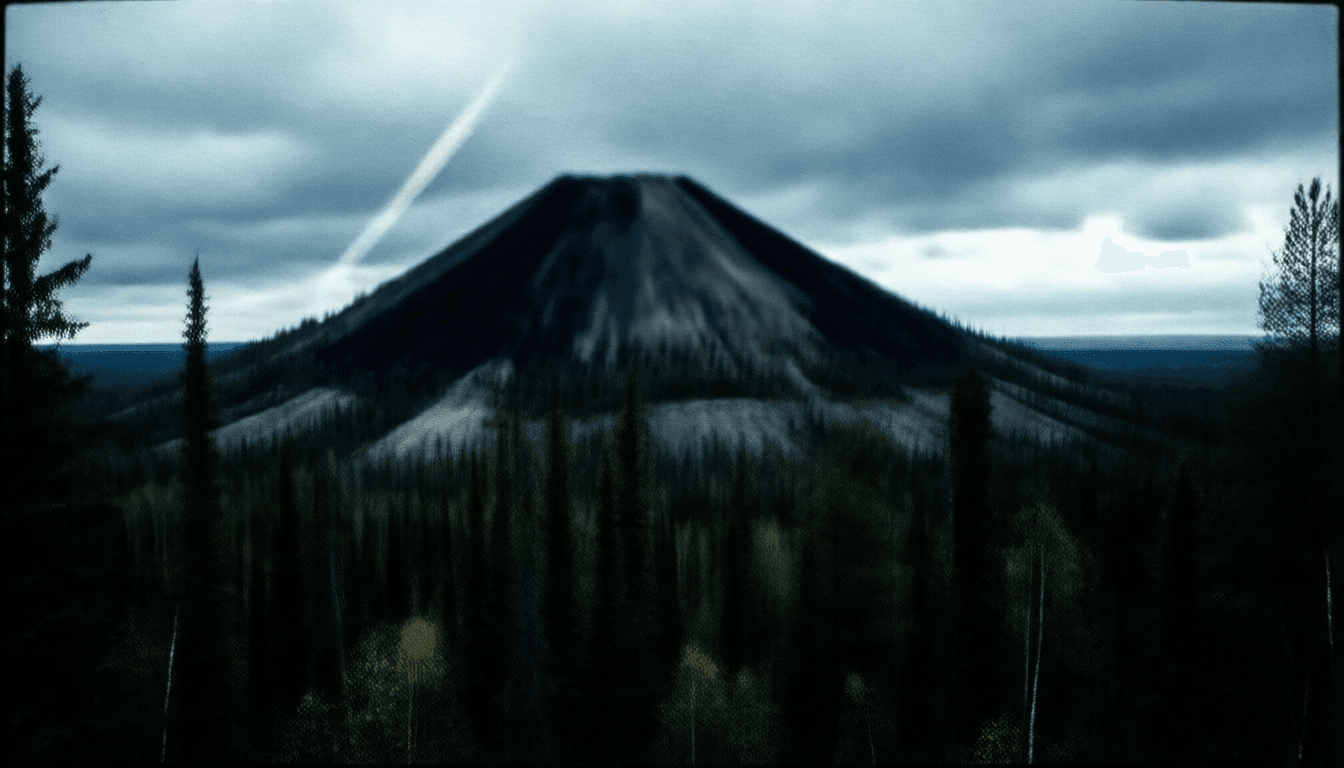
The Patomskiy Crater in Russia’s Irkutsk region is often referred to as “The Eagle’s Nest.” This enormous conical limestone mound, 80 meters high with a central crater diameter of 6 meters, defies any conventional geological explanation. There are no impact traces, no evidence of volcanic activity, and its estimated age of 250-500 years is too young for most natural formation theories. For generations, local Yakuts have called it the “Fiery Eagle’s Nest” or “Nest of Death,” regarding it as a place imbued with strong evil energy and meticulously avoiding it. Recent satellite imagery captured a subtle, almost imperceptible change in the crater’s circumference over the last decade. However, our interest was piqued by severely damaged black box footage from a vanished geological survey team. The mere 20 seconds of video, just before the system ceased entirely, showed the team’s vehicle approaching the crater. In the last two frames, as the camera violently flickered, a shadow – clearly not cast by sunlight – was caught ‘flowing’ upwards along the side of the mound, briefly obscuring part of the rock face before receding back into the structure. Not a single body or piece of their equipment was ever recovered.
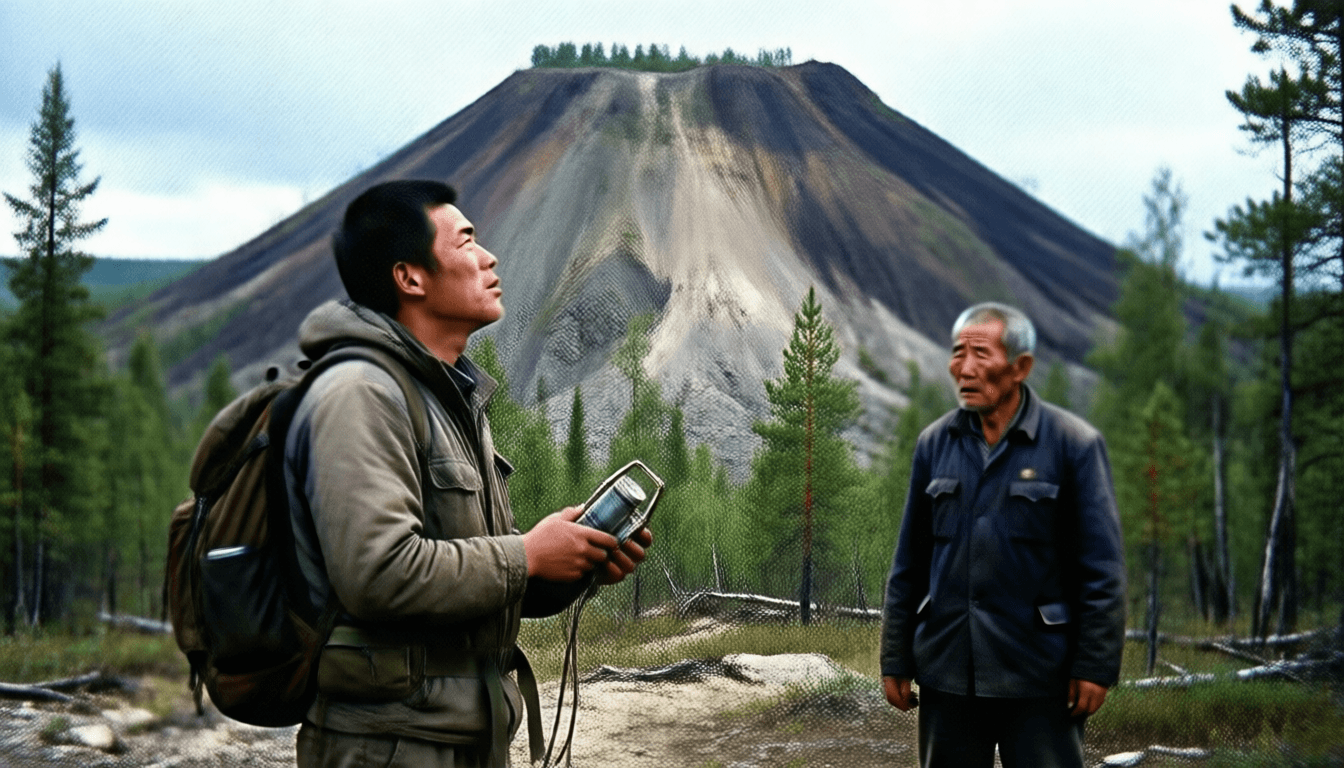
Drawn by this anomalous footage and persistent local legends, I, accompanied by local guide Yuri Volkov, arrived at the Patomskiy Crater, deep within the desolate taiga of the Siberian wilderness. The journey itself was torment – a constant battle against overwhelming isolation and the oppressive silence of the Siberian wild. Upon arrival, the sheer scale of the crater disoriented me. It felt like an alien presence, a massive wound on the Earth. Despite it being mid-summer, the air around the base of the crater was noticeably colder, and even the usual hum of insects common to the taiga was completely absent. Initial surveys with a portable spectrometer found no unusual elemental composition in the surface rocks. However, magnetometer readings spiked severely at random specific points on the lower slopes – inexplicable magnetic field signals in an area with no known metallic deposits. Even Yuri, hardened by this harsh environment, maintained a respectful distance, his eyes ceaselessly scanning the colossal structure, a silent unease palpable on his weathered face.
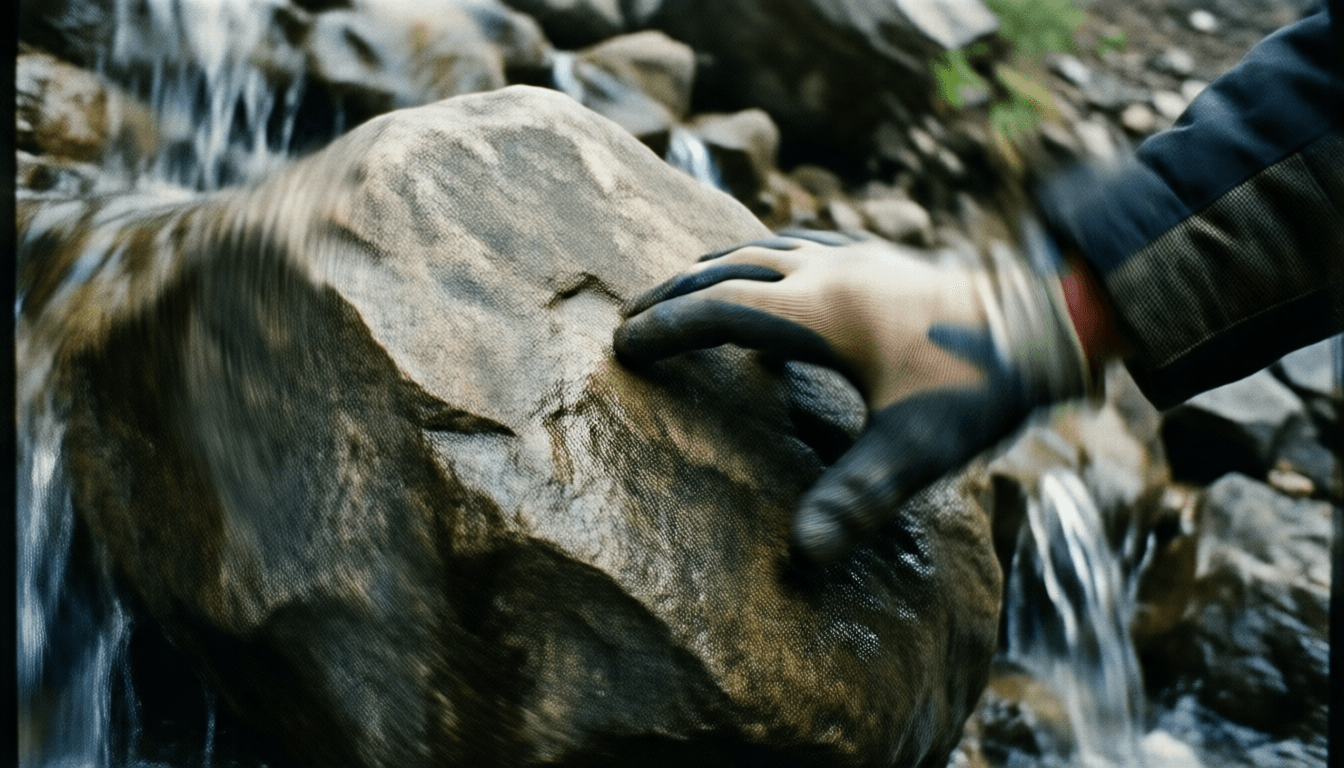
Ascending the inner slope of the crater proved unexpectedly challenging. The fractured limestone underfoot offered little purchase, sliding beneath my boots not like loose debris, but with a hesitant, reluctant movement. Sound itself was distorted. My own breathing sounded abnormally loud, yet shouts directed at Yuri, barely 50 meters away, seemed to vanish entirely as if the air itself absorbed the vibrations. Small seasonal meltwater streams, which typically trickle down the inner walls, would slow to an almost complete stop at certain points, their sounds transforming into an abnormal gurgle before flowing again. The most chilling phenomenon occurred when I placed my hand on a particularly large rock face. A distinct low-frequency vibration, felt more than heard, resonated through the rock, subtly affecting my tinnitus and temporarily causing a profound sense of disorientation. It felt less like a geological hum and more like a slow, deep breath. My specialized seismic sensors, designed to detect minute ground movements, began recording intermittent, rhythmic waves emanating from deep within the crater's core. It was less tectonic activity and more, bizarrely… organic.
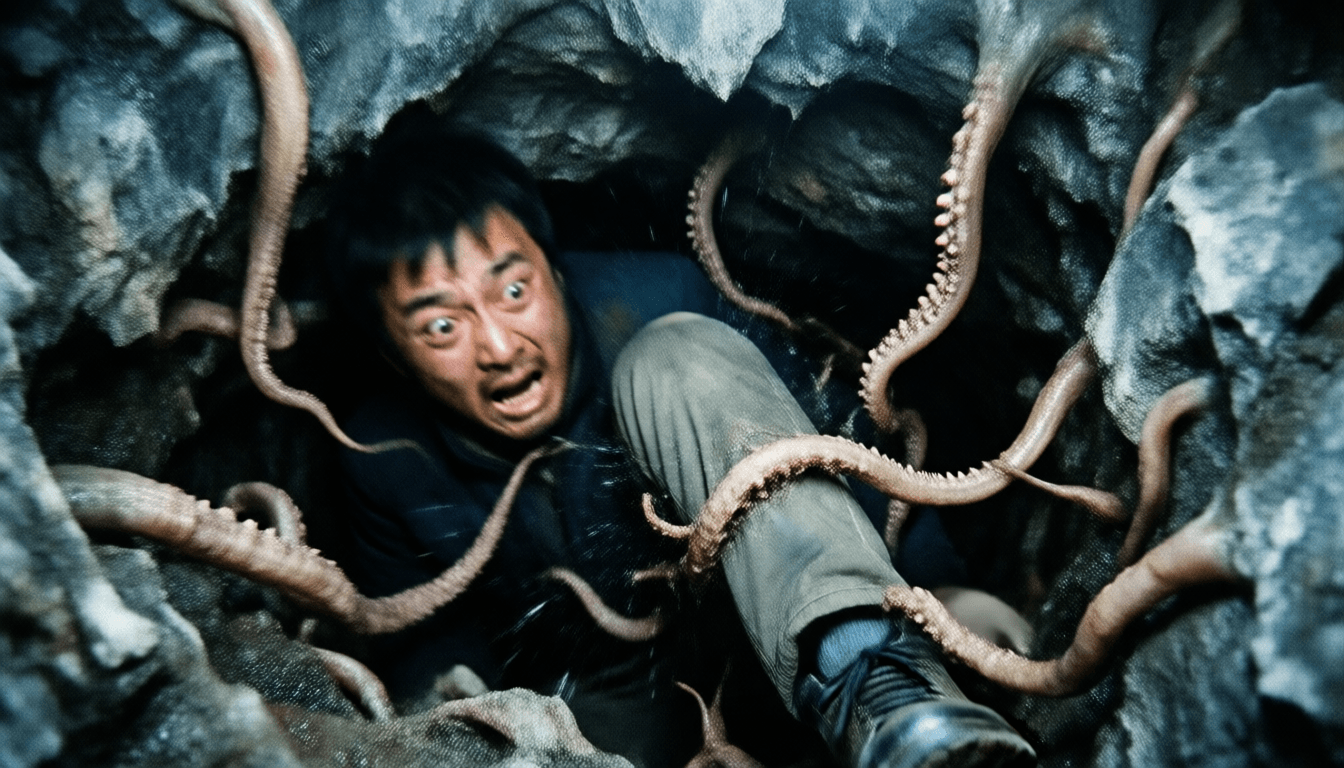
Despite Yuri’s explicit warnings, I descended into the central depression to collect a geological core sample from its deepest point. The air here was utterly still, profoundly silent, and exceptionally cold. As I began drilling, the rhythmic waves recorded by the seismic sensor intensified, vibrating through the ground and into my drilling equipment. Suddenly, the entire crater floor heaved. Not a sharp, seismic tremor, but a viscous, sickening motion, as if the ground beneath me was a thick, moving membrane. The previously stable walls of the central depression began to ‘flow.’ Individual stones, from pebbles to meter-wide boulders, no longer behaved like inert matter. They stretched, condensed, and flowed against gravity, sealing off my access point. A section of the wall to my left, previously solid, elongated into a blunt, stony tendril, rapidly pinning my leg against the closing rock face with impossible force. The impact was brutal, bone-shattering. The living stone tightened its grip, slowly attempting to engulf me, the immense pressure stifling my breath. There was no escape, no crevice – just the relentless, silent pressure of the closing walls. The material itself seemed intent on integrating me into its structure. I felt the rough texture against my skin, the coldness of the stone, the crushing force that transcended purely geological power.
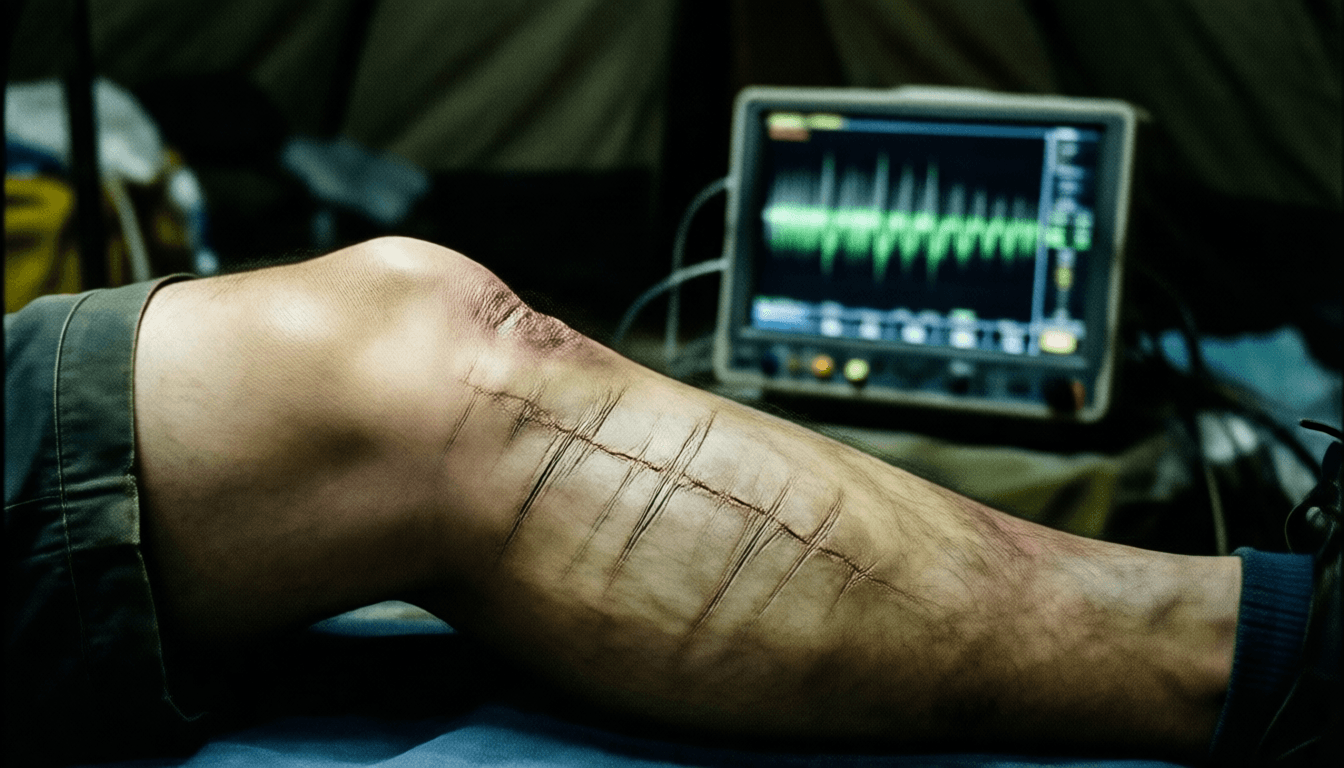
I barely escaped. The precise mechanism of my release remains unclear – only a blur of pain, terror, and an inexplicable, momentary easing of pressure. Yuri, responding to my desperate, muffled cries, pulled me free. My leg was severely damaged. We retreated immediately. Back at base camp, the recovered core sample, while appearing to be ordinary limestone, consistently emitted an inexplicable internal heat that only dissipated when exposed to direct sunlight. My leg never fully recovered after surgery. There was a deep, persistent ache, and moreover, inexplicably, the skin where the stone had made contact was faintly stained with a microscopic striation pattern – resembling crude organic fossils. Miraculously recovered, my seismic sensor was still replaying the waves recorded from the crater's core, now amplified to an almost imperceptible degree. They were undeniably rhythmic. Like a colossal, subterranean heartbeat. New satellite imagery processed since our return shows the subtle expansion of the crater’s circumference has slightly accelerated. The “Eagle’s Nest” is not merely an anomaly. It is an entity, slowly expanding, silently breathing, and it has tasted what it craves. It knows I am still out, and I too know it is still in. Waiting.
[ CLASSIFIED VERDICT ]
[ACCESS LOG - SOURCE FILE]
The Patomskiy Crater, known to the local Yakuts in Siberia as the “Fiery Eagle’s Nest” or “Nest of Death,” has been a forbidden place for centuries, believed to harbor a powerful evil spirit. This massive conical structure, inexplicable by scientific means, is rumored to affect the surrounding ecosystem and cause mysterious phenomena.