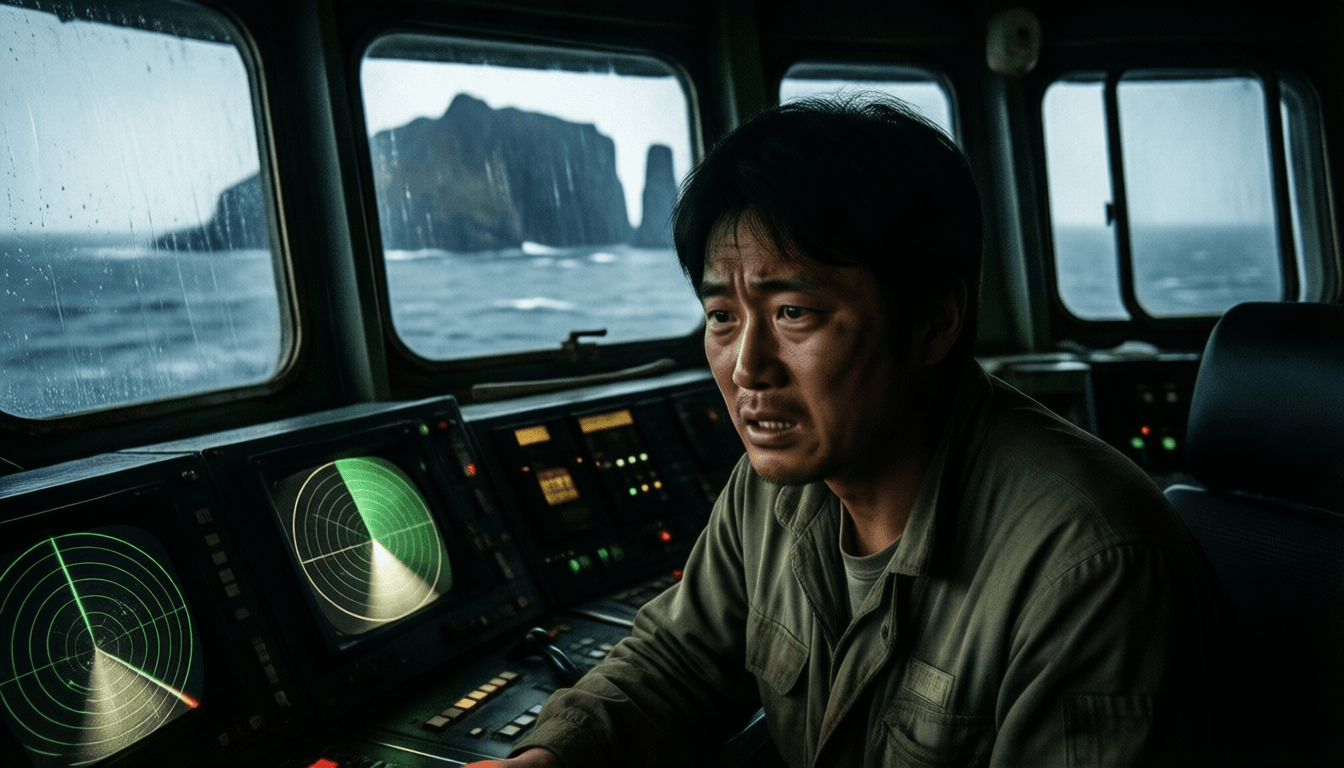
The Living Abyss of Dokdo
The first anomalies weren't sensational headlines or cryptic posts, but rather a distortion in the data itself. This was the case for the public bathymetric and seismic survey records of the Dokdo waters from late 2018 to early 2023. While data from the Korea National Oceanographic Agency (KNOA) was always precise, a significant inconsistency became apparent after that period. The depth of a particular submarine canyon varied by several meters within mere months, not centuries. Seismic activity in the East Sea is naturally frequent, but localized seismic patterns around Dokdo were unsettlingly precise, often occurring in clusters that deviated from typical fault line propagation models.
This situation escalated when the private research vessel 'SeaWatch', contracted by a consortium known only as the 'Chimera Project', ceased all communication on September 14, 20XX. SeaWatch's last confirmed location was a highly restricted area southwest of Dokdo—coincidentally, the very point where the most severe depth anomalies were concentrated. KNOA's official statement cited "equipment malfunction and severe weather," yet satellite images from the previous week showed calm seas. My initial interest was purely academic, a geomorphological puzzle. However, the quiet desperation I sensed from the 'Chimera Project's' discreet inquiries hinted at something more than simple signal loss.
I entered Dokdo's waters under the guise of an independent geological survey, leveraging old connections and the persistent geopolitical uncertainties surrounding the island. My small, sturdy vessel was equipped for deep-sea acoustic mapping and seafloor sampling. The target area was a complex network of submarine canyons and volcanic vents known as the 'Dragon's Maw' Trench – a deep, gash-like feature extending from Dokdo's southwestern flank.
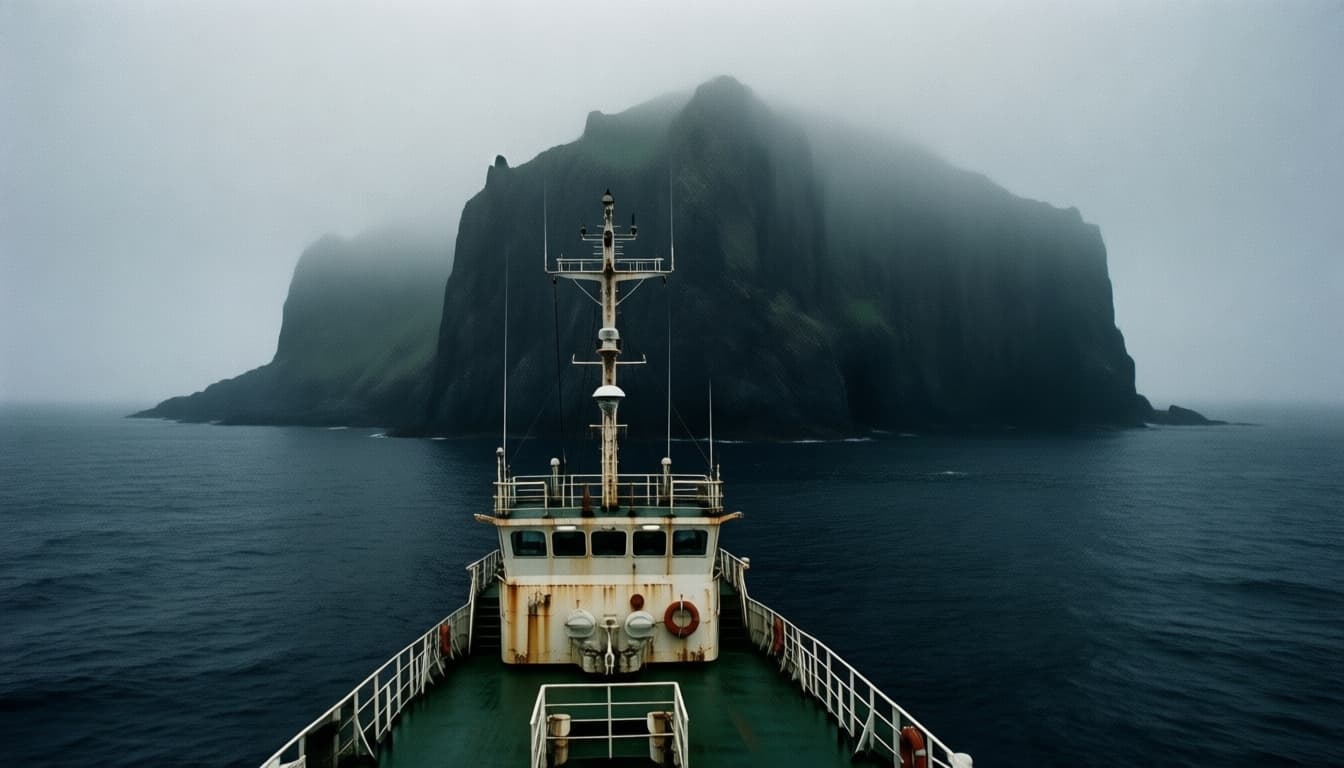
The entry itself was unremarkable, yet the clinging, oppressive humidity in the air, despite the chilly autumn breeze, was memorable. Dokdo’s basalt pillars rose impassively. As soon as I entered the designated zone, approximately 12 kilometers southwest of the main Dokdo island, initial readings were unsettling. My sonar array, designed to penetrate hundreds of meters of water and sediment, began returning fragmented data. It wasn’t equipment failure; it was as if the seafloor itself refused to be mapped, scattering acoustic pulses at non-Euclidean angles. Water temperatures, which should have been consistent at that depth, fluctuated erratically, with localized pockets of ice-cold water appearing amidst warmer currents. The normally dull thrum of the ship's engine seemed to transmit through the hull differently, absorbed by the water in an uncanny, ominous way.
The first true anomaly occurred when I deployed the Remotely Operated Vehicle (ROV) into a particularly active vent within the Dragon's Maw Trench. The ROV's external microphone, designed to pick up the low hum of deep-sea life and geological activity, fell silent for precisely three seconds. It wasn't static or interference; every sound—the whirring of the thrusters, the distant creak of the ship, the muffled sounds of water—stopped, completely and abruptly. And then, with an equally sudden jolt, the sounds returned, but distorted. The distinct metallic scrape from the ROV's manipulator arm as it tried to retrieve a rock sample returned to me through the hydrophones as a delayed echo, a ghostly reverberation ringing in the void of silence, as if reflected from a surface beyond impossible distances.
Later, reviewing topographic scans of a newly discovered fissure, I observed what appeared to be slow, deliberate movement. Not rockfall, not erosion. A section of the trench wall, roughly 20 meters across, moved inward by nearly half a meter over 17 minutes, precisely closing a gap in the seafloor. My internal barometers recorded minute, rhythmic pressure fluctuations. This was not current; it felt like a geological pulse, as if something deep below was breathing. The air on deck grew still, the natural sounds of waves and wind subsided, replaced by an uneasy, profound silence that seemed to press in from all sides. The only sound was the low, steady thrumming of my own heart.
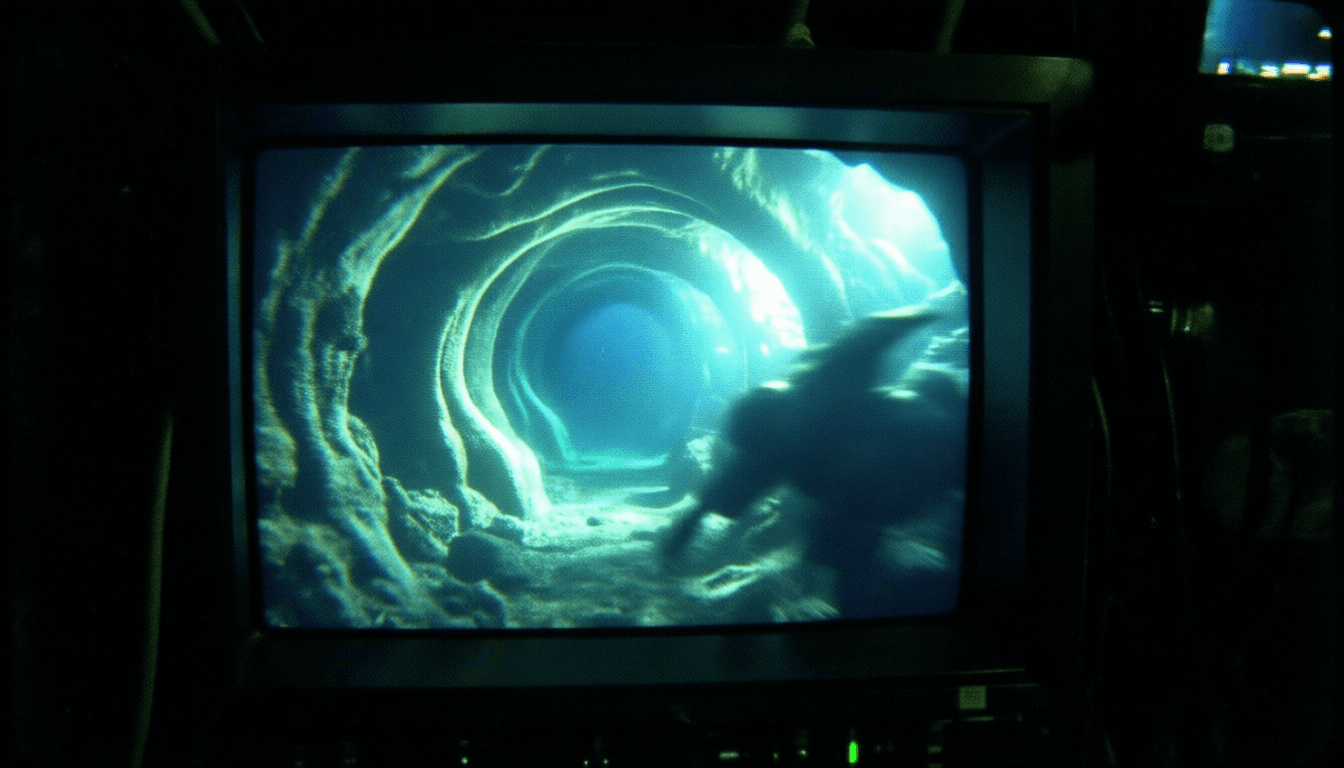
The environment truly turned hostile during a dive into an uncharted submarine cave system, discovered by erratic sonar. I deployed a modified ROV with more robust sensors. It found newly formed, incredibly smooth tunnels extending deep into the earth beneath the seafloor. The tunnel walls pulsed with a faint, unknown bioluminescence. Then, the ROV's live feed began to fragment. Not static; it was deliberate, almost surgical interference. Images pixelated and reformed, showing the ROV not under its own power, but seemingly forcibly rotated and irreversibly dragged into a tightening fissure.
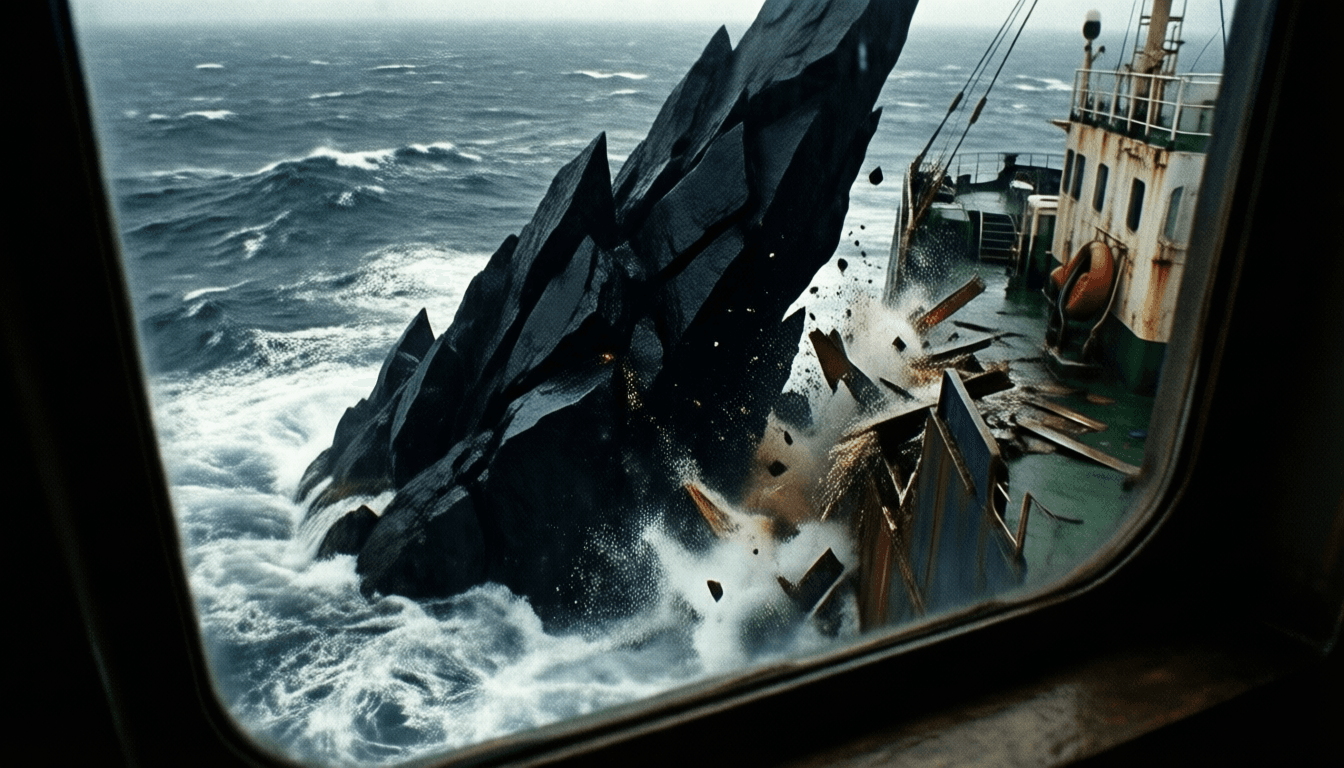
Before I could initiate an emergency retrieval, a deep, resonant vibration emanated from below. This wasn't regional seismic activity; it was ultra-localized, originating directly beneath my vessel. The deck violently shuddered, not from waves, but as if the very seafloor beneath me was rearranging itself. Superheated water erupted meters from the hull, boiling the surface, then rapidly subsided as if sucked back into the abyss. The sonar array screamed. A colossal, previously unmapped rock structure, obsidian-black and impossibly angular, surged from the deep, scraping against the underside of my vessel. The sound was like tearing steel and bone. It wasn't moving 'up' in the traditional sense; it was expanding through the water at an impossible rate. Its crystalline facets glinted in the deck lights. The vessel was pinned, immobile, by this newly emerged protuberance.
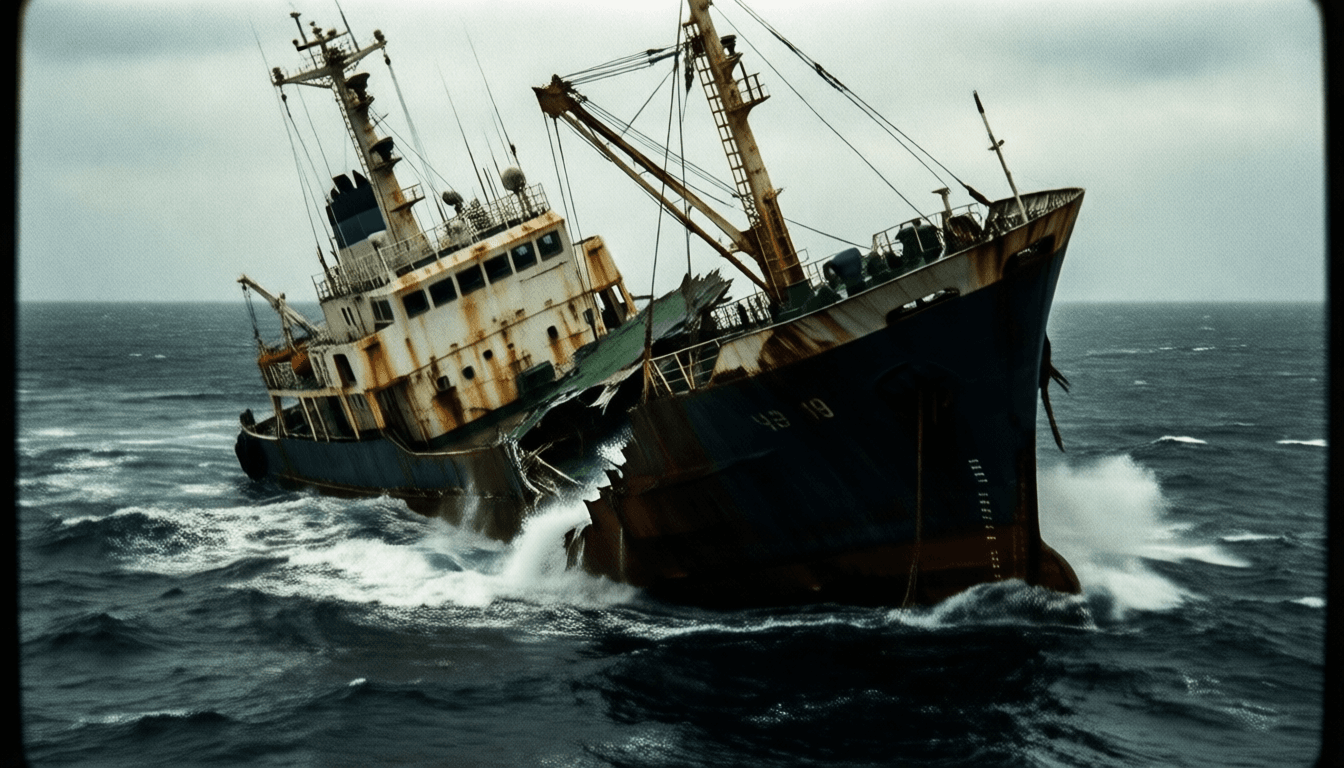
Then came the sound. Not through the hydrophones, but through the hull, through the water, directly into my bones. A deep, colossal, grating roar, as if the very tectonic plates of the earth were screaming. A section of the hull groaned with tearing metal, as another fissure erupted from the newly emerged rock structure, ripping into the starboard side of the vessel. The water temperature around the rupture plummeted, flash-freezing the incoming water. I felt pressure build in my chest, my lungs compressing. The ship wasn't merely being destroyed; it was being consumed, pulled into the earth's expanding, moving maw. The air grew heavy, crackling with unseen energy, and for a terrifying moment, the water itself seemed to solidify, pressing the hull with the force of solid rock before releasing with a violent shudder that flung me across the control room. I barely managed to cut the ROV's tether, activate the emergency distress beacon, and engage the engines to full power, tearing free from the tightening grip of the structure, leaving a significant portion of my hull behind. The last image on my dying sonar was of the 'Dragon's Maw' trench. Its walls were now impossibly tall, closing like a trap around the sinking remains of my equipment, sealing them within the hungry maw of the earth.
My vessel limped back, fatally breached, and predictably, my story was dismissed. 'Bad weather,' 'collision with uncharted debris,' 'psychological stress.' The emergency distress signal was received but immediate rescue was not possible due to "poor visibility." The distress signal itself was reportedly experiencing inexplicable interference.
I collected the surviving data. Fragmented sonar images of incredibly smooth tunnels, impossible echo distortions, records of unbelievable seismic waves. A shard, barely salvaged from the newly emerged rock structure, is now under analysis. Preliminary reports indicate anomalous crystalline structures and localized energy signatures defying known geological processes. Holding it, I feel a subtle, almost imperceptible vibration.
What remains is a profound, chilling realization: what I encountered was not merely a geological phenomenon, but a conscious, manipulative force. The 'Geomorphic Weavers' of Dokdo, hinted at in fragmentary records of the 'Chimera Project,' were not a metaphor. They were real. They were the seafloor itself, moving, growing, consuming every intruder. They manipulated silence, orchestrated vibrations, actively reshaped the environment to trap and eliminate.
The anomalous depth changes around Dokdo continue, unnoticed by official channels. Thousands of kilometers from the East Sea, I still occasionally feel a faint, resonant vibration in my bones, especially when reviewing global seismic maps. More and more localized, inexplicable 'mini-quakes' are being reported, often in areas of significant geological stress. I wonder if these Weavers are confined to Dokdo, or if that remote, disputed island is merely a sensitive point, a focal center, for a much vaster, slower-moving network. A network that perhaps now knows I exist. The data, too impossible to share, remains archived and unexplained, a silent testament to a vast, living intelligence moving beneath our feet.
[ CLASSIFIED VERDICT ]
[ACCESS LOG - SOURCE FILE]
Rumors persist of strange topographical changes and inexplicable seismic activities on the seafloor around Dokdo. Some fishermen testify to feeling vibrations in the deep sea, as if something vast is breathing, and whispers spread that the underwater topography itself is alive. This story has evolved into an urban legend about an ancient, intelligent entity slumbering beneath Dokdo, known as the 'Geomorphic Weavers'.