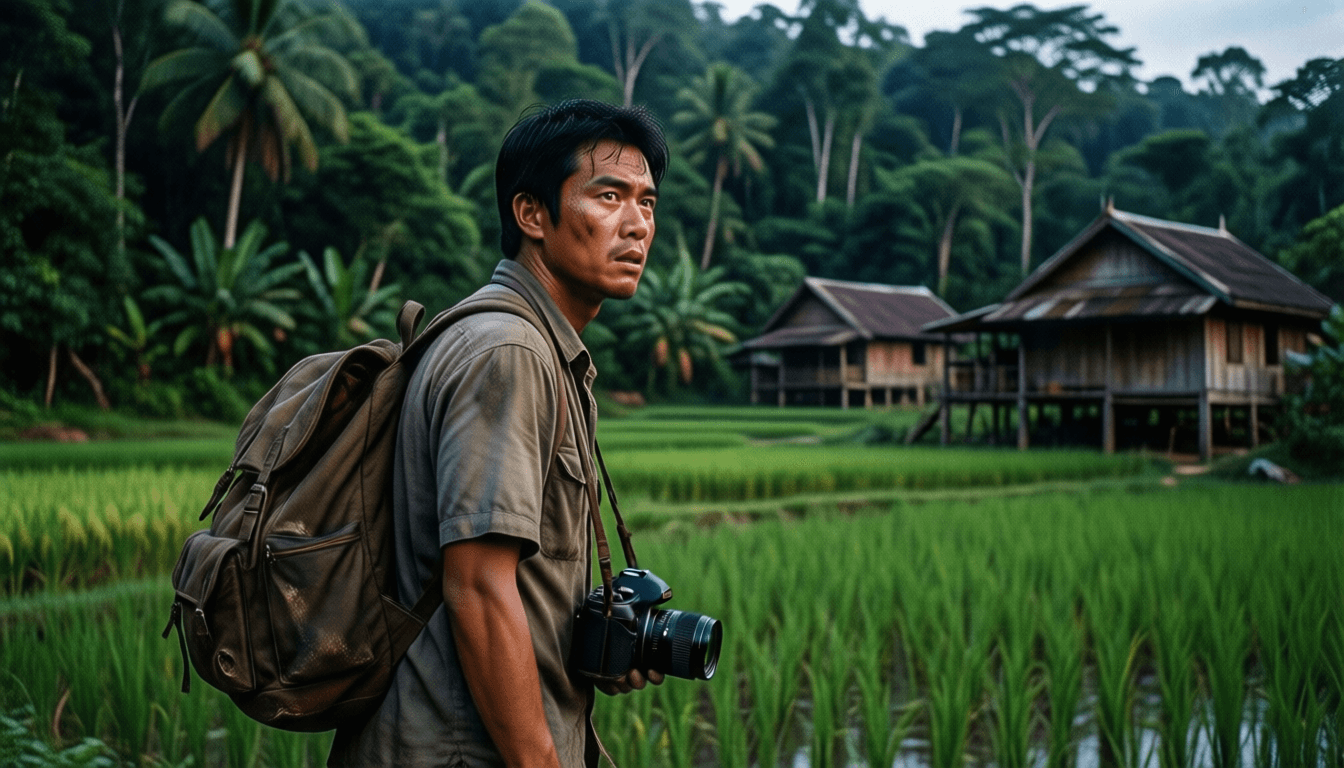
The Shadow of Krasue
My initial interest began with an archived post on a local agricultural forum, titled 'Unexplained Livestock Deaths.' Early entries speculated disease or predators, but as the thread progressed, a more sinister pattern emerged. Farmers across several rural regions of Thailand, primarily Surin and Buriram, reported identical, inexplicable occurrences. Livestock, particularly pigs and poultry, were found with specific internal organs completely missing. Not torn or partially eaten, but surgically removed, as if by a precise hand. One farmer expressed extreme frustration, stating, "The liver gone, the intestines unwound and vanished."
These reports correlated with several minor police records I cross-referenced – 'unexplained animal deaths' that local authorities had failed to account for. Mainstream media briefly covered a surge in 'mystery mutilations' two years prior, attributing them to unknown viral strains or sophisticated poachers. But deep within the forums and local news comment sections, a repetitive, hushed explanation overshadowed the official narrative. A single word whispered in fearful tones by the residents: "Krasue."
My investigation focused on a particularly perplexing recent incident. In Ban Na Klang, a remote village bordering the jungle, an entire litter of piglets and their mother sow had been found with the characteristic marks of precise evisceration. The local reporter who had filed the initial report on this incident had then abruptly ceased all contact, adding an eerie layer to the official silence.
The journey to Ban Na Klang was long, marked by an oppressive, humid heat that clung to everything. Upon arrival, the village itself was steeped in wary politeness. My questions about the livestock incidents were met with averted gazes, swift changes of topic, or polite but firm suggestions that it had "just been bad animals." A thick undercurrent of dread, already mixed with the heavy air, permeated every interaction.
I eventually located the incident site: a dilapidated small pigsty, precariously situated on the village's edge where well-tended rice paddies abruptly gave way to an unyielding wall of jungle. The air here was heavy with the unmistakable metallic tang of old blood, mingling with the humidity and a sickeningly sweet odor of putrefaction. Flies buzzed lethargically, but what was striking was the absence of other sounds. The usual cacophony of the jungle—the cicadas, the distant bird calls—was strangely muted, creating an unnatural pocket of oppressive silence around the sty.
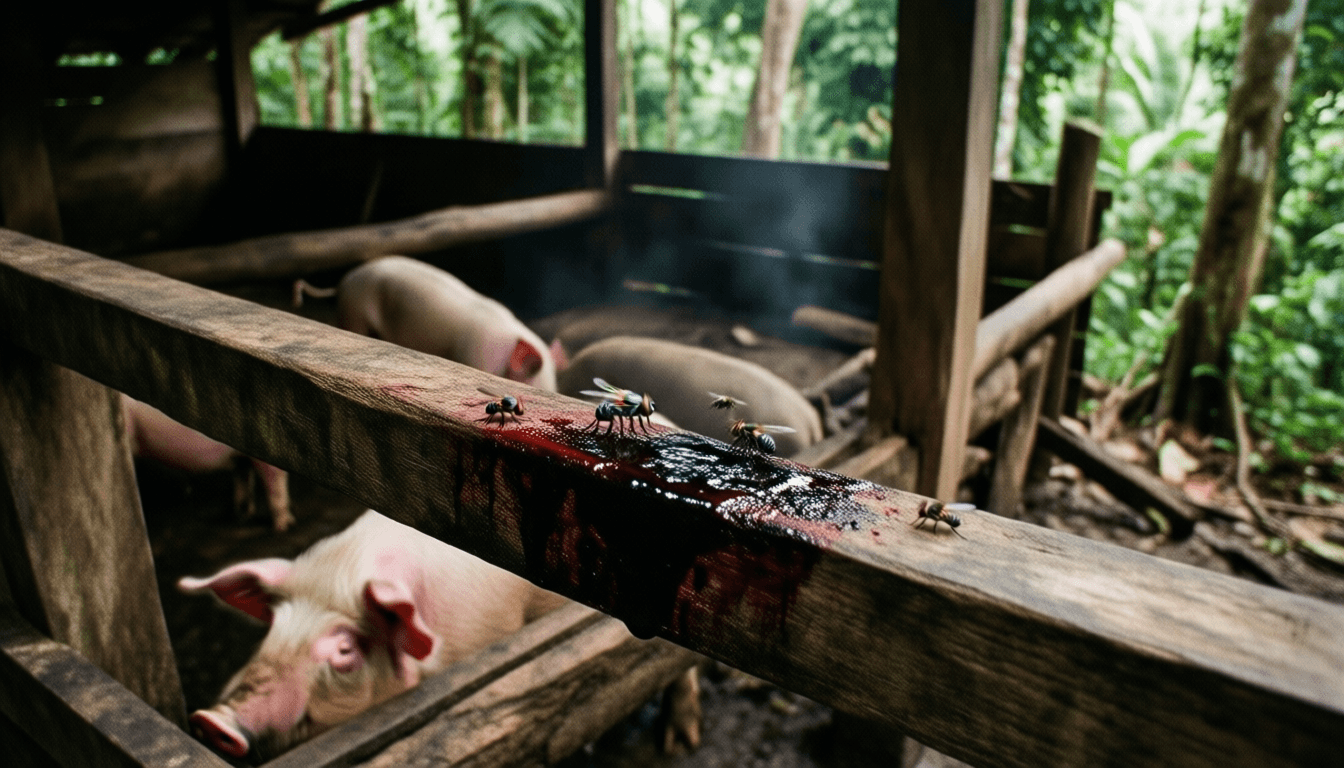
The pigsty itself was surprisingly robust, reinforced with rough timber, with no obvious breaches that a large predator could have exploited. The small entry, barely 30 centimeters high, seemed impossible for anything but a young animal to pass through. Inside, the remaining carcasses were hollow, confirming the reports. The eviscerations were indeed incredibly clean, almost surgical. One dried stain on a low wooden beam shimmered iridescently in the harsh afternoon sun, but defied identification. It wasn't blood, nor sap, nor animal waste. It gleamed with an unsettling, oily sheen.
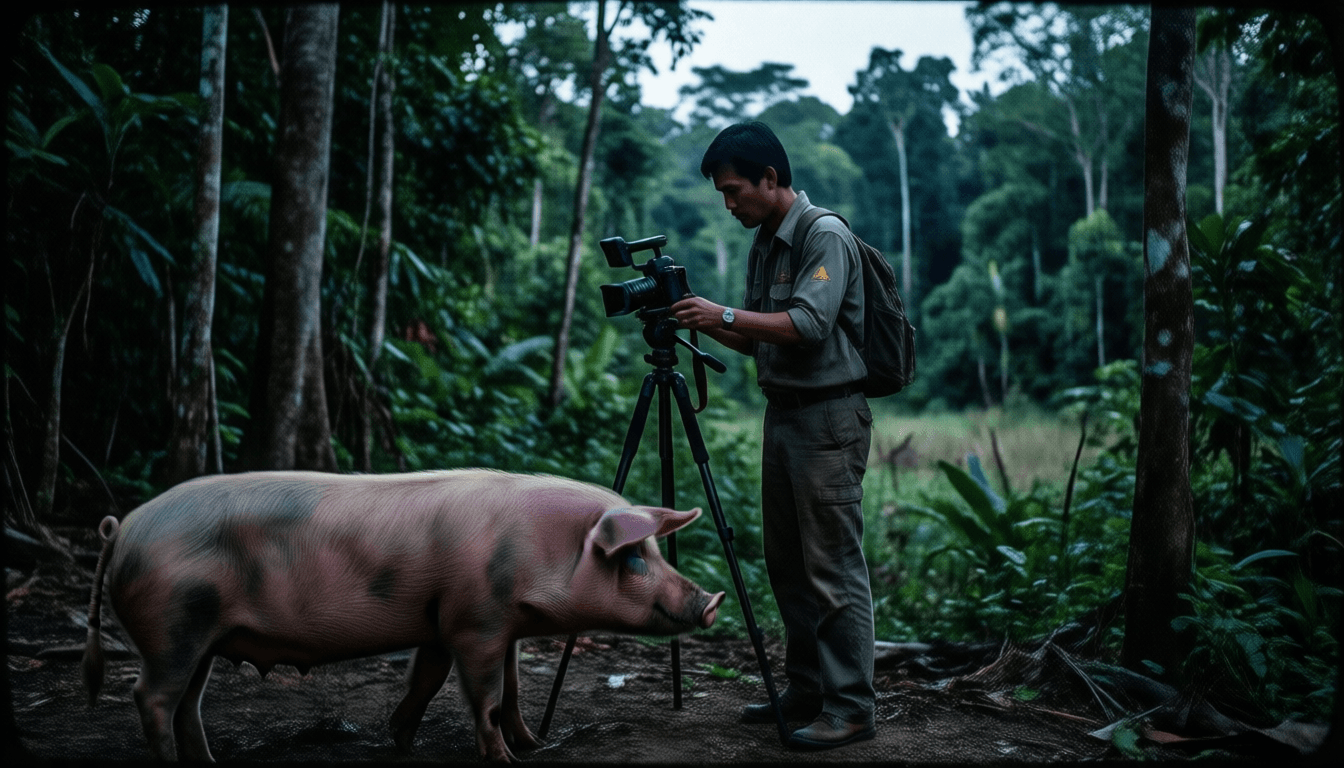
As twilight rapidly descended, painting the sky in fiery oranges and purples, I decided to stay. Drawn by the impossibility of what I had witnessed, I set up a low-light camera near the sty. The jungle, previously just quiet, now began to 'breathe' around me. The air grew heavier, the humidity thickening to a viscous cling that felt like drinking water with every breath.
Subtle anomalies began to layer over the quiet. A ceaseless rustling of leaves nearby, too regular for an ordinary breeze, too localized for any animal. It sounded as if something was being dragged just beyond my sight. And then that faint, sickeningly sweet aroma, like overripe fruit mixed with old iron, intensified, ebbing and flowing in the unmoving air.
The localized silence around the pigsty became more absolute. The distant chorus of crickets and frogs, which had resumed a faint thrumming as the sun set, cut off distinctly and chillingly around my position. The resulting absolute stillness was deafening, amplifying the frantic beat of my own heart.
Movement flickered at the edge of my vision, deep within the jungle's shadows. It moved low to the ground, too fluid for a human, too deliberate for an animal. No distinct form was visible, only the fabric of the darkness itself seeming to ripple, an intimation of slow, purposeful motion.
Then, a new sound, faint at first, barely a whisper in the heavy air. A soft, wet slurping sound. It seemed to come from above the branches initially, then slowly, unsettlingly closer. It brought with it a faint phosphorescence, a sickly green glow that flickered through the thick foliage, steadily brightening.
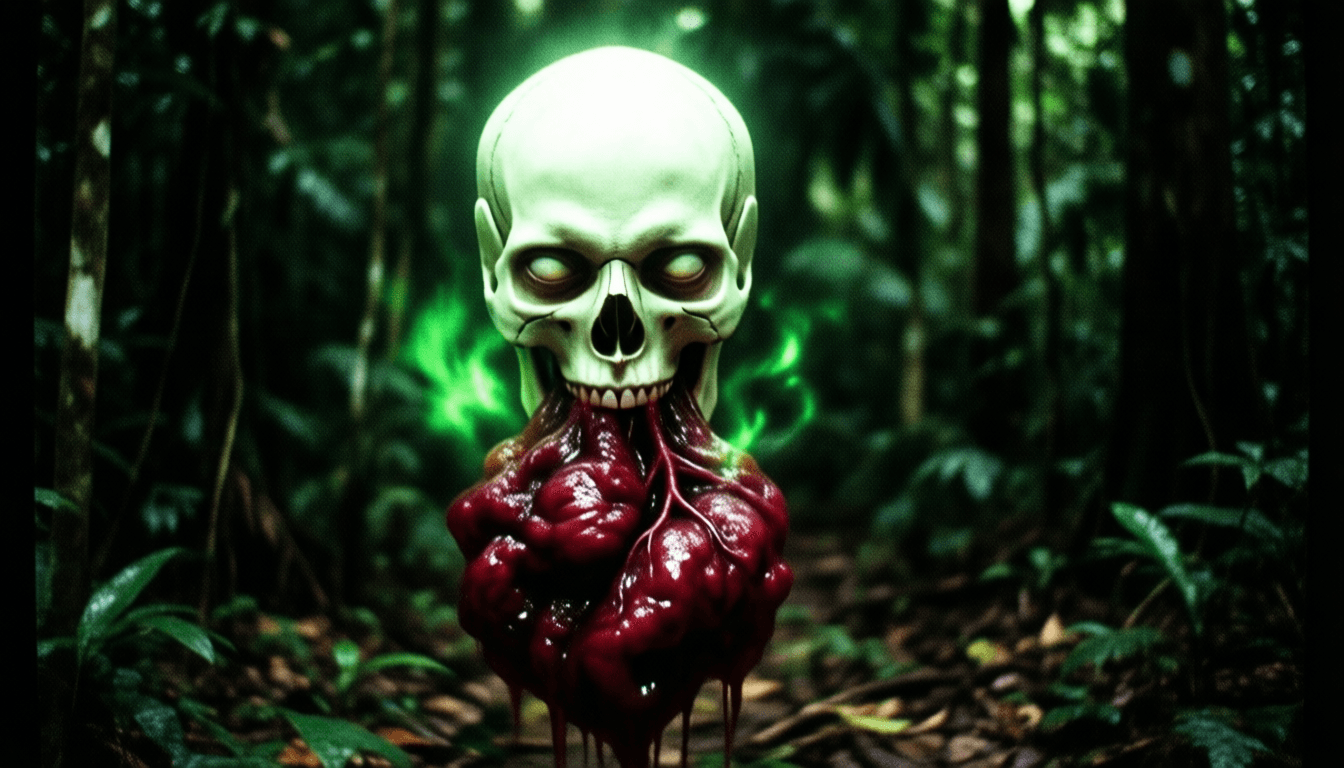
The light intensified, piercing the oppressive gloom. It revealed an impossible, horrifying form. A luminous, pale human head hovered above the jungle floor. Beneath it, a glistening, dark red mass of internal organs dangled, pulsing, suspended by some viscous, unseen force. The source of the wet, gurgling slurping sound became disgustingly clear.
The Krasue, a nightmare made real, had found me. Its previously unfocused gaze momentarily locked, staring at me with a primal, predatory hunger that seemed to drain the blood from my face.
I scrambled, adrenaline coursing through me, attempting to retreat into the dense, thorny thicket adjacent to the dirt track. The Krasue pursued with impossible speed and maneuverability. Its dangling entrails flailed and whipped, catching on the dense foliage, creating a horrific, rustling chaos of tearing leaves and snapping twigs, closing the distance.
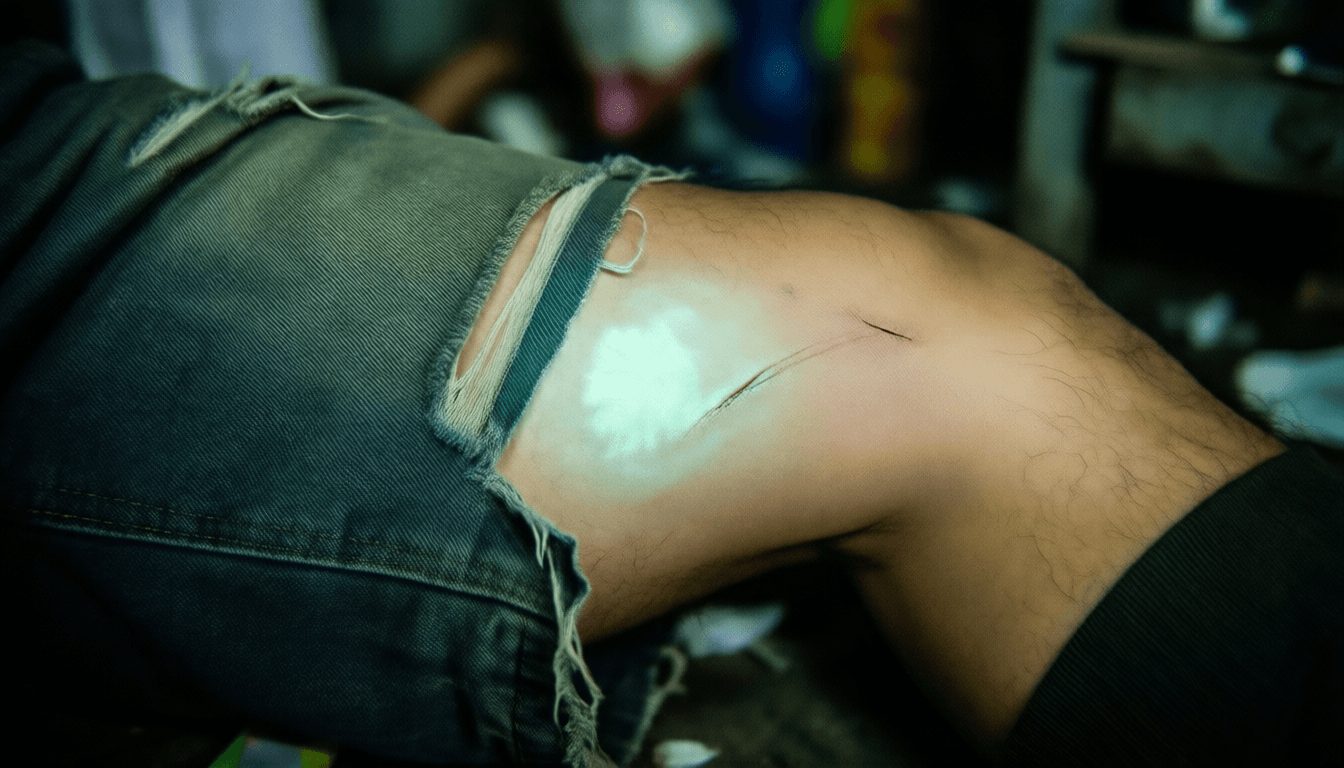
It lunged. The dangling organs brushed against my left leg, a repulsive, wet impact, leaving a cold, sticky residue. Its presence loomed closer, and a thin, sharp tendril – like a long, red tongue or some segment of an internal organ – extended, aiming with sickening precision for my abdomen, attempting to penetrate.
But the thorny thicket became my desperate, unexpected defense. The Krasue recoiled slightly, its luminous head flinching as the sharp thorns snagged its vulnerable entrails. I forced myself deeper into the brush, feeling the tearing branches rip at my clothes and skin, but the pain was a small price for a momentary reprieve.
I tumbled into a shallow, muddy ditch, partially obscured by dense roots and thorny overgrowth. The Krasue hovered above, its pale, glowing head casting an eerie, flickering light on my struggles. Its mouth moved silently, its entrails dripping wetly, emitting soft, dissatisfied, wet hisses as it tried to descend without risking its exposed form in the dangerous thorns and mud.
Seizing the precious moments of its hesitation, I scrambled desperately through the mud and brush, the Krasue's dissatisfied, unreal light slowly receding. I put as much distance, and as many thorns, as possible between myself and the entity.
Hours later, disoriented and trembling, covered in mud, blood, and the raw, tearing wounds from the thorns, I stumbled out of the jungle. My camera was gone, ripped from its tripod in my confused retreat. My story, without any tangible evidence, would sound like the ravings of a madman.
Back in civilization, the physical wounds from the thorns slowly healed, leaving faint scars. But the memory of that light, the impossible pursuit, and the sickening sound of entrails remained indelible.
Days later, while rummaging through my gear bag, a small, anomalous object brushed against my fingers, deeply embedded in a torn pocket. It was a single, thin, blackened thorn, unlike any indigenous to the area, but it exuded that faint, sickeningly sweet aroma I now dreaded.
More unsettlingly, inside my torn trousers, precisely where the Krasue's dangling entrails had brushed, there was a permanent, faint iridescent stain. No amount of washing would remove it. Under UV light, it emitted a sickly, pale luminescence, a perfect, horrifying echo of the light that emanated from the creature itself.
Now, I occasionally catch that faint, sweet, metallic scent in unexpected places. A sudden gust of wind on a humid evening, a strange odor in an old building. And when the air turns heavy and silent, or when the full moon hangs high and still, I feel an inexplicable, subtle pressure in my abdomen. A phantom sensation, an echo of the entity's attempted penetration. It is a cold, stark reminder that some things, once seen, cannot be unseen, and some things, once escaped, are never truly escaped.
The final thought that chills me to the bone is the realization about the local reporter who abruptly ceased contact after filing that initial article. Perhaps he didn't just quit. Perhaps he couldn't.
[ CLASSIFIED VERDICT ]
[ACCESS LOG - SOURCE FILE]
The Krasue is a female nocturnal ghost in Thai folklore. At night, her head and internal organs detach from her body, floating in the air to hunt for blood, raw flesh, or fetuses. She is sometimes depicted attacking livestock or posing a threat to pregnant women.