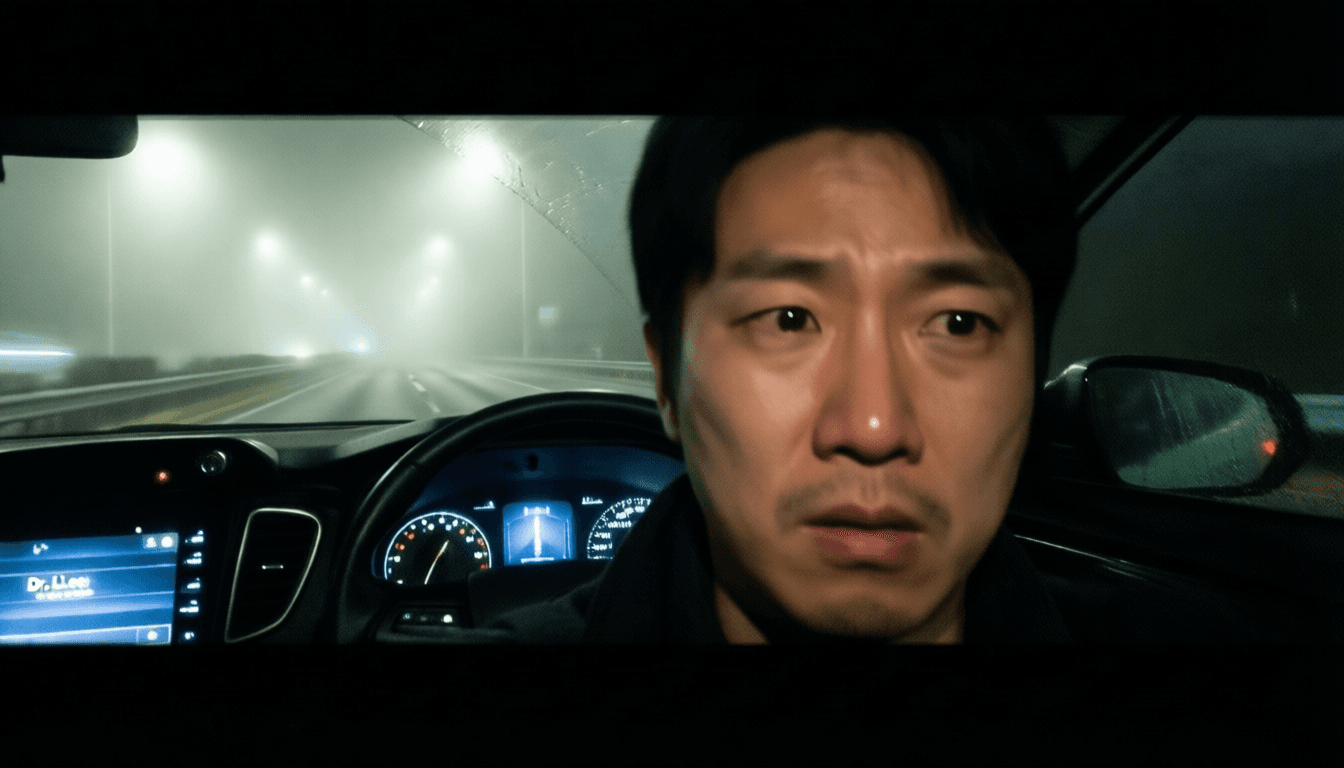
Jayuro Ghost Story: The Eyeless Woman
The data, buried within quarterly accident analysis reports from the Korea Transportation Safety Authority, a division of the Ministry of Land, Infrastructure and Transport, slowly began to form an eerie pattern. Over the past decade, a statistically abnormal surge in single-vehicle accidents was observed on a specific 15km stretch of the Jayuro highway connecting Goyang and Paju. Common elements in police statements referred to drivers reporting 'collisions with phantom pedestrians' or 'sudden, inexplicable swerving,' which, upon arrival at the scene, were dismissed as shock or hallucination due to the absence of anything. These rumors amplified through online forums, especially among late-night driving communities, gradually forming a consistent narrative: a pale, solitary female figure, always seemingly in a faint mist, perpetually wearing excessively large sunglasses. And in the fleeting moments just before a collision or sudden swerve, drivers reported realizing that those 'sunglasses' were something far more unsettling—a deep, unnatural void. This confluence of bureaucratic data and terrifying rumor hinted at something beyond mere road hazards.
Dr. Lee, a cultural anthropologist specializing in regional folklore, was drawn to the Jayuro phenomenon with an almost compulsive dedication to empirical verification. His reputation for cool-headed meticulousness made him the ideal candidate to dissect myth from reality. Equipped with a custom-modified vehicle featuring high-resolution dashcams (front, side, and rear), thermal cameras, a set of directional microphones, and atmospheric pressure and temperature sensors, he embarked on his journey one late autumn night. The weather forecast promised ideal conditions: a thick, clinging fog rolling in from the Han River estuary. As he entered the infamous stretch of highway, the world narrowed. Visibility was reduced to mere meters, and his headlights created disorienting tunnels of light in the swirling vapor. The air was heavy, damp, and cold. Dr. Lee's initial instrument readings were unremarkable, simply indicating typical atmospheric conditions for dense fog. He drove slowly, methodically, scanning the shoulder of the road, every sensor tuned to register the slightest anomaly. The hum of his engine was the only constant sound in the oppressive silence.
Approximately 5km into the designated zone, the first anomalies were detected. The car's external temperature sensors flickered, registering localized drops of several degrees near the vehicle despite a stable ambient temperature. Dr. Lee initially attributed it to instrument malfunction, then to a pocket of cold air. A moment later, the directional microphones, designed to filter out road noise, picked up a faint, melancholic humming. It was barely audible, at the edge of perception, yet it consistently seemed to emanate from behind the vehicle, even though the road was demonstrably empty. Dr. Lee adjusted the gain, but the sound remained elusive, a ghostly presence. Then, the fog itself began to move unnaturally. Instead of passively diffusing, it actively coalesced ahead, forming an opaque wall that momentarily swallowed the highway, only parting a few centimeters from his bumper to reveal the asphalt directly in front. It was creating a chilling, moving aperture. The effect was disorienting, feeling less like weather and more like a deliberate manipulation of his vision, constantly keeping him at the limit of visibility. A growing pressure behind his eyes induced a subtle disorientation, and his instruments, though reporting normal operation, flickered with occasional, minor, inexplicable deviations. He checked his rearview mirror more frequently, a cold knot tightening in his stomach. The humming grew a little clearer, now unmistakably a wordless lament, seemingly closer.
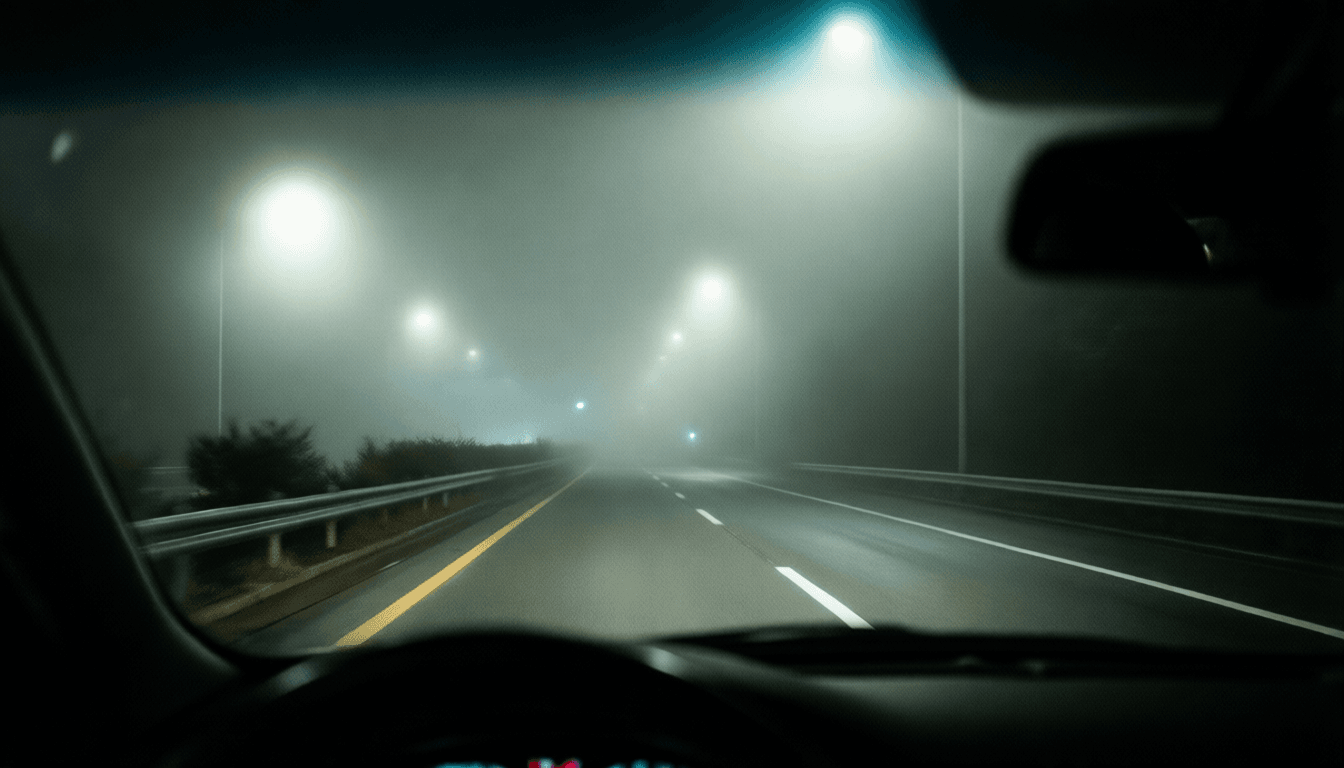
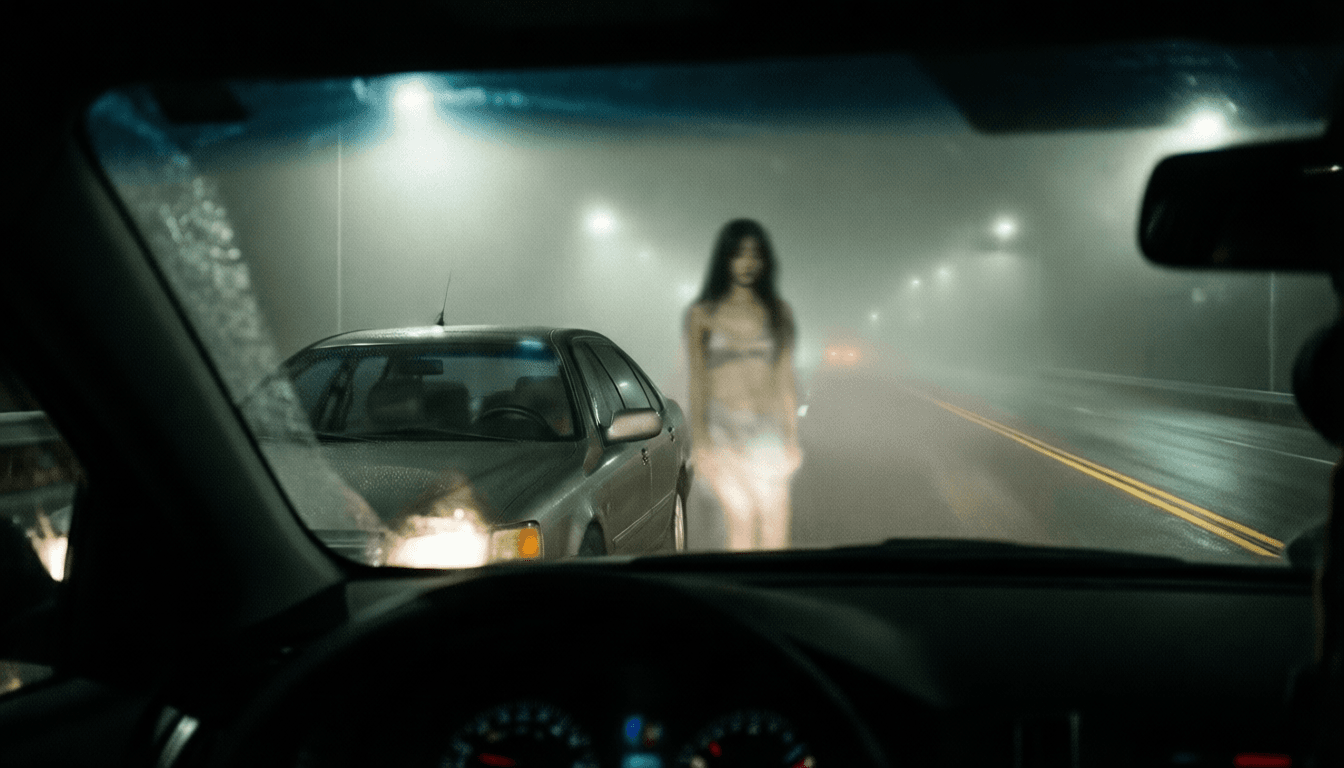
Dr. Lee was now deep within the densest part of the fog. The highway was a featureless gray tunnel. His dashcam screen briefly flickered with static. The melancholic humming was no longer distant; it resonated within the very fabric of the fog itself. Suddenly, a figure appeared impossibly close at the edge of the misty shoulder. It was a pale, indistinct woman, seemingly wearing excessively large, dark sunglasses. Dr. Lee instinctively swerved, his heart hammering against his ribs, narrowly avoiding the phantom pedestrian. But as his headlights swept past her in a fleeting instant, the impossible happened: those 'sunglasses' were not sunglasses. They were deep, black voids, abyssal hollows where her eyes should have been. Her face was smooth, like ancient porcelain, devoid of any expression save that unsettling emptiness.
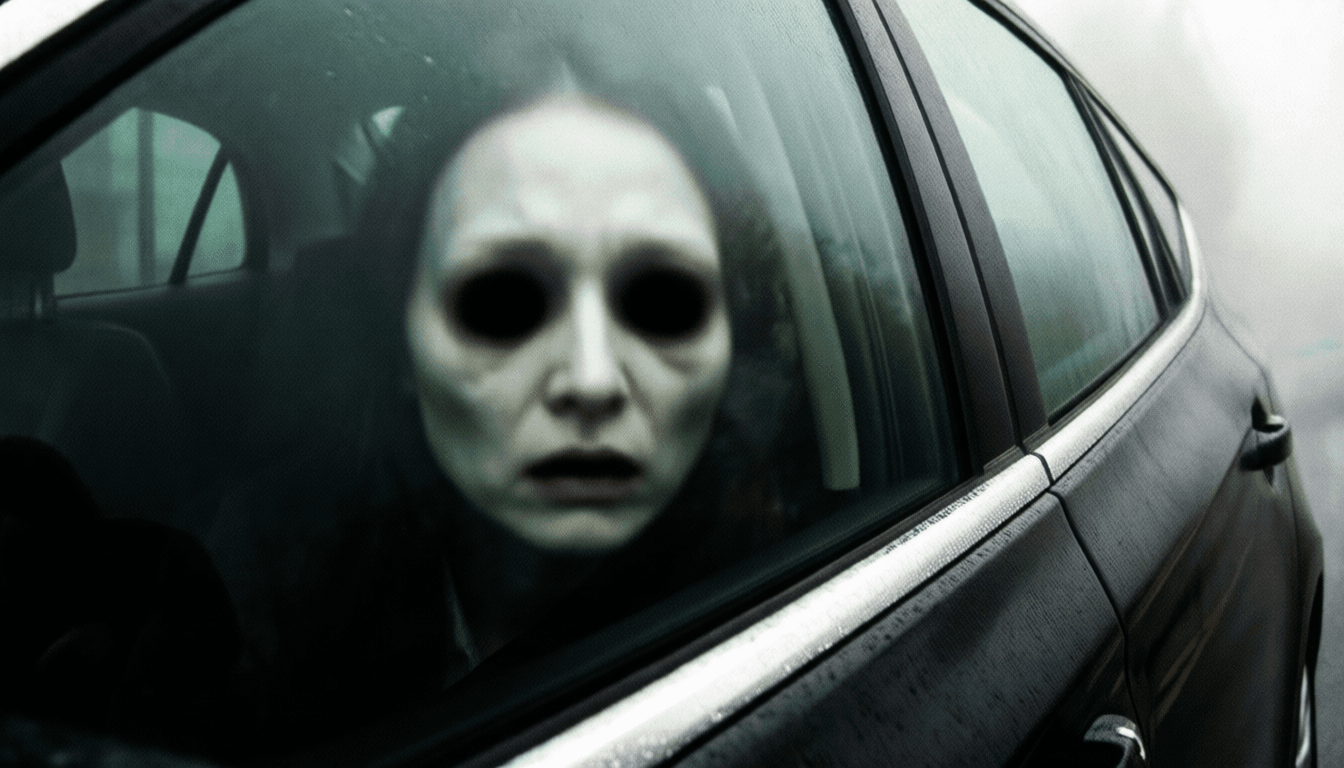
He wrestled the wheel straight, his vision still reeling. But in his rearview mirror, immediately, her figure reappeared directly behind his car, pressed against the rear window. Through the dense fog, those empty sockets stared directly at him. Dr. Lee slammed on the brakes, the car skidding violently on the damp asphalt. The figure did not vanish. Instead, it slid with impossible speed along the outside of the car, appearing beside the passenger window. A pale, slender hand pressed against the glass, distorting his reflection. The thermal camera registered a localized, rapid temperature drop of -40°C at the exact point of contact. The dashcam footage distorted into sustained static before cutting out.
And then, the fog inside the car began to thicken around Dr. Lee. It was cold and suffocating. A faint condensation bloomed directly in front of him, on the inside of the windshield. He felt a cold, bone-chilling sensation around his own eyes. A fleeting pressure, a ghostly absence, as if something intangible had brushed past his eyes. The humming was now a desperate, distorted wail, echoing within the confined space of the car. The car's engine sputtered and died, plunging him into absolute silence and an impenetrable cold. Trapped and suffocating, Dr. Lee fumbled for the ignition. The figure's face, those empty sockets, was now inside the car, leaning over the passenger seat, impossibly close, watching him. He heard a faint, damp click, as if something was being carefully removed, seemingly from his own face. A surge of desperate adrenaline, he twisted the ignition, and miraculously, the engine roared back to life. He floored the accelerator, tires screaming as he sped away through the oppressive fog. He left the ghostly figure and the chilling silence behind, never looking back.
Dr. Lee arrived home physically unharmed but in a state of profound shock, wracked by an insistent, bone-deep coldness. He immediately reviewed the dashcam footage. The critical section where the figure appeared was blurred and corrupted by static and white noise, with only a single frame from early in the encounter showing an unidentifiable pale smudge on the roadside. However, the thermal camera log clearly showed an inexplicable, transient spike of -40°C inside the vehicle at the exact moment contact was registered.
Over the next few days, Dr. Lee became increasingly sensitive to bright light. He started wearing sunglasses even indoors, attributing it to eye strain from the intense drive and residual disorientation. His eyes felt perpetually dry and tired. A week later, peering closely at his reflection in a dark window, he saw it. A faint, almost imperceptible shadow beneath his eyes. It wasn't merely dark circles from lack of sleep; it was a subtle, unsettling indentation, a deeper hollowness where light seemed to get lost. He rubbed at it, but it wasn't a smudge, nor a physical mark. He convinced himself it was an optical illusion, a trick of the light.
He later found a small, intricately carved old binyeo (traditional Korean hairpin) on the floor of his car's passenger side. It wasn't his, and he didn't recall it being there before. Days later, it remained strangely cold to the touch. He documented it as "source unknown" and stored it with his research materials.
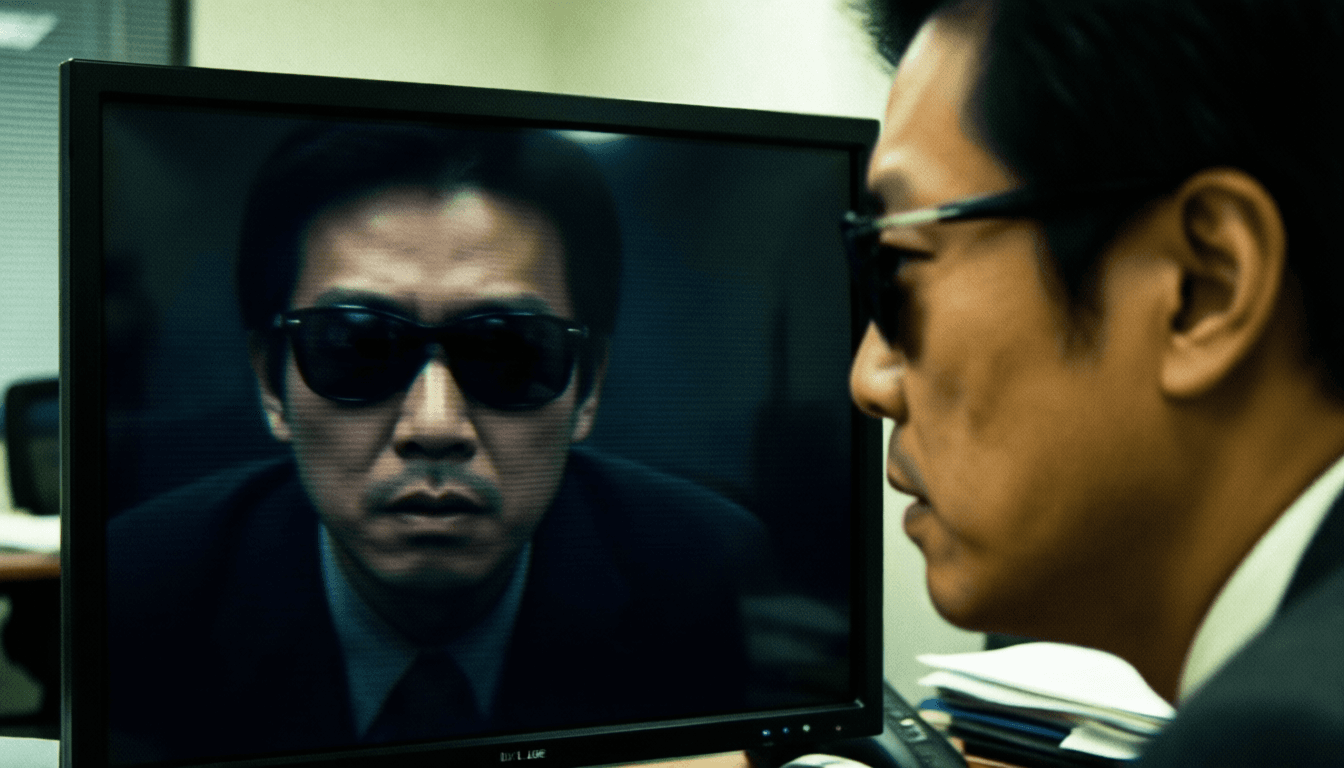
Months passed. Dr. Lee resumed his work, meticulously documenting his research, but never published his account of the Jayuro drive. He periodically gazed into mirrors, scrutinizing the deepening, impossible shadows beneath his eyes. The world sometimes seemed to lack a certain vitality, a depth of color, especially in low-light environments. He began wearing sunglasses constantly, even while driving, even on bright days, excusing it to colleagues as "chronic migraines." One evening, reviewing old dashcam footage for an unrelated research project, a car sped past on the monitor. In a fleeting instant, he saw his own reflection in the darkened glass of the monitor. He was wearing sunglasses. Beneath them, in the reflection, the void seemed clearer, more pronounced. He did not take off his sunglasses. On the monitor screen, in that same reflection, the dashcam footage briefly, inexplicably, flickered with static.
[ CLASSIFIED VERDICT ]
[ACCESS LOG - SOURCE FILE]
Jayuro is a highway connecting Goyang and Paju in South Korea, notorious for an urban legend about a woman in sunglasses appearing in thick fog, posing a danger to drivers. It's said that upon closer inspection, where her eyes should be, there are only empty sockets, leading to many single-vehicle accidents.