The Giant Breath of Karakoram
As an archivist documenting unexplainable phenomena, I've learned that the most chilling truths aren't revealed through dramatic declarations but through the accumulation of ignored data. Our official narratives are neat, but the peripheries – forums, obscure geological surveys, whispered local tales – tell a different story.
For years, an online community, "Geological Anomalies of Central Asia," meticulously logged peculiar occurrences in a specific, lesser-known region of the Karakoram mountain range, particularly near the Bhutanese border. These weren't typical tectonic shifts. Reports detailed rapid, powerful ground vibrations, highly localized seismic activity, recorded by remote sensors. These were often dismissed by official geological agencies as insignificant microtremors or sensor malfunctions. The anomaly lay in their correlation. Almost every vibration reported in this particular valley was followed, often within minutes, by accounts of highly localized "microbursts," or sudden, violent downdrafts. These were no ordinary weather phenomena. The few seasonal yak herders' testimonies described these as sudden, almost percussive blasts of air, capable of flattening ancient juniper forests, triggering precise, anomalous landslides, or even momentarily reversing the flow of mountain streams. The damage patterns were too clean, too concentrated, and too powerful to be explained by conventional atmospheric events.
Forum users, inspired by centuries-old Himalayan folklore, called them 'The Breath of the Rook,' positing that the passage of some ancient, high-altitude entity caused these impossible disturbances. Their compelling, albeit unofficial, data aggregation caught my attention. The sheer volume of ignored, localized incidents suggested not environmental coincidence, but a recurring, massive physical presence.
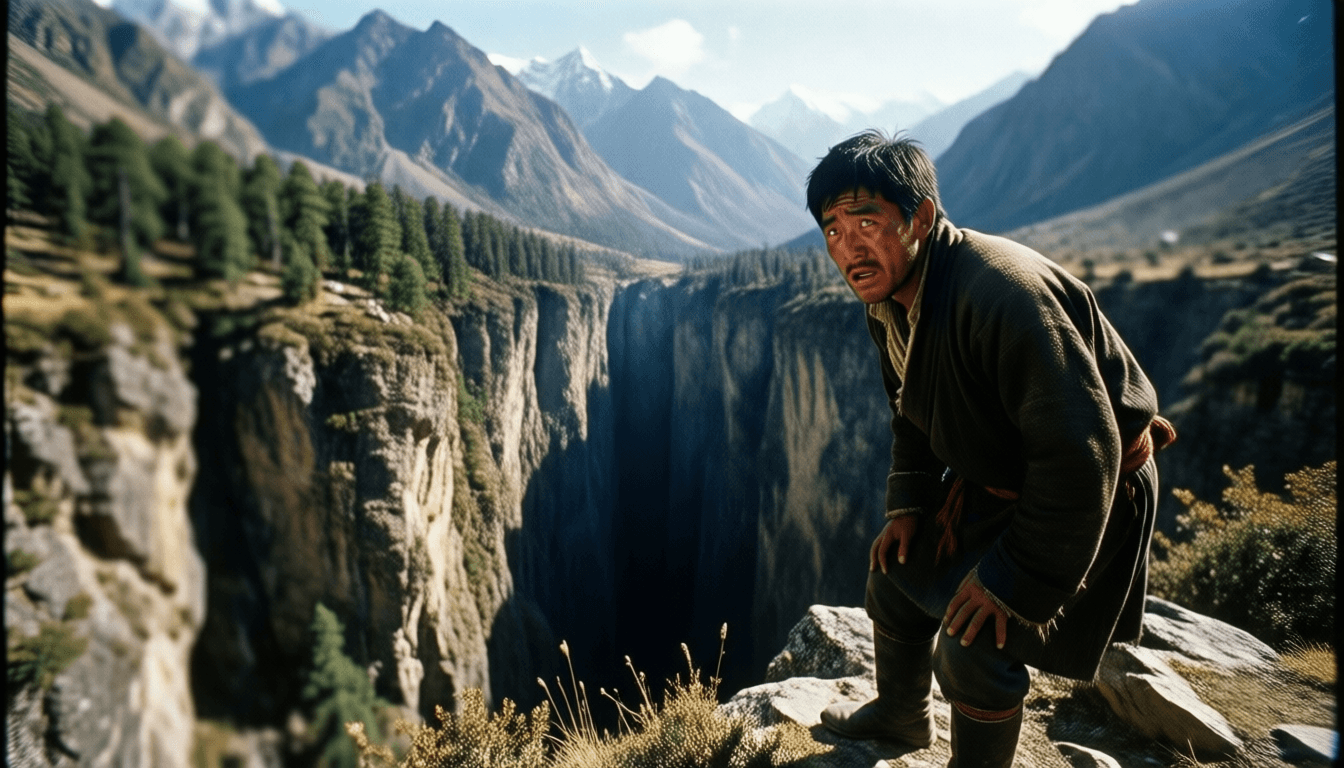
My journey began with the familiar alpine chill and the humbling scale of the mountains. I hired a local guide, Tenzin, an experienced Sherpa. While initially enthusiastic about the assignment, his zeal noticeably dimmed as we neared the designated coordinates. His discomfort was a familiar sign; local knowledge, often dismissed as superstition, frequently held the key.
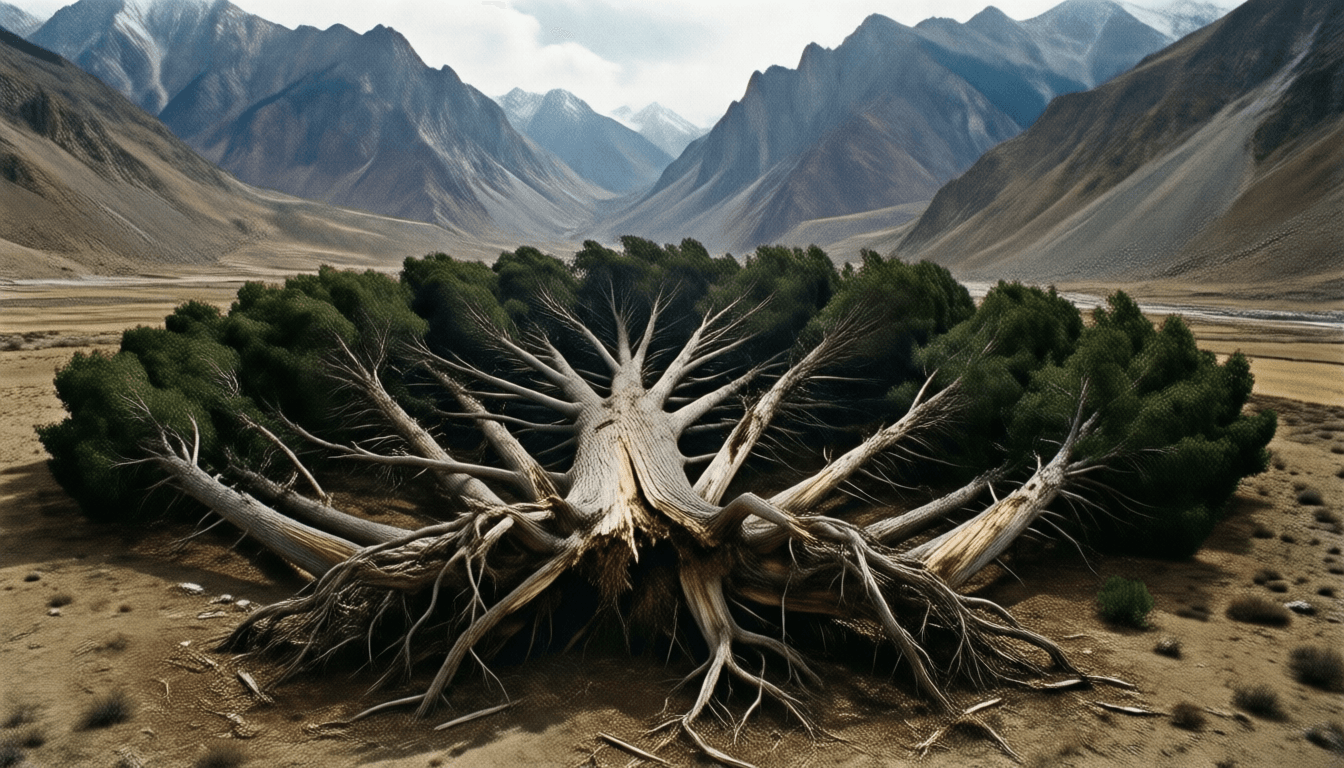
We ascended into a vast, desolate U-shaped valley carved into the range. The air was thin, and a profound silence hung heavy, broken only by the wind scraping against pointed peaks. It was in this silence that the first anomalies began to manifest. I observed unusual erosion patterns on ancient rock faces at impossible heights. Grooves and gouges, unlike anything I'd ever seen, were too wide and deep to be traces of any known creature. And the forests. Sections of ancient juniper forest were pressed flat, not randomly like an avalanche, but in distinct, colossal elliptical patterns, as if a colossal, invisible hand had pressed down with unimaginable force. The trees weren't simply broken; they were shattered from above, their roots often intact. The scale suggested something truly immense, yet there were no conventional impact marks.
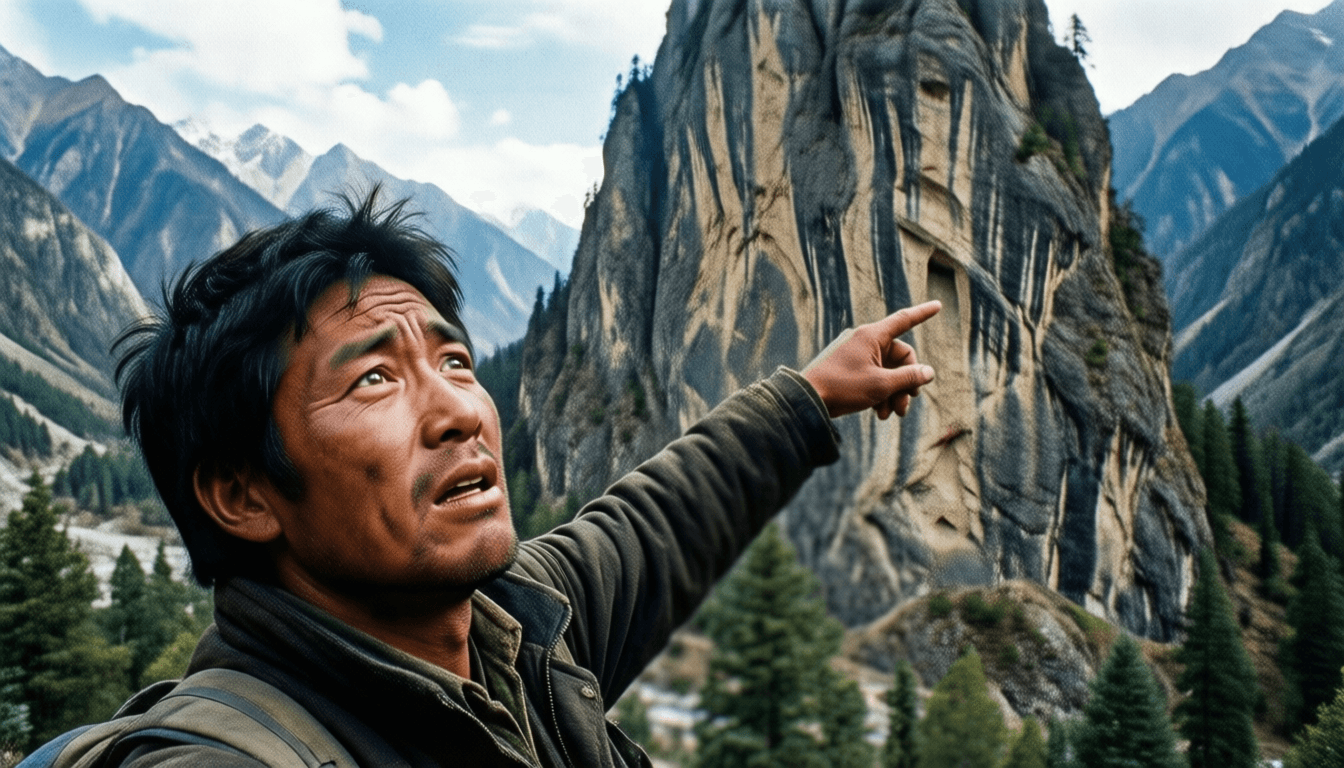
Tenzin grew progressively quieter, his eyes scanning the impossible heights with almost fearful reverence. He spoke only once, pointing to a strangely clean spot on a high ridge, devoid even of moss. "The old ones say... where the Breath lingers, nothing grows."
As we delved deeper, the valley itself seemed to warp the laws of perception. The thin air hummed with low-frequency vibrations, a sound felt more in the chest than heard with the ear. Streams in the shadowed gully exhibited an erratic, hesitant flow, sometimes momentarily reversing before settling back into place, as if the water itself responded to invisible pressure differentials.
The echoes were the most unsettling. My voice, amplified by the mountains, returned not as a clear reverberation but as a distorted, delayed chorus, sometimes fading into a profound, anomalous silence only to reappear from an unexpected direction. The wind, a constant companion in the Karakoram, would sometimes cease entirely, creating a suffocating sonic void, only to gust back with sudden ferocity, tugging at clothes and threatening to unbalance. Shadows stretched and contracted along distant slopes at impossible speeds, movements entirely inexplicable by the sun's slow traverse.
Tenzin's whispers were almost lost to the wind. He recounted tales of 'Sky-Eaters' dwelling beyond the clouds, presences whose existence could steal breath and bend light. He pointed out faint, impossibly enormous footprints in alpine snowfields that appeared and vanished between our passes – far larger than any known creature, yet too distinct to be random erosion. A colossal sense of pressure from above bore down on me. It wasn't merely altitude sickness; it was the palpable weight of something vast and ancient.
We reached a high, barren plateau, a natural rock amphitheater. Tenzin, face ashen, sank to his knees, praying, refusing to go further. Driven by a cold, analytical curiosity, I pressed on towards a specific fissure I had observed on satellite maps.
It was then, standing at the edge of the cliff, looking down into deeper crevices of dizzying depth.
It began soundlessly, with the sensation of the air itself tearing. An instantaneous, localized pressure wave struck me, knocking the breath from my lungs, scattering specialized alpine equipment. It was a physical impact, a sudden vacuum of sound, followed by an impossibly deafening roar – not a voice, but pure atmospheric displacement. My eardrums pounded furiously. Air temperature plummeted in seconds, condensing into an impossible fog that swirled and dissipated around me.
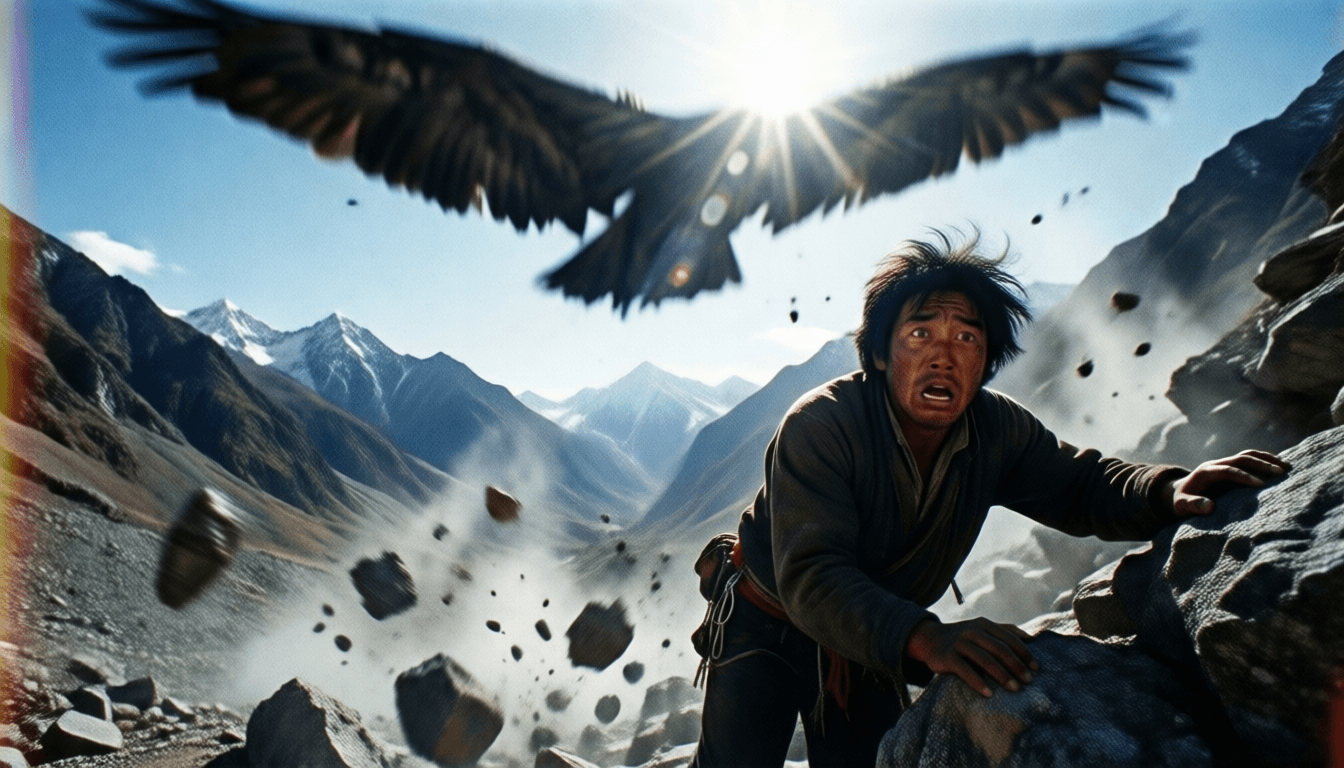
And the wind. Not a gale, but an atmospheric weapon. An incredibly powerful, concentrated stream of air ripped through the valley, tearing at my parka, threatening to lift me bodily into the air. I clung to the rock, muscles screaming. I scrabbled desperately to hold on as loose shale and ancient stones around me were uprooted and hurled into the chasm below. In the swirling, frigid mist, against an impossibly vast sky, I saw it. Not a clear image, but a momentary impression. A vast, dark silhouette, a shadow that moved with unnatural, almost silent grace amidst the atmospheric chaos it generated. Impossibly long, dark wings, their edges appearing not feathery but like ancient, scarred hide, swept through the space above my head, momentarily eclipsing the sun. Its passage generated a secondary, low-frequency vibration that rattled my teeth; a soundless thunder that resonated through my very bones.
I wasn't hit directly, but the sheer wave of air emanating from the wing, the vacuum left in its wake, pulled at me with lethal force. I smelled metallic ozone, followed by a cold, brief graze. Not flesh, but something hard, cold, and immensely powerful scraped against the rock face inches from my face, leaving a fresh gouge. It was the wind from its passage, the turbulence of its immense mass, that almost killed me. For a fleeting instant, I felt the pure predatory indifference of a colossal, alien, ancient eye. It assessed me as an insignificant speck, then vanished, leaving only the chaotic aftershocks of its impossible passage and a ringing silence.
Tenzin was gone. I found him much later, lower down the plateau, amidst a fresh landslide. His injuries were consistent with a fall from a great height.
I returned from the Karakoram physically exhausted, emotionally shattered, but meticulously methodical. My official report, of course, was dismissed. Altitude sickness. Delirium. Localized microbursts and a tragic landslide for Tenzin. But they couldn't account for the peculiar, impossibly large feather fragment I recovered. Its keratin structure was unlike any scientifically known avian species, scarred and reinforced in a way that defied classification. Nor could they explain the distinct, impossibly deep gouges on the rock face I'd clung to, marks that seemed to glow with trace elements not native to the local geology. Not to mention the twisted, almost liquefied remains of my alpine barometer, melted and compressed with a force inconsistent with any known atmospheric or geological phenomenon.
My data correlated with that from the "Geological Anomalies" forum, now painting a chillingly consistent picture. The seismic vibrations aren't geological; they are the impact shocks of colossal limbs. The microbursts aren't weather; they are immense volumes of air displaced from wings of unimaginable span. The unexplained drone malfunctions and aircraft "atmospheric disturbance" reports from that specific region are no coincidence.
I sit now in my quiet study. The hum of the city is a distant, fragile whisper. On my screen are high-resolution satellite images of the Karakoram valley from the day of the incident. In one frame, a vast, faint shadow, impossibly distinct and angular, stretches for kilometers across the desolate peaks. In the next frame, taken minutes later, it is gone. It's not an optical illusion. It's the ephemeral trace of something vast, ancient, an apex predator of extreme altitude that exists, indifferent to our maps, our science, or our claims of dominion. The true horror is not what I saw, but the chilling certainty that it continues to patrol its domain, unseen and unheard, a living impossibility, reminding us how utterly insignificant we are in a world far older and more mysterious than we ever conceived. And sometimes, its shadow falls upon us.

[ CLASSIFIED VERDICT ]
[ACCESS LOG - SOURCE FILE]
This story combines Himalayan folklore with mysterious geological and atmospheric phenomena, focusing on an ancient, colossal creature hidden in the Karakoram Mountains. It's based on the belief that unexplained powerful winds and ground vibrations are actually linked to the movements of a being called 'The Breath of the Rook.' It explores the fear that a supernatural entity, beyond scientific explanation, exists beyond our perception.