
Intelligence of Kanas Lake: Presence in the Shadows
In late 2022, blurry videos filmed at Kanas Lake flooded Chinese social media platforms (Douyin, Weibo). These clips, allegedly taken by tourists from observation decks, showed a massive shadow moving beneath the surface, leaving significant ripples. As expected, authorities at the Kanas National Nature Reserve dismissed them as "optical illusions due to light refraction" or "large schools of fish." However, just weeks after the viral videos circulated, in the summer of 2023, the mysterious disappearance of independent geophysicist Dr. Li Wei cast a different shadow. His advanced research drone, which was mapping the lake's deepest trench without official permission, vanished without a trace. Recovered records from his base station contained telemetry data indicating an impossibly large, dense, and fast-moving underwater object detected just moments before the drone's signal abruptly and completely cut out. No wreckage was ever found.
Official reports cited battery malfunction—a tragic but mundane loss for Dr. Li Wei. Yet, the persistent legends of the Tuvan people, and more crucially, the recovered telemetry data, told a completely different story. As a mystery archivist, I felt an intense compulsion to investigate the narrative firsthand, despite increasingly restricted access to the lake.
I arrived at Kanas Lake in late autumn, as the first frost began to skim the shallow waters. The tourist season was winding down, lending an air of deep isolation and desolation. I managed to secure a small, electrically powered research skiff, equipped with high-resolution multi-frequency sonar, robust deep-sea camera gear, and a compact remotely operated underwater vehicle (ROV)—an upgraded version of Dr. Li Wei's lost drone.

The lake was vast, its jade-green waters seemingly placid. The overwhelming scale of the surrounding Altai Mountains and the shadows cast by the birch and larch forests made the air feel thin and crisp, mingled with the scent of pine and damp earth. When the skiff's motor cut, an almost suffocating, profound silence descended, broken only by the gentle lapping of water against the hull. I steered towards the exact coordinates where Dr. Li Wei's drone signal was last detected—an unusually deep and narrow trench near the lake's center, avoided by local fishermen due to unpredictable, powerful undertows. I deployed the sonar and began a systematic sweep.
As the ROV descended into the trench, the sonar began intermittently picking up massive echoes. These weren't the diffuse reverberations of a school of fish. Singular, elongated, incredibly dense forms moved at impossible speeds in the extreme depths. They were too large, too fast, and too deep for any known species, including the endemic Siberian taimen. Their movement patterns were unsettlingly fluid, appearing and disappearing at the very edge of the sonar's range like phantom vessels.
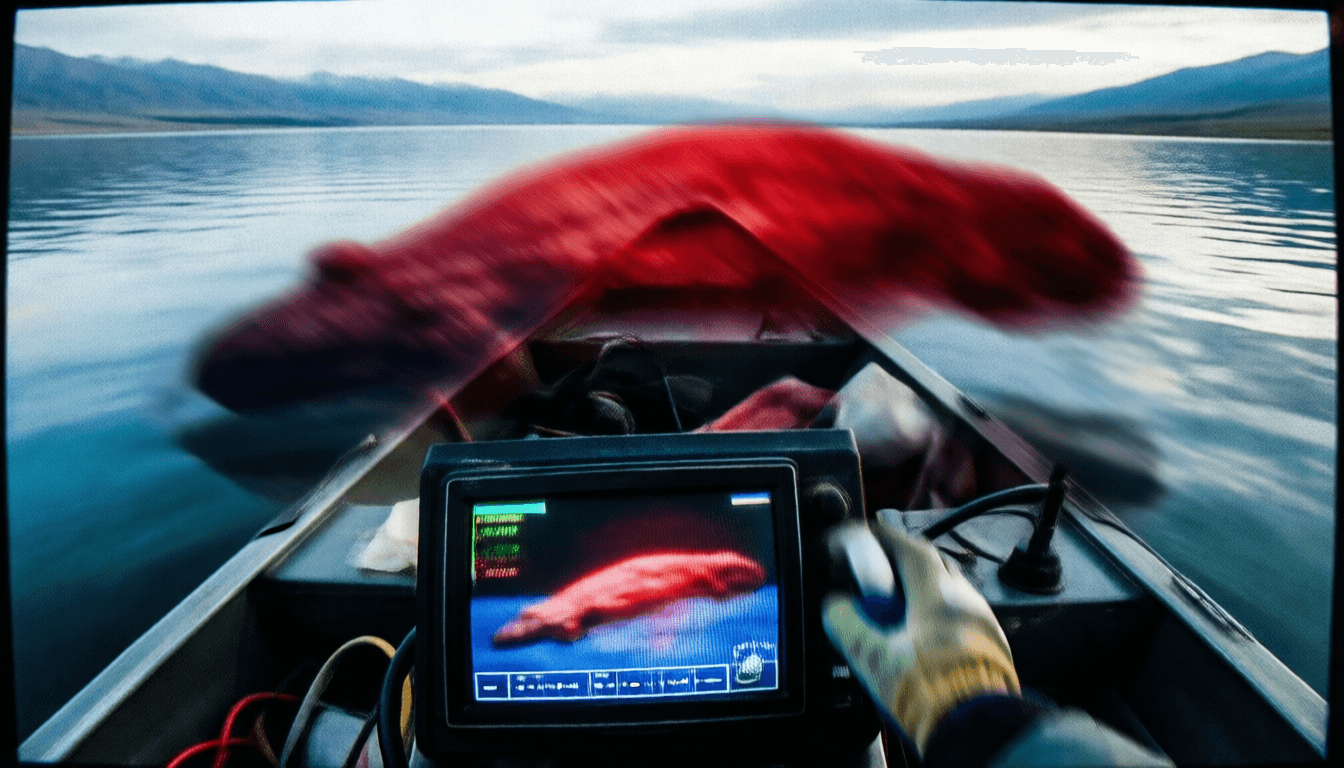
The subtle lapping against the hull began to fade. The distant sound of wind through the trees, even the low hum of the skiff's internal electronics, seemed muffled. The air grew unnaturally still and heavy, and the lake surface transformed into a perfectly flat, dark mirror reflecting nothing but the cold, indifferent sky. A bow-mounted water temperature sensor detected a sudden, inexplicable drop of several degrees in the water directly beneath the boat. It was too abrupt and localized to be a natural current; it felt as if the chill of a vast, unseen abyss had just passed below.
The ROV's live feed briefly distorted, showing unexplainable static and impossible gyroscopic readings—an abrupt, violent spin, then an immediate, clean recalibration. It felt less like a malfunction and more like an unseen, deliberate force had briefly wrested control. A profound awareness of being utterly alone, yet simultaneously being watched, enveloped me. The vast, dark void beneath the hull felt less like water and more like a colossal, liquid eye. A faint, metallic scent, like ozone or stagnant, mineral-rich water, began to permeate the air.
The ROV camera briefly captured a massive, dark, serpentine form—moving with impossible grace, too immense to be described as anything but monstrous. Before I could fully process the image, the skiff twisted violently. Not from a direct impact, but from a sudden, incredibly powerful shift in the lake's currents. The boat began to spin uncontrollably, being dragged toward the center of the deep trench by unseen, silent cataclysms. The electric motor screamed impotently against the overwhelming force. The water around the boat distorted without visible cause. Ripples emanated not from the surface, but outwards from beneath the boat. The air directly above the water shimmered, as if immense, invisible pressure differentials were at play. The sonar display flashed red, painting a colossal, indistinct mass far exceeding any known biological signal directly below. The lake's surface, unnaturally calm just moments before, now heaved with localized, violent whirlpools, appearing and disappearing with uncanny precision, utterly without visible origin.
A deep, resonant hum vibrated through the hull, felt more than heard. Then, a sickening lurch. Something immense brushed against the skiff's underside. Not a collision, but a crushing pressure. Unsecured research equipment clattered wildly. The deep-sea camera gear's cable strained to impossible tension, then snapped cleanly, dragged below. The skiff was now listing severely, its hull groaning under unseen pressure. In desperation, I lunged to sever the ROV's tether, fearing it would drag the entire boat down. As I wrestled with the clamp, a section of the hull beside me suddenly buckled inward—not punctured, but compressed by immense, precise pressure from below. Thirty feet away, a sudden, vast displacement of water occurred. A dark, featureless section of an impossibly colossal form briefly surged above the surface—not breaching, but rising with an almost liquid motion, then submerging again without a splash, leaving only an unsettling disturbance. Water poured into the damaged hull. I abandoned what remained of my equipment, desperately engaging the emergency manual pump and wrestling with the tiller, trying to head for the distant shore. The unseen presence was always there, directly below me, with an unnerving sentience.
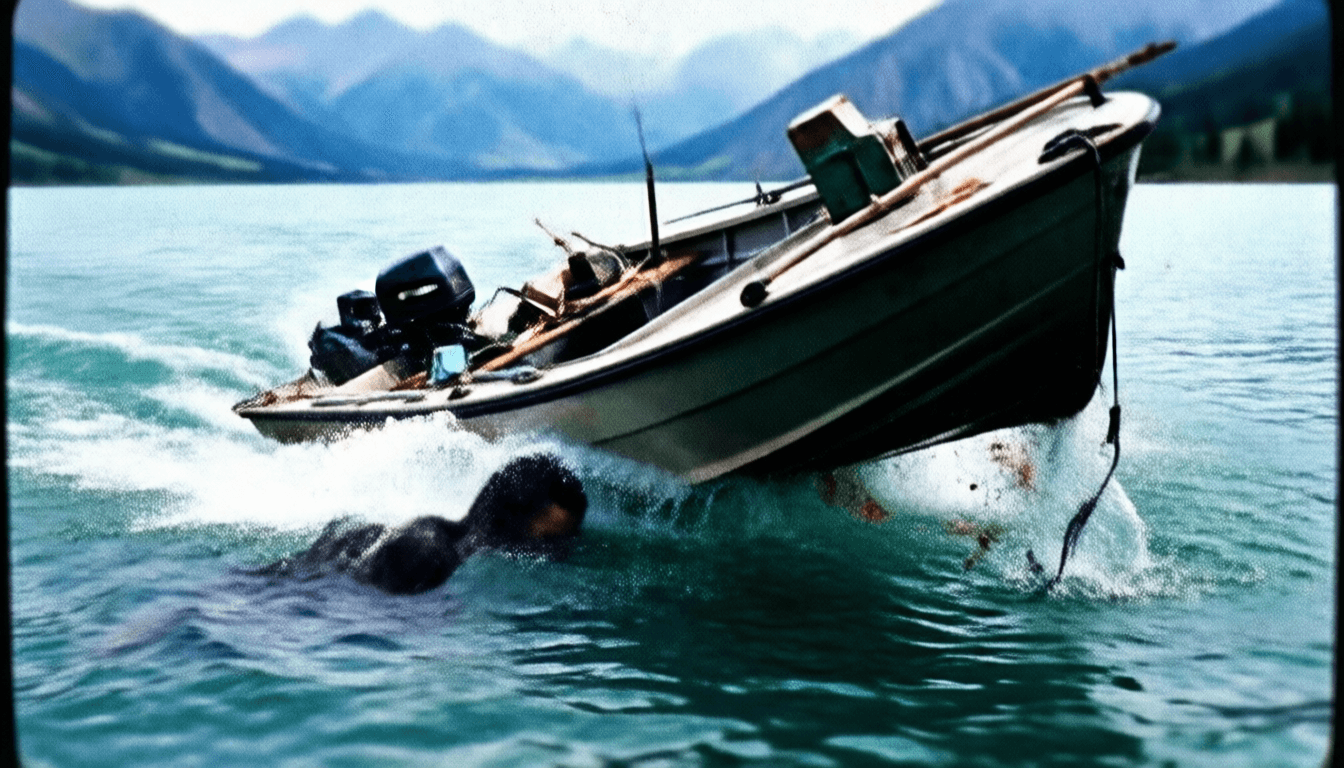
I barely made it to shore, suffering from hypothermia and profound trauma, the skiff slowly sinking behind me. For weeks afterward, I isolated myself, piecing together the scant remaining clues. Back in my soundproofed archive, I reviewed the last few seconds of the ROV footage (just before its tether snapped) and the corrupted sonar data. The video offered only shadowy blur. But the sonar, after repeated forensic analysis, revealed not just one massive, elongated echo, but a second, still immense but distinct, signal moving unsettlingly in tandem with the primary one.
Physical evidence was sparse but undeniable. A deep, perfectly smooth yet incredibly precise indentation left on the recovered sonar transducer's waterproof casing—not a sharp impact, but consistent with immense, focused pressure. And then, a few days later, a single, elongated, iridescent scale, dark like polished obsidian but unlike any known fish scale, found lodged in a tear in the skiff's emergency life vest recovered near the lake's outlet. Its surface was unnervingly smooth, almost warm to the touch. I issued no definitive report. Instead, I archived the evidence—the footage, the sonar logs, the scale—under a new, highly restricted classification. The chilling realization that dawned on me was not merely that the legends were true. It was that what I had encountered was no mere colossal animal. It was an intelligent entity, with unnerving patience and complete dominion over its environment, turning the very water into a weapon. The lingering chill wasn't just from the lake's cold. It was from the fact that Kanas Lake's vast, dark forms were not just deep, but deeply, terrifyingly aware. And the second sonar signal wasn't an appendage. It was something else entirely. "It wasn't hunting," my notes concluded. "It was... a parent."

[ CLASSIFIED VERDICT ]
[ACCESS LOG - SOURCE FILE]
After viral videos showed a colossal shadow moving in China's Kanas Lake, a geophysicist exploring its depths mysteriously disappeared. His drone left records detecting a massive underwater object, bolstering the Tuvan people's legends of a lake monster. This story details a direct investigation into that mystery.