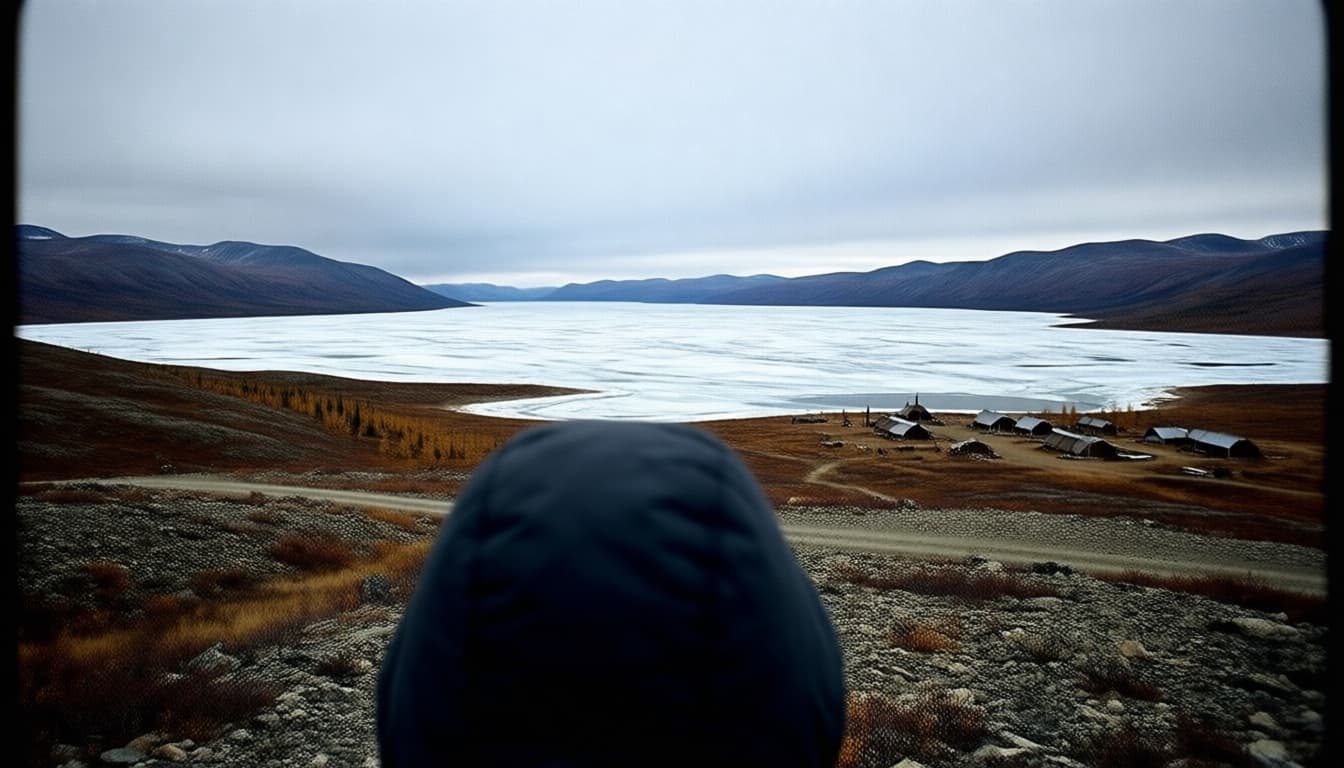
The Hungry Silence of Anjikuni Lake
The Anjikuni Lake disappearance in Canada is one of the most chilling unsolved mysteries. In November 1930, trapper Joe Labelle reported finding an entire Inuit village, approximately 1200 people, vanished without a trace. Fires were still burning, meals lay untouched, and rifles leaned against doorways. But no one was there. Most disturbingly, seven dog sled teams were found inexplicably tied and starved to death, and Labelle described an "eerie, unnatural silence" that pervaded the entire valley. An official investigation by the Royal Canadian Mounted Police (RCMP) confirmed the basic facts: an entire community had disappeared without a trace, leaving behind only the perfectly preserved tableau of a sudden, impossible absence.
My interest in this case was reignited not by the well-known accounts, but by recently digitized fragments of a geological survey report concerning the Anjikuni region from the 1970s. Tucked away in an obscure appendix, dense with technical jargon, was a note claiming "significant, localized gravitational anomalies" and "sporadic, extreme atmospheric pressure differentials" had been detected near the vanished village site. Initially dismissed as equipment malfunction, the data included graphs showing short, sharp spikes and drops that defied conventional explanation. Cross-referencing this information with newly translated oral histories from a Chipewyan elder who used to trap near Anjikuni, I found a recurring motif: "the land seemed to swallow something," a "hungry silence" as distinct from the quiet of the wild. These details suggested the absence was not merely a *lack*, but a *presence* of something deeply wrong with the physical fabric of the place. This was no abduction. It was something far more fundamental.
The journey to the Anjikuni site was arduous. A flight to a remote northern outpost, followed by a three-day trek across late autumn tundra. The air thinned, the landscape was stark, an endless canvas of grey and muddy brown. Upon reaching the coordinates, the first thing I noticed was the absolute, unwavering silence. Even the wind seemed to make no sound here, only exerting pressure on my ears. The ruins were subtle, almost swallowed by the landscape: collapsed sod houses, skeletal wooden structures. Just as Labelle described, a rusted pot lay near a fire pit, a broken bone needle beside half-finished clothing. These were not relics of gradual abandonment. They were snapshots of a moment, frozen, and then forgotten.
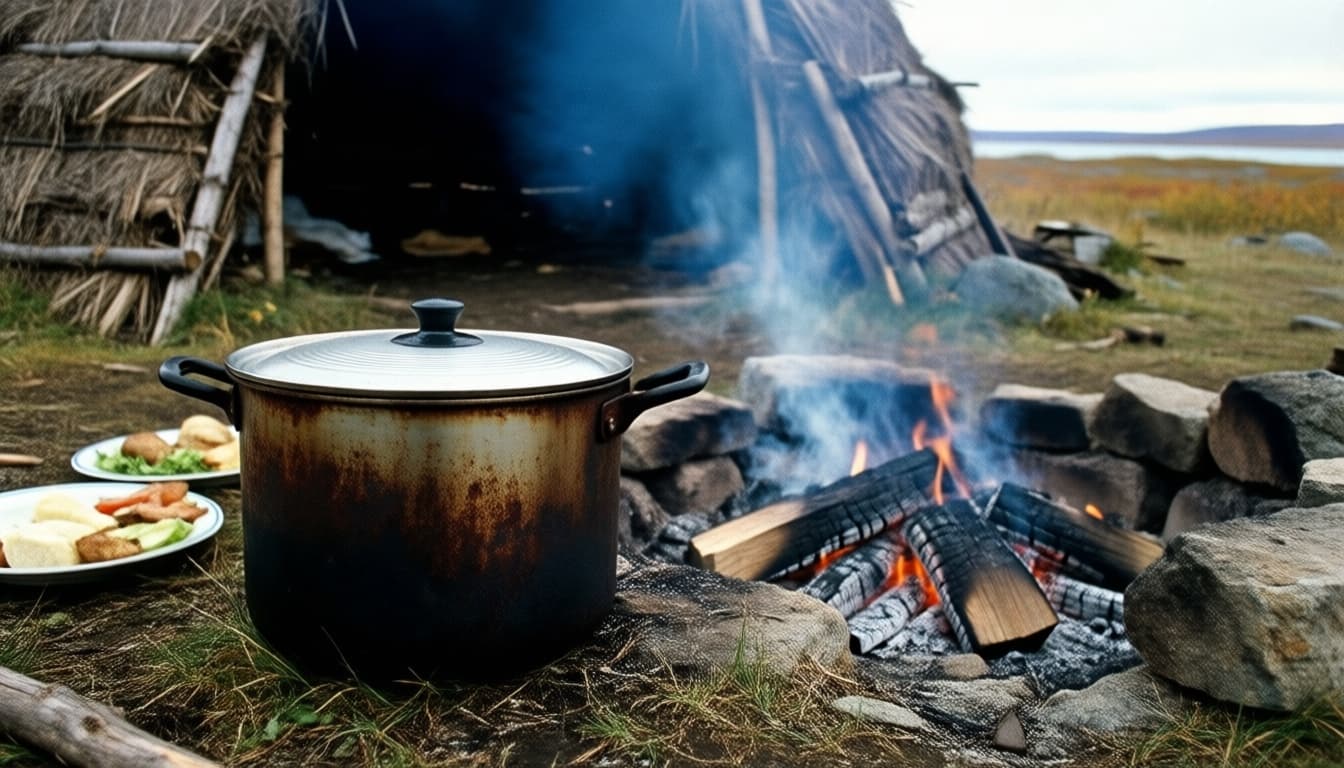
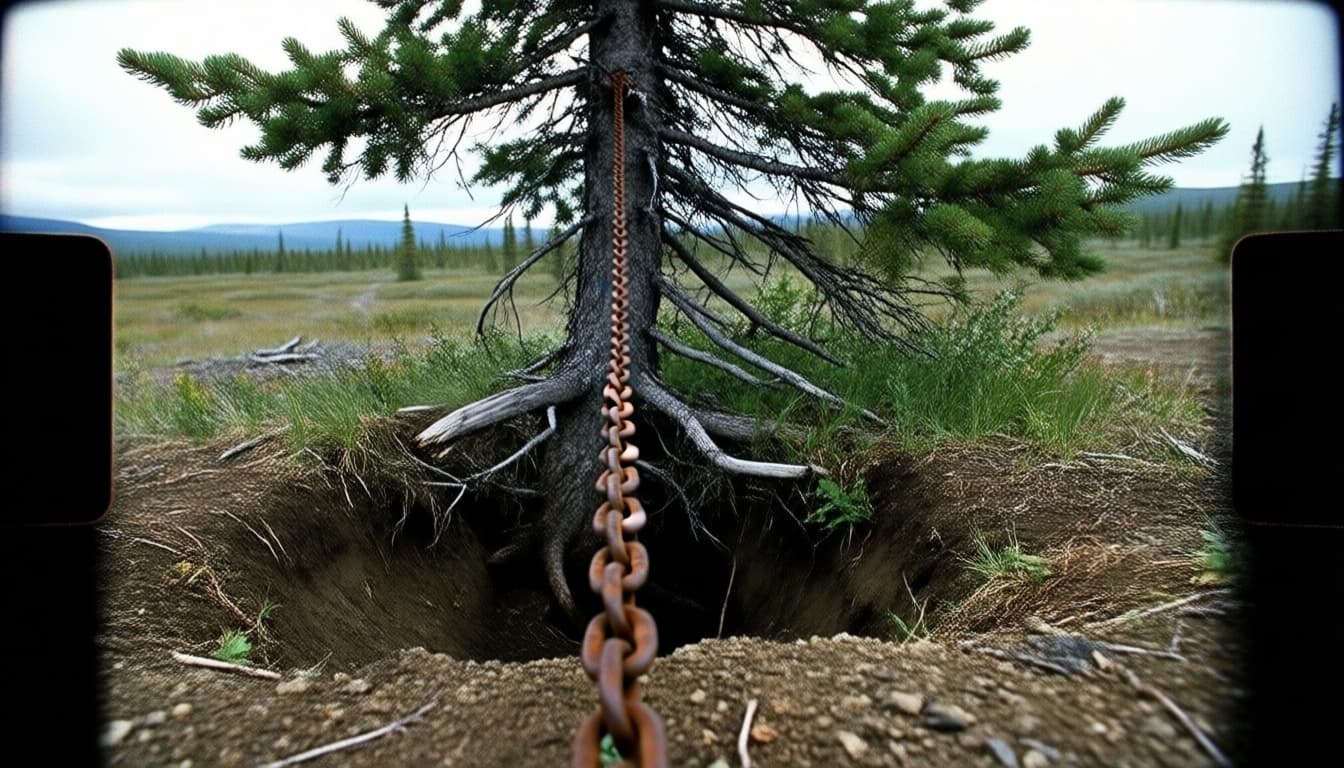
I documented everything: the precise coordinates of the structures, the astonishing preservation of organic matter in the dry, cold air, the eerily clean site. No animal tracks, no scavengers. Just the spectral presence of human habitation, a tableau awaiting actors who would never return. What truly unsettled me was the fate of the dog sled teams. I found several points where rusted chains were still attached to old, gnarled spruce trees. These chains led into hollows in the earth: graves. Why would anyone starve loyal dogs, bury them, and then vanish without a trace? The question echoed in the unnatural stillness.
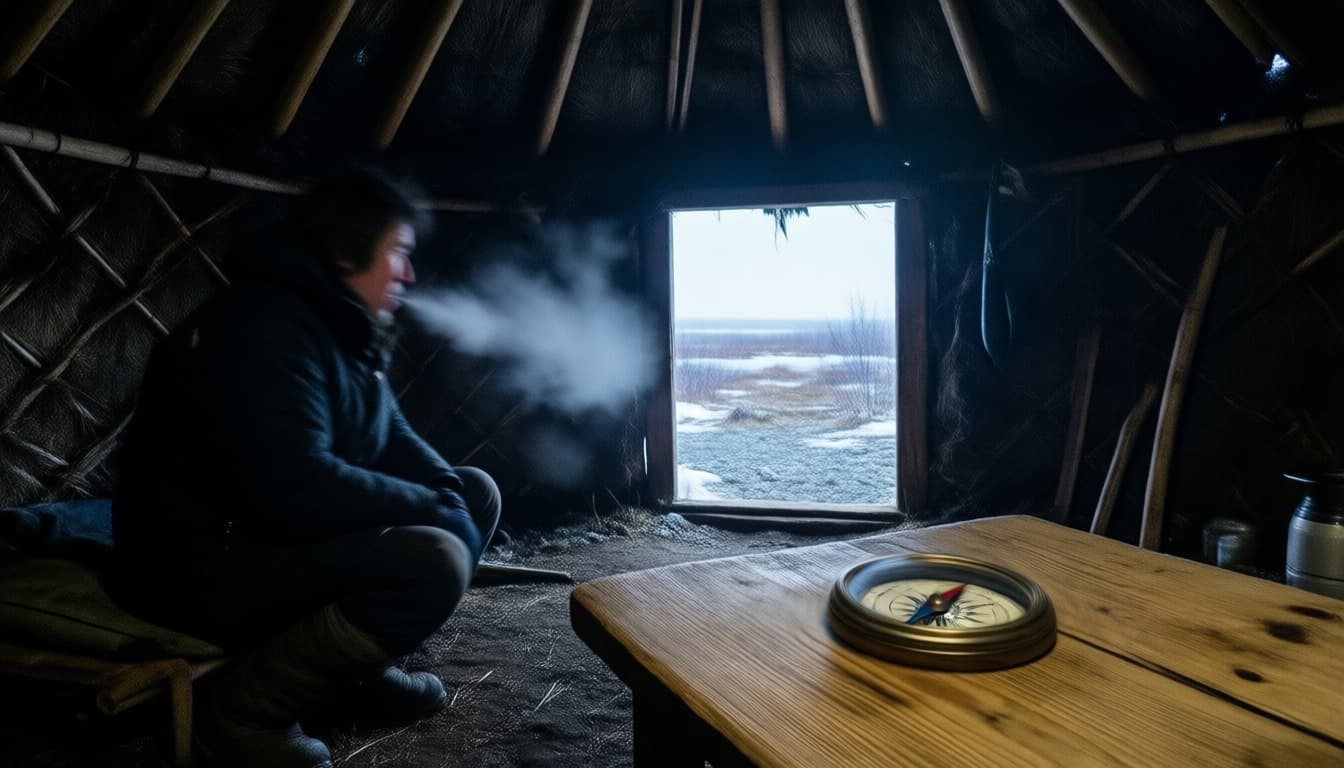
As the sun began to set, subtle environmental anomalies began to manifest. My usually reliable handheld compass spun erratically, then wildly, whenever I approached the central cluster of huts. My GPS signal became intermittent, then died completely. I found localized pockets of extreme cold, about the size of a small room, where my breath would visibly plume even though the surrounding air was merely chilly. Sounds, too, were strange. My footsteps seemed absorbed by the ground, without their usual crunch. When I shouted, the echoes were delayed, distorted, as if returning after passing through a heavy, viscous medium. Sometimes, they would return instantaneously, before I had even finished speaking.
Most disturbing was the lake itself. Its surface, which should have rippled with the wind, was unnaturally still, a dark, reflective membrane that seemed to absorb all light. As I observed the eerie absence of natural movement at its edge, I noticed a subtle distortion in the reflection of the distant horizon. It was as if the landscape itself was subtly rippling in the water, yet remained solid in reality. When I pointed my camera towards the lake, it captured inexplicable blurs and streaks of light invisible to the naked eye. The feeling of being watched intensified, but it wasn't by any entity – it was by the space itself. A deep, heavy awareness that I was intruding on something ancient, and fundamentally wrong.
I found what appeared to be the largest dwelling, perhaps a community building or the chief's residence. Stepping inside, the air was significantly colder, thick with the smell of old earth and something else I couldn't place, both metallic and organic. My flashlight beam cut through the darkness, illuminating details: a small, half-finished bone carving, a perfectly preserved leather thong, a wooden bird carving, a child's toy. I knelt to examine the bird, my fingers tracing its smooth contours.
Then, the silence deepened, becoming absolute, pressing in from all sides. My ears rang. The air around me grew heavy, palpably dense, as if I had descended into the extreme deep sea. The small wooden bird in my hand began to vibrate, subtly at first, then increasing in intensity, humming against my palm. A low, resonant hum began to emanate from the ground beneath my feet, vibrating up through my boots and into my legs. The shadows in the corners of the hut began to twist. Not moving, but *stretching*, deepening impossibly.
Then, the very floor seemed not to collapse, but to be *pulled down* by an invisible, immense force. I stumbled, the air now feeling like thick jelly, resisting my movements. The wooden bird flew not upwards from my hand, but *sideways*, sliding across the floor, then appearing to *dissipate* into the air, its edges blurring, then simply gone. My vision warped. The hut walls seemed to undulate like water, the ceiling appearing to fold inwards without physical change. I felt an intense, disorienting *pressure* on my very being. Not a sensation of falling, but of *disassembling*, my own mass scattering into an increasingly impossible spatial geometry. My muscles convulsed, fighting an invisible current that sought to pull me into the same inexplicable absence that had swallowed the villagers. Horrifically, a momentary flash crossed my mind – not an image, but a *feeling* of instantaneous, complete dispersion, as if a thousand lives had simply ceased to be, not dead, but *unmade*.
With a desperate, primal scream, I threw myself towards the doorway, a raw impulse to escape this shattering reality. My body felt ripped, my limbs heavy and disconnected. I stumbled out of the hut, rolling onto the frozen ground, gasping at the thin, sharp air. The hum abruptly ceased. The oppressive pressure was gone. The silence returned, but it was now the familiar, albeit unsettling, quiet of the northern wild. I lay there, trembling, my mind reeling, the ghost of impossible sensations lingering in every cell.
Eventually, I made my way back. The return journey was a blur of adrenaline and disorientation. My compass malfunctioned intermittently for weeks after returning to civilization, occasionally spinning wildly far from Anjikuni. My GPS device, however, never worked again, its internal clock permanently broken.
That profound, bone-deep cold I felt in the hut never entirely left me. Now, I experience sudden localized pockets of extreme cold, even in warm environments. Brief moments of frigid air that others don't perceive. More disturbing is the way sound sometimes works around me. Casual conversations occasionally produce subtle, delayed echoes, or spoken words seem to be heard instantaneously *before* the speaker's lips move. I find myself constantly listening for these elusive temporal distortions.
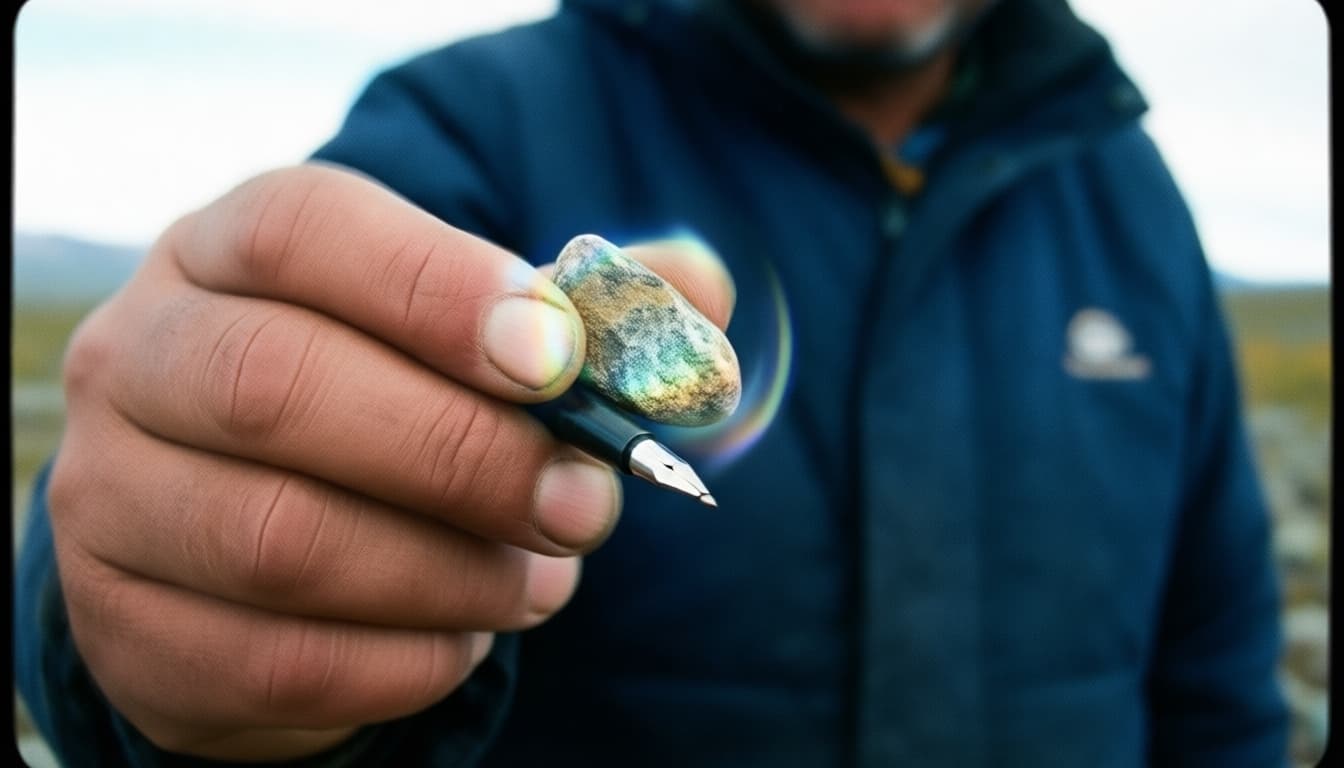
But the most concrete and terrifying consequence is this: sometimes, when holding small objects – a pen, a coin, a stone – I feel a faint internal vibration, a soft hum at my fingertips. And occasionally, for brief, chilling moments, I perceive the object's edges subtly blurring, its physical form momentarily softening. As if the object is on the verge of *disassembling*. I've learned to drop them quickly.
I have no clear answers for Anjikuni Lake. No clear evidence of an entity or a monster. But I now know that the land itself is capable of a deep, silent act of unmaking. The villagers were not taken. They were simply *unmade*. And I, for one terrifying moment, brushed against the edge of that same unmaking. The silence, the cold, the misaligned echoes, and the hum. They were not merely anomalies of a place. They were symptoms of an active, unseen force still breathing in the tundra, a hungry silence, and I fear it has subtly, irrevocably, imprinted itself upon me.
[ CLASSIFIED VERDICT ]
[ACCESS LOG - SOURCE FILE]
The Anjikuni Lake disappearance is an unsolved mystery from the 1930s in northern Canada, where an entire Inuit village vanished without a trace. A trapper named Joe Labelle reported finding fires still burning and meals untouched, but 1200 villagers and a dog sled team, inexplicably starved to death, were gone. Despite an RCMP investigation, the complete and sudden disappearance of the entire community remains an inexplicable mystery.