
The Hungry Lights of the East Sea
On October 17, 2013, dry, concise sentences were recorded in the Donghae Coast Guard’s log: "02:47 KST. Coast Guard Vessel 512, Bravo-7 Sector, East Sea. Unidentified light source, bearing 270, 3 nautical miles. Rapid, erratic movement. Lost at 02:51. No vessel involvement." This report was not an isolated incident. Over the past 40 years, similar reports have been continuous along the rugged coastline of the East Sea, an area known as 'Dragon's Teeth'. Fishermen spoke of "ghost lights" and "pulling lights," recounting the eerie silence that preceded their appearance. Online forums dedicated to Korean maritime folklore were filled with anecdotes, often dismissed as superstitions of drunken fishermen. They described luminous orbs that moved against currents, exhibited an unearthly internal luminescence, and were occasionally linked to unexplained disappearances. Notably, between 2005 and 2018, three fishermen vanished in clear weather off the tip of Dragon's Teeth. Their boats were found adrift, engines off but otherwise undamaged. One investigator, however, noted an unidentified smell, "like ozone, but colder," lingering in the air. What captivated my interest wasn't just the sightings, but the precise, clinical repetition of anomalous data points in Coast Guard records. I focused not merely on the visual presence of these lights, but on the consistent, chilling details of the 'effects' they produced. This was no hoax. It was an inexplicable environmental variable, seemingly predatory in nature.
Approaching the tip of Dragon's Teeth required a half-day trek along a nearly abandoned coastal path. An old, dilapidated observation post overlooked a treacherous, rocky cove. Despite it being early autumn, the air was incessantly cold, permeated with the bracing salt tang of the deep sea. My equipment was minimal: a high-sensitivity recorder, a thermal imaging camera, a directional microphone, and modified night vision goggles. The exact coordinates of the 2013 incident pointed to the waters directly offshore from this cove, known to be a primary haunt of the lights. I set up a temporary shelter in the observation post. Its exposed concrete exterior offered little protection from the incessant wind. The first night passed uneventfully. The only symphony was the roar of waves and the cries of gulls. The physical characteristics of the place were immediately apparent. The roar of waves crashing against the cliffs was perpetually overwhelming, and any sound was immediately absorbed by the vast sea, leaving no echo off the steep rock faces. It was a place where sound quickly died, leaving only the endless push and pull of the ocean.
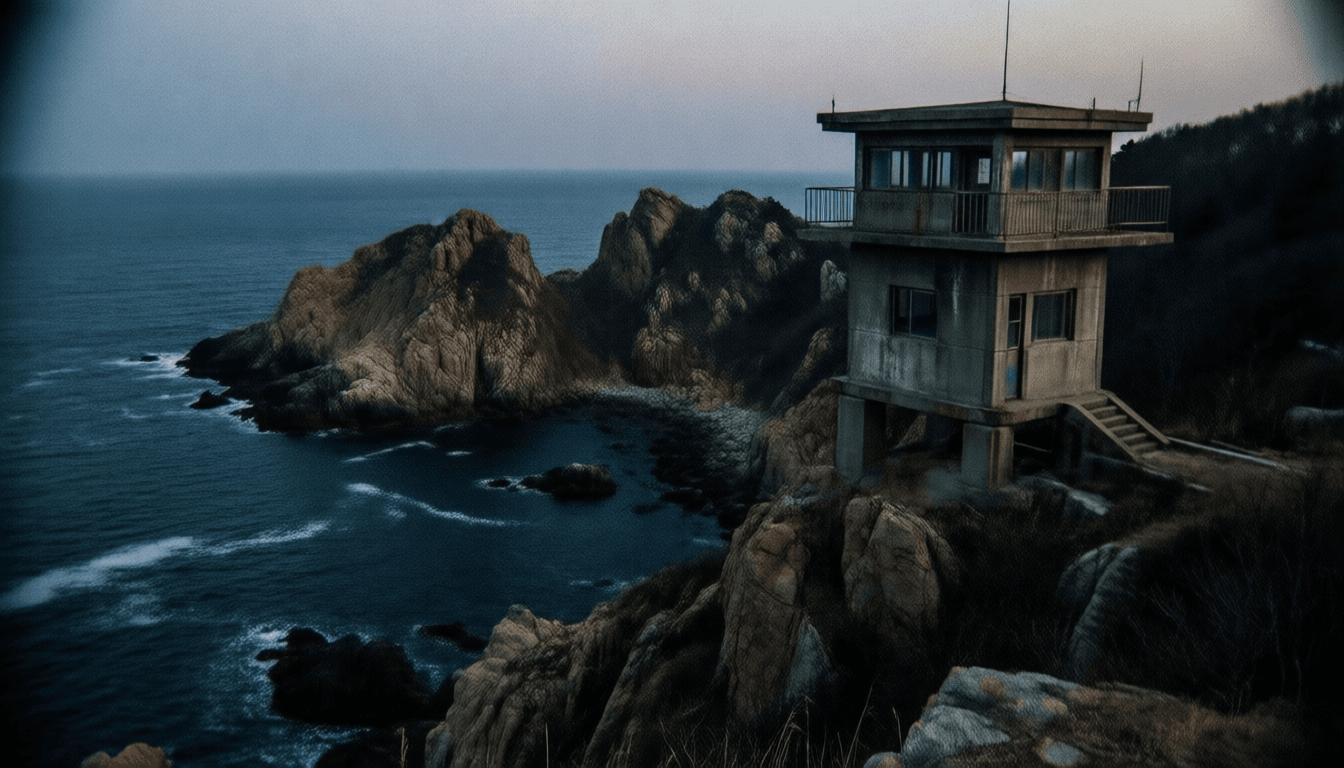
On the second night, just past 2 AM, the temperature plummeted dramatically. It was more than a typical diurnal change. My breath plumed more visibly. The directional microphone picked up a faint, infrasonic hum, seeming to emanate from the very stone of the observation post itself. It was less a sound heard with the ears and more a vibration felt in the chest. And then the sea began to change. The constant roar of the waves, which had been unceasing for two days, gradually seemed to recede. It wasn't that the volume decreased, but a strange sensation that its 'presence' itself was vanishing. An impossible, vacuum-like silence pressed in from all sides. The air became heavy and still, abnormally cold, stinging my skin despite my insulated gear. On the thermal camera, irregular cold spots appeared and spread across the water's surface.
And then they appeared. Three distinct, pale blue-white lights emerged from beneath the surface, about a nautical mile offshore. They were not bright in the traditional sense. They did not illuminate the surrounding dark sea. Instead, they were pure light themselves, condensed luminosities that seemed to absorb ambient light. With an eerily fluid motion, they ascended and descended with incredible precision, then traversed the surface at speeds no known vessel could achieve, stopping abruptly without a ripple. My recorder, which had initially picked up a low hum, now registered only static amidst the profound silence. I tried to shout, but the sound seemed trapped in my throat, an un-echoed sound. The largest of the lights slowly, deliberately began to approach the cove. As it drew nearer, the water directly beneath and around it became unnaturally calm, defying the constantly incoming tide. Small rocks around the light seemed to shimmer, distorting the starlight. It wasn't merely observing; it was 'interacting'.
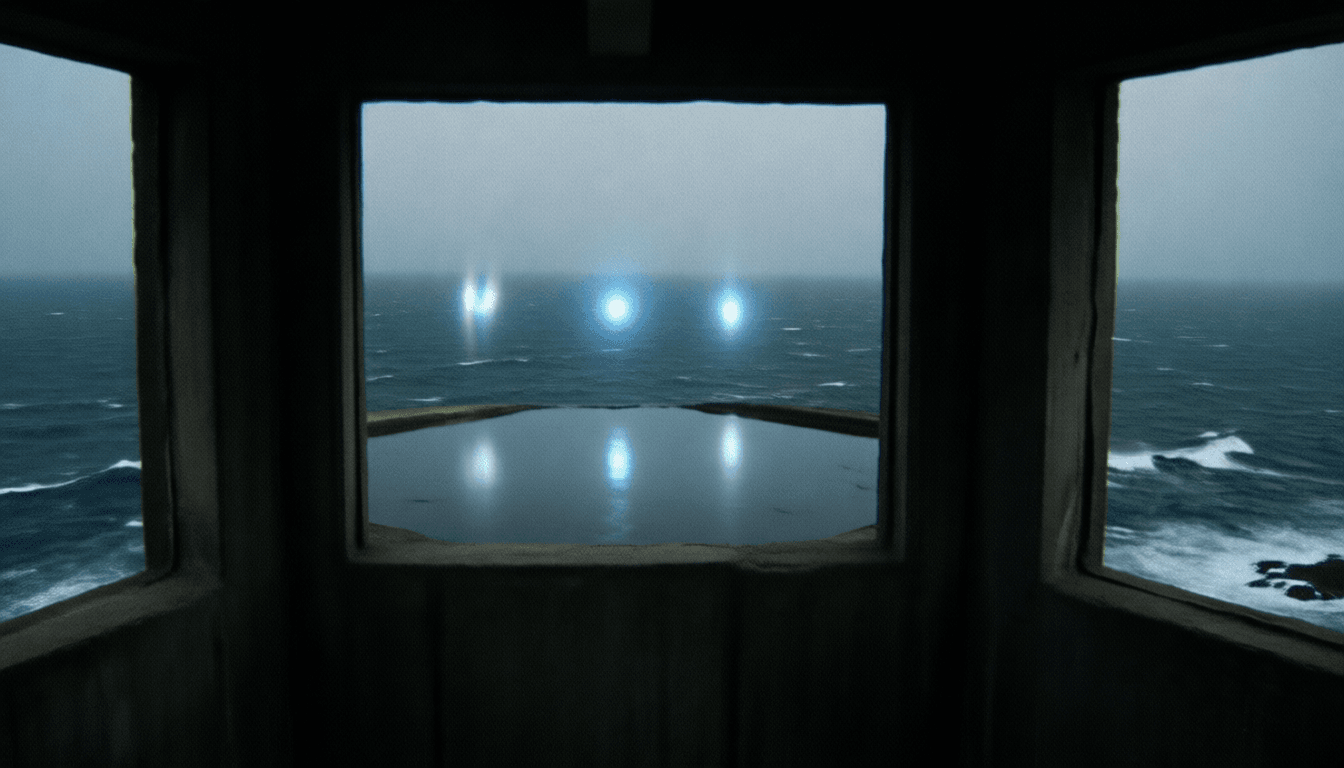
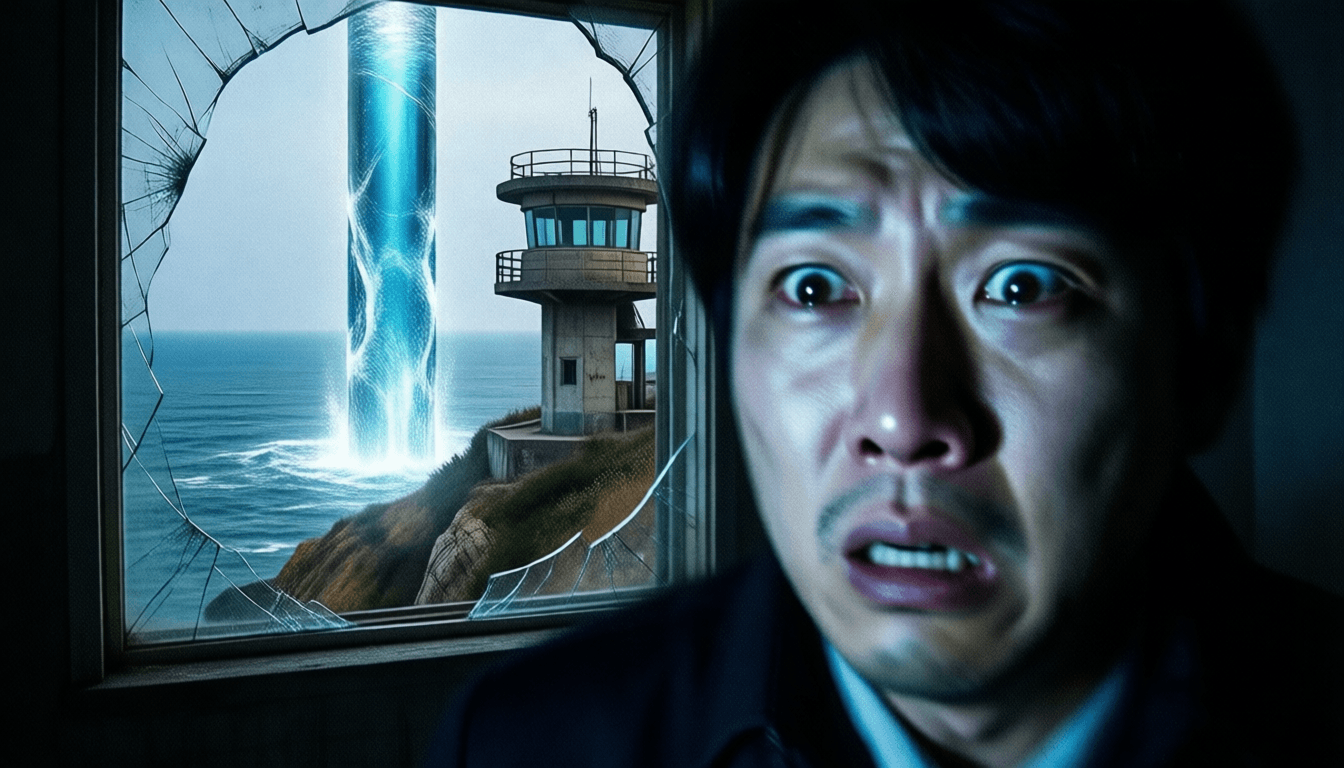
The largest light was now less than a hundred meters from the shore, hovering just above the abnormally still surface. The silence was absolute, an oppressive pressure on the ears. The low-frequency hum returned, louder now, felt deep in my bones, vibrating my teeth. My night vision goggles flickered, distorting momentarily into a nauseous green. As I fumbled to adjust them, the light began to slowly descend into the water. But it wasn't disappearing. Instead, the surface of the water around the light defied gravity, rising perfectly, like glass, reaching upwards like grasping tendrils. It wasn't spray or waves; it was a cohesive, impossible column of seawater, reflecting the blue-white light within.
I instinctively recoiled, but the ground beneath my feet, the very rock of the observation post, began to vibrate violently. Small pebbles bounced unnervingly weightlessly. The air, which moments ago had been heavy, now felt incredibly thin, stealing my breath. The several-meter-tall column of water extended a shimmering, translucent 'arm', directed squarely at the cliff where I stood. It moved silently, with deliberate speed. I turned to flee, but the entrance to the observation post was blocked by a sudden localized tremor. Debris rained down, trapping me momentarily. As I struggled, the water's arm reached me. There was no impact, no splash. Instead, it was an all-encompassing 'pull'. What I felt as the water touched me was not the sensation of getting wet or being struck, but a profound, cold emptiness spreading through my arm and chest. It was as if something vital was being siphoned away. A momentary erasure of self, a complete loss of bodily control. My vision blurred, flashing with the same sickly blue-white light. There was a metallic taste of ozone. My heart seemed to stop. The pressure was immense, not physical, but existential. I gasped and collapsed. The water arm receded with the same impossible grace, the column collapsing back into the sea with barely a ripple. The large light, along with the two smaller ones, submerged and then vanished as abruptly as they had appeared. The roar of the ocean returned, deafening, violent, as if it had only paused to watch.
I lay there for a long time. The salty scent of the sea mingled with an unidentifiable taste on my tongue. My left arm, where the water had touched me, felt profoundly numb, with a deep, bone-chilling cold that lingered for hours. My thermal camera was broken, but my high-sensitivity recorder, despite capturing mostly static during the event, yielded one anomalous clip. Just before the hum intensified and the water reached me, a faint, rhythmic pulse was captured beneath the static. It sounded like a deep, slow heartbeat. It was not a sound of nature.
Even back in civilization, the cold in my arm remained, a phantom limb of ice. Sometimes, my reflection in a window seemed to flicker with a faint internal luminescence at the edge of my vision. It could have been an optical illusion, but it stopped me every time. The metallic ozone scent, described by the investigator years ago, now subtly clung to my clothes even after washing. I never saw the lights again, but I could feel their presence. I began to notice subtle barometric changes, premature drops in temperature, and faint internal vibrations that heralded their distant presence. They are still out there. Not a phenomenon to be observed, but rather, observing. And the brief, chilling emptiness I felt, that momentary depletion, left me with a quiet, profound understanding. The lights of the East Sea were not merely lights. They were a 'hungry' void. A precise, indifferent presence moving within our world, siphoning off something unseen. And now, it knows where I am. No further disappearances at the tip of Dragon's Teeth have appeared in coastal records since my visit, but that deep hum remains, a faint reverberation in the quiet hours.

[ CLASSIFIED VERDICT ]
[ACCESS LOG - SOURCE FILE]
For the past 40 years, reports of unidentified luminous objects and disappearances have persisted along the rugged coastline of the East Sea, particularly in an area known as 'Dragon's Teeth'. Fishermen refer to these as 'ghost lights' or 'pulling lights,' circulating maritime legends about the eerie silence that precedes their appearance and the inexplicable sensations they induce.