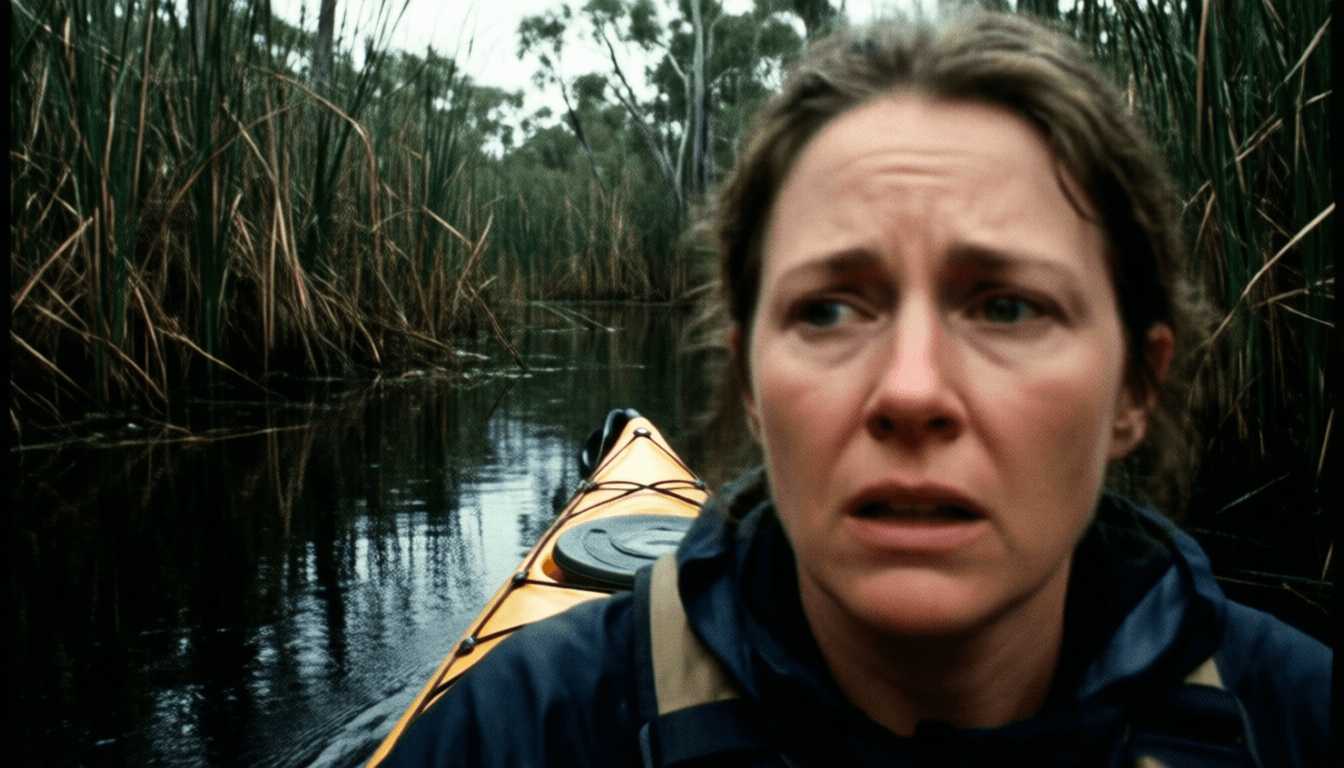
Hum of the Abyss
Over the past 18 months, three people vanished without a trace from an isolated section of the Nalingu Wetlands, adjacent to Coorong National Park in South Australia. No bodies, no signs of struggle. Authorities concluded two cases were accidental drownings and one was crocodile-related, despite the area being far from crocodile habitats.
Then, six weeks ago, a fourth person disappeared. The victim was Liam Vance, an amateur wildlife photographer. Obsessively dedicated to photographing rare birds, he was last seen in a peculiarly stagnant section of the wetlands known as 'Deadwater.' His overturned kayak was found, and a waterproof camera recovered by a local fisherman was the only clue.
Most of the files on the camera were corrupted, but a short video clip, once overwritten, was partially recovered. The screen showed only murky water and reeds, but the audio was chillingly clear. A deep, resonant, low hum, unlike anything produced by insects or electrical devices. This was followed by the sound of water being violently churned, then a brief, forced expulsion of air, before cutting out abruptly. Local Aboriginal elders who heard the recording made no comment, merely pointing to Deadwater and muttering 'Bunyip.' Coupled with records of strange cries and cattle disappearances reported in the region since the 1800s, independent cryptozoologist Dr. Evelyn Reed became convinced that traditional tales weren't mere warnings but accurate descriptions of something real.
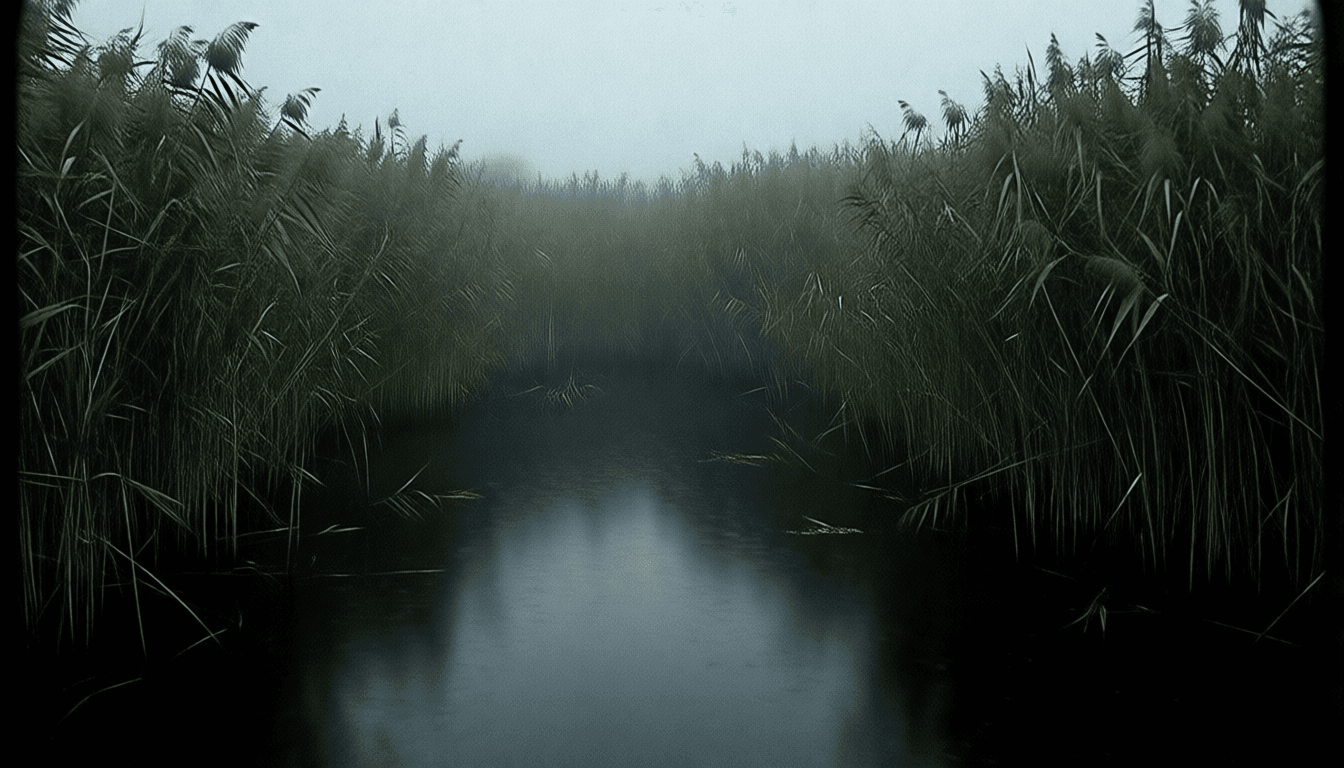
Equipped with specialized acoustic gear, sonar, and a reinforced kayak, Dr. Reed ventured into Deadwater. The humid air hung heavy, thick with the scent of decaying vegetation. An oppressive silence seemed to swallow all sound, even the birdsong, leaving only the faint hum of insects and the dip of her paddle.
The water was unnaturally dark, reflecting the dense branches like a bruised mirror. Reeds formed suffocatingly tight tunnels, and the current was slow and unpredictable. There were subtle pulls in the water, contrary to visible flow. Amidst the stifling heat, Dr. Reed felt a strange sensation of being 'watched' from somewhere within the reeds. Her sonar initially detected no unusually large objects, but abnormally sharp temperature shifts appeared at various depths—too precise to be explained by natural thermoclines.
Soon, faint, intermittent sounds began to register on her directional microphone. Unlike the deep hum from Vance's camera, this was a low-frequency vibration that resonated through the kayak's hull, making her teeth ache. It was too diffused to pinpoint its exact location. Even the sound of her paddle strokes was unnaturally delayed or, at times, didn't echo at all.
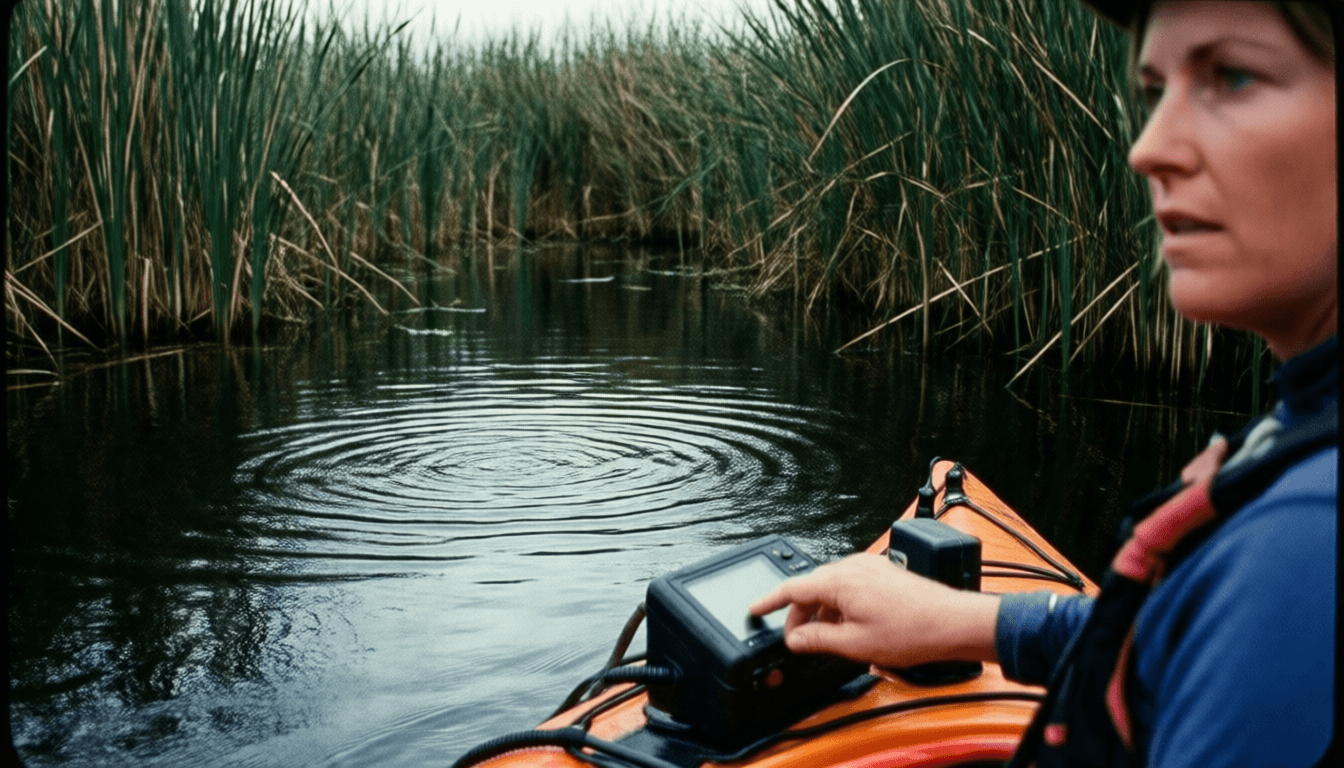
In the middle of a calm pool, small ripples spread out irregularly. Not concentric circles, but waves as if something vast deep beneath the water was 'breathing.' As she approached, the water seemed to subtly part, then closed again without a trace after she passed. Her sonar showed 'blips' of solid mass appearing intermittently, vanishing in the blink of an eye. Dr. Reed began to experience extreme disorientation. The oppressive heat seemed localized only around her. A primal urge to turn back consumed her, but she dismissed it as fatigue and the unsettling atmosphere. The eerie feeling of being watched by unseen eyes, tracking every move, grew more intense. Mud prints found along the banks were unlike typical animal tracks—they resembled large, indistinct suction marks, some partially submerged. In the air, the putrid smell of decaying organic matter began to mix with a faint metallic odor.
Dr. Reed followed a particularly strong sonar signal—a massive object moving slowly beneath a dense clump of reeds—into a narrow channel. Suddenly, the reeds closed in behind her, forming a natural cage. The water around her kayak became unnaturally still, then she felt a subtle but distinct 'pull' downwards, a suction.
The deep 'hum' from Vance's recording erupted directly beneath her. It wasn't just a sound; it was a physical force, vibrating her chest and blurring her vision. The channel's water erupted violently. Not splashing, but churning like a living maelstrom, pulling the kayak down with irresistible force.
The kayak overturned. She was thrown into the icy, churning water. The current was impossible; defying all logic, it pulled her down, deeper. She felt something vast, gelatinous yet powerfully muscular, brush against her leg. A sudden, immense pressure crushed her below the waist, pulling her further into the depths. The surrounding water became impossibly cold, then impossibly hot. She was seized by an immobile, 'held' feeling in the cold, deep abyss. It wasn't just being pulled; a chilling flash of insight suggested something was 'exploring' her. Her lungs burned, but she thrashed desperately. She kicked hard at something soft yet firm. The grip suddenly released, as if no longer interested. She shot to the surface, gasping for air, disoriented, a burning pain in her left thigh. Before her lay only violently swirling water and impenetrable reeds. The deep hum faded, leaving only an echo of silence in her ears.
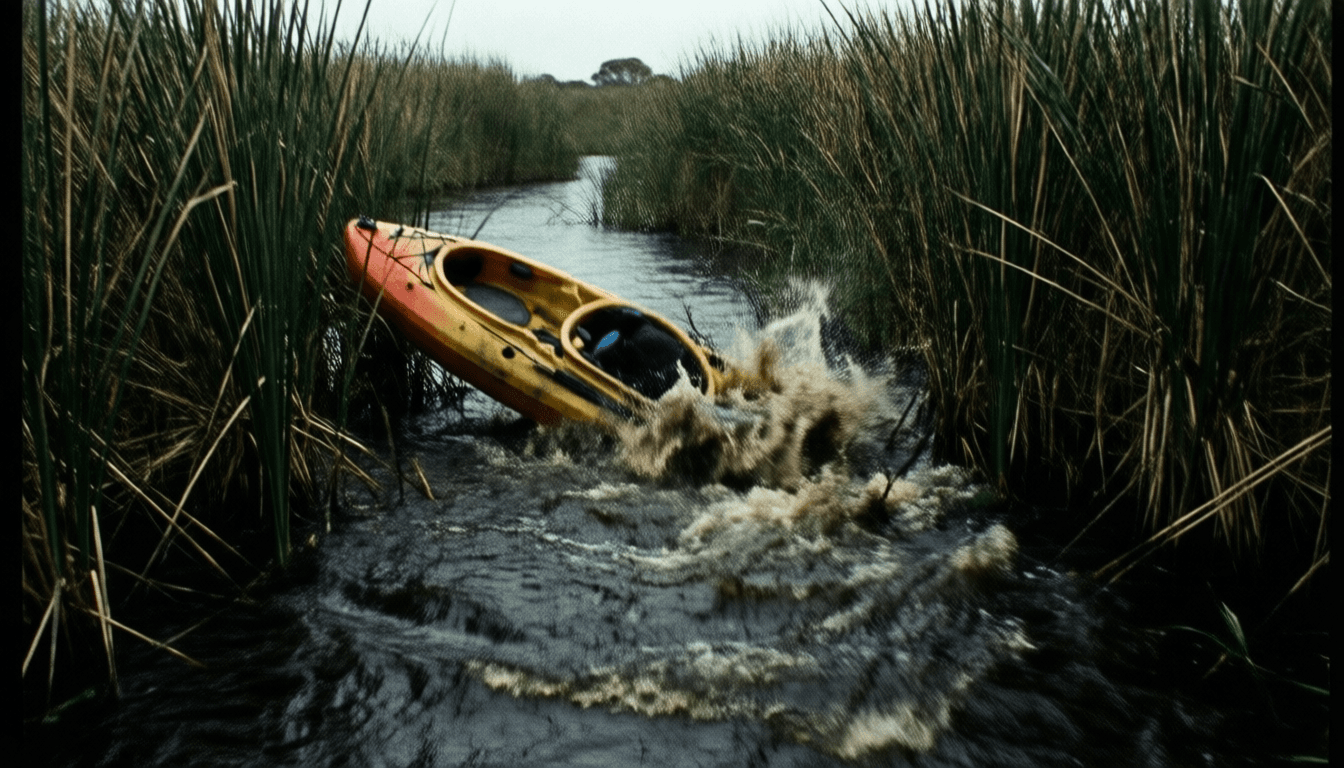
Battered, trembling, and disoriented, Dr. Reed was driven by pure, primal fear to right her kayak and navigate the maze of reeds. She had no memory of the return journey. Finally, breaking free from Deadwater into the familiar open wetlands, the oppressive silence was gone. She had no external injuries beyond deep bruises and a severe laceration on her thigh (presumed to be from large, blunt teeth or bone fragments), but despite the high ambient temperature, she suffered from severe hypothermia.
Back at her camp, Dr. Reed discovered that the specialized voice recorder attached to her kayak was still active. The last few minutes of the recording weren't the terrible hum. After a faint gurgling sound, a low, resonant, eerie 'chuckle' emerged from beneath the water, then the recording abruptly cut out with her scream. Even more chilling was what she found inside her wet, waterproof bag: a single, palm-sized, glossy dark grey scale, faintly iridescent. It was massive, larger than any fish or reptile known in the region, and initial microscopic examination revealed an internal structure unlike anything recorded.
Dr. Reed never publicly reported her findings. She kept all the data, including the scale, without attributing it. It wasn't disbelief she feared; it was the truth she now 'knew.' Legends weren't myths to be studied; they were primal truths hidden beneath the water. In her cryptozoology lectures, she subtly began to add a chilling thought at the end: 'Sometimes, the true unknown isn't merely an undiscovered species, but a fundamental violation of biology and physics as we understand it. Sometimes, the oldest stories aren't warnings from the past, but warnings about something still living in the past.' She stared at the scar on her thigh, remembering the impossible cold, the impossible heat, and the impossible pressure. Deadwater still breathed. And the 'hum' was now a ghostly echo in her mind.
[ CLASSIFIED VERDICT ]
[ACCESS LOG - SOURCE FILE]
This story is based on the Australian Aboriginal myth of the 'Bunyip.' The Bunyip is a large, mysterious creature said to inhabit Australia's swamps, rivers, and waterholes. It is associated with the disappearance of people and livestock, and eerie cries from underwater, its existence remaining a long-standing mystery.