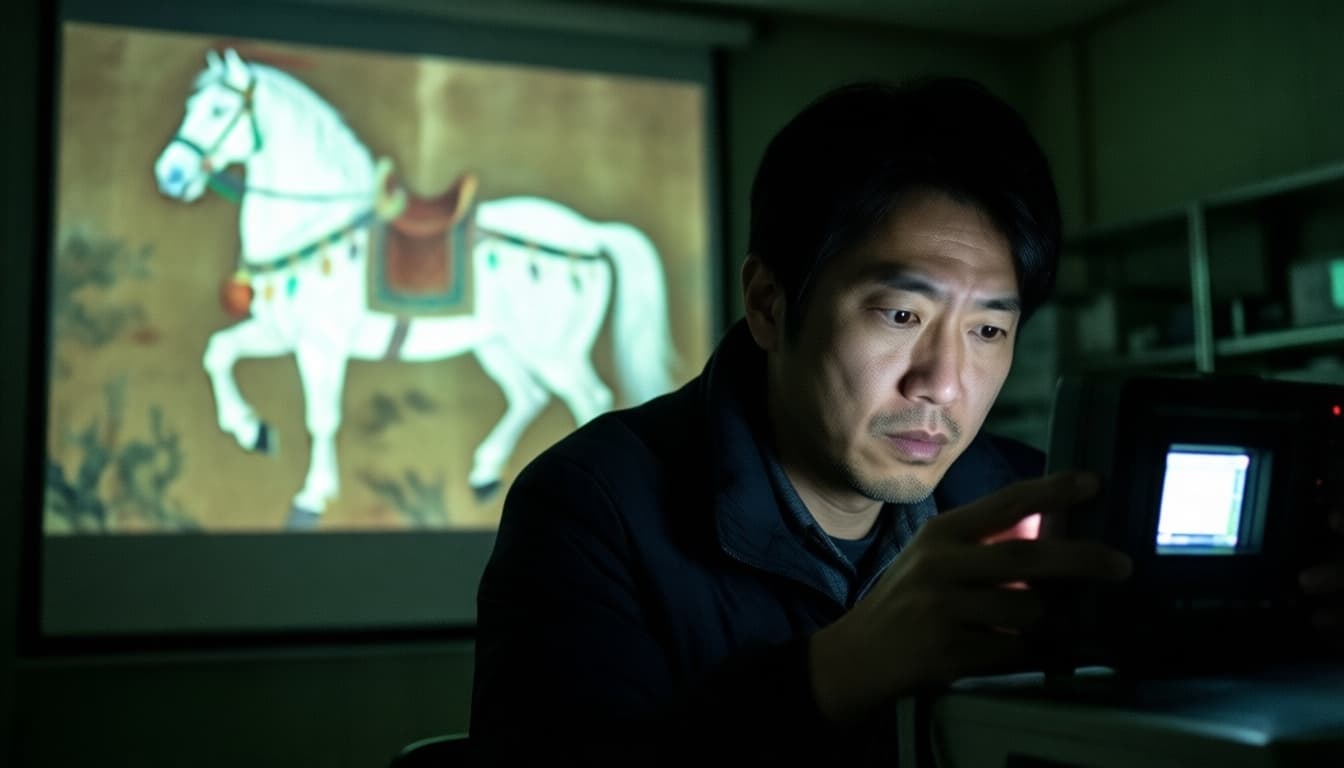
The Hum of Cheonmado
As an archivist documenting inexplicable phenomena, I often had to unearth rare and unsettling seeds of truth amidst the remnants of local rumors and internet urban legends. For the past five years, there have been peculiar digital artifacts and equipment malfunctions plaguing conservators and digital archivists handling high-resolution replicas of the Cheonmado from Cheonmachong. These incidents, reported across various institutions—from major museums exhibiting life-sized replicas to university labs studying ultra-high-definition digital scans—were initially dismissed as minor.
Environmental sensors occasionally registered faint, low-frequency electromagnetic spikes emanating from the image itself, connected to the painting's essence rather than the frame or screen. Sometimes, these were accompanied by extremely subtle drops in temperature. High-resolution optical scanners also reported almost imperceptible 'ghosting' effects or color shifts, unexplainable by material degradation or digital encoding errors. These phenomena were always dismissed as 'sensor errors,' 'software bugs,' or 'environmental interference.' Yet, the pattern persisted, and a silent rumor circulated among younger, digitally savvy staff: 'The Cheonmado sometimes... hums.' It was too consistent and specific to be mere coincidence, hinting at a subtle, impossible phenomenon tied to the painting itself. My team was specifically assembled to investigate such occurrences.
I secured night access to a university's digital archaeology lab. It was a sterile, climate-controlled chamber designed for precise study of ancient artifacts through high-resolution projection. My focus was the pristine image of the Cheonmado from Cheonmachong, projected wall-to-wall. The room was cold and stark, dominated by the quiet hum of server racks and air filters. The projected image emanated an almost spiritual light, the dynamic brushstrokes of the galloping horse, swirling clouds, and surrounding figures rendered in astonishing detail.
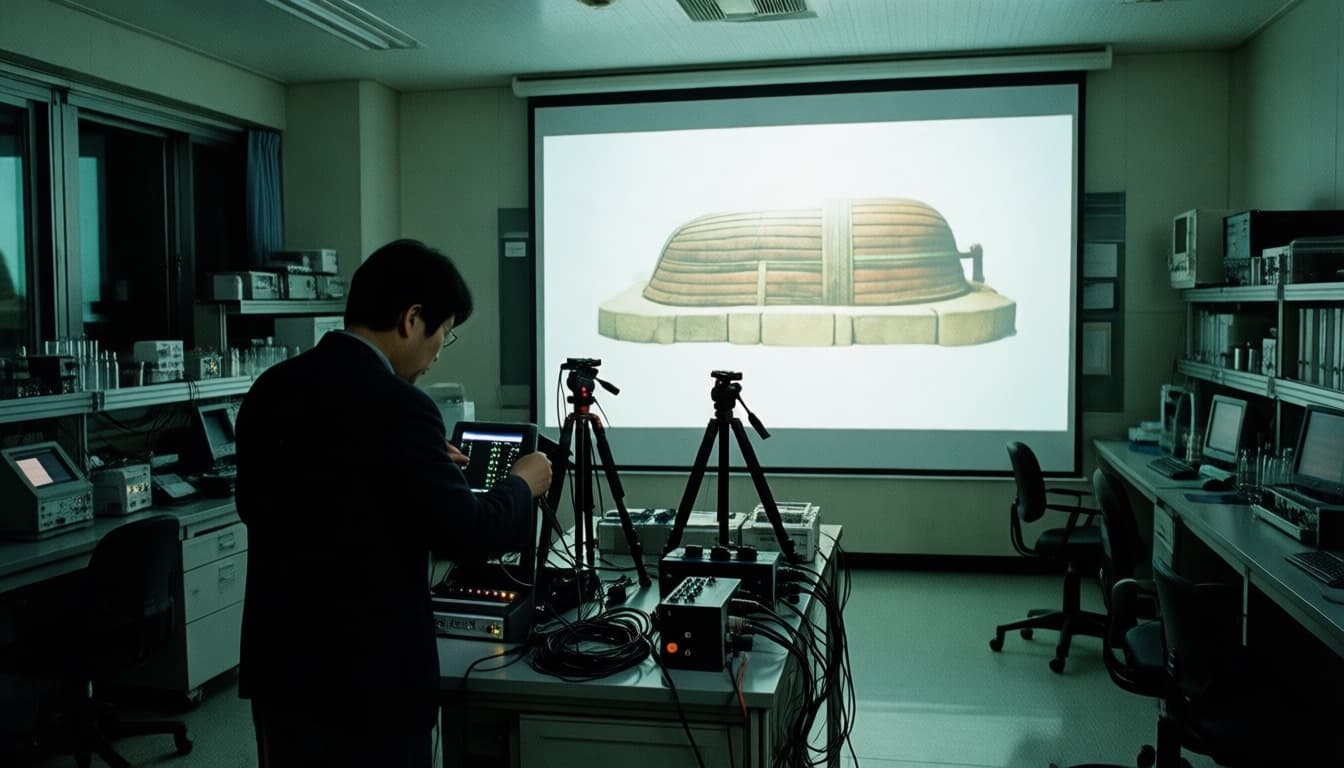
I meticulously set up my own array of exquisitely calibrated sensors: ultrasonic microphones, EMF detectors, thermal cameras, and a precision atmospheric pressure gauge. My goal was to establish an unshakeable baseline, then monitor for the rumored anomalies, either to refute the urban legend or, more disturbingly, to confirm it. The silence in the lab was profound, broken only by the faint whir of my equipment and the almost imperceptible drone of the building's infrastructure.
The first few hours passed uneventfully, reinforcing my professional skepticism. Then came the first anomaly. A subtle but distinct fluctuation on the low-frequency EMF detector. It was below the threshold of human hearing, yet undeniably present and localized to the projected image. Not spikes, but rhythmic, almost organic undulations, like slow, deep breaths. Simultaneously, the thermal camera showed a localized surface temperature drop of less than 0.5 degrees, not from the screen itself, but from the head of the horse within the projected image.
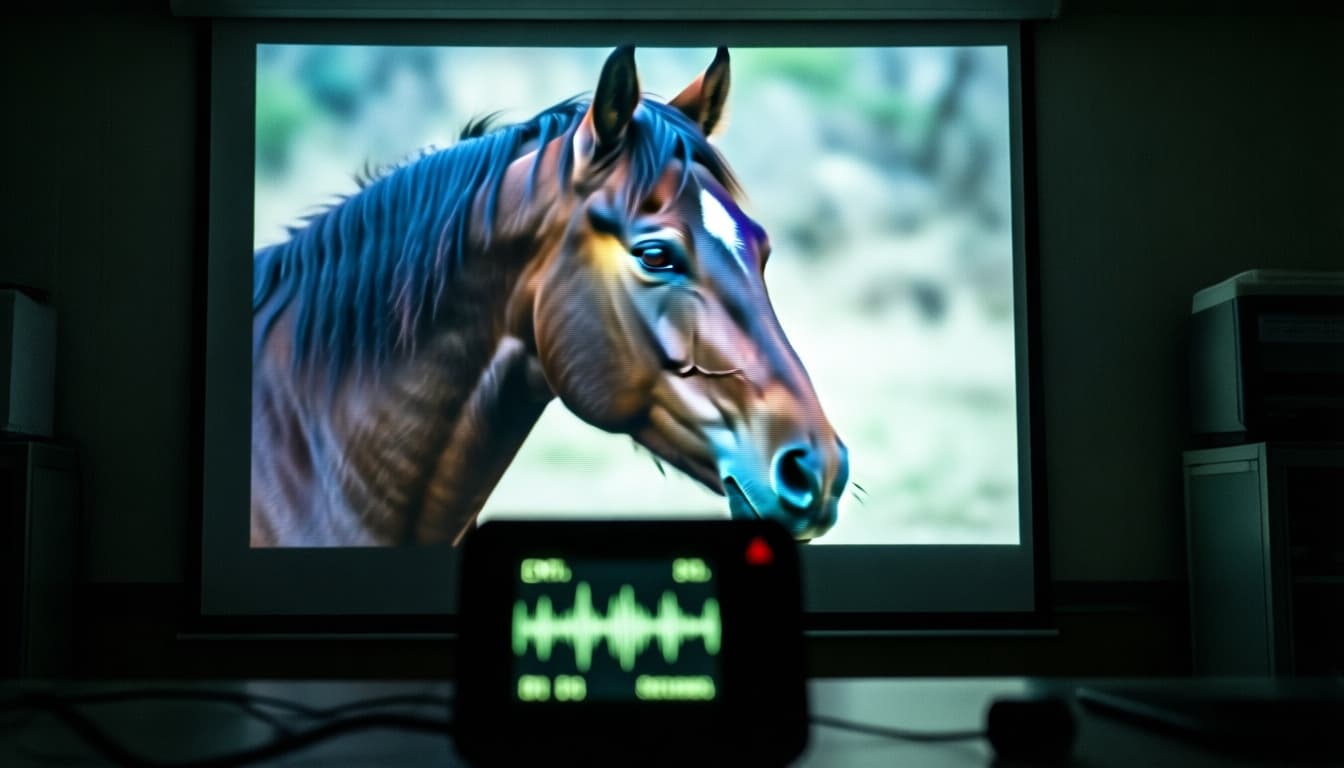
The building's HVAC hum, initially a constant, reassuring presence, subtly receded, leaving an unnatural stillness as if absorbed or suppressed. My heart began to pound violently in my ears. I double-checked my equipment, recalibrating, searching for any trace of interference. Nothing. The colors of the projected image itself seemed to subtly deepen, the horse's black outline sharpening, its painted eye taking on an eerie intensity. The swirling cloud patterns behind it seemed to possess a deeper motion, as if caught in an unseen current. A faint, almost imperceptible metallic scent, reminiscent of aged copper or distant rain, began to permeate the lab's sterilized air.
The low-frequency hum intensified, becoming a palpable pressure filling the room, vibrating through the floor into my bones. My atmospheric pressure gauge registered a sudden, inexplicable drop. The lab's main lights flickered erratically, not a short circuit, but as if the power itself was being drawn away or disrupted by an unseen external force. The projected image of the Cheonmado distorted, stretching and contracting across the screen, its proportions momentarily elongating before snapping back, like a canvas rippling in an impossible wind.
The painted mane and tail of the horse blurred, then began to sway, defying the static nature of the projected image. A deep, resonant vibration—not heard, but felt directly in my chest—emanated from the screen, accompanied by an almost imperceptible high-pitched whinny that seemed to originate inside my skull. I stumbled backward, reaching for the emergency power switch, but the lab's heavy electronically locked door remained inert, its lock light flashing an error code. As the pressure became so intense that breathing became difficult, a translucent tendril, a shimmering mix of light and shadow, emerged from the center of the projected horse's chest. It wasn't physically defined, yet it displaced the surrounding air, creating a visual distortion. This spectral appendage stretched impossibly across the room.
It reached my outstretched hand. It felt like a shock of raw energy piercing skin and bone, yet simultaneously an intense, burning cold. For a fleeting moment, I saw not the painted horse, but an ancient, burning intelligence, an infinite, predatory presence staring back at me from the depths of the painting.
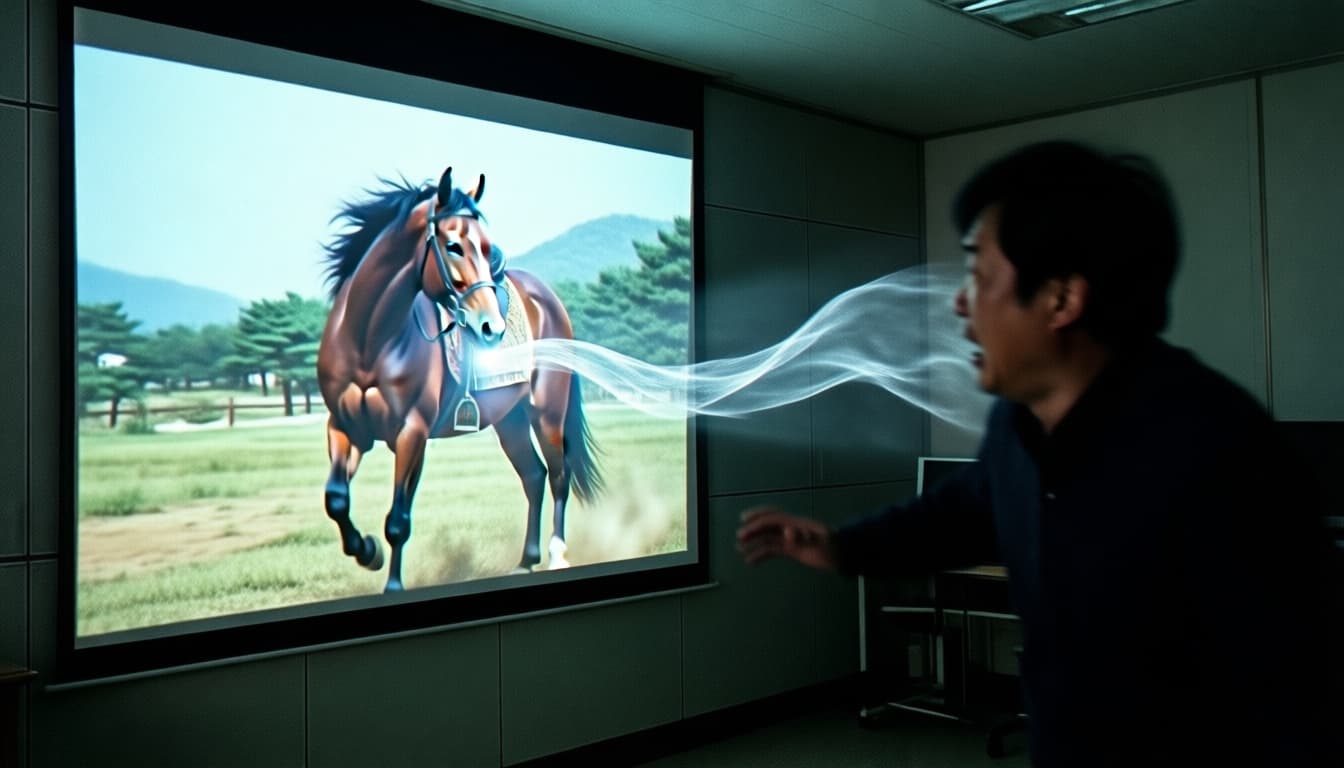
I don't remember how the door opened, or how I escaped. One moment, the cold tendril receded and the pressure in the room normalized; the next, I was stumbling into the empty hallway, gasping for breath. My specialized equipment, left behind, was irrevocably damaged. Data logs showed a brief, impossible energy spike that, if physical, would have been an explosion, followed by a total system shutdown across multiple independent devices. The high-resolution projector itself was unharmed, and the Cheonmado image was static and perfect again... yet subtly changed. A faint, almost imperceptible afterglow remained around the painted outline of the horse, visible only from certain angles, like heat rising from an unseen surface.
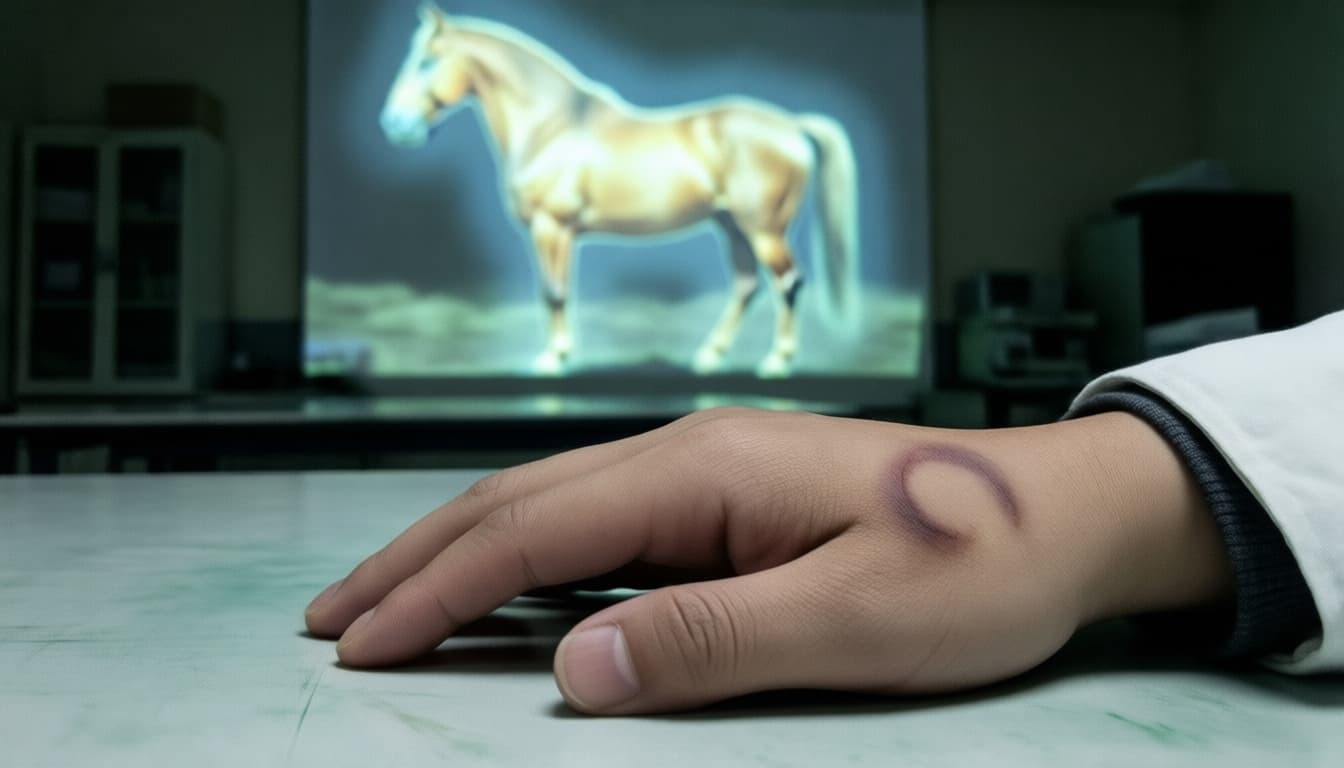
Days later, a faint horseshoe-shaped bruise appeared on the back of my hand where the spectral tendril had touched. It was cold to the touch and resisted healing. I submitted my report, carefully omitting the more fantastical details, attributing equipment failure to an unidentified surge current and my distress to atmospheric pressure changes. It was dismissed and filed. But I understood. The 'hum' wasn't an error. It was a resonance. The horse was not merely a painting of a psychopomp, a spirit guide for the dead. It was a conduit. An image of an ancient entity that, when reproduced with sufficient fidelity, could react and interact with the living world. The truth wasn't that something had emerged from the painting, but that something had 'noticed' me. A fleeting trespass into that ancient, painted consciousness. And it now knew I was outside its eternal stable.
[ CLASSIFIED VERDICT ]
[ACCESS LOG - SOURCE FILE]
The Cheonmado (Heavenly Horse Painting) from Cheonmachong is a horse painting discovered in a Silla dynasty tomb, believed to be a 'psychopomp' or spirit guide that escorts the souls of the deceased to the heavens. This story is based on an urban legend that when the Cheonmado's mystical power is recreated through modern digital technology, the entity within the painting can react with reality and perceive living beings.