The Ozark Howler: A Sound that Rips the Heart
As an archivist of anomalous phenomena, I've learned that the most chilling truths often emerge not from sensational headlines, but from the periphery: shared whispers, localized anxieties, and persistent anomalies that defy simple explanation. My focus is on evidence, observation, and the meticulous recording of inconsistencies.
This particular investigation began with a convergence of disparate, yet undeniably consistent, data points from the American Midwest. The catalyst was a series of audio files that began circulating on amateur wildlife forums and online survivalist communities from late spring, all originating from the Missouri-Arkansas Ozark region. Sources varied—a motion-activated trail camera near Eminence, Missouri; a backpacker’s phone left recording overnight by a remote creek; a Shannon County farmer’s security system footage—yet every recording contained an identical, deeply unsettling vocalization. It was a sound that defied classification: a guttural growl that seamlessly transitioned into an elk-like bugle, only to conclude with a dog-like howl, its timbre unnaturally, almost synthetically distorted. Local wildlife experts, when pressed by reporters, dismissed it as a hoax or misidentified animal sounds, yet no one could offer a definitive identification, and the acoustic signature remained stubbornly consistent across all samples. Adding to this, rural community bulletin board threads, titled “What’s that sound near Cedar Creek?”, garnered over 200 comments in weeks, detailing inexplicable livestock disappearances, prolonged and abnormal forest silences, and domestic pets vanishing without a trace, almost invariably occurring on nights when the impossible sound was reported. My investigation into the “Ozark Howler” legend began not with folklore, but with these undeniable, unidentifiable recordings and the quiet dread they cast over these isolated communities.
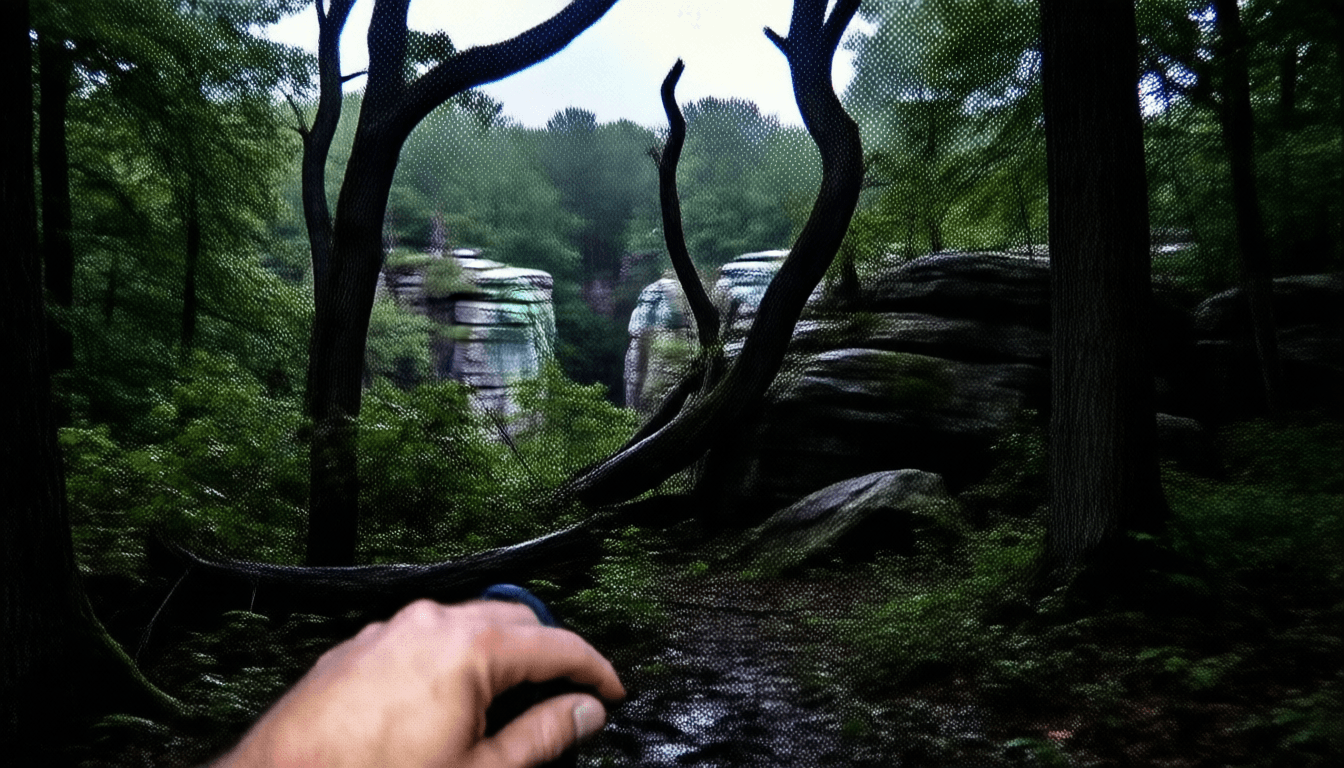
Based on the density of geolocated audio files and the most credible reports, I focused my initial exploration on a particularly remote hollow deep within the Mark Twain National Forest, west of Eminence. This area was a labyrinth of ancient limestone bluffs, sinkholes, and a perpetually shaded, winding waterway known by locals as Devil’s Run. The name derived from its unsettlingly slow current and the dense, almost claustrophobic canopy of forest that completely obscured the sky above.
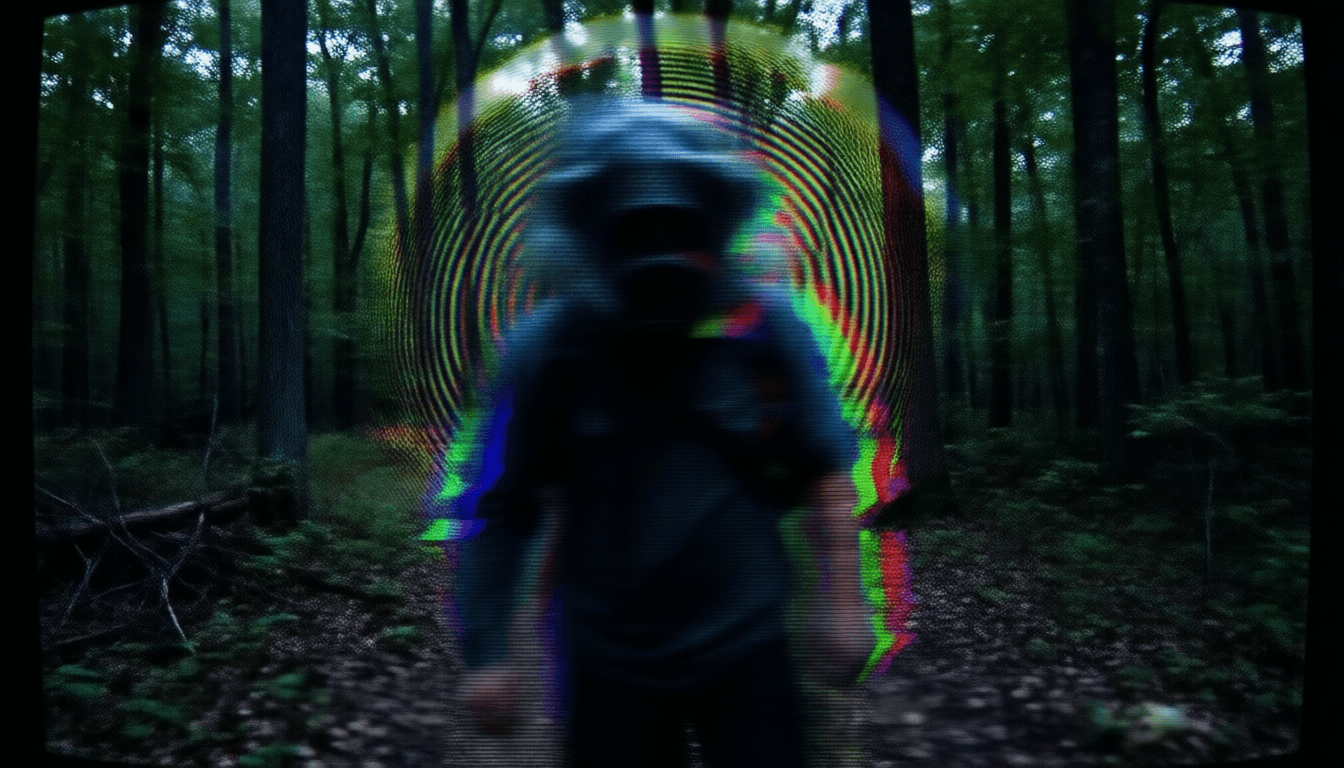
Equipped with high-sensitivity recorders, directional parabolic microphones, thermal imaging optics, and an aerial reconnaissance drone, I navigated the overgrown deer trails alone. The air was thick with the smell of damp earth and decaying leaves, and an abnormal silence hung heavy. There was no typical forest chorus—no birdsong, no cicadas, only the faint rustle of my gear and the regular crunch of deadfall beneath my boots. The only constant sound was the low, persistent murmur of Devil’s Run, which seemed to suck all other noise into itself.
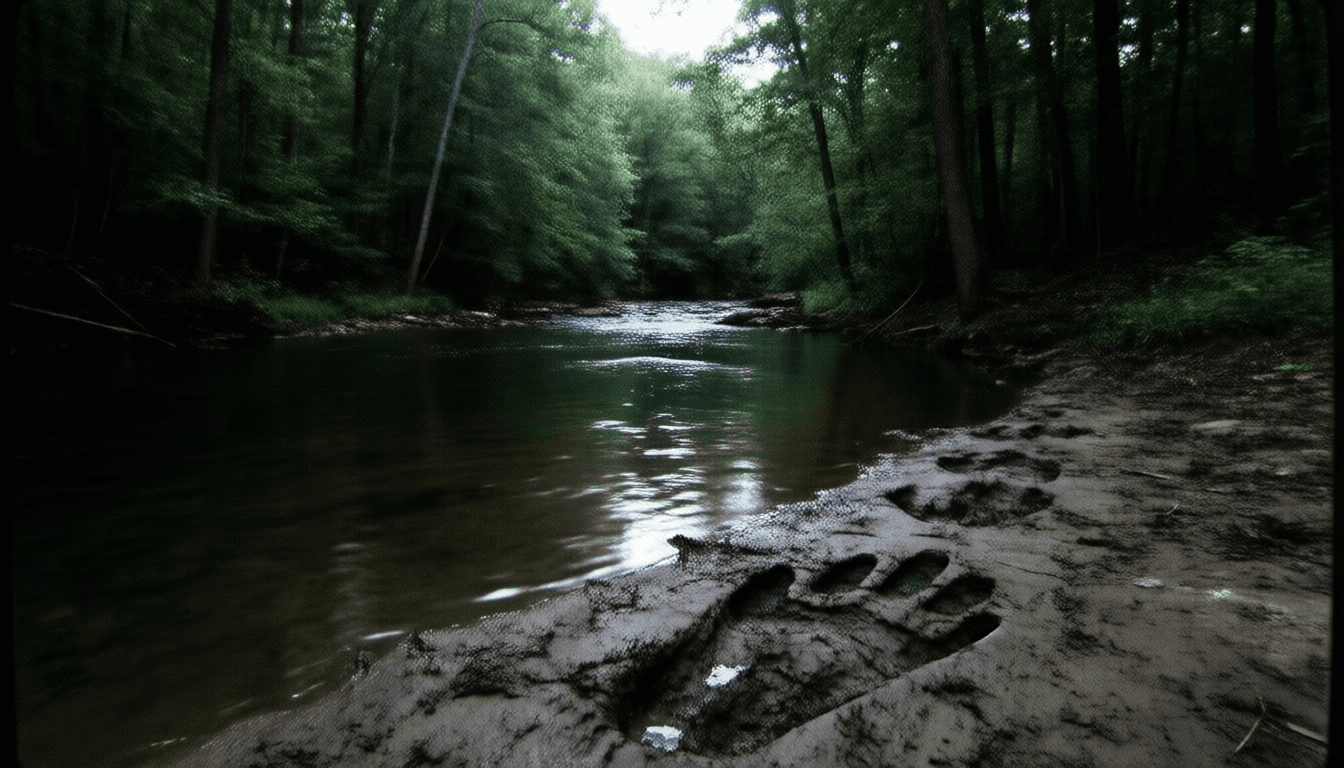
Reaching the creek, the water was unnervingly still, its flow so sluggish despite recent rains that its surface was a dark, unreflective mirror beneath the dense forest canopy. Along the bank, in patches of soft earth, I found faint, abnormally large impressions. Too vague to be footprints, too ambiguous to be hoofprints, yet they suggested something massive and deliberate had passed, though impossible to photograph. An unpleasant odor, wet-dog-like, simultaneously acrid and metallic, occasionally wafted through the still air, growing stronger in certain localized pockets.
Deeper into the hollow, the environment began to subtly shift, the physical properties of the place unsettlingly apparent. The low murmur of Devil’s Run seemed off, as if it was lagging, creating a faint, impossible echo that didn’t quite align with the water’s flow. My own footsteps resonated unnaturally long. When I spoke into my field recorder, my voice sounded oddly muffled and dead, as if the air itself had grown denser and more absorbent.
Amongst ancient, gnarled oak trees, a sudden, localized drop in temperature hit. The air grew so cold that my breath briefly plumed, despite the region’s usual humidity. My thermal camera registered no corresponding anomaly; the chill felt profound and unnatural. The light filtering through the dense forest seemed to grow dimmer, and shadows deepened into amorphous, wavering forms that seemed to shift at the very edges of my peripheral vision. My gaze would snap to a point, only to find still nothing.
An increasingly powerful, undeniable sense of being watched descended. A feeling that something immense and unseen moved with incredible stealth through the dense undergrowth, always just beyond the range of direct sight or conscious hearing. The damp, acrid odor returned, this time much stronger, almost suffocating. Another unidentifiable smell mingled with it, triggering an instinctive unease. My high-sensitivity recorder, constantly running, began to register sporadic, ultra-low frequency pulses. A deep, irregular heartbeat-like rhythm, just below the human auditory threshold, too consistent to be natural seismic activity.
Rounding a bend in the creek, a massive sinkhole opened up, shrouded in deep shadow. As I reached its edge, the unsettling silence shattered. The “howl” erupted. It wasn’t distant; it was everywhere at once, striking me with a physical force like a blow. My eardrums throbbed with painful pressure, my teeth chattered uncontrollably, and the air itself seemed to compress around me, stifling my breath. The ground vibrated violently beneath my feet, resonating with the impossible sound.
The howl shifted pitch and point of origin with impossible, instantaneous speed, creating a nauseatingly disorienting cacophony. It was as if sound waves weren't merely passing through the air, but actively tearing at the fabric of reality around me. I stumbled backward, dropping my backpack and expensive equipment. The drone I’d deployed minutes earlier suddenly lost signal, its demise signaled by a distant, sharp metallic crack.
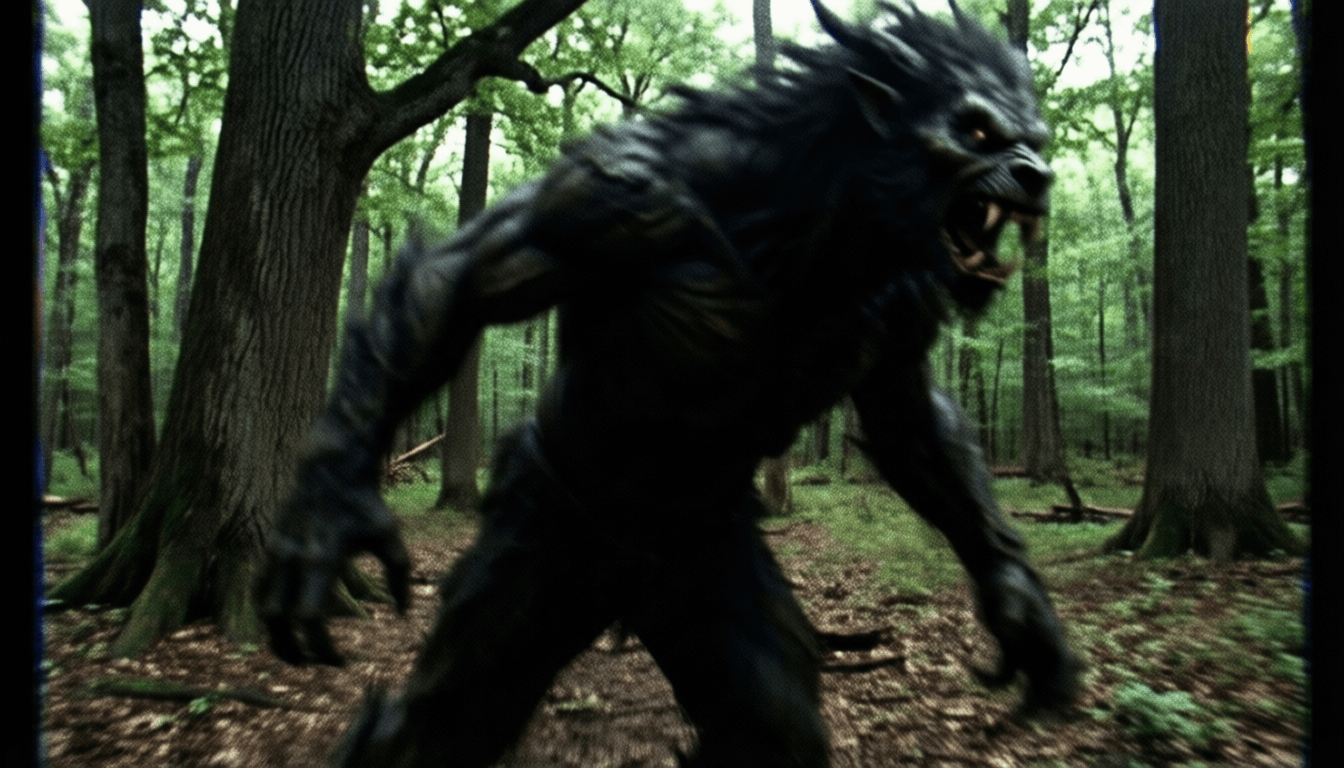
At the edge of my vision, I caught glimpses of a massive, black-furred, powerfully muscled, blurred shape. It moved with a speed that defied its apparent bulk, flashing through dense gaps between trees like a predatory shadow detached from the deep forest. It didn't charge directly. Instead, it seemed to blink between the trees, an impossibility for any physical creature. One moment, it was fifty feet away; the next, barely ten. Its eyes, glowing with an eerie, primal intensity, stared at me from behind thick oak trunks, its immense bulk partially obscured but undeniably present. It was a calculated display of dominance, toying with its prey.
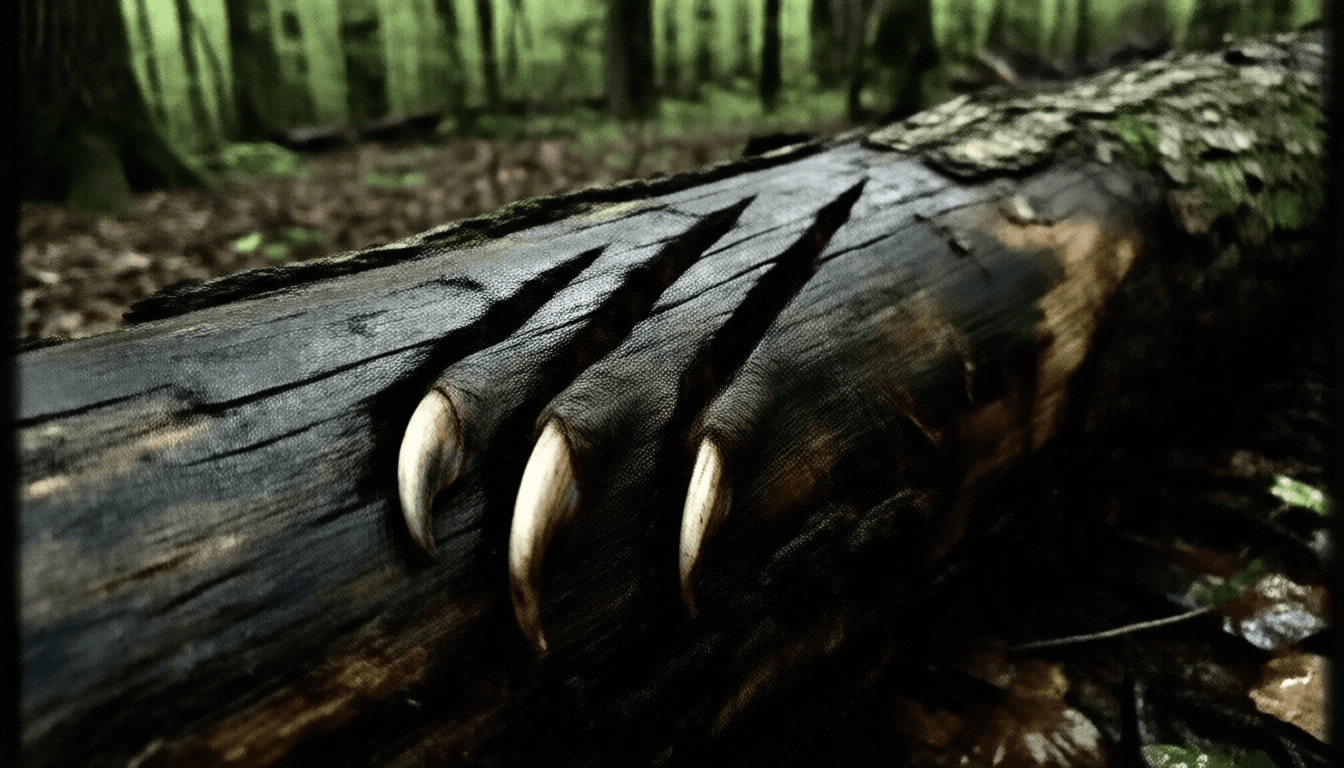
I scrambled backward, adrenaline surging, my hand hitting the rough bark of a fallen log. On its surface were three fresh, deep gashes. Too wide and sharp for a bear, too high and powerful for a wolf. As I struggled to regain my footing, a branch directly overhead snapped with an unnatural, violent crack. Not breaking naturally and falling, but propelled with impossible force from above, missing my head by inches. I instinctively looked up. For a split second, I saw it—a half-seen, half-imagined impossible form disappearing into the impossibly dense canopy, the rustling of leaves sounding less like foliage and more like tearing canvas. The damp, acrid smell was now overwhelming, a hot, sickening stench washing over my face. I was utterly disoriented and terrified, with the absolute certainty that if I didn't move now, it would fully engage me. I fled, not daring to look back, the howl echoing in my ears, every primal instinct screaming for survival.
Few clear memories remain of my escape—only a desperate, adrenaline-fueled scramble, a tangible terror pushing me through the fading light. I returned to my vehicle bruised, scratched, and mentally shattered. Days later, in the sterile environment of my acoustic lab, I began the arduous task of reviewing the recordings. Amidst my panicked breathing and the deafening cacophony of the climax, there was one segment, captured just before my drone crashed. Within the impossible howl of the Howler, I isolated a low-frequency hum, an almost melodic thrum pulsing beneath the acoustic chaos. And then, an undeniable, distinct, clear whisper, buried deep within the soundscape, just below the threshold of conscious human hearing. It repeated a single word, too distorted to fully decipher, yet vaguely resembling a corrupted human name or perhaps a fragment of an ancient, forgotten place name. It seemed to originate from the exact spatial coordinates where the Howler’s most intense vocalization had occurred.
My thermal camera, cracked from the fall, still held its last saved image. Blurred, but at its center, amidst the heat signatures of surrounding trees and rocks, was a distinct, massive cold patch, its overall shape perfectly humanoid yet impossibly tall, silhouetted against the warm forest. The implication was stark and unsettling: not an animal emitting heat, but something actively drawing heat from the environment, or existing at an impossible, unmeasurable temperature. Even back in my controlled environment, a faint, persistent tinnitus remained, particularly noticeable when the air was still. A recurring smell of ozone mixed with damp earth now permeated my home, regardless of ventilation. And on the trunk of my car, where I had leaned in shock after my escape, were faint, almost imperceptible triple claw marks, just deep enough for a fingernail to catch. They perfectly matched the claw marks I had seen on the fallen log. These were the traces. Not conclusive proof, but evidence of an encounter with something that defied the parameters of known existence. Some things, once touched, leave marks etched deeper than physical wounds, a chilling reminder that the “howl” I heard may have been less a beast’s cry and more the resonance of something far older, far stranger, and now acutely aware of my presence.
[ CLASSIFIED VERDICT ]
[ACCESS LOG - SOURCE FILE]
In the remote forests of the Ozark region in the American Midwest, rumors circulate about a strange, anomalous sound—a mix of an elk's bugle and a dog's howl. This sound is associated with unexplained livestock disappearances and eerie forest silences, instilling fear among local communities about an unknown entity known as the 'Ozark Howler'.