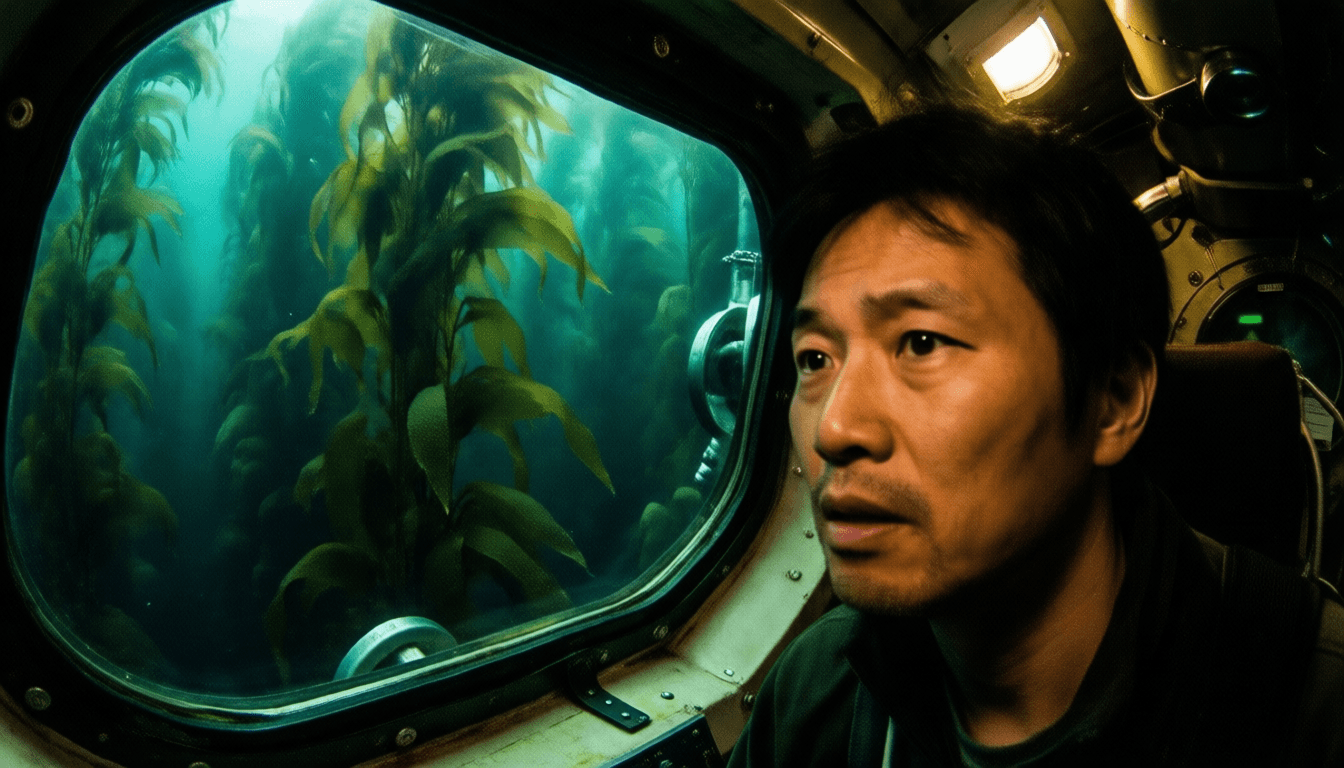
The Green Whisper: Intelligence of the Deep
Reports from Puget Sound aren't solely about marine life or shipping records. Sometimes, strange, inexplicable whispers are intermingled, often dismissed as folklore or nitrogen narcosis. Over the past decade, a quiet but persistent pattern has emerged among the diving and commercial fishing communities active in the deeper, kelp-rich channels north of Whidbey Island.
Online forums, particularly those like 'PNW Divers Anonymous' and 'Sound Watch,' feature posts detailing a phenomenon some have termed 'The Green Whisper.' These posts describe a series of unsettling sensory experiences encountered while diving within unusually dense kelp forests. Testimonies speak of hearing complex, vibrating low-frequency sounds or rhythms, not as distinct voices, but as a 'chorus of bio-electric static' that seems to resonate directly within the skull, bypassing the ears. Divers also report sudden and extreme vertigo, cognitive impairment making it difficult to process basic information, and 'mental submersion' or panicked rapid ascents due to overwhelming sensory input.
Some divers reported intense, localized pressure behind the eyes and in the temples, headaches, and even temporary partial aphasia immediately after incidents—symptoms inconsistent with decompression sickness or known marine toxins. A 2017 Reddit thread (since deleted but preserved in screenshots) saw a user, 'u/DeepGreenDreamer,' describe "seeing thoughts" and "feeling the water itself think" after a deep kelp dive. The last update stated, "The pattern is becoming clearer," followed by account deactivation. More recently, in early 2023, the local news briefly covered the discovery of fisherman Marcus Thorne in a comatose state on his small skiff near Possession Sound. After his boat's GPS and sonar systems mysteriously malfunctioned for hours, he was found muttering about a "deep green song." His medical examination remains inconclusive. Such disparate yet thematically linked incidents have formed the basis of our investigation into what local fishermen sometimes refer to as 'The Breathing Forest.'
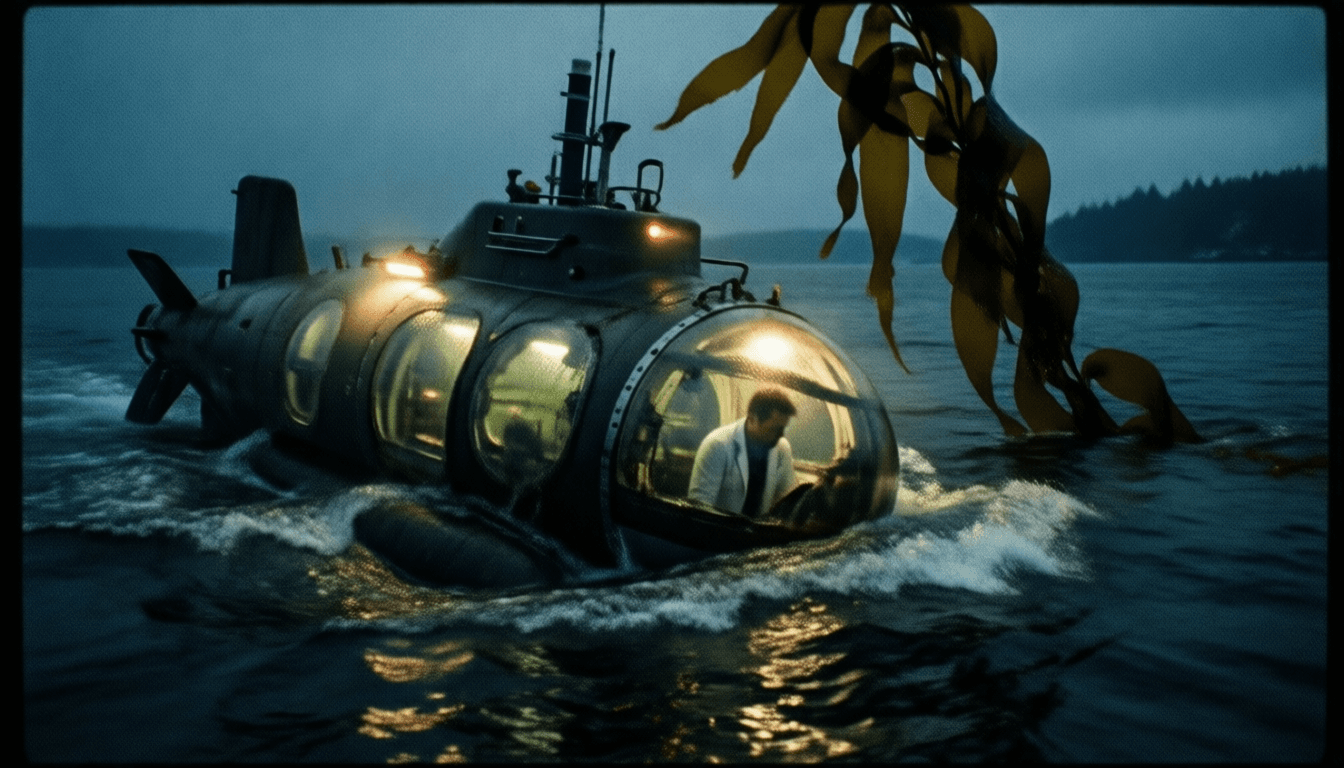
Our team, comprising marine bio-acoustics specialists and neurological experts, was deployed to 'Site Gamma-7,' an unusually extensive and seemingly ancient kelp forest. The primary objective was to deploy advanced bio-feedback sensors and hydrophones to record anomalous biological or electromagnetic signals. We utilized the Nautilus-II, a small remotely operated submersible fitted with a human occupancy pod. The environment revealed on the initial dive was breathtakingly beautiful yet subtly disquieting. Comprised predominantly of Bull Kelp (Nereocystis luetkeana) and Giant Kelp (Macrocystis pyrifera), the kelp formed an almost impenetrable canopy extending to approximately 60 meters below the surface. Light filtering through this dense, swaying forest was an ethereal emerald green, creating a disorienting sense of depth and scale.
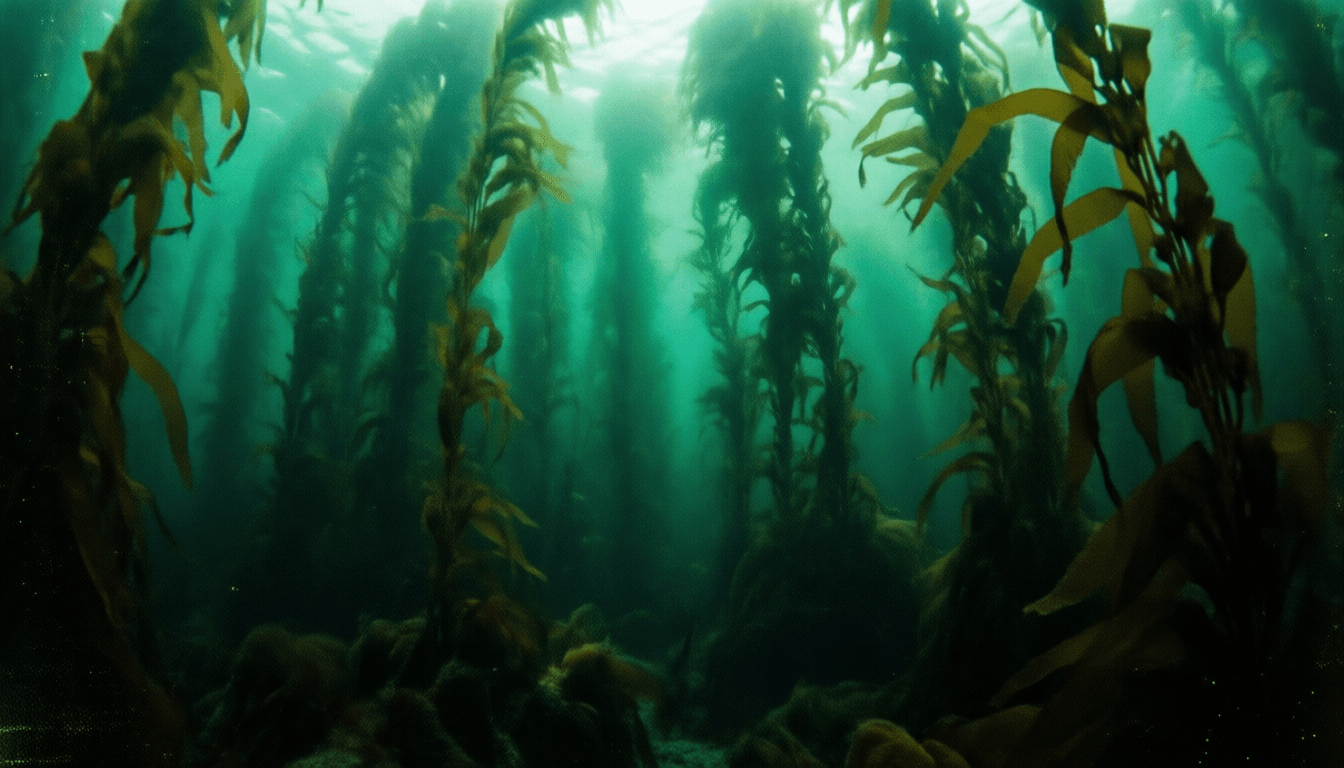
The Nautilus-II's external hydrophones immediately picked up anomalous Ultra-Low Frequency (ULF) signals emanating directly from the kelp biomass. These were not the familiar clicks or groans of crustaceans or fish, nor the rhythmic pulses of known marine mammals. Instead, they were complex, non-repeating wave patterns, too intricate to be considered random ambient noise. Bio-electric sensors also detected subtle but consistent fluctuations in electrical charge within the kelp fronds themselves, generating faint, localized electromagnetic fields. Water temperature within the densest parts of the forest showed subtle, inexplicable discrepancies—pockets of slightly warmer water that shouldn't have existed given the currents. The air inside the purified, recirculated occupancy pod began to feel abnormally heavy, almost viscous.
Deeper within Site Gamma-7, at approximately 45 meters, the ULF signals intensified dramatically. Through the Nautilus-II's advanced sound processing, the complex patterns began to cohere into a form of cadence, a rhythmic hum that seemed to vibrate the submersible's hull itself. It was not overtly hostile but profoundly alien. Inside the human occupancy pod, lead investigator Dr. Aris Thorne began to experience the initial stages of 'The Green Whisper.' A faint, high-pitched ringing started in his ears, overriding the internal environmental control systems. This was soon followed by a dull, persistent ache behind his forehead, as if a subtle pressure differential was forming within his skull.
The kelp itself began to exhibit subtle, unsettling behaviors. While the outlying fronds swayed predictably with residual currents, within the core of Site Gamma-7, some of the thickest stalks and pneumatocysts (gas bladders) remained unnaturally still, as if fixed in absolute tranquility. And, paradoxically, localized sections began to sway against the dominant water movement. Slow, deliberate undulations defied visible currents. It was a ripple effect: localized, non-mechanical movements, almost like muscular contractions.
Dr. Thorne's internal physiological monitors, linked through the submersible's systems, began to register anomalies. Heart rate variability spiked erratically, and galvanic skin response readings indicated heightened stress despite Dr. Thorne's conscious efforts to maintain composure. The pressure inside his head intensified, becoming a pervasive 'presence.' It wasn't sentience in the human sense, but a vast, interconnected consciousness, a profound biological cognition, like a cold, damp hand gripping his brain. Through the panoramic viewport, the intricate network of kelp fronds, illuminated by the Nautilus-II's floodlights, seemed to pulse almost imperceptibly, faintly, in synchronicity with the ULF signals. The data stream from the hydrophones was overwhelming—a deluge of complex waveforms that no known algorithm could parse into coherent information. The sensation was no longer mere pressure; it was a profound, invasive, and escalating mental violation.
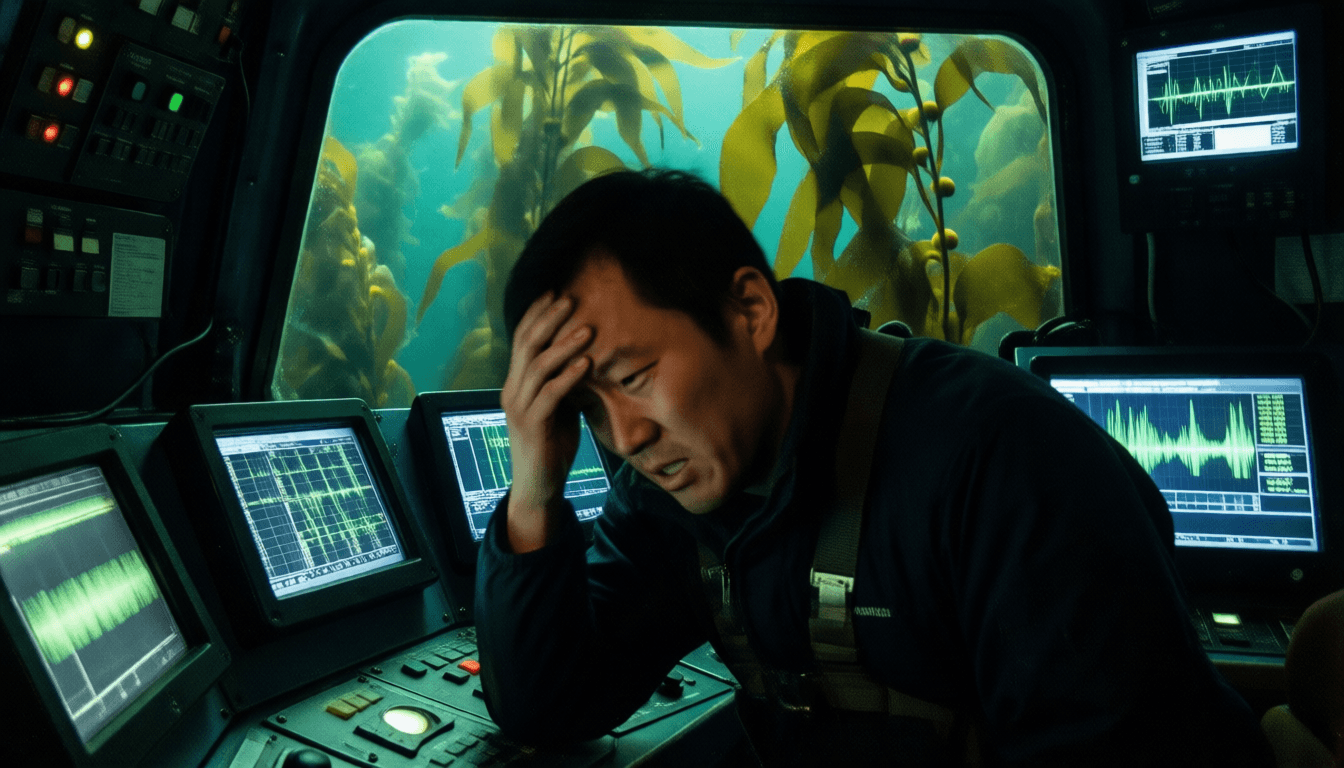
Disregarding automated protocols, Dr. Thorne piloted the Nautilus-II towards the source of the most intense ULF readings. It was a vast cavern within the kelp forest, where abnormally large, ancient-looking stalks formed living arches. As the submersible passed through, the pressure inside Dr. Thorne's head became unbearable. It manifested as dazzling flashes of abstract, primordial information—not images or words, but pure, unadulterated biological data. A sudden, violent torrent of raw sensation flooded his consciousness. It was overwhelming, cold, vast. It bypassed all sensory organs. It was the 'voice' of the network, not speaking, but 'pouring' its entire unfiltered bio-electric existence directly into Dr. Thorne's mind.
The Nautilus-II's systems began to fatally malfunction with a quiet, cascading digital collapse. Not sparks or explosions, but screens flickering to frozen states, communications cutting out, and primary propulsion systems beginning to lose power. Thrusters decelerated erratically. This was not a mechanical failure; it was a complete, localized system disruption, as if the surrounding energy field was actively interfering with the submersible's electronics.
And the kelp moved.
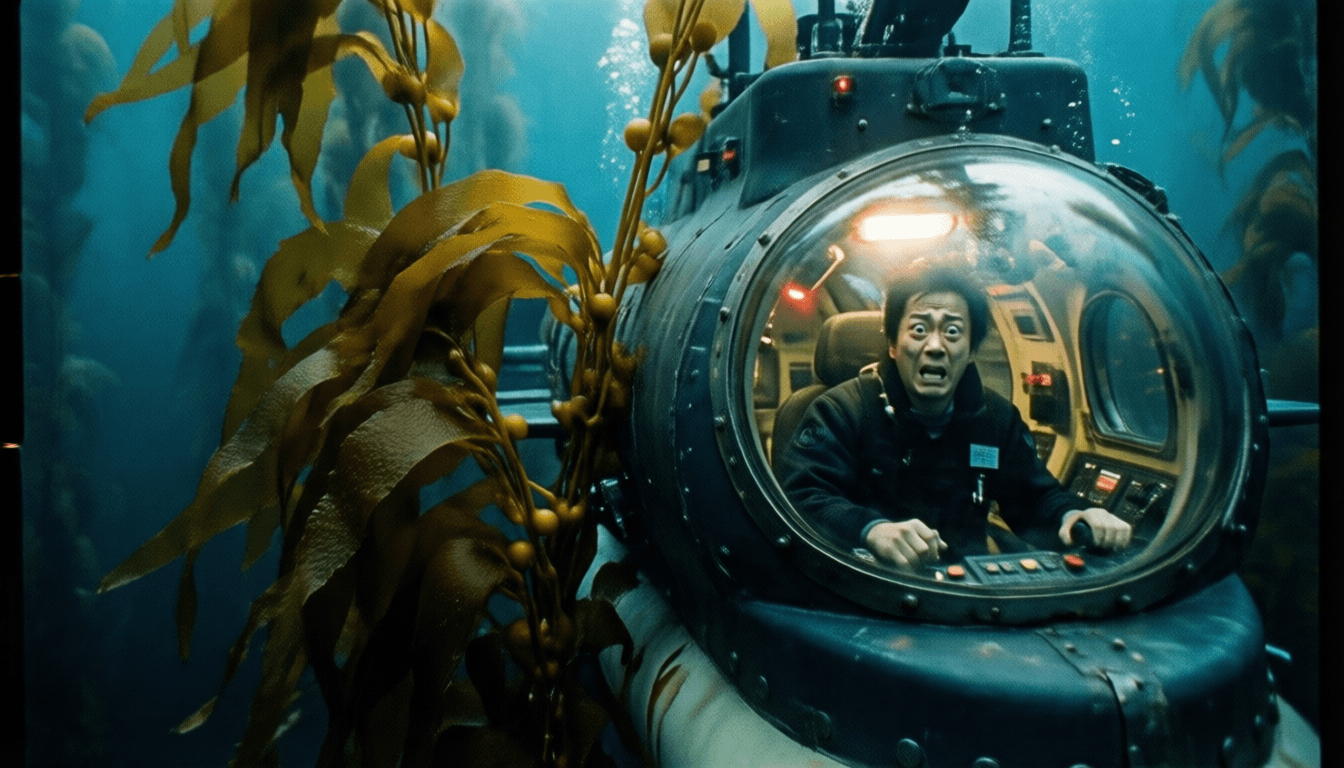
From the walls of the cavern, enormous, ancient kelp stalks began to bend and contract. Not a gentle sway, but a deliberate, slow, powerful tightening. Broad fronds pressed against the Nautilus-II's hull, leaving deep, groaning indentations in the reinforced composite material. The occupancy pod shuddered under immense biological pressure. The escape route, clear moments before, was now blocked by newly elongated fronds—as if they had grown several feet in mere seconds, or had been 'directed' into place with impossible precision.
Barely conscious under the deluge of infiltrating biological information, Dr. Thorne was physically trapped within the cockpit as the pod groaned under external pressure. The primordial mental data stream intensified, causing his muscles to spasm violently. An oxygen alarm blared, an unheard cacophony amidst the internal noise. With a desperate, primal burst of will, Dr. Thorne jettisoned emergency ballast and simultaneously activated the auxiliary cutting arm, hoping to sever the thickest, constricting fronds. The cutters screamed against the incredibly dense kelp tissue, and the Nautilus-II bucked violently. A final, overwhelming torrent of pure, cold biological horror flooded Dr. Thorne's mind—a realization of the kelp's sheer, unfathomable scale of life and reaction—before darkness. The heavily damaged, tilting submersible limped away from its constricting embrace, using residual thrust to churn towards the surface, its lights flickering into the gloom.
Dr. Aris Thorne was found barely conscious in the Nautilus-II, displaying acute disorientation, severe neurological distress, and a profound catatonic state. Physical examination revealed no conventional injuries, but a brain MRI showed unexplained persistent activation in the auditory and language processing centers despite the absence of external stimuli. Electroencephalogram (EEG) patterns were chaotic, displaying anomalous frequencies unlike any known neural activity.
Months later, Dr. Thorne remains in rehabilitation. His aphasia is partial but persistent; he struggles with word retrieval, often substituting common nouns with abstract descriptors. He avoids eye contact, especially when discussing the expedition, and shows an almost pathological aversion to water, even rain. He suffers from chronic, severe migraines, often accompanied by what he describes as "internal static" or a "buzzing."
Data recovered from the Nautilus-II's black box is fragmented but severely corrupted. Last-moment hydrophone recordings show ULF patterns too complex for computational analysis, almost fractal in structure, and seemingly reacting directly to the submersible's movements and Dr. Thorne's escalating stress levels. Bio-electric readings from the kelp itself indicated momentary, localized power surges on a scale far exceeding any known plant physiology. Physical damage to the Nautilus-II's hull and cutting arm confirmed the immense force exerted by the kelp. Microscopic analysis of recovered kelp fragments revealed abnormal cellular density and structural integrity, suggesting unknown biological enhancements.
Dr. Thorne is often observed meticulously re-examining the residual raw ULF data, tracing the intricate waveforms with trembling fingers. When asked what he sees, he whispers, with unfocused eyes, "It wasn't angry... it was just... reacting. Like nerve endings. But those nerve endings were the Sound itself." He occasionally taps out complex, rhythmic patterns with his fingers, patterns that eerily match fragments of the ULF recordings. The 'Green Whisper' never truly left Aris Thorne. It integrated. He now carries a piece of that vast, alien bio-network within his neurological landscape, forever resonating with the quiet, colossal, profoundly indifferent consciousness beneath the waves. The question now isn't whether the kelp can communicate, but what happens when a mind too fragile to comprehend that communication becomes its unwitting receiver. And in the deepest parts of the Sound, if the network now perceives 'us.'
[ CLASSIFIED VERDICT ]
[ACCESS LOG - SOURCE FILE]
In the Puget Sound region, rumors circulate about strange whispers emanating from the deep sea and inexplicable phenomena experienced by fishermen. Particularly, the dense kelp forests north of Whidbey Island are referred to as 'The Green Whisper' or 'The Breathing Forest,' with tales of divers experiencing mental disorientation or bizarre hallucinations upon entering them. While these legends are often dismissed as mere folklore, the recent increase in people suffering from similar symptoms has ignited fear of an unknown marine entity.