
The Hum of the Gobi Desert
The official report from the Mongolian Meteorological Agency closed the case of the disappearance of a four-person expedition team at the Ulaanbaatar-12 remote observation station in the southern Gobi Desert as of October 2023, citing 'severe sandstorm activity' and 'unexpected equipment failure' as the cause. However, independent satellite analysis commissioned by the nascent online exploration group 'Echoes of the Desert' revealed anomalies. While localized sand disturbances were present, the broader meteorological conditions around Ulaanbaatar-12 were unusually calm for the Gobi Desert. More disturbingly, just before the observation station's last telemetry data cut out, a series of unprecedented localized electromagnetic pulse signals were detected, unexplainable by any known natural phenomenon or military exercise. Corroborating this, fragmented reports from nearby nomads detailed livestock exhibiting sudden, erratic behavior before dying without external trauma or disappearing entirely. The common thread running through these disparate accounts? The constant low-frequency hum emanating from beneath the sand, and whispers of an ancient warning – the 'intestinal worm' that 'swallows signals and vanishes into the earth like a pulse' – the Algai Khorhoi. These conflicting stories and unexplainable data demanded deeper investigation.
My journey to the designated sector of the Gobi Desert, approximately 150 kilometers east of Dalanzadgad, proceeded without incident, save for a profound sense of isolation. The land stretched endlessly, ochre beneath an indifferent sky, a testament to its own stoicism. The dust-laden air was suffocatingly hot. Upon reaching Ulaanbaatar-12's coordinates, I saw a small, utilitarian structure of prefabricated modules. There were no signs of sandstorm damage, no drifts against the doors, no broken antennae. It stood eerily intact, as if time itself had halted.
Inside the station, it was deserted. The equipment wasn't damaged but powered down, as if paused. Faintly, almost imperceptibly, a hum resonated within the structure. It was more a vibration than a sound, like the distant thrum of heavy machinery. My geophones detected sporadic deep tremors, too regular to be random geological shifts, too localized to be distant earthquakes. Compass needles wavered at specific corners of the main module. My handheld radio, intended to find survivors or simply make contact, emitted only static, which continuously broke into sharp interference that felt like it resonated through my teeth. The sand outside, usually soft and yielding, was strangely compacted in irregular patches, giving a peculiar, dull echo to my footsteps.
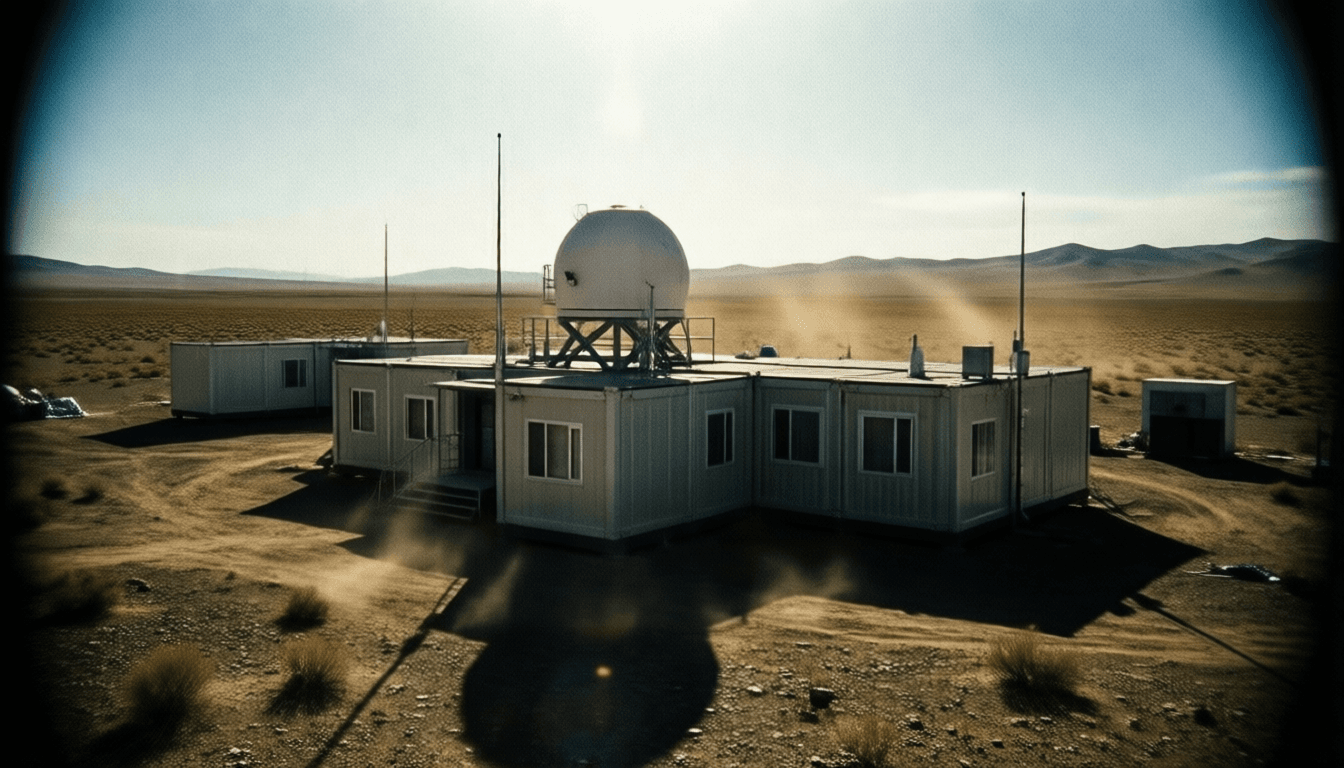
As I spent more time documenting the station, the initial anomalies intensified. The desert's silence, usually a calming serenity, now became a heavy, unnatural presence. Sounds died too quickly, as if absorbed by the sand, yet my own breathing seemed unnaturally amplified, echoing in my skull. Geophone readings grew more agitated, detecting a distinct, rhythmic pulsation just beneath the surface. It was moving, broadly, slowly, deliberately, around the perimeter of the station.
Outside, the hum was now more distinct, a low-frequency drone that vibrated through my boots and into my body. Thermal imaging detected localized hot zones on the sand, independent of sunlight, moving in slow, sinuous patterns. My personal electronics – camera and GPS devices – began to flicker intermittently and drain battery rapidly, despite being recently charged. I discovered several perfectly circular, smoothly drilled depressions in the sand, several meters deep, too uniform to be animal burrows or wind erosion. There were no piles of excavated sand. They simply were. Like core samples taken by an invisible drill.
As the sun began to set, casting long, stark shadows, I noticed undulations in the sand far off. They were far larger and faster than anything wind could create. They moved with an ominous fluidity, dark ripples beneath the surface, tracing a direct path toward my expedition vehicle, parked about a kilometer away. My breath caught. The hum intensified, becoming a crushing pressure in my chest. From my radio, still useless for communication, a sudden, ear-splitting shriek of pure static erupted, a raw, continuous scream that temporarily deafened me.
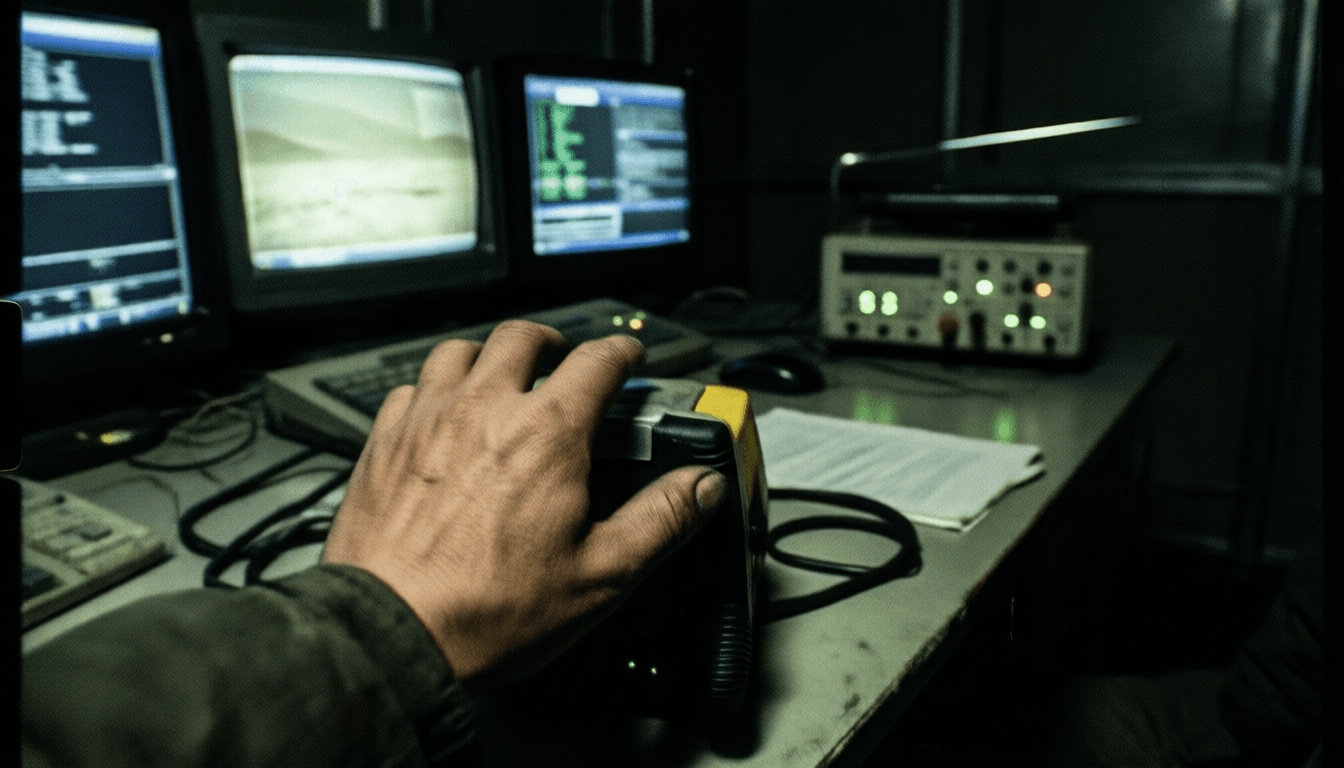
I sprinted towards the vehicle. The metallic shriek from the radio cut through the desert night's silence like a physical force. My footsteps felt heavy, sluggish, as if the sand itself resisted my movement. The ground beneath my feet began to shake violently. Not a unified seismic shock, but intense, localized, wave-like tremors. I stumbled, losing my balance, scraping my hands on the rough sand.
Ahead, the undulations I had seen converged around my vehicle. The sand around it began not just to vibrate, but to churn, defying the physics of dry earth. It wasn't a typical sinkhole, but a localized vortex of dry particulate matter, slowly, inexorably pulling my vehicle downwards. The hum became an unbearable sonic assault, vibrating my entire skeleton and blurring my vision. My hair stood on end, a crackling static electricity filling the air.
As I scrambled to crawl away, a section of the sand around the vortex suddenly erupted. Not outwards, but collapsing rapidly inwards, revealing a vast, slick, segmented form. It was dark, reddish-ochre, with an unnatural sheen, its surface rippling with internal light. There was no distinct 'head' or 'tail,' just a massive, undulating body, as thick as an oil drum. It rapidly retracted and vanished. Just before it disappeared completely, a sharp, chitinous, segmented protrusion grazed my outstretched hand as I tried to brace myself. An intense, blinding electrical shock ripped through my arm, followed by a numbing tremor up to my shoulder. Then, a fierce, burning pain. I screamed, not from fear, but from raw, white-hot agony.
The vortex subsided as quickly as it had appeared, having swallowed my vehicle whole. The hum diminished to a low thrumming vibration. Where my expedition vehicle had stood just moments before, there was now nothing but a perfectly smooth expanse of sand, as if nothing had ever disturbed it. The air crackled with ozone, a metallic smell acrid in my throat.

I don't remember how long I lay there, convulsing, or how I managed to crawl away from that smooth, terrifying ground. Rescuers came three days later. A Ministry of Defense patrol, drawn by my low-power emergency beacon, which had mysteriously reactivated hours after the incident. Official debrief reports cited 'severe dehydration, disorientation, and heatstroke-induced hallucinations' to explain the missing vehicle and my burns. The electrical burn on my hand was suggested to be from contact with damaged observation station equipment in my 'confused state.'
The physical scars are fading, but others remain. My personal electronics, especially communication devices, continue to malfunction with localized electromagnetic interference, and my compass spins wildly if I stand still for too long. My neurological exams report an inexplicable, persistent, faint rhythmic pulsation, a low-frequency vibration, detected in my brain activity. Sometimes, in the dead of night, when everything is quiet, I still feel the phantom vibration of that hum. Not in my ears, but deep within my skull, a resonating echo of the desert's hidden heart. It is a constant, chilling reminder that I made contact. It didn't just take my vehicle. It touched me. And a part of it, however minuscule, now lives within the very fiber of my being. The Gobi Desert keeps its secrets, but some it shares. And once shared, they are never truly forgotten.

[ CLASSIFIED VERDICT ]
[ACCESS LOG - SOURCE FILE]
This story is based on the myth of the 'Algai Khorhoi' (Mongolian Death Worm), a legendary creature believed to inhabit the Gobi Desert of Mongolia. This worm is said to move beneath the sands, emitting electromagnetic pulses and paralyzing or killing creatures with venom. This legend has been passed down among desert nomads for generations, and while lacking scientific evidence, it remains an object of fear and mystery for many.