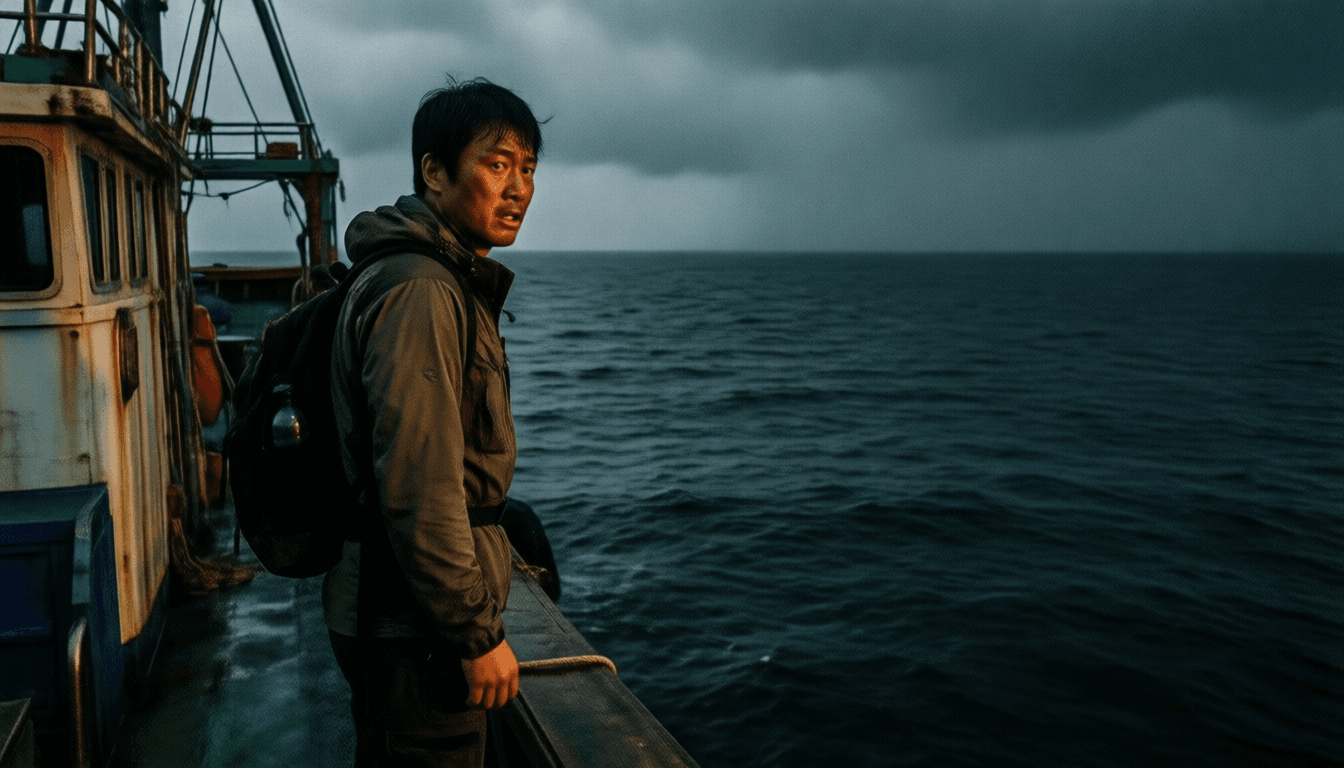
The Frozen Scream of the Deep Ocean
In 1948, the incident of the S.S. Ourang Medan in the Malacca Strait remains one of the most unsolved mysteries in maritime history. The distress signal was initially unclear but soon turned chilling. "All officers including captain dead, lying in chartroom and on the bridge. Probably whole crew dead. I die." This was reportedly followed by indecipherable Morse code, concluding with the single phrase, "I die!"
When the American merchant vessel Silver Star, which received the distress signal, arrived on the scene, it found the Ourang Medan adrift in calm, sun-drenched waters. The sight discovered within the ship fueled decades of speculation and horror. Every crew member, from the captain on the bridge to the engineers in the engine room, was dead. Their bodies were frozen in poses of extreme terror, mouths agape, eyes wide open, arms outstretched as if fending off an unseen assailant. There were no signs of injury, struggle, or any apparent cause of death. Even the ship's dog was found dead, silently snarling towards an invisible horror. Before the Silver Star could tow the mysterious vessel, an unexplained fire erupted in the Ourang Medan's cargo hold, forcing the American crew to evacuate. The ship ultimately exploded and sank into the deep, taking all its secrets with it.
Despite numerous historical searches, no official registered vessel named Ourang Medan has ever been definitively identified, nor has its wreckage been found. Yet, the story persists, recounted in maritime journals, naval archives, and countless online forums. It exists like an unexplainable phantom, becoming a testament to an unknown, lethal force at work in the serene, deep waters of Southeast Asia. My own research, sifting through decades of obscure incident reports and sonar anomalies, recently uncovered a disturbing pattern: a concentration of small vessel disappearances and intermittent distress signals emanating from an unusually deep trench off the coast of uninhabited islands within that historical region. These signals eerily echoed the Ourang Medan's final moments. Quietly logged and dismissed as "equipment failure" or "piracy," this mysterious pattern was my new target.
Our chartered fishing vessel slowly cut through the oppressive, humid stillness of the equatorial sea, heading towards the designated coordinates. Even Captain Lim, hardened by decades in these waters, had an unusual tension in his jaw. He avoided my gaze, muttering, "This isn't good fishing ground, sir. Too quiet."
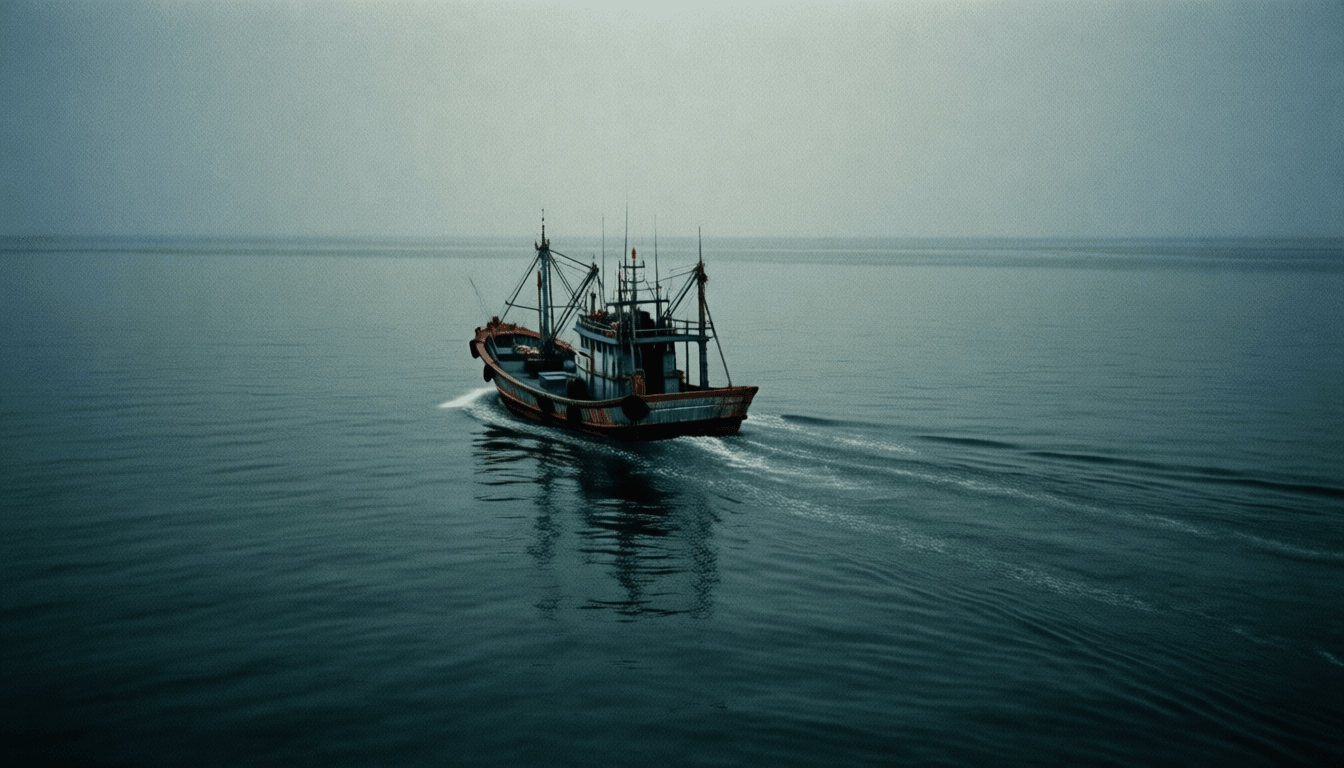
As we neared the designated trench, the sea surface around us began to take on an unsettling character. It was abnormally flat, almost oily, reflecting the featureless sky in a bizarre way. The typical sounds of the sea – distant gulls, the gentle lapping of waves against the hull – vanished, replaced by an absolute, profound silence that seemed to press in from all sides. The only sound was the low thrum of the diesel engine, which now felt intrusive and vulnerable in the suffocating quiet. I deployed advanced sonar and hydroacoustic sensors. Initial readings were perplexing: depth anomalies that shouldn't exist, and barely perceptible, low-frequency vibrations picked up in the water column. The temperature began to drop subtly but distinctly, a bone-chilling cold that defied the tropical climate.
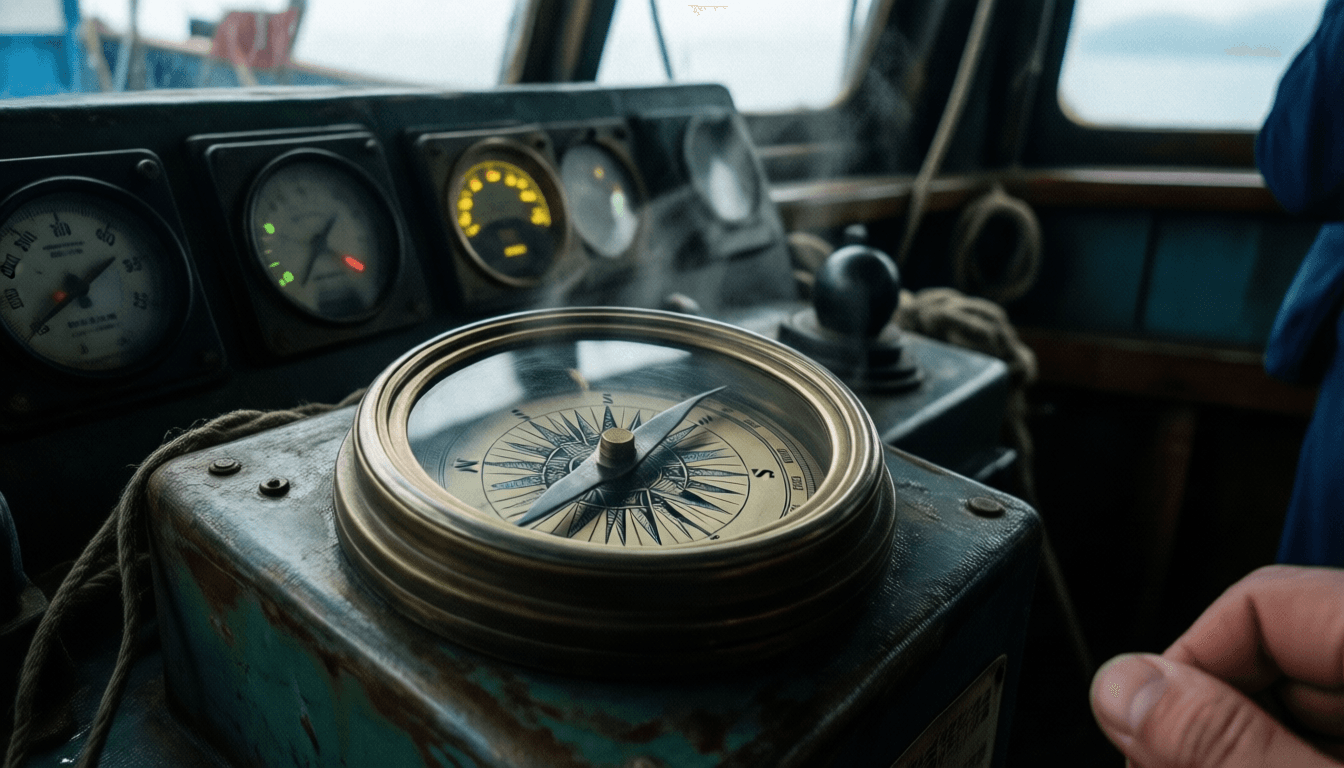
The silence deepened, becoming almost a tangible entity. Captain Lim, usually jovial, had retreated to the wheelhouse, his tanned face pale beneath his skin. My instruments too began to behave erratically. The GPS flickered, displaying impossible coordinates, then snapping back into place with violent jumps. The compass needle swung slowly, in deliberate arcs, as if disconnected from the Earth's magnetic field. A strange, high-pitched humming, like a vibration felt in the chest rather than heard by the ear, a deep resonant frequency that seemed to prick at the teeth, began to permeate the entire vessel.
I stepped onto the deck. The cold was now biting. The water around us began to move irregularly. There were no waves, no currents, yet objects like a discarded fishing buoy we had just passed were slowly rotating against a non-existent flow, as if caught in an invisible, unnatural vortex. The air itself seemed to thicken, making it difficult to breathe against an unseen pressure. At the edge of the horizon, I saw a faint, almost transparent shimmering. It looked like heat haze on a desert road, but here it was, above a perfectly still water surface. It was an optical distortion that couldn't be explained. I found myself checking my own pulse. The analytical detachment was gone, replaced by primal instinct.
The humming intensified, vibrating through the ship's hull, and I suddenly felt a profound, chilling sense of isolation. Despite Captain Lim and his small crew being present, I felt utterly alone, miles from any living soul. It was not unlike the isolation the Ourang Medan must have felt as it drifted towards its silent end, that deep, inescapable terror.
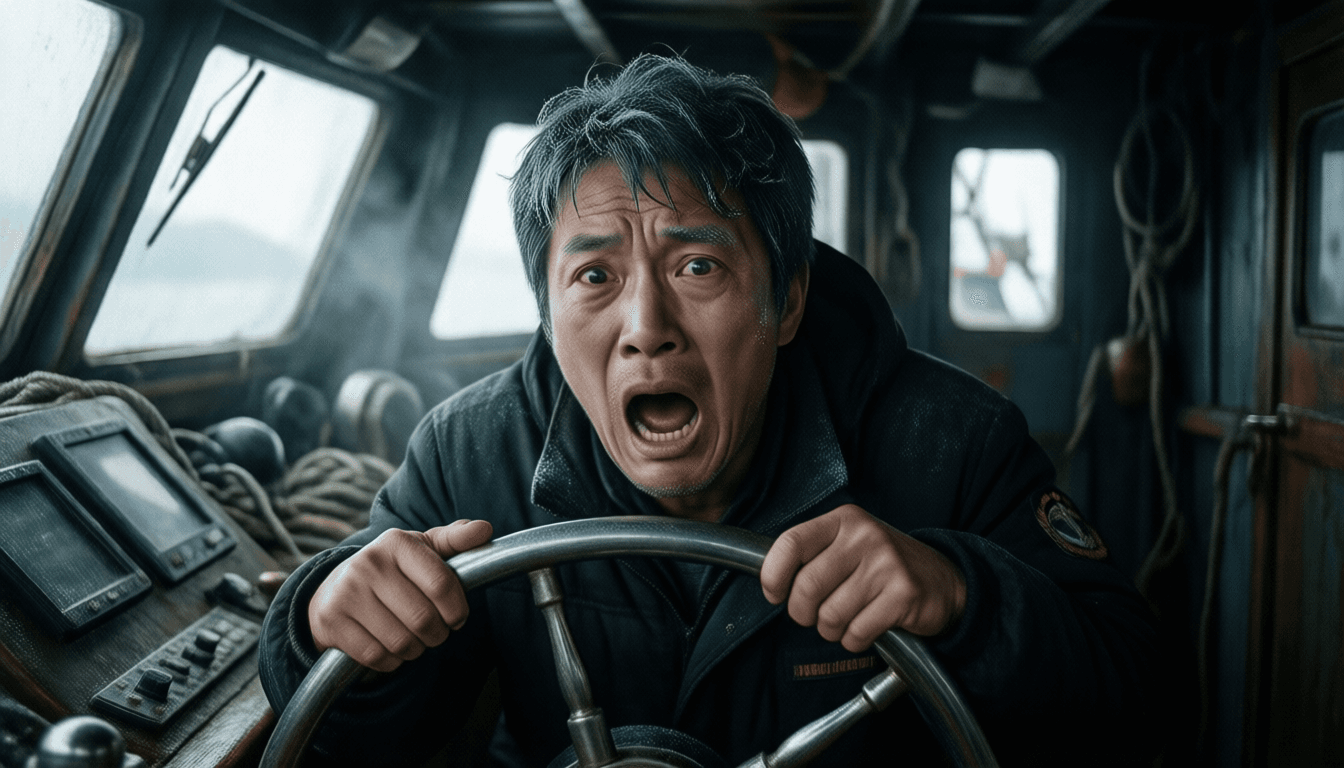
Suddenly, the engine sputtered and died. The now unmasked humming filled the absolute silence, resonating through every fiber of the hull. The ship began to drift. The internal temperature plummeted further, becoming a damp, clinging cold that seeped through clothes and into bones. My breath plumed faintly in the air. I rushed to the wheelhouse. Captain Lim was slumped over the controls, his hands still clenched on the wheel. His eyes were wide open, staring at nothing. His mouth was agape, a silent scream frozen on his lips. His skin was pale, almost translucent, and a faint rime of frost had begun to form on his hair. There was no trauma, no sign of struggle.
I turned. Primal fear gripped me. The humming intensified, becoming an unbearable pressure in my skull. It was a sound that vibrated the brain directly, bypassing the ears. The air around me began to tighten. Not a lack of oxygen, but an overwhelming, invisible force pressing in from all sides. Crushing me. I felt my facial muscles contort, a desperate reflex to gasp and scream, but no sound came out. My vision blurred, swirling patterns of black and white filling the edges. For a fleeting moment, I wasn't just observing the captain's fate; I was feeling it. Experiencing the sudden, paralyzing understanding of overwhelming, inexpressible terror, deep mental violation, and perfect helplessness. A cold, invisible hand seemed to grip my heart, squeezing, pulling. My limbs began to stiffen, my mouth unconsciously opening, mirroring the silent scream of the dead.
I collapsed, not from physical impact, but from a complete physiological shutdown. As my body failed, a horrifying, distorted image flashed in my mind: an absurdly elongated, skeletal face, with eyes like pools of infinite darkness, superimposed over the shimmering haze on the horizon. It wasn't a visible entity; it was a dreadful imprint transmitted directly into my consciousness. The cold intensified further, burning rather than freezing, as if my very essence was being drawn out.
Just as consciousness began to fray, a violent shock rocked the boat. An absurdly huge swell, out of place on the calm, flat surface, slammed into the stern, jarring the vessel. The crushing pressure momentarily receded, and the scream in my mind paused. That was enough. Driven by a desperate, instinctual surge of adrenaline, I clawed my way towards the emergency flare gun with ice-cold, unresponsive fingers. The humming was still there, but its immediate, soul-crushing intensity had receded slightly. I fired a flare skyward. A lone scream against the overwhelming void, the red light soared into the still, dark sky.
Hours later, they found me. Huddled and half-frozen in the wheelhouse, unresponsive, with the dead captain still at the helm. When I was finally able to speak, my account was met with skeptical gazes from experts, then dismissed with uncomfortable silence. Official reports documented my condition as "hypothermia and extreme psychological stress," and the deaths of Captain Lim and his crew as "fatal engine failure followed by carbon monoxide poisoning." The enormous wave was explained away as an isolated weather anomaly.
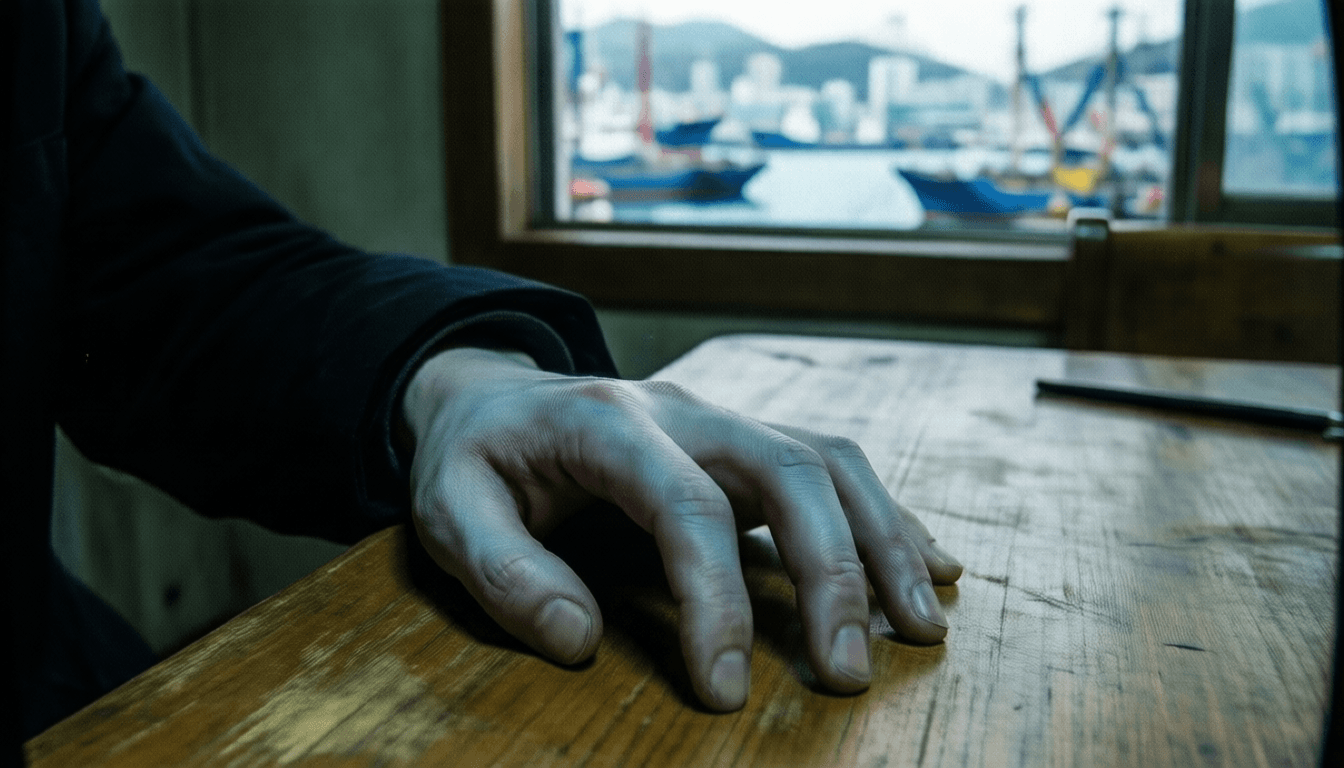
But I know what I felt. Doctors are baffled by the persistent, deep cold that refuses to leave my bones, even in the warmest environments. My left hand suffers from a permanent, involuntary tremor. Sleep is often disturbed by an internal humming, a resonant frequency vibrating through my chest, sometimes accompanied by the spectral vision of that distorted skeletal face at the edge of my sight.
The small, waterproof black box recorder recovered from our mission was damaged, mostly noise. But in certain sections, isolated by spectral analysis, there was a distinct low-frequency vibration matching the "humming" I described. More disturbing still, buried beneath the noise, were faint, unidentifiable vocalizations, long drawn-out rasping sounds. Nothing any known animal or human could produce.
The coordinates have been quietly marked as "anomalous maritime activity." The S.S. Ourang Medan file remains open. I have added my experience to its pages. Not as a testimony to ghosts, but to something far more insidious. A force that leaves no physical trace, only the chilling imprint of absolute terror. A cold so profound it freezes human life itself, leaving it to silently scream at an unseen void. The sea, it seems, holds secrets deeper and colder than we can comprehend. And sometimes, those secrets reach out. I still feel the cold.
[ CLASSIFIED VERDICT ]
[ACCESS LOG - SOURCE FILE]
The S.S. Ourang Medan incident is a maritime urban legend about a mysterious ship found in the Malacca Strait with all crew members dead in positions of extreme terror. After the bodies were discovered without visible trauma, the ship reportedly exploded from an unknown fire and sank. Although the ship's existence has never been officially verified, the story persists as a maritime mystery.