Amazon's Silence and Stench: The Awakening of the Faceless One
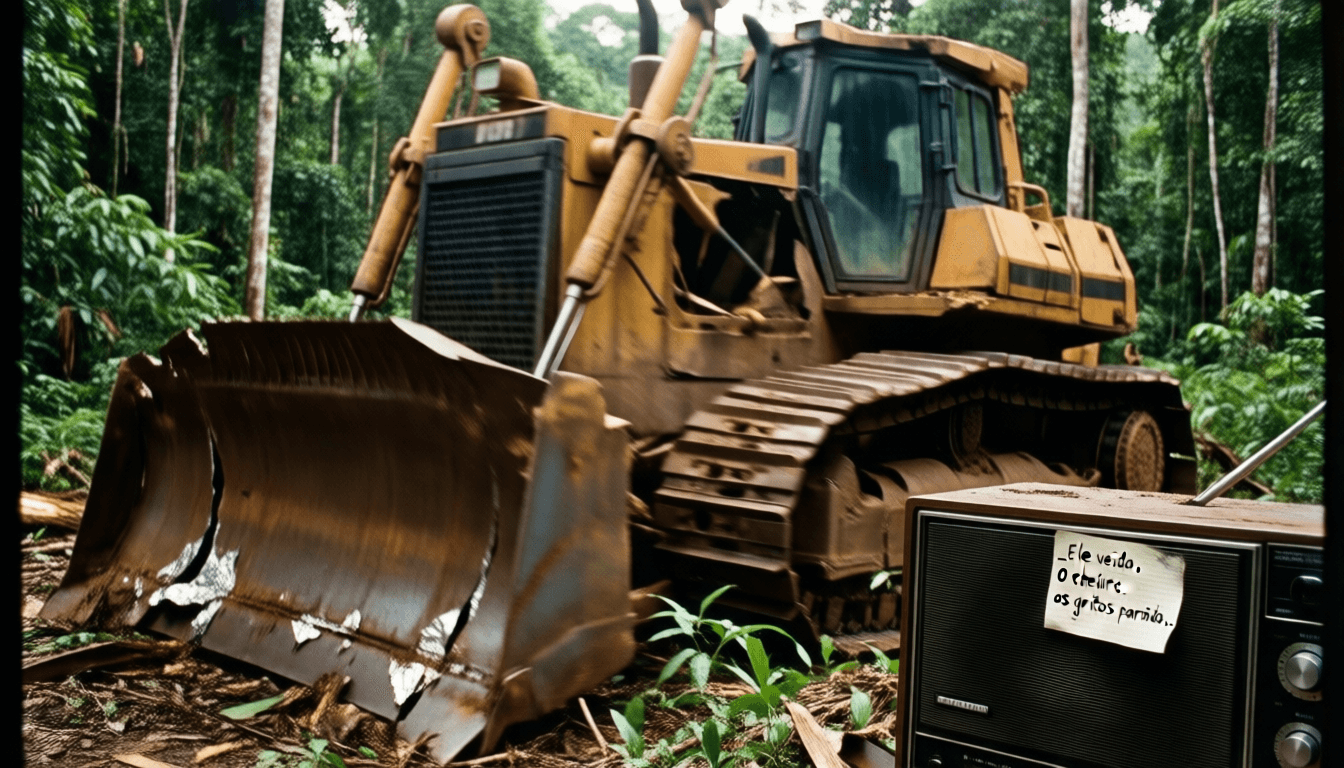
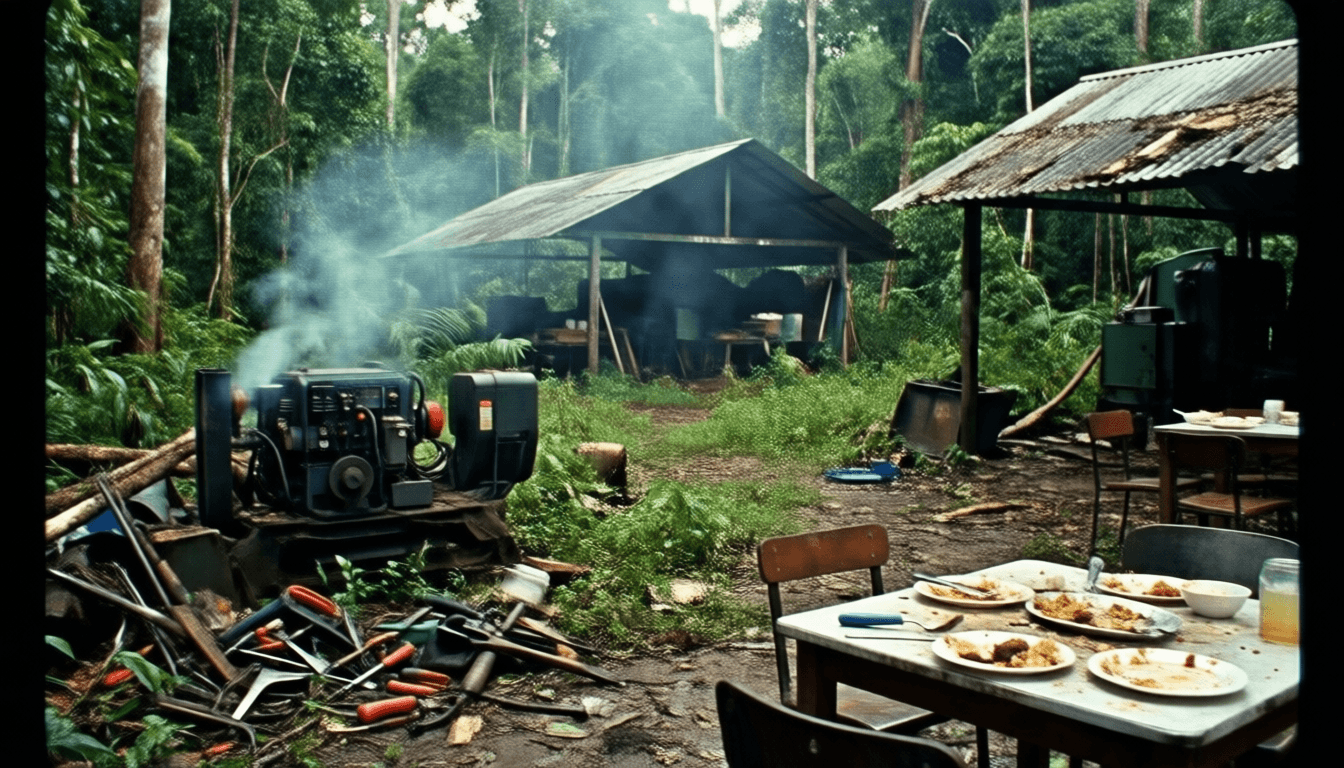
Late 2019, a fragmented email chain reached the archives, marking its first recorded entry. It detailed the abrupt, inexplicable abandonment of 'Campamento Esmeralda,' an illegal logging outpost deep in Acre, Brazil. Authorities, confirming the absence of personnel via aerial surveys, attributed it to the sudden, unannounced withdrawal of illegal operators. However, a ground team hired by a rival timber company, investigating the sudden void, found something chilling. Equipment was still operational, generators hummed, meals were half-eaten. Yet, there were no bodies, and no signs of struggle beyond several gaping tears in the thick metal plating of massive bulldozers, as if something impossibly strong had tried to rip them apart. Most unsettling was a single, scrawled note, impaled on a dismantled radio: "_Ele veio. O cheiro. Os gritos pararam._" ("It came. The smell. The screaming stopped.") This, combined with previously dismissed indigenous warnings – rumors that the area's "Faceless Ones (Rostros sin Ojos)" or "Black Cloaks (Capa-Preta)" had been "disturbed" – transformed a mere corporate espionage case into a truly unsettling inquiry. Our objective: to ascertain the true nature of the Campamento Esmeralda incident and the silence that followed.
Access to the region required extensive negotiations and the guise of botanical research. Our two-person team approached Campamento Esmeralda by river, the dense emerald walls of the Amazon rainforest closing in behind us. The air was thick with suffocating heat and humidity, alive with the incessant hum of unseen insects. Upon disembarking, the usual jungle symphony of birdsong, squawks, and distant howls seemed abnormally subdued. Even before the camp came into view, a faint, metallic and organic, heavy, sickening odor hung in the air.
The camp itself was a tableau of suspended animation and violent disarray. Diesel generators still idled, their low thrum the only mechanical heartbeat. Tools lay strewn, some coated in a strange, viscous residue. The bulldozer mentioned in initial reports was tilted on its side, its massive steel panels bent and peeled back like crumpled foil. The damage wasn't from impact or explosion; it was torn, ripped. Trees at the camp's edge showed similar wounds – not chainsaw cuts, but long, deep furrows gouged into their bark, some reaching the weeping sapwood. The most immediate anomaly was the pervasive silence. Even the ever-present mosquitoes seemed to have vanished.
Following a rough, erratic trail of broken undergrowth leading from the camp deeper into the jungle, the character of the suffocating environment began to shift. The air grew heavier, and the initially faint, unidentifiable, sickeningly sweet yet pungent odor became more intense. Our GPS units flickered erratically, sometimes losing signal altogether.
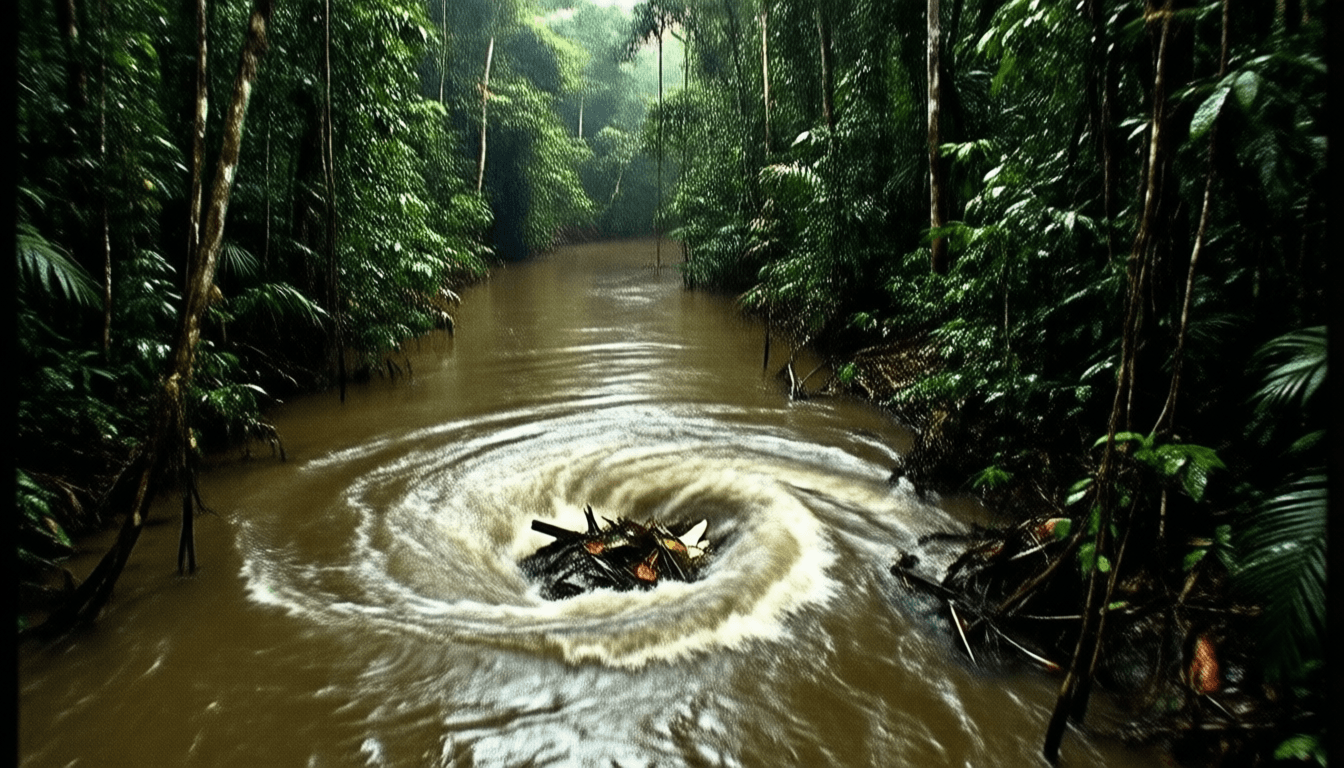
The river, a crucial navigational reference, became a source of unease. In one narrow channel, a small eddy swirled constantly upstream, pushing debris against the current. Later, a stagnant pool we encountered had its surface shimmer with a greasy, iridescent film that seemed to subtly pulsate, even in the perfect stillness of no wind.
The auditory anomalies began. The low, incessant hum of jungle life, which had previously been faintly subdued, was now entirely absent. Its place was taken by an absolute, profound silence that pressed in on the ears, making our own breathing sound impossibly loud. Then, faintly at first, a sound unlike any known animal began to emanate through the dense forest. It was less a sound carried by air and more a deep, rumbling vibration that resonated through the earth beneath our feet. It was closer to a continuous, agonizing groan, like massive tectonic plates grinding, rather than a roar. Attempts to triangulate the source were impossible; it seemed to come from all directions at once, and nowhere, a disorienting internal pressure. We found vague, enormous depressions in the leaf litter, larger than any known Amazonian animal, leading deeper into a darker, denser part of the forest where the smell was overwhelmingly nauseating.
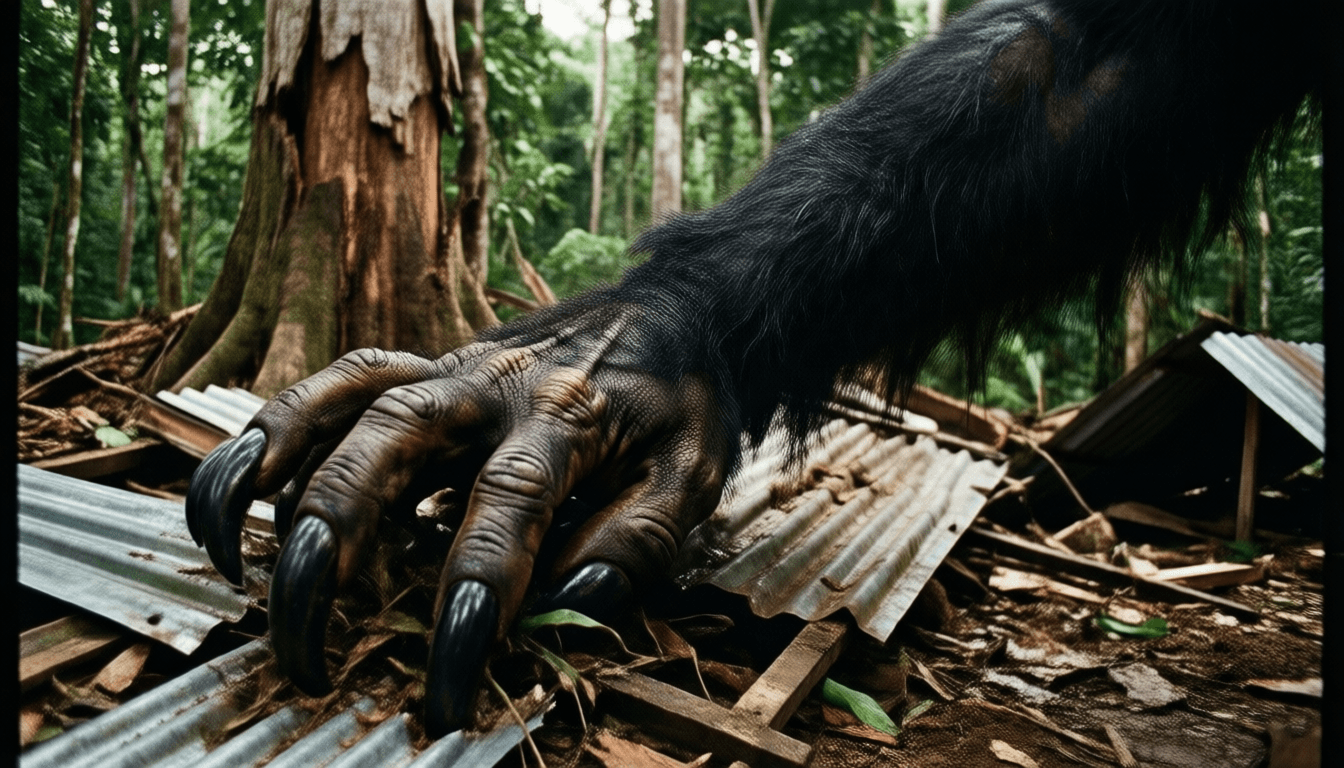
We stumbled into a clearing where trees stood like skeletal giants, their lower bark stripped away, roots violently exposed. In the center lay a partially collapsed makeshift structure, perhaps a storage shed, its corrugated iron roof ripped to shreds. As we approached, the putrid, decaying stench intensified, becoming eye-watering and inducing immediate retching. The low, guttural rumble now echoed from within the wreckage, unmistakably close.
Suddenly, a thick mass of foliage, dense with vines and smaller trees on the opposite side of the clearing, began to bend inwards. There were sounds of impossible force, snapping and tearing, inconsistent with any wind pattern. It wasn't being pushed away; it was being pulled from deeper within. The ground beneath our feet began to vibrate with increasing violence, a deep tremor making it difficult to stand. A section of the shed's remaining tin wall buckled inwards with a shrieking metallic groan, collapsing. A massive, leathery appendage, covered in coarse black hair and ending in obsidian-like talons, ripped through the gap. The stench became unbearable, a wave of noxious gas momentarily paralyzing our senses.
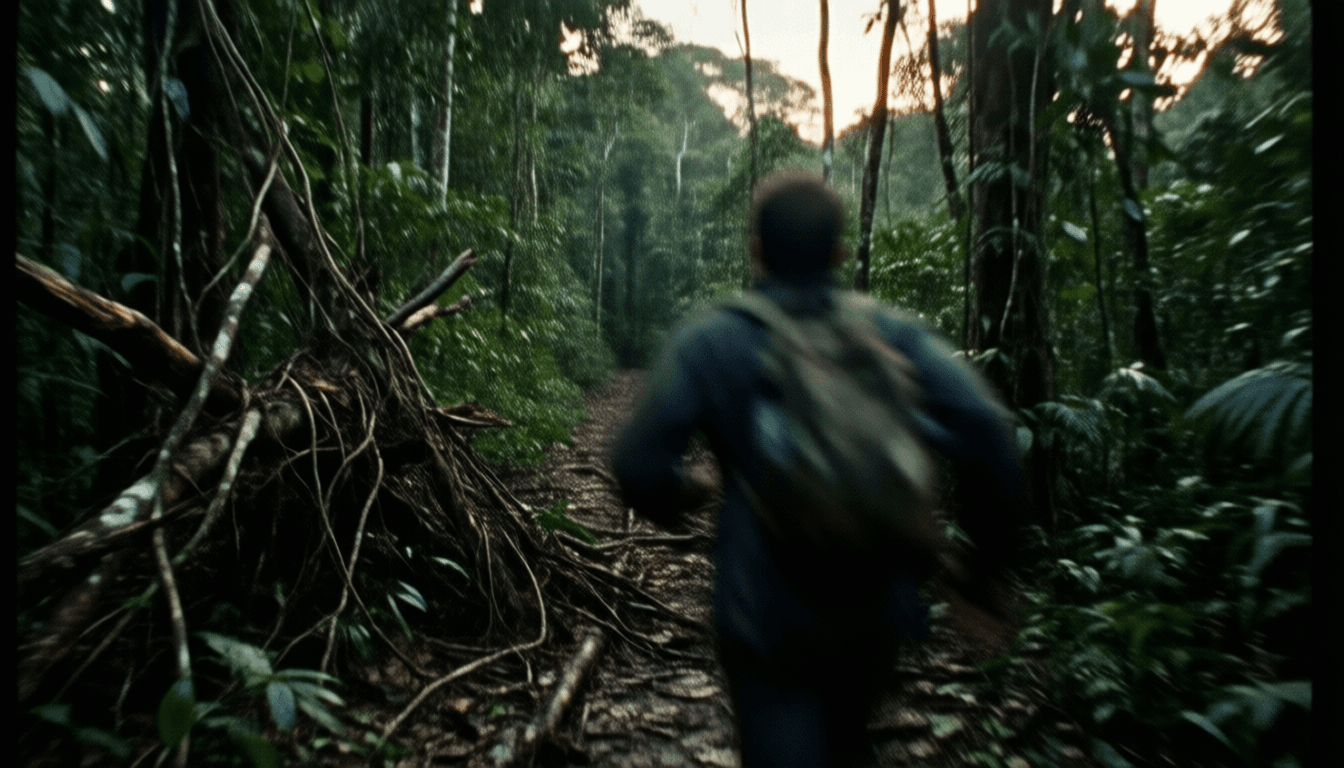
We tried to retreat, but the earth itself seemed to move. The ground before us momentarily softened, giving way into shallow mud. The rumble erupted again, this time with a physical force that knocked the breath from our lungs and left a ringing silence in our ears. Amidst the stench and disorienting rumble, a vast, dark bulk shifted in the wreckage. A single, large, dark obsidian-like eye, embedded within a deeply furrowed brow, seemed to gaze at us without a pupil, reflecting only the murky greens of the jungle. It was immense, armored, its slow, deliberate movements indicating an unstoppable momentum. Its talons, now fully revealed as it began to tear away the last remaining supports of the wreckage, were thick and powerful, capable of shredding bone and metal with ease. There was no escape in the open clearing. We were trapped between the collapsing structure and the impossibly dense jungle. The creature's head, abnormally large and almost featureless save for the single eye and a vestigial, downward-curving nose, slowly rotated towards us. As the last supports of the shed shrieked and splintered, the creature pushed through, its foul breath a physical weight in the choking air, its intentions chillingly clear. We ran into the forest, eyes squeezed shut, hearing the tearing of the jungle directly behind us by massive talons, a primal, relentless pursuit.
We barely made it out. One broken shinbone, another with severe lacerations from scrambling through impossibly dense undergrowth in terror. But we survived. We returned with corrupted audio recordings which, after extensive digital restoration, contained persistent low-frequency thrums and unsettling growls that defied classification. Our GPS units were completely fried, flickering randomly even in open spaces.
But the most compelling, chilling, and lasting evidence was not tangible. It was the smell. Months later, amidst mundane urban settings, suddenly, momentarily, the tang of something sour, metallic, and profoundly organic would pierce the air. A phantom scent, accompanied by a cold, visceral fear. It would happen in the rain, passing a construction site, or in the inexplicable silence of a deep forest.
And updated reports arrived. Not from Campamento Esmeralda, which remained an untouched, silent tomb, but from new logging operations further afield. The same details emerged: abandoned equipment, inexplicable damage, and whispering local warnings. A particularly unsettling online article, shared on certain cryptid forums, detailed a recent cattle mutilation near the Peruvian border, noting especially the absence of blood and the unusual way the carcasses were "peeled." Accompanying the text was a single, blurry, indistinct photograph: a glimpse of a vast, armored dorsal plate receding into the forest shadows. The post's author, a local farmer, concluded with a hauntingly familiar phrase, translated from Spanish: "The Faceless One has awakened. And the stench... God, the stench."
The profound silence we experienced in that clearing, and the persistent, reappearing phantom smell, serves as a visceral warning. It confirms that the Mapinguari, the Rostros sin Ojos, are not merely myths archived in records, but a living, hunting reality, eternally pressing at the edges of our known world. And sometimes, its breath, or its silence, finds you.
[ CLASSIFIED VERDICT ]
[ACCESS LOG - SOURCE FILE]
This story is based on local indigenous warnings and myths about a legendary animal in the Brazilian Amazon region, particularly an unknown creature referred to as 'Faceless One' (Rostros sin Ojos) or 'Black Cloak' (Capa-Preta). The mysterious abandonment and horrific destruction of the logging camp symbolize the terror that can arise when the enigmatic beings from the depths of the Amazon, passed down through ancient times, encroach upon human territory.