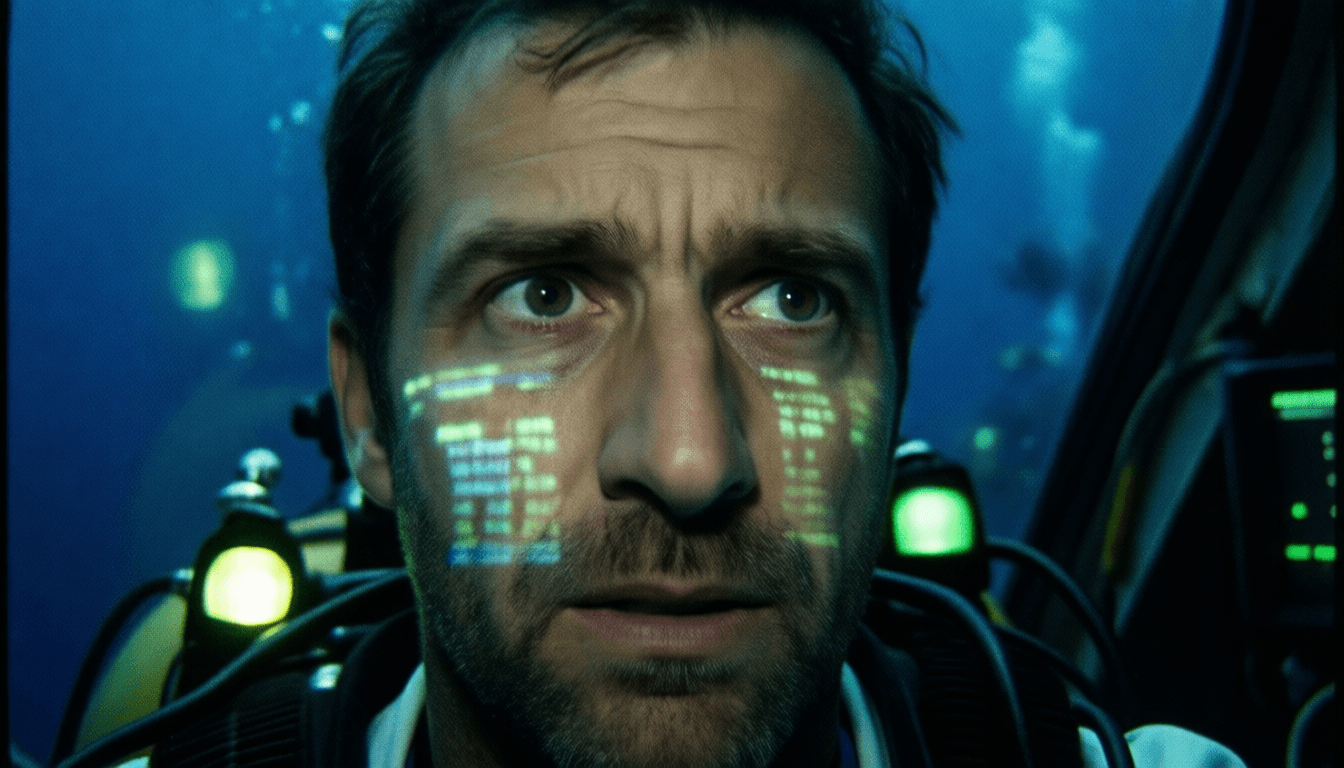
The Eye of the Aegean Abyss
For years, whispers circulated within the deep-sea research community of the Aegean regarding the Santorini caldera. Official reports attributed anomalous seismic readings and inexplicable thermal shifts to "caldera instability" or "hydrothermal vent fluctuations." Yet, among commercial deep-sea mariners and some geophysicists, a persistent theory of "the Dome" prevailed. This referred to a recurring, too symmetrical, too massive sonar reflection pattern repeatedly caught in the caldera's deepest, most inaccessible reaches. Such data was invariably dismissed as multipath interference or transducer error. However, Dr. Elena Petrova, a brilliant but increasingly marginalized marine geophysicist, recently published an analysis of sonar data obtained from a 2017 Hellenic Navy survey. Her presentation was swiftly dismissed, yet it clearly showed subtle, varying, repetitive geometric anomalies over multiple passes across two weeks, at depths exceeding 800 meters. Officially discarded, her work nevertheless sparked a quiet, renewed interest.
Driven by Dr. Petrova's compelling yet officially discredited findings, Dr. Aris Thorne, a seasoned and deeply skeptical marine geophysicist, secured funding for a specialized, unofficial expedition. His submersible, the 'Nautilus X,' was a state-of-the-art vessel custom-built to withstand extreme pressures, equipped with an advanced multi-frequency sonar array. The descent into the caldera was a slow, methodical crawl into absolute darkness. Exterior temperatures plummeted, and the immense pressure made the submersible's hull emit a constant, low hum, signaling structural integrity. Dr. Thorne cataloged familiar geological features as they passed: the steep, jagged inner walls of the caldera, occasional bioluminescent life, and plumes of smoke from active hydrothermal vents. However, as they neared the target coordinates, the expected deep-sea ambiance began to subtly shift.
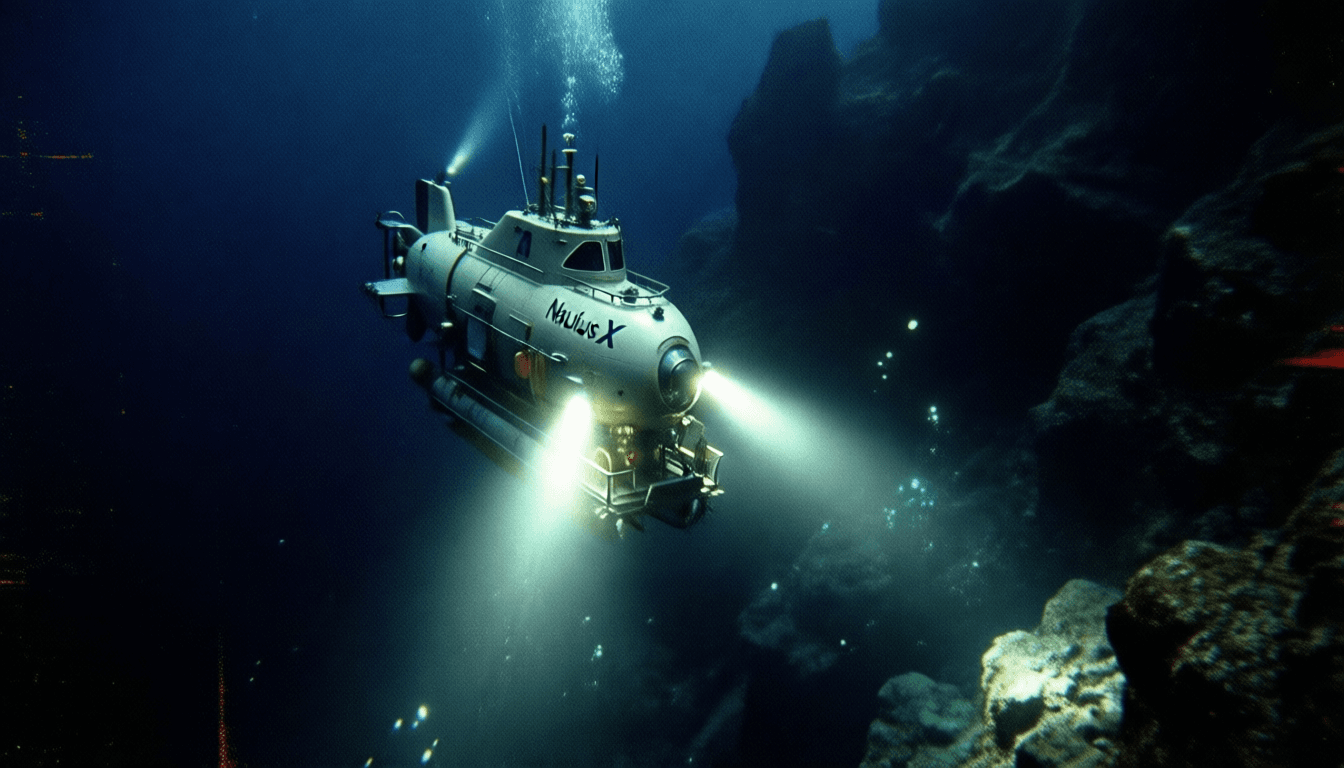
The initial anomalies were subtle, almost imperceptible. The 'Nautilus X's' primary sonar, normally a precise mapping tool, began returning erratic data. Pings directed at the caldera wall returned abnormally weak, as if absorbed, or with a long, resonant quality that defied known geological structures. Concurrently, the submersible encountered localized currents that defied known thermocline patterns and bathymetry—slow, deliberate eddies exerting a soft, anomalous tug. When Dr. Thorne engaged the submersible's high-intensity external lights, the beams cut through the perpetual darkness. They occasionally glimpsed vast, impossibly smooth surfaces that reflected light abnormally, almost liquid-like, but these forms would vanish as the sub approached, leaving nothing. The most unsettling change was the ambient acoustic environment. The usual symphony of deep-sea life—clicks, whistles, rustles—dissolved into an eerie, profound silence, broken only by the hum of the sub's systems and the erratic sonar pings. It was as if the ocean itself was holding its breath.
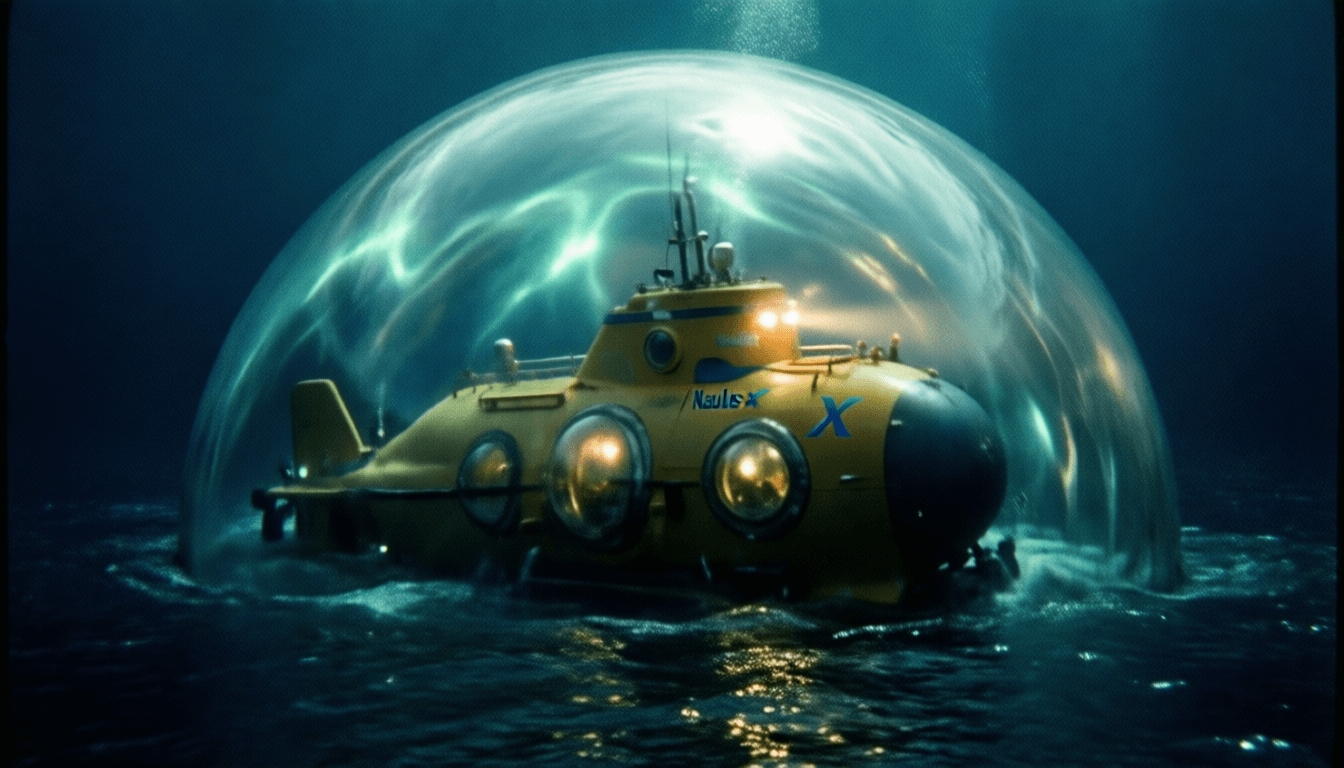
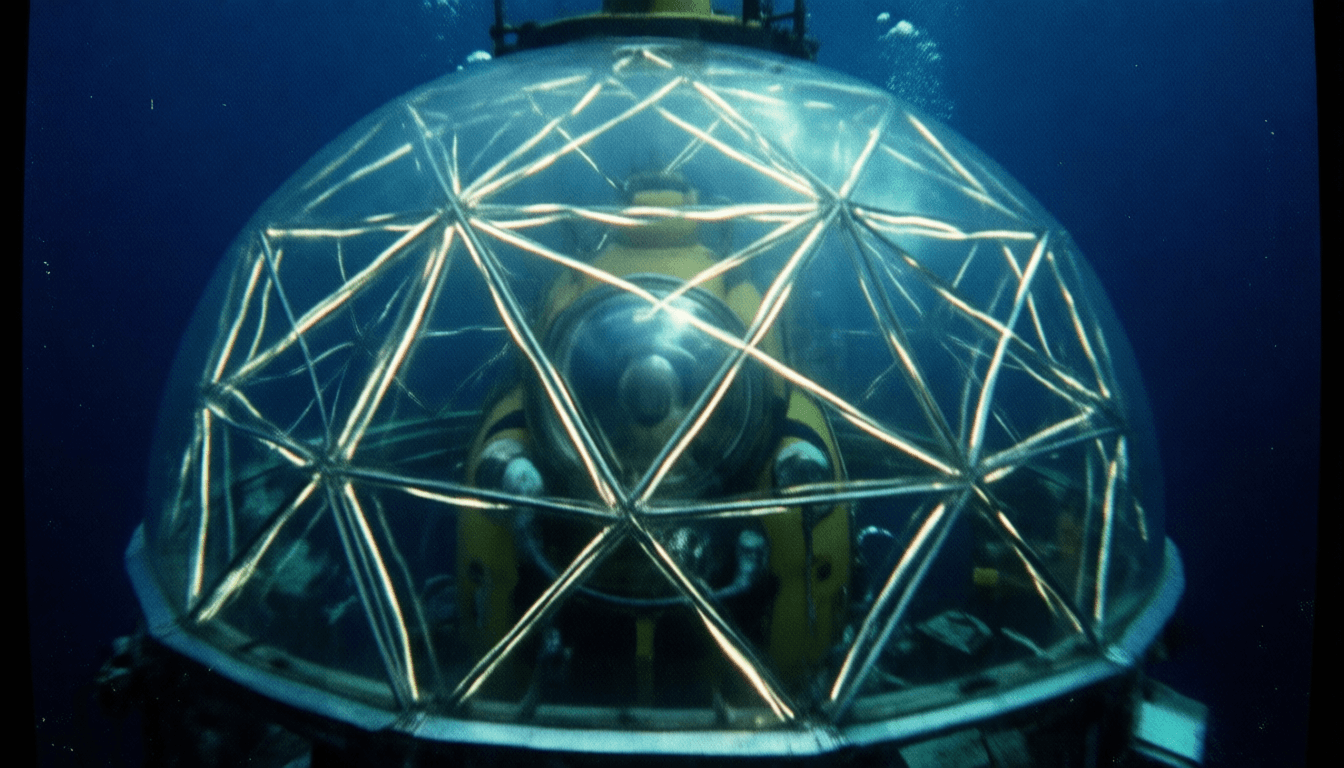
At 863 meters, the primary sonar picked up a massive, impossibly smooth structure. It wasn't jagged rock or ancient ruins. It was a colossal, translucent dome, softly emanating a faint internal luminescence, beating with an almost imperceptible rhythm. As the 'Nautilus X' approached, its internal systems began to malfunction in impossible ways. The sub's gyroscopes spun wildly, internal clocks accelerated and decelerated, and pressure gauges swung between impossible highs and lows, indicating localized, extreme hydrodynamic pressure shifts. This wasn't equipment failure; the environment itself was being manipulated.
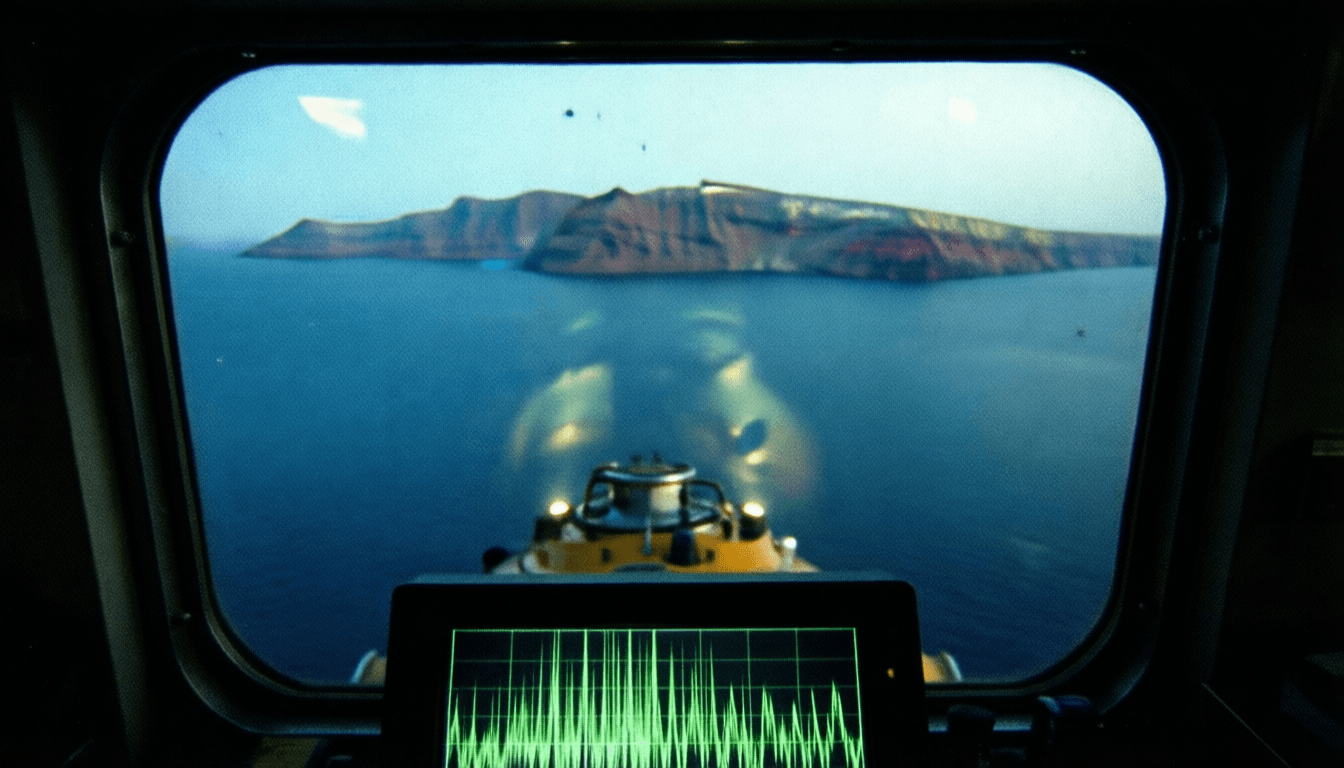
A vast, unseen field enveloped the submersible, pulling it slowly and deliberately towards the dome's surface. The hull shrieked, not merely from hydrostatic pressure, but from an external, twisting force. Dr. Thorne wrestled with the controls, but the sub's thrusters were fighting a losing battle against the inexplicable pull. The 'Nautilus X' scraped against the dome's surface. No sound was heard externally, but internally, the entire submersible resonated with a deep, chilling hum. Internal lights flickered, nearly dimming to darkness, and the viewport showed a distorted spectrum of light, as if the water itself outside was refracting differently, or the dome was actively manipulating light waves. He realized the chilling truth then. What he faced was not an ancient ruin. He was... being analyzed. The submersible was a specimen, momentarily held by an indifferent, impossibly advanced intelligence. Pushing the 'Nautilus X's' emergency thrusters to their limit, the hull screaming, Dr. Thorne tore the submersible free from the field's grasp in a desperate, violent maneuver. Warning alarms shrieked that structural integrity was failing in minor sections, but they were moving. They were ascending, leaving the pulsing dome behind.
Dr. Thorne piloted the damaged 'Nautilus X' back to the surface. Exterior sensors were unrecognizably melted, and most internal data logs were corrupted. Official reports attributed the incident to 'catastrophic submersible malfunction due to unprecedented and unpredictable extreme deep-sea environmental conditions.' Sporadic data showing localized spacetime distortions and impossible energy readings were dismissed as 'sensor ghosting' and 'system cascade failure.' But Dr. Thorne knew the truth.
In the aftermath, sifting through the few fragments of data he'd managed to salvage, he found one undamaged log: an impossibly regular, ultra-low frequency hum recorded just before the primary systems collapsed. And next to it, a single frame of grainy auxiliary camera footage, caught during the violent escape. It showed, for a fleeting instant, a complex, geometric lattice of light, rhythmically pulsing within the translucent dome. It was not a ruin. It was active. It was alive.
The Aegean Sea still lies in a placid slumber beneath the sun. But Dr. Thorne carries a new, cold dread. He was observed, analyzed, and perhaps deemed insignificant. Or perhaps simply released as a warning. The inexplicable domes remain untouched, unfathomable, beneath the waves. And the chilling realization lingers: It was not an ancient, slumbering discovery. It was an active, intelligent presence, still there, in the world's deepest, quietest abysses. Watching. Waiting. And... it allowed him to leave.
[ CLASSIFIED VERDICT ]
[ACCESS LOG - SOURCE FILE]
Rumors often circulate about ancient civilizations or unknown, intelligent entities hidden in the deep sea, a realm almost entirely inaccessible to humans. This particular story is based on an eyewitness account of a massive, translucent dome displaying intelligent activity, discovered in the Aegean abyss. It explores the chilling fear that an advanced, unknown world might be silently observing us from the deepest, most secluded parts of our own planet.