The Devil's Sea: Echo of the Held Ships
The stories about the 'Devil's Sea', officially designated by Japanese maritime authorities as a permanent danger zone – also known as the 'Dragon's Triangle' – are not mere fishermen's superstitions. This area is notorious for a consistent pattern of compasses dancing wildly, localized fog appearing suddenly from clear skies, and ships and aircraft inexplicably vanishing. In 1952, the state-of-the-art research vessel Kaiyo Maru 5, with 31 crew members and scientists aboard, evaporated without a trace in the heart of this Devil's Sea. There were no distress signals, no wreckage. Only a few life jackets, miraculously found hundreds of miles away days later, remained. They were undamaged, with no signs of prolonged drift. The official report from the Japanese Coast Guard simply concluded "missing," but to those who understood its implications, it meant not just an accident, but an 'erasure.' Recently declassified military satellite images have captured transient, unexplainable localized gravitational or energy anomalies over the Devil's Sea, often dismissed as sensor malfunctions or atmospheric interference. Yet, their pattern is too precise, too repetitive.
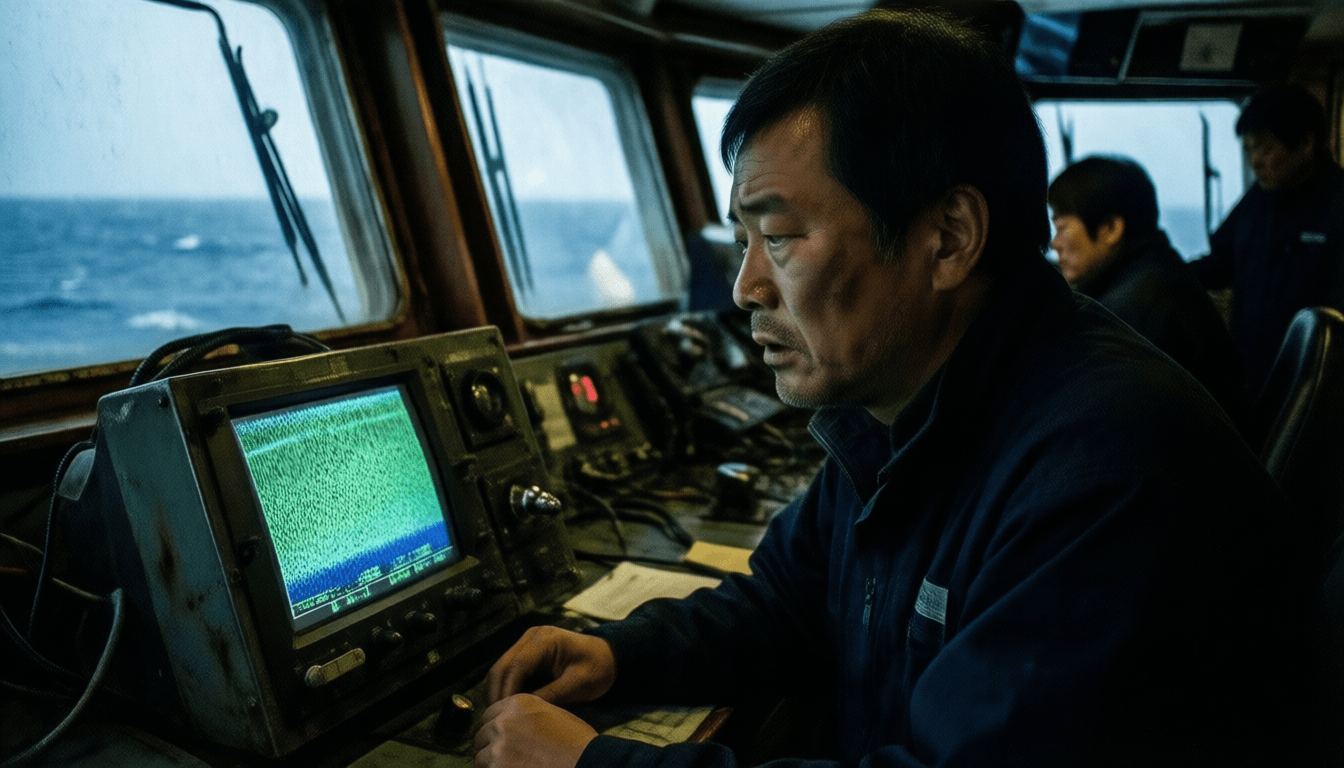
As a retired deep-sea geomorphologist, I acquired a small research vessel driven by a personal obsession with such oceanic anomalies. The goal was to deploy an advanced unmanned submersible, fitted with custom gravimeters and acoustic sensors, to the exact coordinates where the Kaiyo Maru 5 vanished. By mapping the seabed and analyzing changes in depth, I aimed to find persistent, measurable magnetic, gravitational, or acoustic distortions that could explain the mystery of the disappearances.
The approach to the zone was eerily quiet. The notoriously volatile Pacific was incredibly calm, reflecting the overcast sky like polished obsidian. Sounds seemed abnormally muted; even the roar of the ship's engines felt distant. The seasoned, skeptical captain and the taciturn first mate remarked on a strange metallic smell, far from any source of pollution. The moment we crossed the theoretical 'hot zone' boundary, the main GPS system suddenly jumped almost 200 meters, then clunked back into place. The ship's chronometer briefly ran 11 seconds ahead before correcting itself to real-time. The captain dismissed it as a "digital glitch," but a subtle unease prickled down my spine.
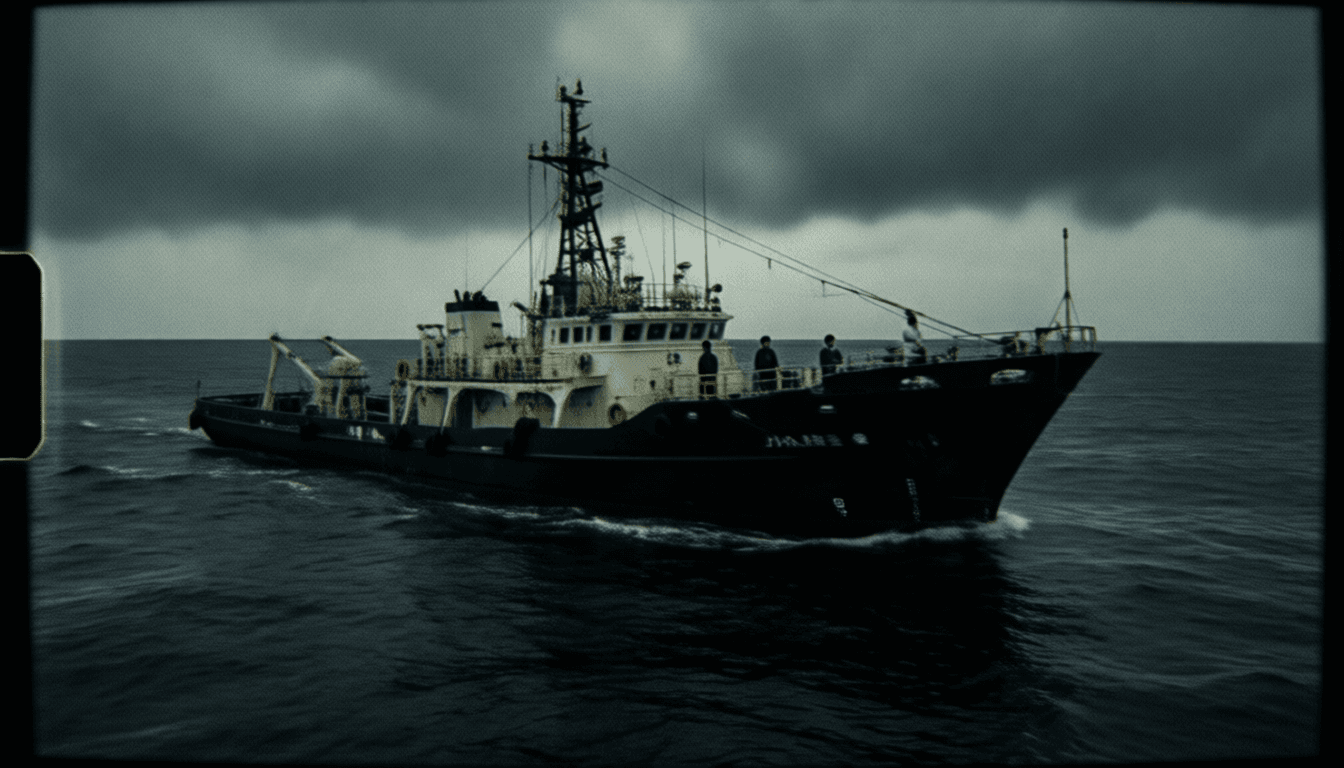
The unmanned submersible was deployed. Its high-resolution sonar feed, designed to consistently map volcanic terrain, became a chaotic mess. It reported impossible topography: vertical canyons hundreds of meters deep appearing and vanishing instantly, colossal solid structures rising from the seabed only to fade away. The submersible's temperature readings fluctuated wildly, suddenly shifting from near-freezing to 30 degrees Celsius within a few meters, entirely defying known thermoclines.
A deep, low, infrasonic hum began to resonate through the ship's hull. It was distinctly different from engine vibrations or wave sounds. A pressure deep in the chest caused a subtle but growing sense of dread. Normal conversation became disjointed; voices seemed to scatter mid-sentence, and reverberations were delayed or oddly distorted, as if the very air resisted sound.
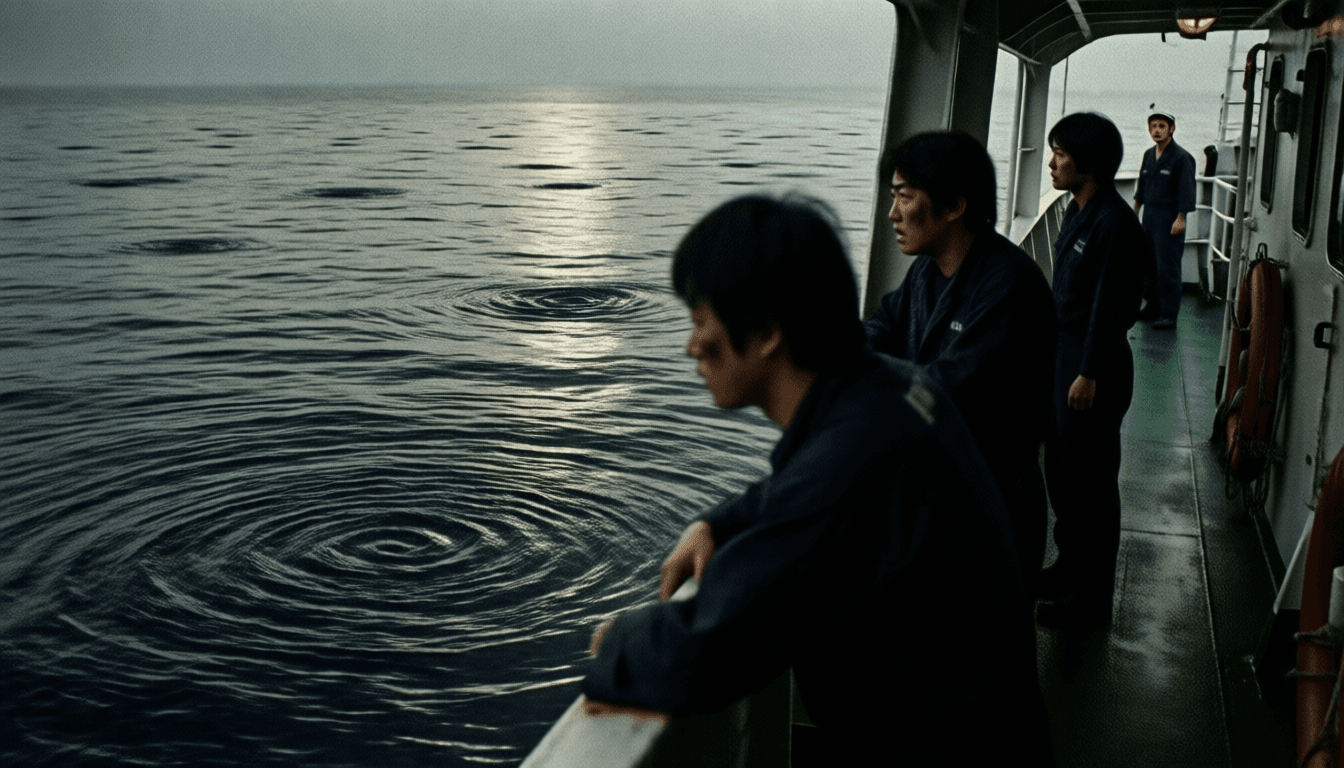
Small, perfectly circular eddies appeared and vanished on the unnaturally flat surface, pulling flotsam against the almost imperceptible wind direction. A patch of water directly beneath the ship's stern subtly refracted light, distorting the view of the shallow depths as if seen through a faulty lens. The submersible's telemetry reported sudden, violent lateral accelerations without external force or command, as if guided by an unseen hand. Communication with the outside world became intermittent, then impossible.
The submersible's video feed suddenly pixelated and died. Before I could issue a retrieve command, the ship was gripped by something. It wasn't a collision, nor a giant wave. An immense pressure came from all sides, as if the water itself had solidified around the hull. The ship groaned, metal screaming under stress no natural phenomenon could inflict. The infrasonic hum amplified into a deafening internal roar, vibrating through bone and sinew, threatening to shatter existence itself.
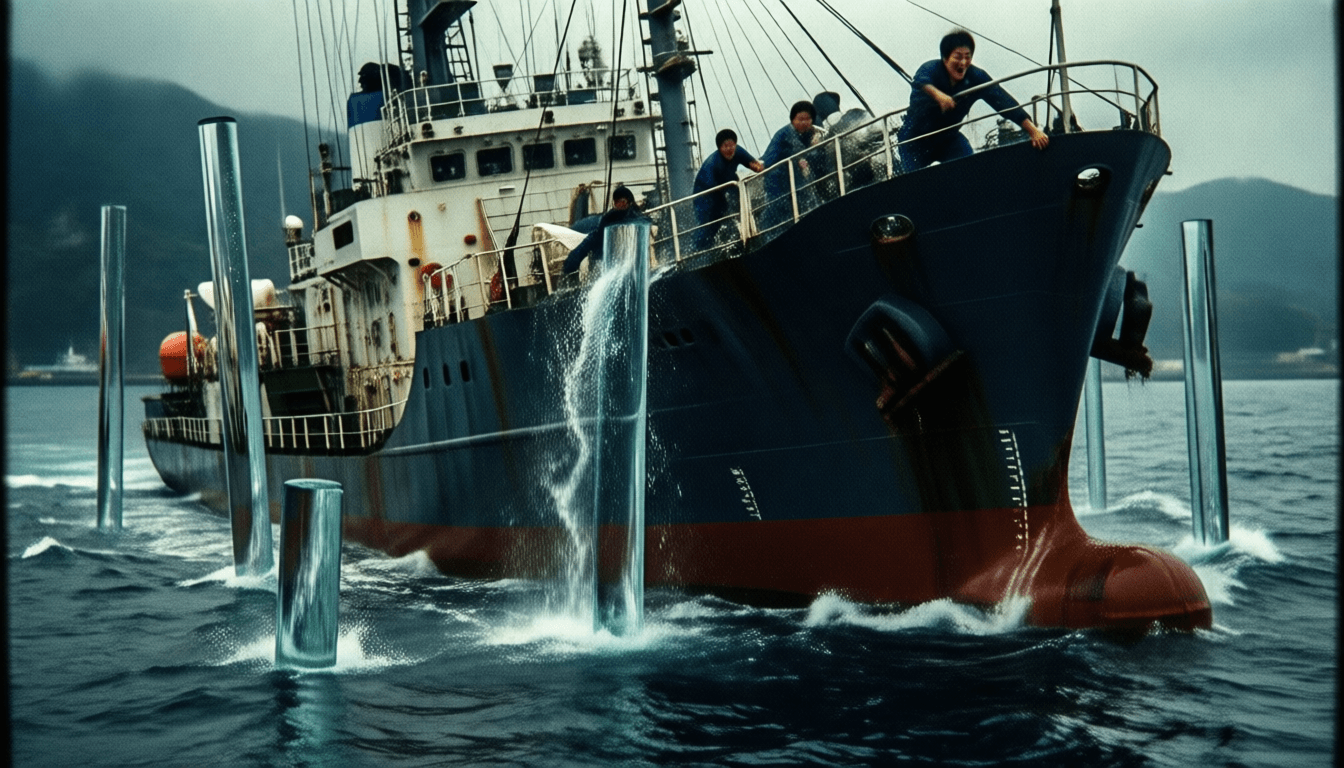
The instruments went wild. The depth sounder showed impossible depths, then negative depths, as if we were simultaneously above and below the surface. The compass spun furiously before locking onto impossible bearings. Suddenly, narrow, perfectly cylindrical columns of water began to rise upward from the sea surface around the ship, defying gravity. They formed brief, glass-like towers before collapsing into sickening splashes. In an eerie moment, the sonar screen flickered, and the faint, yet distinct, outline of the Kaiyo Maru 5 appeared directly beneath us. Not wreckage, but a perfectly intact, impossibly present, phantom energy signature within the distortion.
The starboard hull of the ship buckled inward, rivets popping like gunshots. Water surged through ruptured seams. A colossal, cold pressure wave enveloped the ship, violently slamming me against a bulkhead. I felt an enormous, deliberate weight, a painful squeeze as my body was compressed. This was not the random, uncaring violence of the sea. It felt like a calculated, intelligent act. The water around us pressed in, threatening to consume us, to integrate us into the impossible state the Kaiyo Maru 5 now occupied.
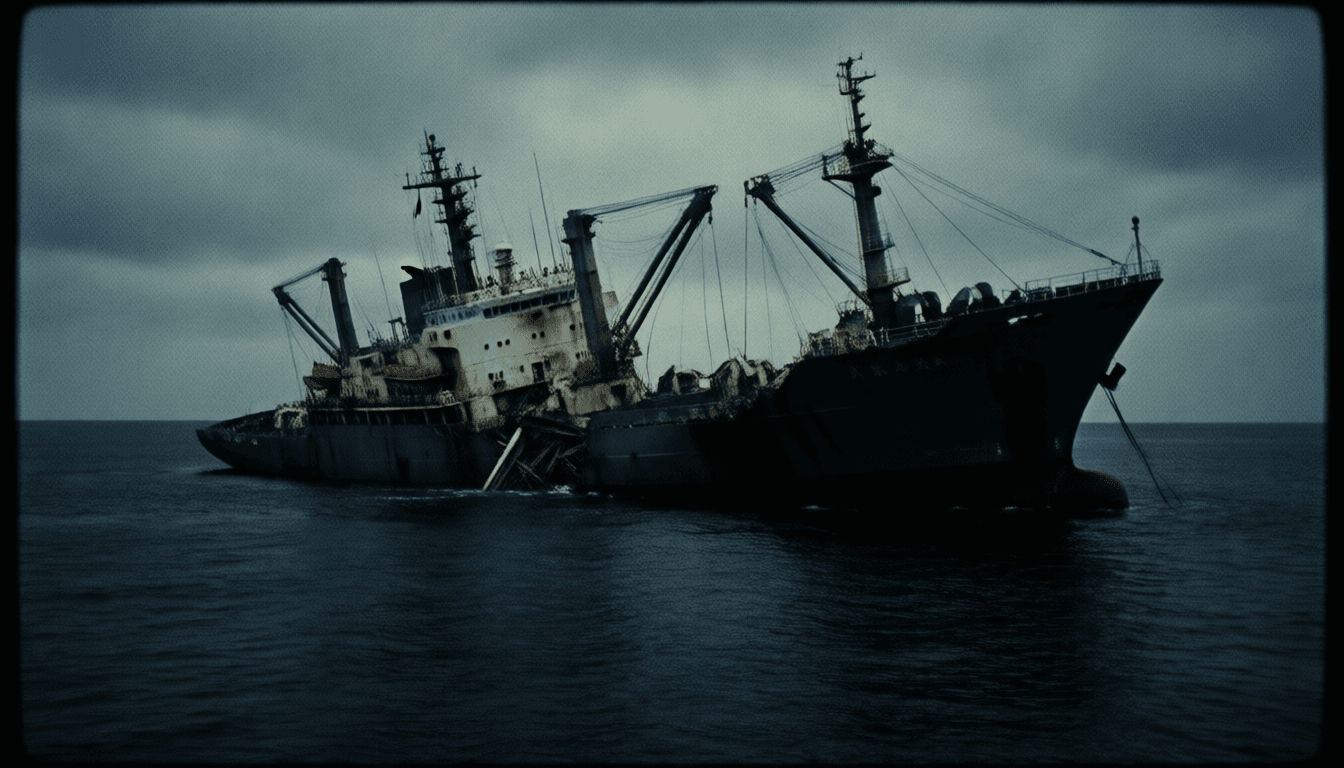
On pure, desperate instinct, I activated the emergency ballast blow, hoping the sudden expulsion of air would disrupt its grip. With a sudden, almost disdainful 'release,' a sensation of inexplicable 'rejection,' the ship was violently flung. It was thrown upward, then sideways, free from the immediate grip. Large sections of the hull were torn away, and the ship listed fatally, but it was afloat. The eerie roar suddenly ceased, replaced by an absolute, chilling silence. The patch of sea where we had been held was now perfectly flat, dark, and utterly still.
The severely damaged ship was found days later by a passing container vessel, hundreds of miles from its last known position. The crew was in shock, their accounts inconsistent and often contradictory. My detailed reports of impossible physics were met with polite skepticism by maritime authorities, dismissed as instrument failures and psychological distress due to severe structural damage. Medical examinations found no apparent physical injuries, yet I live with a persistent, deeply embedded vibration in my sternum, a subtle, cold hum. The phantom sensation of impossible pressure never fully dissipated.
Most of the submersible's footage was irreparably damaged, but a single, perfectly clear, static image was inexplicably recovered from the onboard data logger. It was the faintly shimmering outline of the Kaiyo Maru 5, seen perfectly through the anomalous water distortion, not as wreckage, but as a ship trapped in amber, utterly motionless. The data logs contained impossible spikes of localized gravitational anomalies and unidentified energy signatures precisely matching the duration of the incident, yet experts dismissed them as "irrecoverable hardware anomalies."
I am haunted by the feeling of being pressed, of the water's deliberate act. For years, I delved into anomalous data, comparing it with historical records of disappearances, finding patterns no one else saw, connections dismissed as coincidence. I published a fringe theory of "localized oceanic spacetime distortion," which was met with academic scorn. But the Devil's Sea continues to consume ships, sometimes spitting out a single undamaged life jacket or cargo container hundreds of miles away, in a spot impossible for any current, without a visible scratch. I understand now. The 'vanishing' isn't random. The sea isn't swallowing ships. The sea is holding them. And sometimes, for reasons unknown, it spits out a single chilling piece of evidence of their continued impossible presence. A reminder that it is still there, still collecting. And that hum never truly goes away. A low, constant vibration deep in my bones, a secret shared with the crushing deep.
[ CLASSIFIED VERDICT ]
[ACCESS LOG - SOURCE FILE]
The area officially designated by Japanese maritime authorities as the 'Devil's Sea' or 'Dragon's Triangle' is a mysterious zone where ships and aircraft inexplicably vanish. The disappearance of the state-of-the-art research vessel Kaiyo Maru 5 with 31 crew members in 1952, with only a few undamaged life jackets found hundreds of miles away days later, symbolizes the terror of this region. This story delves into the experiences of a deep-sea geomorphologist who embarks on an expedition to uncover the mystery of these 'erasures'.