The Cursed Breath of Poveglia
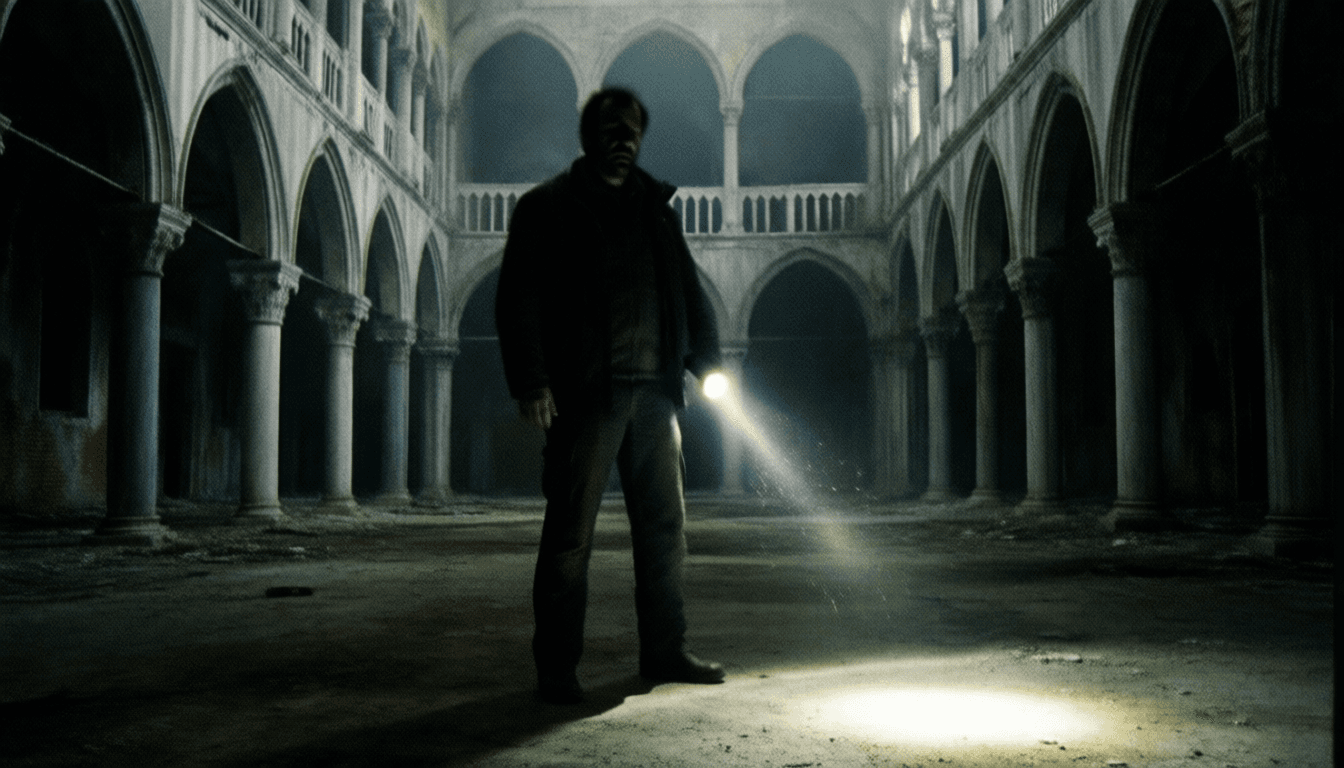
For decades, the name 'Poveglia' has circulated relentlessly among those seeking truly inaccessible and cursed places. All unauthorized access to this small island, barely a mile from Lido, is prohibited by official Venetian decree. Google Maps blurs the island's dilapidated buildings, a stark contrast to the vibrant digital life of surrounding tourist spots. Yet, whispers amplified by anonymous online posts, speculative articles, and blurry drone footage persist. Whispers that the soil itself is made of human ash, that the brutal suffering of 160,000 plague victims permeates the air, and that a hospital director was murdered by the island's ghosts. From disembodied cries to claims of physical attacks by unseen entities, historical tragedy has transformed into a modern myth of terror. My work involves delving into all these folk tales, hysteria, and subtly obscured historical records to find where reality twists. I had a hunch Poveglia was more than just a myth.
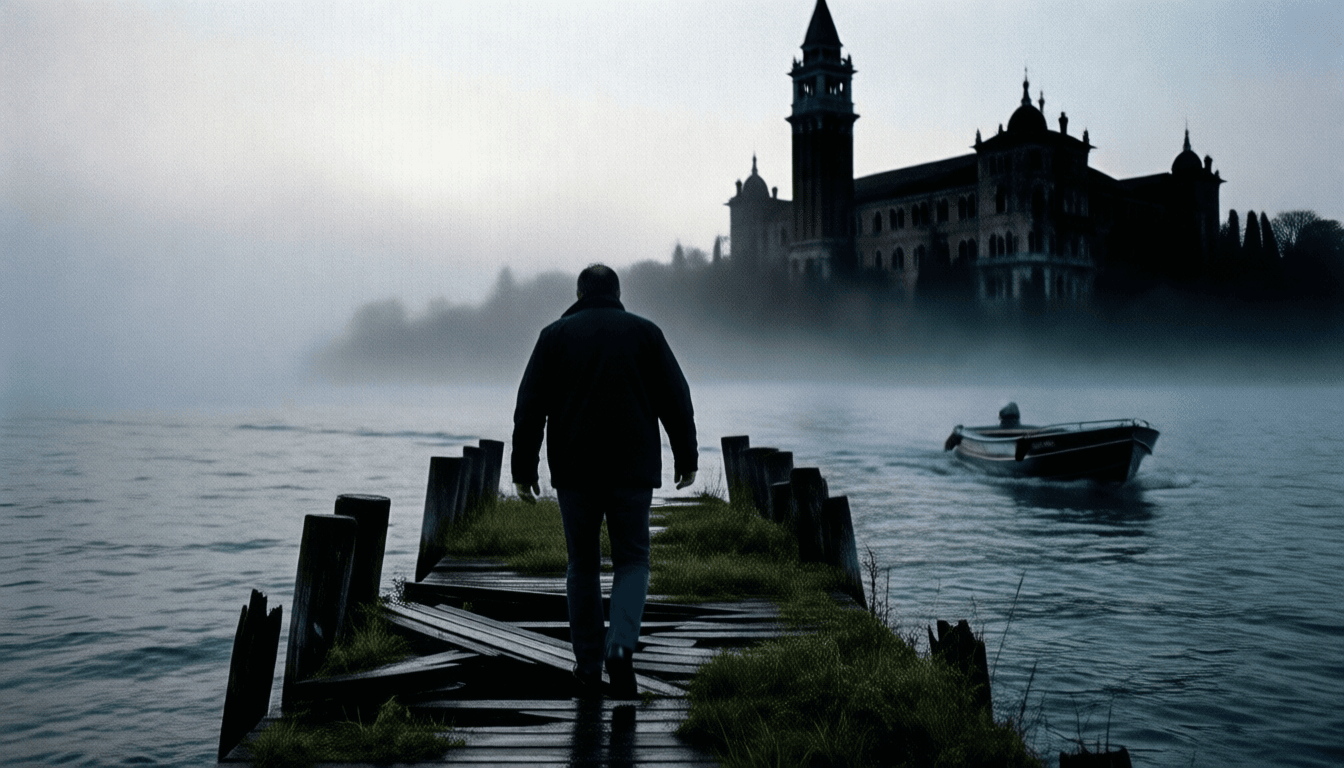
With funds provided by an anonymous sponsor, I undertook this illegal crossing. At dawn, during low tide, with fog creeping low over the water, the skiff traversed the silent lagoon. Poveglia emerged from the mist not as a grand fortress, but as a low, green hill, topped by the gaunt remains of its infamous building, the old mental asylum. The moment the boat scraped against the broken dock, a heavy, suffocating silence descended, as if absorbing all sound. The damp earth, salt, and an inexplicable faint, metallic, pungent odor hung in the air.
My boots crunched over shards of broken glass, ceramic fragments, and dried seashells. I made my way towards the asylum. The building's Venetian Gothic arches sagged under the weight of time, its walls stained by salt and age, its windows gaping like empty eye sockets. Inside, it was filled with filth, light barely penetrating. Rusted medical equipment — stretchers, wheeled cabinets, a few cracked enamel sinks — lay abandoned. On the walls, faint traces marked where beds had been, where restraints had been bolted. It was a derelict hospital, yet it gave the peculiar impression not of being empty, but of everything being frozen in time.
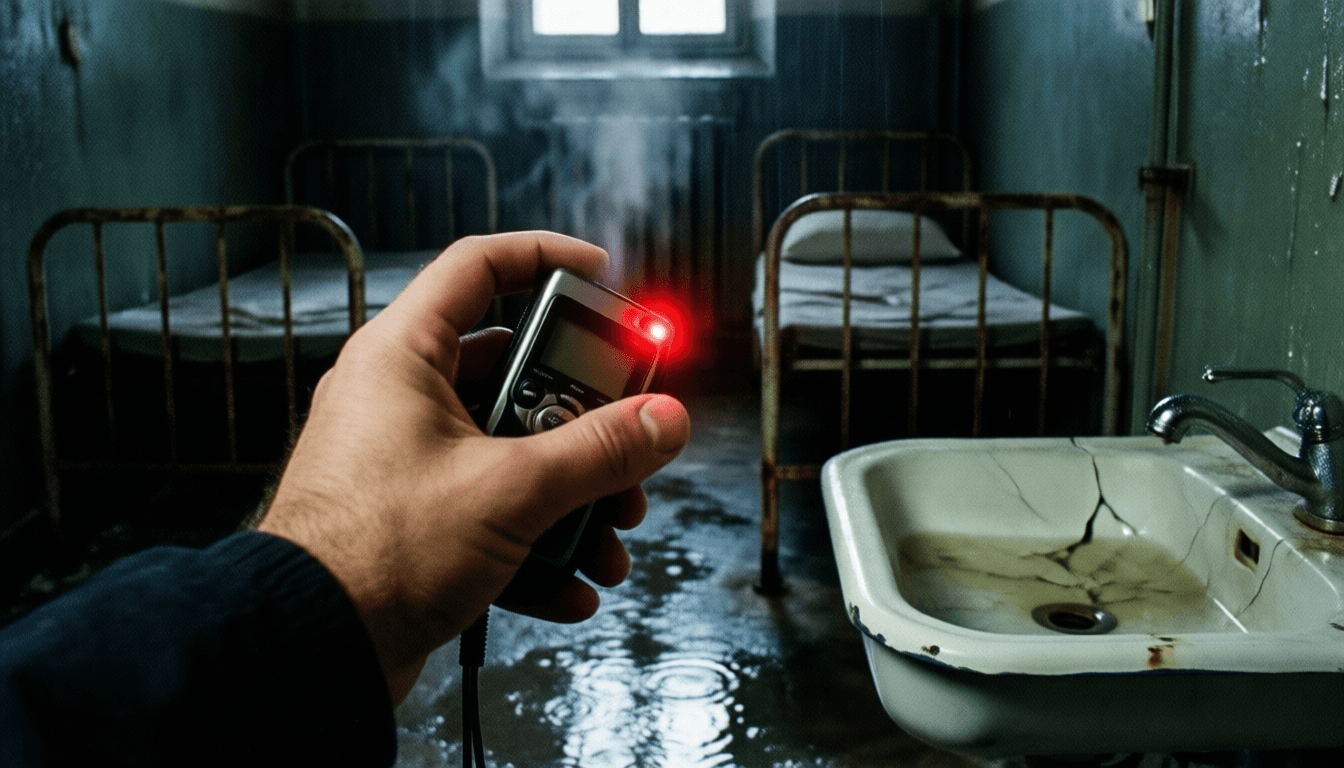
As I delved deeper into the asylum, the silence grew more intense, feeling like a living entity. My carefully placed footsteps echoed too long, too loudly, then were swallowed and disappeared. In the ward where tens of thousands of plague victims supposedly took their last breaths, the ambient temperature dropped sharply. My breath plumed visibly white in the stagnant air. In a cracked porcelain sink in one corner, rainwater had collected, and I watched, mesmerized, as the surface rippled inwards, despite no apparent movement. I placed my recorder on an old bedside table. Its red light blinked like a beacon in the darkness.
A little further, in what appeared to be an administration office, a stack of severely water-damaged ledgers lay on a desk. As I leaned in to examine the blurred handwriting, a faint but heavy breath brushed against my back. I spun around quickly, raising my camera, but saw only the empty, shadow-draped corridor. My heart pounded violently. "Is anyone there?" My voice was thin and shaky. The words hit the moldy walls and echoed, but the reverberation was strange. After a distinct delay, it elongated and transformed into a voice that sounded accusatory, before fading away. The smell of old blood and disinfectant filled the room then vanished instantly. A cold shiver ran down my spine. A clear sensation, not of one, but of multiple gazes, fell upon my neck, watching me.
I found it in the farthest wing, near the remnants of what locals called 'the bell tower'. On the white-washed wall of a small, windowless room, a series of crude but deeply etched symbols and tally marks were carved. Not desperate patient graffiti, but something deliberate and ritualistic. The moment my camera focused, the air pressure in the room fluctuated violently, as if a vacuum had been created and then released. A heavy iron door at the end of the corridor — previously unmoving — slammed shut with a shocking sound that shook the entire building. The clack of a rusty bolt engaging followed. I was trapped.
A sharp, vivid scream erupted from the floor above me, immediately followed by a low, guttural scream from an adjacent room. The sounds mingled and distorted, physically assaulting my ears. The blood in my body ran cold. The floorboards beneath my feet creaked and bowed as if a massive, invisible weight shifted. And from the corners of the room, faint, shimmering distortions began to coalesce. They weren't solid forms, nor ghosts in the traditional sense, but rather like interference, like heat haze, pushing inwards.
Rusted scalpels and forceps, medical instruments on a nearby table, vibrated and then clattered as if knocked by an unseen hand. A scalpel slid off the table, hit the floor, and skittered to a halt just inches from my boot.
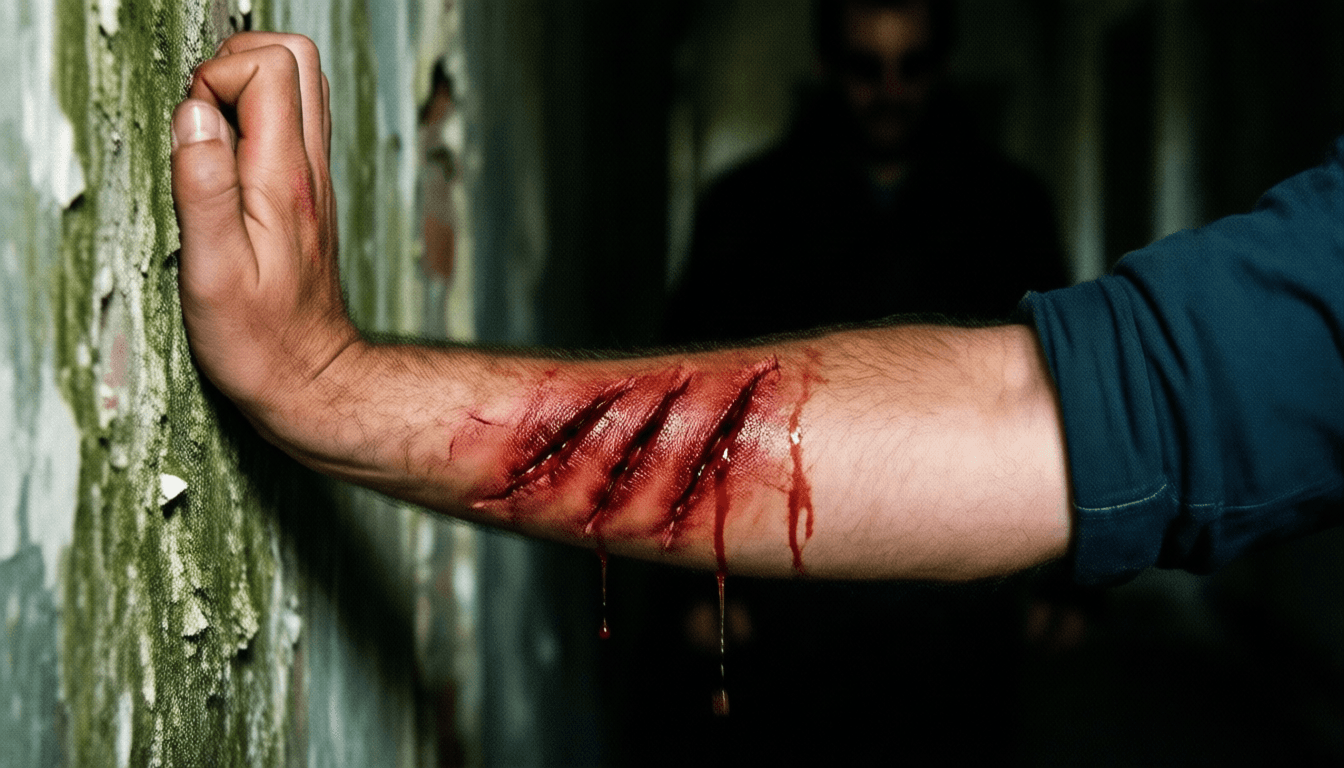
Then, an immense force struck my back, knocking the breath from my lungs, and I slammed against the wall and fell. A sharp, burning pain shot across my forearm. I looked down in horror. Three parallel lacerations from which blood streamed profusely. There was no visible source. The smell of decay and sickness became overwhelming, clogging my lungs with its stickiness.
I desperately scrambled to my feet, my eyes darting everywhere. A massive, rusted bed frame in one corner of the room, previously unmoving, now violently rattled, lifted about an inch off the floor, and then shot across the room at incredible speed, smashing into the wall where I had stood moments before. Countless, too-close-to-ignore, non-human, damp whispers enveloped me. My escape was not planned. It was a primal, adrenaline-fueled scramble through shattering plasterboard, tearing clothing and flesh, but I blindly stumbled towards the faint light outside, abandoning my equipment and all semblance of control.
Shaken and bleeding, I returned to the mainland. Doctors attributed the lacerations to debris, the broken ribs to a fall. 'I fell' was an easier story to tell.
Days later, in the sterile quiet of my office, I embarked on the arduous task of reviewing the few recovered recording devices. The audio files were mostly static, interspersed with my ragged breathing. But for about 12 seconds in the deeper wards of the asylum, a faint, rhythmic sound emerged. It was a low hum, like a giant, slow heartbeat, overlaid with countless faint, hissing whispers that were indecipherable. They were not human voices. Rather, they were closer to an imitation, like countless dry leaves rustling against each other, struggling to form a sound.
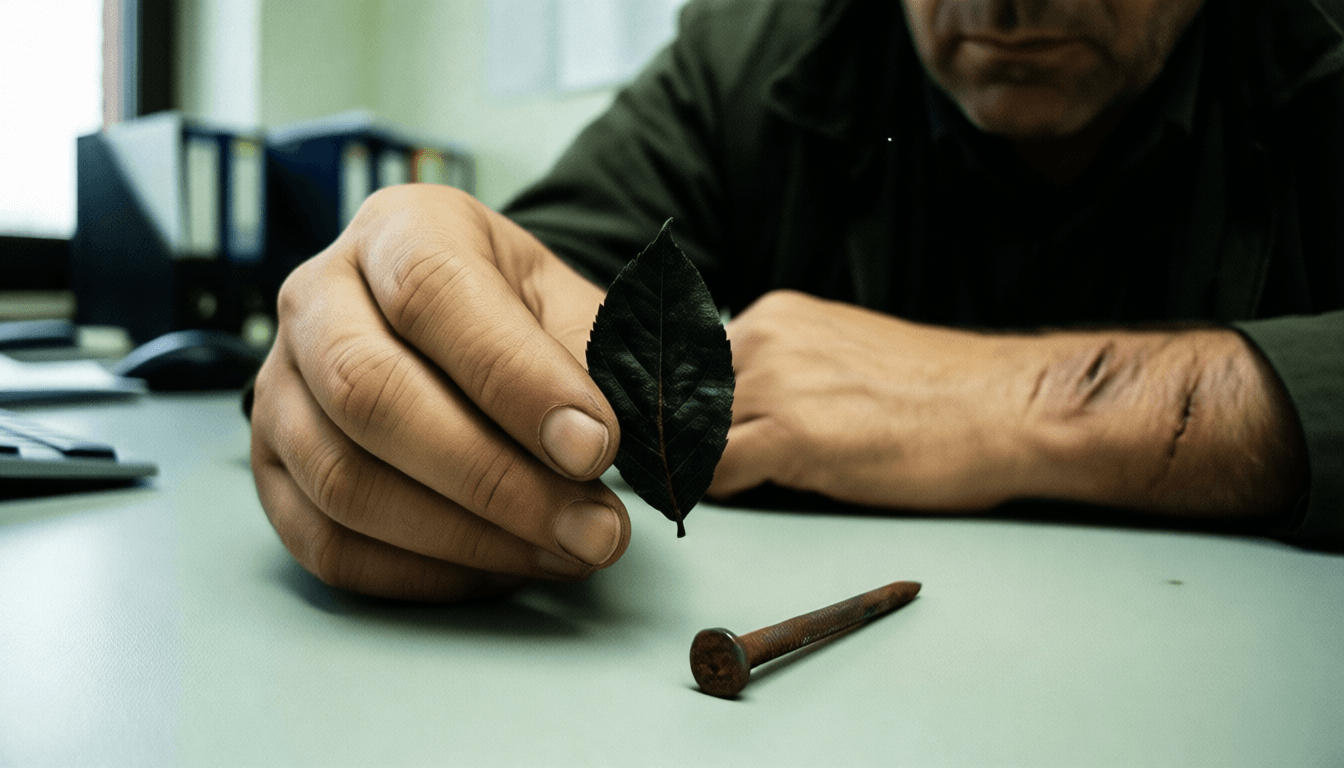
Later, unpacking my soiled gear, I found it. A small, dark object entangled in the mesh of my bag. It was a dried, blackened leaf, unlike any species native to the Venetian Lagoon. And beneath it, clinging to the fabric, was a rusted, hand-forged nail. Its head was flat, its body pitted by the passage of time. I didn't remember picking it up. It was just there.
The smell, too, had not left. A faint, persistent scent of damp earth, old coins, and a metallic tang that felt like blood seemed to emanate from my clothes, from my skin, despite multiple washes. Sometimes, in the deepest silence of my apartment, I now hear it. Not my voice, but a faint, delayed echo of a heavy sigh from far away. As if a vast, ancient breath is being drawn in, just beyond the threshold of my hearing, and slowly exhaled. I sometimes find myself staring at certain photos I took on Poveglia. A blurry image of a shadowed doorway inside the asylum. In the deepest, darkest parts of the frame, where no light reaches, some indistinctness seems to coalesce. As if something in the very depths of the photograph itself refuses to be entirely still, refuses to completely disappear.
[ CLASSIFIED VERDICT ]
[ACCESS LOG - SOURCE FILE]
This story is set on Poveglia, a real island located in the Venetian Lagoon, Italy. Historically operating as a plague quarantine station and mental asylum, and having witnessed countless deaths and tragedies, the island is known as one of the "most cursed places in the world." Urban legends of terrifying supernatural phenomena, along with rumors that its soil is composed of human remains, persist to this day.