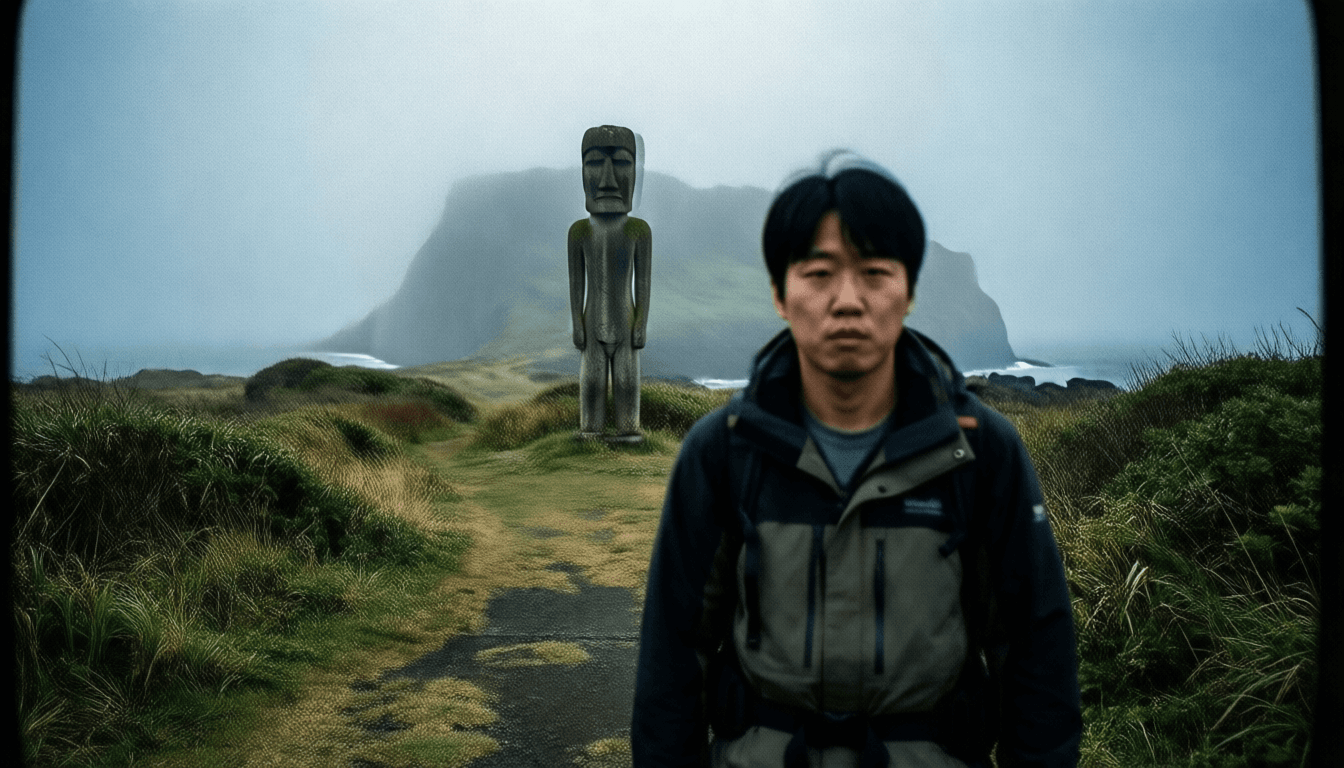
The Curse of the Moving Dol Hareubang Forest
The first mention appeared in a concise police record on October 14, 1997, reported by the Jeju Shinmun. It concerned three foreign backpackers reported missing after failing to check out of a guesthouse in Aewol-eup. Their rental car was found abandoned on a rarely used coastal road, about 20km west of their last known location. Search operations were hampered by sudden, unexplained fog and unusually rough seas, yielding no trace of the missing individuals. Weeks later, only one water-damaged backpack was recovered, its contents mostly ruined. Inside, there was a compact film camera. Finally, a severely damaged photograph captured a faint, low-light image of a cluster of Dol Hareubang. The ancient, pockmarked faces were captured in an unnaturally large close-up; though the poor quality obscured details, the police forensic team described the overall impression as “severely unsettling.”
For years, the incident remained a local cold case, resurfacing only in hushed whispers among fishermen and guesthouse owners. However, the recent digital age brought a new, chilling context. Online forums dedicated to Korean urban legends and mysterious phenomena resurrected the 'Aewol Missing Persons Case.' Users speculated about a 'cursed Dol Hareubang forest,' distinct from the friendly figures typical for tourists. These were said to be older, more primitive forms, occupying the island's abandoned, forgotten corners, possessed of a quiet, sinister sentience. One crucial detail often repeated: a now-deleted but archived post claimed a local fisherman witnessed the Dol Hareubang changing positions in a dense fog. Statues that had faced the sea had turned inland, as if watching something emerge from the thick mist.
My interest, as always, lay at the intersection of archived records and modern anecdotal evidence. I arrived on Jeju in late autumn, the usual bustle subdued by the encroaching chill. Following a meticulously compiled itinerary, derived from old survey maps and the most credible theories from online forums, I located the approximate site of the disappearances.
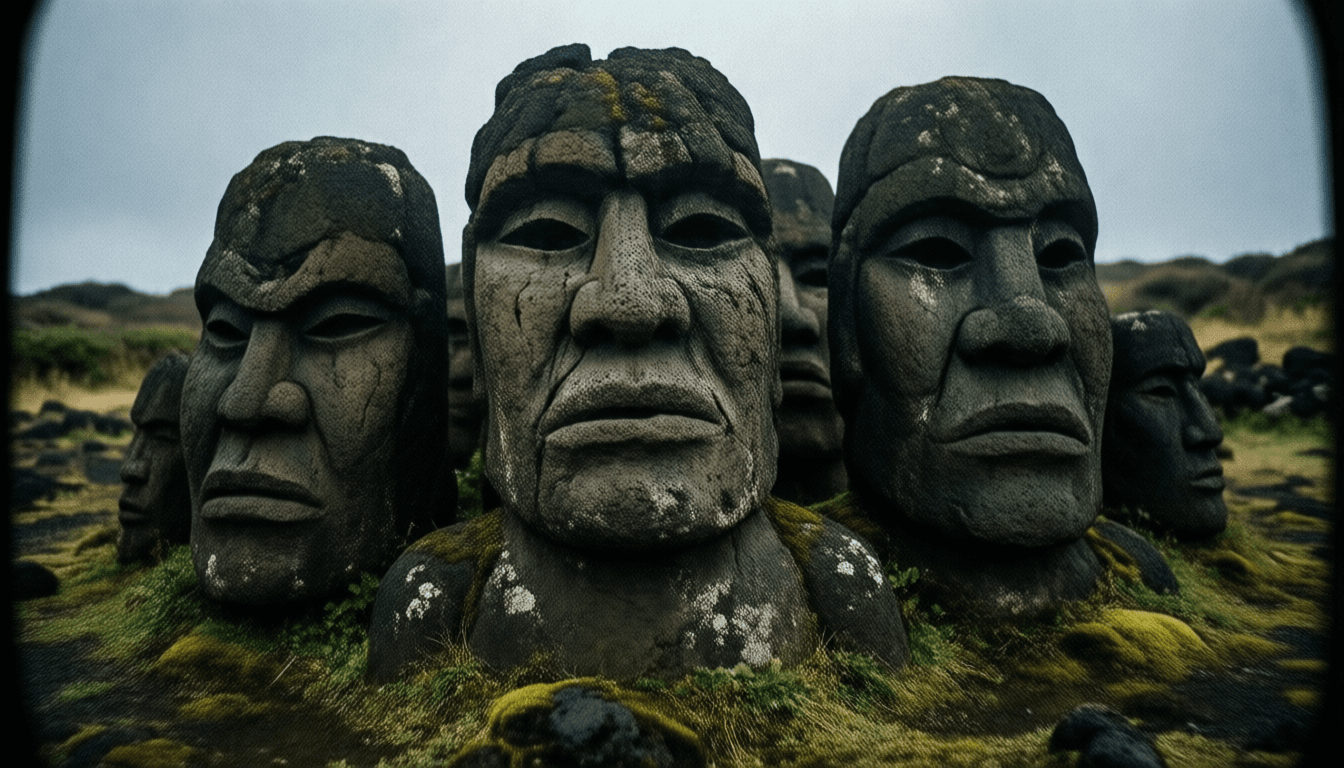
The coastal road was barely discernible, choked with thorny brush and the persistent tang of the sea. After more than an hour’s trek through twisted pines and wind-sculpted basalt formations, I found them. Seven primitive, rough-hewn Dol Hareubang, unlike the uniformly carved figures in the parks, were clustered together. Their faces, eroded by centuries of salt and wind, bore expressions less of guardianship and more of ancient, silent judgment. They were taller than expected, their volcanic rock bodies mottled with gray lichen and dark moss. The ground around them was strangely clear, as if nothing dared to grow close. Even the roar of the sea, usually fierce, felt unnervingly muted in this small, hidden clearing, as if holding its breath in awe.
As I documented the site, the air grew heavy, almost viscous. The afternoon light, filtered through an increasingly overcast sky, cast long, wavering shadows that seemed to detach themselves from their source. I unconsciously kept checking my periphery, certain I caught glimpses of movement among the Dol Hareubang—a subtle tilt, a nuanced turn of a head. Each time I looked directly, they remained perfectly still. Yet, the sense of being watched intensified, pressing down on me from above and behind.
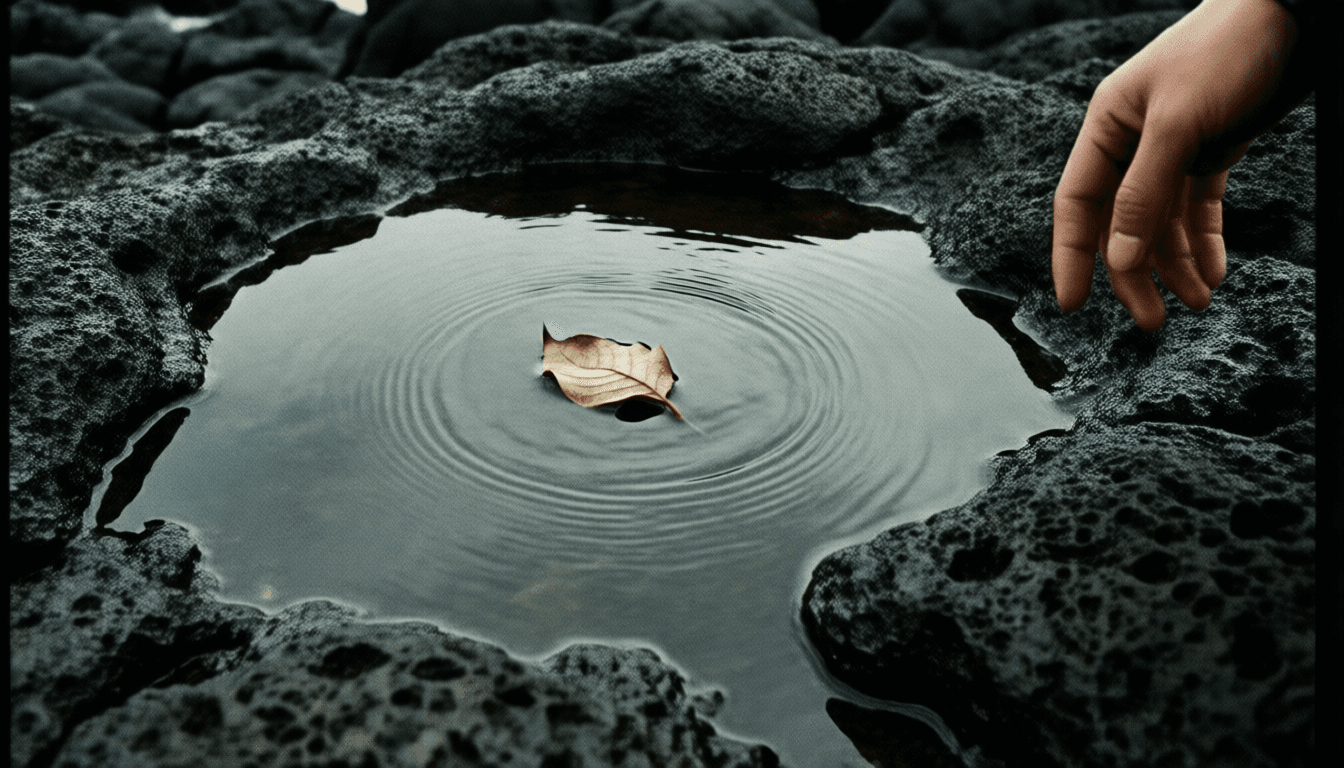
I knelt to examine the ground near the largest Dol Hareubang, the one with the particularly stern expression. In a nearby basalt depression, a small, shallow puddle, fed by an imperceptible subterranean spring, lay still. A single wind-blown leaf settled onto its surface. Instead of drifting randomly, it slowly twitched, then moved against an almost imperceptible current to the precise center of the puddle, where it sank, as if pulled by an unseen magnet. I tossed a small pebble into the water. The ripples spread outwards, then, unbelievably, reversed course, converging back to the point of impact before disappearing. I sprang to my feet, a cold dread washing over me. The deep silence that had settled over the clearing was now more than just an absence of sound; it felt like an active suppression of all natural noise. The only sound was the thunderous, deafening pounding of my own heart.
The sudden, horrifying realization of what I was witnessing sent adrenaline surging through me. I instinctively turned to retreat, but the path by which I had entered the clearing was gone. Not overgrown, but blocked. The two Dol Hareubang that had guarded the entrance now stood shoulder-to-shoulder, forming an impenetrable wall of stone. They hadn't walked. They had simply shifted positions.
A low, grating groan emanated from the ground beneath my feet. It wasn't a geological sound; it was organic. The sound of granite shifting under immense, slow pressure. The basalt bedrock of the clearing itself began to undulate, gently at first, then with increasing violence. The ground seemed to writhe, and I stumbled, losing my balance. All seven Dol Hareubang began to rotate slowly on their axes, their weathered faces turning in unison towards me. No legs moved, no arms swung, yet their massive bodies turned, their ancient forms groaning with a sound like scraping tectonic plates.
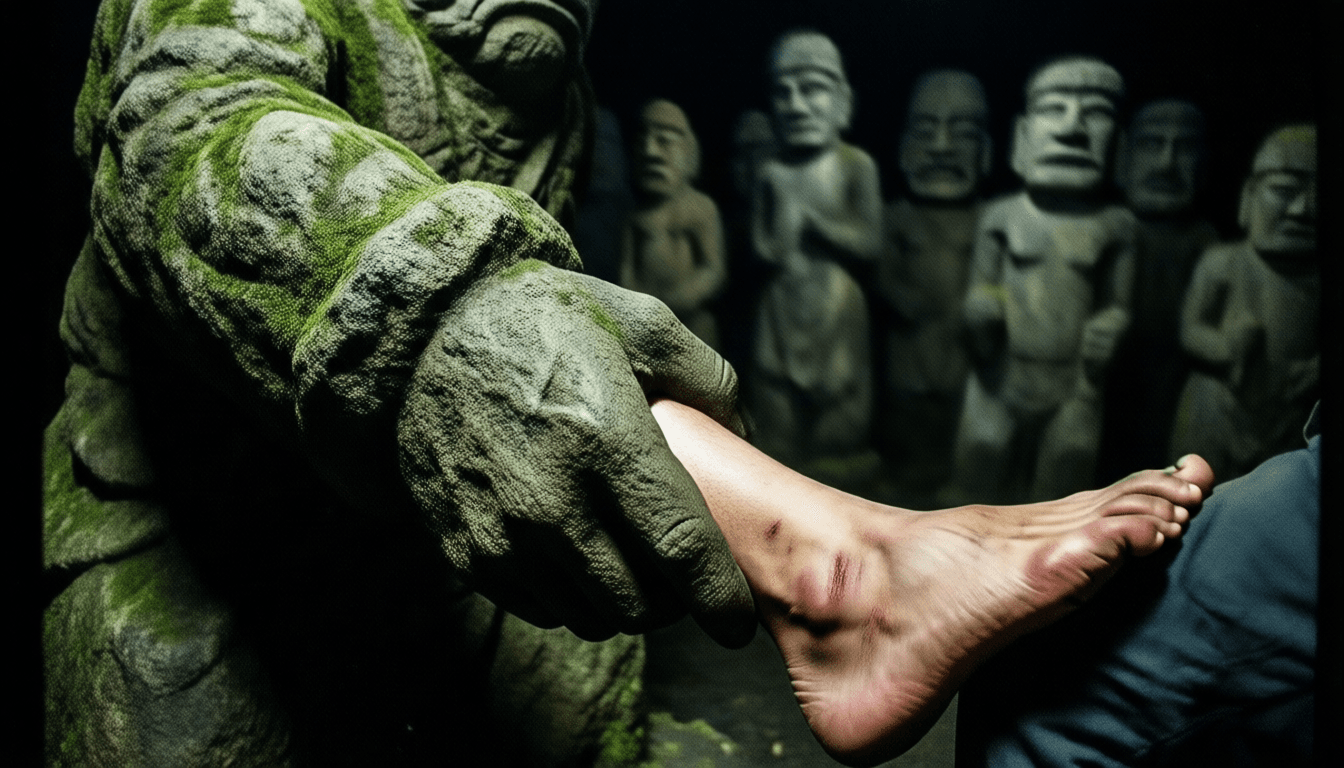
Then, from the largest Dol Hareubang, the one with the stern expression I had first examined, a thick, gnarled arm extended. Carved from the same porous volcanic rock, it moved with a speed that defied its immense weight and material. It felt less like a limb and more like a geological process suddenly animated. The rough, moss-encrusted stone fingers, as thick as my forearm, clamped around my ankle with bone-crushing force. The stone was impossibly cold, exuding an ancient, marrow-chilling frigidity. I screamed. A primal, raw scream that was instantly swallowed by the unnatural silence of the clearing. I struggled, kicking wildly, but the grip was absolute, unyielding. The other Dol Hareubang continued their slow, relentless turn, closing ranks, their empty eyes now seeming to focus. I could feel individual basalt grains scraping my skin, the slow, agonizing pressure that threatened to snap bone. In a desperate, pain-fueled moment, I twisted, snatching a shard of broken volcanic gravel from the nearby ground with my free hand, and swung it violently at the massive stone 'hand' clutching my leg. A sharp, shattering crack echoed, and for a fleeting instant, the grip loosened just enough. I tore free, leaving behind torn fabric and a deeply lacerated, bloody gash on my ankle. As I stumbled backward, the ground convulsed again, and I half-crawled, half-fell, scrambling towards a rock crevice. Behind me, I heard a dull, resonant 'thud,' the 'hand' retracting, the Dol Hareubang resuming their perfectly still, watchful stance. The stone scraped again, sealing the crevice behind me, trapping me in darkness.
Nearly 24 hours later, I was found miles down the coastline, huddled, disoriented, and hypothermic in a shallow sea cave. I claimed to have fallen, gotten lost in the fog, and hit my head on rough basalt. Doctors noted extensive bruising consistent with blunt force trauma around my right ankle and, to their mild confusion, a deep laceration with embedded particles of a specific type of volcanic rock found only on that remote western coast.
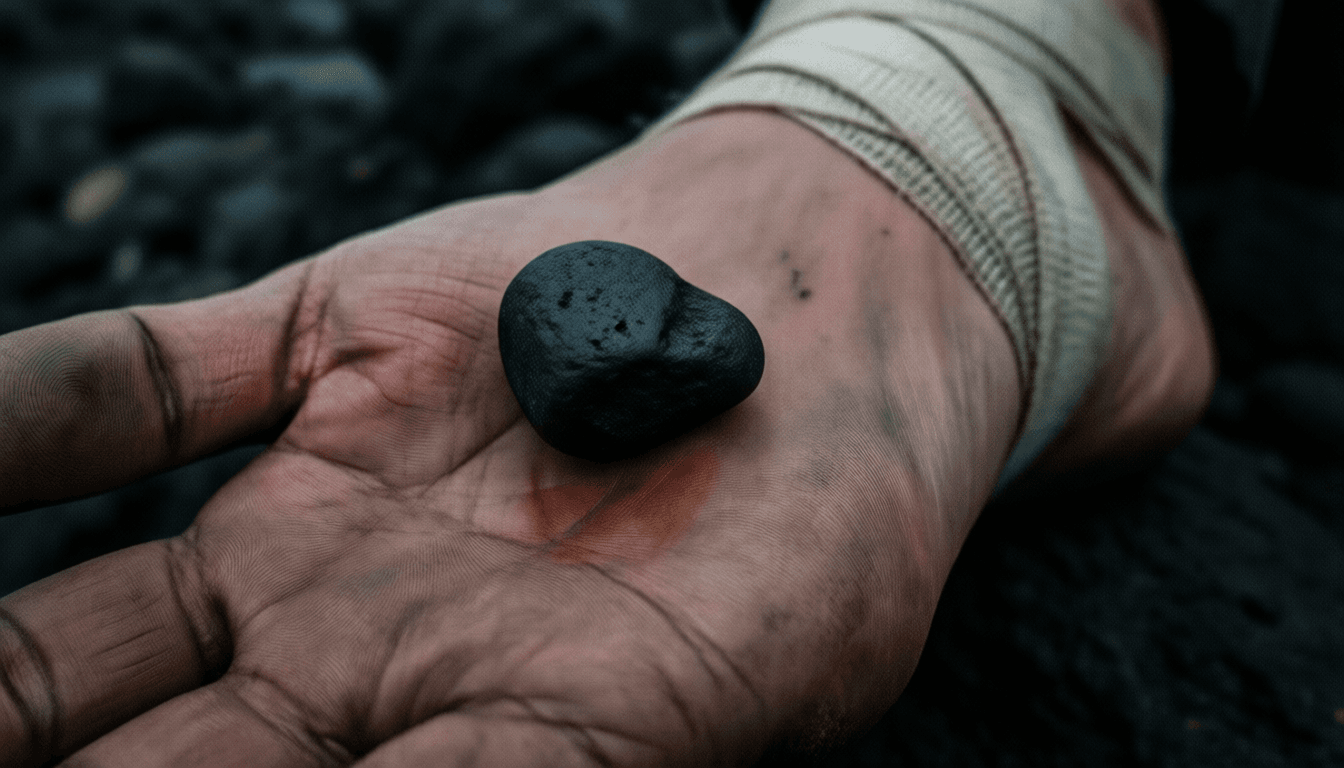
I had no photos, no tangible proof of what had happened. My camera was irreparably crushed when it was recovered. But I had something else. In my jacket pocket, I found a small, black, thumb-sized stone. One side was a perfectly smooth piece of ancient volcanic basalt. But the other was rough, jagged, and stained with a faint reddish-brown smear. My blood, perhaps, or something far older.
Months and thousands of kilometers removed from Jeju, I still carry that stone. Sometimes, it feels unnaturally cold in my palm, a chilling anchor. Other times, it seems to radiate a faint, almost imperceptible warmth. I've since read countless articles about Dol Hareubang, their deep connection to Jeju's spiritual world, their role as guardians. But the true nature of their guardianship, as I now understand it, is far more ancient and terrifying than any local legend. They are not protecting the island from external forces. They are the force itself. They are the silent observers, a millennia-old consciousness etched into the very rock of the land, dormant yet awake, capable of terrible, patient movement.
And now, I know one of them noticed me. Every shadow, every perfectly still statue in a park, every unmoving rock on a hiking trail – they all carry a different, unsettling weight now. I see their faces even where none are carved. I often feel a faint, cold pressure on my ankle, a phantom grip. The stone in my pocket is a constant reminder, a piece of that dormant, awakening presence. And I sometimes wonder: Is it merely a reminder, or a tether?
[ CLASSIFIED VERDICT ]
[ACCESS LOG - SOURCE FILE]
This story is based on an urban legend featuring Jeju Island's symbolic Dol Hareubang. Specifically, it draws on eerie rumors that ancient Dol Hareubang, abandoned in remote parts of the island, move on their own in the fog to trap people or prevent them from entering the island. They represent not just guardians, but the powerful, primordial force of the island itself.