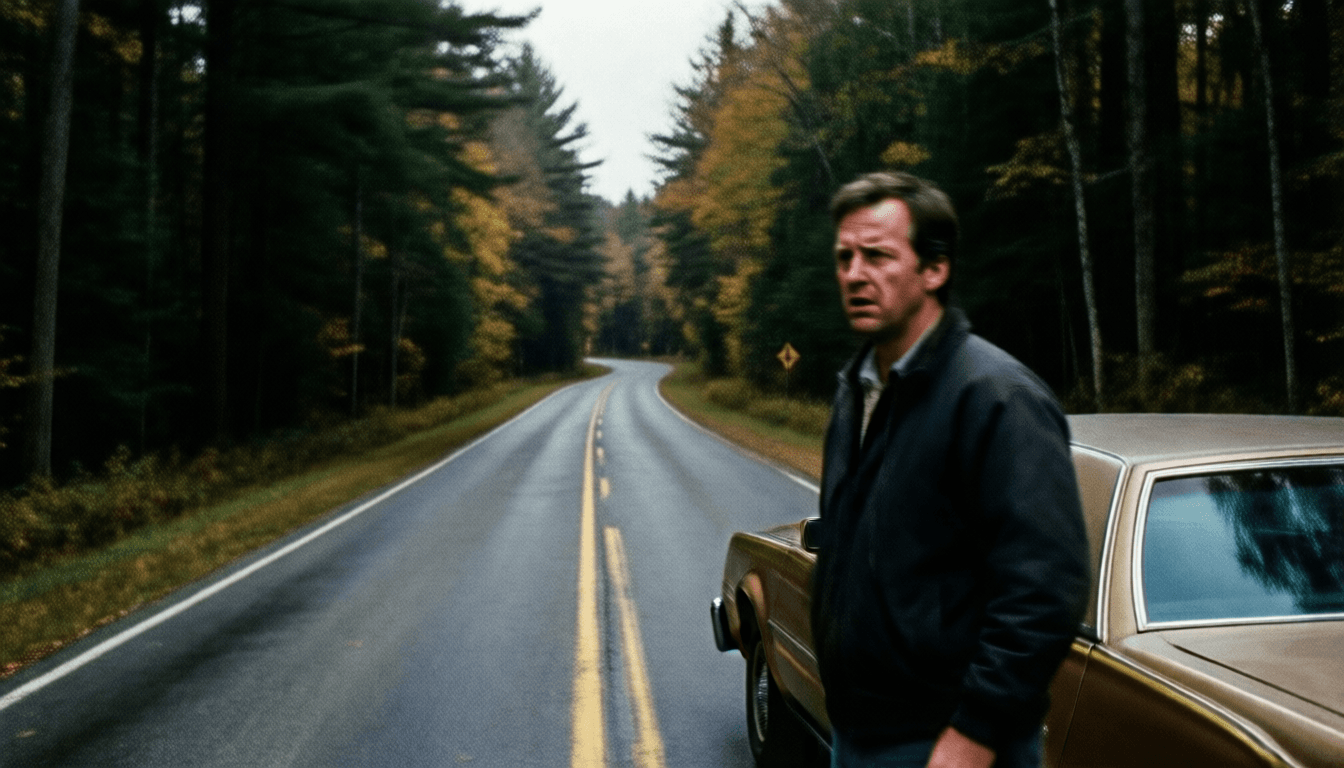
The Curse of Blackwood Grade
Generally, ‘Dokkaebi Road’ or ‘Magnetic Hill’ phenomena are common roadside mysteries, often explained by an optical illusion where surrounding terrain makes a downhill slope appear uphill, causing a car in neutral to seemingly roll ‘uphill.’ Such rational explanations are valid in most cases. However, much more sinister tales are passed down through unnamed local forums and old newspaper articles concerning ‘Blackwood Grade’ in rural Vermont. Beyond the typical claims of vehicles moving against gravity, there are consistent reports that distinctly differ from the optical illusion theory. Online posts detail that beyond cars merely moving uphill, items inside parked vehicles also shift according to unexpected physical laws. Coins left on the dashboard might be found in the backseat, or heavy objects change position without external impact.
More disturbingly, there are frequent chilling reports of parked car batteries draining inexplicably overnight, hikers' compasses severely malfunctioning, and missing persons not finding their way out but rather being lured deeper into the wilderness. A 2012 post cited a local news article about a teenager's abandoned vehicle found at the top of the Grade. All his personal belongings were in place, except for his phone and wallet. These two items were later discovered intact and clean, over 100 meters downhill from the car's original parking spot. The boy was never found. This peculiar combination of unexplained movement of inanimate objects beyond the vehicle itself and persistent disappearances triggered my investigation. My goal was to thoroughly document these claims and, if possible, disprove them by hypothesizing unique geological or magnetic anomalies.
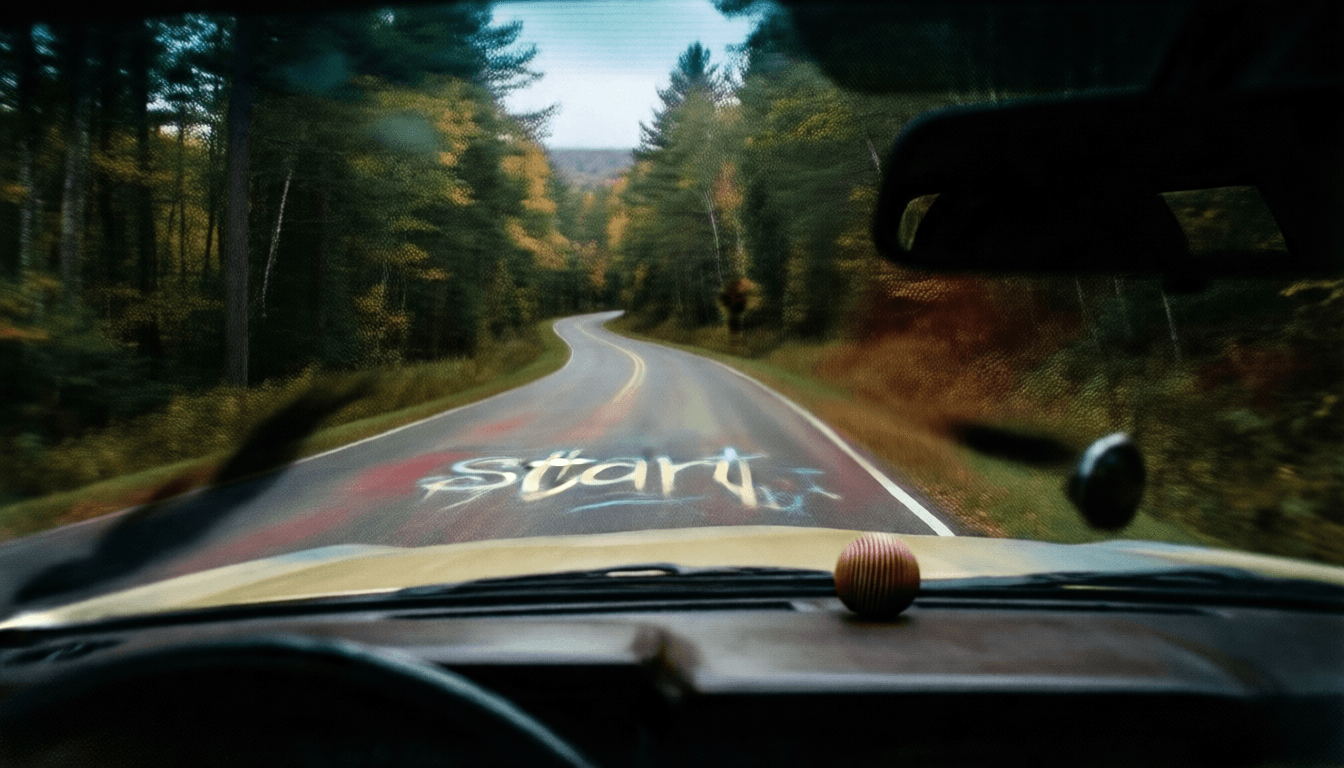
I arrived at Blackwood Grade on a crisp yet cloudy autumn afternoon. The road was secluded, a poorly maintained, winding two-lane path, surrounded by an almost impenetrable, dense old-growth forest. The air was eerily still. Even before parking, I detected an immediate, subtle reduction in ambient noise. The usual rustle of leaves, distant bird calls, the faint hum of human activity—all were strangely muted, as if the air itself absorbed all vibrations. I positioned my vehicle, a trusty old sedan, at the faded graffiti mark indicating the local 'starting point.' My equipment was elaborate: a high-resolution camera mounted on a tripod, an extremely precisely calibrated laser level, and sensitive scientific instruments—a gravimeter, a magnetometer, and a wide-band acoustic recorder. First, I placed a small, weighty rubber ball on the dashboard and recorded its exact coordinates relative to the windshield. I put the car in neutral and released the brake. The sedan began to move. Slowly at first, then with a steady, undeniable acceleration, it rolled uphill. My inclinometer confirmed the ground was indeed sloping downwards. The rubber ball remained perfectly stable on the dashboard. This was the expected optical illusion, as science predicted. Yet, despite the mild outdoor temperature, an unexpected chill permeated the cabin. The air felt inexplicably heavy, almost viscous.
I drove back downhill, past the starting point, to attempt a second, more specific experiment. I engaged the emergency brake and again placed the rubber ball and a sensitive magnetic compass on the dashboard. This time, I also put a heavier, non-magnetic stone on the hood. I exited the car and stood at the encroaching forest's edge, my recording equipment still active. The car was stationary, the air silent, the forest mute. Minutes crawled by. Then, the compass needle, instead of pointing north, began to move erratically, tracing confused arcs. My perfectly stable laser level registered subtle, almost imperceptible vibrations on its digital display, as if the very ground beneath the asphalt hummed at an inaudible frequency. And then I saw it. Without any tremor to the vehicle, the rubber ball began to slide. Not a sudden jolt, but a slow, deliberate crawl towards the passenger side, then further towards the back of the cabin, before finally disappearing from view beneath the dashboard. There was no wind. From the dense woods behind the car, I heard a faint, drawn-out sound, like a long, sighing whisper. I rationalized it as an echo or a trick of the still air, but a strange chill ran down my spine. A sudden, localized coldness pressed in eerily. My breath fogged, even though the temperature a mere foot away was unchanged. The indicator light on my recording camera blinked once, then dimmed almost to extinction, before returning to normal. I questioned whether I had truly witnessed it or imagined a malfunction.
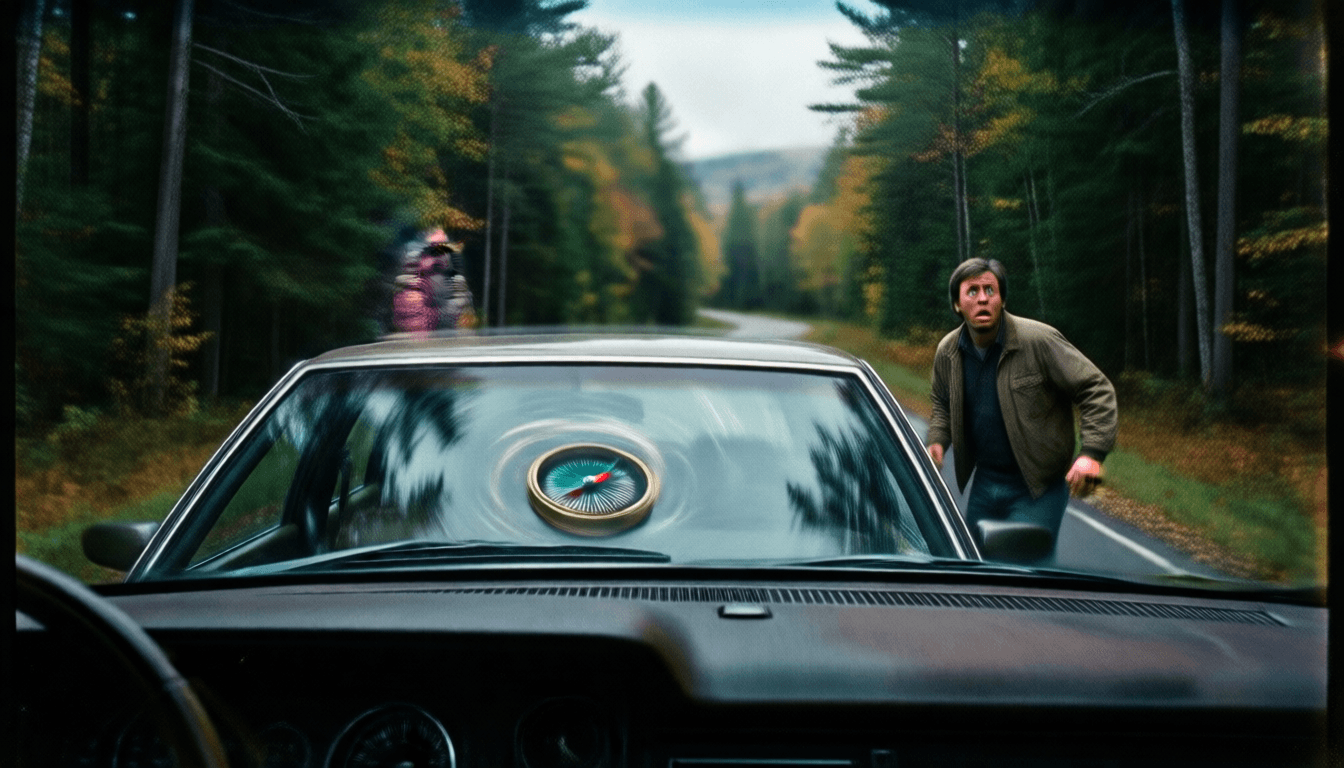
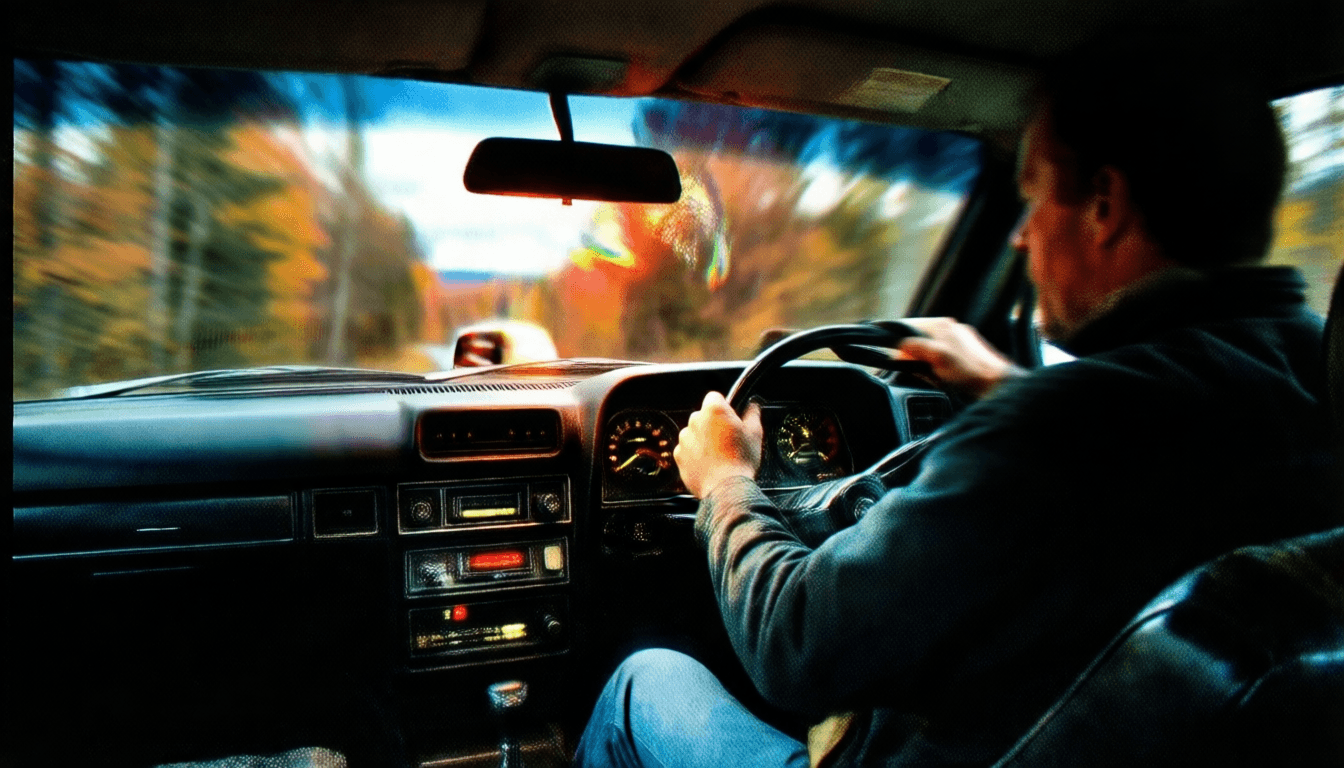
A profound sense of dread compelled me to leave. I returned to the car. The unexplained chill still clung to me. I gasped at the sight of the rubber ball bizarrely wedged beneath the driver's seat. I started the engine. It idled cleanly. But when I tried to shift into reverse to turn the car around, the gear shifter was locked. Firmly fixed in neutral, it wouldn't budge no matter how much force I applied. The engine idled loudly, almost aggressively. I released the emergency brake, expecting to roll downhill. Nothing moved. The car was completely stationary. I pressed the accelerator. The tires spun uselessly on the dry asphalt, emitting only smoke. Then, with a sudden, violent lurch, the car accelerated backwards with impossible force, surging uphill. It wasn't rolling. It felt like it was being forcefully dragged. The engine was still locked in neutral, but the speedometer needle rapidly climbed—40 kilometers per hour, then 50. I gripped the steering wheel and resisted. At first, it was stiff, then it turned to the right against my will, the car body screaming a terrible protest as it scraped against tree trunks. A deep, resonant hum permeated the vehicle, a frequency that vibrated through every bone in my body. The interior lights flickered wildly, then completely extinguished, plunging the cabin into near darkness. Suddenly, immense pressure crushed my chest. My breath caught. The seatbelt tightened further around me. It moved by itself.
Still accelerating uphill in neutral, the car collided with another tree, this time the front passenger side collapsing inward with a horrifying crunch. Glass shattered. The dashboard gauges went mad, needles wildly swinging. A faint, acrid smell of ozone and burnt wiring filled the cabin. Amidst the crushing and desperate struggle, I could hear a scraping sound, not from outside, but from under the car. Something large and metallic seemed to be dragging. Just before being completely destroyed, I glimpsed the side mirror. And in a flash, I saw it: a shimmer in the air, a deep distortion of light. Directly behind the car, it appeared as if the very atmosphere was tearing and stretching like a viscous liquid. With an instinctive scream, I somehow managed to unbuckle the self-tightened seatbelt and kicked open the driver's side door. It was the moment the car veered sharply left, crashing into the dense forest with furious noise. A tremendous sound of breaking branches and tearing metal followed. The inexplicable hum stopped. An ominous, complete silence settled once more.
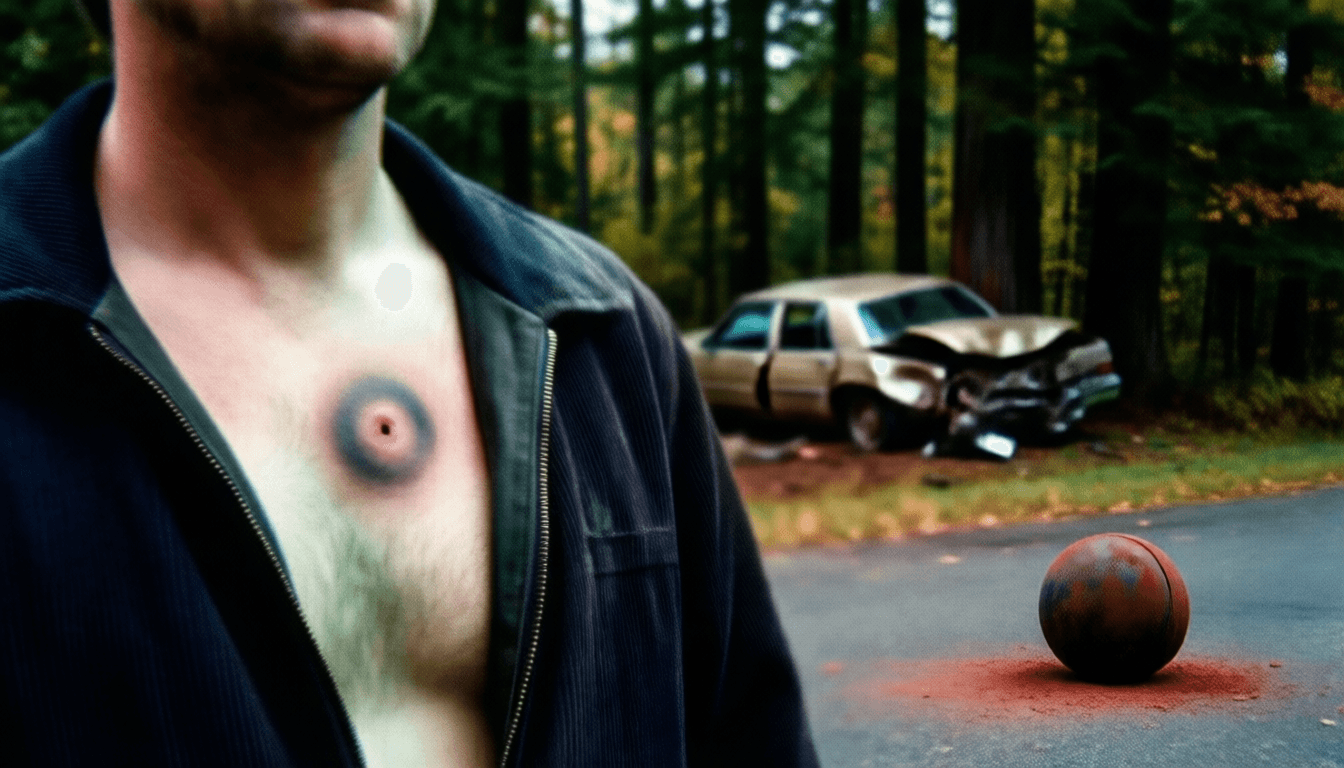
I lay on the asphalt. Scratched and bruised, but alive. I saw the wreckage of my sedan embedded in the forest. The front was completely crumpled, as if it had hit a concrete barrier at highway speed, yet it had only struck thin trees. The interior was twisted debris. As I barely managed to get up, there was a cold bruise on my chest, several centimeters in diameter, exactly where the pressure had been applied. Its coldness pierced my jacket and skin and did not disappear. My pockets were empty. Car keys, wallet, cell phone—all gone. Despite a frantic search, I found nothing. Limping away from the wreckage to escape Blackwood Grade, I kicked something small. It was the rubber ball I had used for my first experiment. It lay perfectly in the middle of the asphalt. Hundreds of meters downhill from where the car crashed, and much further downhill than where I had first parked. It was lightly covered in a strange, reddish dust.
Even days later, the cold circular mark on my chest does not respond to any warmth. My sense of direction is severely impaired. Even in familiar places, I experience moments of profound disorientation. The ground beneath my feet feels unnaturally tilted, or I feel as if I'm walking at an abnormal angle, resisting an invisible force. I now compulsively level all surfaces with a spirit level. I never recovered my personal items. I often wake up sensing a faint, metallic, ozone smell and an intangible pressure on my chest. But the moment I open my eyes, it all vanishes. I am irrevocably changed. I have encountered something that defies not only understanding but the very fabric of reality. It has left me with a cold, subtle fragment. The incident at Blackwood Grade is categorized in my archives not as a debunked myth, but as an active, unresolved phenomenon—a localized, malevolent crack in the world's predictable order.
[ CLASSIFIED VERDICT ]
[ACCESS LOG - SOURCE FILE]
This story is based on the urban legend of 'Dokkaebi Road' or 'Magnetic Hill,' where cars appear to roll uphill due to an optical illusion. However, it delves into a more sinister local legend in rural Vermont, Blackwood Grade, where beyond mere illusion, supernatural phenomena occur, such as objects moving independently and people being led astray by an unseen force.