The Cold Grip of Ok-su-yeon
My investigation into regional drowning phenomena often begins at statistical anomalies, points of deviation that resist conventional explanation. In the case of an oxbow lake situated on the outskirts of a tributary of the Lijang River, which locals simply call 'Ok-su-yeon (玉水淵),' the anomaly was stark. Official documents in the local archives recorded at least 16 drownings over the past 70 years in a seemingly placid 200-meter stretch. The peculiarity wasn't just the sheer number. All victims were skilled local fishermen, proficient swimmers, even tourists who had navigated far more treacherous waters. Police reports consistently mentioned calm surface conditions at the time of the accidents and an absence of struggle marks on the riverbanks. Bodies resurfaced downstream days, sometimes weeks later, eerily preserved. The official conclusion was always 'accidental drowning,' yet local whispers persisted, unofficial warnings appeared at forgotten trailheads, and, more recently, a chilling succession of anonymous posts on local forums spoke of 'cold grips' and 'strangely pulling water.' Before its deletion, one particularly unsettling post described a fisherman seeing his distorted reflection in Ok-su-yeon's dark surface, with two hands reaching upwards from beneath it.
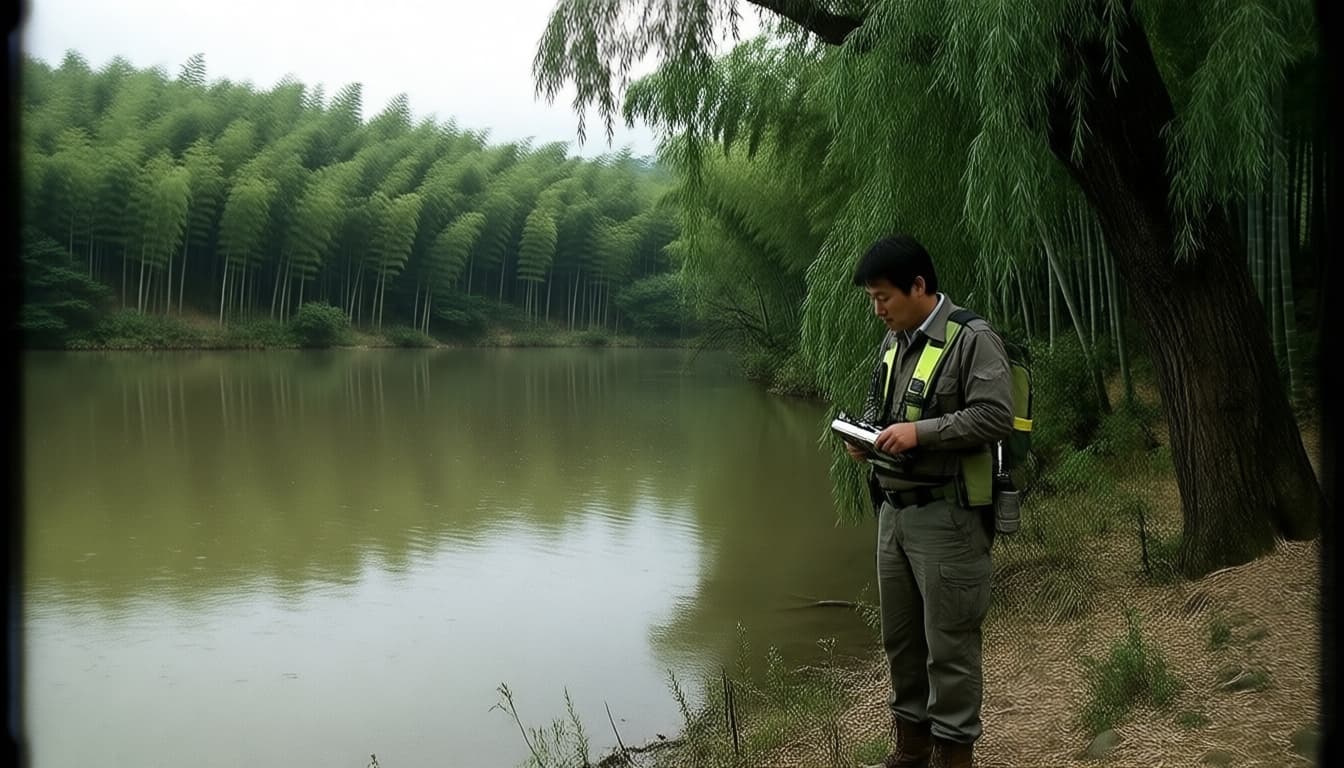
As expected, Ok-su-yeon was remote. I had to navigate several increasingly narrow, overgrown dirt roads, eventually abandoning my car and continuing on foot. Even before reaching the lakeside, the air was heavy and damp, thick with the smell of rotting leaves and stagnant water. Ok-su-yeon itself was an almost perfect oval, about 30 meters wide at its broadest point. Dense bamboo groves and ancient, twisted willow trees encircled the lake, their branches overhanging the murky surface. Not a breath of wind stirred, not a single leaf trembled, and the water's surface was abnormally calm, reflecting the grey sky like polished obsidian. There was no distant traffic noise, no birdsong, only the faint, rhythmic hum of unseen cicadas. Setting up my audio recorder and handheld thermal camera near the bank, I noticed the temperature here was several degrees colder than the surrounding forest. The water's edge was indistinct, soft mud giving way abruptly to a steep drop into dark depths. It felt less like a lake and more like a wound in the earth.
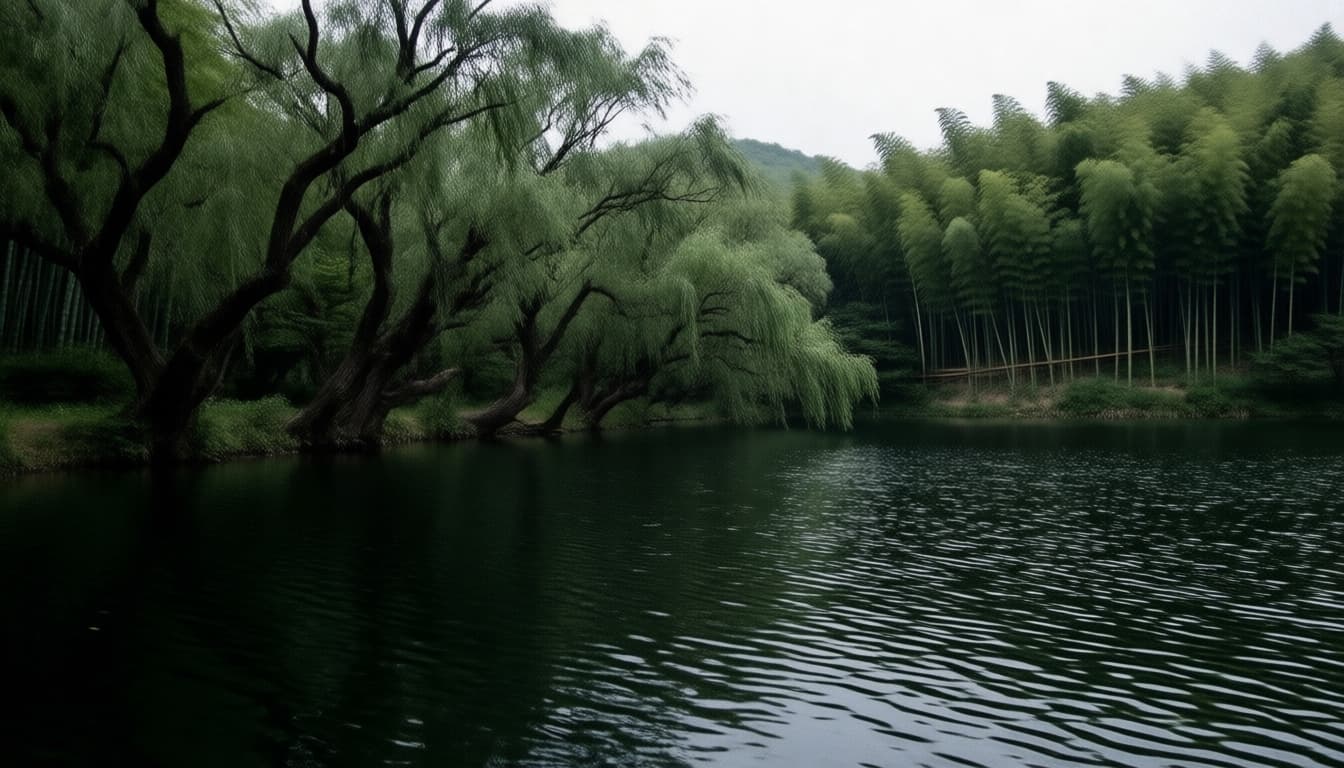
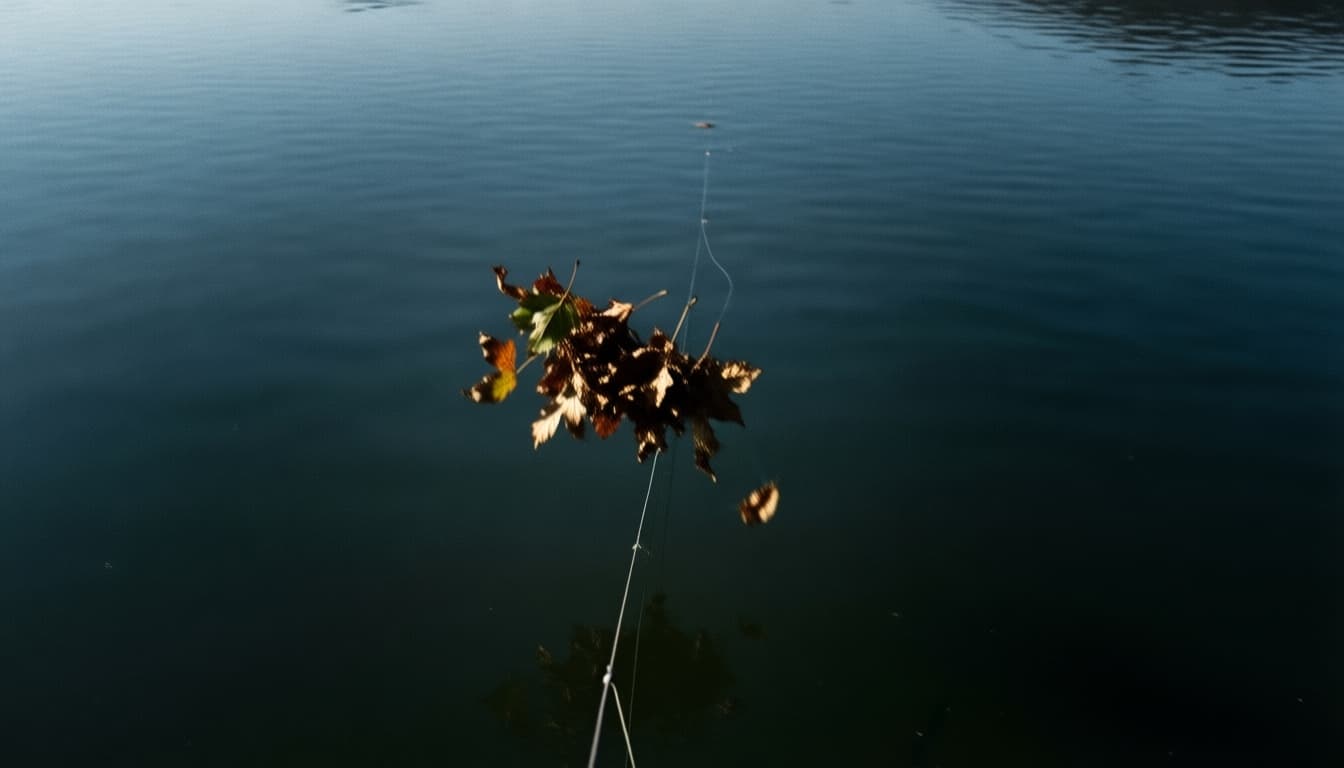
As the afternoon light began to fade, subtle anomalies started to manifest. Sonar readings showed a consistent depth of approximately 12 meters at the center, with no discernible currents. Yet, a small cluster of fallen leaves from the low-hanging willows, rather than following the minuscule flow of the tributary, drifted slowly and deliberately towards the deepest part of Ok-su-yeon. I watched their counter-logical progression for almost an hour. I cast a water thermometer, weighted with a small lead, into the water. Surface temperature was uniform, but as it descended, the temperature plummeted far more rapidly than expected, reaching near-freezing at just 5 meters deep before stabilizing. Even stranger, upon retrieving the line, I felt a faint, almost imperceptible tug. It wasn't the tension from the thermometer's weight, but a subtle resistance pulling downwards, independent of the line's tautness.
I reviewed the recorded audio. There were cicadas, my own movements, but interspersed were moments of absolute silence. Unnaturally long gaps where the rustle of leaves should have been. And then, an utterly inexplicable sound: a faint, almost percussive 'shwoop,' like something heavy shifting in thick mud, emanating from deep within the water, followed by my own breathing sounding like a faint, delayed echo. The thermal camera, fixed towards the water, began to detect unexplained, momentary cold spots. They appeared and vanished just below the surface, moving in a fluid, purposeful linear fashion.
The inexplicable cold spots grew more frequent, converging on a single point directly opposite my position. My heart began to race. I moved closer, thermal camera aimed, trying to ascertain their source. The surrounding air became noticeably colder, a bone-chilling dampness permeating everything. Suddenly, the perfectly still water surface violently rippled directly in front of me. Not from wind, but from a powerful, unseen disturbance rising from below. At the center of this disturbance, a bizarre, guttural gurgle, like a massive inverse suction, emanated. The ground beneath my feet, firm moments before, began to give way, turning into dangerous, boggy mud.
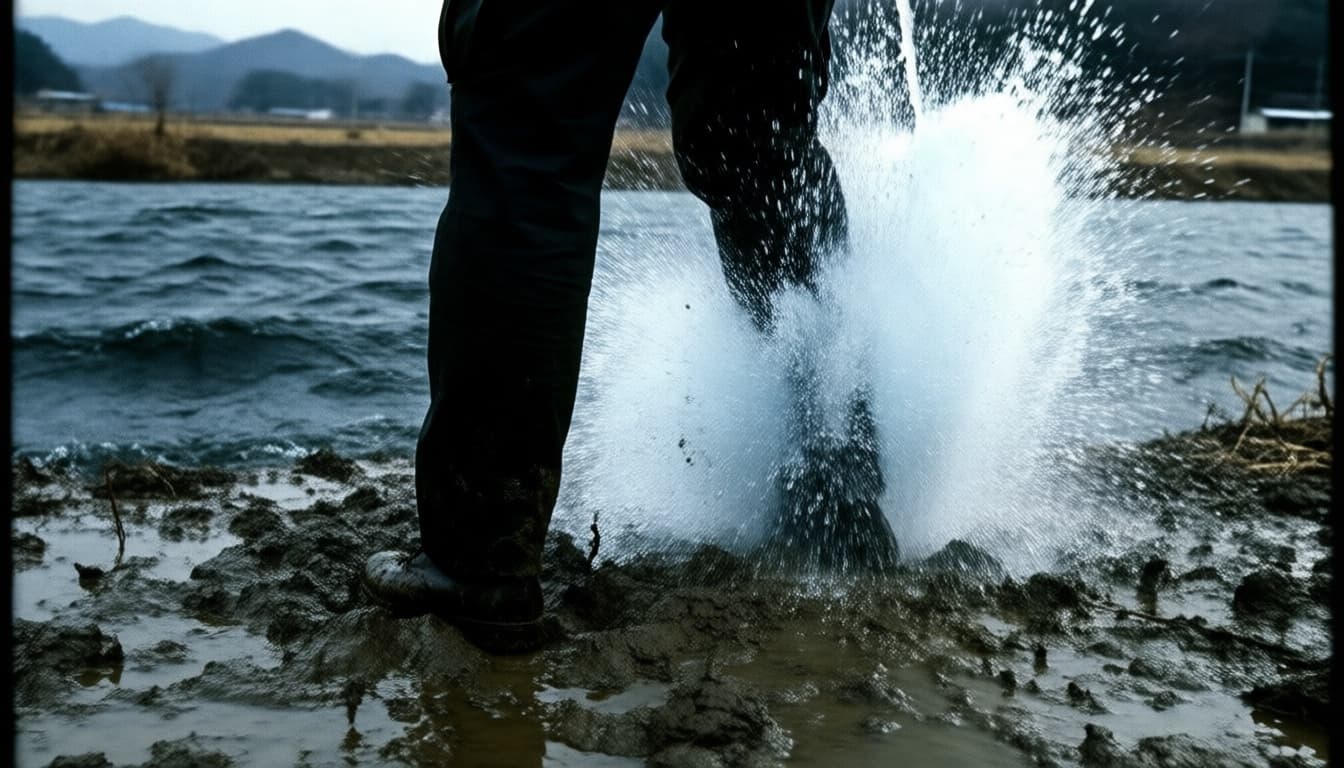
I instinctively recoiled but was too late. An icy jet of water erupted from Ok-su-yeon in a single, powerful splash, leaping up past my boots and seizing my ankle. It wasn't a wave; it was a focused, upward blast seemingly aimed at me. And beneath that water, a distinct, overwhelming pressure wrapped around my right ankle. It was massive, cold, and impossibly strong. There was no visible hand, no discernible form. Only an undeniable, shackling pressure dragging me down into the rapidly liquefying mud.
I screamed, struggling to pull back, clawing at the ground, but my other foot slid into the muck. The water around my ankle thrashed violently, a desperate, inhuman struggle felt within it. The pressure intensified, pulling with a force that threatened to dislocate my limb. I felt the cold seep into my bones, and a texture that was neither skin nor rock, but something organic and solid. With a final, desperate surge of strength, I wrenched my leg free, my boot ripping off in the process. The pressure held onto the empty leather boot for a moment before releasing it. Gasping, bleeding, I stumbled away from the bank, collapsing into the dense bamboo grove. Behind me, the water had returned to its chilling stillness.
I made it back to my car, shaking uncontrollably. My right ankle throbbed, covered in mud and a deep, spreading bruise. My lost boot was gone. Days later, reviewing the thermal camera footage in my office, the truth revealed itself. Not cold spots, but a single, massive hypothermic region, eerily shaped like outstretched limbs, had rapidly approached my position, engulfing my leg just before I broke free. On the audio recording, beneath my panicked screams and the splash, filtering revealed a new layer: a low, raspy rumbling, followed by a faint, muffled sigh, unmistakably non-human, echoing from the depths.
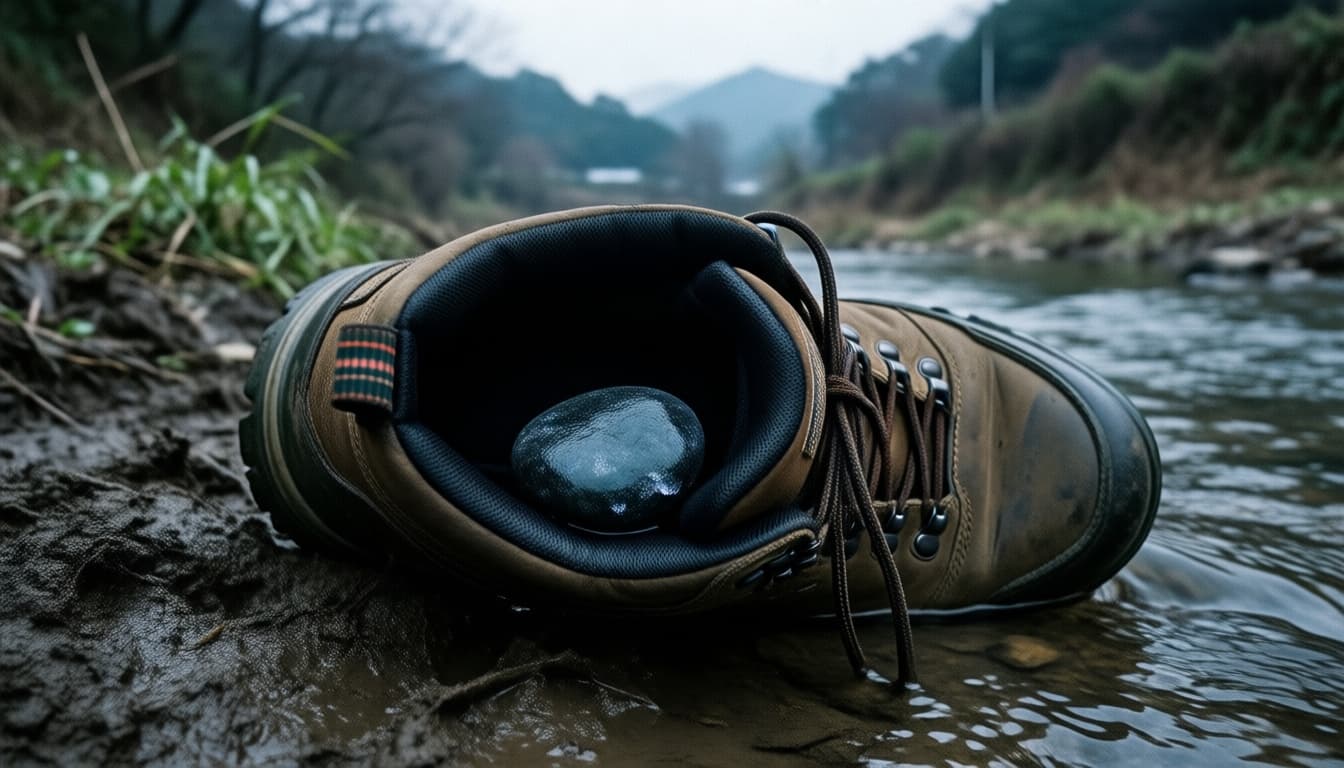
Some time later, a local farmer cultivating his fields a kilometer downstream from Ok-su-yeon discovered my lost boot. It was deeply embedded in the riverbed mud, not washed ashore, but facing upstream, as if deliberately placed. Inside the boot, nestled against the sole, was a single, smooth, black river stone – a type not found in the Lijang tributary. Despite days in the warm sun, it was icy cold to the touch. Ok-su-yeon wasn't just a dangerous body of water; it was a hunting ground, and whatever dwelled within it was more than just waiting for its next victim—it was actively, maliciously drawing them in. That knowledge settled deep within me, like a cold, heavy anchor. The disappearances were no longer a mystery. They were acts of precise, patient malevolence, and I was merely the one who had felt the truth of its pull in my very bones.
[ CLASSIFIED VERDICT ]
[ACCESS LOG - SOURCE FILE]
The oxbow lake named 'Ok-su-yeon' in a tributary of the Lijang River is the source of a local urban legend about skilled fishermen and swimmers suffering inexplicable drownings over the past 70 years. Locals whisper about 'cold grips' and 'strangely pulling water' within its depths, warning others through unofficial signs and online posts. Eyewitness accounts of two hands pulling people down from beneath the water are central to this chilling myth.