The Cold Corpse of Fujian Mausoleum
In the secluded mountain regions of Fujian province, whispers of ancient clan ossuaries—temporary burial sites—have been passed down through generations. These were not mere ghost stories; records testified to physical disturbances. Heavy wooden coffins found subtly ajar or dislodged from their stands, specific protective talismans torn or scattered. And most chillingly, desiccated remains discovered outside their designated resting places. These corpses were invariably in grotesque, rigid, almost standing postures, radiating an intense localized cold from specific areas.
Recently, these tales materialized into a chilling regional crisis. Police reports, painstakingly acquired from local archives, detailed inexplicable events in an isolated village called Zhenchun. This past June, a centuries-old clan ossuary was found severely desecrated. Several elderly residents testified to regular thumping sounds emanating from the ossuary at night, coupled with an inexplicable chill within their homes. Two night watchmen, assigned to guard the site after initial disturbances, vanished without a trace. Local authorities swiftly concluded the disappearances were due to animal attacks or accidental falls, and the ossuary damage, vandalism. Yet, the unusually detailed site report for such a hastily closed case mentioned 'the peculiar state of disturbed coffins' and 'unexplained localized frost traces.' These phenomena, precisely aligning with historical folklore, combined with the missing guards, prompted a direct investigation.
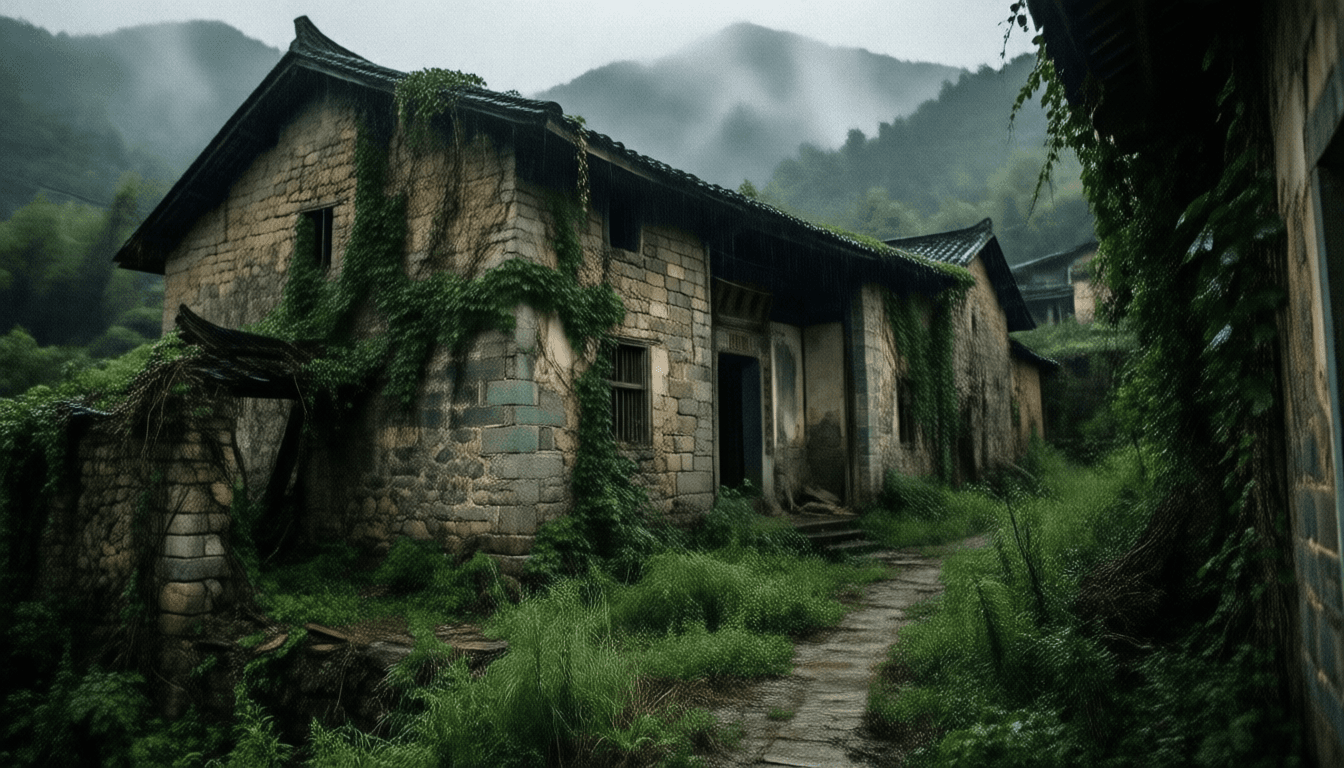
The journey to Zhenchun was arduous. Multiple bus changes, followed by a long trek down a forgotten, weed-choked path. The village itself was skeletal; stone houses crumbled, suffocated by creeping vines. An oppressive silence hung in the humid air, broken only by the hum of insects. The destination, the ancestral shrine, was a dark, ponderous structure of carved wood and ancient stone. Its very presence exuded abandonment and decay.
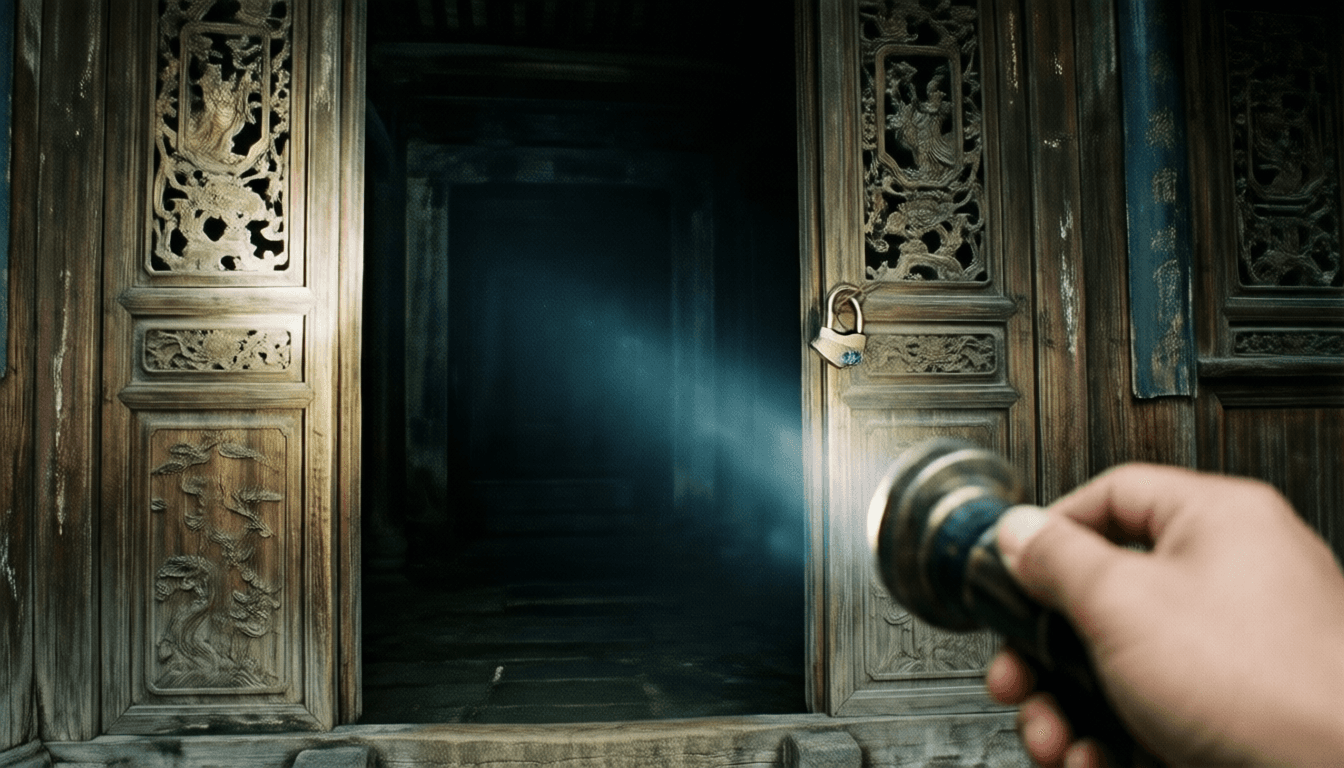
The entrance to the ossuary, annexed to the shrine, was unmistakable. The massive, robust wooden door, with faded protective motifs intricately carved, had not been damaged by common looters. The wood around the ancient lock was shattered, but the breakages burst outwards, from the inside. As if something of immense power had attempted an escape from within. The rough, jagged edges of the broken sections suggested massive, concentrated pressure, not random destruction by tools or animals.
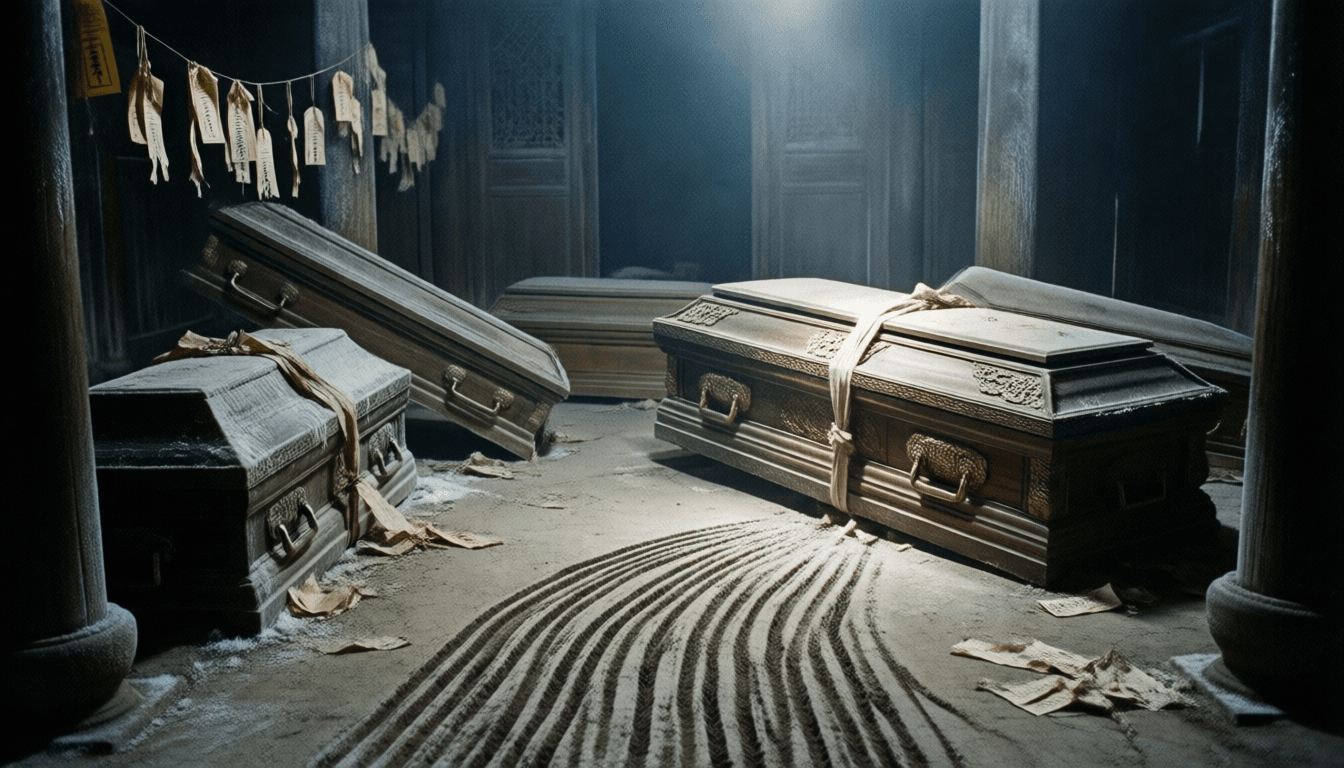
Immediately inside, the air changed. Colder, denser, heavy with the smell of damp earth, mildew, and something indefinably metallic, sweet, and brackish. Dark wooden coffins lined the walls, some precariously balanced on their stands, others overturned or askew. A thick layer of dust coated every surface, yet in one specific area, a series of bizarre drag marks cut across the dust, leading from a heavily bound coffin towards the forcibly opened door. These were not animal tracks or the irregular scuffs of human feet. They were unnervingly uniform and rigid, as if a rectangular, heavy object had been systematically pulled across the floor. The faded paper talismans, crudely drawn and nailed to many of the coffins, hung precariously or lay shredded on the floor. Their protective efficacy was evidently exhausted or insufficient.
As I delved deeper into the ossuary, meticulously documenting each detail, the atmosphere intensified. The oppressive silence deepened, swallowing even my own footsteps. My normally clear voice sounded muffled, its echoes distorted or delayed, then abruptly cut off. Then, a faint, rhythmic 'thump... thump... thump...' began. Almost imperceptible, yet it resonated from deeper within an adjacent burial chamber. It would cease when I tried to pinpoint its direction, only to resume when my attention shifted. Without warning, localized pockets of extreme cold manifested. Not just a drop in temperature, but a sensation of warmth being actively 'sucked out' of the air. Though the ambient temperature of the ossuary was cool, it wasn't enough to cause this phenomenon; within these cold spots, my breath suddenly plumed into visible vapor. These intense thermal anomalies were sharp, momentary, and profoundly unsettling.
In a particularly shaded corner, near an overturned coffin, my flashlight beam illuminated dust particles moving erratically. They didn't follow natural air currents. Instead, they swirled in sudden, sharp bursts, sometimes appearing to be 'pulled up' into tiny, invisible vortices. It was a movement that defied the physics of dust settlement. A faint metallic sweetness, mingled with the scent of old, coagulated blood and an indescribable mildew, intensified and receded in this area. A small pool of rainwater lay in an old, cracked ceramic basin on the floor. As the rhythmic thumping subtly intensified, the water in the basin began to vibrate imperceptibly. This was followed by small, inexplicable ripples that were not concentric but moved against the natural slope of the basin. It was as if an unseen force was creating localized pressure fluctuations or attempting to 'pull up' sections of the water in small, violent undulations.
Beneath a loose floorboard near the basin, I discovered a tightly bound silk bundle. Inside were parchments inscribed with delicate handwriting. The ancient texts detailed old local rituals for dealing with the 'sleepless dead.' Specific talismans, complex burial practices, and most chillingly, explicit instructions on how to 'pin' a corpse exhibiting 'jumping' movements due to rigor mortis, extreme cold, and a 'thirst for life force.'
Engrossed in the bundle's gruesome details, the rhythmic thumping erupted into a violent crescendo. It was no longer distant but resonated directly behind the wall of the adjacent burial chamber. The entire ossuary groaned, and the floorboards beneath my feet creaked under immense, unseen pressure. With a deafening roar, the main entrance, which I had secured with heavy stones, slammed shut. Ancient wood splintered and cracked, throwing me into a chaotic pile of unstable coffins. I was trapped.
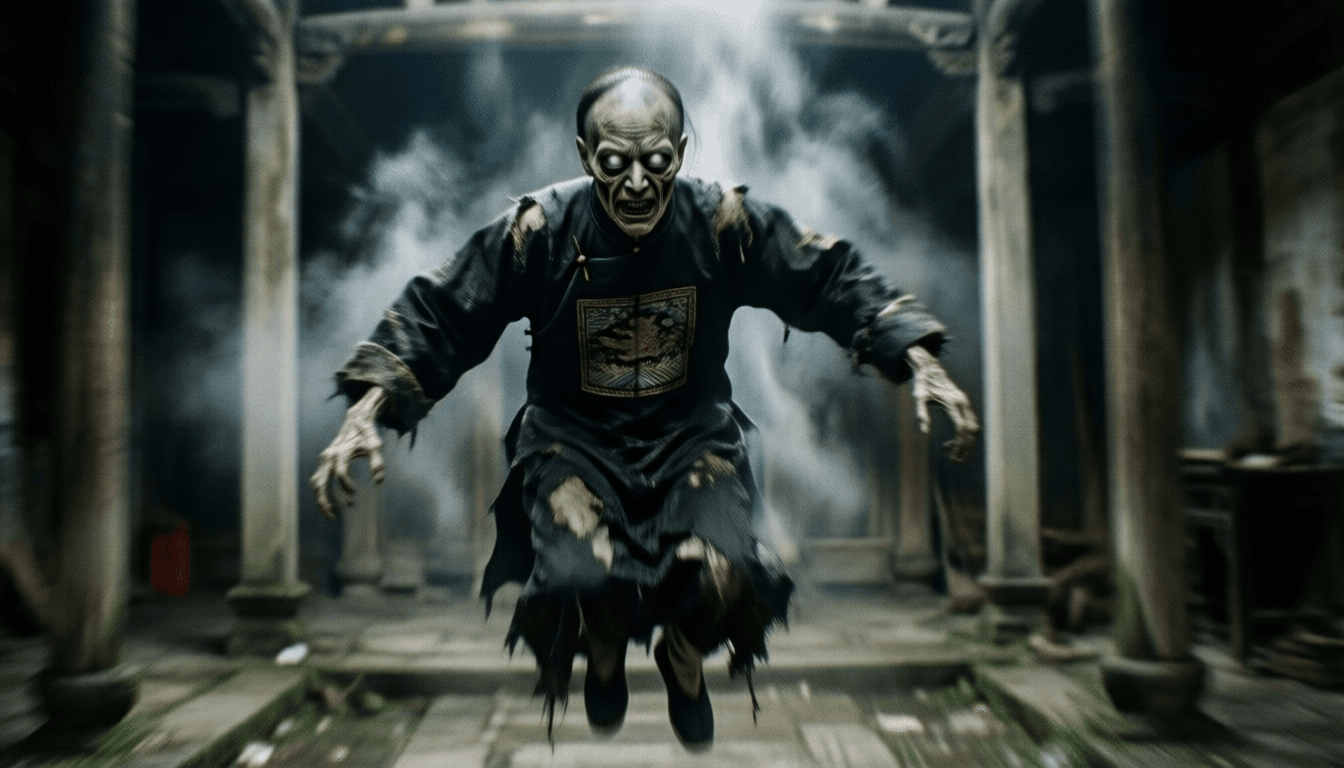
An unnatural silence, deeper and more absolute than anything I had experienced before, descended. The thumping stopped. And then, an inner door leading to the adjacent room—a thick door heavily reinforced with wood and iron bands—began to bulge inward. The wood groaned under impossible pressure, and the iron shrieked. Finally, with a last explosive rupture, the door shattered inward, collapsing. It revealed itself. Not a skeletal wraith. Instead, a desiccated, mummified form, dressed in tattered black funeral robes, seemingly from the late Qing dynasty. Its skin was like grey leather, pulled taut over the facial bones. Its eyes were sunken and opaque, its mouth fixed in a gaping rictus. Its limbs were rigid, unnaturally bent at almost right angles. In that moment, I understood what the ancient texts meant by a 'jumping' gait.
It didn't walk. It bounded across the space with terrifying speed and silence, a furious, impossible movement defying the physics of a decaying corpse. It crashed into heavy, centuries-old coffins, sending them flying across the room like cardboard, yet there was no sound from the impact itself beyond the shattering of wood. Not even the scrape of its feet or the rustle of its clothes as it moved. It existed in a terrifying vacuum of sound, its silent movement amplifying its impossible speed. The air around it turned catastrophically cold. A localized chill that stung the skin and numbed the muscles. I felt an incredible localized suction, as if the very air was being violently 'pulled in' around it. It focused directly on me, its stiff, claw-like hands reaching out. The touch was like liquid nitrogen – immediate paralysis and agony. With incredible force, it shoved me into a pile of crumbling wooden crates. The cloying, sweet stench of decay was overwhelming. As it drew closer, a strange humming sensation resonated through my gums, up to my jaw. In a desperate, primal act, my hand closed around a fallen paper talisman—one of the few intact ones—from the floor, and I slapped it onto its forehead.
The effect was instantaneous and absolute. The entity froze mid-motion, standing perfectly still like a paused image, its eyes fixed and lifeless. The intense cold receded slightly, and the localized suction stopped. I gasped, shivering, my arm burning with cold agony. I didn't waste the moment, desperately pushing open the shattered but not fully obstructed main entrance. I stumbled out into the fading sunlight, severely bruised, physically exhausted, and profoundly traumatized.
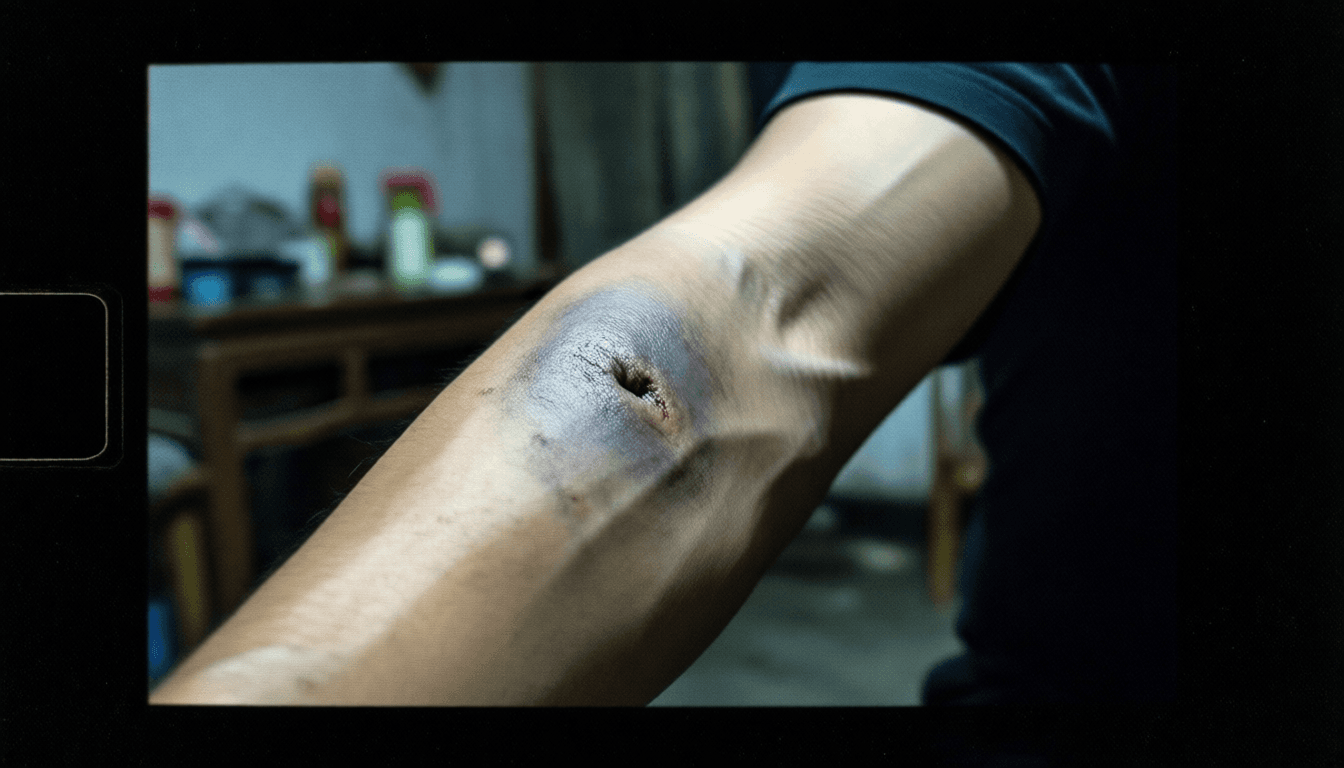
Stumbling out of the ossuary, disoriented and trembling, its impossible speed and profound silence replayed in my mind. My camera, dropped and cracked in my escape, still held a single, blurry, underexposed photo: a tall, dark, indistinct figure in the deep shadows of the ossuary. Far from definitive proof, it was an undeniable 'something.' Back in the archives, I cross-referenced the recovered bundle's details with other historical records. Descriptions of specific sealing rituals, unique talismans, 'coldness,' 'thumping sounds,' and the distinctive 'jumping' gait—all perfectly matched centuries-old reports from not just Fujian but adjacent provinces, and even historical texts from overseas Chinese communities, often dismissed as superstitions or attributed to other causes. Local authorities, as expected, classified the Zhenchun incident as 'unresolved disappearances' and attributed the damaged ossuary to looters. But the most chilling outcome was etched onto my flesh. The specific area on my forearm where its hand had briefly made contact remained unnaturally cold. A deep, persistent chill that no warmth, not even direct heat, could fully permeate. It wasn't frostbite. It was something far more insidious. A slightly discolored, greyish patch of localized necrosis, showing no signs of healing. It was a permanent, living memory.
My report on the Zhenchun incident offered no definitive conclusions. Instead, I presented the collected evidence: records of past similar events, the damaged photograph, the recovered ancient directives, and the clinical description of the persistent cold on my arm. The final line of my report read:
The collected data strongly correlates with on-site observations. Whatever this phenomenon is, it is demonstrably physical, and its containment requires methods beyond modern science or existing mortal comprehension. Further investigation is strongly recommended with extreme caution.
The fear remains. Not because I've proven the existence of the supernatural, but because something undeniably 'real,' 'physical,' exists, defying all our scientific understanding, and it has left its cold, grey mark. And it is still out there, only temporarily halted, waiting for the talismans to fail again.
[ CLASSIFIED VERDICT ]
[ACCESS LOG - SOURCE FILE]
In Chinese folklore, a 'Jiangshi' refers to a corpse that has died but cannot rest peacefully, reanimating to absorb life force. It typically moves by hopping with stiff, outstretched arms, emits extreme cold, and can be suppressed with talismans. This story is based on an incident in a Fujian mausoleum where phenomena precisely matching this legend occurred.