The Chrono-Crypt of Lalibela
In 2017, a paper published by Dr. Almaz Gebre was quickly retracted by academia, yet it rapidly solidified into a powerful myth within countless online mystery communities. Appearing in a journal for archaeoacoustics, the paper detailed 'abnormal temporal resonance patterns' detected in an unmapped, sealed passage beneath the Church of Saint George in Lalibela, Ethiopia. Dr. Gebre claimed acoustic signals exhibiting 'pre-echoes' and 'temporal compression' were recorded from specific deep bedrock fissures, but peer reviewers dismissed these as 'measurement errors' and 'pseudoscience.' However, screenshots of the paper and discussions around it proliferated, giving birth to the term 'Lalibela's Chrono-Crypt.' The narrative gained further traction from local legends of 'whispering veins' – passages where monks and occasional workers had attested to profound disorientation, a sense of 'lost time,' and objects found out of place or subtly altered. My objective was to either confirm the veracity of these claims or definitively prove them to be fiction.
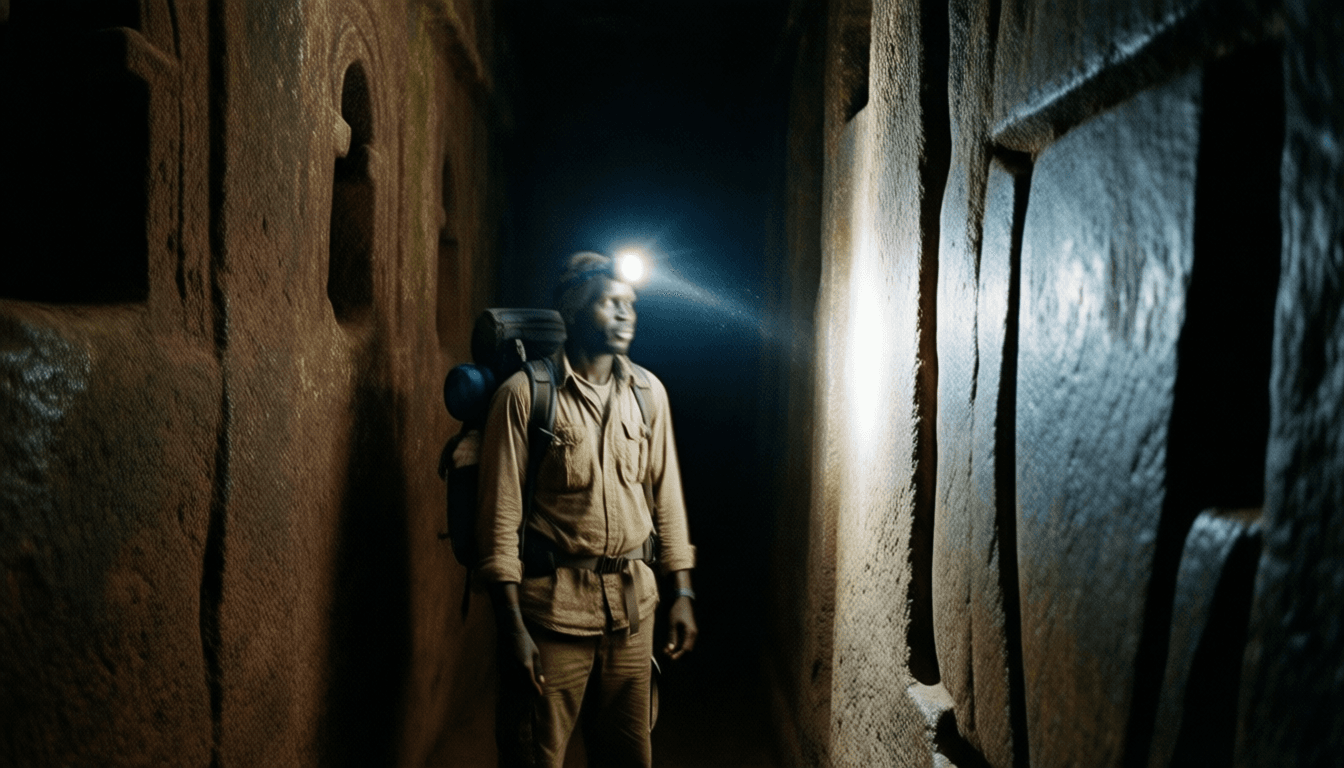
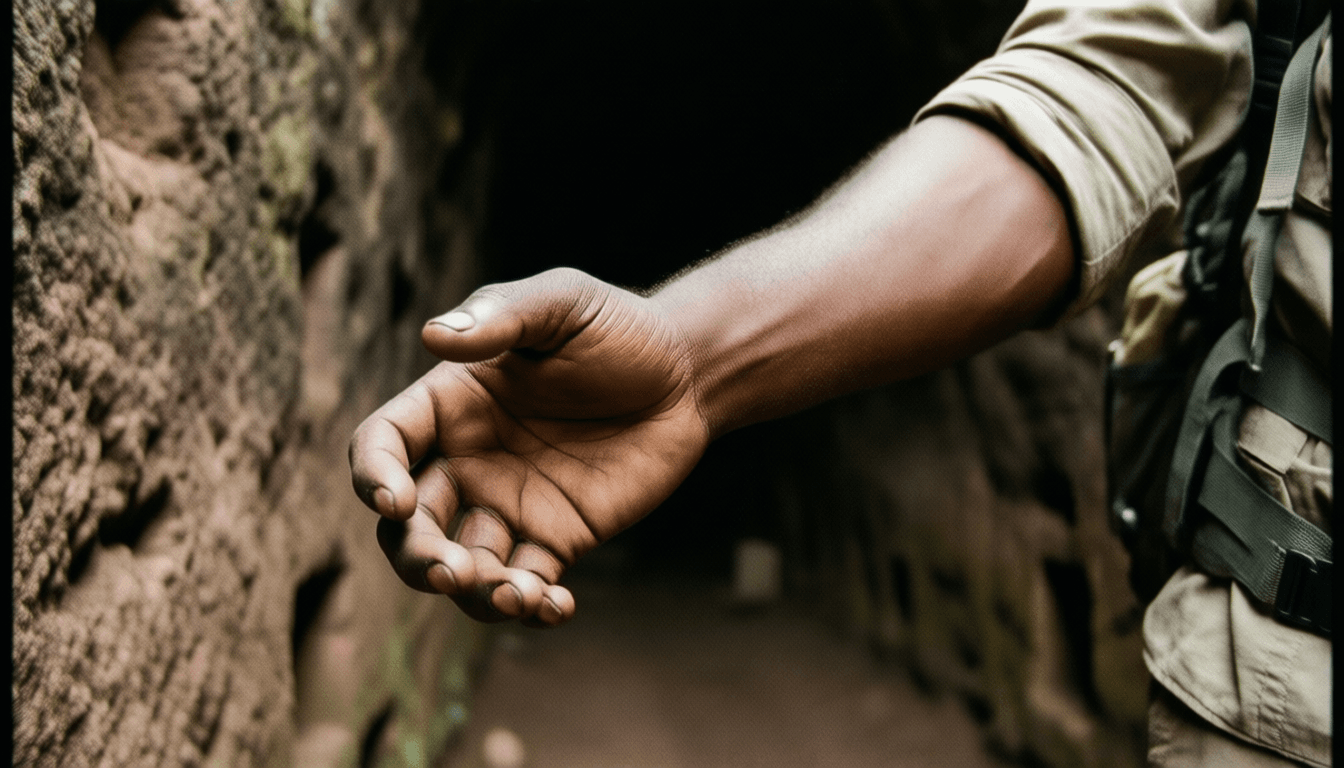
Access was secured through careful negotiation, under the guise of an historical architectural survey. The designated entry point was a narrow, forgotten crawlspace behind a recently excavated side chapel, leading into a passage not found on standard tourist routes or church records. The air immediately grew heavy and cool, imbued with a unique metallic, almost fishy odor unlike any natural cave I had explored.
Initial passages clearly bore the marks of hand-hewn excavation, with ancient tool impressions distinct. Yet, deeper within, the rock faces became unnervingly smooth, almost polished, exhibiting a geometric precision that seemed impossible for their purported method of creation. A pervasive silence felt unnatural; sounds seemed to dissipate rather than echo. My headlamp's beam, normally sharp and clear, appeared to subtly waver at its edges, causing shadows to ripple irrespective of my movements. Gravity felt subtly erratic, a slight lightness followed by a heavy drag.
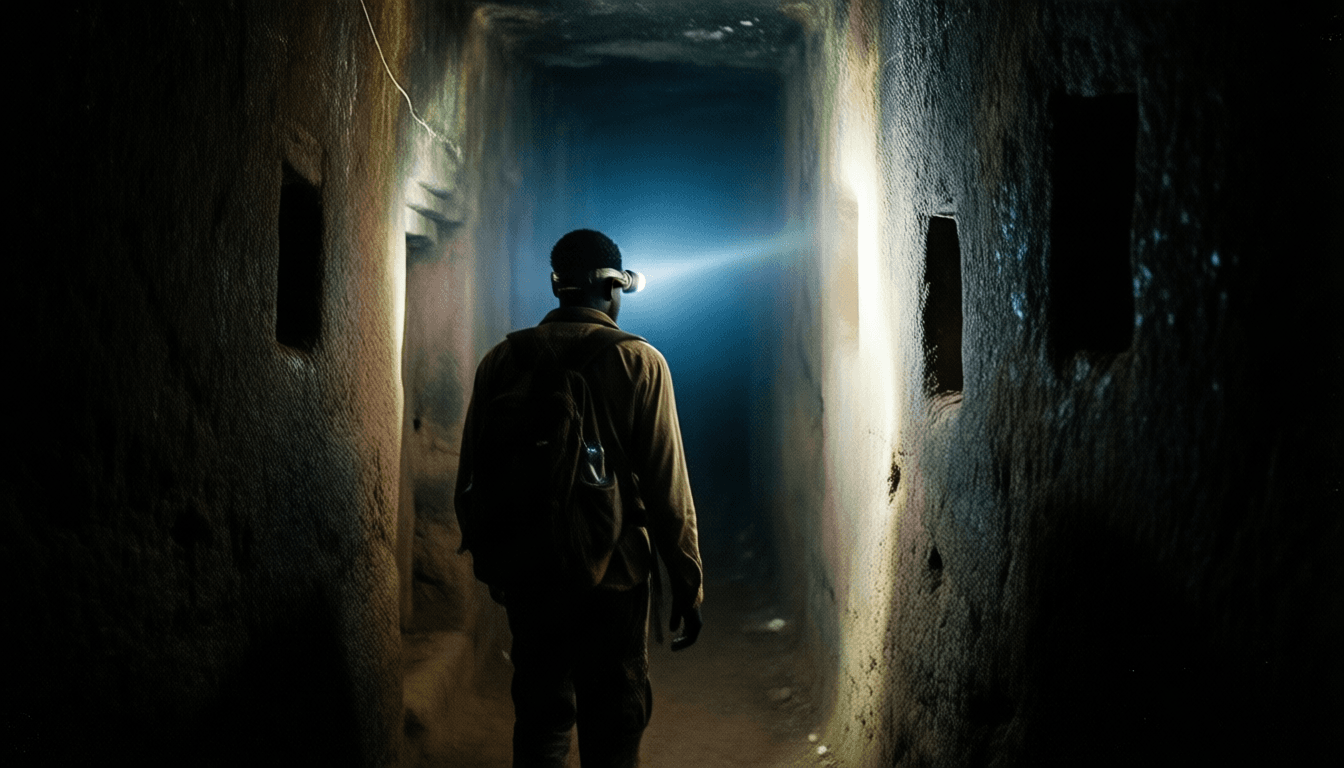
As I progressed, the environmental anomalies grew more intense. My audio recorder, designed to capture minute acoustic data, showed irregular frequency spikes far beyond human audibility, then absolute stillness where ambient noise should have been. Dropped stones produced impact sounds several milliseconds before the visual event, or simply vanished into what felt like a vacuum.
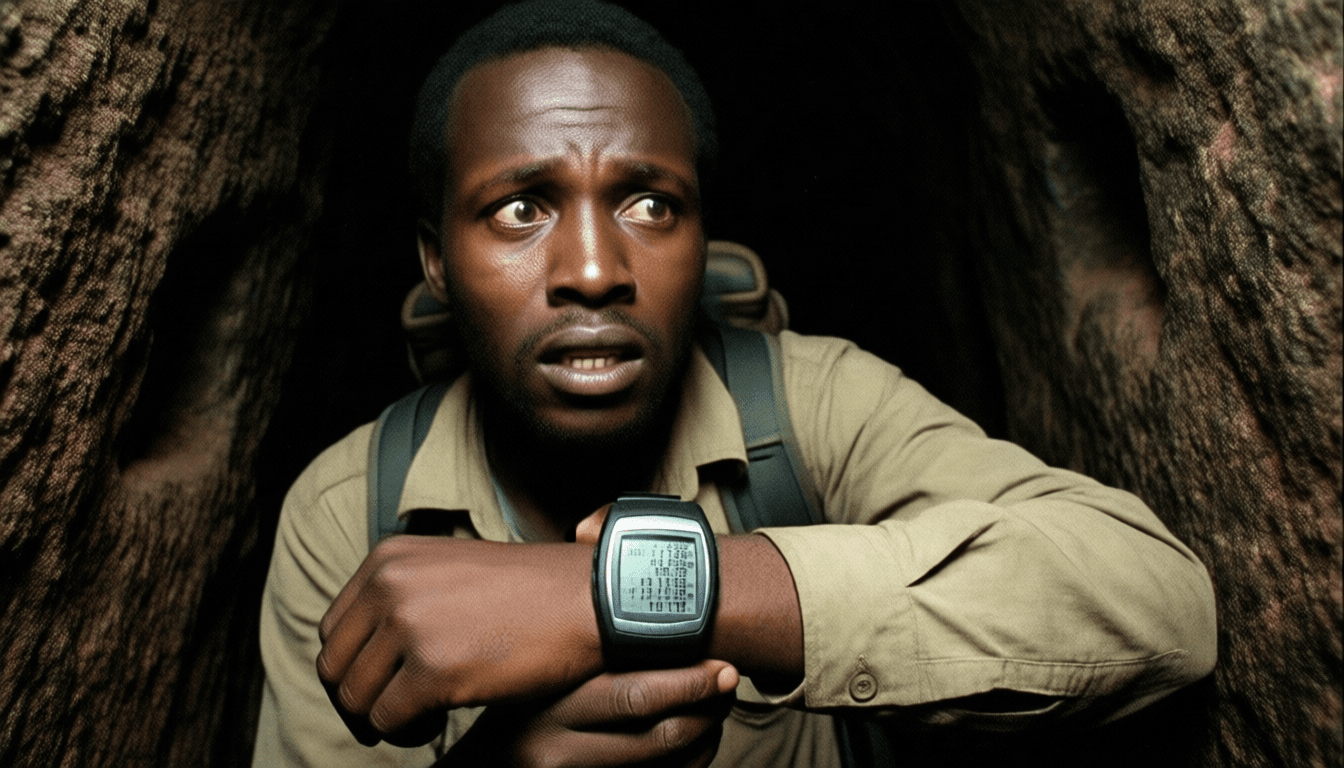
My biological clock became unreliable; what felt like 20 minutes of careful forward movement registered as only 5 minutes when I checked my digital watch. Conversely, short rests stretched into what seemed like interminable lengths. A faint, persistent metallic taste lingered on my tongue. The air, though stagnant, felt charged with unseen energy, the fine hairs on my arms prickling with static.
In particularly narrow fissures, carvings on the opposite wall seemed to subtly shift their intricate patterns when not directly observed. My headlamp's cast shadow occasionally detached, momentarily lengthening or shortening, projected against the rock as if influenced by a different light source than my own. A profound sense of being observed, not by a physical presence, but by the very essence of the place, began to permeate.
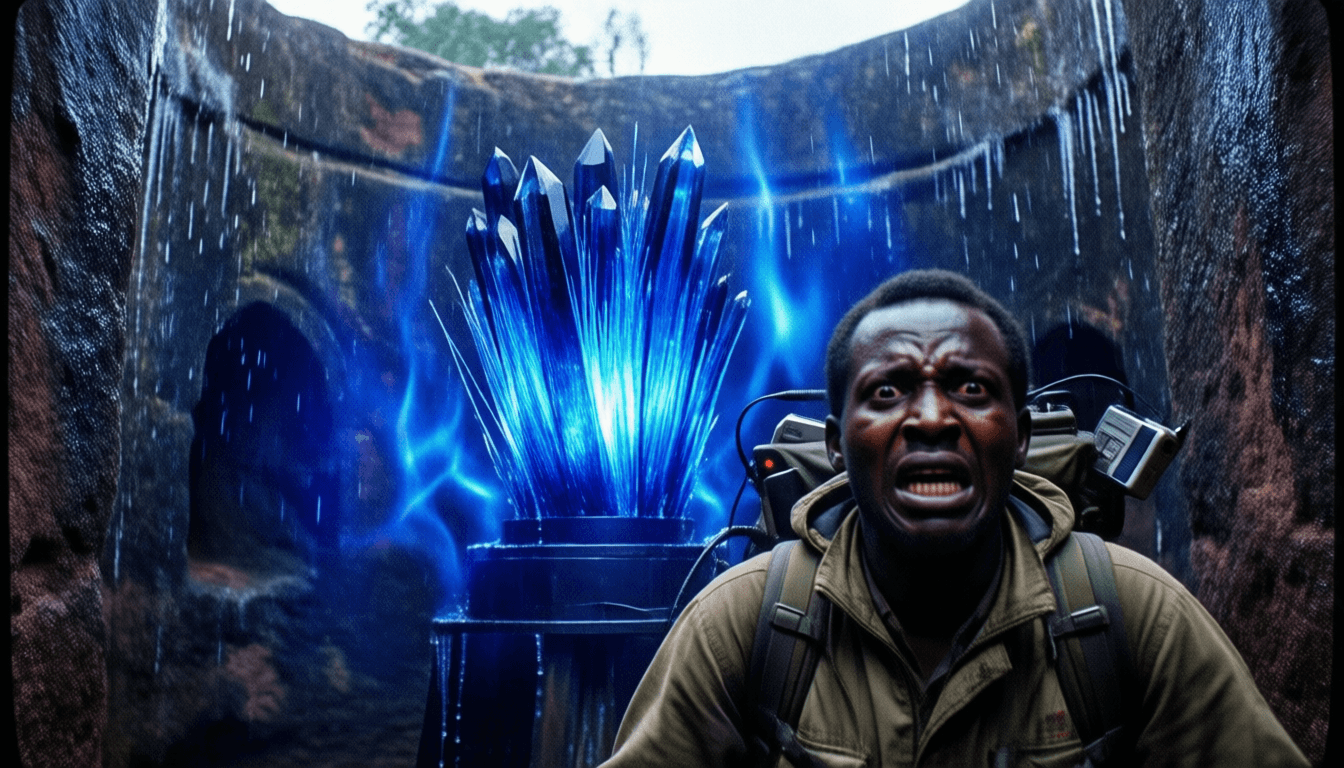
I finally reached a larger, perfectly spherical chamber. It appeared not carved, but rather fused or grown from the living rock. Within, a deep blue light faintly emanated from a central non-metallic structure: a delicate lattice of crystalline fibers encased in obsidian. I instinctively knew this was the core node of Gebre's 'Chrono-Crypt.'
As I cautiously advanced, a low hum, more felt than heard, resonated from the structure. The surrounding air visually distorted and shimmered like intense heat, yet the temperature plummeted to an impossible cold. When I shone my headlamp's beam onto the structure, the light noticeably bent, refracting around it rather than directly illuminating it. Water droplets on the chamber walls ceased their downward flow, momentarily hung in the air, then crept upwards against gravity before freezing mid-air.
The blue light pulsed, intensifying. Waves of immense pressure radiated outwards, accompanied by a deafening, impossible silence that vibrated through bone. My body felt pulled in multiple directions simultaneously, a sensation of being physically stretched and molecularly deconstructed. My equipment shattered; the audio recorder imploded inwards, my headlamp flickered violently, its beam twisting into strange spirals before dying. My vision blurred, and in a terrifying moment, I saw myself reflected in the obsidian structure. But the image was not mine – impossibly old one moment, unbelievably young the next, beginning to fragment. I was caught in a localized temporal distortion field, my physical form battling incomprehensible forces, at risk of being torn apart or having my atoms scattered into non-existent timelines. Seizing a momentary gap in the distortion, I stumbled backwards in primal terror, scrambling, disheveled and defenseless, back into the twisting passages, leaving most of my equipment behind.
Hours later, I emerged disoriented and exhausted, yet outwardly unharmed. My remaining digital watch, though battered, still functioned. However, its display would occasionally flicker, briefly showing a date several days ahead, before snapping back. A dull, persistent ache resonated in my right arm, not an injury, but from an impossible strain, as if the limb had been temporarily detached and wrongly reattached.
The metallic, fishy odor lingered in the air, though only I could detect it. More chillingly, especially in the absolute silence of the night, I sometimes hear them: faint, impossible pre-echoes of sounds yet to be made. Or whispers that seem to arrive just before I even form the thought.
I returned from Lalibela, but the temporal distortion left an indelible mark, subtly desynchronizing me from the established flow of time. The Chrono-Crypt was not merely observing, thereby preserving, the future of Ethiopia. It was a network heedlessly manipulating, even constructing or rewriting, temporal causality. My brief interaction was not a brush with death, but an involuntary registration into its impossible influence. I am no longer just an investigator. I am a recipient of its subtle, persistent interference. And I check the date on my watch, constantly, just in case.
[ CLASSIFIED VERDICT ]
[ACCESS LOG - SOURCE FILE]
This story is based on a fictional urban legend known as the 'Chrono-Crypt of Lalibela,' supposedly introduced to academia in 2017 through Dr. Almaz Gebre's paper. It describes claims of 'abnormal temporal resonance patterns' detected in a sealed passage beneath St. George Church in Lalibela, Ethiopia. Local legends also contribute to this myth, speaking of 'whispering veins' where strange phenomena like temporal disorientation occur.