The Cheviot Hum
On December 17, 1967, Australian Prime Minister Harold Holt officially disappeared while swimming off Cheviot Beach in Portsea, Victoria. Despite extensive searches, his body was never found, and the conclusion was drowning. However, this neat conclusion never satisfied everyone. For decades, whispers of suicide, defection to China, and even submarine abduction persisted. These sensational theories, while consistently present since the initial disappearance, tend to obscure specific, more ominous details that were systematically dismissed.
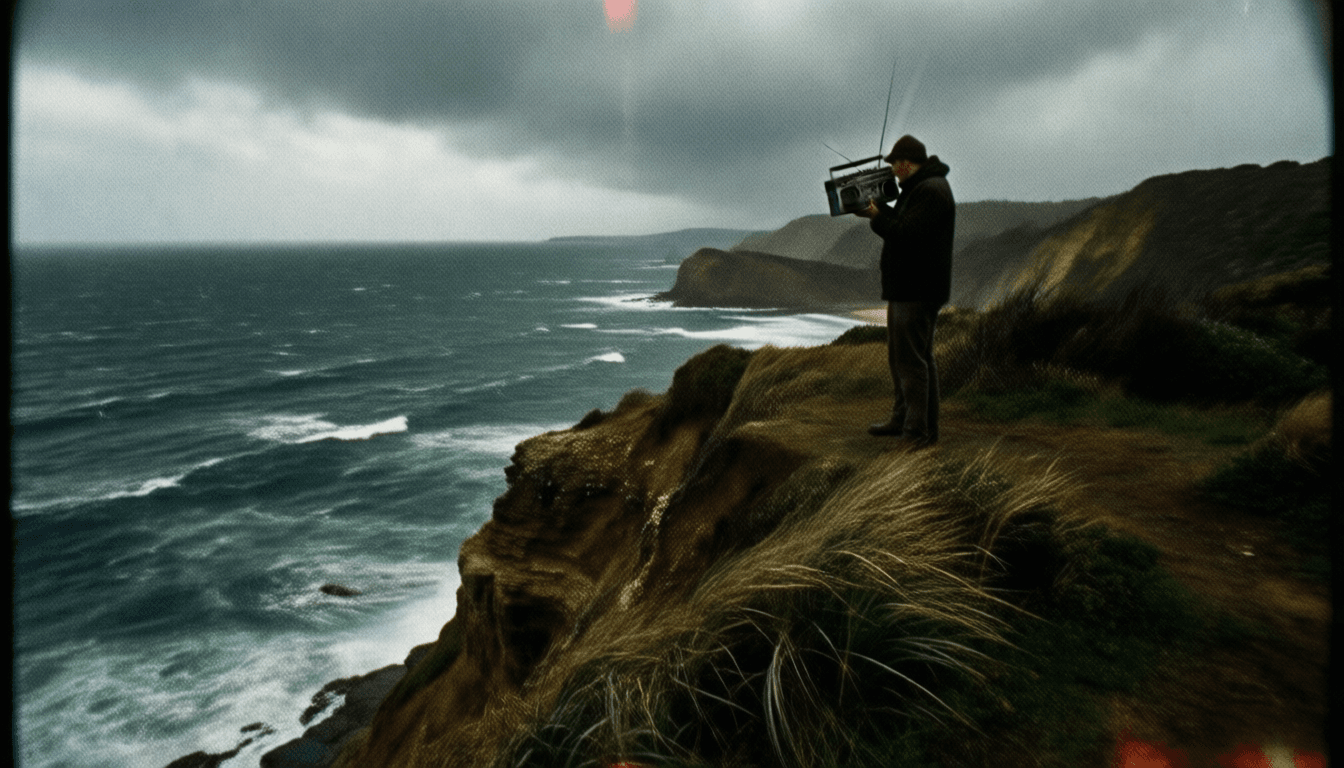
Local fishermen and holidaymakers in the Portsea area, particularly near Cheviot Beach, reported a persistent, low-frequency "pulsating hum" in the hours surrounding Holt's disappearance. Described as "like an engine starting under the water, but too deep and slow" and "a vibration that resonated in your bones," these testimonies were invariably attributed to naval exercises, submarine activity, or unusual atmospheric phenomena. Official inquiry records contained a few brief mentions, usually followed by the annotation: "Dismissed. Unreliable testimony." However, a recently declassified Department of Defence memo from January 1968 included an informal report from the Cape Schanck lighthouse keeper, miles away. He described an "anomalous acoustic disturbance inexplicable by known maritime traffic or weather patterns," specifically noting a "harmonic pulsation" that "felt like an internal vibration." Buried among thousands of pages, the memo was marked "No action required." This suggests the "hum" was not merely local folklore but a physical phenomenon consistently reported over a wider area, deliberately overlooked. The question isn't *if* the hum existed, but *what* it was, and why its mentions were so thoroughly erased.
Spurred by the Cape Schanck memo, my interest turned to Cheviot Beach. It's a desolate stretch of coastline, characterized by treacherous currents and jagged, rocky terrain. Even on calm days, it was not a place for leisurely activity. The waters here are notorious for their deceptive strength, pulling outwards towards the Bass Strait. My objective was simple: walk the terrain, listen, and observe. More out of academic thoroughness than any expectation of discovery, I carried an audio recorder and a low-frequency sensor.
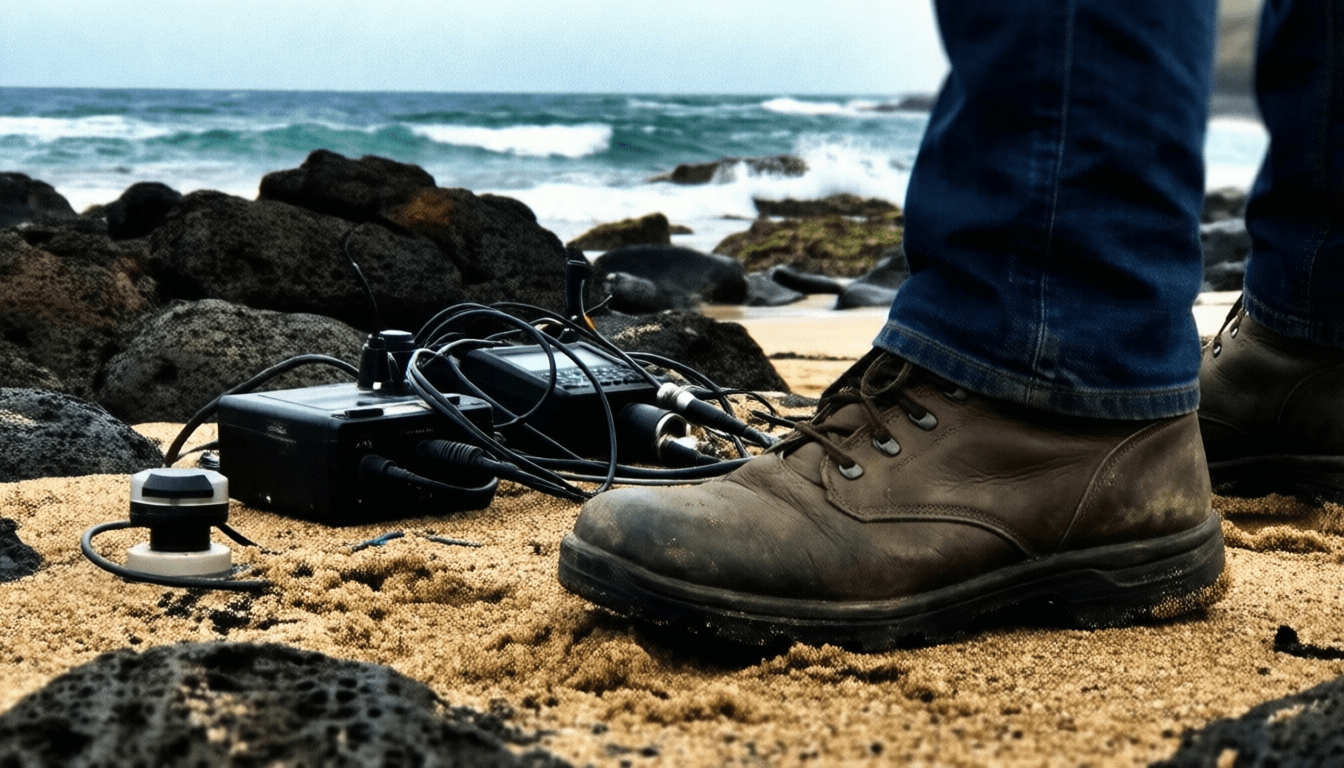
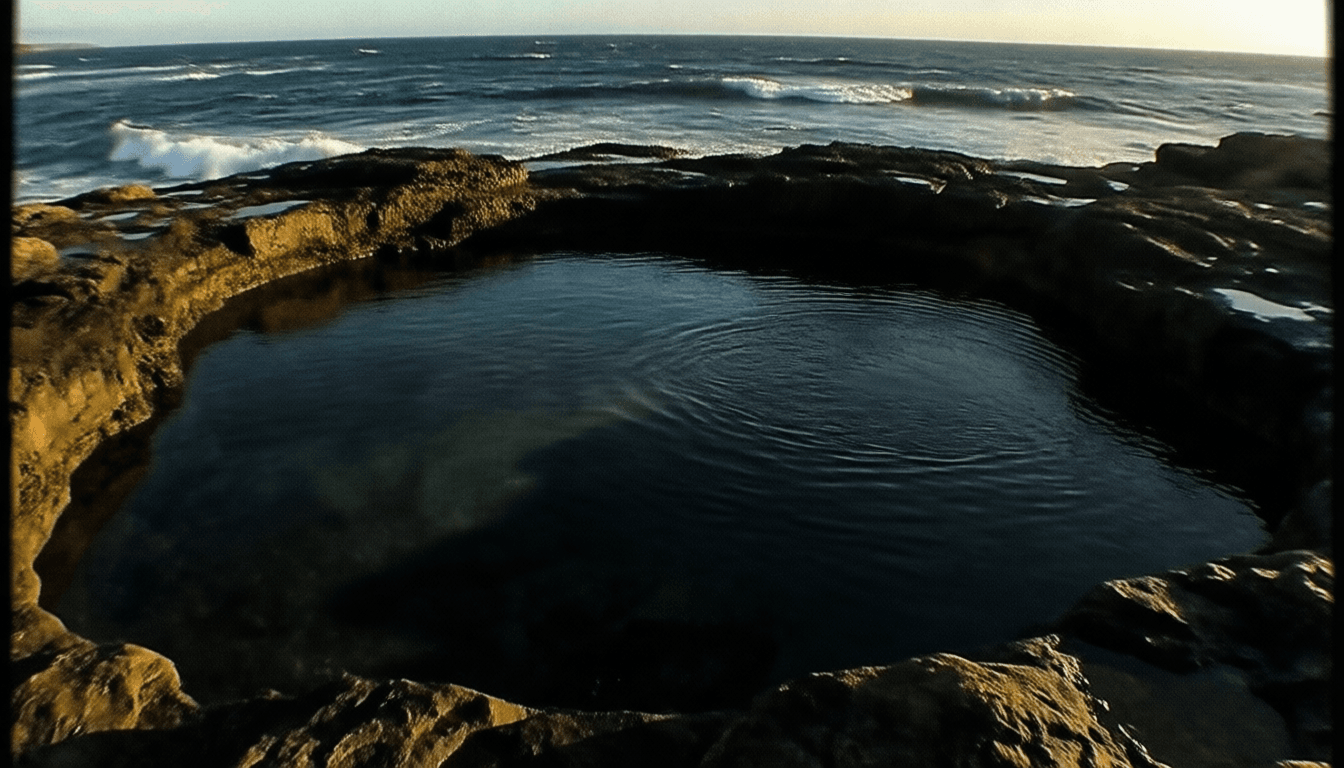
The air was heavy, the roar of the ocean a constant presence. The path to the beach wound through dense coastal scrub, eventually leading to a narrow strip of sand that gave way to a chaotic jumble of ancient volcanic rocks. This was the precise area where Holt was last seen. The waves were normal, yet an unseen, powerful undertow swirled, creating subtle, conflicting currents around submerged rocks. A particularly large, dark cluster of rocks a little way offshore formed a natural pool – a deceptive calm before deeper water. That was my primary investigation point. The isolation was immediate and profound. My phone had no signal. The only sounds were the gulls and the relentless crash of the waves.
I spent hours tracing the coastline, taking acoustic measurements, and simply observing the water. For a long time, there was nothing beyond the expected natural sounds of the sea. Then, as the afternoon sun began to fade, a shift occurred. It was subtle at first, almost imperceptible amidst the background roar. My low-frequency sensor, which had been recording ambient seismic activity, began to register a faint, regular pulsation. A frequency too low to be heard, more felt than heard. It was the familiar "vibration that resonated in your bones."
I adjusted my position, moving closer to the water's edge, towards the rock pool. The hum intensified microscopically, a deep, resonant vibration that seemed to emanate from beneath the waves. Not from afar, but directly below. The water within the pool began to behave strangely. While the surrounding currents maintained their outward pull, a small section within the rocky enclosure remained unnaturally calm, almost stagnant, despite the force of incoming waves. Then, for a fleeting instant, I saw it: a small patch of surface water created a counter-wave, receding *backwards* against the flow, only to be immediately engulfed by the next incoming wave. It was physically impossible. A momentary violation of hydrodynamics.
The hum now resonated in my chest, a distinct 'hmmm-hmmm-hmmm' rhythm. My audio recorder, which had initially only picked up white noise, now captured this out-of-audible-range pulsation, displaying a distinct, structured waveform. My rational mind struggled for explanations: geological activity, an internal fault line... But the regularity, the *design* of the pulsation, defied natural origin. Even the light seemed different. Shadows cast by the rocks were too sharp, too absolute, absorbing more light than they should have, creating pockets of oppressive darkness even at dusk. The feeling of being utterly alone deepened, almost becoming predatory. I was being observed by something that could perceive me through this resonant frequency.
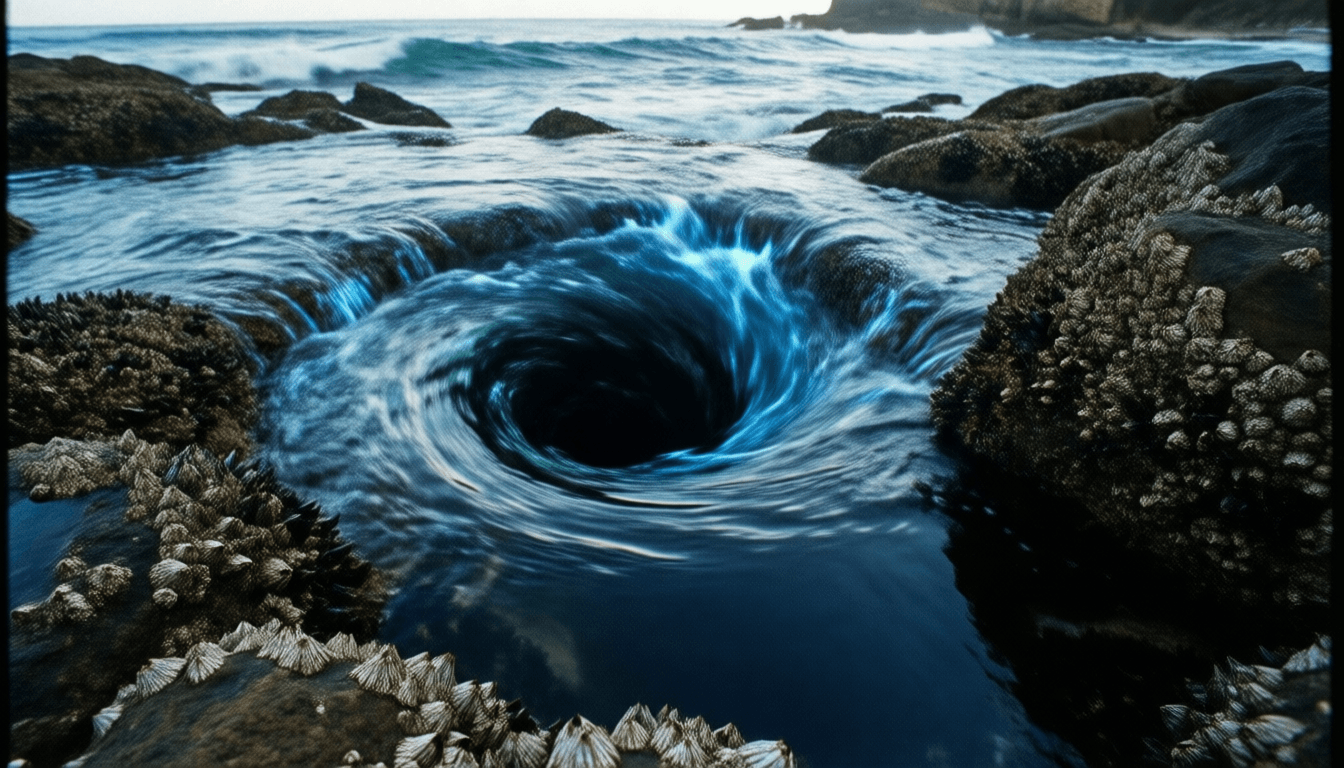
Driven by morbid curiosity and perhaps an irrational compulsion, I navigated the slippery rocks and stepped into the pool. The hum was now a powerful physical sensation: a painful pressure behind my ears, an ache vibrating in my teeth. The air grew heavy, almost viscous, making breathing shallow and difficult. In the center of the rock pool, where the water had been unnaturally still, a low, swirling vortex began to form. It started slowly, hesitantly, but then accelerated. The surface tension of the water shimmered, then broke, forming a perfect, inverted cone, sucking downwards.
This was no ordinary current. The water within the vortex wasn't just moving; it was flowing *into itself*, defying gravity. The edges of the vortex shimmered with an otherworldly glow, a soft, internal blue light that pulsed in time with the painful hum. My recorder shrieked with feedback; the low-frequency sensor went off the charts. I stood at the edge, fascinated and terrified. A massive wave broke over the outer rocks, sending tons of water cascading towards me. I instinctively braced, but the wave never reached me. As it entered the vortex's sphere of influence, it simply *ceased to exist*. It didn't break or splash; it was absorbed into the impossible downward flow with a sickening *gulp*.
The vortex’s power intensified, creating immense suction that tugged at my legs, threatening to pull me into its impossible mouth. I clung to barnacle-encrusted rocks, my fingers bleeding, my body screaming against the immense force. The atmospheric pressure dropped further, my lungs burning. In the shimmering blue water, I saw something. Not a body. Not a submarine. Several meters beneath the surface, a perfectly smooth, obsidian-dark surface pulsed with the same blue light. It was massive and utterly alien, its surface seeming to *absorb* the surrounding light, creating a void of absolute darkness at its center. It was the source of the hum, the master of the impossible currents. It was not a natural phenomenon. It was a mechanism. Or a door. Or just a mouth.
I knew with a soul-freezing certainty: this was what Harold Holt had encountered. He hadn’t drowned. He had been drawn in and swallowed whole by this quiet, inhuman operation. The hum was its overture, the impossible current its grip. I clawed my way backward, against the immense suction. My muscles screamed, the rocks tore at my skin. The hum reached a crescendo of physical agony, forcing a desperate, terrified retreat. I stumbled, fell, and rose again. Engulfed by primal fear, I fled desperately from the glowing, impossible mouth in the water, which still swirled, waiting.
I made it back to my car, trembling, bleeding, still gasping for air that felt thin and wrong. My low-frequency sensor was dead, broken. The audio recorder, a useless chunk of plastic. But the vibration remained within me. The hum had followed me. It was a phantom sound, a low-level thrumming beneath my heartbeat, a constant reminder that beneath the world’s surface, at least since 1967, something utterly alien had been operating unbeknownst to anyone.
I never spoke directly about what I witnessed. The official explanation for Holt’s disappearance remains firm. The Cape Schanck memo, with its mention of a "harmonic pulsation," sleeps in forgotten archives. But I know. I feel it in my bones. To me, the sea is no longer just water. It is a vast, opaque curtain, behind which countless mechanisms operate, silently and persistently. The fear is not of monsters, but of an indifferent, efficient process. Holt was not a victim of the sea. He was a victim of something far older and more calculating. It still slumbers beneath the waves, waiting for the precise resonant frequency, the right atmospheric conditions, or perhaps the correct political climate, to begin its quiet, humming operation once more. The Cheviot hum was not an anomaly. It was a signature. And it still faintly, vibrates within me.

[ CLASSIFIED VERDICT ]
[ACCESS LOG - SOURCE FILE]
In 1967, Australian Prime Minister Harold Holt disappeared while swimming, and his body was never found. Despite the official conclusion of drowning, his disappearance has fueled numerous conspiracy theories and speculation for decades, and this story deepens that mystery in another ominous direction.