The Call from the Deep: Cadborosaurus
For decades, Cadborosaurus had been relegated to the fringes of serious cryptozoological discussion. It was often dismissed as merely an unidentified oarfish or an exaggerated whale sighting. Yet, the persistent whispers refused to fade. The most compelling, and simultaneously unsettling, piece of evidence was the 1937 'Naden Harbour Carcass' photograph. Captured and examined by local scientists, the carcass possessed an undeniable serpentine form, a horse-like head, and distinctive flippers, yet it defied taxonomic definition. Tragically, this specimen vanished before full scientific study could be conducted, leaving behind only a few blurry photographs and a lingering, profound 'what if'.
Now, a new thread has emerged. Online forums dedicated to unidentified oceanic phenomena buzz with recent sonar data and blurry, low-resolution satellite images captured from a particularly deep and narrow fjord on the west coast of Vancouver Island. Amateur analysts claim to have detected anomalous, elongated signals with undulatory movements, far larger and faster than known marine life, distinct from whales or large sharks. There are also unconfirmed reports from commercial fishing vessels of unexplained localized pressure spikes coinciding with sudden, mass disappearances of fish from their catch boxes. Cross-referencing these digital flickers with local hydrographic charts pointed to an ancient, geologically active trench system where local legends spoke of 'where the sea breathes'. The persistent occurrence of these new anomalies, combined with past precedents, necessitated direct investigation. My goal was to explore this isolated region, to either validate or refute the recent data.
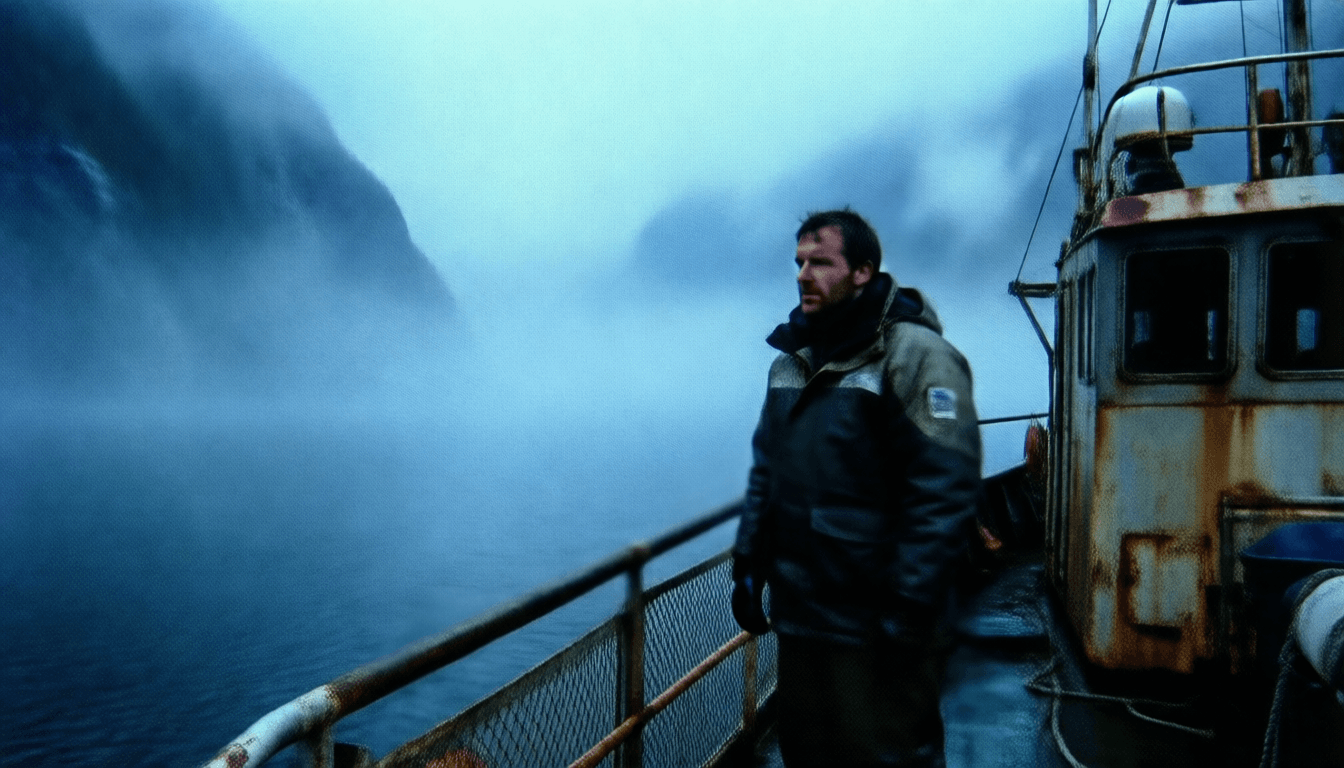
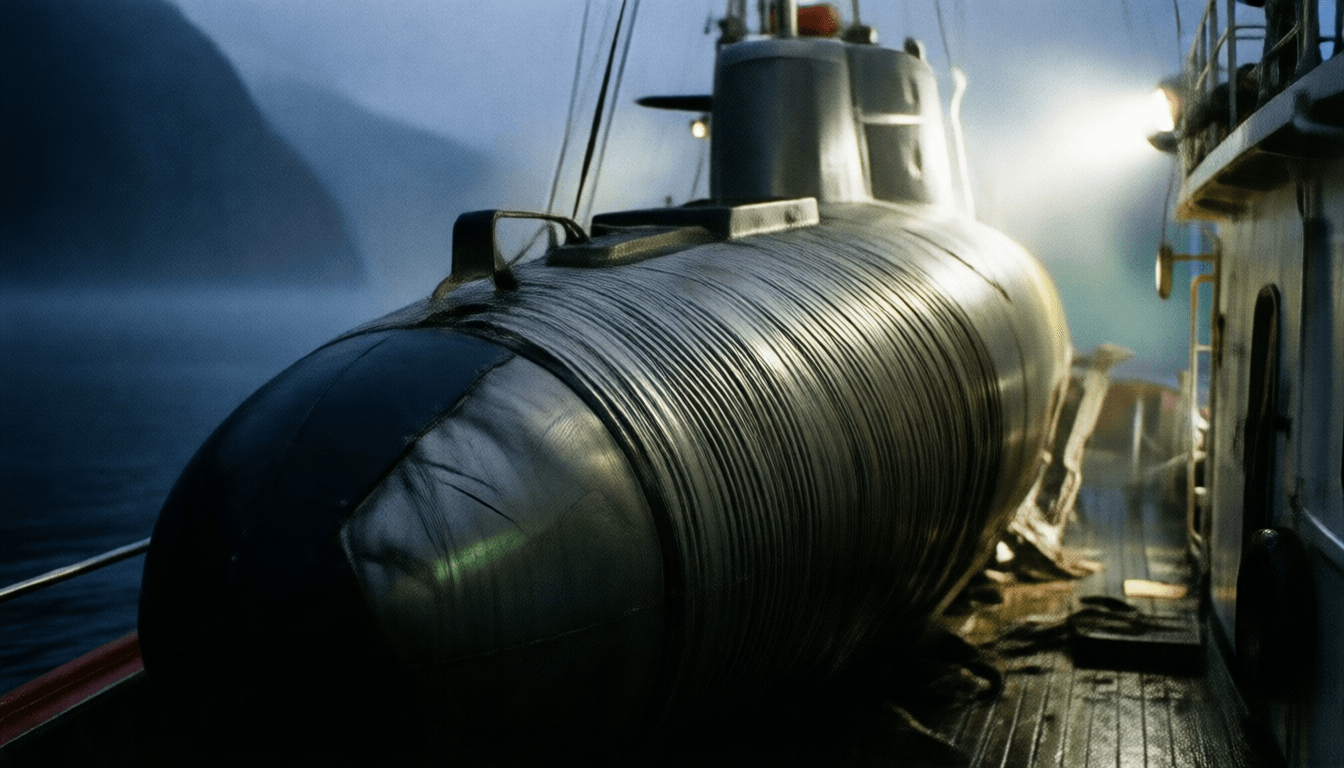
Accessing the target point, a crevasse-like inlet known locally as 'Serpent's Coil,' required a low-draft research vessel equipped with high-frequency sonar, hydrophones, and environmental sensors. The entrance was veiled in dense fog, a common coastal phenomenon but here it was overwhelming, swallowing sound and distorting scale. The fjord itself was a geological anomaly – sheer granite cliffs, covered in moss, plummeted thousands of feet into a frozen, unknown abyss, creating a cathedral-like acoustic space. The water was almost black obsidian, reflecting only a leaden sky.
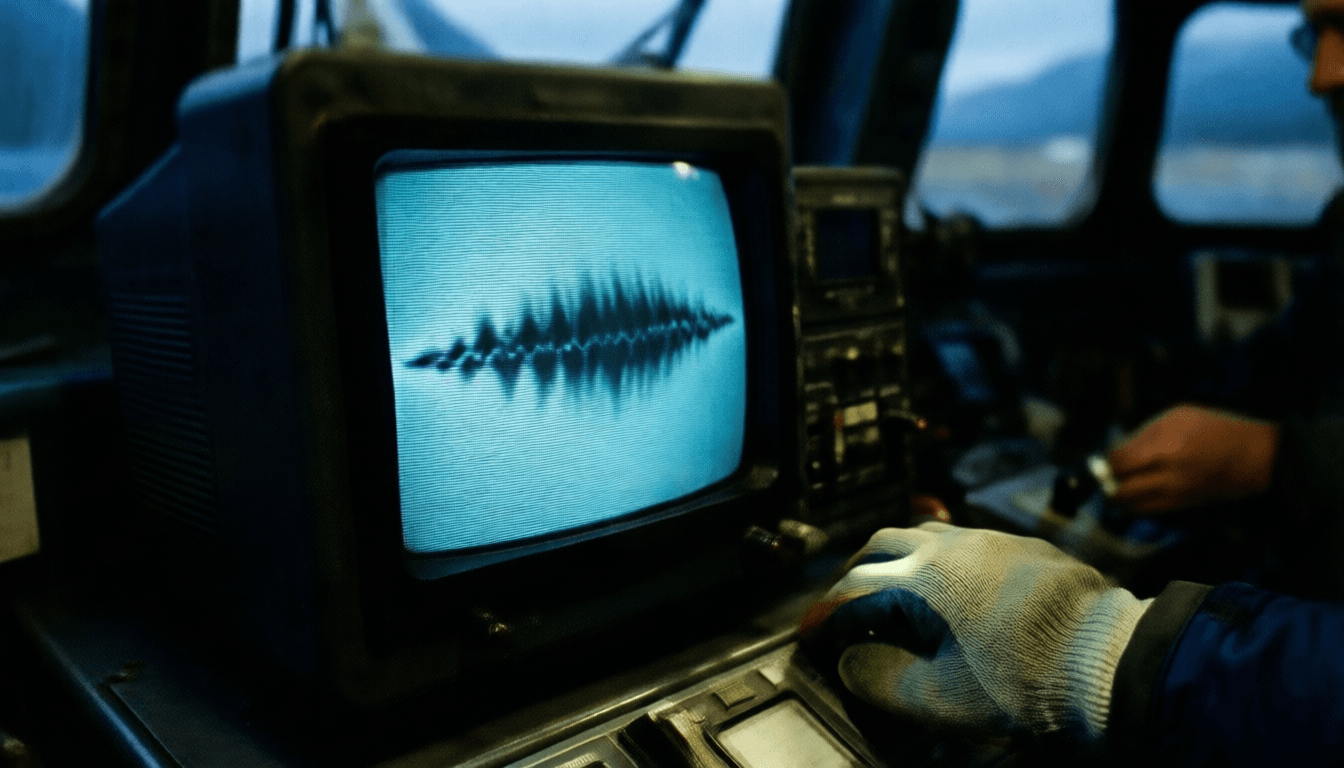
Upon entry, the ship's sonar immediately registered an abnormal depth profile. Certain areas were significantly deeper than existing charts, hinting at unexplored caverns or abyssal fissures. Initial hydrophone deployments yielded only the expected sounds of the deep: distant creaks of shifting ice, the snapping of shrimp, and the occasional mournful whale song. Yet, the profound silence between these natural sounds was chilling. The air was still, heavy with the scent of salt and decaying kelp. The only movement was the slow, inexorable tug of unseen sub-surface currents, subtly rocking the vessel despite its anchoring. It felt less like floating on water and more like being suspended over a vast, hidden void.
The first anomaly was subtle, almost imperceptible. The hydrophones began picking up low, irregular, powerful infrasonic vibrations, unlike any known seismic activity or biological signal. It was less heard and more felt, a hum resonating through the ship's hull, unsettling the stomach. On the sonar, designed to penetrate great depths, fleeting, elongated 'ghost' images began to appear. Too deep, too fast, too fluid to be normal marine life, often appearing and disappearing within the uncharted abyssal trenches.
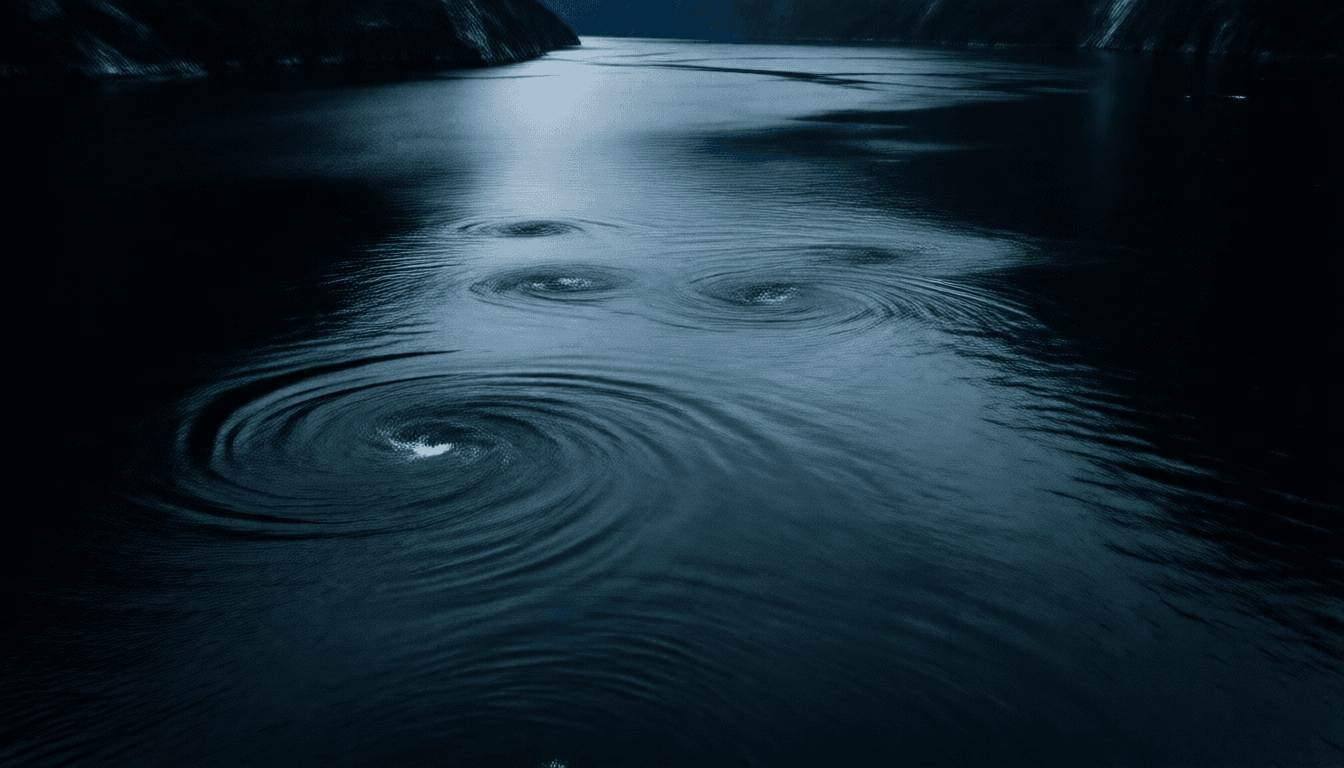
Environmental shifts followed. Portions of the placid water surface began to swirl against the dominant current, forming small, counter-rotating eddies that appeared and vanished as quickly as they arose. In these localized areas, water temperature dropped sharply, sending a chill through the ship's sensors. Sudden, deep pressure waves were detected, powerful enough to temporarily trigger the ship's emergency bilge pumps, despite no large vessels or submarines being nearby.
The most disturbing incident occurred during the nocturnal deployment of a deep-sea camera array. As the lights pierced the absolute darkness, they revealed brief flashes of something immense and dark moving at the periphery, yet impossible to focus on. Upon retrieval of the cameras, the tether displayed clear, parallel gouges – too large and smooth for rock abrasion, and inconsistent with known marine predator bites. The fjord's silence deepened further, feeling less like an absence of sound and more like an intentional un-sound, as if all life held its breath. The hum from the hydrophones became more frequent, closer, a slow-building pulse from the deep.
I was deploying a specialized acoustic transponder near one of the previously identified anomalous sonar flickers. It was a small, single-person submersible tethered to the main vessel, a compact model designed for precision maneuvering in deep water. As I descended into the narrow, deep canyon, the sonar screen flared violently, painting a colossal, undulating signal directly below and ahead. The infrasonic hum intensified into an unbearable roar through the submersible's hull, physically assaulting my eardrums. Suddenly, the water itself became hostile. A powerful, focused current, impossibly strong and originating not from surface tides but from within the canyon walls, slammed into the submersible. It was violently pushed and scraped against the sheer rock face of the canyon, metal groaning, threatening to buckle the hull. The tether strained and whined. This was no natural current; it was a deliberate, concentrated force.
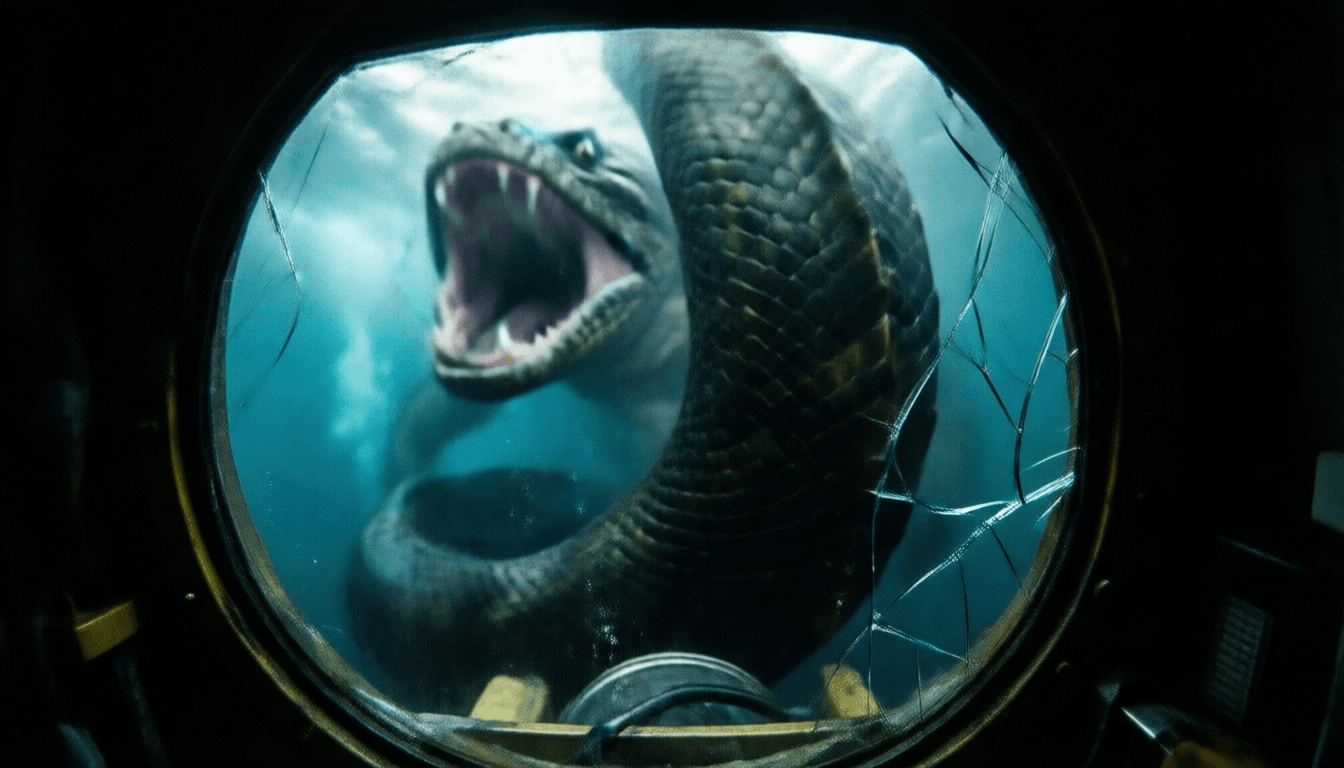
Then, the impossible happened. The water outside the viewport began to churn, not with bubbles, but with dark, viscous mass. An impossibly long, massive serpentine form enveloped the submersible. I caught glimpses of raised dorsal ridges, a flash of an eye region, and a powerful, almost pincer-like tail wrapping around the hull. The creature wasn't merely passing by; it was acting. It was exerting pressure, trying to crush the submersible, to drag it into deeper, unseen caverns. Internal pressure alarms blared. A section of the viewport cracked. The powerful hum intensified, seeming to resonate directly through the creature's body – a sonic weapon to disorient and incapacitate. I fired emergency thrusters, fighting against an intelligent, directional force. The creature's grip loosened slightly as the submersible screamed past its scaled body, but the tether was already frayed, emergency lights blinking. Finally, a colossal, abyssal-cold wave slammed the submersible against the rock, snapping the tether. Just before the viewport was obscured by chaos – darkness and the creature retreating into a deeper void – the last thing I saw was an impossible maw opening in the faint underwater light. The submersible plummeted into the darkness, systems failing, the crushing pressure portending imminent collapse. I barely managed to activate the emergency buoyancy device, hoping it would work before the abyss consumed me completely.
I was rescued, unconscious, suffering from severe hypothermia and pressure trauma, by my automated emergency beacon. The submersible, or what remained of it, was eventually dragged to the surface, a twisted wreck. The aft section, where the creature had exerted pressure, wasn't just crushed; it bore deep, incredibly smooth gouges, unlike any rock damage. More chillingly, the cracked forward viewport had faint, lingering bioluminescent residue – distinct from any known deep-sea chemical signatures.
My recording devices yielded fragmented data. The hydrophone audio from the climax was a cacophony of white noise and that persistent, impossible hum, punctuated by what sounded like deep, tormented wails. But the sonar logs showed a clear, continuous 'shadow' far below the wreck site, moving at a leisurely, almost contemplative pace for hours after the incident. It never left the area.
Back on shore, my physical wounds healed, but the psychological ones remained. I found myself staring at the endless grey expanse of the sea. The sound of the waves no longer brought peace, but became a constant echo of that deep, resonant hum. My report, detailed with damaged equipment, chemical analyses, and corrupted sonar logs, would likely be filed away, attributed to stress-induced hallucination or equipment malfunction. But I know what I saw. What I felt.
Sometimes, late at night, when the wind howls off the coast, I still think I hear it. Not the hum, but something far more unsettling – a call. Distant, intelligent, patient, from the abyssal deep. It's not a hunt. It's a reminder. That Cadborosaurus is not merely a legend or a misidentified creature, but a living, conscious, sentient presence. And it is watching. Waiting. The fjord still holds its ancient secret, and I am merely the latest witness to its silent, territorial vigilance. The deep remembers.
[ CLASSIFIED VERDICT ]
[ACCESS LOG - SOURCE FILE]
Cadborosaurus is an unidentified marine creature reportedly sighted off the coast of British Columbia, Canada. In 1937, a mysterious carcass with a serpentine body and a horse-like head was found in Naden Harbour, photographed, but disappeared before full scientific study, remaining a legend. This story delves into an investigation of this legend's potential re-emergence in modern times.