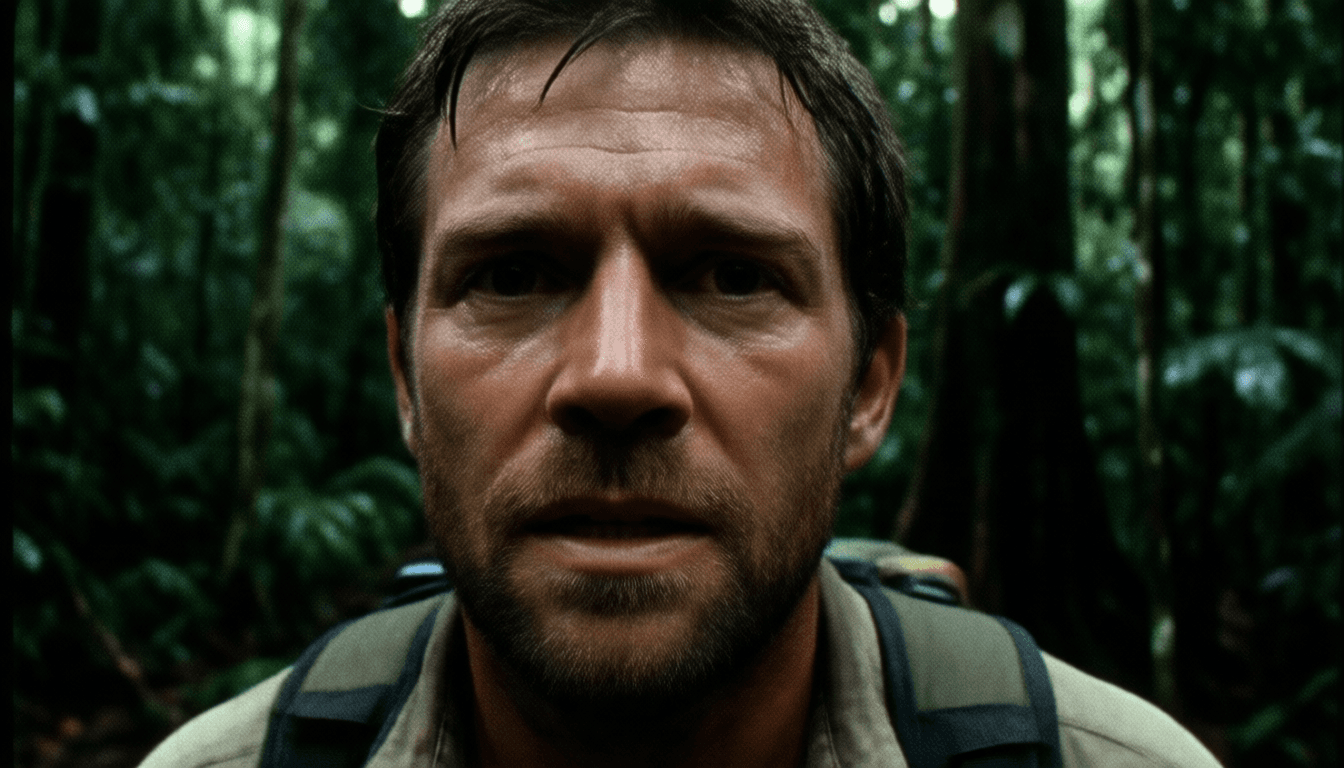
The Breathing Ground: The Truth Behind Fawcett's Disappearance
For nearly a century, the 1925 disappearance of British explorer Percy Fawcett and his sons Jack and Raleigh Rimmell in Brazil's Mato Grosso has fueled countless expeditions, theories, and persistent whispers of something more than mere misfortune. While official records largely cite conflict with indigenous tribes or starvation, recently declassified sections of 1930s Brazilian intelligence documents, cross-referenced with Kaiapó oral traditions, point to a specific, unclassified geographical anomaly deep within the unexplored reaches of the Xingu River basin. Titled the "Xingu Geographical Anomaly Report," the documents include enigmatic mentions of a brief aerial reconnaissance team experiencing "unstable ground" and "acoustic distortion" before communications ceased. More chillingly, an attached hand-drawn map, presumed to be from a survivor of a subsequent ill-fated reconnaissance mission, marks a specific point with a symbol eerily resembling a vortex or an entrance, annotated with the phrase: "Aquí, o chão respira." ("Here, the ground breathes.") This convergence of once-secret government reports and ancient local legend, directly challenging the standard narrative, suggested Fawcett hadn't simply been lost 'in' the jungle, but rather swallowed 'by' something within it. It was this anomaly, this breathing ground, that I set out to find.
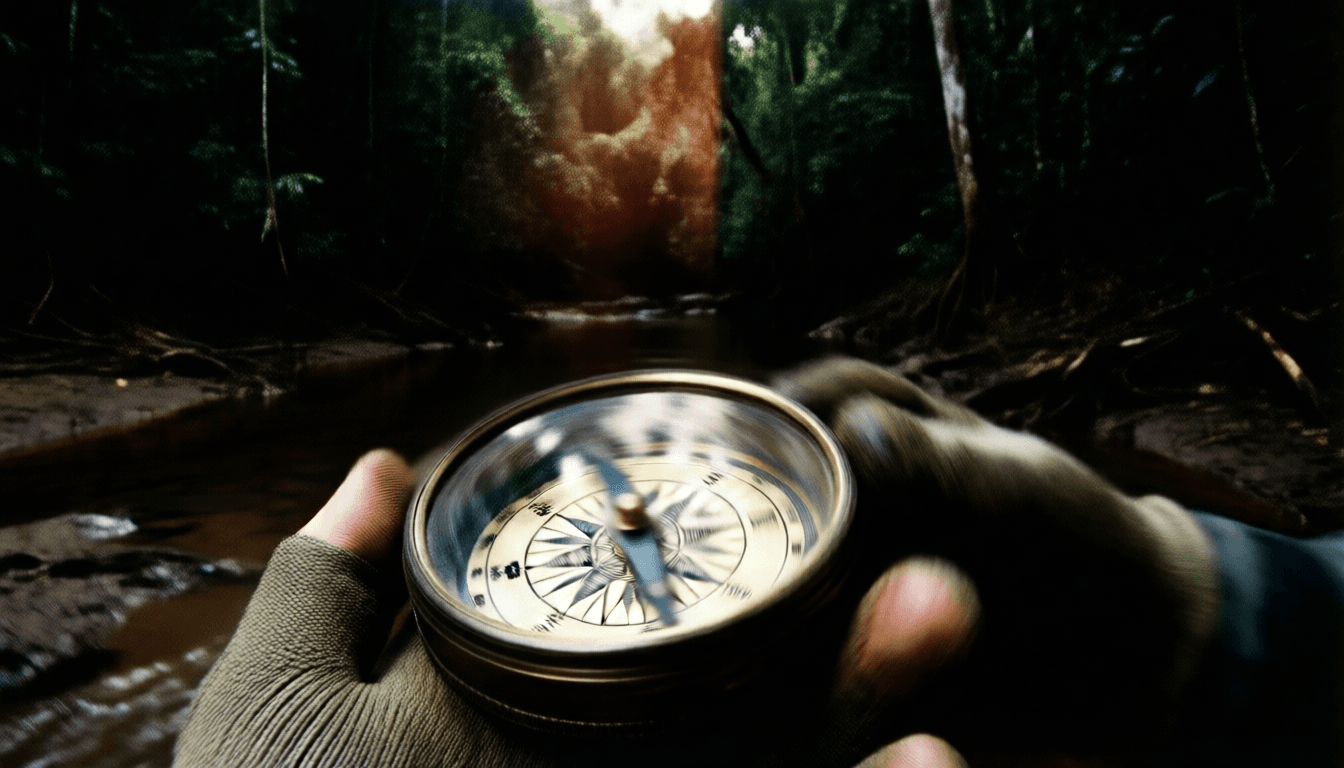
Following the coordinates from the declassified report, my expedition entered a particularly dense and low-lying region of the Xingu River. The journey itself was a brutal exercise in endurance. The air was humid and oppressive, the river a winding ribbon choked with floating masses of aquatic vegetation. For days, the only sounds were the hum of insects, the paddle against the water, and the rhythmic stroke of my two local guides. Their faces grew increasingly grim as we neared the coordinates. The GPS flickered erratically, cutting in and out, seemingly struggling to penetrate localized interference. The jungle canopy overhead was so thick that little sunlight permeated, creating an perpetual humid twilight. It was in this antechamber of shadows that the first subtle disquiet began to manifest. The current, which should have pushed steadily southward, would occasionally halt, creating inexplicable dead zones where our canoe would simply stop, only to resume its flow with an almost mechanical precision. My trusty compass would, at times, spin aimlessly. The guides exchanged uneasy glances, murmuring in low Portuguese and Kaiapó – a growing apprehension I couldn't fully understand but keenly felt. We were entering the mouth of something.
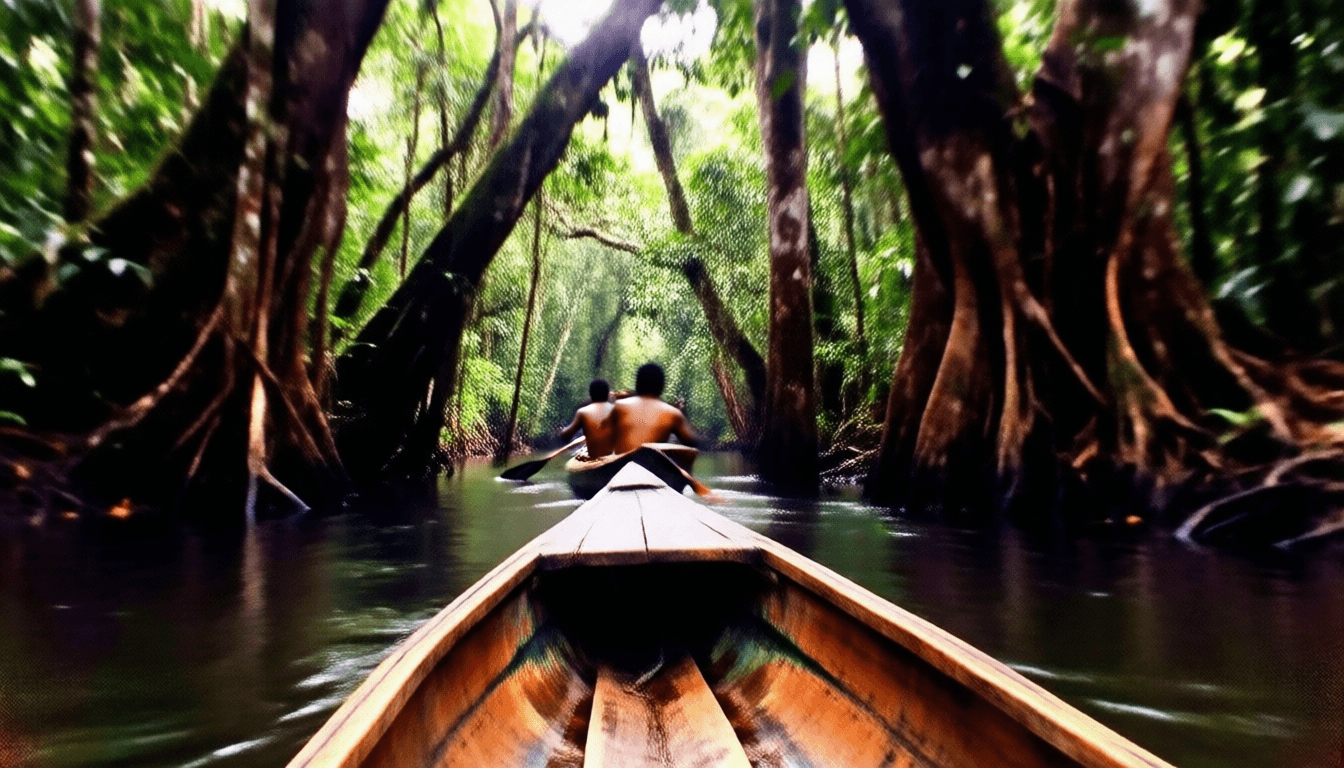
The silence was the truly unsettling first element. Not the natural lulls of the jungle, but an absolute, suffocating void that extinguished every hum, every chirp, every distant simian call. In this silence, the only sounds were our own ragged breaths and the river, which, paradoxically, began to generate strange, delayed echoes. The dip of a paddle would reverberate seconds later from an impossible distance, or a whispered question would return distorted, a drawn-out moan. The very air felt heavier, pressing down on the lungs, making simple movement exhausting. We reached a tributary unmarked on any map, yet it matched the hand-drawn sketch in the intelligence documents perfectly: a narrow, dark channel leading deeper inward. The water here moved with disturbing slowness, sometimes appearing to swirl upon itself despite its shallow depth. The trees lining the banks were abnormally colossal, their roots forming grotesque tangles, their branches interlocking like jaws. My guides refused to go further. Their fear was palpable. They explained in hushed tones that this was a "place not to be seen," a "place that eats sounds." Driven by my archivist's obsessive need for objective truth, I proceeded alone. The enigmatic Kaiapó phrase echoed in my mind: "Aquí, o chão respira."
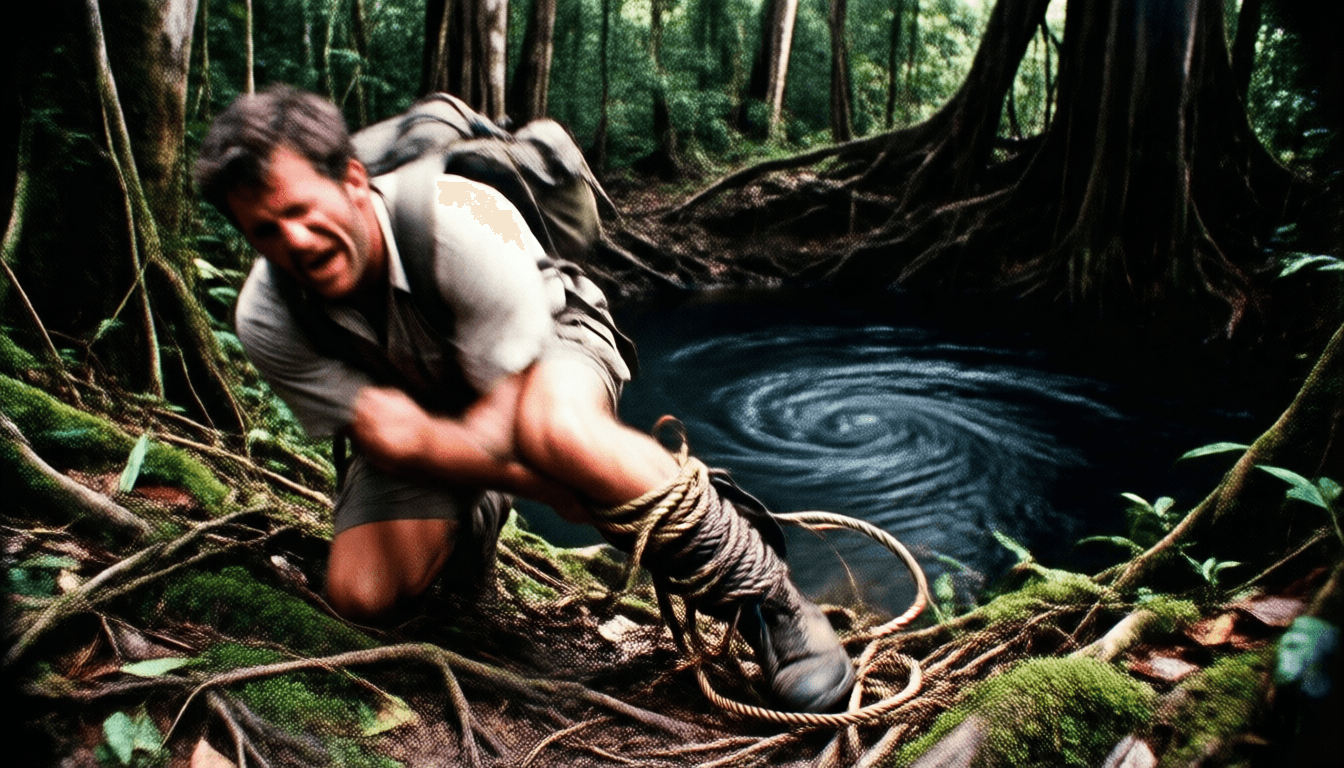
Tying off the canoe and proceeding on foot into the tributary, I reached a clearing that defied logic. The ground here was not solid earth, but a dense, living mat of roots and moss, subtly, almost imperceptibly, undulating as if breathing. The silence was absolute, a profound pressure that stripped all resonance from the air. In the center of this clearing was a depression, a pool of perfectly still, black water, reflecting the oppressive canopy like polished obsidian. As I approached the edge, a low, resonant thrumming began to vibrate up through the soles of my boots from the ground itself. The surrounding air became impossibly heavy, crushing my chest, making breathing a desperate struggle. Then, the vegetation around the pool began to move. Not swaying, but moving. Thick, rope-like lianas, previously still, unwound themselves, slithering across the ground with incredible speed, extending like massive probing tendrils. They found purchase and began to contract, pulling the soft, root-matted earth towards the central pool. The ground itself began to slowly, inexorably, contract, like a fist clenching. I could feel the earth beneath my feet compacting, trying to drag me down into the sticky, black water. The previously still water was now churned by silent, internal currents, creating miniature whirlpools that tugged at the edges of the living mat. One liana, thicker than my forearm, lashed out, wrapping around my ankle with a bone-jarring impact. It tightened with incredible force, pulling me towards the dark water. I thrashed desperately, fumbling for my knife, my lungs burning. I hacked at the liana, the blade sinking into its fibrous, living core, releasing a thick, sap-like fluid that smelled faintly of ozone and decay. I wrenched myself free just as the ground split open, revealing a vast, dark maw beneath. The air pressure suddenly dropped painfully, my ears popping, blood rushing to my head. I felt a profound inhalation, a silent roar that pulled at my very being, a force dragging me into the chasm where the ground truly breathed. I stumbled backward, scrambling away from the contracting clearing, the breathing ground, and the silent maw that had almost consumed me.
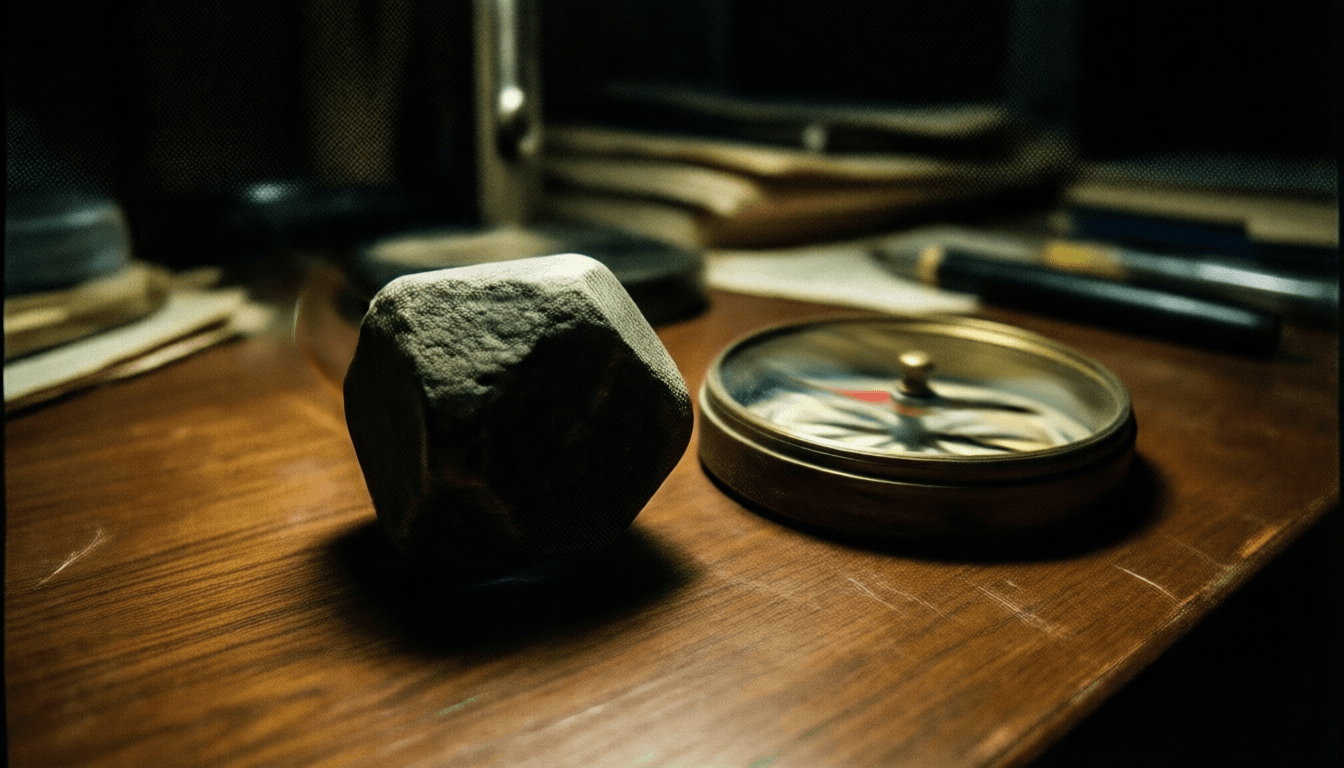
I returned to civilization with a fractured ankle, several deep lacerations, and a profound, inexplicable terror. Most of my equipment was lost in the desperate retreat, save for a waterlogged, corrupted camera file and a single, unidentifiable object that I found weeks later, embedded in my boot. It was a small, dark, hexagonal stone. It was abnormally cold to the touch, possessing no geological features I could identify. It hums with a faint, almost imperceptible tremor, sometimes in sync with my own heartbeat. My guides refuse to speak of it, their eyes wide and distant whenever the subject arises. My official report cited only "severe environmental hazards" and "unpredictable terrain," omitting all mention of the breathing ground, the silent echoes, the suffocating pressure. No one would have believed it. But sometimes, alone in my study, a deep, absolute silence descends. The compass on my desk begins to spin idly. And I find myself staring at the walls, listening for a faint, resonant thrumming rising from the floorboards. Fawcett hadn't been lost 'because of' the jungle; he had disappeared 'into' it. He had found a place that didn't just hide its secrets, but devoured them. The lost city of Z, if it existed, was merely a lure, a red herring used to describe something far older, far more alien, and utterly indifferent to human endeavor. The maw is still there. Beneath the roots, beneath the silence, it takes slow, patient breaths, waiting for the next curious hand to grasp its secrets. And sometimes, late at night, I swear I can feel the ground beneath my apartment subtly, almost imperceptibly, undulating.
[ CLASSIFIED VERDICT ]
[ACCESS LOG - SOURCE FILE]
The explorer Percy Fawcett disappeared in 1925 in the Brazilian Amazon while searching for the Lost City of Z with his two sons. Officially, his disappearance is attributed to conflict with indigenous tribes or illness, but this story is based on the chilling urban legend that he was swallowed by an unknown entity 'within' the jungle. Rumors of an unknown phenomenon, like the breathing ground, surround his disappearance.