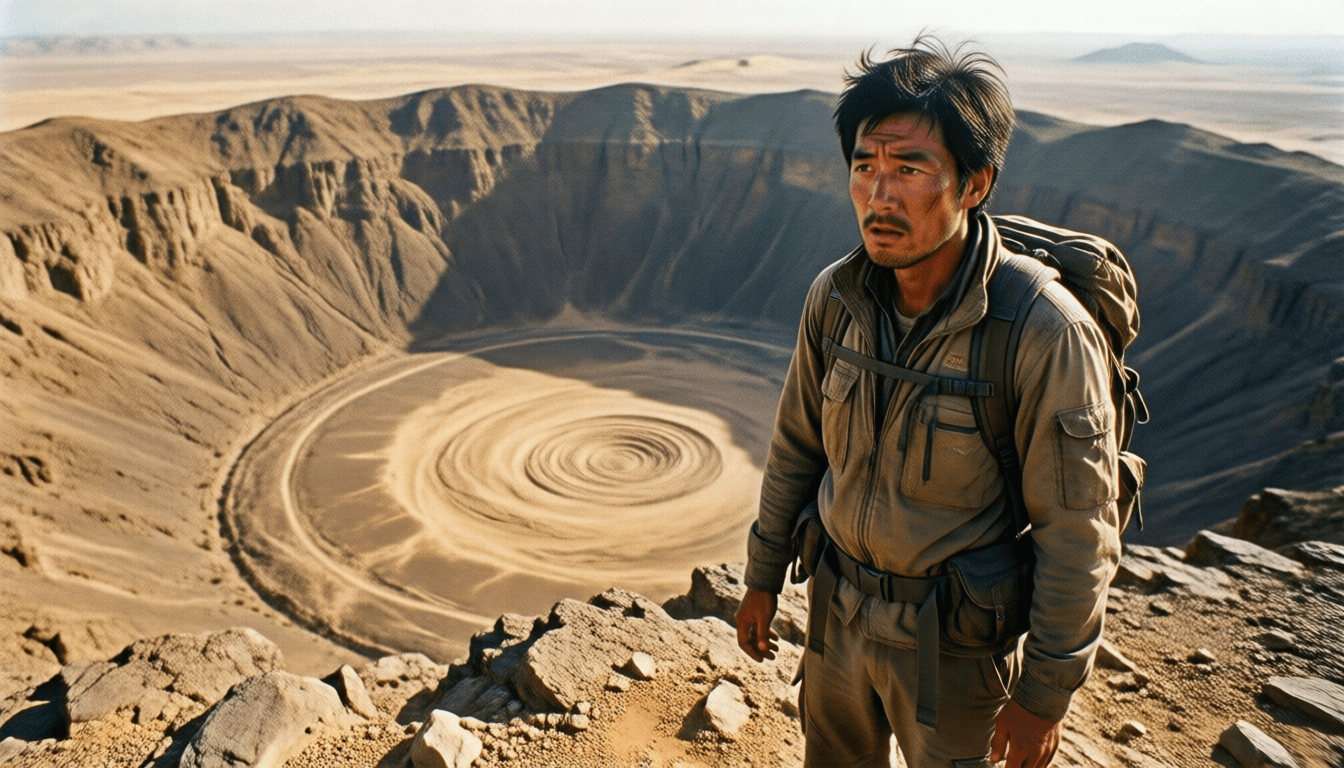
The Breathing Eye of the Sahara
Located in the western Sahara Desert, the Richat Structure is known as the 'Eye of the Sahara.' This perfectly concentric circular formation, spanning 50 kilometers in diameter, remains a steadfast geological anomaly that cannot be fully explained by standard erosion theories. Its overwhelming precision, as captured by satellite images, evokes a sense of artificiality rather than a natural landform. Online forums speculated wildly, calling it 'the Earth's breathing hole.' Fragmented amateur drone footage showed 'impossible waves' flowing across the sand within the inland rings, irrespective of wind direction. A deleted blog post by a technician mentioned unexpected equipment malfunctions and localized disorientation.
Particularly chilling were the eerily consistent warnings in the nomadic legends surrounding the site. They called Richat the 'Thirsty Eye' or 'Breathing Eye,' describing it as a place 'where sound dies and time unravels.' Repeatedly, stories spoke of those who ventured too deep vanishing without a trace, along with descriptions of a deep, unsettling silence and a persistent feeling of being watched. The decisive moment these rumors and legends could no longer be dismissed as mere superstition came with the disappearance of Dr. Elias Son, a renowned geophysicist. He had planned an in-depth acoustic survey of the Richat Structure's 'anomalous geological resonance.' His last satellite phone message stated: 'That humming… it's not geological… it’s *listening*.' Neither the doctor nor his high-performance acoustic equipment were ever found.
I was Aris Son, Elias's brother. Beyond the personal motive of tracing his vanished footsteps, a professional obligation to document the anomalous characteristics of this phenomenon compelled me. Arriving at the outer edge of the Richat Structure with state-of-the-art recording equipment and sensors resistant to environmental interference, its immense scale was overwhelming. The rings, stretching across the depleted horizon, unfurled endlessly like a giant fingerprint. Passing through the first and second rings was desolate but geologically understandable.
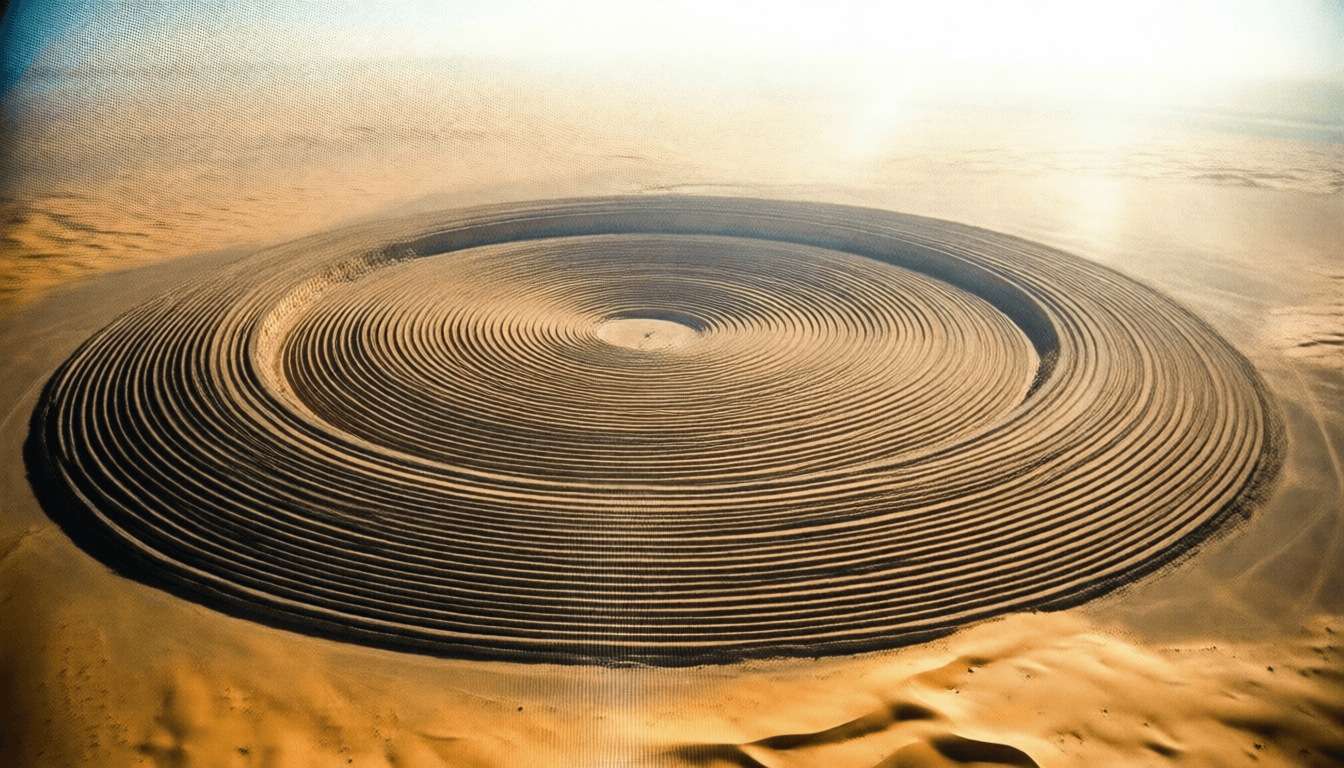
However, subtle changes began as I entered the third ring. While desert temperatures were high, the temperature here remained abnormally constant. There were no expected microclimatic variations. The wind that swept the outer rings had almost vanished, yet fine sand exhibited peculiar movements, gliding slowly like liquid. Communication with the distant support team sporadically cut out or became unintelligible, completely severing once I entered the second inner ring. GPS signals also began to degrade severely.
Inside the second ring, the 'localized silence' the nomads spoke of became a reality. It wasn't merely quiet. It was as if sound itself was actively *absent*. Footsteps sounded dull and muffled, and even my own breathing felt distant, as if behind some barrier. When I spoke into my recorder, the playback was barely audible, a thin, faint whisper. Dropping a small pebble, the sound was immediately absorbed into the air and vanished, without the expected echo or impact.
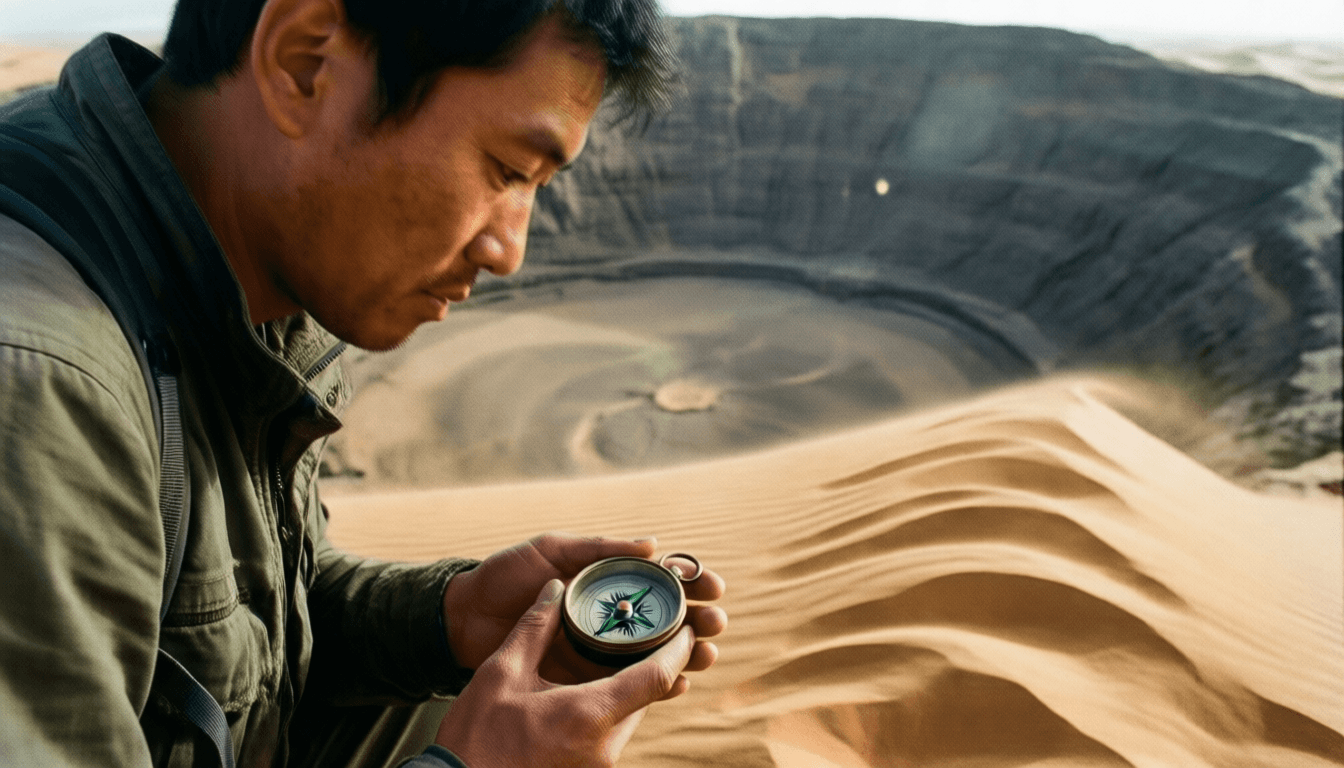
The concentric rings were no longer clear guides. My sense of distance began to distort. Familiar landmarks seemed out of order, and the horizon subtly warped, giving the feeling of being trapped within a giant, shallow bowl. High-resolution camera photos captured strange halos and shimmering refractions of light in empty space. It was then. A low-frequency hum, barely audible, began to resonate in my chest. Tinnitus was accompanied by intermittent dizziness. The compass needle spun erratically before stopping, pointing in an impossible direction. I launched my drone, but its motor failed upon takeoff, crashing. Its camera recorded only static until just before impact. On the ground, I found fragments of Elias's acoustic sensors. Though there were no burn marks, some were twisted as if melted. One small metal cylinder was partially intact; it emitted a faint, rhythmic *thump-thump* even without power.
Finally, I reached the central depression. The sand here was unlike anything I had seen. So fine and delicate, it felt almost gelatinous. Upon it, deep, symmetrical indentations seemed to pulse slowly. The low humming now intensified into an internal vibration, rattling my teeth and blurring my vision.
The 'waves' I had seen in drone footage began to appear not just on the sand, but across the *entire column of air*. Waves of distorted space radiated outwards from the center, forming a physical barrier. I was trapped within it. The ground itself subtly undulated, making my footing unstable, as if pulling me downwards. The 'localized silence' now transformed into an active force. The air around me visibly shimmered, solidifying into a viscous texture, constricting my breath. Air caught in my throat. The internal humming became agonizingly severe, accompanied by an unbearable pressure, as if all sound, all vibration, all *existence* was being compressed and extinguished. My scream was swallowed by silence before it left my throat, the very act of screaming becoming a painful, impossible struggle against the suffocating density of the air. The *thump-thump* from Elias's device accelerated wildly, becoming frantic.
The concentric undulations of the ground intensified, momentarily rising like moving walls, blocking any escape. The *geometry* of the depression itself subtly reconfigured, creating illusions of impossible slopes and vanishing exits. The air pressure became so powerful that capillaries burst, and internal organs fiercely resisted. For a fleeting moment, beyond the shimmering, solidified air, I saw a deeper, darker, perfectly circular depression forming at the heart of the structure, as if *inhaling* light and heat. It was an act of pure environmental consumption. I was pinned at the edge of this closing void, fighting to retain consciousness as the internal pressure threatened to tear me apart.

Days later, I was found near the first ring of the Richat Structure, dozens of kilometers away. I was disoriented, suffering from severe dehydration, inexplicable internal injuries, and ruptured eardrums. My vehicle and advanced equipment had vanished without a trace. The field camera, though badly damaged, yielded fragmented data. Images of the Richat Structure were strangely distorted, horizons sharply bent. At times, faint concentric patterns appeared superimposed on the landscape like a watermark. Audio recordings contained only static, yet intermittently, bursts of the *thump-thump* sound from Elias's device could be heard. Now, it no longer sounded like a mere pulse, but rather a slow, deliberate sound of 'inhaling-exhaling.'
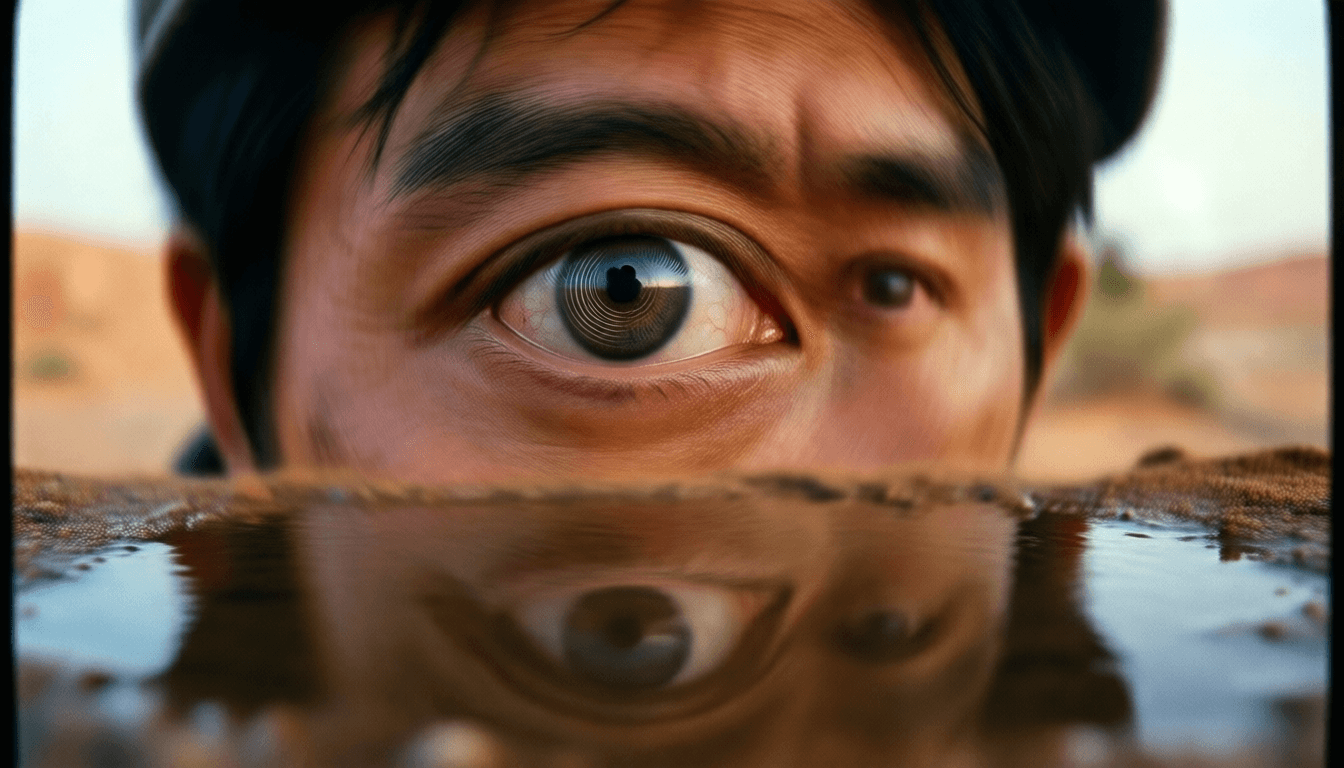
Most terrifying was the change that remained within me. I now intermittently experience the localized silence I endured at the center. Moments of absolute stillness, when all external sound abruptly vanishes for a few seconds, replaced by a deep, active *absence of sound*. Each time, it is accompanied by a faint echo of internal pressure. More unsettlingly, when I see my reflection in still water or a glossy surface, for a fleeting instant, faint concentric rings appear within my pupils. They seemed to perfectly replicate the Richat Structure. A subtle, indelible mark. A part of the 'Breathing Eye' remained within me, as if observing forever.
[ CLASSIFIED VERDICT ]
[ACCESS LOG - SOURCE FILE]
The Richat Structure, a colossal concentric geological formation in the Sahara Desert, is often linked to legends and rumors of alien civilizations or mysterious forces due to its perfectly circular shape. Local nomads call it the 'Thirsty Eye' or 'Breathing Eye,' warning that those who venture too deep vanish, and sound itself dies there. It remains a geological anomaly difficult to explain by simple erosion theories.