The Breath of Kuldhara
The abandoned Kuldhara village in Jaisalmer, Rajasthan, India, remains one of its most chilling enigmas. Official archaeological records, consistent with local historical accounts, confirm its sudden abandonment in 1825. This once-thriving Paliwal Brahmin village, along with 83 surrounding settlements, is said to have been deserted overnight. There were no mass graves, no signs of conflict, no natural disaster. The dominant narrative attributes this exodus to the tyrannical minister, Salim Singh. Enamored with a village maiden, he threatened Kuldhara's chief; rather than surrender her, the villagers vanished en masse, leaving behind a potent curse: any attempt to resettle Kuldhara would lead to misfortune.
While compelling, this story always felt incomplete. Thousands disappearing overnight, leaving homes, possessions, even cooking utensils intact, suggests an immediate, overwhelming terror rather than mere human defiance. Through my study of regional folklore, I unearthed fragmented mentions of a "deep silence," a "withering presence," and a "hunger from the earth" that predated Salim Singh's intervention. It was these dissonant whispers, buried beneath the popular tale, that spurred my investigation. I instinctively felt the true horror was not what was inflicted upon Kuldhara, but what Kuldhara became.
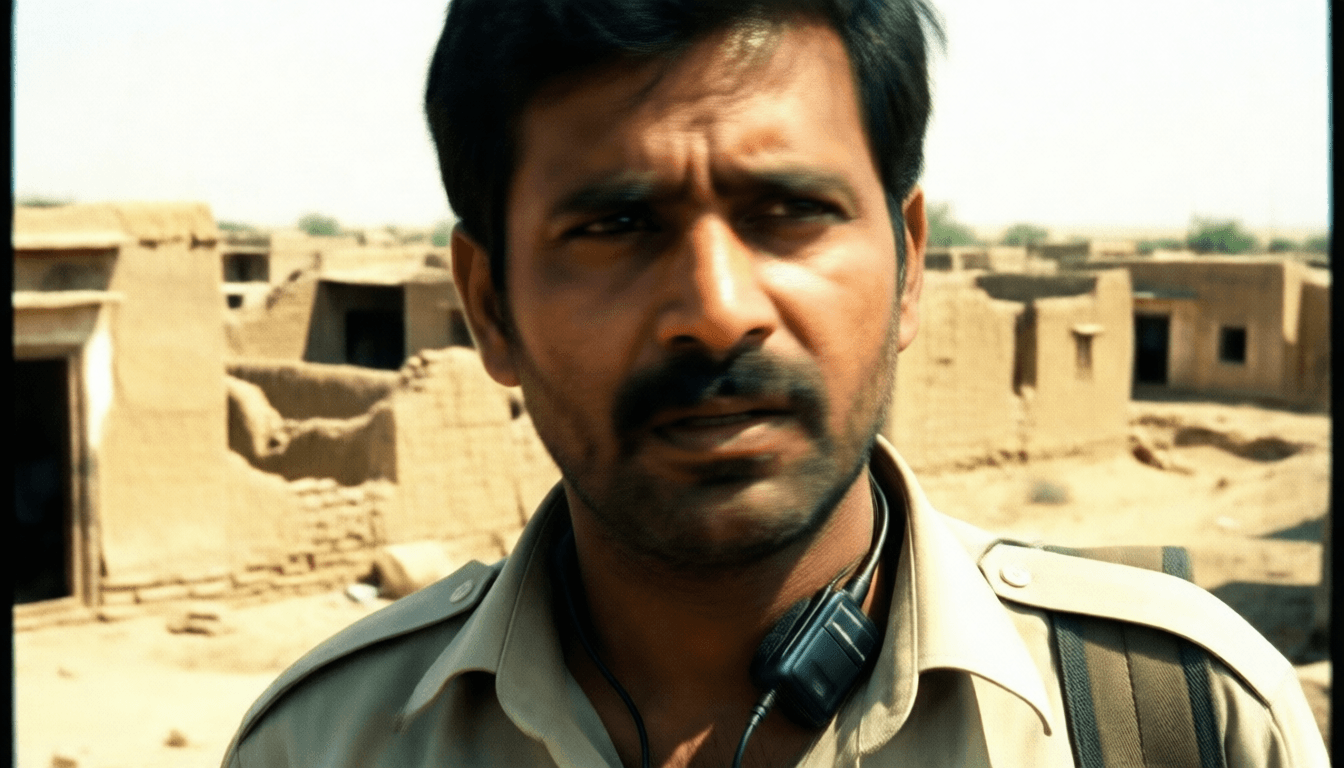
It was a solitary journey. The desert roads stretched endlessly, the air under the Rajasthani sun shimmering with heat and fine dust. As I approached Kuldhara, the mud-brick houses emerged from the haze like skeletal remains. There were no fences, no entry fees, just an unspoken, unsettling aura that greeted me. My equipment included standard photographic gear, an audio recorder with a high-gain microphone, and a thermal camera. My objective was clear: to document its abandoned state, identify anomalies overlooked by conventional archaeological surveys, and, if possible, capture unusual environmental data.
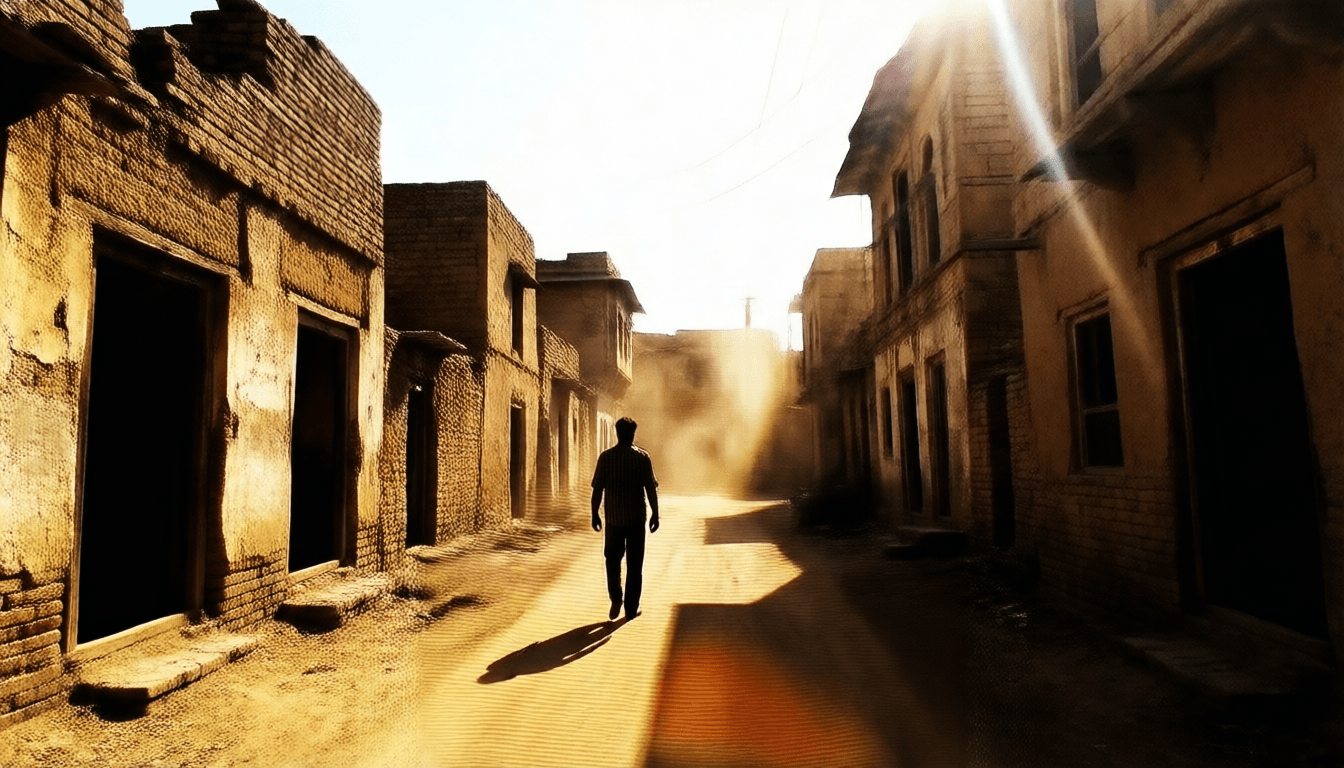
The moment I stepped onto the main thoroughfare, the first thing that struck me was an absolute, profound silence. It wasn't merely the absence of human activity; it was the absence of anything. No birdsong, no distant hum of insects, not even the gentle whisper of wind that characterizes a desert landscape. The air itself felt heavy, almost viscous. The fine sand beneath my boots absorbed the sound of my steps, making each stride feel unnaturally loud, as if breaking an ancient pact. I navigated the labyrinthine alleys, entering homes through their open doorways. The detritus of daily life — broken pottery in the kitchens, stone grindstones, skeletal charpoys in the courtyards — lay frozen in time. The sheer scale of a ghost village where thousands had evaporated was overwhelming.
I focused on what appeared to be the village chief's house, judging by its slightly larger scale and comparatively well-preserved courtyard. The air here was subtly cooler than elsewhere, yet my thermal camera recorded no noticeable temperature drop. However, this subtly cooler region persisted, almost imperceptibly shifting its position as I moved. My audio recorder, left running in the main room, picked up only static and my own breathing, yet upon later playback, I distinctly heard a faint, irregular clicking, like stones moving. Nothing had moved.
The silence outside deepened further. It became oppressive, crushing to the point of aching ears. Only my own heartbeat seemed to echo in my head. I observed dust, too fine to be stirred by a negligible breeze, occasionally swirling in slow, languid spirals in the corners of rooms, as if agitated by an invisible, slow current. On my way back towards the village well, a cold chill, distinct from the odd cool spot I'd felt earlier, ran down my spine. The thermal camera still registered nothing. Yet, the air thickened, and the dust seemed to hang suspended. I began to catch subtle movements at the edge of my vision: shadows lengthening too quickly, a flicker of movement between two buildings. When I turned my head, they vanished. My rational mind attributed it to optical fatigue from the intense sunlight, but the feeling of being watched intensified.
I retrieved the audio recorder from the chief's house. On fast playback, amidst the static, I heard it. Whispers. Faint, layered, yet undeniably present. It was no human language I recognized; rather, it was closer to a resonant sigh, or a long, low hum that vibrated at the edge of hearing. It felt internal. Ancient, without malice or sadness, yet utterly alien. My fingertips grew cold despite the heat. This was no curse from a spiteful minister. This was something else.
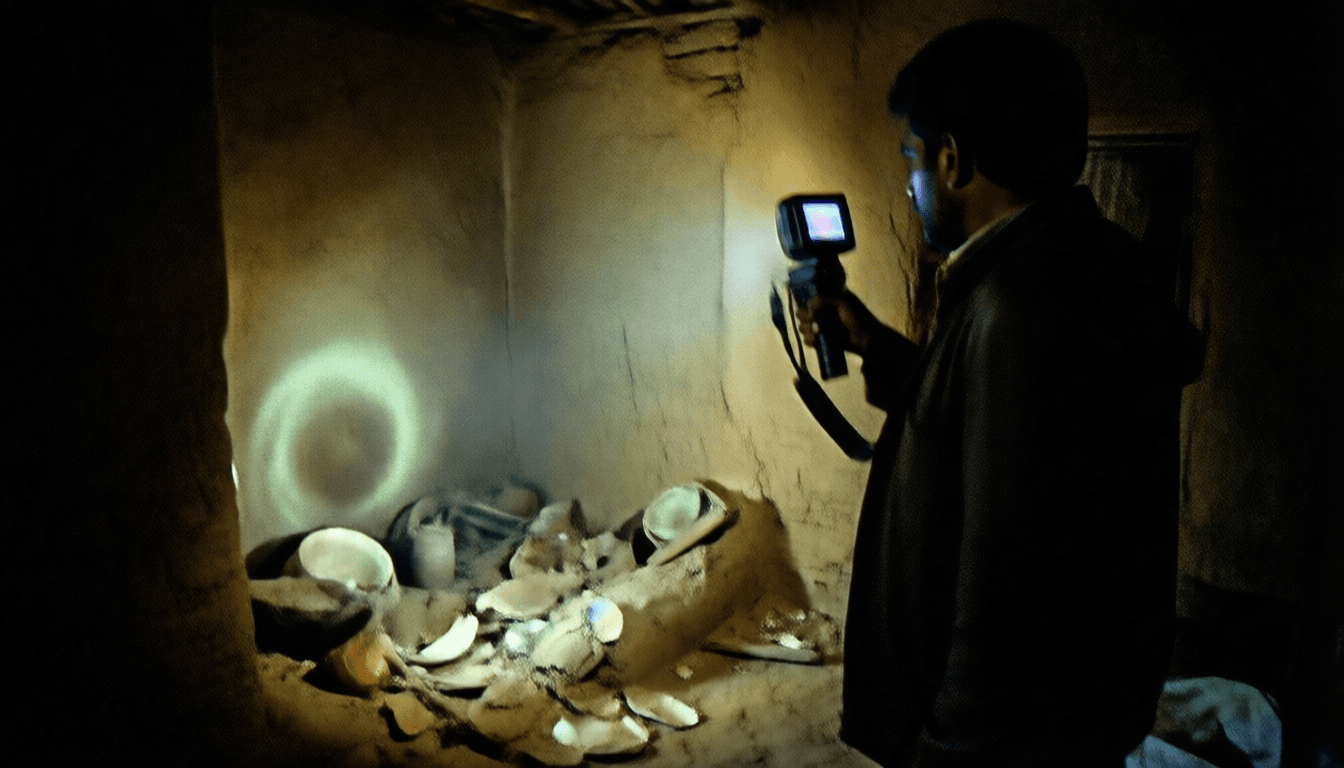
Driven by an inexplicable impulse, or perhaps the foolish instinct of an investigator, I entered the main temple. The old idols were long gone. The air within was distinctly different—thicker, colder than anywhere else I'd encountered. My thermal camera registered readings that should have been impossible in such an environment. A deep, consistent cold spot radiated from the altar floor. It wasn't the coldness of natural temperature, but a coldness that felt like absence.
The moment I centered the thermal camera on the cold spot, a sudden, profound shift occurred. The overwhelming silence within the temple didn't just exist; it deepened further, becoming a physical pressure. My eardrums felt as if they might burst. The air became impossibly heavy, like being submerged in water. And then, a sound. It was not human, nor animal. It was an impossibly deep, gurgling inhalation, beginning beneath the flagstones, flowing through my bones, vibrating in my teeth. It was the sound of a vast, ancient hunger.
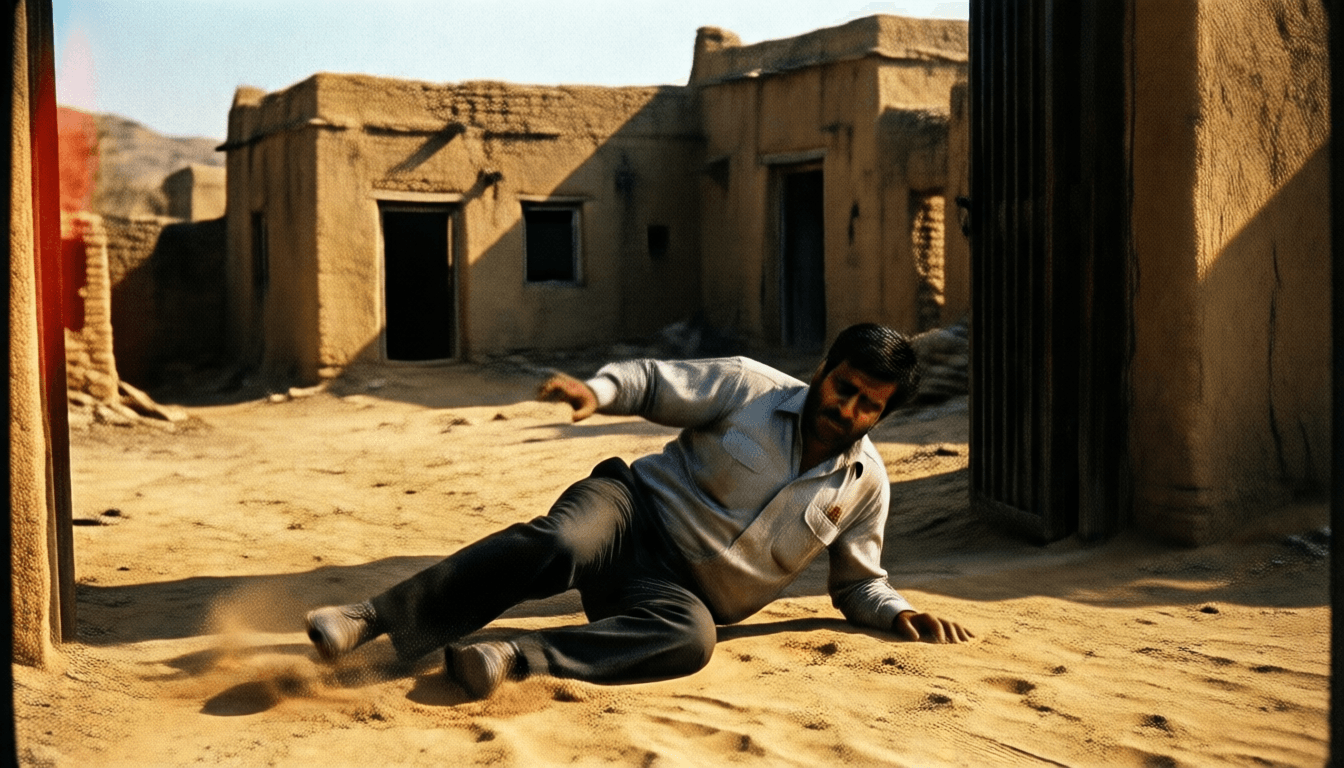
Even the light, filtering through the temple's only aperture, seemed to dim, as if drawn into the stone. The ground beneath my feet trembled. Not an earthquake's shake, but a subtle, sickening undulation, as if the earth itself twitched. Then, an intense, crushing pressure enveloped my entire body. Not a physical impact, but a systemic compression, as if the air itself condensed around me, trying to squeeze the breath from my lungs. A cold, sharp tug sensation on my right ankle. An irresistible physical traction began to drag me slowly, inexorably, towards the altar floor. My equipment-laden bag acted as an anchor, holding me.
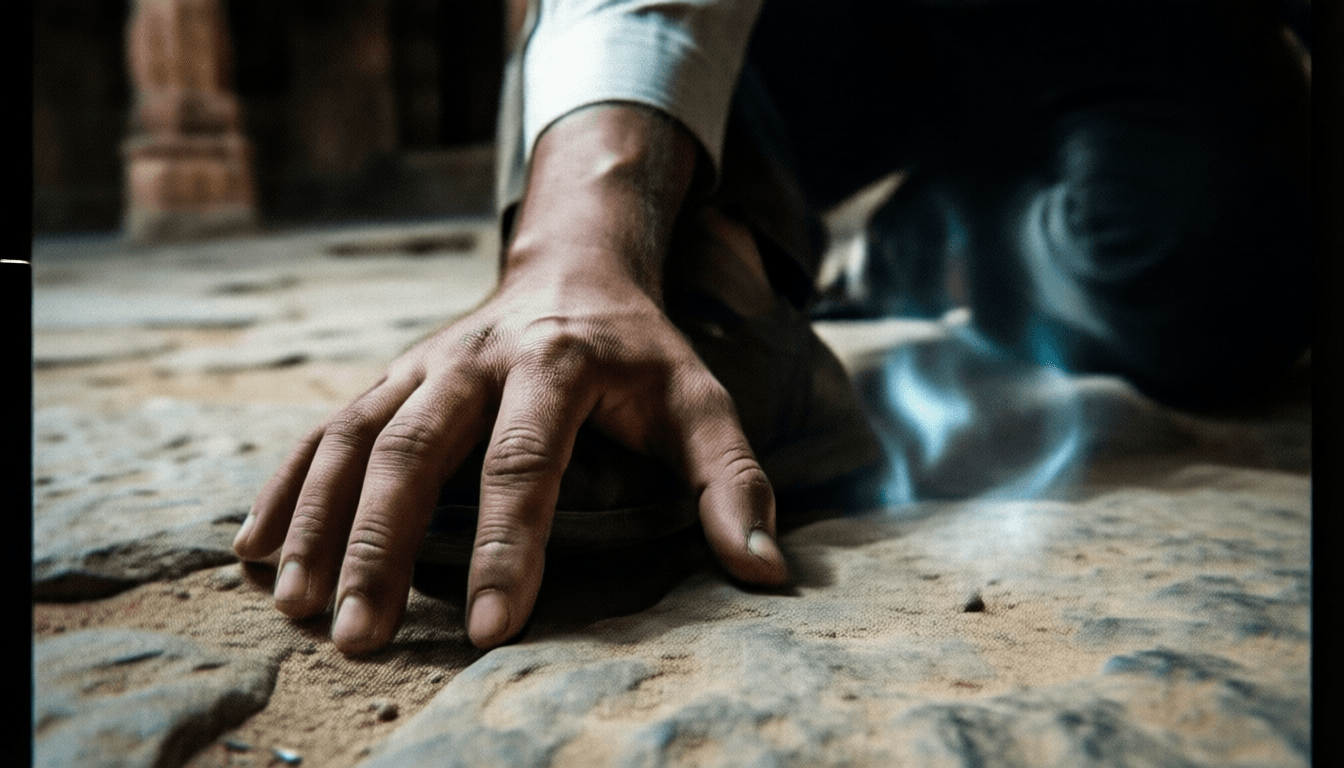
I struggled against the invisible force. The air grew colder, an icy terror seeping deep into my skin, beyond mere temperature. A raw, unmanageable panic seized all my senses. My fingers scraped on the rough stone floor. I thrashed desperately to free my ankle from the cold, engulfing pressure. The gurgling inhalation deepened. It was vast, patient. It was not trying to hurt me, but to absorb me.
With a desperate surge of adrenaline, I twisted, freeing my foot. Only the sensation of a cold, empty vacuum remained where the force had been. Scrambling backward, I still felt a lingering, ghostly tether. Driven by an instinct far older than rational thought, I half-crawled, half-fell out of the temple entrance. Behind me, the deep, engulfing inhalation slowly faded, replaced by Kuldhara's profound, expectant silence. I stumbled beyond the village boundary and collapsed onto the hot desert sand. The weight of the silence was now a tangible presence behind me.
The return journey was a blur. My right ankle bore no visible injury, yet the skin felt cold to the touch, and an abnormal weight remained—a ghostly pressure. But the coldness was psychological, seeping deeper than skin. Reviewing the collected data back in my meticulous archives was a chilling validation. The thermal images of the temple floor were conclusive: an impossible cold spot at the center, radiating outwards—a signature of non-thermal energy absorption. More shocking was the audio. The initial whispers, run through noise reduction filters, resolved into a low, continuous hum, then an unclassifiable, irregular, resonant pulse. The final segment, recorded inside the temple, contained the deep, gurgling inhalation. It was a vast, empty sound, seemingly beyond the limitations of the recording equipment, and ceased abruptly the moment I exited the structure.
And the dust. No matter how meticulously I cleaned my equipment and myself, a fine, pale grey powder kept reappearing on the thermal camera, in the seams of my bag, on my clothes. It was Kuldhara's unique, almost luminous dust, and it seemed indelible, refusing to be entirely wiped away. It felt less like fine particles and more like an unerasable residue.
The villagers didn't flee a human tyrant. They fled this. The curse was not a warning against human resettlement; it was a warning to ensure that whatever was trapped in Kuldhara was never disturbed again, or never allowed to come out again. I now understand that Kuldhara's deep silence is not an absence. It is a presence. And sometimes, in the dead of night, when the city outside grows quiet, I can almost hear that deep, slow inhalation, and feel that ghostly pressure on my ankle—a chilling reminder that some things, once awakened, maintain a connection across time and distance, holding a patient hunger. My archives now hold more than records; they hold a resonance.
[ CLASSIFIED VERDICT ]
[ACCESS LOG - SOURCE FILE]
Kuldhara village in Jaisalmer, Rajasthan, India, is a ghost town where thousands of residents mysteriously vanished overnight in 1825. According to legend, a tyrant named Salim Singh threatened the village over a maiden, leading the villagers to disappear en masse rather than surrender her, leaving behind a powerful curse. This curse warns that any attempt to resettles Kuldhara will be met with misfortune.