The Breath of Death Mountain
In February 1959, nine experienced climbers met their enigmatic end on Kholat Syakhl in Russia's Ural Mountains. Their tent was torn from the inside, their bodies scattered, some bearing internal injuries unrelated to external impact. The 1959 investigation concluded it was an "insurmountable natural force," later officially revised to an "avalanche." However, recently digitized, little-known notes appended to Lyudmila Dubinina's autopsy report from that time detail anomalies overlooked in all subsequent interpretations. Dr. Boris Vozrozhdenny's initial notes described, besides missing tongue and eyes, "localized cellular necrosis inconsistent with frostbite" and "subtle, uniform cellular breakdown as if exposed to extreme, sustained low-frequency vibration." Simultaneously, local interviews conducted by an ethnographer in the late 1990s resurfaced. Yuri Klimenko, an elderly Mansi hunter, recalled a low, sustained humming sound, the "mountain's whisper," heard only on certain nights around Kholat Syakhl, the 'Death Mountain.' He claimed this sound often preceded sudden, inexplicable weather changes or animal behavior, and his grandfather called it "the mountain's breath," saying it was "a sound that draws strength from a man's bones." It was this very parallelism—clinical pathology hinting at an unseen force, indigenous legend speaking of a resonating, debilitating presence—that drove my expedition. The "avalanche" theory failed to explain internal organ damage without trauma, or the radical decision of many to abandon the safety of their tent, inadequately clothed, into sub-zero conditions. I sought that sound. I sought that tremor.
Upon arriving in Ivdel, a small timber village, I was met with familiar skepticism and indifference. Anatoly, a taciturn local guide, agreed to take me to the perimeter of the Kholat Syakhl region. Beyond that, I would proceed alone by snowmobile and on foot, following the approximate last route of the 1959 Dyatlov group. The weather was brutal. A ferocious wind, seemingly drawing warmth directly from the bones, replicated the conditions of 1959.
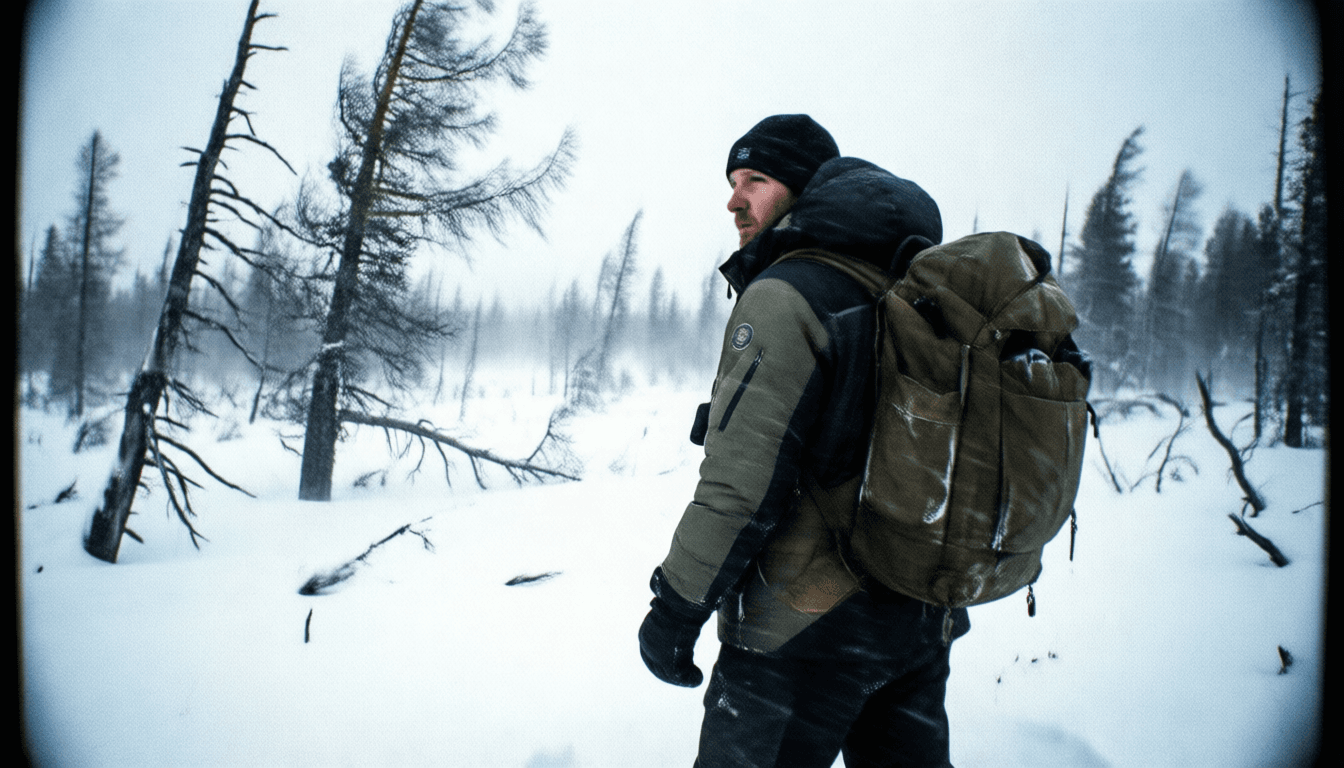
As I ascended the mountain, the landscape morphed into a monochrome of white and grey, punctuated by sparse, skeletal trees. The silence during brief lulls in the wind was profound, almost deafening—not a natural stillness, but a vacuum pressing on the ears. My robust military altimeter showed erratic fluctuations, dropping and rising tens of meters even on level ground, before snapping back to normal with an ominous click. A Geiger counter, brought along for unrelated hypotheses, registered tiny, oscillating spikes in specific, localized air pockets, though well below hazardous levels. Anatoly, who had insisted on accompanying me further than planned, merely pointed at his compass's twitching needle. It spun wildly for a minute before settling north. "This mountain has always played such tricks," he grumbled. He left me then, his snowmobile a shrinking dot against the vast white expanse.
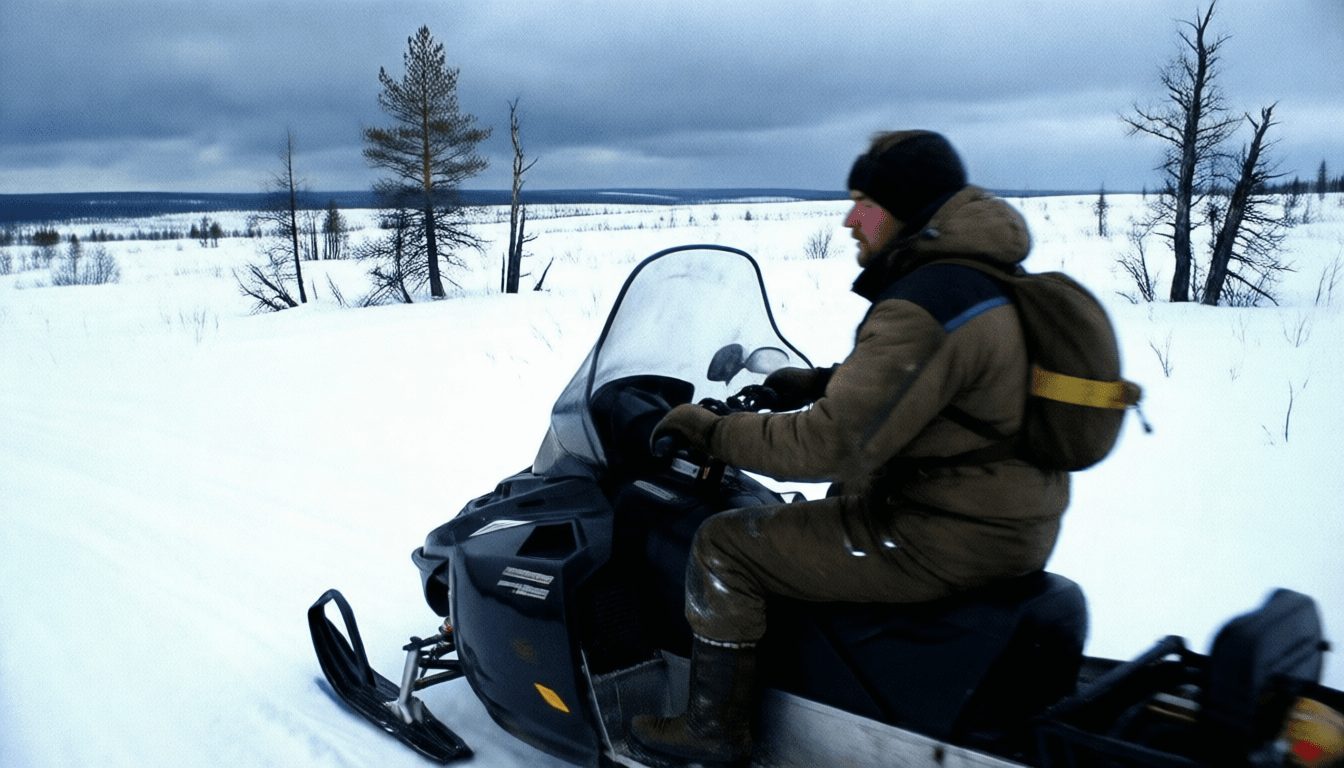
Alone, around 2 PM, I reached an open area corresponding to the Dyatlov group's last campsite. The wind was still fierce, but a few meters away, even amidst the swirling snow, there was an unnatural zone of absolute calm where the wind ceased entirely. The air here was different—heavier, thicker. It felt like breathing under moderate pressure. My usually stable heart rate monitor showed a subtle but persistent elevation.
Then, I heard it. A low, sustained humming. Not loud, but a deep, resonant thrumming that seemed to emanate not from any specific direction, but from the mountain itself, vibrating through the snow and ice. It was less heard than felt. A low-frequency vibration settled in my chest, a deep, unsettling bass vibrating directly against my ribs, bypassing my ears. It grew in intensity, a subtle pressure building. And with it came a profound disorientation. Shadows in the afternoon sun seemed to lengthen and contract independently of the light, dancing with a strange, liquid quality. My vision blurred at the edges, and my mouth filled with a metallic, coppery taste—symptoms, I would later learn, common in incidents of extreme internal pressure trauma. The ominous stillness in some air pockets intensified, compressing the sound, making my own breathing echo unnaturally loud in my ears, yet muffling the distant scream of the wind. My communication devices crackled, then died.
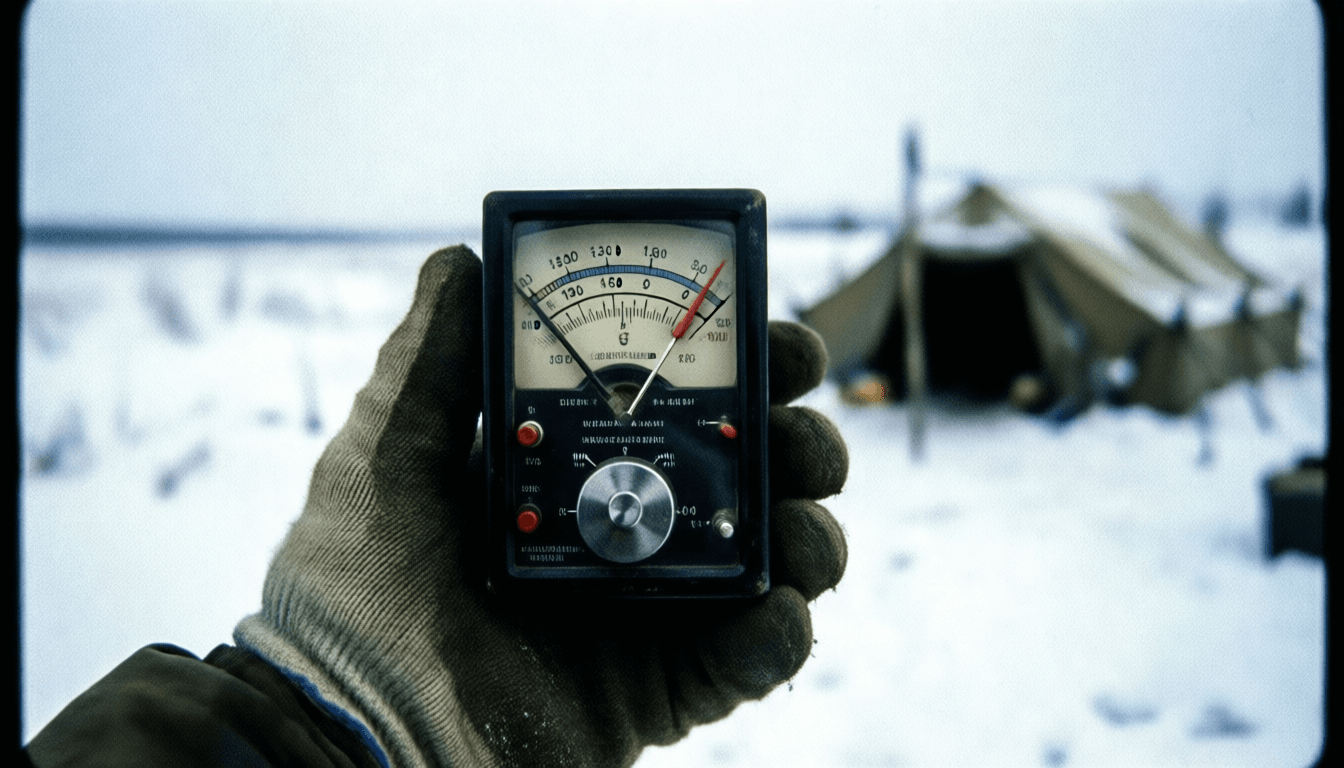
The humming intensified further, becoming a physical presence. The air around me began to visibly vibrate, tiny snow particles dancing in small, chaotic eddies. The altimeter shrieked, its needle violently oscillating between impossible extremes. Suddenly, the deep resonance in my chest turned violent. It was as if a massive, invisible hand had seized my torso, applying immense, uniform pressure. I gasped. The air felt like cement in my lungs, the force twisting and compressing my diaphragm. My vision tunneled, the world around me seeming to warp and distort as if shimmering with heat.
A deafening 'CRACK' echoed. It wasn't from the outside world, but from within me. The sound of bone succumbing to pressure. My expedition camera, strapped to my chest, shattered inwards, its lens imploding with a sickening 'THWACK'. I felt myself lifted, then violently thrown onto the ice. Not from an impact, but from the sudden cessation of the unseen force. Gasps, disorientation, agony. My ribs felt crushed, my sternum screaming. The humming vanished, leaving only my own ragged, desperate gasps to punctuate the terrifying, humming silence.
My snowmobile, a few meters away, lay hideously twisted and crumpled, as if caught in a giant vice. Its engine block was cracked, fluids seeping onto the white snow. My communication devices were completely flattened. The wind, which had briefly subsided, now returned with ferocious intensity, but carrying a faint, high-pitched 'ZING', a sound that seemed to scrape against the inside of my skull.
I stumbled back down the mountain, leaving a trail of blood and broken equipment. It took three days to reach the nearest remote outpost. My body was battered, my mind struggling to process what it had endured. Rescuers found fractured ribs, bruised lungs, and severe internal contusions. Injuries consistent with blunt force trauma, yet my parka was largely intact, and there were no external lacerations or impact marks on my skin to account for the internal damage. Medical reports later noted it as "injuries consistent with rapid decompression and subsequent recompression"—a diagnosis difficult to reconcile with an open, outdoor environment.
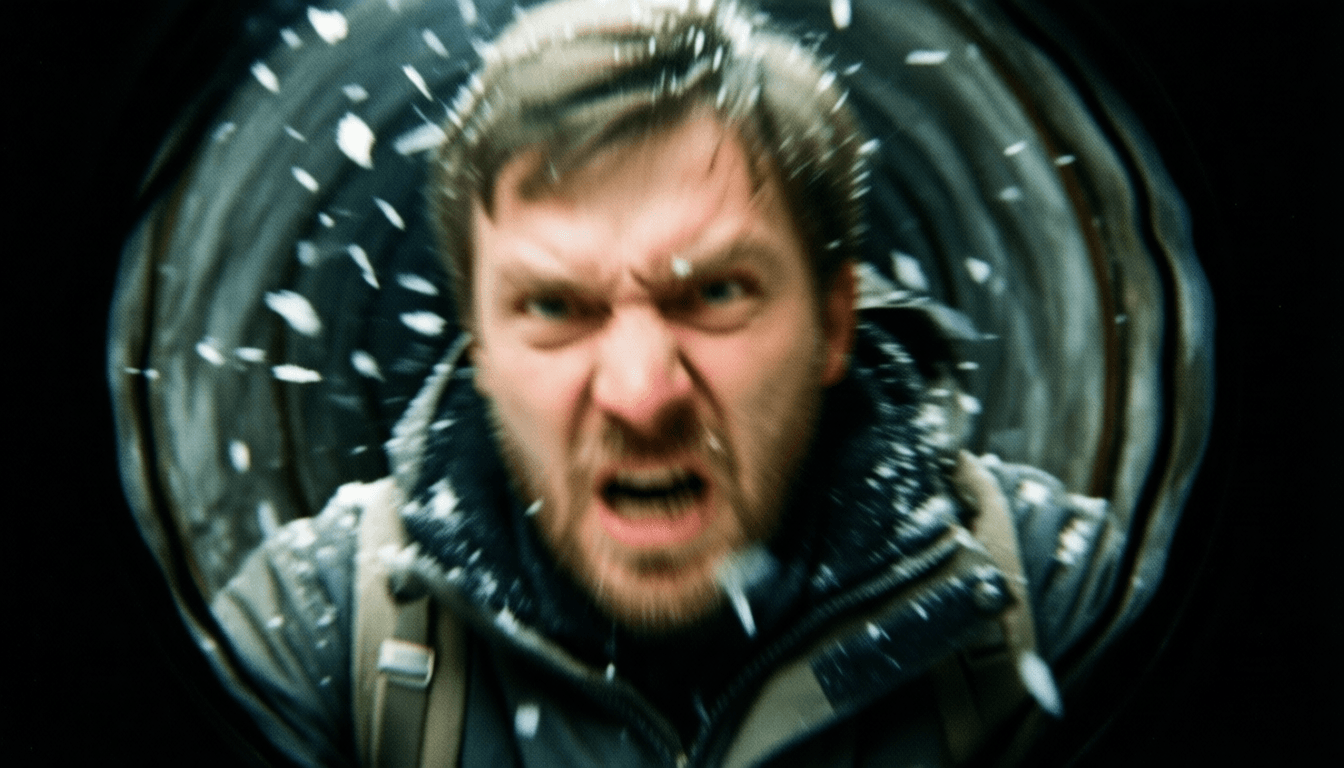
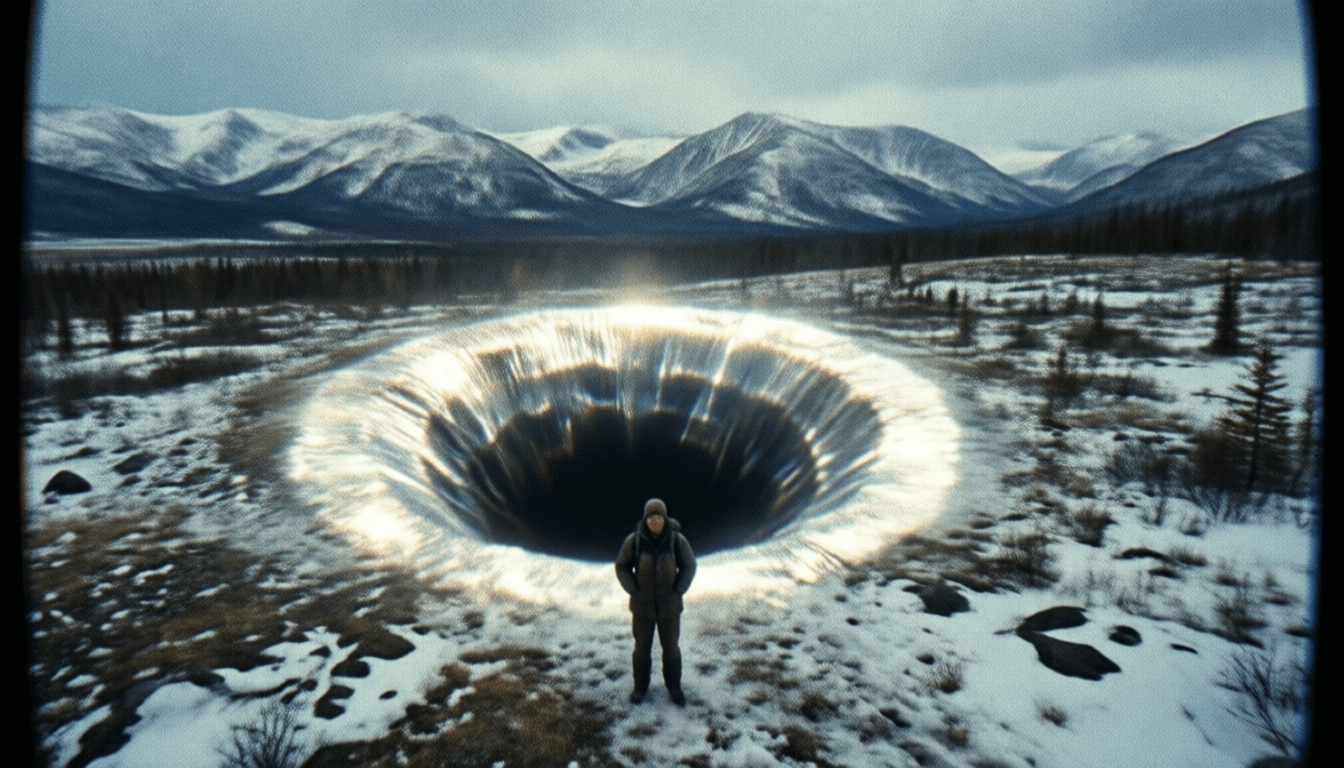
The memory card from the recovered camera was damaged. Only a single recoverable image file remained: a distorted, wide-angle shot taken just before the explosion. It showed the desolate landscape, snow, and distant ridge. But in the center, where I had stood, there was a bizarre absence: a localized distortion of light, a shimmering void that seemed to absorb the image itself, a perfectly circular warp in the very fabric of reality.
I wake now often, a phantom humming vibrating in my chest, a faint zing echoing inside my skull. My medical records lie beside the recovered Dyatlov autopsy reports. The similarities are chillingly clear: "cellular necrosis inconsistent with frostbite." Internal compression damage without external impact. Flight into the inexplicable cold. Kholat Syakhl does not merely kill with cold or accident. It breathes. And its breath carries an immense pressure that draws the strength from bones, leaving only the ghost of a sound and the chilling weight of what wasn't there. The mountain doesn't just take lives; it compresses reality itself.
[ CLASSIFIED VERDICT ]
[ACCESS LOG - SOURCE FILE]
The Dyatlov Pass incident, where nine climbers mysteriously perished in Russia's Ural Mountains in 1959, remains one of modern history's greatest mysteries. Their tent was found torn from the inside, some bodies bore inexplicable internal organ damage, and survivors fled into sub-zero temperatures. This story delves into the mystery of an unseen force and low-frequency vibrations present on 'Kholat Syakhl,' the Death Mountain, based on original autopsy records and local Mansi legends.