Braxton's Breath
When the whispers first began in a remote area of Braxton County, West Virginia, they were merely the usual commotion one might find in local small business communities or emergency services Facebook groups. A few fragmented posts about "unidentified chemical smells" near a deserted logging road. Metallic, acrid, nose-stinging. Then the reports became more ominous: "acute respiratory distress," "burning throat and eyes," "unexplained nausea." These symptoms appeared in individuals who had lingered briefly around the logging road.
Initially dismissed as coincidence or industrial contamination, Freedom of Information Act requests revealed no permits for chemical storage or recent industrial activity in the area. What was found instead was a chillingly similar pattern to witness testimonies from the 'Flatwoods Incident' of September 1952. Reports from that time described a gigantic entity, pulsating flashes, a terrible toxic mist, and precisely the same physiological symptoms. Over 70 years later, the descriptions were eerily identical, save for the "monster" itself. Just the smell and the sickness. These inexplicable clusters of symptoms continued sporadically but persistently, turning my attention from old archives to a current mystery.
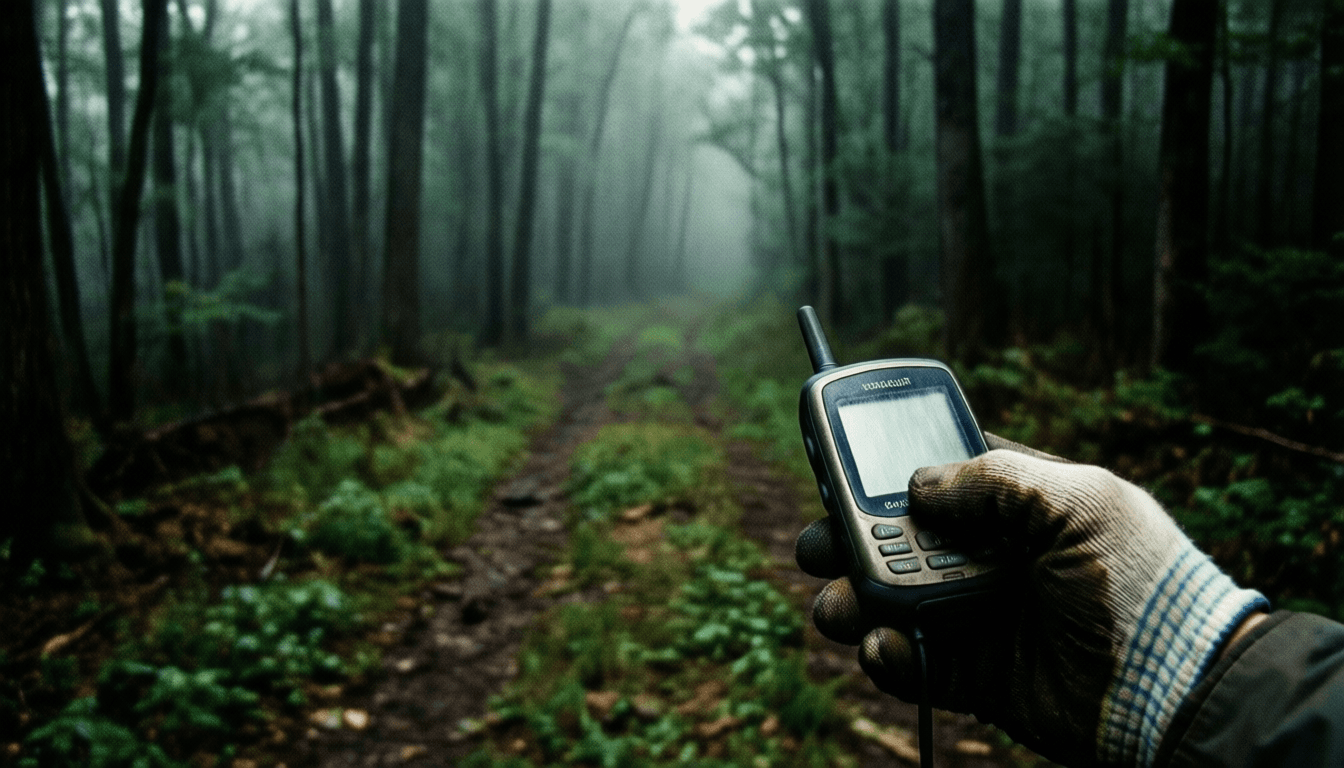
My first field visit was purely observational. The logging road, overgrown to the point of being nearly impassable, soon gave way to dense forest. The air was still, heavy with the scent of earth and pine. I hiked in about a mile, tracking my path with GPS. An astonishing silence enveloped me. No bird calls, no rustling of small animals. Only the faint crunch of my own footsteps on fallen leaves. Despite it being late summer, the ambient temperature within the forest felt several degrees cooler than outside.
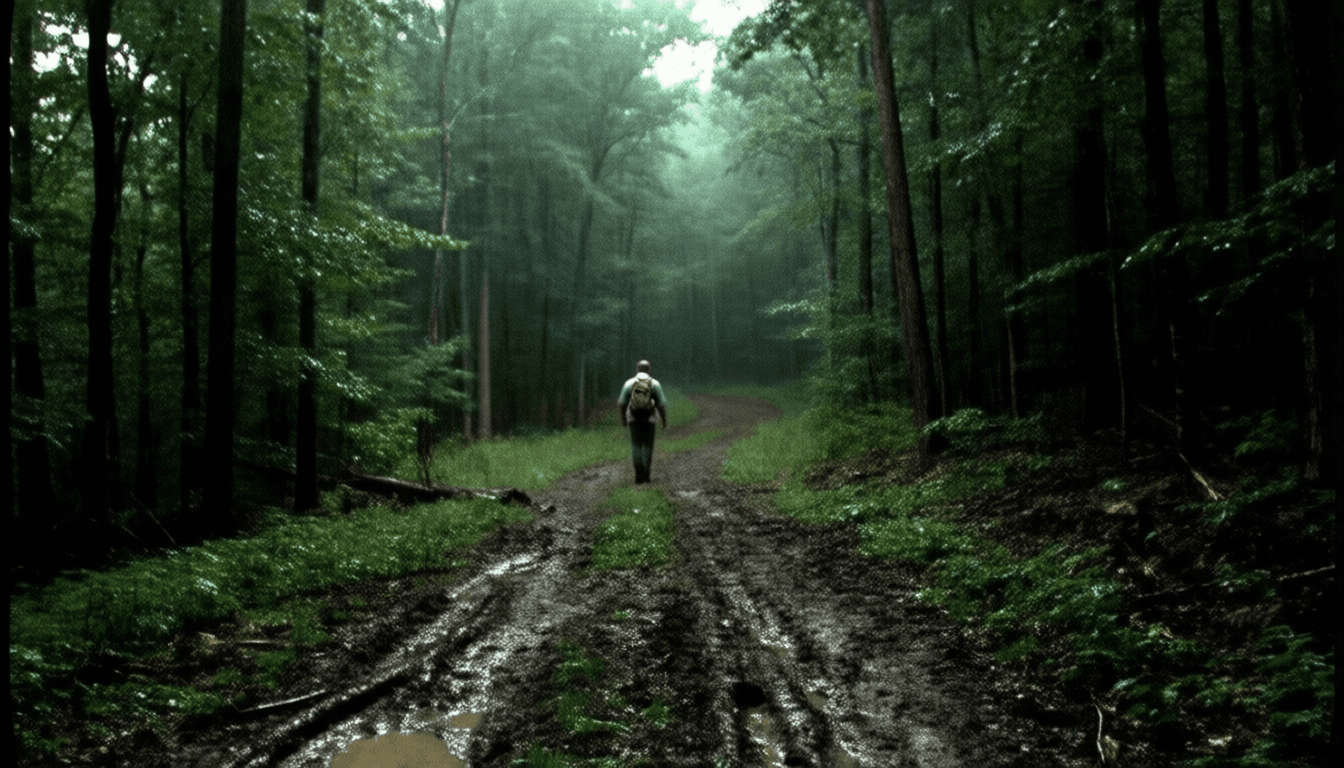
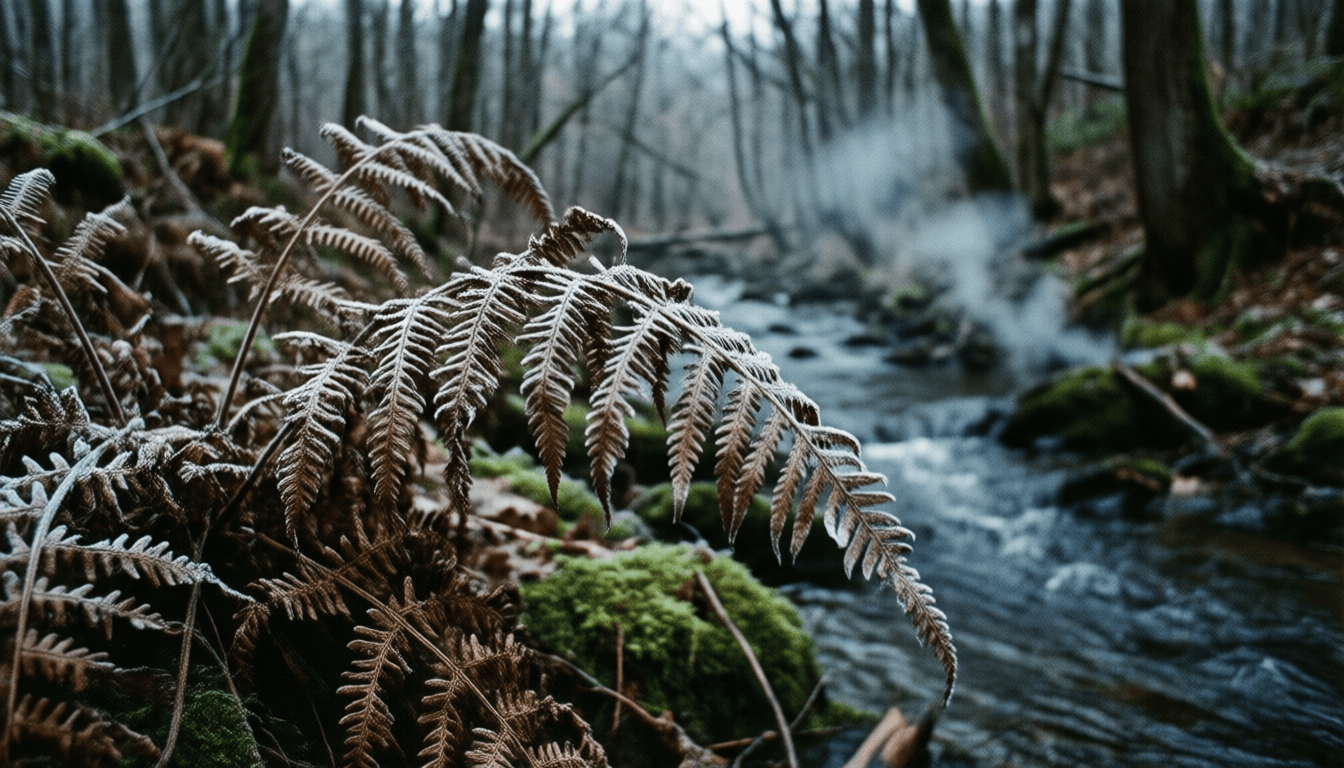
The first clear clue came by a small, moss-lined creek running parallel to the path. Specifically, the broad-leaved fern fronds appeared strangely desiccated, almost crystalline. Their edges crumbled as if flash-frozen and thawed, yet there was no sign of frost. And then there was a faint, almost imperceptible hum in the air. Too low for cicadas, too constant for power lines. More of a pressure on the eardrums than an auditory sound. I was prepared for local flora and fauna oddities or geological anomalies, but not for this unnatural quiet, this silent pressure.
Deeper in, the metallic smell began to intensify. Not the sharp tang of iron, but a mix of ozone and burning wires, with a subtle, unsettlingly sweet undertone like decaying fruit. My throat began to tickle, and the back of my palate felt dry. The desiccation of the plants became more pronounced, spreading across a wider area, entire thickets appearing withered and brittle in a way inconsistent with drought. The ambient temperature continued to drop, and a thin, wispy, out-of-season cold vapor condensed in depressions in the terrain, clinging low to the ground.
The hum intensified. A low, resonant vibration that felt like it resonated in my chest, and my vision seemed to subtly waver at the periphery. I pulled out my portable air quality monitor. Particulate matter and VOC levels were within normal ranges, yet the air was distinctly wrong, heavy and difficult to draw in. My breathing became shallow and involuntary, and the tickle in my throat transmuted into a continuous burning sensation. Now, the silence was absolute. The forest seemed entirely dead to sound, save for that persistent internal hum. And as I walked, I began to feel a distinct, uncomfortable pressure, as if walking against a strong, invisible current.
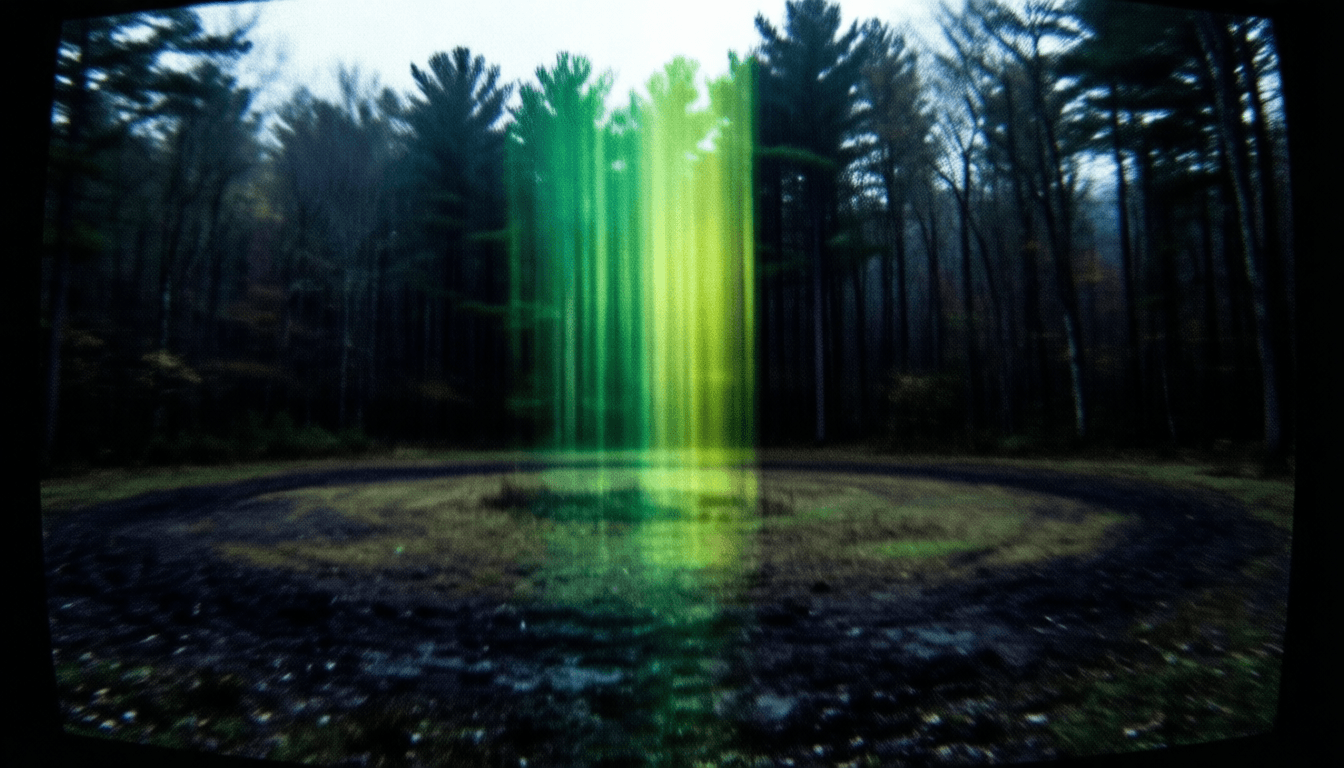
Turning a bend, the air was thick with the acrid smell, and my lungs burned with every inhale. Ahead, the forest floor was entirely clear in an almost perfect circle, as if swept clean by an unseen force. The earth was dark, hard-packed clay, devoid of all vegetation, radiating a distinct cold that permeated my hiking boots. In the center of this clearing, something existed. Not a physical object in the traditional sense, but an intensely focused distortion of the air itself.
Approximately three meters tall, it appeared as a pulsating vertical column of refracted light and deep shadow, with internal flashes of greenish-yellow light blinking rhythmically. While lacking distinct form, it gave the impression of a broad, hooded head and a heavy body. The hum escalated into a deafening roar, a vibratory assault that felt like it was dismantling my very organs. Then the air itself became an active force. I felt an immense, crushing pressure, as if trapped between two invisible walls. My chest tightened, my vision blurred at the edges, and the capillaries in my eyes felt ready to burst.
The temperature plummeted further, and the ground beneath my feet felt as if it solidified, then became pliable, then solid again, as if the earth itself was warping. I tried to move, but the atmospheric pressure held me fast, my muscles screaming against unseen shackles. The distortion pulsed faster, the greenish-yellow light intensified, and waves of pure, agonizing heat washed over me. It was a flame-less heat, yet one that felt like it was cooking my skin from the inside out. I felt my body begin to shut down. The burning in my lungs became an absolute inferno, and my consciousness flickered.
As the distortion seemed to lean towards me, and I perceived its "face" condensing into two points of intense, burning light within the swirling shadows, I experienced not contact, but a chilling depletion. A profound sense of emptiness, as if something vital was being siphoned from me by the sheer proximity of its existence. Every cell in my body screamed in protest, my very being rejected by the air, the light, the unseen forces. With a desperate, primal lurch, a reflex born of pure terror, I managed to break free. I stumbled backward, gasping, falling. As I fled, my ragged breaths sounded louder than the hum, and the crushing pressure slowly receded.
I barely made it back to my car. The acrid, metallic smell clung to my clothes and hair for days, even after washing. My lungs still burned, and a dry cough persisted. Doctors found no common cause for bacterial or viral infection, or severe respiratory inflammation. They simply diagnosed "unexplained lung irritation," which slowly subsided but left a dull ache. The skin where the heat wave had washed over me showed no burns or marks, but felt permanently cold to the touch. A localized, bizarre hypothermia.
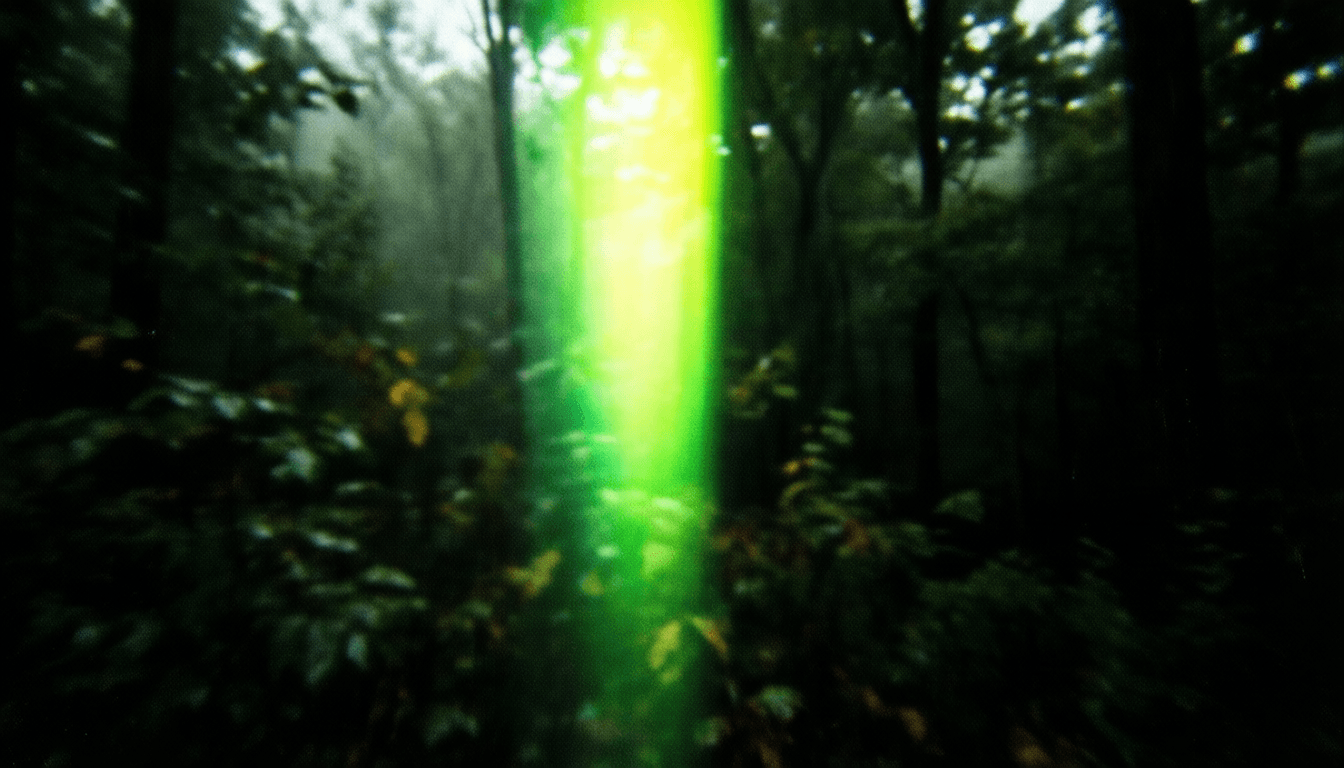
Ambient audio recordings from my field recorder were mostly static, but beneath it, the distinct, rhythmic hum was undeniably present. Occasionally, unclassifiable sounds interjected—high-pitched screams that, when isolated, induced nausea. I have one distorted photograph, taken reflexively as I turned to flee. Amidst blurred foliage and overwhelming shadow, only a vertical streak of greenish-yellow light is visible in the center. A light that shouldn't exist in the midday sun, a light in the darkness that shouldn't be.
Medical reports from the 1952 Flatwoods witnesses documented similar long-term respiratory issues and nervous agitation. At the time, it was dismissed as mass hysteria, carbon monoxide poisoning, or simple fright. Now, I know it was merely the closest language they had to describe an environmental assault. I set out to understand a cryptid, to track a historical anomaly. Instead, I confirmed an active phenomenon that defies physical understanding but causes severe, undeniable harm. The whispers in the local groups haven't stopped. In fact, just this morning, a new report surfaced: the familiar acrid smell near a secluded hiking trail about ten miles west of the original logging road. It seems the 'Braxton Breath' isn't confined to one place. It's moving. And I am left with the chilling certainty that this is not a ghost story from the past, but a persistent, mobile, and unequivocally lethal presence.
[ CLASSIFIED VERDICT ]
[ACCESS LOG - SOURCE FILE]
The Flatwoods Monster incident in Flatwoods, West Virginia, in 1952, involved reports of a gigantic entity, pulsating flashes, a terrible toxic mist, and acute respiratory distress symptoms among witnesses. This story explores an unexplained phenomenon occurring over 70 years later, manifesting with similar environmental symptoms.