The Bennington Triangle: The Abyss of the Forest's Silence
'Bennington Triangle' is a distinctly sensational term, almost a modern myth. It's a nickname born from a series of disappearances in the Glastonbury wilderness area of southwestern Vermont. But in the days before the internet or true crime podcasts, there were simply 'people who vanished.' Take the case of Paula Welden, a vibrant Bennington College student, on December 1, 1946. She headed for the Long Trail, and that was the last anyone saw of her. Dressed in a red jacket and jeans, she entered the familiar, dense woods. Witnesses testified she was on that path. And then, nothing. An extensive search, involving hundreds of volunteers, state police, and even the FBI, found not a single trace. No body, no belongings, not even a broken branch. It was as if the forest had swallowed her whole.
As mysterious as her disappearance was, it might have remained an isolated tragedy if it hadn't been followed by other sequential disappearances in the vicinity. In 1945, veteran hunter Middie Rivers vanished. In 1949, local resident James E. Tetford disappeared from inside a public bus. In 1950, 8-year-old Paul Jephson disappeared without a trace. Perhaps the most chilling was the case of Frieda Langer, who disappeared in 1950. Her body was found months later in the shallow bed of a creek, in the same area that had been persistently searched, yet its condition suggested it hadn't been exposed to the elements for that long. The common threads in all these incidents weren't just simple disappearances. It was the ominous silence reported by search parties, the sudden cessation of natural sounds deep within the woods, and an inexplicable chill in the air, even in summer, that seemed to permeate everything. The 'Triangle' wasn't a theory; it was a geographic fact where people simply ceased to be.
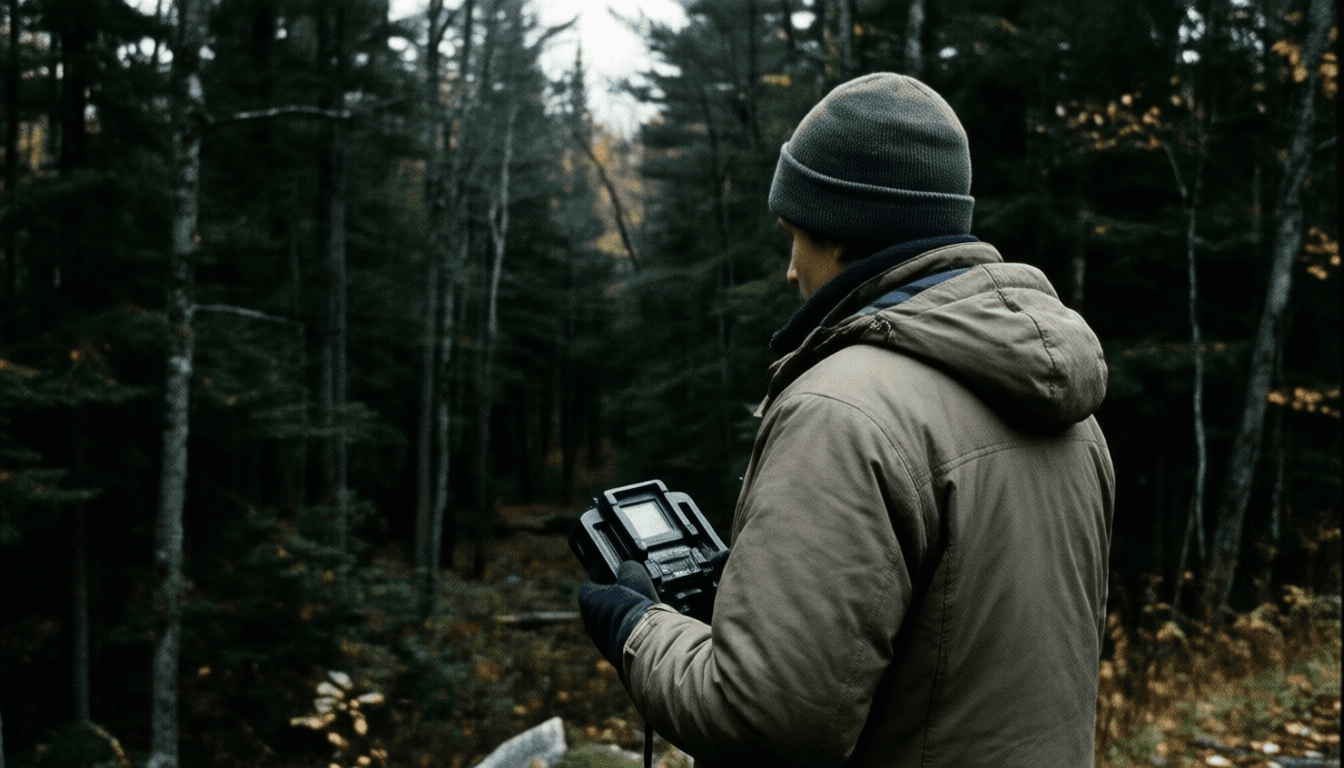
My work is to record, analyze, and find patterns in what appears to be random. Equipped with a professional kit including high-resolution cameras, directional microphones, ground-penetrating radar, environmental sensors for temperature and barometric pressure, and a robust satellite communicator, I approached the boundary of the Glastonbury wilderness area. My focus wasn't on ghosts or cryptids. It was to document anomalous environmental data – subtle shifts that might precede a larger event. I chose a section of the Long Trail, targeting an old, overgrown logging road that Paula Welden was presumed to have walked.
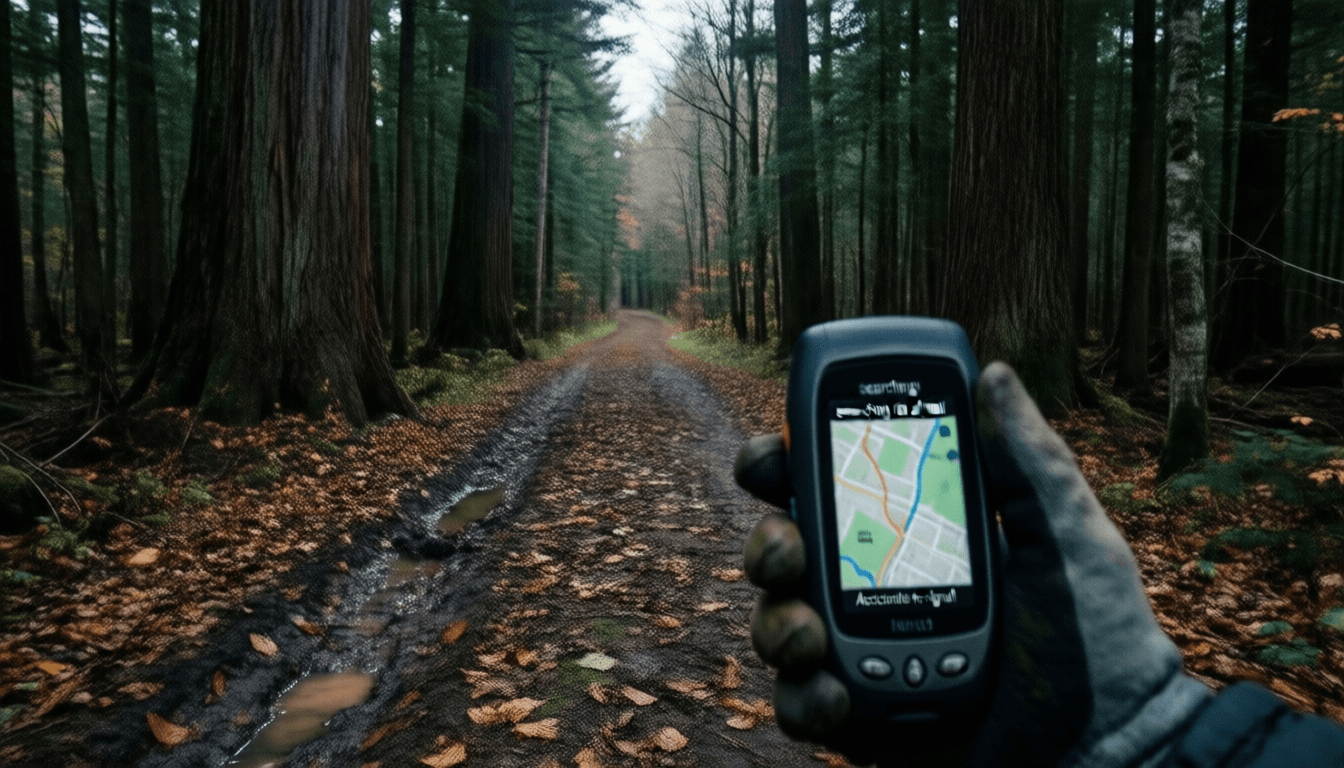
The forest here was more than merely dense. It felt ancient, like a living cathedral of dark bark and interwoven branches, millennia old. The canopy obscured the sky, filtering the afternoon sun into perpetual twilight. Despite being late autumn, the air was significantly colder than under the clear sky above the forest. A damp, bone-chilling cold seemed to emanate from the very ground. The initial silence was profound, broken only by the regular crunch of my boots on fallen leaves. My GPS struggled to find a signal, oscillating between inaccurate positions and no signal at all. This was common in deep valleys, but it felt unsettling nonetheless.
As I delved deeper, the silence intensified. It wasn't merely an absence of sound but an active presence, a kind of vacuum. The chirping of birds, the rustling of squirrels, even the buzzing of insects simply ceased. It felt like walking into a soundproof chamber built in the heart of the forest. My environmental sensors began to register anomalies. Sharp, sudden localized temperature drops confined to pockets of air just a few feet wide. Stepping through them was like stepping into an invisible refrigerator.
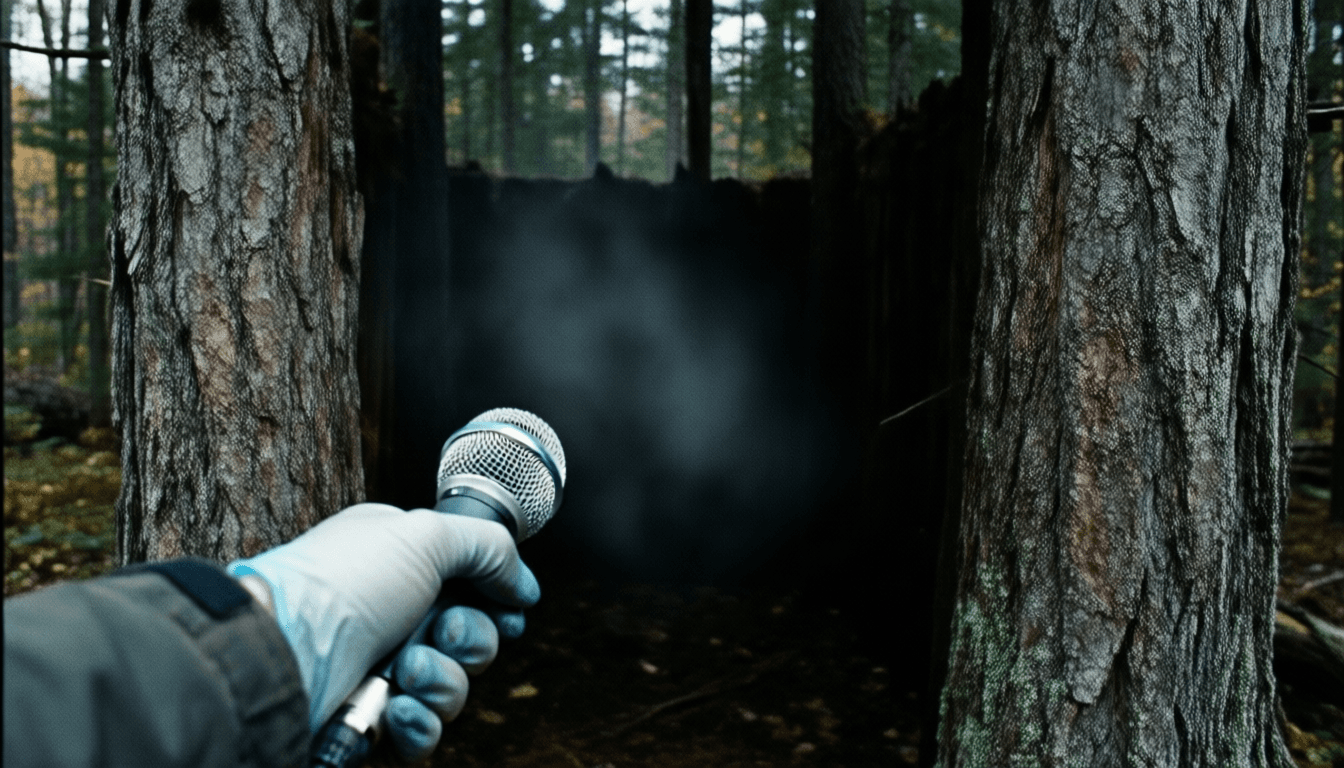
The GPS grew increasingly erratic, my position jumping meters off course and then snapping back. The path itself seemed to subtly alter. A distinctive moss-covered boulder I'd used as a marker appeared to have shifted twenty feet uphill when I looked back. And the water. The usual gurgle of a small, clear stream running through a ravine would intermittently distort for seconds at a time. It would morph into an empty, hollow burble, then impossibly, into a faint trickle as if the water was *flowing uphill*, before resuming its normal course. My directional microphone, calibrated to filter out ambient noise, picked up a low-frequency hum that seemed to underlie everything. It was almost infrasound, felt more as a pressure on the chest than a sound. At the periphery of my vision, shadows seemed to deepen and move, but when directly observed, they were solid tree trunks. A primal sensation, a tingling at the back of my neck, the feeling of being watched, was constant, unwavering.
The anomalies escalated with terrifying speed. I found myself in a small, enclosed clearing, the trees forming an unnatural circle. High up on the rough bark of a massive maple, beyond human reach, a single, tarnished brass button was embedded. Its design was indistinct, but it was undeniably old and utterly out of place. As I lifted my camera, the silence shattered not with noise, but with its absolute *absence*. Even my breath sounded muffled, swallowed by the air itself. I tried to shout to test the phenomenon, but my voice caught, my vocal cords vibrating with no sound. Instead, a faint echo of the words I had *intended* seemed to reverberate from the opposite side of the clearing, distorted, like a chilling mimicry.
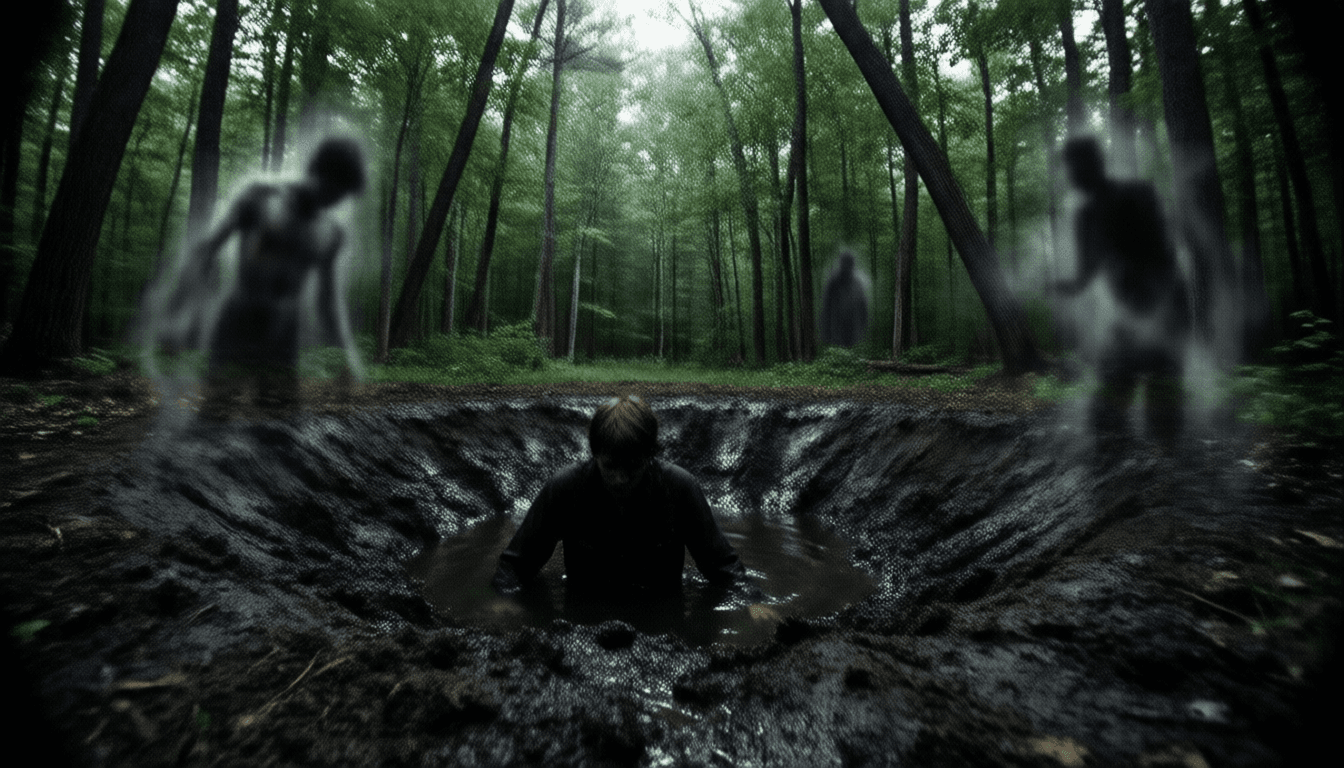
The air grew impossibly denser, pressing down on me with a palpable weight, making it difficult to breathe. It was like being submerged in water. My limbs felt heavy and sluggish. The ground beneath my feet softened, then became strangely adhesive. Not mud, but something viscous and drawing me down. I struggled to lift my feet, but the resistance was immense. An invisible suction. The trees around the clearing, unmoving in the nonexistent breeze, subtly bowed inwards, narrowing my escape route. My flickering satellite communicator died completely. Its screen went black, the device now emitting an unnatural, bone-aching cold that numbed my hand.
And then the ground itself gave way. Not a collapse. A localized, concentrated subsidence, a deliberate, sinking embrace. The sticky earth beneath my feet pulled me deeper, past my ankles, up my shins. Not a hole, but a purposeful movement. The cold intensified, piercing to the bone. In the coalescing shadows between the trees, faint, swirling mists began to gather. They were not wind-blown, but coalesced with deliberate, slow movement, forming vague, ephemeral shapes. There was a distinct feeling of *presence*. I was caught, sinking. The dense air crushed my lungs, the cold sapped my strength. The forms in the mist were drawing closer.
The release was as sudden as the entrapment. One moment, I was sinking, fighting for breath against the suffocating pressure, the next the ground was solid, the air light, and the crushing weight gone, sending me gasping and scrambling onto firm earth. I crawled, stumbled, then ran. Out of the clearing, out of the most hostile section of the wilderness. Until the trees thinned, and the ordinary sounds of the forest cautiously returned.
I returned to base, ragged, scratched, and uncontrollably shaking. Reviewing the collected data offered no comfort. Environmental sensors recorded the temperature dropping to near freezing at the peak of the event, then abruptly normalizing. Barometric pressure spiked and plummeted in seconds. The directional mic recording was the most chilling. Underneath the indecipherable, layered whispers, there was a sustained low-frequency hum. And just before the feed cut out, a deep, cavernous *inhale*, followed by a sound like rushing wind, then absolute, complete silence.
The single photograph taken during my struggle, though captured just before the camera ceased functioning, was severely corrupted. It was a blurry image of unnatural darkness and digital noise. But zoomed in and carefully adjusted for contrast, a faint, almost translucent outline was discernible within the static. It was humanoid, yet without distinct features. A form made of swirling shadow and ephemeral mist. An anomalous presence that existed precariously at the edge of comprehension, defying the lens.
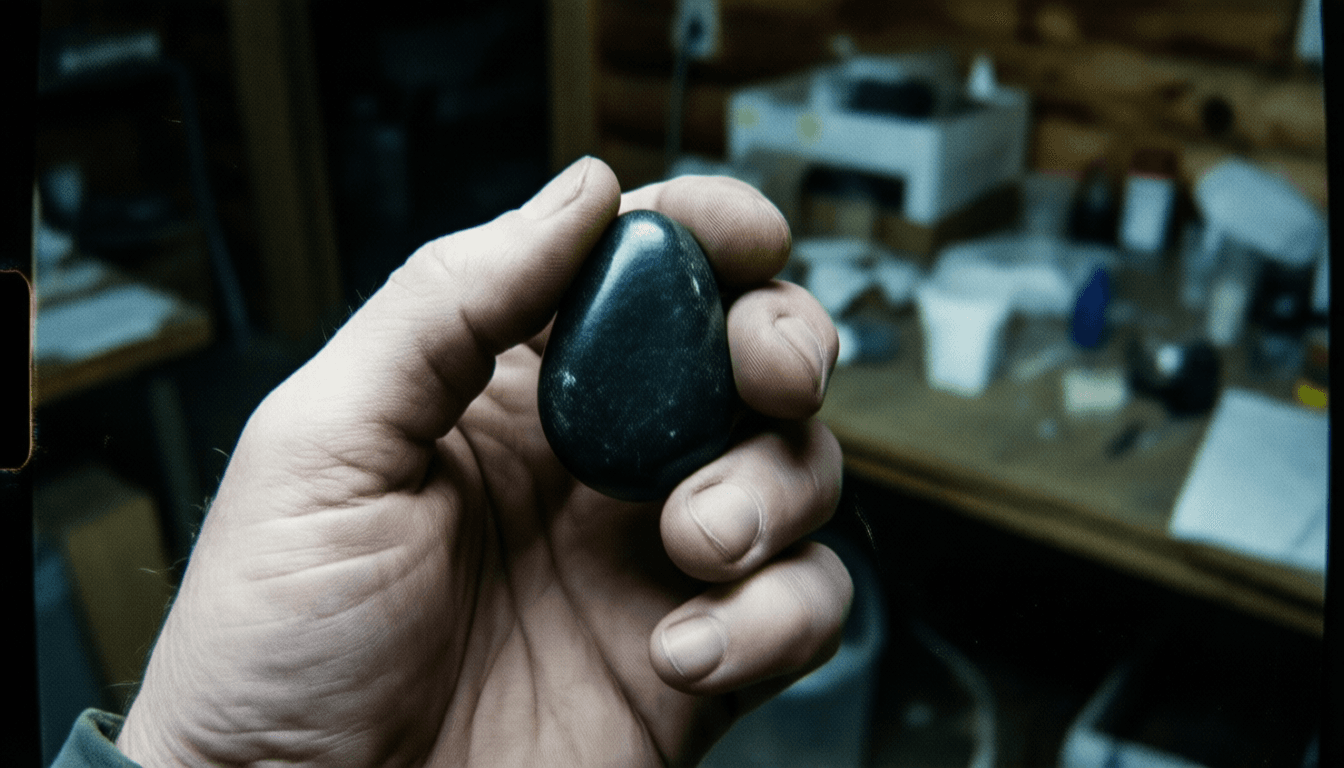
Weeks later, the tremors stopped, and the fatigue receded. But the cold did not. I found a small, perfectly smooth, black stone in the pocket of my field jacket. A stone I had no memory of picking up. It was abnormally cold to the touch. Colder than any ambient temperature. And held to the ear in complete silence, it emitted a faint, almost imperceptible low hum. I no longer look at maps of the Bennington Triangle with academic detachment. I now see it as a wound in the earth. A place where the veil between what exists and what *takes* is impossibly thin. The stone in my pocket remains eternally cold, and occasionally, when the house is completely silent, especially when I'm alone, it vibrates ever so slightly, almost imperceptibly. A chilling, persistent echo of a world that almost consumed me, and which, I know, left a piece of itself behind.
[ CLASSIFIED VERDICT ]
[ACCESS LOG - SOURCE FILE]
The 'Bennington Triangle' is a modern mythical term referring to a series of mysterious disappearances that occurred in the Glastonbury wilderness area of southwestern Vermont from the mid-1940s to the early 1950s. People vanished without a trace, often with no bodies or belongings ever found despite extensive searches, creating a mystery that persists to this day, as if the forest itself swallowed them whole.